Showing posts with label protest. Show all posts
Showing posts with label protest. Show all posts
23 January 2022


07 June 2020
Attention.
Stuart, Thomas Jefferson, 1805

The people are the only censors of their governors: and even their errors will tend to keep these to the true principles of their institution. To punish these errors too severely would be to suppress the only safeguard of the public liberty. The way to prevent these irregular interpositions of the people is to give them full information of their affairs thro’ the channel of the public papers, and to contrive that those papers should penetrate the whole mass of the people. The basis of our governments being the opinion of the people, the very first object should be to keep that right; and were it left to me to decide whether we should have a government without newspapers, or newspapers without a government, I should not hesitate a moment to prefer the latter. But I should mean that every man should receive those papers and be capable of reading them. I am convinced that those societies (as the Indians) which live without government enjoy in their general mass an infinitely greater degree of happiness than those who live under European governments. Among the former, public opinion is in the place of law, and restrains morals as powerfully as laws ever did any where. Among the latter, under pretence of governing they have divided their nations into two classes, wolves and sheep. I do not exaggerate. This is a true picture of Europe. Cherish therefore the spirit of our people, and keep alive their attention. Do not be too severe upon their errors, but reclaim them by enlightening them. If once they become inattentive to the public affairs, you and I, and Congress, and Assemblies, judges and governors shall all become wolves.
Thomas Jefferson, letter to Edward Carrington, January 16, 1787
The people are the only censors of their governors: and even their errors will tend to keep these to the true principles of their institution. To punish these errors too severely would be to suppress the only safeguard of the public liberty. The way to prevent these irregular interpositions of the people is to give them full information of their affairs thro’ the channel of the public papers, and to contrive that those papers should penetrate the whole mass of the people. The basis of our governments being the opinion of the people, the very first object should be to keep that right; and were it left to me to decide whether we should have a government without newspapers, or newspapers without a government, I should not hesitate a moment to prefer the latter. But I should mean that every man should receive those papers and be capable of reading them. I am convinced that those societies (as the Indians) which live without government enjoy in their general mass an infinitely greater degree of happiness than those who live under European governments. Among the former, public opinion is in the place of law, and restrains morals as powerfully as laws ever did any where. Among the latter, under pretence of governing they have divided their nations into two classes, wolves and sheep. I do not exaggerate. This is a true picture of Europe. Cherish therefore the spirit of our people, and keep alive their attention. Do not be too severe upon their errors, but reclaim them by enlightening them. If once they become inattentive to the public affairs, you and I, and Congress, and Assemblies, judges and governors shall all become wolves.
Thomas Jefferson, letter to Edward Carrington, January 16, 1787
Education.
Stuart, Thomas Jefferson, 1805

I know no safe depository of the ultimate powers of the society, but the people themselves: and if we think them not enlightened enough to exercise their controul with a wholsome discretion, the remedy is, not to take it from them, but to inform their discretion by education. this is the true corrective of abuses of constitutional power. Pardon me, Sir, for this difference of opinion. my personal interest in such questions is entirely extinct; but not my wishes for the longest possible continuance of our government on it’s pure principles. if the three powers maintain their mutual independance on each other, it may last long: but not so if either can assume the authoritie’s of the other.
Thomas Jefferson, letter to W. C. Jarvis, September 28, 1820
Valuable.
Trumbull, Thomas Jefferson, 1788

The spirit of resistance to government is so valuable on certain occasions that I wish it to be always kept alive. It will often be exercised when wrong, but better so than not to be exercised at all.
Thomas Jefferson, letter to Abigail Adams, February 22, 1787
05 June 2020
Assertive.
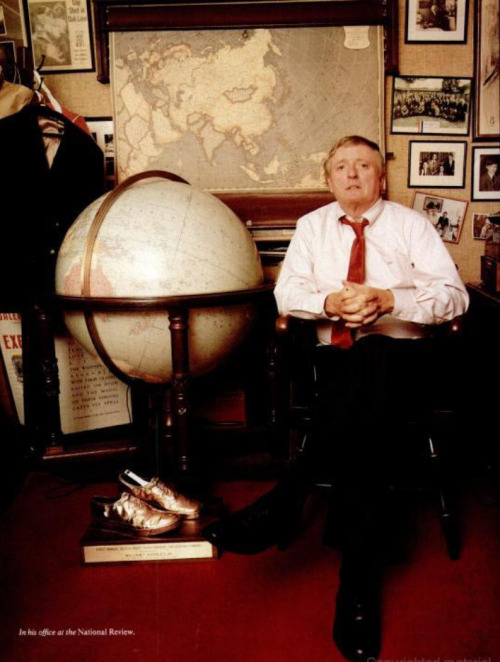
The best defense against a usurpatory government is an assertive citizenry.
William F. Buckley Jr.
04 June 2020
Equal.
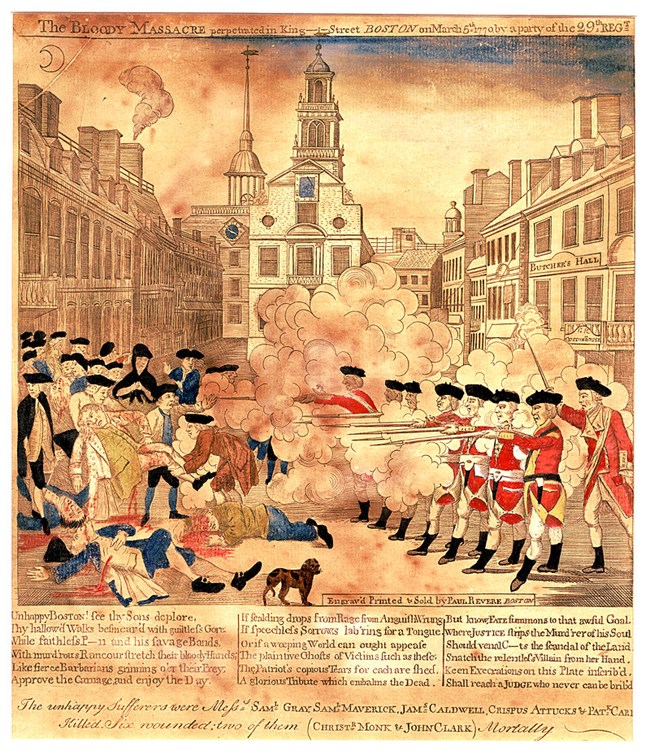
October 24, 1770. Boston, Massachusetts.
John Adams’ client, Captain Thomas Preston, was probably the most hated man in Boston, at least among those agitating for American independence.
Seven months earlier, Preston led a handful of British soldiers (a.k.a. redcoats) to the King’s Custom House to protect a fellow solider being attacked by a large group of irate Colonists. Though details are sketchy, in the end, the soldiers fired into the crowd and six colonists lay dead, with five wounded.
Preston and the soldiers were immediately arrested and American patriots sprang into action. Some Colonists portrayed the events as an unprovoked attack and named it the “Boston Massacre.” Paul Revere made his famous engraving showing Preston and the soldiers firing callously into the crowd. Tensions between the British and Americans were at an all-time high.
But despite the perilousness of the situation, several men—like John Adams—stepped forward to ensure that the soldiers were provided a proper legal defense in court. It didn’t matter to Adams that his clients were hated British soldiers, or that Massachusetts could soon be at war with these very men. In his eyes, all individuals deserved to be treated equally in the eyes of the law. He would help enshrine this dedication for our country.
Adams was a respected lawyer, statesman, and future president of the United States, but he risked his reputation and the wrath of his countrymen to ensure justice was delivered fairly. It would not be the first time he displayed his commitment to the equal protection of the law.
CONNECT
Subscribe to:
Posts (Atom)