"I am not one who was born in the custody of wisdom. I am one who is fond of olden times and intense in quest of the sacred knowing of the ancients." Gustave Courbet

18 August 2013

Happy birthday, Lewis.

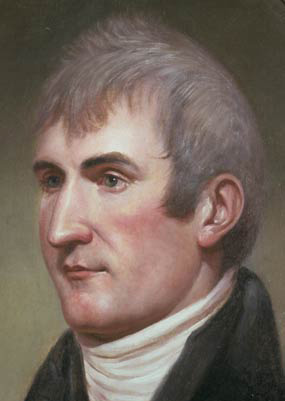
Charles Wilson Peale, Meriwether Lewis, 1807


Meriwether Lewis was born on this date in 1774.

This day I completed my thirty-first year, and conceived that I had in all human probability now existed about half the period which I am to remain in this Sublunary world. I reflected that I had as yet done but little, very little indeed, to further the happiness of the human race, or to advance the information of the succeeding generation. I viewed with regret the many hours I have spent in indolence, and now sorely feel the want of that information which those hours would have given me had they been judiciously expended. but since they are past and cannot be recalled, I dash from me the gloomy thought and resolved in future, to redouble my exertions and at least indeavour to promote those two primary objects of human existance, by giving them the aid of that portion of talents which nature and fortune have bestowed on me; or in future, to live for mankind, as I have heretofore lived for myself.

Meriwether Lewis, 18 August 1805, Out There

CONNECT
Stay.


To stay wild, untamed, to cover myself in green leaves, to shout, weep, pray.

Marc Chagall

CONNECT

Cleaning.

17 August 2013

Faith.

Chagall, Song of Songs IV, 1958


You darkness, that I come from,
I love you more than all the fires
that fence in the world,
for the fire makes
a circle of light for everyone,
and then no one outside learns of you.

But the darkness pulls in everything:
shapes and fires, animals and myself,
how easily it gathers them! -
powers and people -

and it is possible a great energy
is moving near me.

I have faith in nights.


Rainer Maria Rilke

Unsayable.


Things aren't all so tangible and sayable as people would usually have us believe; most experiences are unsayable, they happen in a space that no word has ever entered, and more unsayable than all other things are works of art, those mysterious existences, whose life endures beside our own small, transitory life.

Rainer Maria Rilke

Mozart, Symphony No. 31 in D major, K. 297/300a, "Paris"

Nikolaus Harnoncourt conducts the Vienna Philharmonic ...

15 August 2013

Discovered.


I can’t begin to tell you the things I discovered while I was looking for something else.

Shelby Foote

CONNECT

10 August 2013

1st.

Miguel Cabrera: 1st player to hit game-tying HR with 2 outs in 9th or later vs Mariano Rivera since Jason Bay, 2009 Red Sox.


CONNECT

Calligraphy.

09 August 2013

Sings.

Homer, Ile Malin, 1897


When we no longer know what to do we have come to our real work and when we no longer know which way to go we have begun our real journey. The mind that is not baffled is not employed. The impeded stream is the one that sings.

Wendell Berry

David Lindley, "King of the Bed"


Danke schön.

Breathing.


Despite having encountered numerous seasonal timelapse videos shot here on Earth, this is the first time I’ve ever seen anything like this visualized on such a large scale from space. It really looks like a heartbeat or the action of breathing. 

08 August 2013

Fire.

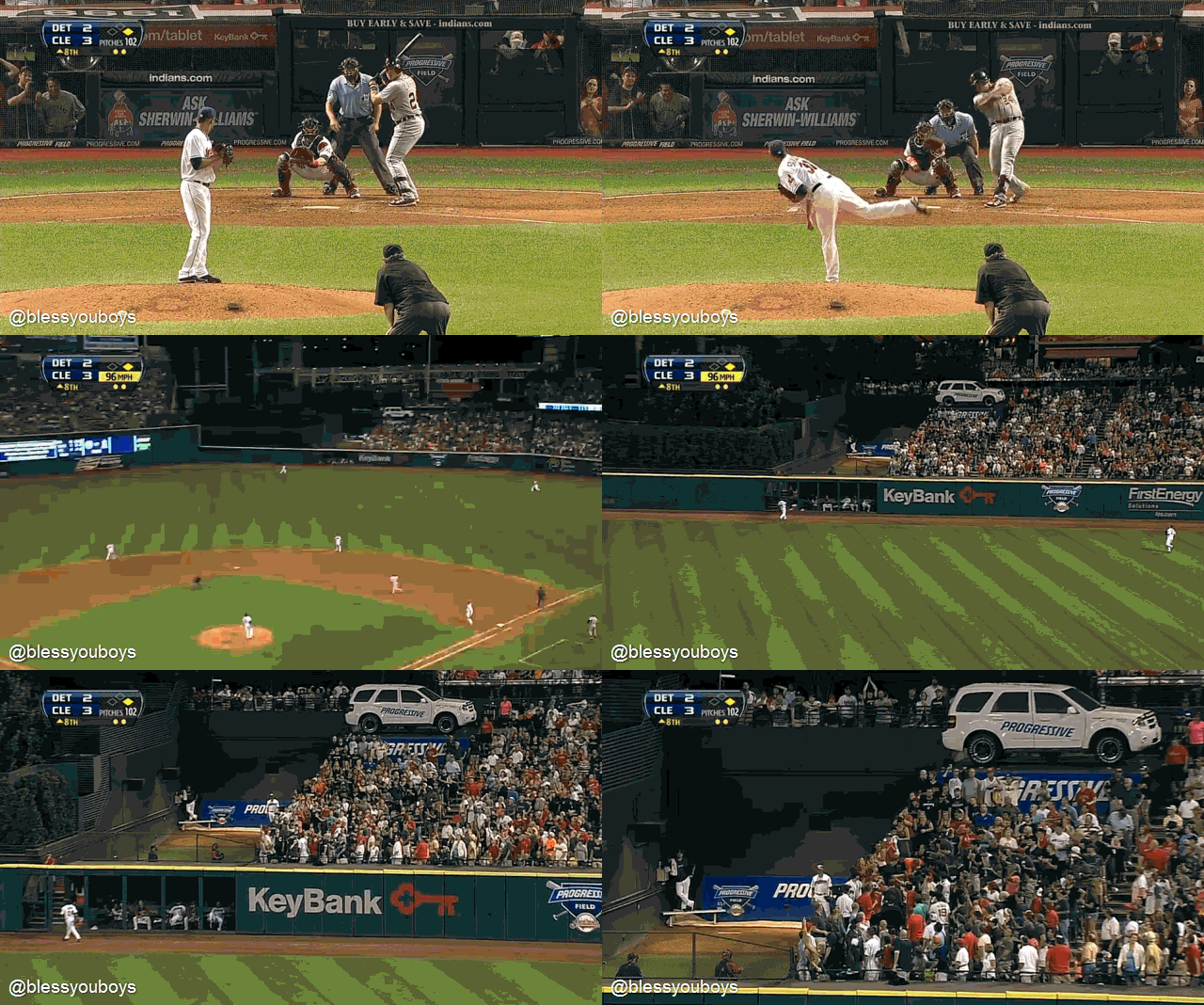
Miguel Cabrera struck out in his first three at-bats [in the Tigers’ 6-5 victory] against Indians starter Danny Salazar, but Terry Francona played with fire and left his starter in during a crucial situation in the top of the eighth inning.  Cabrera made him pay.


Anything that travels that far ought to have a stewardess on it.

06 August 2013

Accomplish.


Thanks, Lori.

Happy birthday, Tennyson.


Alfred, Lord Tennyson, was born on this date in 1809.

Ring out, wild bells, to the wild sky,
The flying cloud, the frosty light;
The year is dying in the night;
Ring out, wild bells, and let him die.

Ring out the old, ring in the new,
Ring, happy bells, across the snow:
The year is going, let him go;
Ring out the false, ring in the true.

Ring out the grief that saps the mind,
For those that here we see no more,
Ring out the feud of rich and poor,
Ring in redress to all mankind.

Ring out a slowly dying cause,
And ancient forms of party strife;
Ring in the nobler modes of life,
With sweeter manners, purer laws.

Ring out the want, the care the sin,
The faithless coldness of the times;
Ring out, ring out my mournful rhymes,
But ring the fuller minstrel in.

Ring out false pride in place and blood,
The civic slander and the spite;
Ring in the love of truth and right,
Ring in the common love of good.

Ring out old shapes of foul disease,
Ring out the narrowing lust of gold;
Ring out the thousand wars of old,
Ring in the thousand years of peace.

Ring in the valiant man and free,
The larger heart, the kindlier hand;
Ring out the darkness of the land,
Ring in the Christ that is to be.

- Alfred Lord Tennyson

05 August 2013

Peter Rowan, "Fetch Wood, Carry Water"


Feather the paddle and the boat will row
Above the flood, beyond the flow.
Feather the arrow of your mind and let it fly
Into the heart of the empty sky.

Pipings.

Rubens, Pan and Syrinx, 1619


Hymn to Pan

From the forests and highlands
We come, we come;
From the river-girt islands,
Where loud waves are dumb,
Listening to my sweet pipings.
The wind in the reeds and the rushes,
The bees on the bells of thyme,
The birds on the myrtle bushes,
The cicale above in the lime,
And the lizards below in the grass,
Were as silent as ever old Tmolus was,
Listening to my sweet pipings.

Liquid Peneus was flowing,
And all dark Tempe lay
In Pelion's shadow, outgrowing
The light of the dying day,
Speeded by my sweet pipings.
The Sileni and Sylvans and Fauns,
And the Nymphs of the woods and waves,
To the edge of the moist river-lawns,
And the brink of the dewy caves,
And all that did then attend and follow,
Were silent with love, as you now, Apollo,
With envy of my sweet pipings.

I sang of the dancing stars,
I sang of the dædal earth,
And of heaven, and the giant wars,
And love, and death, and birth.
And then I changed my pipings—
Singing how down the vale of Mænalus
I pursued a maiden, and clasp'd a reed:
Gods and men, we are all deluded thus!
It breaks in our bosom, and then we bleed.
All wept—as I think both ye now would,
If envy or age had not frozen your blood—
At the sorrow of my sweet pipings.

- Percy Bysshe Shelley

Debussy, "Syrinx," performed by Jean-Pierre Rampal ...

Streamer.


Have you ever dropped a stick in a river and wondered where it might go if it floated all the way downstream? Now you can trace its journey using Streamer.

Deuce.

Duck, ... duck, ...


... deuce.

04 August 2013

Lyle Lovett, "Nobody Knows Me"

Rinds.


In a practical sense, cheese rinds can be used to communicate something about a cheese. But as with most forms of communication, you can get creative with it.

CONNECT

Peter Rowan.

"Cheyenne"


"Tumbleweed"


"Land of the Navajo"

Ball.

I miss it ...

Happy birthday, Shelley.

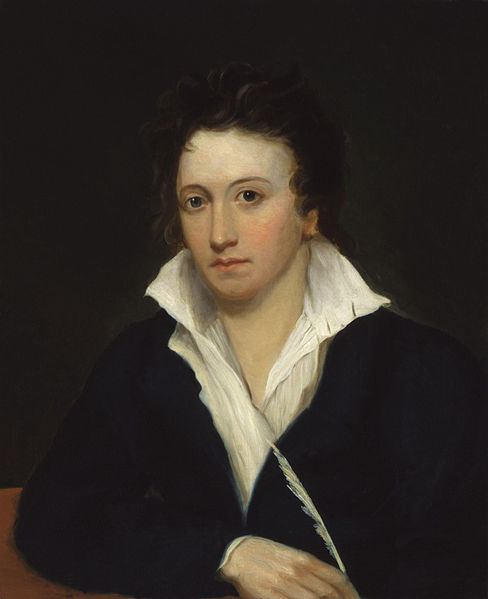
Clint, Percy Bysshe Shelley, 1819


Percy Bysshe Shelley was born on this date in 1793. 

To a Skylark

Hail to thee, blithe Spirit!           Bird thou never wert,      That from Heaven, or near it,           Pourest thy full heart In profuse strains of unpremeditated art.      Higher still and higher           From the earth thou springest      Like a cloud of fire;           The blue deep thou wingest, And singing still dost soar, and soaring ever singest.      In the golden lightning           Of the sunken sun      O'er which clouds are bright'ning,           Thou dost float and run, Like an unbodied joy whose race is just begun.      The pale purple even           Melts around thy flight;      Like a star of Heaven           In the broad daylight Thou art unseen, but yet I hear thy shrill delight:      Keen as are the arrows           Of that silver sphere,      Whose intense lamp narrows           In the white dawn clear Until we hardly see--we feel that it is there.      All the earth and air           With thy voice is loud.      As, when night is bare,           From one lonely cloud The moon rains out her beams, and heaven is overflowed.      What thou art we know not;           What is most like thee?      From rainbow clouds there flow not           Drops so bright to see As from thy presence showers a rain of melody.      Like a poet hidden           In the light of thought,      Singing hymns unbidden,           Till the world is wrought To sympathy with hopes and fears it heeded not:      Like a high-born maiden           In a palace tower,      Soothing her love-laden           Soul in secret hour With music sweet as love, which overflows her bower:      Like a glow-worm golden           In a dell of dew,      Scattering unbeholden           Its aerial hue Among the flowers and grass, which screen it from the view:      Like a rose embowered           In its own green leaves,      By warm winds deflowered,           Till the scent it gives Makes faint with too much sweet these heavy-winged thieves.      Sound of vernal showers           On the twinkling grass,      Rain-awakened flowers,           All that ever was Joyous, and clear, and fresh, thy music doth surpass.      Teach us, sprite or bird,           What sweet thoughts are thine:      I have never heard           Praise of love or wine That panted forth a flood of rapture so divine.      Chorus hymeneal           Or triumphal chaunt      Matched with thine, would be all           But an empty vaunt-- A thing wherein we feel there is some hidden want.      What objects are the fountains           Of thy happy strain?      What fields, or waves, or mountains?           What shapes of sky or plain? What love of thine own kind? what ignorance of pain?      With thy clear keen joyance           Languor cannot be:      Shadow of annoyance           Never came near thee: Thou lovest, but ne'er knew love's sad satiety.      Waking or asleep,           Thou of death must deem      Things more true and deep           Than we mortals dream, Or how could thy notes flow in such a crystal stream?      We look before and after,           And pine for what is not:      Our sincerest laughter           With some pain is fraught; Our sweetest songs are those that tell of saddest thought.      Yet if we could scorn           Hate, and pride, and fear;      If we were things born           Not to shed a tear, I know not how thy joy we ever should come near.      Better than all measures           Of delightful sound,      Better than all treasures           That in books are found, Thy skill to poet were, thou scorner of the ground!      Teach me half the gladness           That thy brain must know,      Such harmonious madness           From my lips would flow The world should listen then, as I am listening now!

- Percy Bysshe Shelley

03 August 2013

Aerosmith, "Draw the Line"

Heart-work.

Caravaggio, St. Jerome Writing (detail), 1606


The work of the eyes is done. Go now and do the heart-work on the images imprisoned within you.

- Rainer Maria Rilke

Vivaldi, Cello Concerto A minor, RV 419

Il Giardino Armonico performs ...

Decide.

In her moving TEDxChapmanU talk, Erin Gruwell shares how she chose to become a teacher who believed in change, who believed her students could decide their own future instead of becoming another victim of gang-related violence or teen pregnancy. She walks the audience through her and her students' journey to chronicle their own stories, mirroring some of the most iconic figures in history.


CONNECT

Bad Co., "Gone, Gone, Gone"


Thanks, Kurtastrophy.

Alive.


Try to learn to breathe deeply, really to taste food when you eat, and when you sleep, really to sleep. Try as much as possible to be wholly alive with all your might, and when you laugh, laugh like hell. And when you get angry, get good and angry. Try to be alive. You will be dead soon enough.

- Ernest Hemingway

Vivaldi, Mandolin Concerto in C major, RV 425

Il Giardino Armonico performs ...

Be.

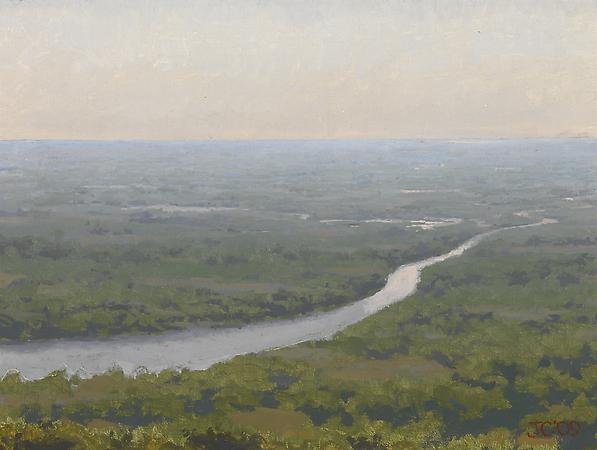
Collins, River Vista, 2009


Ars Poetica

A poem should be palpable and mute 
As a globed fruit, 

Dumb 
As old medallions to the thumb, 

Silent as the sleeve-worn stone 
Of casement ledges where the moss has grown— 

A poem should be wordless 
As the flight of birds. 


A poem should be motionless in time 
As the moon climbs, 

Leaving, as the moon releases 
Twig by twig the night-entangled trees, 

Leaving, as the moon behind the winter leaves, 
Memory by memory the mind— 

A poem should be motionless in time 
As the moon climbs. 


A poem should be equal to: 
Not true. 

For all the history of grief 
An empty doorway and a maple leaf. 

For love 
The leaning grasses and two lights above the sea—

A poem should not mean 
But be.

- Archibald MacLeish

Vivaldi, Concerto for strings in G minor (RV 157)

Il Giardino Armonico performs, with Enrico Onofri playing fiddle ...

Live.

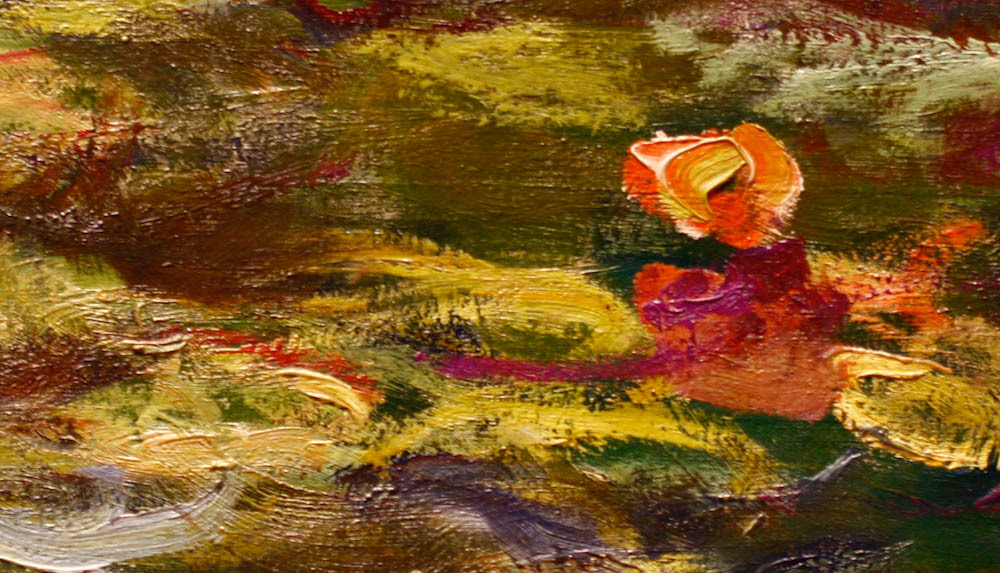
Monet, Waterlilies (detail), 1919


I have a friend who's an artist and has sometimes taken a view which I don't agree with very well. He'll hold up a flower and say "look how beautiful it is," and I'll agree. Then he says "I as an artist can see how beautiful this is but you as a scientist take this all apart and it becomes a dull thing," and I think that he's kind of nutty. First of all, the beauty that he sees is available to other people and to me too, I believe. Although I may not be quite as refined aesthetically as he is. I can appreciate the beauty of a flower. At the same time, I see much more about the flower than he sees. I could imagine the cells in there, the complicated actions inside, which also have a beauty. I mean it's not just beauty at this dimension, at one centimeter; there's also beauty at smaller dimensions, the inner structure, also the processes. The fact that the colors in the flower evolved in order to attract insects to pollinate it is interesting; it means that insects can see the color. It adds a question: does this aesthetic sense also exist in the lower forms? Why is it aesthetic? All kinds of interesting questions which the science knowledge only adds to the excitement, the mystery and the awe of a flower. It only adds. I don't understand how it subtracts.  

A poet once said, 'The whole universe is in a glass of wine.' We will probably never know in what sense he meant it, for poets do not write to be understood. But it is true that if we look at a glass of wine closely enough we see the entire universe. There are the things of physics: the twisting liquid which evaporates depending on the wind and weather, the reflection in the glass; and our imagination adds atoms. The glass is a distillation of the earth's rocks, and in its composition we see the secrets of the universe's age, and the evolution of stars. What strange array of chemicals are in the wine? How did they come to be? There are the ferments, the enzymes, the substrates, and the products. There in wine is found the great generalization; all life is fermentation. Nobody can discover the chemistry of wine without discovering, as did Louis Pasteur, the cause of much disease. How vivid is the claret, pressing its existence into the consciousness that watches it! If our small minds, for some convenience, divide this glass of wine, this universe, into parts -- physics, biology, geology, astronomy, psychology, and so on -- remember that nature does not know it! So let us put it all back together, not forgetting ultimately what it is for. Let it give us one more final pleasure; drink it and forget it all!

I think it's much more interesting to live not knowing than to have answers which might be wrong. I have approximate answers and possible beliefs and different degrees of uncertainty about different things, but I am not absolutely sure of anything and there are many things I don't know anything about, such as whether it means anything to ask why we're here. I don't have to know an answer. I don't feel frightened not knowing things, by being lost in a mysterious universe without any purpose, which is the way it really is as far as I can tell.

- Richard P. Feynman

Real.


... the real was always more fantastic than the fantastical.

- Bruce Chatwin

Focus.


Life is a train of moods like a string of beads, and, as we pass through them, they prove to be many-colored lenses which paint the world their own hue, and each shows only what lies in its focus.

- Ralph Waldo Emerson

Thanks, Drew!

Added.


From the start I've used every trick I could pick up to mask my shortcomings. With the eye issues, there's only so much you can do. I've learned that "vision" and eye sight are two different things. With 20/20 sight there's no interpretation, no grey area, what you see is what you get and you can attack it. But with vision there's the added elements of anticipation, of making "educated guesses" ... of feel. So I depend on my vision much more than my eye sight. 

Thanks, Seth.

Daring.


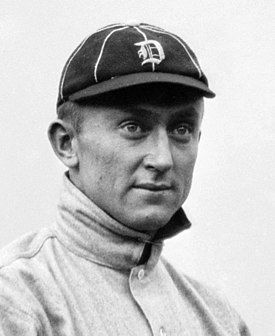
During a career that featured 54 steals of home, nearly 900 stolen bases, and countless collisions with enemy baserunners, Ty Cobb made more daring dashes and vicious slides than anyone in baseball history. It might seem impossible to choose one of Cobb’s baserunning exploits as the best, but what happened on May 12, 1911, is hard to top.

CONNECT

Stay focused, my friends.

01 August 2013

That.

Leonardo, Heart, 1513


What was said to the rose that made it open was said 
to me here in my chest. 

What was told the cypress that made it strong 
and straight, what was 

whispered the jasmine so it is what it is, whatever made 
sugarcane sweet, whatever 

was said to the inhabitants of the town of Chigil in 
Turkestan that makes them 

so handsome, whatever lets the pomegranate flower blush 
like a human face, that is 

being said to me now. I blush. Whatever put eloquence in 
language, that's happening here. 

The great warehouse doors open; I fill with gratitude, 
chewing a piece of sugarcane, 

in love with the one to whom every that belongs! 

- Rumi

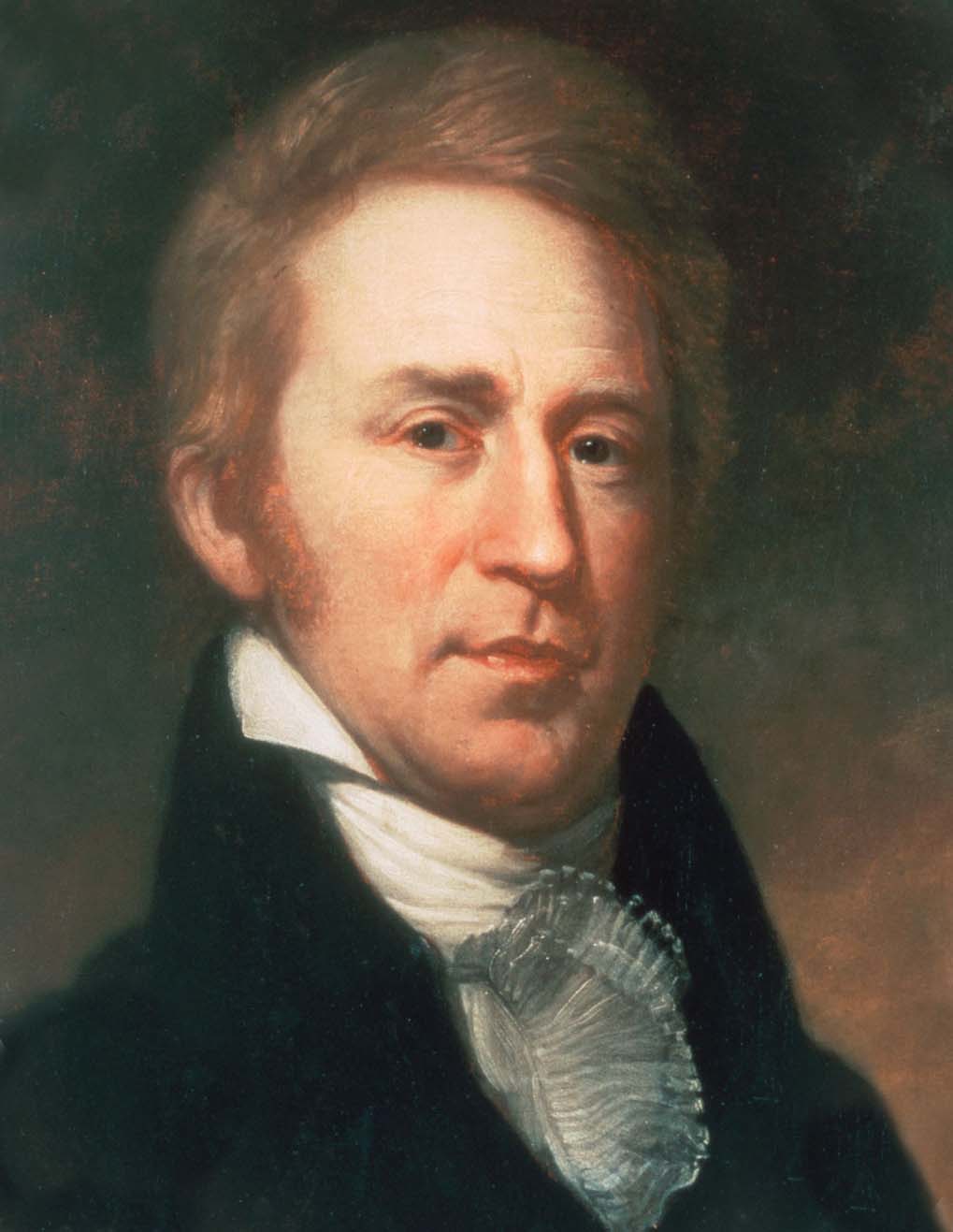
Happy birthday, Clark.

Charles Willson Peale, William Clark, 1810


William Clark was born on this date in 1770.

May 13, 1804
Boats and everything Complete, with the necessary stores of provisions & such articles of merchandize as we thought ourselves authorised to procure -- tho' not as much as I think nessy. for the multitude of Inds. thro which we must pass on our road across the Continent &c. &c.

May 14, 1804
All the preparations being completed, we left our encampment ...

CONNECT

Understand.

Schneider, Grizzly, Undated


A bear operates from an instinct that humans can only try, and usually fail, to understand.


Natural selection at work.

Bowman.


It is not recorded what the German commander said when he learned that one of his men had been spitted by a broad-head arrow.

It was May 1940, and the German officer’s unit was attacking toward a village called l’Epinette, near Bethune, France. Five of his soldiers took cover behind a farmyard wall, sheltered from the fire of British rearguards covering the retreat of the British Expeditionary Force to the English Channel. Without warning, one German crumpled, the feathered tip of an arrow sticking out of his chest. From a small farm building on their flank, rifle-fire tore into the others.

While he may have known that his enemy was soldiers of the Manchester Regiment, the German leader could not have known that they were led by the formidable Captain Jack Churchill. It was Churchill’s arrow that skewered the luckless German, while his men’s rifles accounted for the rest. However deadly, bows and arrows were surely anachronisms in modern war. They were formidable soldiers and always had been, precisely the sort of men Jack Churchill was cut out to lead.

But then, so was the bowman.

CONNECT

Happy birthday, Melville.


Herman Melville was born on this date in 1819.

(Stubb solus, and mending a brace.)
Ha! ha! ha! ha! hem! clear my throat!- I’ve been thinking over it ever since, and that ha, ha’s the final consequence. Why so? Because a laugh’s the wisest, easiest answer to all that’s queer; and come what will, one comfort’s always left- that unfailing comfort is, it’s all predestinated. I heard not all his talk with Starbuck; but to my poor eye Starbuck then looked something as I the other evening felt. Be sure the old Mogul has fixed him, too. I twigged it, knew it; had the gift, might readily have prophesied it- for when I clapped my eye upon his skull I saw it. Well, Stubb, wise Stubb- that’s my title- well, Stubb, what of it, Stubb? Here’s a carcase. I know not all that may be coming, but be it what it will, I’ll go to it laughing. Such a waggish leering as lurks in all your horribles! I feel funny. Fa, la! lirra, skirra! What’s my juicy little pear at home doing now? Crying its eyes out?- Giving a party to the last arrived harpooneers, I dare say, gay as a frigate’s pennant, and so am I- fa, la! lirra, skirra! Oh-

We’ll drink to-night with hearts as light, To love, as gay and fleeting As bubbles that swim, on the beaker’s brim, And break on the lips while meeting.

- Herman Melville, from Moby Dick