"I am not one who was born in the custody of wisdom. I am one who is fond of olden times and intense in quest of the sacred knowing of the ancients." Gustave Courbet
Showing posts with label moon. Show all posts

09 March 2026

Conscious.


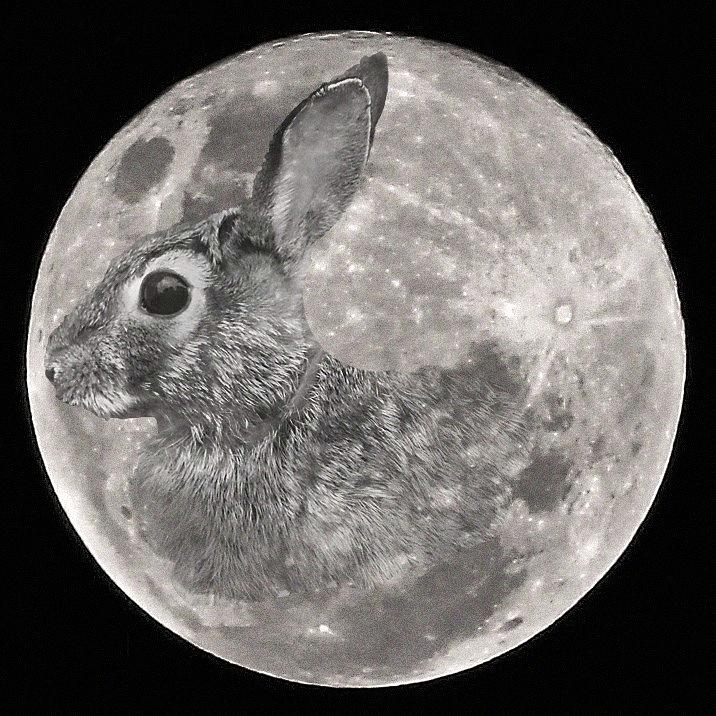
The full moon, well risen in a cloudless eastern sky, covered the high solitude with its light. We are not conscious of daylight as that which displaces darkness. Daylight, even when the sun is clear of clouds, seems to us simply the natural condition of the earth and air. When we think of the downs, we think of the downs in daylight, as with think of a rabbit with its fur on. Stubbs may have envisaged the skeleton inside the horse, but most of us do not: and we do not usually envisage the downs without daylight, even though the light is not a part of the down itself as the hide is part of the horse itself. We take daylight for granted. But moonlight is another matter. It is inconstant. The full moon wanes and returns again. Clouds may obscure it to an extent to which they cannot obscure daylight. Water is necessary to us, but a waterfall is not. Where it is to be found it is something extra, a beautiful ornament. We need daylight and to that extent it us utilitarian, but moonlight we do not need. When it comes, it serves no necessity. It transforms. It falls upon the banks and the grass, separating one long blade from another; turning a drift of brown, frosted leaves from a single heap to innumerable flashing fragments; or glimmering lengthways along wet twigs as though light itself were ductile. Its long beams pour, white and sharp, between the trunks of trees, their clarity fading as they recede into the powdery, misty distance of beech woods at night. In moonlight, two acres of coarse bent grass, undulant and ankle deep, tumbled and rough as a horse's mane, appear like a bay of waves, all shadowy troughs and hollows. The growth is so thick and matted that even the wind does not move it, but it is the moonlight that seems to confer stillness upon it. We do not take moonlight for granted. It is like snow, or like the dew on a July morning. It does not reveal but changes what it covers. And its low intensity---so much lower than that of daylight---makes us conscious that it is something added to the down, to give it, for only a little time, a singular and marvelous quality that we should admire while we can, for soon it will be gone again. 

Richard Adams, from Watership Down

21 February 2026

Marvel.

Wyeth, Crescent Moon, 1979


MOON SONG

A child saw in the morning skies
The dissipated-looking moon,
And opened wide her big blue eyes,
And cried: "Look, look, my lost balloon!"
And clapped her rosy hands with glee:
"Quick, mother! Bring it back to me."

A poet in a lilied pond
Espied the moon's reflected charms,
And ravished by that beauty blonde,
Leapt out to clasp her in his arms.
And as he'd never learnt to swim,
Poor fool! that was the end of him.

A rustic glimpsed amid the trees
The bluff moon caught as in a snare.
"They say it do be made of cheese,"
Said Giles, "and that a chap bides there. . . .
That Blue Boar ale be strong, I vow --
The lad's a-winkin' at me now."

Two lovers watched the new moon hold
The old moon in her bright embrace.
Said she: "There's mother, pale and old,
And drawing near her resting place."
Said he: "Be mine, and with me wed,"
Moon-high she stared . . . she shook her head.

A soldier saw with dying eyes
The bleared moon like a ball of blood,
And thought of how in other skies,
So pearly bright on leaf and bud
Like peace its soft white beams had lain;
Like Peace! . . . He closed his eyes again.

Child, lover, poet, soldier, clown,
Ah yes, old Moon, what things you've seen!
I marvel now, as you look down,
How can your face be so serene?
And tranquil still you'll make your round,
Old Moon, when we are underground.

Robert Service

20 October 2024

Well-Risen.


The full moon, well-risen in a cloudless eastern sky, covered the high solitude with its light. We are not conscious of daylight as that which displaces darkness. Daylight, even when the sun is clear of clouds, seems to us simply the natural condition of the earth and air. When we think of the downs, we think of the downs in daylight, as with think of a rabbit with its fur on. Stubbs may have envisaged the skeleton inside the horse, but most of us do not: and we do not usually envisage the downs without daylight, even though the light is not a part of the down itself as the hide is part of the horse itself. We take daylight for granted. But moonlight is another matter. It is inconstant. The full moon wanes and returns again. Clouds may obscure it to an extent to which they cannot obscure daylight. Water is necessary to us, but a waterfall is not. Where it is to be found it is something extra, a beautiful ornament. We need daylight and to that extent it us utilitarian, but moonlight we do not need. When it comes, it serves no necessity. It transforms. It falls upon the banks and the grass, separating one long blade from another; turning a drift of brown, frosted leaves from a single heap to innumerable flashing fragments; or glimmering lengthways along wet twigs as though light itself were ductile. Its long beams pour, white and sharp, between the trunks of trees, their clarity fading as they recede into the powdery, misty distance of beech woods at night. In moonlight, two acres of coarse bent grass, undulant and ankle deep, tumbled and rough as a horse's mane, appear like a bay of waves, all shadowy troughs and hollows. The growth is so thick and matted that event the wind does not move it, but it is the moonlight that seems to confer stillness upon it. We do not take moonlight for granted. It is like snow, or like the dew on a July morning. It does not reveal but changes what it covers. And its low intensity---so much lower than that of daylight---makes us conscious that it is something added to the down, to give it, for only a little time, a singular and marvelous quality that we should admire while we can, for soon it will be gone again.

Richard Adams, from Watership Down

30 March 2024

Move.


TIDELESS LAKE

You move as though the moon
pulls you, though it's away is nominal
when compared to the wind,
the atmospheric pressure, 
the will of your waves
to creep up the shore
and caress the dunes.

reminding me I do not need 
a moon to move.

Mae Stier

04 October 2023

When.


Someday, I would like to go home. The exact location of this place, I don't know, but someday I would like to go. There would be a pleasing feeling of familiarity and a sense of welcome in everything I saw. People would greet me warmly. They would remind me of the length of my absence and the thousands of miles I had travelled in those restless years, but mostly, they would tell me that I had been missed, and that things were better now I had returned. Autumn would come to this place of welcome, this place I would know to be home. Autumn would come and the air would grow cool, dry and magic, as it does that time of the year. At night, I would walk the streets but not feel lonely, for these are the streets of my home town. These are the streets that I had thought about while far away, and now I was back, and all was as it should be. The trees and the falling leaves would welcome me. I would look up at the moon, and remember seeing it in countries all over the world as I had restlessly journeyed for decades, never remembering it looking the same as when viewed from my hometown.
Henry Rollins

Thank you, Jessica

11 February 2023

Left.

Morris, The Hare and The Moon, 2020


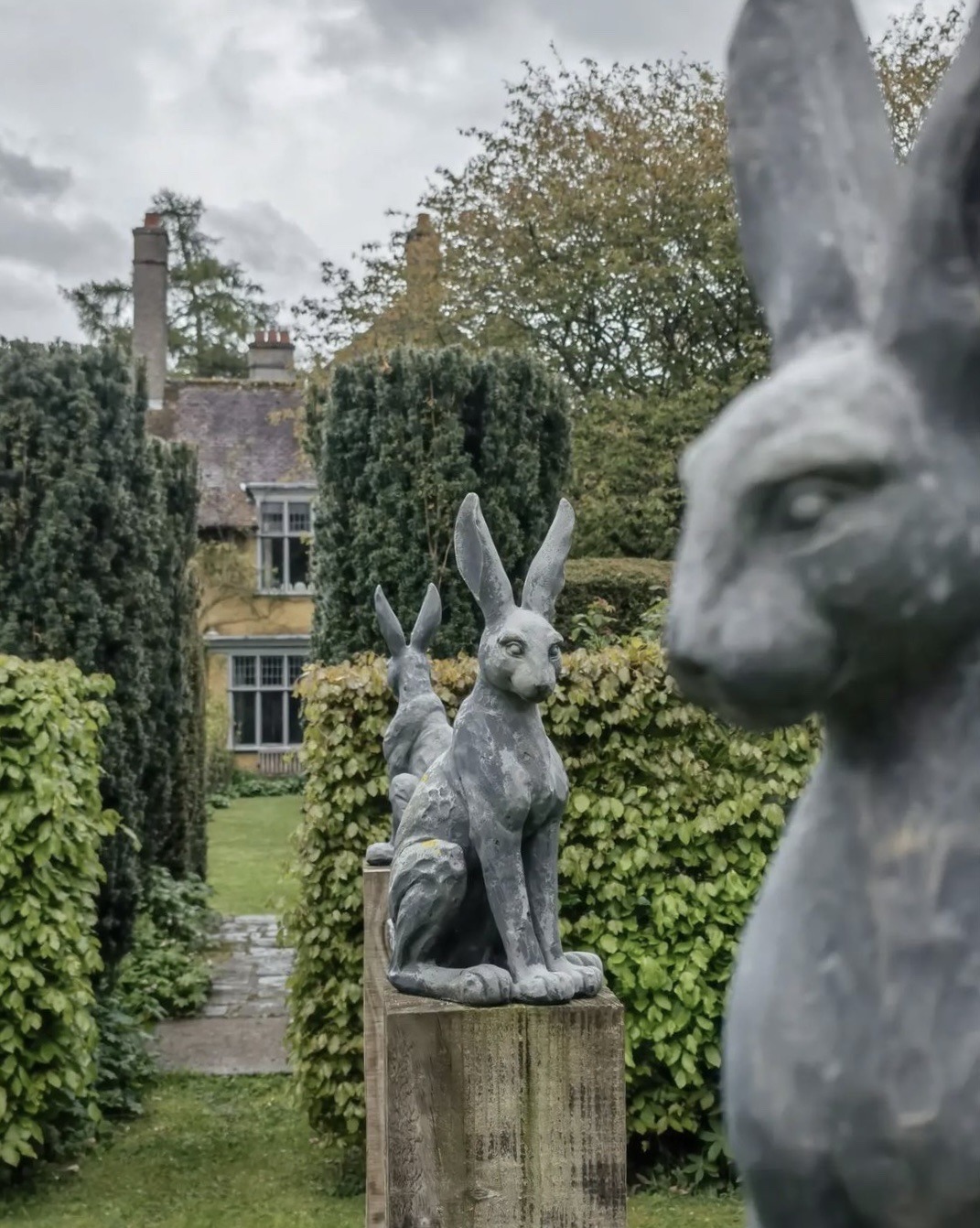
The HARE

In the black furrow of a field
        I saw an old witch-hare this night;
     And she cocked a lissome ear,
        And she eyed the moon so bright,
     And she nibbled of the green;
        And I whispered "Wh-s-st! witch-hare,"
     Away like a ghostie o'er the field
        She fled, and left the moonlight there.

Walter de la Mare

14 March 2022

Bathed.

Homer, Summer Night (detail), 1890


The moon shines in the midst of the sky; the immeasurable vault of heaven seems to have expanded to infinity; the earth is bathed in silver light; the air is warm, voluptuous, and redolent of innumerable sweet scents. Divine night!

Nikolai Gogol

20 October 2021

Out.


THE MOON

The moon has a face like the clock in the hall;
She shines on thieves on the garden wall,
On streets and fields and harbour quays,
And birdies asleep in the forks of the trees.

The squalling cat and the squeaking mouse,
The howling dog by the door of the house,
The bat that lies in bed at noon,
All love to be out by the light of the moon.

But all of the things that belong to the day
Cuddle to sleep to be out of her way;
And flowers and children close their eyes
Till up in the morning the sun shall arise.

Robert Louis Stevenson

01 December 2020

Rolls.

Chełmoński, Moonrise, 1888


This grand show is eternal. It is always sunrise somewhere; the dew is never all dried at once; a shower is forever falling; vapor is ever rising. Eternal sunrise, eternal sunset, eternal dawn and gloaming, on sea and continents and islands, each in its turn, as the round earth rolls.

John Muir

24 September 2020

Heard.

Chatham, Fall Moon Rising, n/d


GOING for WATER

The well was dry beside the door,
And so we went with pail and can
Across the fields behind the house
To seek the brook if still it ran;

Not loth to have excuse to go,
Because the autumn eve was fair
(Though chill) because the fields were ours,
And by the brook our woods were there.

We ran as if to meet the moon
That slowly dawned behind the trees,
The barren boughs without the leaves,
Without the birds, without the breeze.

But once within the wood, we paused
Like gnomes that hid us from the moon,
Ready to run to hiding new
With laughter when she found us soon.

Each laid on other a staying hand
To listen ere we dared to look,
And in the hush we joined to make
We heard—we knew we heard—the brook.

A note as from a single place,
A slender tinkling fall that made
Now drops that floated on the pool
Like pearls, and now a silver blade.

Robert Frost

07 May 2020

Changes.


The full moon, well risen in a cloudless eastern sky, covered the high solitude with its light. We are not conscious of daylight as that which displaces darkness. Daylight, even when the sun is clear of clouds, seems to us simply the natural condition of the earth and air. When we think of the downs, we think of the downs in daylight, as with think of a rabbit with its fur on. Stubbs may have envisaged the skeleton inside the horse, but most of us do not: and we do not usually envisage the downs without daylight, even though the light is not a part of the down itself as the hide is part of the horse itself. We take daylight for granted. But moonlight is another matter. It is inconstant. The full moon wanes and returns again. Clouds may obscure it to an extent to which they cannot obscure daylight. Water is necessary to us, but a waterfall is not. Where it is to be found it is something extra, a beautiful ornament. We need daylight and to that extent it us utilitarian, but moonlight we do not need. When it comes, it serves no necessity. It transforms. It falls upon the banks and the grass, separating one long blade from another; turning a drift of brown, frosted leaves from a single heap to innumerable flashing fragments; or glimmering lengthways along wet twigs as though light itself were ductile. Its long beams pour, white and sharp, between the trunks of trees, their clarity fading as they recede into the powdery, misty distance of beech woods at night. In moonlight, two acres of coarse bent grass, undulant and ankle deep, tumbled and rough as a horse's mane, appear like a bay of waves, all shadowy troughs and hollows. The growth is so thick and matted that event the wind does not move it, but it is the moonlight that seems to confer stillness upon it. We do not take moonlight for granted. It is like snow, or like the dew on a July morning. It does not reveal but changes what it covers. And its low intensity---so much lower than that of daylight---makes us conscious that it is something added to the down, to give it, for only a little time, a singular and marvelous quality that we should admire while we can, for soon it will be gone again.

Richard Adams, from Watership Down

22 April 2020

Eye.


I sit up late dumb as a cow,
which is to say
somewhat conscious with thirst
and hunger, an eye for the new moon
and the morning’s long walk
to the water tank. Everywhere
around me the birds are waiting
for the light. In this world of dreams
don’t let the clock cut up
your life in pieces.

Jim Harrison

15 June 2019

Dreaming.

van Gogh, Rising Moon, 1889


Will a moon so bright ever arise again?
Drink a cupful of wine and ask of the sky.
I don't know where the palace gate of heaven is,
Or even the year in which tonight slips by.
I want to return riding the whirl-wind! But I
Feel afraid that this heaven of jasper and jade
Lets in the cold, its palaces rear so high.
I shall get up and dance with my own shadow.
From life endured among men how far a cry!

Round the red pavilion
Slanting through the lattices
Onto every wakeful eye,
Moon, why should you bear a grudge, O why
Insist in time of separation so to fill the sky?
Men know joy and sorrow, parting and reunion;
The moon lacks luster, brightly shines; is all, is less.
Perfection was never easily come by.
Though miles apart, could men but live for ever
Dreaming they shared this moonlight endlessly! 

Su Tung-po