"I am not one who was born in the custody of wisdom. I am one who is fond of olden times and intense in quest of the sacred knowing of the ancients." Gustave Courbet
Showing posts with label Knox. Show all posts

25 July 2026

Happy Birthday, Henry Knox

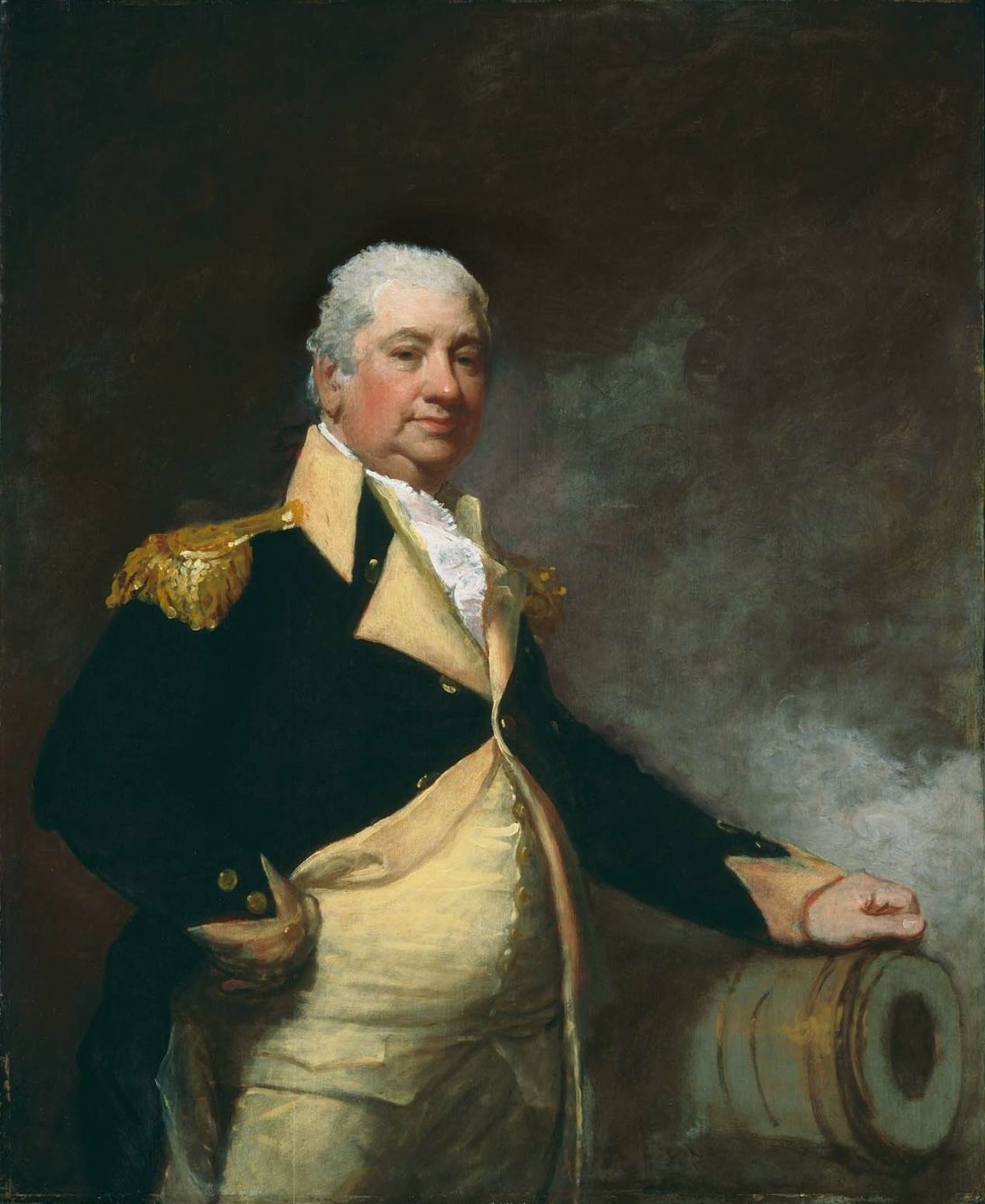
Stuart, Henry Knox, 1806
On the very first impression of Faction and licentiousness the fine theoretic government of Massachusetts has given away and its laws arrested and trampled under foot. Men at a distance, who have admired our systems of government, unfounded in nature, are apt to accuse the rulers, and say that taxes have been assessed coo high and collected coo rigidly. This is a deception equal to any that has been hitherto entertained. It is indeed a face, that high taxes are the ostensible cause of the commotions, but that they are the real cause is as far remote from truth as light from darkness. The people who are the insurgents have never paid any, or but very little taxes—But they see the weakness of government; They feel at once their own poverty, compared with the opulent, and their own force, and they are determined to make use of the latter, in order to remedy the former. Their creed is "That the property of the United States has been protected from the confiscations of Britain by the joint exertions of all, and therefore ought to be the common property of all. And he that attempts opposition to this creed is an enemy to equity and justice, and ought to be swept off the face of the earth." In a word they are determined to annihilate all debts public and private and have agrarian Laws which are easily effected by the means of unfunded paper money which shall be a tender in all cases whatever. 
The numbers of these people may amount in [M]assachusetts to about one fifth part of several populous counties, and to them may be collected, people of similar sentiments, from the States of Rhode Island, Connecticut and New Hampshire so as to constitute a body of 12 or 15,000 desperate and unprincipled men—They are chiefly of the Young and active part of the community, more easily collected than perhaps Kept together afterwards—But they will probably commit overt acts of treason which will compel them to embody for their own safety—once embodied they will be constrained to submit to discipline for the same reason. Having proceeded to this length for which they are now ripe, we shall have a formidable rebellion against reason, the principles of all government, and against the very name of liberty. This dreadful situation has alarmed every man of principle and property in New England—They start as from a dream, and ask what has been the Cause of our delusion? What is to afford us security against the violence of lawless men? Our government must be braced, changed, or altered to secure our lives and property. We imagined that the mildness of our government and the virtue of the people were so correspondent, that we were not as other nations requiring brutal force to support the laws—But we find that we are men, actual men, possessing all the turbulent passions belonging to that animal and that we must have a government proper and adequate for him—The people of Massachusetts for instance, are far advanced in this doctrine, and the men of reflection, and principle, are determined to endeavor to establish a government which shall have the power to protect them in their lawful pursuits, and which will be efficient in all cases of internal commotions or foreign invasions—They mean that liberty shall form the basis, a liberty resulting from the equal and firm administration of the laws. They wish for a general government of unity as they see that the local legislatures, must naturally and necessarily tend to retard general government. 
We have arrived at that point of time in which we are forced to see our national humiliation, and that a progression in this line, cannot be productive of happiness either private or public—something is wanting and something must be done or we shall be involved in all the horror of faction and civil war without a prospect of its termination—Every tried friend to the liberties of his country is bound to reflect, and step forward to prevent the dreadful consequences which will result from a government of events—Unless this is done we shall be liable to be ruled by an Arbitrary and Capricious armed tyranny, whose word and will must be Law. 

 Henry Knox, born on this date in 1750, from his letter to George Washington, October 23, 1786

The "Knox Moving Co." scene from John Adams ...


An excellent book ...

07 July 2026

Bound.

Stuart, Major General Henry Knox, 1806


Every friend to the liberty of his country is bound to reflect, and step forward to prevent the dreadful consequences which shall result from a government of events.

Henry Knox, from his letter to George Washington, October 23, 1786

Best.

Brian Lamb dicsusses the book 1776 with its author, David McCullough ...
[Henry Knox] is such an extraordinary story of an American who seemed to be miscast, seemed to be a fellow not prepared for the role that history had for him to play and who not only lived up to the role but went over the top, as it were.  An example of a man who came from very humble origins with very little advantage in the way of education or connections.  He rose to be one of the most important Americans of his day, the man that George Washington discovered and the man that George Washington counted on through nearly eight and a half years of the Revolutionary War and who then counted on him as his secretary of war during the time that Washington was president.

He started out as a Boston bookseller. Big, stout, gregarious, robust, friendly, popular fellow who had about the equivalent of a fifth grade education and who loved books and never stopped reading. And he became one of the best officers in the whole war. 

Washington singled out two young men almost within a week or two weeks after he took command at Cambridge, Massachusetts as people he could count on. One was Nathaniel Green, who was a 33-year-old Quaker who'd been made a major general at the age of 33, having had no military experience at all. And the second was Henry Knox, who was all of 25, and he had had no military experience at all.  But both of them had been reading books. What they knew about the military was entirely from books. That was an age, an era that believed that one of the best ways to learn things was to read books, the age of The Enlightenment. They are in their way, I think, wonderful examples, personifications of the Enlightenment faith that if you want to learn something, pick up a book and get reading.

Henry Knox, a long-standing member of The Hammock Papers' Great Hall.

The "Knox Moving Co." scene from John Adams ...


An excellent book ...

25 July 2024

Happy Birthday, Knox

Stuart, Henry Knox, 1806


They start as from a dream, and ask what has been the Cause of our delusion? What is to afford us security against the violence of lawless men? Our government must be braced, changed, or altered to secure our lives and property. We imagined that the mildness of our government and the virtue of the people were so correspondent, that we were not as other nations requiring brutal force to support the laws—But we find that we are men, actual men, possessing all the turbulent passions belonging to that animal and that we must have a government proper and adequate for him ...

Henry Knox, born on this day in 1750, from a letter to George Washington, October 23, 1786

29 December 2021

Bound.

Stuart, Henry Knox, 1806


Every friend to the liberty of his country is bound to reflect, and step forward to prevent the dreadful consequences which shall result from a government of events.

Henry Knox

20 February 2021

Prevent.

Stuart, Henry Knox, 1806


Every friend to the liberty of his country is bound to reflect, and step forward to prevent the dreadful consequences which shall result from a government of events.

Henry Knox

25 November 2020

Evacuated.


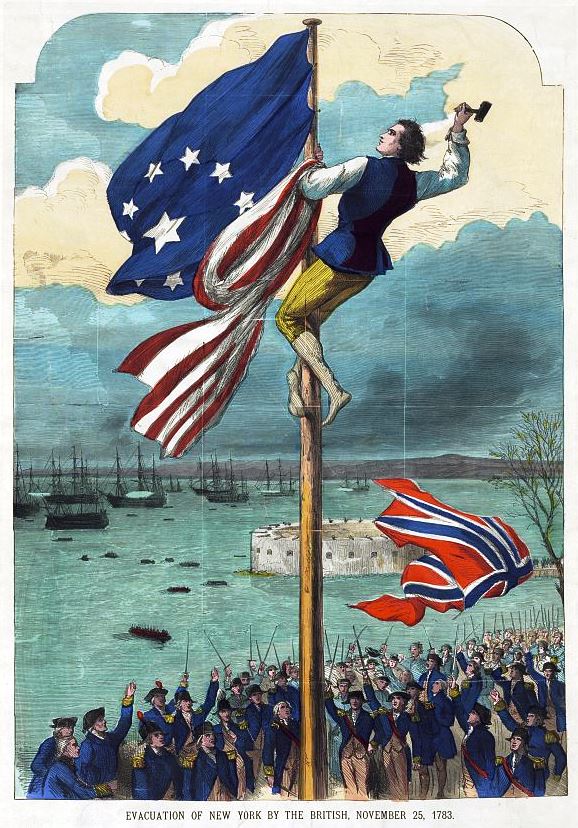
On this day in 1783, the British evacuated New York, their last military position in the United States, during the Revolutionary War.
On Wednesday, November 20, Washington rode down from West Point to Tarrytown where he, Gov. Clinton, and Lt. Gov. Van Cortlandt met and lodged at Edward Covenhaven’s tavern. Also that evening, former officers and soldiers were meeting at Cape’s Tavern in the city to plan for the procession of the governor, Washington, and the last 800 troops remaining in his service. They resolved to all wear a black-and-white Union Cockade as a Badge of Distinction representing Louis XVI, more for its ability to annoy the British soldiers than any abiding affection for their ally, the Catholic monarch of France. But come the twenty-second, Carleton had not yet completed his evacuation. Washington’s triumphant return to the city whose loss haunted him throughout the war would have to wait a few more days.

On November 20, 1783, Washington, Clinton, and the army’s remaining soldiers marched from Tarrytown to Day’s Tavern in Harlem, one of the scenes of Washington’s retreat following the Battle of Long Island Carleton’s months-long evacuation would finally be completed on November 25, 1783. Immediately, citizens began preparing an entire day of festivities. Throughout the early hours of the morning, people streamed into the city. The final British troops were supposed to leave the island at noon, at which point Washington, Clinton, and their contingent would march into the city. Much attention was paid to timing to make sure that American forces arrived immediately upon the last evacuation so as not to leave any intermittent period in which there was no authority.

Before noon, Major General Henry Knox led a column of soldiers–dragoons, artillery, and infantrymen–down from McGowan’s Pass in Harlem. As he reached the outer limits of the city, he paused to await final word from a British messenger. When word came, Knox and company marched into the city to Cape’s Tavern on Broadway. Once there, Knox led a group of mounted citizens–wearing their black-and-white Union cockades–back to Bull’s Head Tavern just outside the city on the Bowery to meet with Washington, Clinton, and the rest of the procession. Citizens had gathered there hoping to get a glimpse of men whose names and deeds they knew of largely from newspaper reports. The plan was that once the last British troops had left and the British flag had been brought down over Fort George, a blast of thirteen cannon shots would signal to Washington and Clinton that the procession into the city could begin, which would end with the raising of the American flag. There was, however, a hitch in the plan.

25 July 2020

Happy Birthday, Knox

Stuart, Henry Knox, 1806

On the very first impression of Faction and licentiousness the fine theoretic government of Massachusetts has given away and its laws arrested and trampled under foot. Men at a distance, who have admired our systems of government, unfounded in nature, are apt to accuse the rulers, and say that taxes have been assessed coo high and collected coo rigidly. This is a deception equal to any that has been hitherto entertained. It is indeed a face, that high taxes are the ostensible cause of the commotions, but that they are the real cause is as far remote from truth as light from darkness. The people who are the insurgents have never paid any, or but very little taxes—But they see the weakness of government; They feel at once their own poverty, compared with the opulent, and their own force, and they are determined to make use of the latter, in order to remedy the former. Their creed is "That the property of the United States has been protected from the confiscations of Britain by the joint exertions of all, and therefore ought to be the common property of all. And he that attempts opposition to this creed is an enemy to equity and justice, and ought to be swept off the face of the earth." In a word they are determined to annihilate all debts public and private and have agrarian Laws which are easily effected by the means of unfunded paper money which shall be a tender in all cases whatever. 
The numbers of these people may amount in [M]assachusetts to about one fifth part of several populous counties, and to them may be collected, people of similar sentiments, from the States of Rhode Island, Connecticut and New Hampshire so as to constitute a body of 12 or 15,000 desperate and unprincipled men—They are chiefly of the Young and active part of the community, more easily collected than perhaps Kept together afterwards—But they will probably commit overt acts of treason which will compel them to embody for their own safety—once embodied they will be constrained to submit to discipline for the same reason. Having proceeded to this length for which they are now ripe, we shall have a formidable rebellion against reason, the principles of all government, and against the very name of liberty. This dreadful situation has alarmed every man of principle and property in New England—They start as from a dream, and ask what has been the Cause of our delusion? What is to afford us security against the violence of lawless men? Our government must be braced, changed, or altered to secure our lives and property. We imagined that the mildness of our government and the virtue of the people were so correspondent, that we were not as other nations requiring brutal force to support the laws—But we find that we are men, actual men, possessing all the turbulent passions belonging to that animal and that we must have a government proper and adequate for him—The people of Massachusetts for instance, are far advanced in this doctrine, and the men of reflection, and principle, are determined to endeavor to establish a government which shall have the power to protect them in their lawful pursuits, and which will be efficient in all cases of internal commotions or foreign invasions—They mean that liberty shall form the basis, a liberty resulting from the equal and firm administration of the laws. They wish for a general government of unity as they see that the local legislatures, must naturally and necessarily tend to retard general government. 
We have arrived at that point of time in which we are forced to see our national humiliation, and that a progression in this line, cannot be productive of happiness either private or public—something is wanting and something must be done or we shall be involved in all the horror of faction and civil war without a prospect of its termination—Every tried friend to the liberties of his country is bound to reflect, and step forward to prevent the dreadful consequences which will result from a government of events—Unless this is done we shall be liable to be ruled by an Arbitrary and Capricious armed tyranny, whose word and will must be Law. 

 Henry Knox, born on this date in 1750, from his letter to George Washington, October 23, 1786

The "Knox Moving Co." scene from John Adams ...


An excellent book ...

11 July 2020

Moving.

Excellent.

An excellent book ...


C-SPAN features J.L. Bell's talk about his book, The Road to Concord: How Four Stolen Cannon Ignited the Revolutionary War, and events dating back to September 1774, including the Patriot plot to steal four British cannons and the British plan to get them back.
Bell's blog, Boston 1773, is HERE.