"I am not one who was born in the custody of wisdom. I am one who is fond of olden times and intense in quest of the sacred knowing of the ancients." Gustave Courbet
Showing posts with label McCullough. Show all posts

07 July 2026

Best.

Brian Lamb dicsusses the book 1776 with its author, David McCullough ...
[Henry Knox] is such an extraordinary story of an American who seemed to be miscast, seemed to be a fellow not prepared for the role that history had for him to play and who not only lived up to the role but went over the top, as it were.  An example of a man who came from very humble origins with very little advantage in the way of education or connections.  He rose to be one of the most important Americans of his day, the man that George Washington discovered and the man that George Washington counted on through nearly eight and a half years of the Revolutionary War and who then counted on him as his secretary of war during the time that Washington was president.

He started out as a Boston bookseller. Big, stout, gregarious, robust, friendly, popular fellow who had about the equivalent of a fifth grade education and who loved books and never stopped reading. And he became one of the best officers in the whole war. 

Washington singled out two young men almost within a week or two weeks after he took command at Cambridge, Massachusetts as people he could count on. One was Nathaniel Green, who was a 33-year-old Quaker who'd been made a major general at the age of 33, having had no military experience at all. And the second was Henry Knox, who was all of 25, and he had had no military experience at all.  But both of them had been reading books. What they knew about the military was entirely from books. That was an age, an era that believed that one of the best ways to learn things was to read books, the age of The Enlightenment. They are in their way, I think, wonderful examples, personifications of the Enlightenment faith that if you want to learn something, pick up a book and get reading.

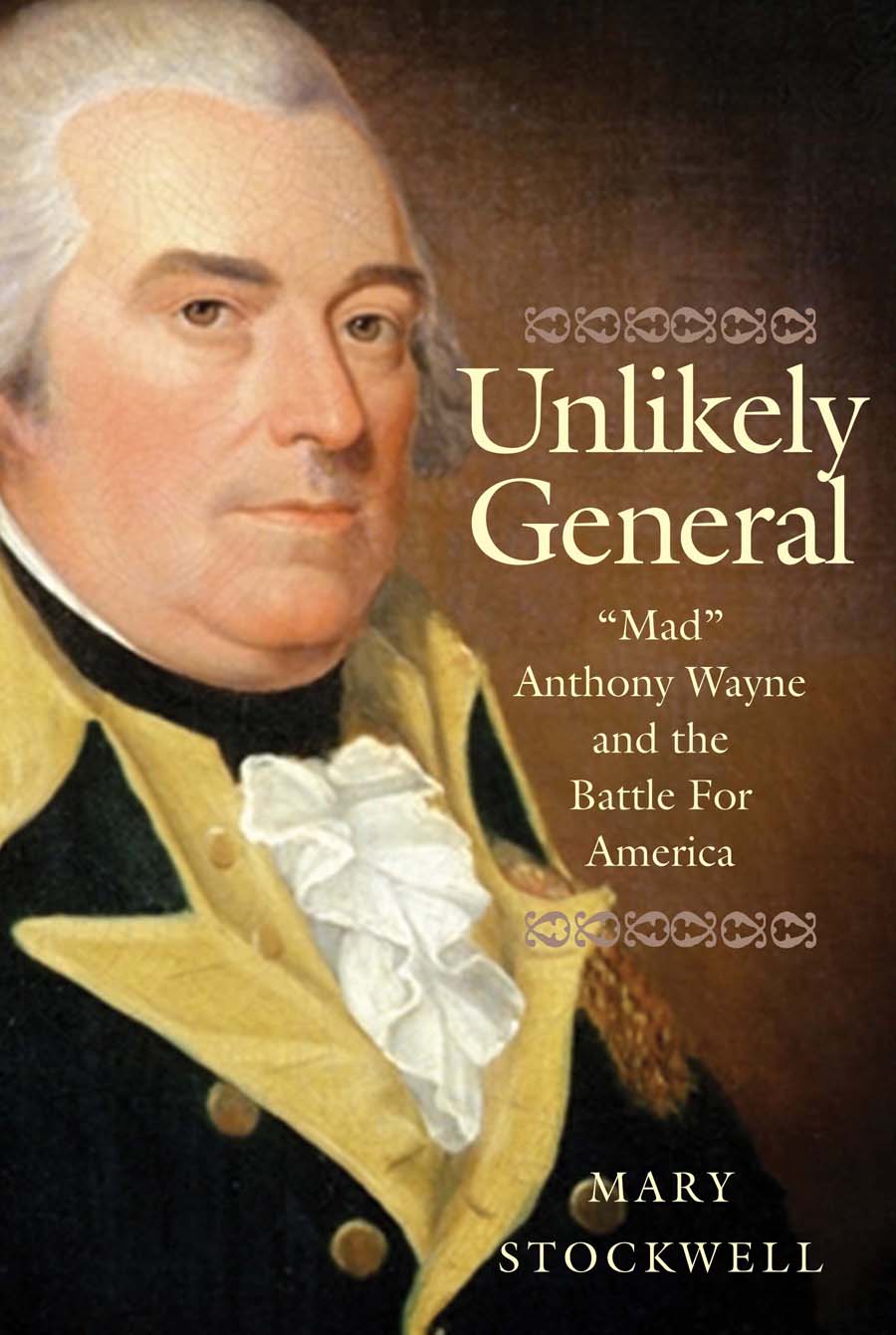
Henry Knox, a long-standing member of The Hammock Papers' Great Hall.

The "Knox Moving Co." scene from John Adams ...


An excellent book ...

04 July 2025

Spirit.

Firchau, Evan's Jefferson, 2025


From David McCullough's John Adams ... 
Alone in his upstairs parlor at Seventh and Market, Jefferson went to work, seated in an unusual revolving Windsor chair and holding on his lap a portable writing box, a small folding desk of his own design which, like the chair, he had especially made for him by a Philadelphia cabinetmaker. Traffic rattled by below the open windows. The June days and nights turned increasingly warm. He worked rapidly and, to judge by surviving drafts, with a sure command of his material. He had none of his books with him, nor needed any, he later claimed. It was not his objective to be original, he would explain, only “to place before mankind the common sense of the subject.” Unlike his friend and colleague, John Adams, Jefferson admitted that he was without the skill of oratory. His talents lie with the quill. What must have Jefferson experienced in that room? How imposing was the weight of the task, the responsibility? Or, was the struggle from within -- the writer’s worst enemy – himself. Adams wanted the 33 year old Virginian to write the document. What was his routine over those few weeks in Philadelphia? The foundation for not only the maturation of thirteen rag-tag colonies, but the inspiration for every independence movement since then, was laid in the courses of Jefferson's words and ideas. With his words Jefferson was committing treason, an act punishable by death. The stakes were higher than that and I believe that Jefferson understood that. Not just the 13 colonies ... but men ... all men. Jefferson stated, "Neither aiming at originality of principle or sentiment, nor yet copied from any particular and previous writing, it was intended to be an expression of the American mind, and to give to that expression the proper tone and spirit called for by the occasion." Unlike his friend and colleague, John Adams, Jefferson admitted that he was without the skill of oratory. His talents lie with the quill. His efforts produced a living document, capable of growth, flexibility, and ... change.
The Smithsonian shows us Mr. Jefferson's writing box ...
The desk wears its status lightly. Up close, you can’t help but notice a series of ink stains on the surface of the drawer. They are the careless, reassuring evidence of life. They mark the desk to this day with the daily humanity of the man who leaned on the writing box for half a century and supported on its sturdy wood the immense store of his mind.

30 October 2024

Best.


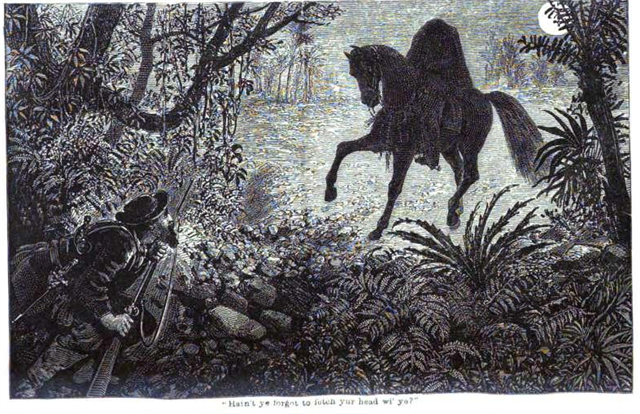
He rides his black steed through the countryside
And whenever he stops a mortal man dies.

He’s the Angel of Death and worthy of dread;
Dressed all in black and lacking a head.

In his left hand is a spine that he’ll use as a whip;
In his right hand a scythe that will cut to the quick.

He rides his black steed through the countryside
If you chance to observe him you may be struck blind
And still think yourself lucky that he left you behind.

If he pulls on the reins and he finds you outdoors
Your heart will stop dead and will beat nevermore.

There are buckets of blood where the Dullahan rides.
On all Hallows Eve you had best be inside.

John F. McCullagh

20 November 2021

Howl.

Billy Yank, Sherman's Necktie, 1864


This month in 1864, General William Tecumseh Sherman "made Georgia howl", beginning his famous "March to the Sea".  In just over a month he moved his army from Atlanta to Savannah, Georgia, destroying property and routing small militia along the way. 

From This Day in Military History ...
He divided his force into two columns and widened the swath of destruction. The Yankees cut away from their supply lines at Atlanta and generally lived off the land. What they did not consume, they destroyed. More than 13,000 cattle fell into Union hands, as well as 90,000 bales of cotton and numerous sawmills, foundries, cotton gins, and warehouses. Sherman’s superiors, President Lincoln and General in Chief Ulysses S. Grant, endorsed his controversial tactic. Sherman argued that, although it would be brutal, destroying the resources of the South could bring the war to a speedy end.  The Union troops moved nearly unopposed across the region until they reached Savannah on December 21. The March to the Sea devastated Southern morale and earned Sherman the lasting hatred of many Southerners.
David McCullogh explains in Ken Burns' Civil War.

23 August 2020

World-class.

If history were taught in the form of stories, it would never be forgotten.

Rudyard Kipling

C-SPAN's masterful In-Depth series has yielded unforgettable stories from these world-class historians ...


04 July 2020

Choosing.

From Ronald Reagan's "A Time for Choosing" speech, given October 27, 1964 ...

Alexander Hamilton said, "A nation which can prefer disgrace to danger is prepared for a master, and deserves one." Now let's set the record straight. There's no argument over the choice between peace and war, but there's only one guaranteed way you can have peace -- and you can have it in the next second -- surrender.

Admittedly, there's a risk in any course we follow other than this, but every lesson of history tells us that the greater risk lies in appeasement, and this is the specter our well-meaning liberal friends refuse to face -- that their policy of accommodation is appeasement, and it gives no choice between peace and war, only between fight or surrender. If we continue to accommodate, continue to back and retreat, eventually we have to face the final demand -- the ultimatum.


The time for choosing, indeed.  But what choice?  The political landscape has been devoid of true leadership for nearly a generation, leaving the dilemma of choosing the leaper with the most fingers.
Leadership is a potent combination of strategy and character. But if you must be without one, be without the strategy. 
Norman Schwarzkopf
David McCullough reminds us of our responsibility to the plan for "The Glorious Cause of America" ...


... and our stomach-turning, symbolism-over-substance "softness" in meeting the challenge ...


Solution?  Learn, teach, act, and never settle.

Thank you, Kurt.

09 March 2018

Know.

David McCullough sits down with Face the Nation to discuss the evolution of political leadership and the importance of an awareness and respect for those that came before ...

... [W]e've had times that have been more unsettling, more worrisome, more painful, more costly than what we're going through now.  We think this is so bleak and unpromising because we really don't know what we've been through before and how we came through it.

When asked to define the American character ...

At best ... honesty, courage, strength of character, and faith in our way of life.  Belief that what those predecessors of ours, those pilgrims, those pioneers, worked so hard to attain, is something that we are obligated to know about and also, not just to sustain, but to improve. 

Make yourself useful.  Don't boast about yourself.  Don't get too full of yourself.  Be kind.  Be modest.


Thanks, Mom.