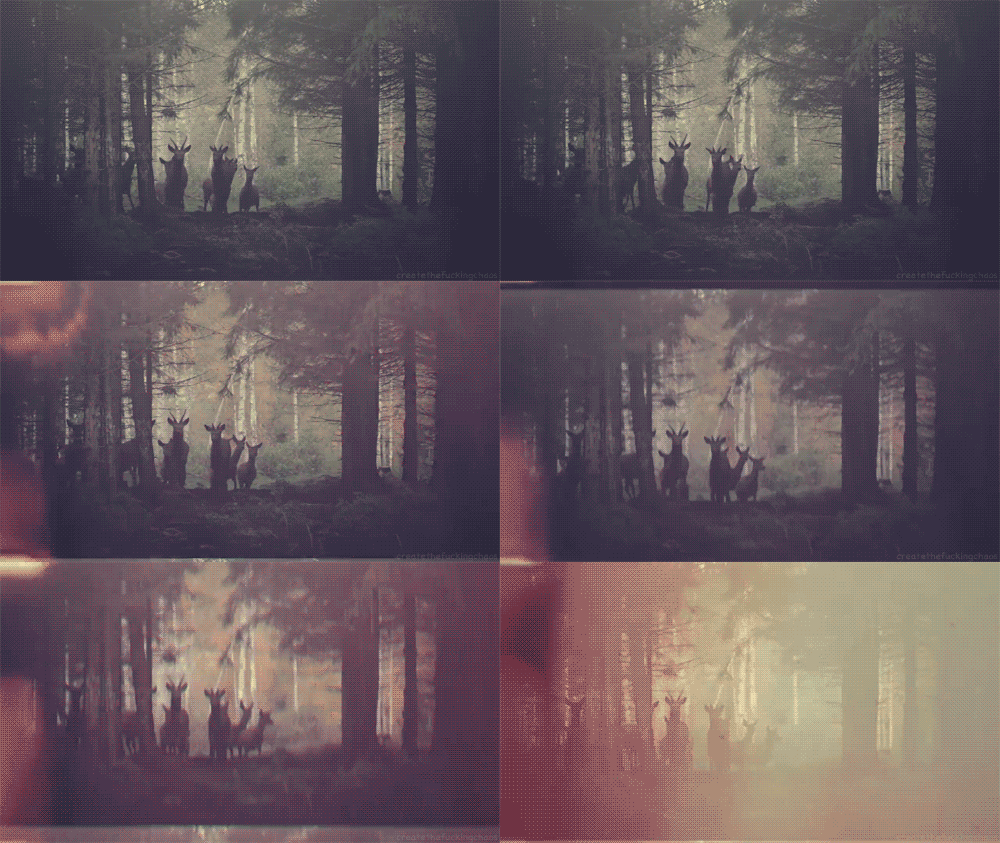
25 March 2020


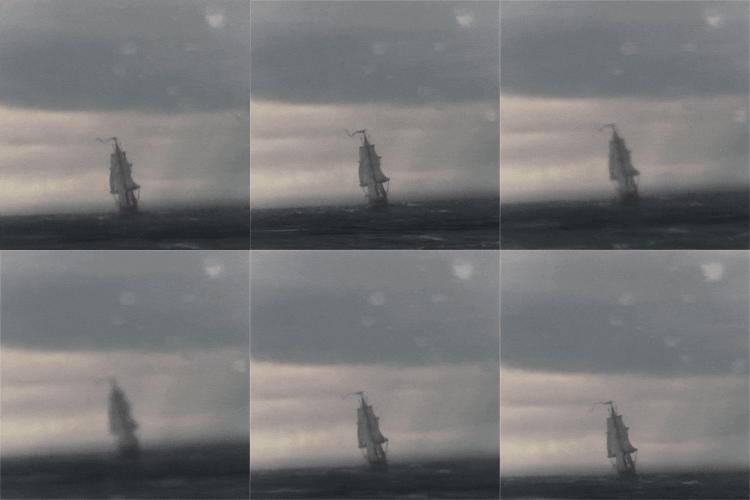
Beethoven, Symphony No 6 in F, Op. 68, "Pastoral"
Leonard Bernstein conducts the Boston Symphony ...

Faith.
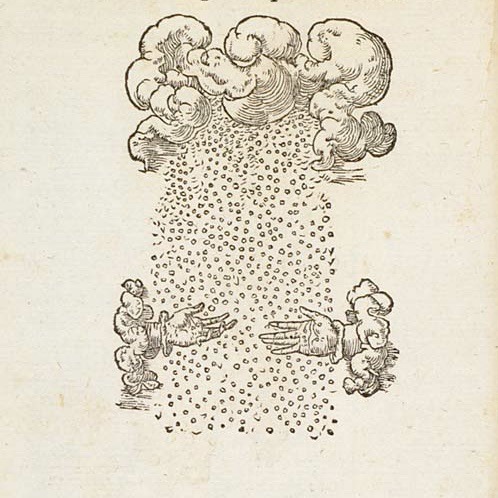
Gross, Spores. n/d

It makes no difference whether the appeal is to numbers or to one. The faith that stands on authority is not faith.
Ralph Waldo Emerson


Noise.
Hill, Water of Leith, Spring, 1930

EARLY SPRING
The Spring is come, and Spring flowers coming too,
The crocus, patty kay, the rich hearts' ease;
The polyanthus peeps with blebs of dew,
And daisy flowers; the buds swell on the trees;
While o'er the odd flowers swim grandfather bees
In the old homestead rests the cottage cow;
The dogs sit on their haunches near the pail,
The least one to the stranger growls "bow wow,"
Then hurries to the door and cocks his tail,
To gnaw the unfinished bone; the placid cow
Looks o'er the gate; the thresher's lumping flail
Is all the noise the spring encounters now.
John Clare

Happy Birthday, John.

"Mona Lisas and Mad Hatters" ...
Thank you, Sally.
Rogues.

On hearing ill rumour that Londoners may soon be urged into their lodgings, I looked upon the street to see a gaggle of striplings making fair merry, and spreading the plague well about. Not a care had these rogues for the health of their elders!
Samuel Pepys
Thanks to The Man in the Green Shirt.
24 March 2020
Bob Weir, "Blue Mountain"
I drank at the Blue Goose Saloon
And I dance all night with the Mormon girls
Ride home, my way lit by the moon
And oh, here's a snake in the rainbow
And here is the balsam in boughs
And here are the ladders of light up to heaven
A blue mountain is all I need now
And I dance all night with the Mormon girls
Ride home, my way lit by the moon
And oh, here's a snake in the rainbow
And here is the balsam in boughs
And here are the ladders of light up to heaven
A blue mountain is all I need now

Lyle Lovett, "Farther Down the Line"
And it's the classic contradiction
The unavoidable affliction
Well it don't take much to predict son
The way it always goes
The unavoidable affliction
Well it don't take much to predict son
The way it always goes
Watercolor.
Conservator Kristi Dahm gives an inside view of the techniques employed by masters of watercolor painting, as well as the chemistry of pigments and the cutting edge contemporary methods used to analyze and preserve them. Dahm is an Assistant Conservator of Prints and Drawings at the Art Institute of Chicago. She has researched myriad topics related to the preservation and technical study of art on paper, from the analysis of Italian Renaissance metalpoint drawings to longevity issues for contemporary prints. She co-authored Watercolors by Winslow Homer: The Color of Light, a study of the materials and techniques in Homer's watercolor paintings.
Amuse.
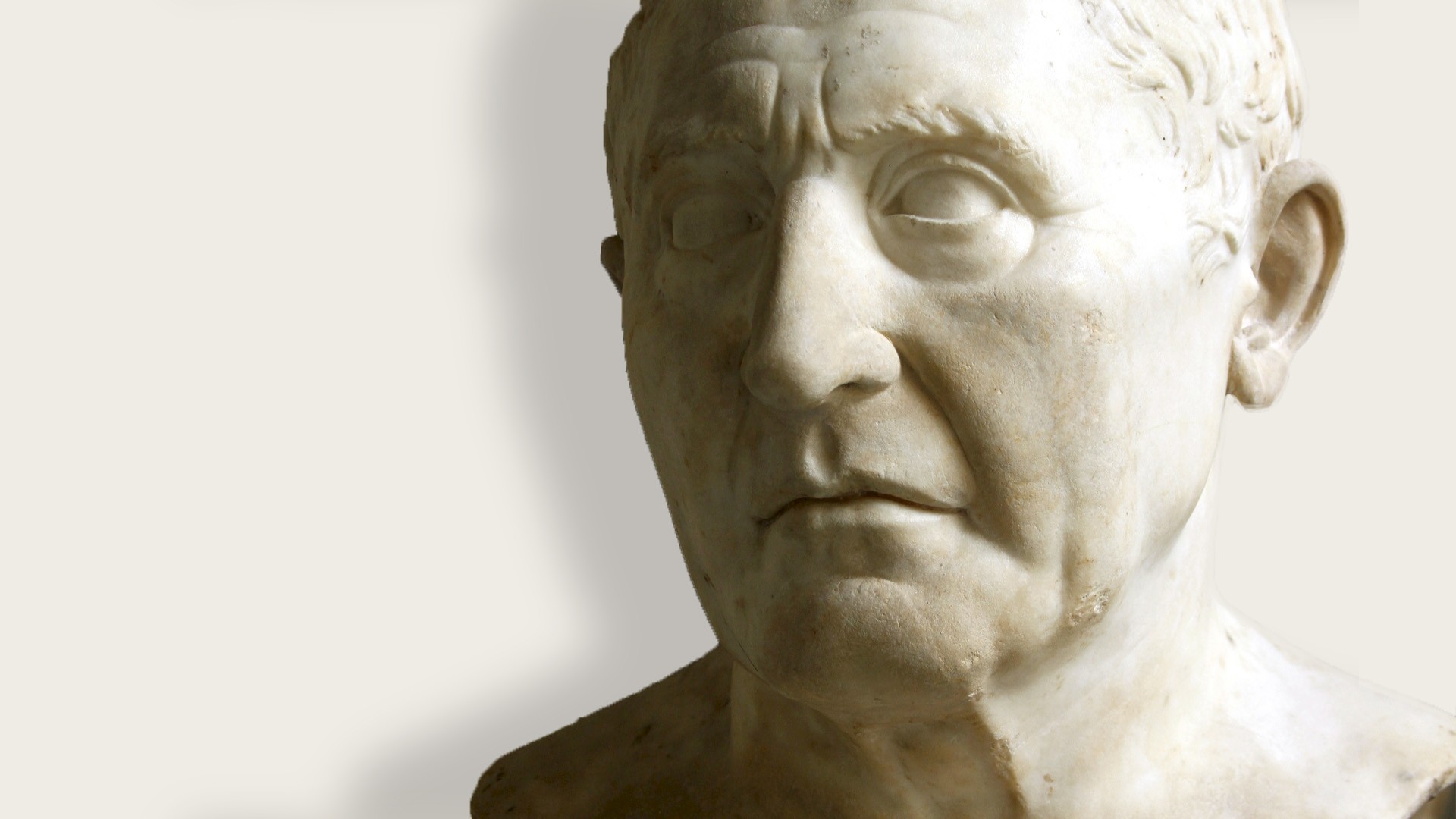
Cicero
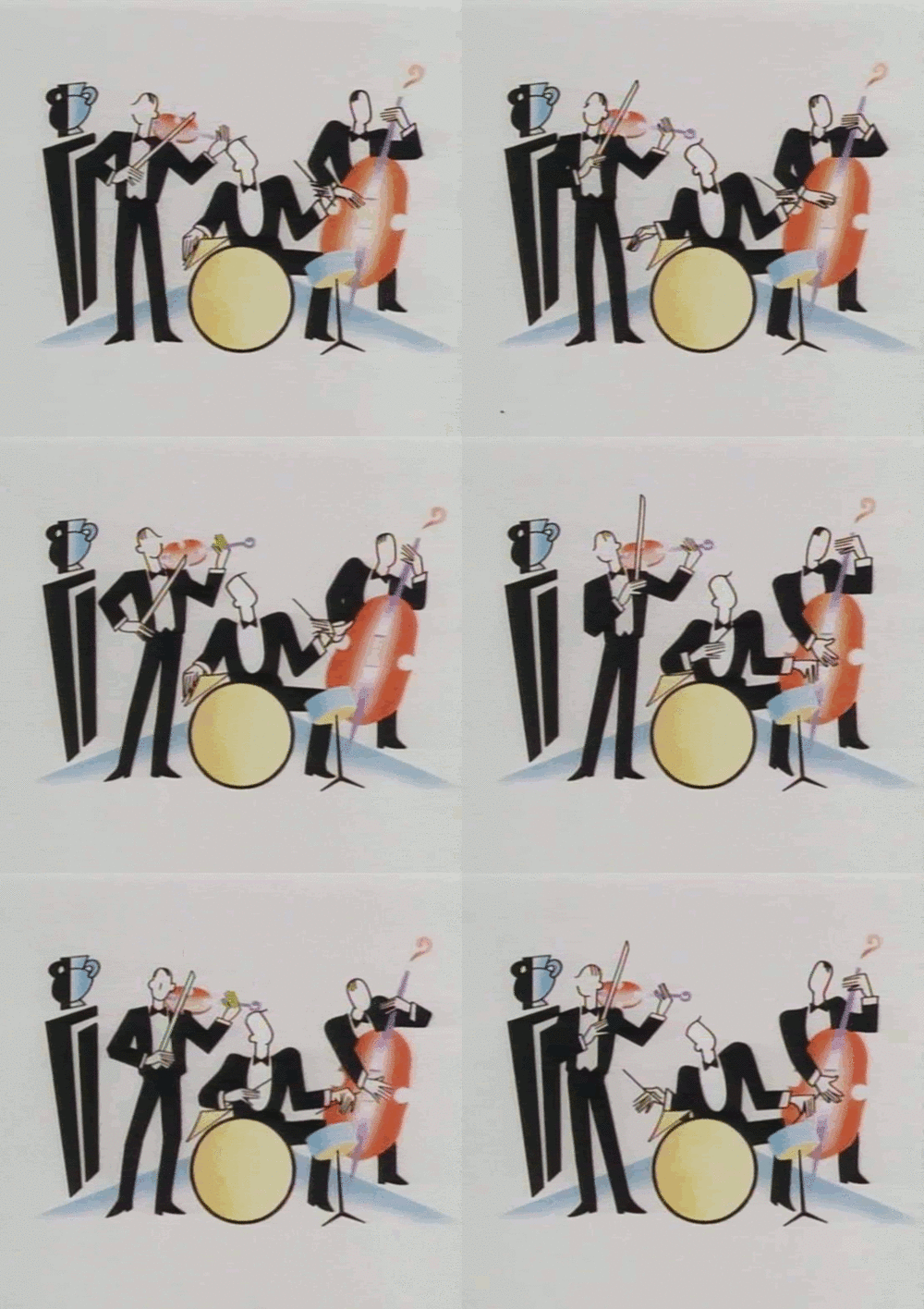
It's sandwich time.
Ray Wylie Hubbard, "The Messenger"
Now I have a mission and a small code of honor
To stand and deliver by whatever measures
And the message I give is from this old poet Rilke
He said, "Our fears are like dragons guarding our most precious treasures” ...
With Pam Tillis ...
To stand and deliver by whatever measures
And the message I give is from this old poet Rilke
He said, "Our fears are like dragons guarding our most precious treasures” ...

Townes Van Zandt, "Kathleen"
It's plain to see, the sun won't shine today
But I ain't in the mood for sunshine anyway
Maybe I'll go insane, I got to stop the pain
Or maybe I'll go down to see Kathleen
A swallow comes and tells me of her dreams
She says she'd like to know just what they mean
And I feel like I could die
As I watch her flying by
Ride the north wind down to see Kathleen
The stars hang high above, the oceans roar
The moon is come to lead me to her door
There's crystal across the sand
And the waves, they take my hand
And soon I'm gonna see my sweet Kathleen
Dance.

ON LOVE
What is Love? Ask him who lives what is life; ask him who adores what is God.
I know not the internal constitution of other men, nor even of thine whom I now address. I see that in some external attributes they resemble me, but when, misled by that appearance, I have thought to appeal to something in common and unburden my inmost soul to them, I have found my language misunderstood, like one in a distant and savage land. The more opportunities they have afforded me for experience, the wider has appeared the interval between us, and to a greater distance have the points of sympathy been withdrawn. With a spirit ill-fitted to sustain such proof, trembling and feeble through its tenderness, I have every where sought, and have found only repulse and disappointment.
Thou demandest what is Love. It is that powerful attraction towards all we conceive, or fear, or hope beyond ourselves, when we find within our own thoughts the chasm of an insufficient void, and seek to awaken in all things that are, a community with what we experience within ourselves. If we reason we would be understood; if we imagine we would that the airy children of our brain were born anew within another's; if we feel we would that another's nerves should vibrate to our own, that the beams of their eyes should kindle at once and mix and melt into our own; that lips of motionless ice should not reply to lips quivering and burning with the heart's best blood:--this is Love. This is the bond and the sanction which connects not only man with man, but with every thing which exists. We are born into the world, and there is something within us, which from the instant that we live, more and more thirsts after its likeness. It is probably in correspondence with this law that the infant drains milk from the bosom of its mother; this propensity develops itself with the development of our nature. We dimly see within our intellectual nature, a miniature as it were of our entire self, yet deprived of all that we condemn or despise, the ideal prototype of every thing excellent and lovely that we are capable of conceiving as belonging to the nature of man. Not only the portrait of our external being, but an assemblage of the minutest particles of which our nature is composed*: a mirror whose surface reflects only the forms of purity and brightness: a soul within our own soul that describes a circle around its proper Paradise, which pain and sorrow and evil dare not overleap. To this we eagerly refer all sensations, thirsting that they should resemble and correspond with it. The discovery of its anti-type; the meeting with an understanding capable of clearly estimating our own; an imagination which should enter into and seize upon the subtle and delicate peculiarities which we have delighted to cherish and unfold in secret, with a frame, whose nerves, like the chords of two exquisite lyres, strung to the accompaniment of one delightful voice, vibrate with the vibrations of our own; and a combination of all these in such proportion as the type within demands: this is the invisible and unattainable point to which Love tends; and to attain which, it urges forth the powers of man to arrest the faintest shadow of that, without the possession of which, there is no rest nor respite to the heart over which it rules. Hence in solitude, or that deserted state when we are surrounded by human beings and yet they sympathize not with us, we love the flowers, the grass, the waters, and the sky. In the motion of the very leaves of spring, in the blue air, there is then found a secret correspondence with our heart. There is eloquence in the tongueless wind, and a melody in the flowing brooks and the rustling of the reeds beside them, which by their inconceivable relation to something within the soul awaken the spirits to dance of breathless rapture, and bring tears of mysterious tenderness to the eyes, like the enthusiasm of patriotic success, or the voice of one beloved singing to you alone. Sterne says that if he were in a desert he would love some cypress. So soon as this want or power is dead, man becomes a living sepulchre of himself, and what yet survives is the mere husk of what once he was.
These words are ineffectual and metaphorical. Most words are so,--no help!
Percy Bysshe Shelley
Imagination.

When you think about how much time most of us spend worrying about what might happen, you know, when we worry and “awfulize” and “catastrophize” the future. All that time we could have been creating something new, building something better, and loving others more. Don’t let your mind misuse your imagination.
Mariano Peccinetti

Passion.

Apart from the desire to produce beautiful things, the leading passion of my life has been and is hatred of modern civilization.
William Morris

Contemplative.

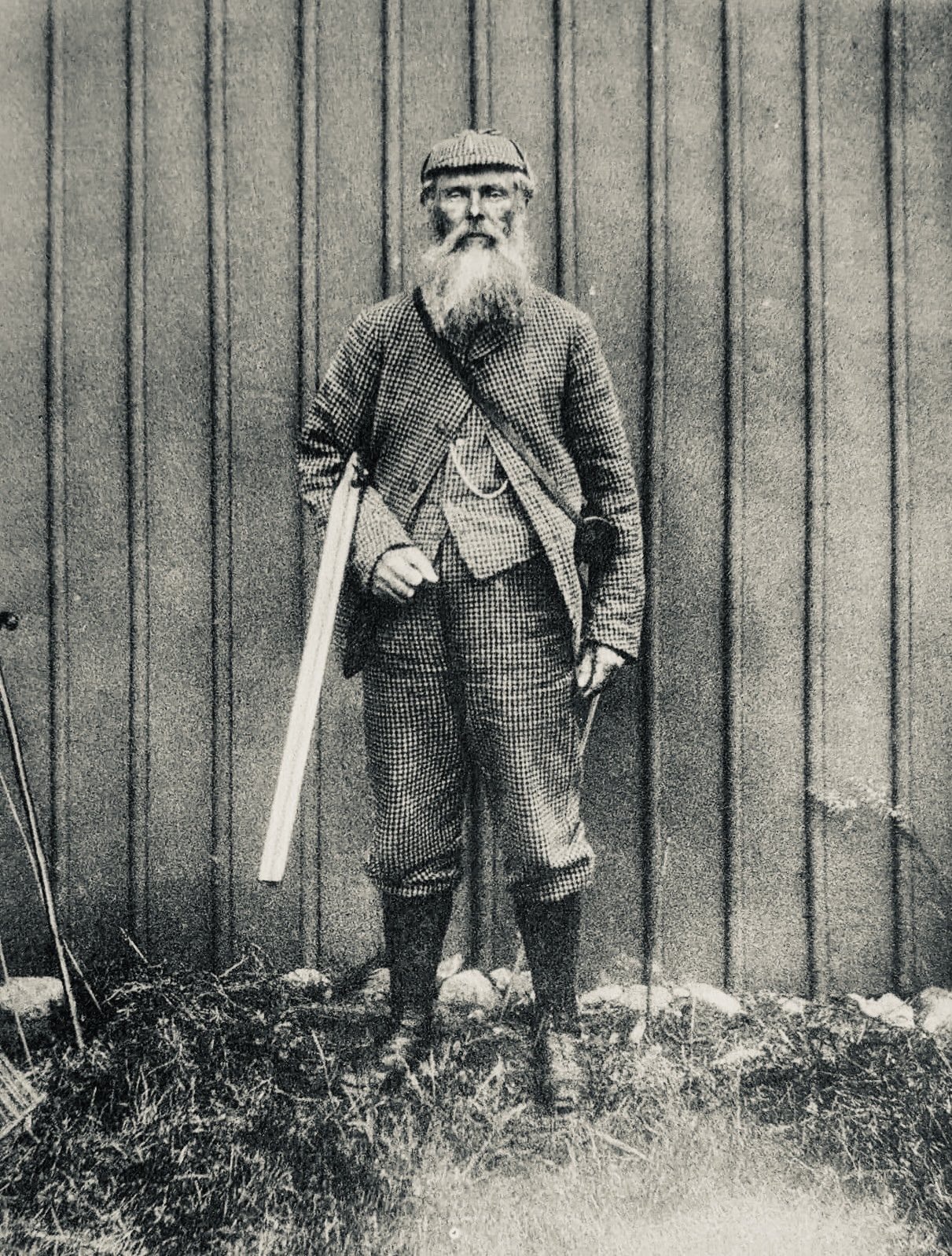
Orson Schofield “Old Mountain” Phelps (1816-1905) was the archetypical Adirondack guide.
Guide historian Chuck Brumley attributed this to the wide literary attention Phelps received from early city visitors to the High Peaks, including Verplanck Colvin and Charles Dudley Warner. Phelps was painted by Winslow Homer. He became a stock character in the guidebooks of E.R. Wallace and S.R. Stoddard.
Phelps certainly had the requisite outdoor skills to be a well-known Adirondack guide, and he cut many High Peaks trails still in use, as well as naming a number of high peaks. But it was his personality and aphorisms that caught the imagination of many of the “city men” he guided. He amused and impressed his clients with rustic humor and philosophy.
CONNECT

You might be misled by the shaggy suggestion of Old Phelps's given name—Orson—into the notion that he was a mighty hunter, with the fierce spirit of the Berserkers in his veins. Nothing could be farther from the truth. The hirsute and grisly sound of Orson expresses only his entire affinity with the untamed and the natural, an uncouth but gentle passion for the freedom and wildness of the forest. Orson Phelps has only those unconventional and humorous qualities of the bear which make the animal so beloved in literature; and one does not think of Old Phelps so much as a lover of nature,—to use the sentimental slang of the period,—as a part of nature itself.
His appearance at the time when as a "guide" he began to come into public notice fostered this impression,—a sturdy figure, with long body and short legs, clad in a woolen shirt and butternut-colored trousers repaired to the point of picturesqueness, his head surmounted by a limp, light-brown felt hat, frayed away at the top, so that his yellowish hair grew out of it like some nameless fern out of a pot. His tawny hair was long and tangled, matted now many years past the possibility of being entered by a comb. His features were small and delicate, and set in the frame of a reddish beard, the razor having mowed away a clearing about the sensitive mouth, which was not seldom wreathed with a childlike and charming smile. Out of this hirsute environment looked the small gray eyes, set near together; eyes keen to observe, and quick to express change of thought; eyes that made you believe instinct can grow into philosophic judgment. His feet and hands were of aristocratic smallness, although the latter were not worn away by ablutions; in fact, they assisted his toilet to give you the impression that here was a man who had just come out of the ground,—a real son of the soil, whose appearance was partially explained by his humorous relation to soap. "Soap is a thing," he said, "that I hain't no kinder use for." His clothes seemed to have been put on him once for all, like the bark of a tree, a long time ago. The observant stranger was sure to be puzzled by the contrast of this realistic and uncouth exterior with the internal fineness, amounting to refinement and culture, that shone through it all. What communion had supplied the place of our artificial breeding to this man.
Perhaps his most characteristic attitude was sitting on a log, with a short pipe in his mouth. If ever man was formed to sit on a log, it was Old Phelps. He was essentially a contemplative person. Walking on a country road, or anywhere in the "open," was irksome to him. He had a shambling, loose-jointed gait, not unlike that of the bear: his short legs bowed out, as if they had been more in the habit of climbing trees than of walking. On land, if we may use that expression, he was something like a sailor; but, once in the rugged trail or the unmarked route of his native forest, he was a different person, and few pedestrians could compete with him. The vulgar estimate of his contemporaries, that reckoned Old Phelps "lazy," was simply a failure to comprehend the condition of his being. It is the unjustness of civilization that it sets up uniform and artificial standards for all persons. The primitive man suffers by them much as the contemplative philosopher does, when one happens to arrive in this busy, fussy world.
CONNECT
Homer, Two Guides, 1877

JSTOR has David Tatham's essay, The Two Guides: Winslow Homer at Keene Valley, Adirondacks ... HERE.
Premiered.

Mozart's Piano Concerto No. 24 in C minor, K. 491, premiered on this date in 1786.
Murray Perahia performs with the Finnish Radio Symphony Orchestra, conducted by Hannu Lintu ...
CONNECT

Eddie Vedder, "Guaranteed"
On bended knee is no way to be free
Lifting up an empty cup I ask silently
That all my destinations will accept the one that's me
So I can breath
Circles they grow and they swallow people whole
Half their lives they say goodnight to wive's they'll never know
Got a mind full of questions and a teacher in my soul
So it goes
Don't come closer or I'll have to go
Holding me like gravity are places that pull
If ever there was someone to keep me at home
It would be you
Everyone I come across in cages they bought
They think of me and my wandering
But I'm never what they thought
Got my indignation but I'm pure in all my thoughts
I'm alive
Wind in my hair, I feel part of everywhere
Underneath my being is a road that disappeared
Late at night I hear the trees
They're singing with the dead
Overhead
Leave it to me as I find a way to be
Consider me a satellite forever orbiting
I knew all the rules but the rules did not know me
Guaranteed
Ensure.

Those who seek absolute power, even though they seek it to do what they regard as good, are simply demanding the right to enforce their own version of heaven on earth. And let me remind you, they are the very ones who always create the most hellish tyrannies. Absolute power does corrupt, and those who seek it must be suspect and must be opposed. Their mistaken course stems from false notions of equality, ladies and gentlemen. Equality, rightly understood, as our founding fathers understood it, leads to liberty and to the emancipation of creative differences. Wrongly understood, as it has been so tragically in our time, it leads first to conformity and then to despotism. Fellow Republicans, it is the cause of Republicanism to resist concentrations of power, private or public, which enforce such conformity and inflict such despotism. It is the cause of Republicanism to ensure that power remains in the hands of the people.
Barry Goldwater
Happy Birthday, Morris
Hollyer, William Morris, 1888

A good way to rid one's self of a sense of discomfort is to do something. That uneasy, dissatisfied feeling is actual force vibrating out of order; it may be turned to practical account by giving proper expression to its creative character.
William Morris
Memories of the Future, a documentary on the aesthetics of William Morris and John Ruskin ...

23 March 2020

Coldtonguecoldhamcoldbeefpickledgherkinssaladfrenchrollscresssandwichespottedmeatgingerbeerlemonadesodawater.
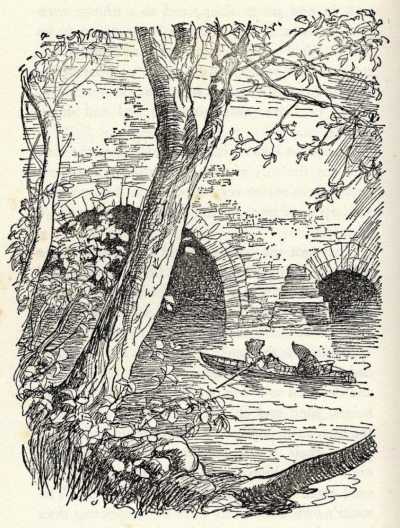
Rackham, Ratty and Mole on the Riverbank, 1908

As he sat on the grass and looked across the river, a dark hole in the bank opposite, just above the water’s edge, caught his eye, and dreamily he fell to considering what a nice snug dwelling-place it would make for an animal with few wants and fond of a bijou riverside residence, above flood level and remote from noise and dust. As he gazed, something bright and small seemed to twinkle down in the heart of it, vanished, then twinkled once more like a tiny star. But it could hardly be a star in such an unlikely situation; and it was too glittering and small for a glow-worm. Then, as he looked, it winked at him, and so declared itself to be an eye; and a small face began gradually to grow up round it, like a frame round a picture.
A brown little face, with whiskers.
A grave round face, with the same twinkle in its eye that had first attracted his notice.
Small neat ears and thick silky hair.
It was the Water Rat!
Then the two animals stood and regarded each other cautiously.
‘Hullo, Mole!’ said the Water Rat.
‘Hullo, Rat!’ said the Mole.
‘Would you like to come over?’ enquired the Rat presently.
‘Oh, its all very well to TALK,’ said the Mole, rather pettishly, he being new to a river and riverside life and its ways.
The Rat said nothing, but stooped and unfastened a rope and hauled on it; then lightly stepped into a little boat which the Mole had not observed. It was painted blue outside and white within, and was just the size for two animals; and the Mole’s whole heart went out to it at once, even though he did not yet fully understand its uses.
The Rat sculled smartly across and made fast. Then he held up his forepaw as the Mole stepped gingerly down. ‘Lean on that!’ he said. ‘Now then, step lively!’ and the Mole to his surprise and rapture found himself actually seated in the stern of a real boat.
‘This has been a wonderful day!’ said he, as the Rat shoved off and took to the sculls again. ‘Do you know, I’ve never been in a boat before in all my life.’
‘What?’ cried the Rat, open-mouthed: ‘Never been in a—you never—well I—what have you been doing, then?’
‘Is it so nice as all that?’ asked the Mole shyly, though he was quite prepared to believe it as he leant back in his seat and surveyed the cushions, the oars, the rowlocks, and all the fascinating fittings, and felt the boat sway lightly under him.
‘Nice? It’s the ONLY thing,’ said the Water Rat solemnly, as he leant forward for his stroke. ‘Believe me, my young friend, there is NOTHING—absolute nothing—half so much worth doing as simply messing about in boats. Simply messing,’ he went on dreamily: ‘messing—about—in—boats; messing——’
‘Look ahead, Rat!’ cried the Mole suddenly.
It was too late. The boat struck the bank full tilt. The dreamer, the joyous oarsman, lay on his back at the bottom of the boat, his heels in the air.
‘—about in boats—or WITH boats,’ the Rat went on composedly, picking himself up with a pleasant laugh. ‘In or out of ‘em, it doesn’t matter. Nothing seems really to matter, that’s the charm of it. Whether you get away, or whether you don’t; whether you arrive at your destination or whether you reach somewhere else, or whether you never get anywhere at all, you’re always busy, and you never do anything in particular; and when you’ve done it there’s always something else to do, and you can do it if you like, but you’d much better not. Look here! If you’ve really nothing else on hand this morning, supposing we drop down the river together, and have a long day of it?’
The Mole waggled his toes from sheer happiness, spread his chest with a sigh of full contentment, and leaned back blissfully into the soft cushions. ‘WHAT a day I’m having!’ he said. ‘Let us start at once!’
‘Hold hard a minute, then!’ said the Rat. He looped the painter through a ring in his landing-stage, climbed up into his hole above, and after a short interval reappeared staggering under a fat, wicker luncheon-basket.
‘Shove that under your feet,’ he observed to the Mole, as he passed it down into the boat. Then he untied the painter and took the sculls again.
‘What’s inside it?’ asked the Mole, wriggling with curiosity.
‘There’s cold chicken inside it,’ replied the Rat briefly; ‘coldtonguecoldhamcoldbeefpickledgherkinssaladfrenchrollscresssandwichespottedmeatgingerbeerlemonadesodawater——’
‘O stop, stop,’ cried the Mole in ecstacies: ‘This is too much!’
‘Do you really think so?’ enquired the Rat seriously. ‘It’s only what I always take on these little excursions; and the other animals are always telling me that I’m a mean beast and cut it VERY fine!’
The Mole never heard a word he was saying. Absorbed in the new life he was entering upon, intoxicated with the sparkle, the ripple, the scents and the sounds and the sunlight, he trailed a paw in the water and dreamed long waking dreams. The Water Rat, like the good little fellow he was, sculled steadily on and forebore to disturb him.
‘I like your clothes awfully, old chap,’ he remarked after some half an hour or so had passed. ‘I’m going to get a black velvet smoking-suit myself some day, as soon as I can afford it.’
‘I beg your pardon,’ said the Mole, pulling himself together with an effort. ‘You must think me very rude; but all this is so new to me. So—this—is—a—River!’
‘THE River,’ corrected the Rat.
‘And you really live by the river? What a jolly life!’
‘By it and with it and on it and in it,’ said the Rat. ‘It’s brother and sister to me, and aunts, and company, and food and drink, and (naturally) washing. It’s my world, and I don’t want any other. What it hasn’t got is not worth having, and what it doesn’t know is not worth knowing. Lord! the times we’ve had together! Whether in winter or summer, spring or autumn, it’s always got its fun and its excitements. When the floods are on in February, and my cellars and basement are brimming with drink that’s no good to me, and the brown water runs by my best bedroom window; or again when it all drops away and, shows patches of mud that smells like plum-cake, and the rushes and weed clog the channels, and I can potter about dry shod over most of the bed of it and find fresh food to eat, and things careless people have dropped out of boats!’
‘But isn’t it a bit dull at times?’ the Mole ventured to ask. ‘Just you and the river, and no one else to pass a word with?’
‘No one else to—well, I mustn’t be hard on you,’ said the Rat with forbearance. ‘You’re new to it, and of course you don’t know. The bank is so crowded nowadays that many people are moving away altogether: O no, it isn’t what it used to be, at all. Otters, kingfishers, dabchicks, moorhens, all of them about all day long and always wanting you to DO something—as if a fellow had no business of his own to attend to!’
Kenneth Grahame, from The Wind in the Willows
It's sandwich time.
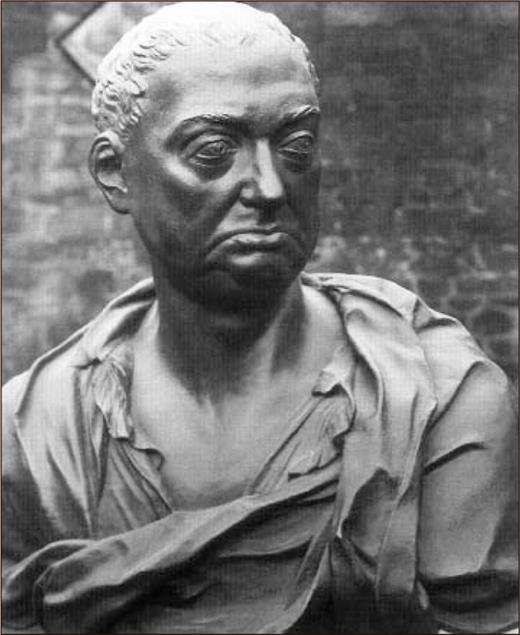
Eternity.

Books do not perish like humankind. Of course we commonly see them broken in the haberdasher's shop when only a few months before they lay bound on the stationer's stall; these are not true works, but mere trash and newfangleness for the vulgar. There are thousands of such gewgaws and toys which people have in their chambers, or which they keep upon their shelves, believing that they are precious things, when they are the mere passing follies of the passing time and of no more value than papers gathered up from some dunghill or raked by chance out of the kennel. True books are filled with the power of the understanding which is the inheritance of the ages: you may take up a book in time, but you read it in eternity.
Peter Ackroyd, The House of Doctor Dee
Lookout.
Flint, The Lookout, n/d

Eternal vigilance is the price of liberty, and it does seem to me that notwithstanding all these social agencies and activities there is not that vigilance which should be exercised in the preservation of our rights.
Ida B. Wells


Walk.
Goldsworthy, Passage, 2015

WALL
A wall walks slowly,
At each give of the ground,
Each creak of the rock’s ribs,
It puts its foot gingerly,
Arches its hog-holes,
Lets cobble and knee-joint
Settle and grip.
As the slipping fellside
Erodes and drifts,
The wall shifts with it,
Is always on the move.
They built a wall slowly,
A day a week;
Built it to stand.
But not stand still.
They built a wall to walk.
Norman Nicholson
Learn.

Thomas Davidson
Subscribe to:
Posts (Atom)