"I am not one who was born in the custody of wisdom. I am one who is fond of olden times and intense in quest of the sacred knowing of the ancients." Gustave Courbet
Showing posts with label watercolor. Show all posts

08 February 2025

Happy Birthday, Ruskin

Ruskin, Saint Mark's Basilica, Venice: Sketch after Rain, 27 May 1846, 1846

People are eternally divided into two classes: the believer, builder, and praiser, and the unbeliever, destroyer, and critic.

John Ruskin, born on this day in 1819

03 February 2024

Breaths.

Hilder, A February Day, n/d


THE SHEPHERD'S CALENDAR: FEBRUARY

The snow is gone from cottage tops
The thatch moss glows in brighter green
And eves in quick succession drops
Where grinning ides once hath been
Pit patting Wi a pleasant noise
In tubs set by the cottage door
And ducks and geese wi happy joys
Douse in the yard pond brimming oer

The sun peeps thro the window pane
Which childern mark wi laughing eye
And in the wet street steal again
To tell each other spring is nigh
And as young hope the past recalls
In playing groups will often draw
Building beside the sunny walls
Their spring-play-huts of sticks or straw

And oft in pleasures dreams they hie
Round homsteads by the village side
Scratting the hedgrow mosses bye
Where painted pooty shells abide
Mistaking oft the ivy spray
For leaves that come wi budding spring
And wondering in their search for play
Why birds delay to build and sing

The milkmaid singing leaves her bed
As glad as happy thoughts can be
While magpies chatter oer her head
As jocund in the change as she
Her cows around the closes stray
Nor lingering wait the foddering boy
Tossing the molehills in their play
And staring round in frolic joy

Ploughmen go whistling to their toils
And yoke again the rested plough
And mingling oer the mellow soils
Boys' shouts and whips are noising now

The shepherd now is often seen
By warm banks oer his work to bend
Or oer a gate or stile to lean
Chattering to a passing friend

Odd hive bees fancying winter oer
And dreaming in their combs of spring
Creeps on the slab beside their door
And strokes its legs upon its wing
While wild ones half asleep are humming
Round snowdrop bells a feeble note
And pigions coo of summer coming
Picking their feathers on the cote

The barking dogs by lane and wood
Drive sheep afield from foddering ground
And eccho in her summer mood
Briskly mocks the cheery sound
The flocks as from a prison broke
Shake their wet fleeces in the sun
While following fast a misty smoke
Reeks from the moist grass as they run

Nor more behind his masters heels
The dog creeps oer his winter pace
But cocks his tail and oer the fields
Runs many a wild and random chase
Following in spite of chiding calls
The startld cat wi harmless glee
Scaring her up the weed green walls
Or mossy mottld apple tree

As crows from morning perches flye
He barks and follows them in vain
Een larks will catch his nimble eye
And off he starts and barks again
Wi breathless haste and blinded guess
Oft following where the hare hath gone
Forgetting in his joys excess
His frolic puppy days are done

The gossips saunter in the sun
As at the spring from door to door
Of matters in the village done
And secret newsings mutterd oer
Young girls when they each other meet
Will stand their tales of love to tell
While going on errands down the street
Or fetching water from the well

A calm of pleasure listens round
And almost whispers winter bye
While fancy dreams of summer sounds
And quiet rapture fills the eye
The sun beams on the hedges lye
The south wind murmurs summer soft
And maids hang out white cloaths to dry
Around the eldern skirted croft

Each barns green thatch reeks in the sun
Its mate the happy sparrow calls
And as nest building spring begun
Peeps in the holes about the walls

The wren a sunny side the stack
Wi short tail ever on the strunt
Cockd gadding up above his back
Again for dancing gnats will hunt

The gladdend swine bolt from the sty
And round the yard in freedom run
Or stretching in their slumbers lye
Beside the cottage in the sun
The young horse whinneys to its mate
And sickens from the threshers door
Rubbing the straw yards banded gate
Longing for freedom on the moor

Hens leave their roosts wi cackling calls
To see the barn door free from snow
And cocks flye up the mossy walls
To clap their spangld wings and crow
About the steeples sunny top
The jackdaw flocks resemble spring
And in the stone archd windows pop
Wi summer noise and wanton wing

The small birds think their wants are oer
To see the snow hills fret again
And from the barns chaff litterd door
Betake them to the greening plain
The woodmans robin startles coy
Nor longer at his elbow comes
To peck wi hungers eager joy
Mong mossy stulps the litterd crumbs

Neath hedge and walls that screen the wind
The gnats for play will Hock together
And een poor flyes odd hopes will find
To venture in the mocking weather
From out their hiding holes again
Wi feeble pace they often creep
Along the sun warmd window pane
Like dreaming things that walk in sleep

The mavis thrush wi wild delight
Upon the orchards dripping tree
Mutters to see the day so bright
Spring scraps of young hopes poesy
And oft dame stops her burring wheel
To hear the robins note once more
That tutles while he pecks his meal
From sweet briar hips beside the door

The hedghog from its hollow root
Sees the wood moss clear of snow
And hunts each hedge for fallen fruit
Crab hip and winter bitten sloe
And oft when checkd by sudden fears
As shepherd dog his haunt espies
He rolls up in a ball of spears
And all his barking rage defies

Thus nature of the spring will dream
While south winds thaw but soon again
Frost breaths upon the stiffening stream
And numbs it into ice-the plain

Soon wears its merry garb of white
And icicles that fret at noon
Will eke their icy tails at night
Beneath the chilly stars and moon

Nature soon sickens of her joys
And all is sad and dumb again
Save merry shouts of sliding boys
About the frozen furrowd plain
The foddering boy forgets his song
And silent goes wi folded arms
And croodling shepherds bend along
Crouching to the whizzing storms

John Clare

Thanks to Walker's Arms for the image.

24 March 2020

Watercolor.

Conservator Kristi Dahm gives an inside view of the techniques employed by masters of watercolor painting, as well as the chemistry of pigments and the cutting edge contemporary methods used to analyze and preserve them. Dahm is an Assistant Conservator of Prints and Drawings at the Art Institute of Chicago. She has researched myriad topics related to the preservation and technical study of art on paper, from the analysis of Italian Renaissance metalpoint drawings to longevity issues for contemporary prints. She co-authored Watercolors by Winslow Homer: The Color of Light, a study of the materials and techniques in Homer's watercolor paintings.

Contemplative.


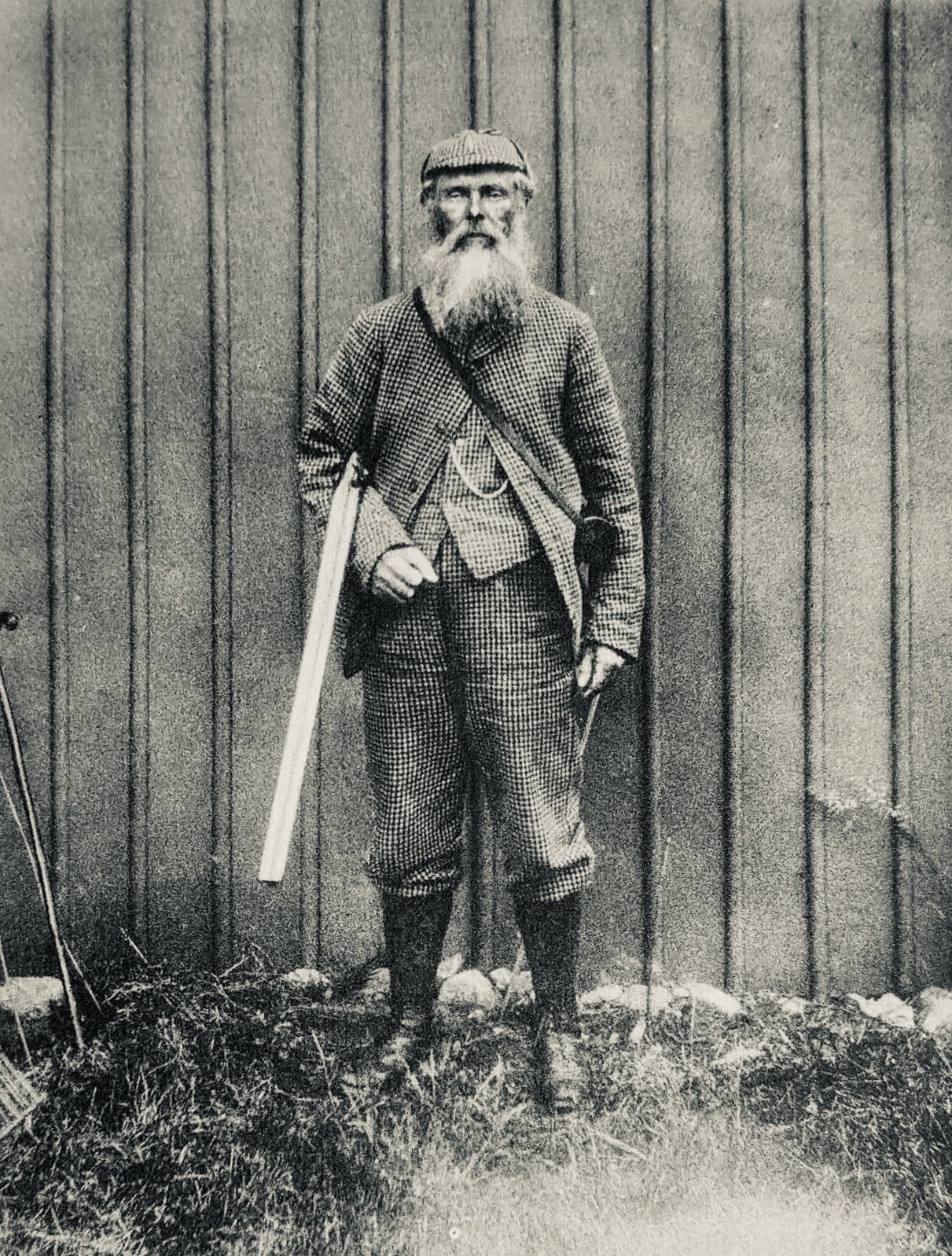
Orson Schofield “Old Mountain” Phelps (1816-1905) was the archetypical Adirondack guide.

Guide historian Chuck Brumley attributed this to the wide literary attention Phelps received from early city visitors to the High Peaks, including Verplanck Colvin and Charles Dudley Warner. Phelps was painted by Winslow Homer. He became a stock character in the guidebooks of E.R. Wallace and S.R. Stoddard.

Phelps certainly had the requisite outdoor skills to be a well-known Adirondack guide, and he cut many High Peaks trails still in use, as well as naming a number of high peaks. But it was his personality and aphorisms that caught the imagination of many of the “city men” he guided. He amused and impressed his clients with rustic humor and philosophy.

CONNECT


You might be misled by the shaggy suggestion of Old Phelps's given name—Orson—into the notion that he was a mighty hunter, with the fierce spirit of the Berserkers in his veins. Nothing could be farther from the truth. The hirsute and grisly sound of Orson expresses only his entire affinity with the untamed and the natural, an uncouth but gentle passion for the freedom and wildness of the forest. Orson Phelps has only those unconventional and humorous qualities of the bear which make the animal so beloved in literature; and one does not think of Old Phelps so much as a lover of nature,—to use the sentimental slang of the period,—as a part of nature itself.

His appearance at the time when as a "guide" he began to come into public notice fostered this impression,—a sturdy figure, with long body and short legs, clad in a woolen shirt and butternut-colored trousers repaired to the point of picturesqueness, his head surmounted by a limp, light-brown felt hat, frayed away at the top, so that his yellowish hair grew out of it like some nameless fern out of a pot. His tawny hair was long and tangled, matted now many years past the possibility of being entered by a comb. His features were small and delicate, and set in the frame of a reddish beard, the razor having mowed away a clearing about the sensitive mouth, which was not seldom wreathed with a childlike and charming smile. Out of this hirsute environment looked the small gray eyes, set near together; eyes keen to observe, and quick to express change of thought; eyes that made you believe instinct can grow into philosophic judgment. His feet and hands were of aristocratic smallness, although the latter were not worn away by ablutions; in fact, they assisted his toilet to give you the impression that here was a man who had just come out of the ground,—a real son of the soil, whose appearance was partially explained by his humorous relation to soap. "Soap is a thing," he said, "that I hain't no kinder use for." His clothes seemed to have been put on him once for all, like the bark of a tree, a long time ago. The observant stranger was sure to be puzzled by the contrast of this realistic and uncouth exterior with the internal fineness, amounting to refinement and culture, that shone through it all. What communion had supplied the place of our artificial breeding to this man.

Perhaps his most characteristic attitude was sitting on a log, with a short pipe in his mouth. If ever man was formed to sit on a log, it was Old Phelps. He was essentially a contemplative person. Walking on a country road, or anywhere in the "open," was irksome to him. He had a shambling, loose-jointed gait, not unlike that of the bear: his short legs bowed out, as if they had been more in the habit of climbing trees than of walking. On land, if we may use that expression, he was something like a sailor; but, once in the rugged trail or the unmarked route of his native forest, he was a different person, and few pedestrians could compete with him. The vulgar estimate of his contemporaries, that reckoned Old Phelps "lazy," was simply a failure to comprehend the condition of his being. It is the unjustness of civilization that it sets up uniform and artificial standards for all persons. The primitive man suffers by them much as the contemplative philosopher does, when one happens to arrive in this busy, fussy world.

CONNECT

Homer, Two Guides, 1877


JSTOR has David Tatham's essay, The Two Guides: Winslow Homer at Keene Valley, Adirondacks ... HERE.

24 February 2019

Therapeutic.

Homer, Adironack Guide, 1892


Rufus Wallace, a hired hand at the North Woods Club in Minerva, New York, modeled for Homer for almost twenty-five years. Wallace, often depicted alongside a younger model to suggest intergenerational camaraderie, is seen here in advanced age and alone. He is the light-struck protagonist in the center of a dark and foreboding scene. But for the shaft of sunshine that illuminates his face, paddle, and wake, Wallace would recede into the forest, a natural man in an urban age. Although Wallace himself is an archetype, his vessel provides an instant sense of place. The guide boat, perfected in the mid-nineteenth century, provided a sturdy and lightweight means to navigate the Adirondack's rivers and lakes. As the region evolved into a controlled wilderness for Americans pursuing the experience of nature as a cure for the perceived dangers of modern life, hours in a guide boat and the company of rugged individuals like Wallace were widely held to be therapeutic pastimes.

CONNECT

Happy Birthday, Homer.

Homer, Campfire, Adirondacks, 1892


Winslow Homer was born on this day in 1836.

What they call talent is nothing but the capacity for doing continuous work in the right way.

Winslow Homer

Sitting in on John Wilmerding's ("Ol' Wilmerding") talk, "Winslow Homer in His Art," at the The College of the Atlantic ...


Marc Simpson's lecture, "Yankee Urchins and Pie-Nurtured Maidens: Winslow Homer's Paintings of 1870s America" ...

25 May 2016

Quietly.

Obata, Mt. Fuji and Ashinoko Lake from Motohakone (detail), 1953


When all thoughts
Are exhausted
I slip into the woods
And gather
A pile of shepherd’s purse.


Like the little stream
Making its way
Through the mossy crevices
I, too, quietly
Turn clear and transparent.

Ryokan