"I am not one who was born in the custody of wisdom. I am one who is fond of olden times and intense in quest of the sacred knowing of the ancients." Gustave Courbet

09 February 2017

Peter Rowan & the Rowan Brothers

Kerrville Music Festival, June 1, 1996 ...

Yeah.

Yeah, but she had another woman with her ...

Nourishes.


It is obvious that here in the USA manual labor doesn’t count anymore; it’s devalued and not honored. Not only when it comes to cooking, also the carpenter, the mechanic, the plumber, the farmer, the gardener and the seamstresses are affected by this. Their knowledge and craft are devaluated. We don’t have time for all those things anymore. We are too busy earning money at often uninteresting jobs. If people were to do more simple, down-to-earth activities like gardening, sewing or cooking they would feel more satisfied and fulfilled, more connected. You won’t get this from watching television. Working with our hands nourishes us. It doesn’t matter, if you cook or do garden work, it will give you a feeling of being connected to the world. You work with the things of this world. Today, if you are a successful person, you hire a cook, a housekeeper, you buy your clothes and somebody buys your food. Nobody touches a broom anymore to sweep the floor. What are hands for? To put chips in your mouth and punch the remote?

Edward Brown

CONNECT

Blood.


All the soarings of my mind begin in my blood.

Rainer Maria Rilke

NS11.


Flying British Airship NS11 over England, 1917.

CONNECT

08 February 2017

Billy Joe Shaver, "Old Five and Dimers Like Me"

Thanks.


The strength of an idea is not built on convictions alone, but, above all, thanks to doubt.

Jordi Savall

Afar.


OBJECTS in MIRROR are CLOSER than THEY APPEAR

It's hard to tell
that the face of the moon
is as much like a man's
as god's. Out yonder,
in the world without us,
who's to say? —
Either we get in the way,
or things make use of us.

Half-way around the globe
from where they started,
the static sound of starlings
echoes off the barn roof.
Spider weave in the spokes
of wheels, and stars
circle unsuspecting suns.
Little do we know,
the world has a talent
for making itself at home.

Meanwhile, we paint our self-
portraits on everything
imaginable, then hold
them up like mirrors.
Our mercurial brushes
grow longer, our skills
more acute. Dust clouds
the vision, tinder
to the eye. So we burn
trees to save the forests, burn
air to fly afar. We do, we say.
We can. The time

is close at hand. Time was
(said a man)
you could tell the weather from the moon.
That was before another
broke the quicksilver distance
and walked all over it.
Now you can't tell a thing.

Alice B. Fogel

Thanks, Nicole.

Happy birthday, Verne.


Jules Verne was born on this day in 1828.

The Earth does not need new continents, but new men.

Jules Verne

Willie Nalson, "Red Headed Stranger"

Again.


Whole Foods now has a produce butcher ... CONNECT

Technique.


Technique is the proof of your seriousness.

Wallace Stevens

On.


Be strong!
We are not here to play, to dream, to drift,
We have hard work to do, and loads to lift.
Shun not the struggle; face it. 'Tis God's gift.

Be strong!
Say not the days are evil, - Who's to blame?
And fold not the hands and acquiesce, - O shame!
Stand up, speak out, and bravely, in God's name.

Be strong!
It matters not how deep entrenched the wrong,
How hard the battle goes, the day, how long.
Faint not, fight on! To-morrow comes the song.

Maltbie D. Babcock

07 February 2017

Heroicially.


Let us not be satisfied with recounting a fable of the heart; let us create its myth. Is not love, with art, our only license to overreach the human condition, to be greater, more generous, more sorrowful if need be than is the common lot? Let us be so heroically.

Rainer Maria Rilke

Mozart, Piano Sonata in C minor, K. 457.

Alfred Brendel performs ...

Develop.


There should be a science of discontent. People need hard times and oppression to develop psychic muscles.

Frank Herbert

Thank you, Casey.

Ride.


Like a piece of ice on a hot stove, the poem must ride on its own melting.

Robert Frost

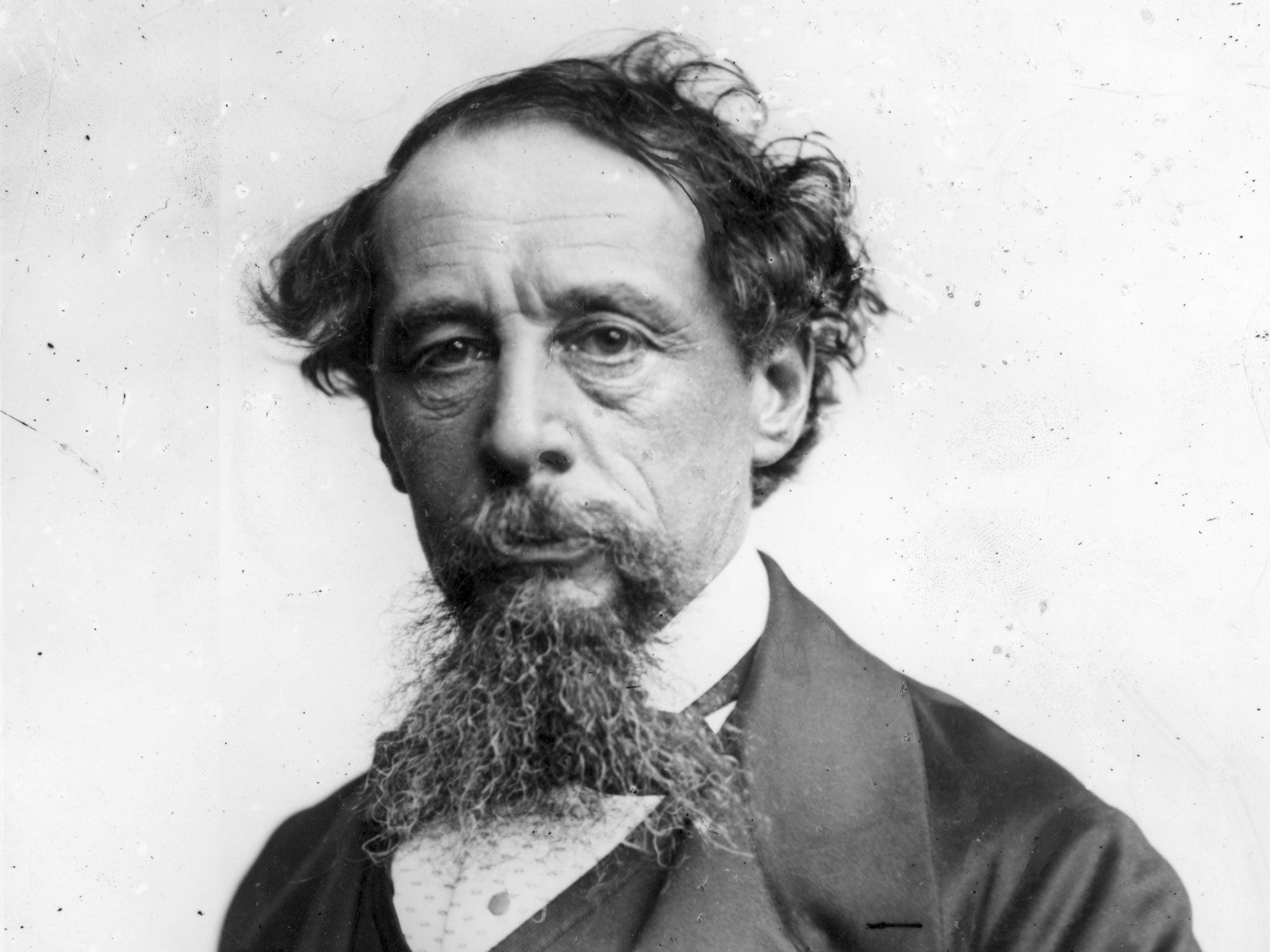
Happy birthday, Dickens.


Charles Dickens was born on this day in 1812.

The IVY GREEN

Oh, a dainty plant is the Ivy green, 
That creepeth o’er ruins old! 
Of right choice food are his meals, I ween, 
In his cell so lone and cold. 
The wall must be crumbled, the stone decayed, 
To pleasure his dainty whim: 
And the mouldering dust that years have made 
Is a merry meal for him. 
Creeping where no life is seen, 
A rare old plant is the Ivy green. 

Fast he stealeth on, though he wears no wings, 
And a staunch old heart has he. 
How closely he twineth, how tight he clings, 
To his friend the huge Oak Tree! 
And slily he traileth along the ground, 
And his leaves he gently waves, 
As he joyously hugs and crawleth round 
The rich mould of dead men’s graves. 
Creeping where grim death has been, 
A rare old plant is the Ivy green. 

Whole ages have fled and their works decayed, 
And nations have scattered been; 
But the stout old Ivy shall never fade, 
From its hale and hearty green. 
The brave old plant, in its lonely days, 
Shall fatten upon the past: 
For the stateliest building man can raise, 
Is the Ivy’s food at last. 
Creeping on, where time has been, 
A rare old plant is the Ivy green.

Charles Dickens 
Dog.

Willie Nelson, "Bloody Mary Morning"

06 February 2017

Happy birthday, Stuart.


James Ewell Brown "Jeb" Stuart was born on this day in 1833.

From Gods & Generals ...

Bob Weir, "Blue Mountain"


Now I chummed up with Latico Gordon
I drank at the Blue Goose Saloon
And I dance all night with the Mormon girls
Ride home, my way lit by the moon
And oh, here is a snake in the rainbow
And here is the balsam in boughs
And here are the ladders of light up to heaven
Blue mountain is all I need now

Life.


I have often thought that if I received an early warning that I would pass on sooner than later, I’d get myself to Lyon and eat for a solid month, after which they could tip me from a gurney into the blessed Rhone. Maybe I’d swim all the way downstream to Arles for my last supper.

Your meals in life are numbered and the number is diminishing. Get at it.

Jim Harrison

Live.

Simply.


The brave dies perhaps two thousand deaths if he’s intelligent. He simply doesn’t mention them.

Ernest Hemingway

Sammartini, Recorder Concerto in F major


Andreas Prittwitz performs with the Lookingback Baroque Orchestra ...

Right.


Roger Scruton discusses the increasing normalization of imposition and philosophy on the right ... HERE.

05 February 2017

The Tallest Man on Earth, "I Won't Be Found"

I'm gonna float up in the ceiling
I built a levee of the stars
and in my field of tired horses
I built a freeway through this farce.

Well if I ever get that slumber
I'll be that mole deep in the ground
and I won't be found.

04 February 2017

Happy birthday, Bonhoeffer.


Dietrich Bonhoeffer was born on this day in 1906.

In normal life we hardly realize how much more we receive than we give, and life cannot be rich without such gratitude. It is so easy to overestimate the importance of our own achievements compared with what we owe to the help of others.

Dietrich Bonhoeffer

Cultivation.


In all this, book-learning is available. A capacity, and taste, for reading, gives access to whatever has already been discovered by others. It is the key, or one of the keys, to the already solved problems. And not only so. It gives a relish, and facility, for successfully pursuing the [yet] unsolved ones. The rudiments of science, are available, and highly valuable. Some knowledge of Botany assists in dealing with the vegetable world -- with all growing crops. Chemistry assists in the analysis of soils, selection, and application of manures, and in numerous other ways. The mechanical branches of Natural Philosophy, are ready help in almost everything; but especially in reference to implements and machinery.

The thought recurs that education -- cultivated thought -- can best be combined with agricultural labor, or any labor, on the principle of thorough work -- that careless, half performed, slovenly work, makes no place for such combination. And thorough work, again, renders sufficient, the smallest quantity of ground to each man. And this again, conforms to what must occur in a world less inclined to wars, and more devoted to the arts of peace, than heretofore. Population must increase rapidly -- more rapidly than in former times -- and ere long the most valuable of all arts, will be the art of deriving a comfortable subsistence from the smallest area of soil. No community whose every member possesses this art, can ever be the victim of oppression of any of its forms. Such community will be alike independent of crowned-kings, money-kings, and land-kings.

But, according to your programme, the awarding of premiums awaits the closing of this address. Considering the deep interest necessarily pertaining to that performance, it would be no wonder if I am already heard with some impatience. I will detain you but a moment longer. Some of you will be successful, and such will need but little philosophy to take them home in cheerful spirits; others will be disappointed, and will be in a less happy mood. To such, let it be said, "Lay it not too much to heart." Let them adopt the maxim, "Better luck next time;" and then, by renewed exertion, make that better luck for themselves.

And by the successful, and the unsuccessful, let it be remembered, that while occasions like the present, bring their sober and durable benefits, the exultations and mortifictions of them, are but temporary; that the victor shall soon be the vanquished, if he relax in his exertion; and that the vanquished this year, may be victor the next, in spite of all competition.


It is said an Eastern monarch once charged his wise men to invent him a sentence, to be ever in view, and which should be true and appropriate in all times and situations. They presented him the words: "And this, too, shall pass away." How much it expresses! How chastening in the hour of pride! -- how consoling in the depths of affliction! "And this, too, shall pass away." And yet let us hope it is not quite true. Let us hope, rather, that by the best cultivation of the physical world, beneath and around us; and the intellectual and moral world within us, we shall secure an individual, social, and political prosperity and happiness, whose course shall be onward and upward, and which, while the earth endures, shall not pass away.

Abraham Lincoln

Differently.


Every being cries out in silence to be read differently. Do not be indifferent to these cries.

Simone Weil 

Today.

1983.


"In Bluer Skies"

02 February 2017

Cream, "Crossroads"

Bewilderment.


Sell your cleverness and buy bewilderment.

Rumi

Eric Clapton, "Badge"

In.

Jackson Browne.

Austin City Limits ...

Splendor.


People cannot stand the saddest truth I know about the very nature of reading and writing imaginative literature, which is that poetry does not teach us how to talk to other people: it teaches us how to talk to ourselves. Art is perfectly useless, according to the sublime Oscar Wilde, who was right about everything. He also told us that all bad poetry is sincere. Had I the power to do so, I would command that these words be engraved above every gate at every university, so that each student might ponder the splendor of the insight.

Harold Bloom

Books.

Allman Brothers Band, "Blue Sky"

Rise.

Friedrich, The Dreamer, 1839


When the classroom crumbles, you must rise.

Simon K., fifth grader

Thanks, Simon.

Today.

1976.


"Squonk"

01 February 2017

Unconquerable.


INVICTUS

Out of the night that covers me, 
      Black as the pit from pole to pole, 
I thank whatever gods may be 
      For my unconquerable soul. 

In the fell clutch of circumstance 
      I have not winced nor cried aloud. 
Under the bludgeonings of chance 
      My head is bloody, but unbowed. 

Beyond this place of wrath and tears 
      Looms but the Horror of the shade, 
And yet the menace of the years 
      Finds and shall find me unafraid. 

It matters not how strait the gate, 
      How charged with punishments the scroll, 
I am the master of my fate, 
      I am the captain of my soul. 

William Ernest Henley

Inspire.


"How to inspire the young?" they ask.

Ultimate.


I wish to preach, not the doctrine of ignoble ease, but the doctrine of the strenuous life, the life of toil and effort, of labor and strife; to preach that highest form of success which comes, not to the man who desires mere easy peace, but to the man who does not shrink from danger, from hardship, or from bitter toil, and who out of these wins the splendid ultimate triumph.

Theodore Roosevelt

Happy birthday, Cole.

Cole, The Architect's Dream, 1840.


Thomas Cole was born on this day in 1801.

How I have walked, day after day, and all alone, to see if there was not something among the old things that was new! Nature is still predominant, and there are those who regret that with the improvements of cultivation the sublimity of the wilderness should pass away: for those scenes of solitude from which the hand of nature has never been lifted, affect the mind with a more deep toned emotion than aught which the hand of man has touched. Amid them the consequent associations are of God the creator-they are his undefiled works, and the mind is cast into the contemplation of eternal things.  None know how often the hand of God is seen in a wilderness but them that rove it for a man's life.  

Rural nature is full of spirit-quickening.  It is, in fact, the exhaustless mine from which the poet and the painter have brought such wondrous treasures-an unfailing fountain of intellectual enjoyment, where all may drink, and be awakened to a deeper feeling of the works of genius, and a keener perception of the beauty of our existence. For those whose days are all consumed in the low pursuits of avarice, or the gaudy frivolities of fashion, unobservant of nature's loveliness, are unconscious of the harmony of creation.  Overall, rocks, wood and water, brooded the spirit of repose, and the silent energy of nature stirred the soul to its innermost depths.

Amid those scenes of solitude, the mind is cast into the contemplation of eternal things.  To walk with nature as a poet is the necessary condition of a perfect artist.  If I live to be old enough, I may sit down under some bush, the last left in the utilitarian world, and feel thankful that intellect in its march has spared one vestige of the ancient forest for me to die by.

We are still in Eden; the wall that shuts us out is our own ignorance and folly.

Thomas Cole

d'Estrée, "Les Bouffons"

Early Delights performs ...

Irrelevant.


Roger Scruton on the virtue of irrelevance ...

Respect for children means respect for the adults that they will one day become; it means helping them to the knowledge, skills, and social graces that they will need if they are to be respected in that wider world where they will be on their own and no longer protected. For the teacher, respect for children means giving them whatever one has by way of knowledge, teaching them to distinguish real knowledge from mere opinion, and introducing them to the subjects that make the mind adaptable to the unforeseen. To dismiss Latin and Greek, for example, because they are not “relevant” is to imagine that one learns another language in order, as Matthew Arnold put it, “to fight the battles of life with the waiters in foreign hotels.” It is to overlook the literature and history that are opened to the enquiring mind by these languages that changed the world; it is to overlook the discipline imparted by their deep and settled grammar. Ancient languages show us vividly that some matters are intrinsically interesting, and not interesting merely for their immediate use; understanding them the child might come to see just how irrelevant to the life of the mind is the pursuit of “relevance.”

Moreover the pursuit of irrelevant knowledge is, for that very reason, a mental discipline that can be adapted to the new and the unforeseeable. It is precisely the irrelevance of everything they knew that enabled a band of a thousand British civil servants, versed in Latin, Greek, and Ancient History, to govern the entire Indian sub-continent – not perfectly, but in many ways better than it had been governed in recent memory. It is the discipline of attending in depth to matters that were of no immediate use to them that made it possible for these civil servants to address situations that they had never imagined before they encountered them – strange languages, alphabets, religions, customs, and laws. It is no accident that it was a classical scholar – the judge Sir William Jones, founder of the Asiatic Society of Bengal in 1788 – who did the most to rescue Sanskrit literature from oblivion, who introduced the world, the Indian world included, to the Vedas, and who launched his contemporaries on the search for the principles and repertoire of classical Indian music.

All this is of great importance to the teacher who wishes to introduce children to the tradition of Western music, and to the listening culture of the concert hall. Hand-in-hand with the relevance revolution came the idea of the “inclusive” classroom – the classroom in which “no child is left behind,” whether or not adapted to the matter in hand. Music has suffered greatly from this, since it is a subject that can be properly taught only to the musical, and which therefore begins from an act of selection. Furthermore even the musical are subjected outside school to a constant bombardment of music in which banal phrases, assembled over the three standard chords and the relentless four in a bar, have filled the ear with addictive clichés. How, in such circumstances, does a musical education begin?