"I am not one who was born in the custody of wisdom. I am one who is fond of olden times and intense in quest of the sacred knowing of the ancients." Gustave Courbet

29 December 2024

Time.


YOU LEARN

After some time, you learn the subtle difference 
between holding a hand and imprisoning a soul;

You learn that love does not equal sex,
and that company does not equal security,
and you start to learn ...

That kisses are not contracts and gifts are not promises,
and you start to accept defeat with the head up high and open eyes,
and you learn to build all roads on today,
because the terrain of tomorrow is too insecure for plans
and the future has its own way of falling apart in half.

And you learn that if it’s too much
even the warmth of the sun can burn.

So you plant your own garden and embellish your own soul,
instead of waiting for someone to bring flowers to you.

And you learn that you can actually bear hardship,
that you are actually strong,
and you are actually worthy,
and you learn and learn … and so every day.

Over time you learn that being with someone
because they offer you a good future,
means that sooner or later you’ll want to return to your past.

Over time you comprehend that only who is capable
of loving you with your flaws, with no intention of changing you
can bring you all happiness.

Over time you learn that if you are with a person
only to accompany your own solitude,
irremediably you’ll end up wishing not to see them again.

Over time you learn that real friends are few
and whoever doesn’t fight for them, sooner or later,
will find himself surrounded only with false friendships.

Over time you learn that words spoken in moments of anger
continue hurting throughout a lifetime.

Over time you learn that everyone can apologize,
but forgiveness is an attribute solely of great souls.

Over time you comprehend that if you have hurt a friend harshly
it is very likely that your friendship will never be the same.

Over time you realize that despite being happy with your friends,
you cry for those you let go.

Over time you realize that every experience lived,
with each person, is unrepeatable.

Over time you realize that whoever humiliates
or scorns another human being, sooner or later
will suffer the same humiliations or scorn in tenfold.

Over time you learn to build your roads on today,
because the path of tomorrow doesn’t exist.

Over time you comprehend that rushing things or forcing them to happen
causes the finale to be different form expected.

Over time you realize that in fact the best was not the future,
but the moment you were living just that instant.

Over time you will see that even when you are happy with those around you,
you’ll yearn for those who walked away.

Over time you will learn to forgive or ask for forgiveness,
say you love, say you miss, say you need,
say you want to be friends, since before
a grave, it will no longer make sense.

But unfortunately, only over time…

Jorge Luis Borges

Excellent.

An excellent album ...

Benefit.


Whose intellect can have had the audacity to judge who is better, and who worse? A large tree, crooked and full of holes, survives for centuries without being cut down, because nothing could possibly be made out of it. This example should raise the spirits of people like us. Everyone knows the profit to be reaped from the useful, but nobody knows the benefit to be gained from the useless.

Olga Tokarczuk

Night-Wind.

Abbey, What Trotty Saw in the Belfry, 1876


CHAPTER I—First Quarter.
There are not many people—and as it is desirable that a story-teller and a story-reader should establish a mutual understanding as soon as possible, I beg it to be noticed that I confine this observation neither to young people nor to little people, but extend it to all conditions of people: little and big, young and old: yet growing up, or already growing down again—there are not, I say, many people who would care to sleep in a church.  I don’t mean at sermon-time in warm weather (when the thing has actually been done, once or twice), but in the night, and alone.  A great multitude of persons will be violently astonished, I know, by this position, in the broad bold Day.  But it applies to Night.  It must be argued by night, and I will undertake to maintain it successfully on any gusty winter’s night appointed for the purpose, with any one opponent chosen from the rest, who will meet me singly in an old churchyard, before an old church-door; and will previously empower me to lock him in, if needful to his satisfaction, until morning.

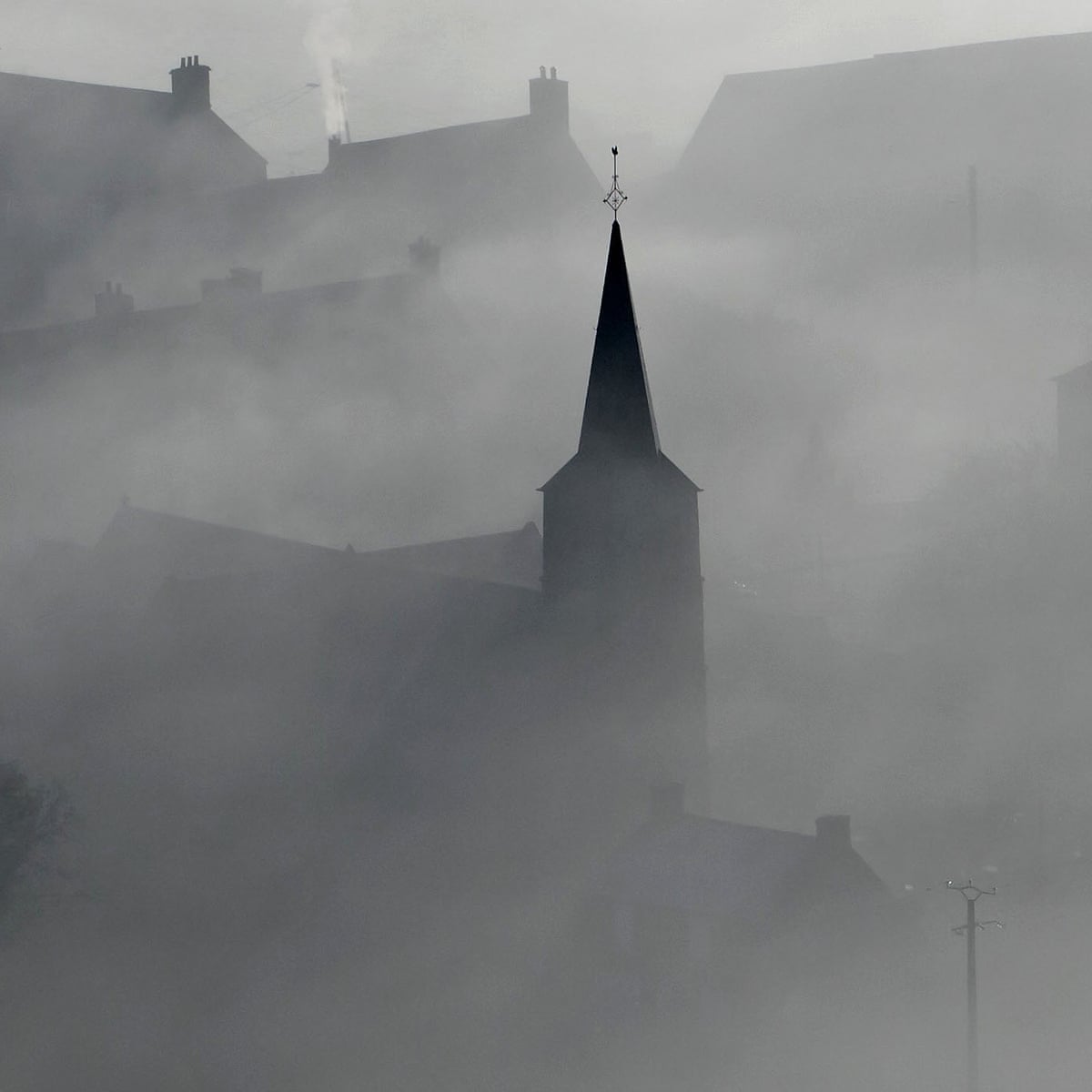
For the night-wind has a dismal trick of wandering round and round a building of that sort, and moaning as it goes; and of trying, with its unseen hand, the windows and the doors; and seeking out some crevices by which to enter.  And when it has got in; as one not finding what it seeks, whatever that may be, it wails and howls to issue forth again: and not content with stalking through the aisles, and gliding round and round the pillars, and tempting the deep organ, soars up to the roof, and strives to rend the rafters: then flings itself despairingly upon the stones below, and passes, muttering, into the vaults.  Anon, it comes up stealthily, and creeps along the walls, seeming to read, in whispers, the Inscriptions sacred to the Dead.  At some of these, it breaks out shrilly, as with laughter; and at others, moans and cries as if it were lamenting.  It has a ghostly sound too, lingering within the altar; where it seems to chaunt, in its wild way, of Wrong and Murder done, and false Gods worshipped, in defiance of the Tables of the Law, which look so fair and smooth, but are so flawed and broken.  Ugh!  Heaven preserve us, sitting snugly round the fire!  It has an awful voice, that wind at Midnight, singing in a church!

But, high up in the steeple!  There the foul blast roars and whistles!  High up in the steeple, where it is free to come and go through many an airy arch and loophole, and to twist and twine itself about the giddy stair, and twirl the groaning weathercock, and make the very tower shake and shiver!  High up in the steeple, where the belfry is, and iron rails are ragged with rust, and sheets of lead and copper, shrivelled by the changing weather, crackle and heave beneath the unaccustomed tread; and birds stuff shabby nests into corners of old oaken joists and beams; and dust grows old and grey; and speckled spiders, indolent and fat with long security, swing idly to and fro in the vibration of the bells, and never loose their hold upon their thread-spun castles in the air, or climb up sailor-like in quick alarm, or drop upon the ground and ply a score of nimble legs to save one life!  High up in the steeple of an old church, far above the light and murmur of the town and far below the flying clouds that shadow it, is the wild and dreary place at night: and high up in the steeple of an old church, dwelt the Chimes I tell of.

They were old Chimes, trust me.  Centuries ago, these Bells had been baptized by bishops: so many centuries ago, that the register of their baptism was lost long, long before the memory of man, and no one knew their names.  They had had their Godfathers and Godmothers, these Bells (for my own part, by the way, I would rather incur the responsibility of being Godfather to a Bell than a Boy), and had their silver mugs no doubt, besides.  But Time had mowed down their sponsors, and Henry the Eighth had melted down their mugs; and they now hung, nameless and mugless, in the church-tower.

Not speechless, though.  Far from it.  They had clear, loud, lusty, sounding voices, had these Bells; and far and wide they might be heard upon the wind.  Much too sturdy Chimes were they, to be dependent on the pleasure of the wind, moreover; for, fighting gallantly against it when it took an adverse whim, they would pour their cheerful notes into a listening ear right royally; and bent on being heard on stormy nights, by some poor mother watching a sick child, or some lone wife whose husband was at sea, they had been sometimes known to beat a blustering Nor’ Wester ...

Woodsmoke.


Apart from the peace and emptiness of the landscape, there is a special smell about winter in Provence which is accentuated by the wind and the clean, dry air. Walking in the hills, I was often able to smell a house before I could see it, because of the scent of woodsmoke coming from an invisible chimney. It is one of the most primitive smells in life, and consequently extinct in most cities, where fire regulations and interior decorators have combined to turn fireplaces into blocked-up holes or self-consciously lit "architectural features." The fireplace in Provence is still used - to cook on, to sit around, to warm the toes, and to please the eye - and fires are laid in the early morning and fed throughout the day with scrub oak from the Luberon or beech from the foothills of Mont Ventoux. Coming home with the dogs as dusk fell, I always stopped to look from the top of the valley at the long zigzag of smoke ribbons drifting up from the farms that are scattered along the Bonnieux road. It was a sight that made me think of warm kitchens and well-seasoned stews, and it never failed to make me ravenous.

Peter Mayle, from A Year in Provence

Will.


As civilization advances, the sense of wonder almost necessarily declines. Such decline is an alarming symptom of our state of mind. Mankind will not perish for want of information, but only for a want of appreciation. The beginning of our happiness lies in the understanding that life without wonder is not worth living. What we lack is not a will to believe but a will to wonder.

Rabbi Abraham Joshua Heschel

Excellent.

An excellent album ...

Traditional, "Five Sheep, Four Goats"

Franziska Müller, accordion, and Steffen Gabriel, flute, perform ...

All.


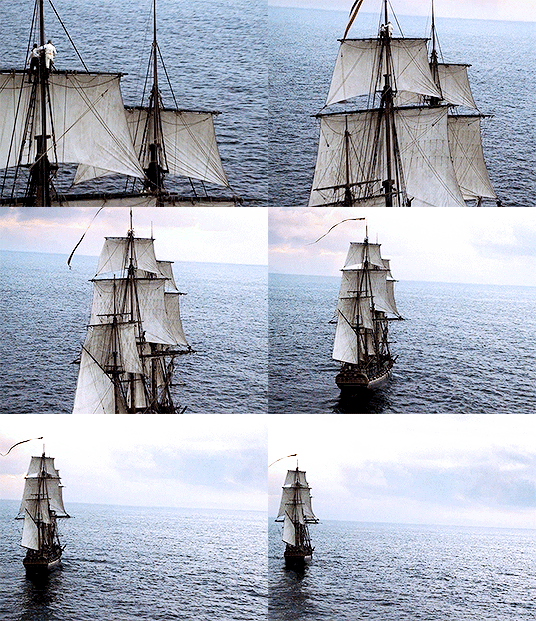
Looks like there's some heavy weather coming. Put up all the canvas, we'll let God take it down.

Ted Turner, from 1979 Fastnet

Sibelius, En saga, Op. 9

Ariane Matiakh conducts the WDR Symphony Orchestra ...

Happy Birthday, Casals


The man who works and is never bored is never old. Work and interest in worthwhile things are the best remedy for age.

Pablo Casals, born on this day in 1876

The Bourrées from Bach's Cello Suite No. 3, BWV 1009 ...

28 December 2024

Reilly, "Serenade"

Echo & The Bunnymen, "Do It Clean"

Paul Weller, "Soul Wandering"


The Smiths, "Some Girls Are Bigger Than Others"

Squeeze, "In Quintessence"

Allegiance.


On this day in 1945, Congress officially recognized "The Pledge of Allegiance."

Sting, "Soul Cake"

Howling.


Here’s to thee, old apple tree,
Whence thou mayst bud
And whence thou mayst blow!
And whence thou mayst bear apples enow!
Hats full! Caps full!
Bushel—bushel—sacks full,
And my pockets full too! Huzza!

Related.


Every day is different and I really believe that cooking is something that adapts to how you’re living your day. For me, the romance of cooking is very important. It doesn’t mean that you have to have a very complicated menu. Maybe you have a potato, an onion, and a piece of meat.  It’s more related to the weather, to who’s around you. Is it winter, is spring, are you under a tree, beside the stream, are you cooking in the snow? It’s related to the music you hear, the clothes you wear, what you take in your backpack, and so on. For me, that is a very, very important ingredient: the romance we have with life.

Chef Francis Mallmann

Published.


And how we burned in the camps later, thinking: What would things have been like if every Security operative, when he went out at night to make an arrest, had been uncertain whether he would return alive and had to say good-bye to his family? Or if, during periods of mass arrests, as for example in Leningrad, when they arrested a quarter of the entire city, people had not simply sat there in their lairs, paling with terror at every bang of the downstairs door and at every step on the staircase, but had understood they had nothing left to lose and had boldly set up in the downstairs hall an ambush of half a dozen people with axes, hammers, pokers, or whatever else was at hand?  The Organs would very quickly have suffered a shortage of officers and transport and, notwithstanding all of Stalin's thirst, the cursed machine would have ground to a halt! If... if...

We didn't love freedom enough. And even more, we had no awareness of the real situation.  We purely and simply deserved everything that happened afterward.

Aleksandr I. Solzhenitsyn, from The Gulag Archipelago, 1918–1956, published on this day in 1973

Found.


Without further ado I left the place, finding my route by the marks I had made on the way in. As I walked in the dark through the tunnels and tunnels of books, I could not help being overcome by a sense of sadness. I couldn't help thinking that if I, by pure chance, had found a whole universe in a single unknown book, buried in that endless necropolis, tens of thousands more would remain unexplored, forgotten forever. I felt myself surrounded by millions of abandoned pages, by worlds and souls without an owner sinking in an ocean of darkness, while the world that throbbed outside the library seemed to be losing its memory, day after day, unknowingly, feeling all the wiser the more it forgot.

Carlos Ruiz Zafón, from The Shadow of the Window

Thanks, Jess.

Excellent.

An excellent album ...

27 December 2024

Released.


Utopia released Adventures in Utopia on this day in 1979.

"Last of the New Wave Riders"...

The Jam, "Going Underground"

Morrissey, "Morning Starship"

Excellent.

Excellent books ...

Abel, Arpeggio in D-Minor, AbelWV A1:A26

Anja Lechner performs ...

Simple.

A homemade 15-foot cane rod, lines meticulously braided from the tail of a stallion, simple flies tied by hand without the aid of a vise—this is pesca alla Valsesiana. Originating on the small mountain streams of northern Italy, this simple, beautiful style of fishing has been in practice since at least the 16th century. 

Led by the sport’s elder statesman, Arturo Pugno, it is still practiced by a small number of devotees on those same streams, using the same materials and techniques employed since the beginning ...

Arrests.


If you cannot read all your books, at any rate handle, or as it were, fondle them – peer into them, let them fall open where they will, read from the first sentence that arrests the eye, set them back on the shelves with your own hands, arrange them on your own plan so that if you do not know what is in them, you at least know where they are. Let them be your friends; let them at any rate be your acquaintances. If they cannot enter the circle of your life, do not deny them at least a nod of recognition.

Winston S. Churchill, from Painting As a Pastime

Transcendently.


We hear the kindred vibrations--music!--& we put out our dormant feelers--unto the limits of the universe -- We attain to a wisdom that passeth understanding -- The stable continents undulate.  The hard & fixed becomes fluid. "Unless above himself he doth erect himself how poor a thing is man!" When I hear music fear no danger -- I am invulnerable -- I see no foe. I am related to the earliest times & to the latest.

There are infinite degrees of life--from that which is next to sleep and death, to that which is forever awake & immortal. We must not confound man with man. We cannot conceive of a greater difference than between the life of one man and that of another. I am--constrained to believe that the mass of men are never so lifted above themselves that their destiny is seen to be transcendently beautiful & grand. 

Henry David Thoreau, from his journal dated January 13, 1857

Values.


Ari Weinzweig on owning choices ...
Reflecting back, the places where this work was most profound for me were mostly in seemingly mundane ways. Without question, I had a whole bunch of advantages on my side. Nevertheless, I was living out what 19th-century English anarchist Edward Carpenter once wrote so powerfully, “To pass through one’s mortal days … under continual compulsion from others, is not to live; it is only to exist.” Realizing that no one was “making me” do any of those things changed my life. To own the decision to get up early to prepare for the day rather than blame others for scheduling a meeting in the morning; to own my decision to be kind to the cashier at a coffee shop; to realize that I could decide not to go to innocuous social occasions I didn’t enjoy rather than feeling forced to attend. To stop myself from complaining about cold winter weather and own that I was choosing to go out to run in it regardless. To embrace that I was deciding to engage with difficult service situations rather than feeling like “I had to.”
Free choice, to be clear, does not mean, “Do whatever you want, others be damned.” It means owning that I have decided to do whatever it is I am doing—and the mindset with which to approach it—even when, as is often the case, I may well not really want to do it. Yes, of course, social pressure, financial implications, the expectations of others, etc. are always at play. But the point is the same. Going along grudgingly, I learned, is exhausting. I know because I unwittingly lived it. Timothy Snyder says, “Most of the power of authoritarians is freely given.” Physically, I was living in a democracy, but I was freely giving up my internal power every day.
Choosing to consciously own my own choices—even in the smallest of situations—changed my life. And on a bigger scale, as Peter Koestenbaum conveys over and over again in his writing, we choose our values. As he writes, "Inconsiderateness may be a small defect … [but it] is the seed which, when fully grown, becomes the cruelty of war.” Deciding to act (or not) with compassion, empathy, generosity of spirit, humility, and dignity is also a choice.

Preserved.


The point I would make is that the novelist and the historian are seeking the same thing: the truth – not a different truth: the same truth – only they reach it, or try to reach it, by different routes. Whether the event took place in a world now gone to dust, preserved by documents and evaluated by scholarship, or in the imagination, preserved by memory and distilled by the creative process, they both want to tell us how it was: to re-create it, by their separate methods, and make it live again in the world around them.

Want.


The authority of those who teach is often an obstacle to those who want to learn.

Cicero

26 December 2024

Happy Birthday, Farrar


Jay Farrar was born on this day in 1966.

"Sinking Down" ...

Charlie Parr, "Blues for Whitefish Lake, 1975"

Heading across the lake in my little boat
A surface of glass
I am bound for a notch in the trees
Rotting wooden steps
It’s difficult to see in the waning light
Of northland’s October evening
Concentrate on the pool of water
That travels from bow to stern ...


It's sandwich time.


Imagine.


The poet has given concrete form to a very general psychological theme, namely, that there will always be more things in a closed, than in an open, box. To verify images kills them, and it is always more enriching to imagine than to experience.

Gaston Bachelard, from The Poetics of Space

Capital.


Mole’s face beamed at the sight of all these objects so dear to him, and he hurried Rat through the door, lit a lamp in the hall, and took one glance round his old home.

He saw the dust lying thick on everything, saw the cheerless, deserted look of the long-neglected house, and its narrow, meager dimensions, its worn and shabby contents — and collapsed again on a hall-chair, his nose to his paws.

"O Ratty!" he cried dismally, "why ever did I do it? Why did I bring you to this poor, cold little place, on a night like this, when you might have been at River Bank by this time, toasting your toes before a blazing fire, with all your own nice things about you!"

The Rat paid no heed to his doleful self-reproaches. He was running here and there, opening doors, inspecting rooms and cupboards, and lighting lamps and candles and sticking them up everywhere.

"What a capital little house this is!" he called out cheerily. "So compact! So well planned! Everything here and everything in its place! We’ll make a jolly night of it. The first thing we want is a good fire; I’ll see to that — I always know where to find things.

"So this is the parlour? Splendid! Your own idea, those little sleeping-bunks in the wall? Capital! Now, I’ll fetch the wood and the coals, and you get a duster, Mole — you’ll find one in the drawer of the kitchen table — and try and smarten things up a bit. Bustle about, old chap!"

Kenneth Grahame, from The Wind in the Willows

Excellent.

Excellent albums ...

Rewarded.

Firchau, Patience Rewarded, 2011

25 December 2024

Old-Fashioned.

Aldin, The Joyful Feast, 1910


The table was literally loaded with good cheer, and presented an epitome of country abundance, in this season of overflowing larders. A distinguished post was allotted to "ancient sirloin," as mine host termed it; being, as he added, "the standard of old English hospitality, and a joint of goodly presence, and full of expectation." There were several dishes quaintly decorated, and which had evidently something traditionary in their embellishments; but about which, as I did not like to appear over-curious, I asked no questions.

I could not, however, but notice a pie, magnificently decorated with peacocks' feathers, in imitation of the tail of that bird, which over shadowed a considerable tract of the table. This the Squire confessed, with some little hesitation, was a pheasant-pie, though a peacock-pie was certainly the most authentical; but there had been such a mortality among the peacocks this season, that he could not prevail upon himself to have one killed.

It would be tedious, perhaps, to my wiser readers, who may not have that foolish fondness for odd and obsolete things to which I am a little given, were I to mention the other makeshifts of this worthy old humorist, by which he was endeavouring to follow up, though at humble distance, the quaint customs of antiquity. I was pleased, however, to see the respect shown to his whims by his children and relatives; who, indeed, entered readily into the full spirit of them, and seemed all well versed in their parts; having doubtless been present at many a rehearsal. I was amused, too, at the air of profound gravity with which the butler and other servants executed the duties assigned them, however eccentric. They had an old-fashioned look; having, for the most part, been brought up in the household, and grown into keeping with the antiquated mansion, and the humours of its lord; and most probably looked upon all his whimsical regulations as the established laws of honourable housekeeping.

Washington Irving, from "Christmas Dinner"

Bells.


The time draws near the birth of Christ:
      The moon is hid; the night is still;
      The Christmas bells from hill to hill
Answer each other in the mist.

Four voices of four hamlets round,
      From far and near, on mead and moor,
      Swell out and fail, as if a door
Were shut between me and the sound:

Each voice four changes on the wind,
      That now dilate, and now decrease,
      Peace and goodwill, goodwill and peace,
Peace and goodwill, to all mankind.

This year I slept and woke with pain,
      I almost wish'd no more to wake,
      And that my hold on life would break
Before I heard those bells again:

But they my troubled spirit rule,
      For they controll'd me when a boy;
      They bring me sorrow touch'd with joy,
The merry merry bells of Yule.

Alfred, Lord Tennyson

Welcome.


On our way homeward his heart seemed overflowing with generous and happy feelings. As we passed over a rising ground which commanded something of a prospect, the sounds of rustic merriment now and then reached our ears; the Squire paused for a few moments, and looked around with an air of inexpressible benignity. The beauty of the day was of itself sufficient to inspire philanthropy. Notwithstanding the frostiness of the morning, the sun in his cloudless journey had acquired sufficient power to melt away the thin covering of snow from every southern declivity, and to bring out the living green which adorns an English landscape even in mid-winter. Large tracts of smiling verdure contrasted with the dazzling whiteness of the shaded slopes and hollows. Every sheltered bank, on which the broad rays rested, yielded its silver rill of cold and limpid water, glittering through the dripping grass; and sent up slight exhalations to contribute to the thin haze that hung just above the surface of the earth. There was something truly cheering in this triumph of warmth and verdure over the frosty thraldom of winter; it was, as the Squire observed, an emblem of Christmas hospitality, breaking through the chills of ceremony and selfishness, and thawing every heart into a flow. He pointed with pleasure to the indications of good cheer reeking from the chimneys of the comfortable farm-houses and low thatched cottages. "I love," said he, "to see this day well kept by rich and poor; it is a great thing to have one day in the year, at least, when you are sure of being welcome wherever you go, and of having, as it were, the world all thrown open to you; and I am almost disposed to join with Poor Robin, in his malediction of every churlish enemy to this honest festival:—
"Those who at Christmas do repine,
And would fain hence despatch him,
May they with old Duke Humphry dine,
Or else may Squire Ketch catch 'em."
The Squire went on to lament the deplorable decay of the games and amusements which were once prevalent at this season among the lower orders, and countenanced by the higher: when the old halls of castles and manor-houses were thrown open at daylight; when the tables were covered with brawn, and beef, and humming ale; when the harp and the carol resounded all day long, and when rich and poor were alike welcome to enter and make merry. "Our old games and local customs," said he, "had a great effect in making the peasant fond of his home, and the promotion of them by the gentry made him fond of his lord. They made the times merrier, and kinder, and better; and I can truly say, with one of our old poets,—
"I like them well—the curious preciseness
And all-pretended gravity of those
That seek to banish hence these harmless sports,
Have thrust away much ancient honesty.

Washington Irving, from "Christmas Day" 

Peace.

Bouguereau, Song of the Angels, 1881


Luke 2:8-20
8 And there were shepherds living out in the fields nearby, keeping watch over their flocks at night. 9 An angel of the Lord appeared to them, and the glory of the Lord shone around them, and they were terrified. 10 But the angel said to them, “Do not be afraid. I bring you good news that will cause great joy for all the people. 11 Today in the town of David a Savior has been born to you; he is the Messiah, the Lord. 12 This will be a sign to you: You will find a baby wrapped in cloths and lying in a manger.”

13 Suddenly a great company of the heavenly host appeared with the angel, praising God and saying,

14 “Glory to God in the highest heaven, and on earth peace to those on whom his favor rests.”

15 When the angels had left them and gone into heaven, the shepherds said to one another, “Let’s go to Bethlehem and see this thing that has happened, which the Lord has told us about.”

16 So they hurried off and found Mary and Joseph, and the baby, who was lying in the manger. 17 When they had seen him, they spread the word concerning what had been told them about this child, 18 and all who heard it were amazed at what the shepherds said to them. 19 But Mary treasured up all these things and pondered them in her heart. 20 The shepherds returned, glorifying and praising God for all the things they had heard and seen, which were just as they had been told.