"I am not one who was born in the custody of wisdom. I am one who is fond of olden times and intense in quest of the sacred knowing of the ancients."
Gustave Courbet
Shakespeare, Leonardo da Vinci, Benjamin Franklin and Abraham Lincoln never saw a movie, heard a radio or looked at television. They had loneliness and knew what to do with it. They were not afraid of being lonely because they knew that was when the creative mood in them would work.
Art moves us because it is beautiful, and it is beautiful in part because it means something. It can be meaningful without being beautiful; but to be beautiful it must be meaningful. Our need for beauty is not something that we could lack and still be fulfilled as people. It is a need arising from our metaphysical condition, as free individuals, seeking our place in a shared and public world. We can wander through this world, alienated, resentful, full of suspicion and distrust. Or we can find our home here, coming to rest in harmony with others and with ourselves. The experience of beauty guides us along this second path: it tells us that we are at home in the world, that the world is already ordered in our perceptions as a place fit for the lives of beings like us.
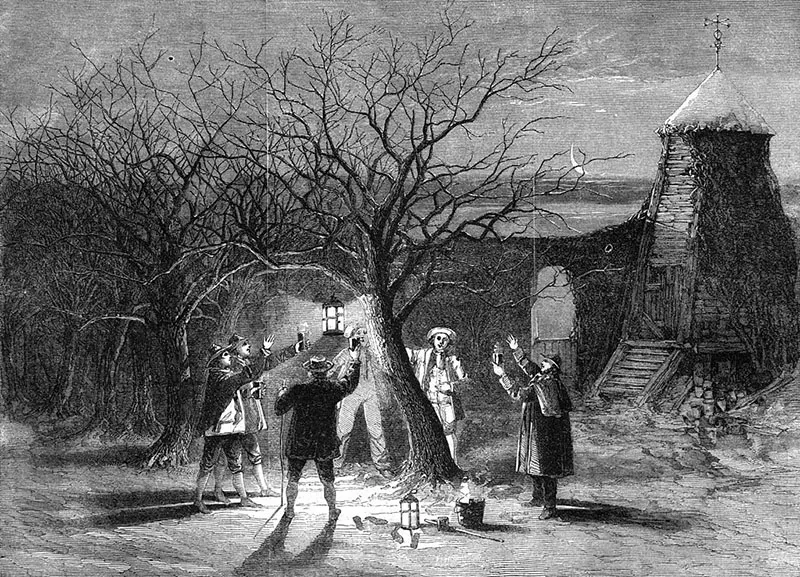
On Twelfth Eve, in Devonshire, it is customary for the farmer to leave his warm fireside, accompanied by a band of rustics, with guns, blunderbusses, etc., presenting an appearance which at other times would be somewhat alarming. Thus armed, the band proceed to an adjoining orchard, where is selected one of the most fruitful and aged of the apple trees, grouping round which they stand and offer up their invocations in the following doggerel rhyme:
Here's to thee
Old apple tree!
Whence thou mayst bud,
And whence thou mayst blow,
And whence thou mayst bear,
Apples enow:
Hats full,
Caps full,
Bushels,bushels, sacks full,
And my pockets full, too!
Huzza! huzza!
The cider-jug is then passed around, and with many a hearty shout, the party fire off their guns, charged with powder only, amidst the branches.
Revellers typically visited local orchards and fruit trees, sang songs, made a hullabaloo (often by banging pots and pans) and were rewarded by the orchard’s grateful owner with some form of warm, spiced alcoholic drink from a communal wassail bowl or cup. Sometimes a topping of apple, known as "lamb's wool," would be added.
The WASSAIL
Give way, give way, ye gates, and win
An easy blessing to your bin
And basket, by our entering in.
May both with manchet stand replete;
Your larders, too, so hung with meat,
That though a thousand, thousand eat,
Yet, ere twelve moons shall whirl about
Their silv'ry spheres, there's none may doubt
But more's sent in than was served out.
Next, may your dairies prosper so,
As that your pans no ebb may know;
But if they do, the more to flow,
Like to a solemn sober stream,
Bank'd all with lilies, and the cream
Of sweetest cowslips filling them.
Then may your plants be press'd with fruit,
Nor bee or hive you have be mute,
But sweetly sounding like a lute.
Last, may your harrows, shares, and ploughs,
Your stacks, your stocks, your sweetest mows,
All prosper by your virgin-vows.
--Alas! we bless, but see none here,
That brings us either ale or beer;
In a dry-house all things are near.
Let's leave a longer time to wait,
Where rust and cobwebs bind the gate;
And all live here with needy fate;
Where chimneys do for ever weep
For want of warmth, and stomachs keep
With noise the servants' eyes from sleep.
It is in vain to sing, or stay
Our free feet here, but we'll away:
Yet to the Lares this we'll say:
'The time will come when you'll be sad,
'And reckon this for fortune bad.
Robert Herrick
Then here’s to the heartening wassail,
Wherever good fellows are found;
Be its master instead of its vassal, and order the glasses around.
Ogden Nash
TWELFTH NIGHT
Now, now the mirth comes
With the cake full of plums,
Where bean's the king of the sport here ;
Beside we must know,
The pea also
Must revel, as queen, in the court here.
Begin then to choose,
This night as ye use,
Who shall for the present delight here,
Be a king by the lot,
And who shall not
Be Twelfth-day queen for the night here.
Which known, let us make
Joy-sops with the cake ;
And let not a man then be seen here,
Who unurg'd will not drink
To the base from the brink
A health to the king and queen here.
Next crown a bowl full
With gentle lamb's wool :
Add sugar, nutmeg, and ginger,
With store of ale too ;
And thus ye must do
To make the wassail a swinger.
Give then to the king
And queen wassailing :
And though with ale ye be whet here,
Yet part from hence
As free from offence
As when ye innocent met here.
Robert Herrick
LAMB'S WOOL
Ingredients
1 liter traditional ale or traditional hard cider
1/2 liter cider
6 apples, peeled and cored
2 tbsp Calvados
1 nutmeg, freshly grated
1 tsp fresh ground ginger
Instructions
Preheat the oven to 120C
Prepare the apples
Core the 6 apples fully, getting rid of the pips. Lightly butter the baking tray. Sprinkle optional Calvados on apples. Place the apples on the baking tray about 6cm (2 inches) apart – they will swell up a little. Bake the apples at 120C for about an hour or so – so they become soft and pulpy and the skins are easy to peel away.
In a large thick bottomed saucepan (which is quite tall to avoid splashes when whisking) add the sugar. Cover the sugar in a small amount of the ale (or cider) and mead and heat gently. Stir continuously until the sugar has dissolved.
dd in the ground ginger and grate in the whole of the nutmeg. Stir, and keeping the pan on a gentle simmer, slowly add in all the rest of the ale (or cider). Leave for 10 minutes on a gentle heat as you deal with the apples.
Take the baked apples out of the oven to cool slightly for 10 minutes – they should now be soft and pulpy.
Break open the apples and scoop out the baked flesh into a bowl, discarding the skin. Then take a fork and mash this apple pulp up, while it is still warm, into a smooth purée with no lumps. Add the apple purée into the ale (or cider) lambswool, mixing it in with a whisk.
Let the saucepan continue to warm everything through for thirty minutes, on a very gentle heat, until ready to drink. When warmed through use the whisk again for a couple of minutes (or use a stick blender) to briskly and vigorously froth the drink up and mix everything together.
The apple and light froth will float to the surface, and depending on how much you have whisked it, the more it looks like lamb’s wool. Note: to traditionally froth drinks up they were normally poured continuously between two large serving jugs to get air into the drink.
Ladle the hot Lambswool into heat-proof mugs or glasses and grate over some nutmeg, or pour the drink into a communal bowl (with several thick pieces of toast in the bottom) to pass around if wassailing.
FARMER'S WASSAIL
Ingredients
1 quart hard cider
1 teaspoon cinnamon
5 or 6 pieces cracked ginger or 1 teaspoon powdered ginger
2 cups dark rum
Juice and thinly pared rind of 1 lemon
Sugar, to taste
2 slices toasted bread (if desired)
6 or 8 baked crab apples or 2 or 3 baked large apples
Instructions
Heat ale in saucepan until just about to boil.
Stir in spices, rum, lemon juice, slivered rind and sugar. Stir until sugar dissolves.
Cover and simmer over low heat for 20 to 30 minutes. Do not boil at any time.
Remove from heat and either pour into punch bowl or individual cups and add toast and apples.
2 After Jesus was born in Bethlehem in Judea, during the time of King Herod, Wise Men from the east came to Jerusalem 2 and asked, “Where is the one who has been born king of the Jews? We saw his star when it rose and have come to worship him.”
3 When King Herod heard this he was disturbed, and all Jerusalem with him. 4 When he had called together all the people’s chief priests and teachers of the law, he asked them where the Messiah was to be born. 5 “In Bethlehem in Judea,” they replied, “for this is what the prophet has written:
6 “‘But you, Bethlehem, in the land of Judah,
are by no means least among the rulers of Judah;
for out of you will come a ruler
who will shepherd my people Israel.’[b]”
7 Then Herod called the Wise Men secretly and found out from them the exact time the star had appeared. 8 He sent them to Bethlehem and said, “Go and search carefully for the child. As soon as you find him, report to me, so that I too may go and worship him.”
9 After they had heard the king, they went on their way, and the star they had seen when it rose went ahead of them until it stopped over the place where the child was. 10 When they saw the star, they were overjoyed. 11 On coming to the house, they saw the child with his mother Mary, and they bowed down and worshiped him. Then they opened their treasures and presented him with gifts of gold, frankincense and myrrh. 12 And having been warned in a dream not to go back to Herod, they returned to their country by another route.
The Escape to Egypt
13 When they had gone, an angel of the Lord appeared to Joseph in a dream. “Get up,” he said, “take the child and his mother and escape to Egypt. Stay there until I tell you, for Herod is going to search for the child to kill him.”
14 So he got up, took the child and his mother during the night and left for Egypt, 15 where he stayed until the death of Herod. And so was fulfilled what the Lord had said through the prophet: “Out of Egypt I called my son.”[c]
16 When Herod realized that he had been outwitted by the Wise Men, he was furious, and he gave orders to kill all the boys in Bethlehem and its vicinity who were two years old and under, in accordance with the time he had learned from the Wise Men. 17 Then what was said through the prophet Jeremiah was fulfilled:
18 “A voice is heard in Ramah,
weeping and great mourning,
Rachel weeping for her children
and refusing to be comforted,
because they are no more.”[d]
The Return to Nazareth
19 After Herod died, an angel of the Lord appeared in a dream to Joseph in Egypt 20 and said, “Get up, take the child and his mother and go to the land of Israel, for those who were trying to take the child’s life are dead.”
21 So he got up, took the child and his mother and went to the land of Israel. 22 But when he heard that Archelaus was reigning in Judea in place of his father Herod, he was afraid to go there. Having been warned in a dream, he withdrew to the district of Galilee, 23 and he went and lived in a town called Nazareth. So was fulfilled what was said through the prophets, that he would be called a Nazarene.
One day the last portrait of Rembrandt and the last bar of Mozart will have ceased to be — though possibly a colored canvas and a sheet of notes will remain — because the last eye and the last ear accessible to their message will have gone.
Oswald Spengler
That is all Ye know on earth, and all ye need to know.
In the thousands of years of human history that predated our current moment of instantaneous communication, the very fabric of human understanding was woven to some extent out of delay, belatedness, waiting. All objects were made of slow time in the way that Copley’s painting concretizes its own situation of delay. I think that if we want to teach history responsibly, we need to give students an opportunity to understand the formative values of time and delay. The teaching of history has long been understood as teaching students to imagine other times; now, it also requires that they understand different temporalities. So time is not just a negative space, a passive intermission to be overcome. It is a productive or formative force in itself.
The Citizens of America, placed in the most enviable condition, as the sole Lords and Proprietors of a vast tract of Continent, comprehending all the various Soils and Climates of the World and abounding with all the necessaries and conveniences of life, are now, by the late satisfactory pacification, acknowledged to be possessed of absolute freedom and Independancy—They are from this period to be considered as the Actors, on a most conspicuous Theatre, which seems to be peculiarly designated by Providence for the display of human greatness and felicity, here they are not only surrounded with every thing which can contribute to the completion of private and domestic enjoyment, but Heaven has crowned all its other blessings by giving a fairer opportunity for political happiness, than any other Nation has ever been favored with—Nothing can illustrate these observations more forcibly than a recollection of the happy conjuncture of times and circumstances under which our Republic assumed its Rank among the Nations—the foundation of our Empire was not laid in the gloomy Age of ignorance and superstition, but at an Epocha when the rights of Mankind were better understood and more clearly defined, than at any former period—The researches of the human Mind after social happiness have been carried to a great extent, the treasures of knowledge acquired by the labours of Philosophers, Sages and Legislators, through a long succession of years, are laid open for our use and their collected wisdom may be happily applied in the establishment of our forms of Government. The free cultivation of letters, the unbounded extension of Commerce, the progressive Refinement of manners, the growing liberality of sentiment, and, above all, the pure and benign light of Revelation, have had a meliorating influence on Mankind and encreased the blessings of Society. At this Auspicious period the United States came into existence as a Nation, and if their Citizens should not be completely free & happy, the fault will be entirely their own.
Such is our situation, and such are our prospects: but nowithstanding the Cup of blessing is thus reached out to us, notwithstanding happiness is ours if we have a disposition to seize the occasion and make it our own, yet it appears to me there is an option still left to the United States of America; that it is in their choice and depends upon their conduct, whether they will be respectable and prosperous or contemptible and Miserable as a Nation. This is the time of their political probation: this is the moment when the eyes of the whole World are turned upon them—This is the moment to establish or ruin their National Character for ever—This is the favorable moment to give such a tone to our fœderal Government, as will enable it to answer the ends of its institution—or this may be the ill fated moment for relaxing the powers of the Union, annihilating the cement of the Confederation and exposing us to become the sport of European Politicks, which may play one State against another, to prevent their growing importance and to serve their own interested purposes; for according to the System of Policy the States shall adopt at this moment, they will stand or fall, and by their confirmation or lapse, it is yet to be decided whether the Revolution must ultimately be considered as a blessing or a curse: a blessing or a curse, not to the present Age alone, for with our fate will the destiny of unborn Millions be involved.
That music is as essential to the home as books or flowers, no one of this age will deny. Nearly every home has music in some form. But the lover of books has more than a shelf or two. He wants a library. The lover of flowers wants something more than a border. He wants a garden. And so, more and more lovers of music are installing in their homes the greatest musical instrument in the world, the pipe organ.
The passions simmer and resimmer in solitude: the passionate being prepares his explosions and his exploits in this solitude. And all the spaces of our past moments of solitude, the spaces in which we have suffered from solitude, enjoyed, desired and compromised solitude, remain indelible within us, and precisely because the human being wants them to remain so. He knows instinctively that this space identified with his solitude is creative; that even when it is forever expunged from the present, when, henceforth, it is alien to all the promises of the future, even when we no longer have a garret, when the attic room is lost and gone, there remains the fact that we once loved a garret, once lived in an attic. We return to them in our night dreams. These retreats have the value of a shell.
The true poet is like a man who is happy anywhere, in endless measure, if he is allowed to look at leaves and grass, to see the sun rise and set. The false poet travels abroad in strange countries and hopes to be uplifted by the mountains of Switzerland, the sky and sea of Italy. He comes to them and is dissatisfied. He is not as happy as the man who stays at home and sees the apple trees flower in spring, and hears the small birds singing among the branches.
The brave things in the old tales and songs, Mr. Frodo: adventures, as I used to call them. I used to think that they were things the wonderful folk of the stories went out and looked for, because they wanted them, because they were exciting and life was a bit dull, a kind of sport, as you might say. But that's not the way of it with the tales that really mattered, or the ones that stay in the mind. Folk seem to have been just landed in them, usually - their paths were laid that way, as you put it. But I expect they had lots of chances, like us, of turning back, only they didn't. And if they had, we shouldn't know, because they'd have been forgotten. We hear about those as just went on - and not all to a good end, mind you; at least not to what folk inside a story and not outside it call a good end. You know, coming home, and finding things all right, though not quite the same - like old Mr. Bilbo. But those aren't always the best tales to hear, though they may be the best tales to get landed in!
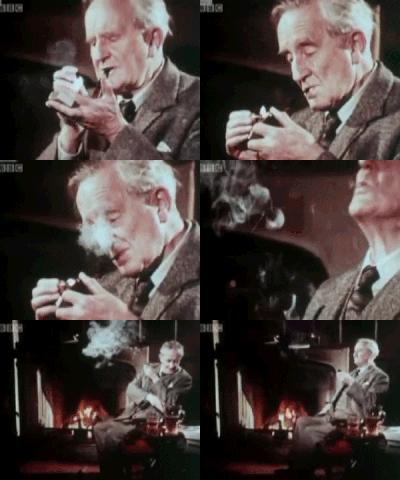
J.R.R. Tolkien, born on this day in 1892, from The Two Towers
What about the main thing in life, all its riddles? If you want, I'll spell it out for you right now. Do not pursue what is illusionary -- property and position, all that is gained at the expense of your nerves decade after decade, and is confiscated in one fell night. Live with a steady superiority over life -- don't be afraid of misfortune, and do not yearn for happiness; it is, after all, all the same: the bitter doesn't last forever, and the sweet never fills the cup to overflowing. It is enough if you don't freeze in the cold and if thirst and hunger don't claw at your insides. If your back isn't broken, if your feet can walk, if both arms can bend, if both eyes can see, if both ears hear, then whom should you envy? And why? Our envy of others devours us most of all. Rub your eyes and purify your heart -- and prize above all else in the world those who love you and who wish you well. Do not hurt them or scold them, and never part from any of them in anger; after all, you simply do not know: it may be your last act before your arrest, and that will be how you are imprinted on their memory.
To nine out of ten of you the choice which could lead to scoundrelism will come, when it does come, in no very dramatic colors. Obviously bad men, obviously threatening or bribing, will almost certainly not appear. Over a drink or a cup of coffee, disguised as a triviality and sandwiched between two jokes, from the lips of a man, or woman, whom you have recently been getting to know rather better and whom you hope to know better still-just at the moment when you are most anxious not to appear crude, or naif, or a prig -- the hint will come. It will be the hint of something which is not quite in accordance with the technical rules of fair play: something which the public, the ignorant, romantic public, would never understand: something which even the outsiders in your own profession are apt to make a fuss about: but something, says your new friend, which "we" -- and at the word "we" you try not to blush for mere pleasure -something "we always do." And you will be drawn in, if you are drawn in, not by desire for gain or ease, but simply because at that moment, when the cup was so near your lips, you cannot bear to be thrust back again into the cold outer world. It would be so terrible to see the other man's face-that genial, confidential, delightfully sophisticated face-turn suddenly cold and contemptuous, to know that you had been tried for the Inner Ring and rejected. And then, if you are drawn in, next week it will be something a little further from the rules, and next year something further still, but all in the jolliest, friendliest spirit. It may end in a crash, a scandal, and penal servitude: it may end in millions, a peerage and giving the prizes at your old school. But you will be a scoundrel.
That is my first reason. Of all the passions the passion for the Inner Ring is most skillful in making a man who is not yet a very bad man do very bad things. My second reason is this. The torture allotted to the Danaids in the classical underworld, that of attempting to fill sieves with water, is the symbol not of one vice but of all vices. It is the very mark of a perverse desire that it seeks what is not to be had. The desire to be inside the invisible line illustrates this rule. As long as you are governed by that desire you will never get what you want. You are trying to peel an onion: if you succeed there will be nothing left. Until you conquer the fear of being an outsider, an outsider you will remain.
Delâtre, Night Scene with Church Steeple in Distance, 1877
What a night it was! The jagged masses of heavy dark cloud were rolling at intervals from horizon to horizon, and thin white wreaths covered the stars. Through all the rush of the cloud river the moon swam, breasting the waves and disappearing again in the darkness.
I walked up and down, drinking in the beauty of the quiet earth and the changing sky. The night was absolutely silent. Nothing seemed to be abroad. There was no scurrying of rabbits, or twitter of the half-asleep birds. And though the clouds went sailing across the sky, the wind that drove them never came low enough to rustle the dead leaves in the woodland paths. Across the meadows I could see the church tower standing out black and grey against the sky.
There seemed to be a magic all round that fire of big logs quietly smouldering in the woods upon Autumn's discarded robe that lay brilliant there; and it was not the magic of Elfland, nor had Ziroonderel called it up with her wand: it was only a magic of the wood's very own.
Many years ago, it dawned on me that reading was “listening on paper.” (Writing, to take it a bit further, is essentially “teaching on paper.”) Mitch’s invitation to Deep Listening reminded me of the power of rereading. Deep Understanding does not happen on the first read, the first listen, or the first reflection. I can only imagine how many times Peter Koestenbaum read his own source material, reflected, discussed, and wrote about the ideas included in his books before they went to print. All of which reminds me that one of the most effective paths to Deep Understanding might be revisiting writing that already resonated with us, looking for what more we can uncover. Rereading might be a good regimen to consider adopting. New understanding not only comes from new material, but equally often from experiencing familiar work with fresh eyes, months or even years later. What we see on the second read is almost never the same as it was on the first time through.
Doubtless this division of time can be described as an artificiality; but doubtless also it can be described more correctly, as a great artificial thing ought always to be described – that is, as one of the great masterpieces of man. Man has, as I have urged in the case of religion, perceived with a tolerable accuracy his own needs. He has seen that we tend to tire of the most eternal splendours, and that a mark on our calendar, or a crash of bells at midnight maybe, reminds us that we have only recently been created. Let us make New Year resolutions, but not only resolutions to be good, but also resolutions to notice that we have feet, and thank them (with a courtly bow) for carrying us.
Among other things, you'll find that you're not the first person who was ever confused and frightened and even sickened by human behavior. You're by no means alone on that score, you'll be excited and stimulated to know. Many, many men have been just as troubled morally and spiritually as you are right now. Happily, some of them kept records of their troubles. You'll learn from them -- if you want to. Just as someday, if you have something to offer, someone will learn something from you. It's a beautiful reciprocal arrangement. And it isn't education. It's history. It's poetry.
"The strength of a man’s virtue should not be measured by his special exertions but by his habitual acts.” Blaise Pascal
SEARCH THIS BLOG
REMEMBER
SUPPORT OUR TROOPS
C.S. LEWIS
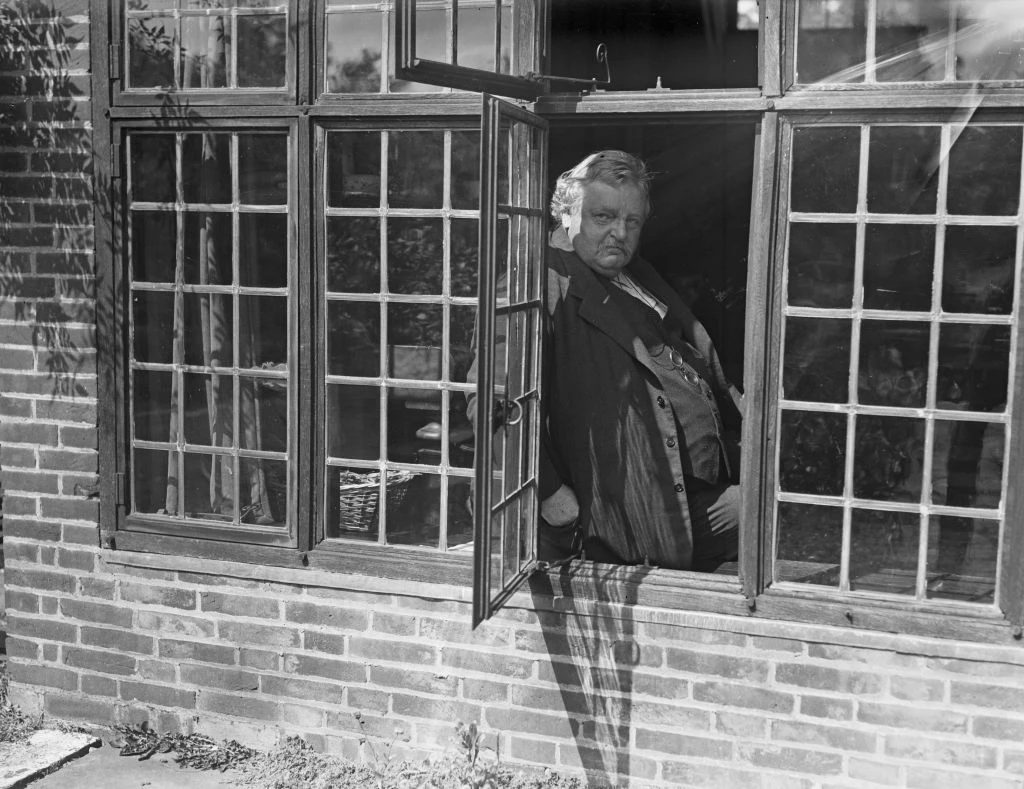
G.K. CHESTERTON
"Tradition refuses to submit to the small and arrogant oligarchy of those who merely happen to be walking about."
KENNETH GRAHAME
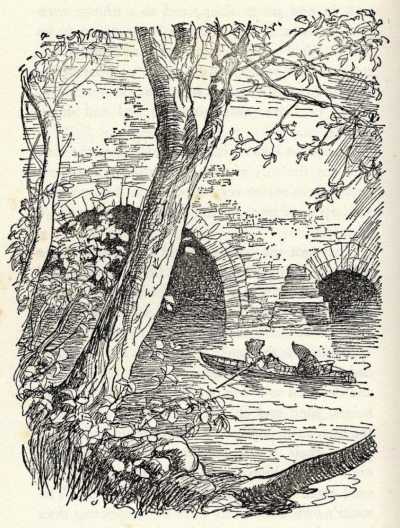
"O Mole! the beauty of it! The merry bubble and joy, the thin, clear, happy call of the distant piping!"
BARRY HINES
"That's why it makes me mad when I take her out and I'll hear somebody say, 'Look, there's Billy Casper there wi' his pet hawk. I could shout at 'em; it's not a pet, Sir, hawks are not pets. Or when folks stop me and say, 'Is it tame?' Is it heck tame, it's trained that's all. It's fierce, and it's wild, an' it's not bothered about anybody, not even about me, right. And that's why it's great.Look, there's Billy Casper there wi' his pet hawk.' I could shout at 'em. It's not a pet, Sir. Hawks are not pets. Or when folks stop me and say, 'Is it tame?' Is it heck tame, it's trained, that's all. It's fierce, and it's wild, an' it's not bothered about anybody, not even about me right. And that's why it's great." (A Kestrel for a Knave)
GEORDIE WALKER
FIORENTINO
The Musician Angel
ECHO & THE BUNNYMEN
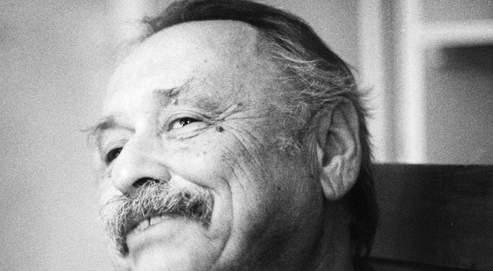
JIM HARRISON
37. Beware, O wanderer, the road is walking too, said Rilke one day to no one in particular as good poets everywhere address the six directions. If you can’t bow, you’re dead meat. You’ll break like uncooked spaghetti. Listen to the gods. They’re shouting in your ear every second.
GIMME FIIIVE!
THE FURS
Suggestions
WOLFGANG AMADEUS MOZART
"When I am, as it were, completely myself, entirely alone and of good cheer – say travelling in a carriage or walking after a good meal, or during the night when I cannot sleep – it is on such occasions that my ideas flow best and most abundantly. Whence, and how, they come I know not ; nor can I force them. Those ideas that please me I retain in memory and am accustomed, as I have been told, to hum them to myself. If I continue in this way, it soon occurs to me how I may turn this dainty morsel to account, so as to make a good dish of it. That is to say, agreeable to the rules of counterpoint, to the peculiarities of various instruments etc. All this fires my soul, and, provided I am not disturbed, my subject enlarges itself, becomes methodised, and defined, and the whole, though it be long, stands almost complete and finished in my mind, so that I can survey it like a fine picture or a beautiful statue at a glance. Nor do I hear in my imagination the parts successively, but I hear them, as it were, all at once. What a delight this is, I cannot tell."
HOOKY
MARY SHELLEY
GREEN MAN
"Feel wind stir the greenwood, or turn pages of a book made from his flesh -- lean close, then, and hear, Green Man's voice."
WALLACE STEVENS
"Technique is the proof of your seriousness."
N.C. WYETH
Cold Maker, Winter, 1909
Dick's Pour House, Lake Leelanau, Michigan
Smelt Basket
PanAm "Pacific Clipper" (1941)
JOHN SINGER SARGENT
Elizabeth Winthrop Chanler (detail), 1893
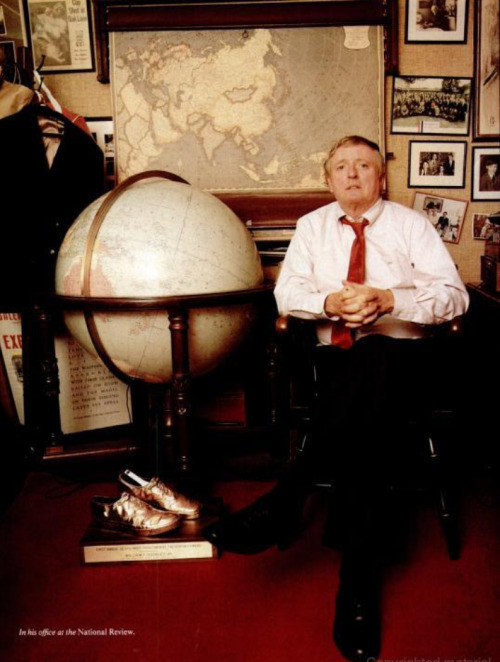
WILLIAM F. BUCKLEY JR.
"We are so concerned to flatter the majority that we lose sight of how very often it is necessary, in order to preserve freedom for the minority, let alone for the individual, to face that majority down."
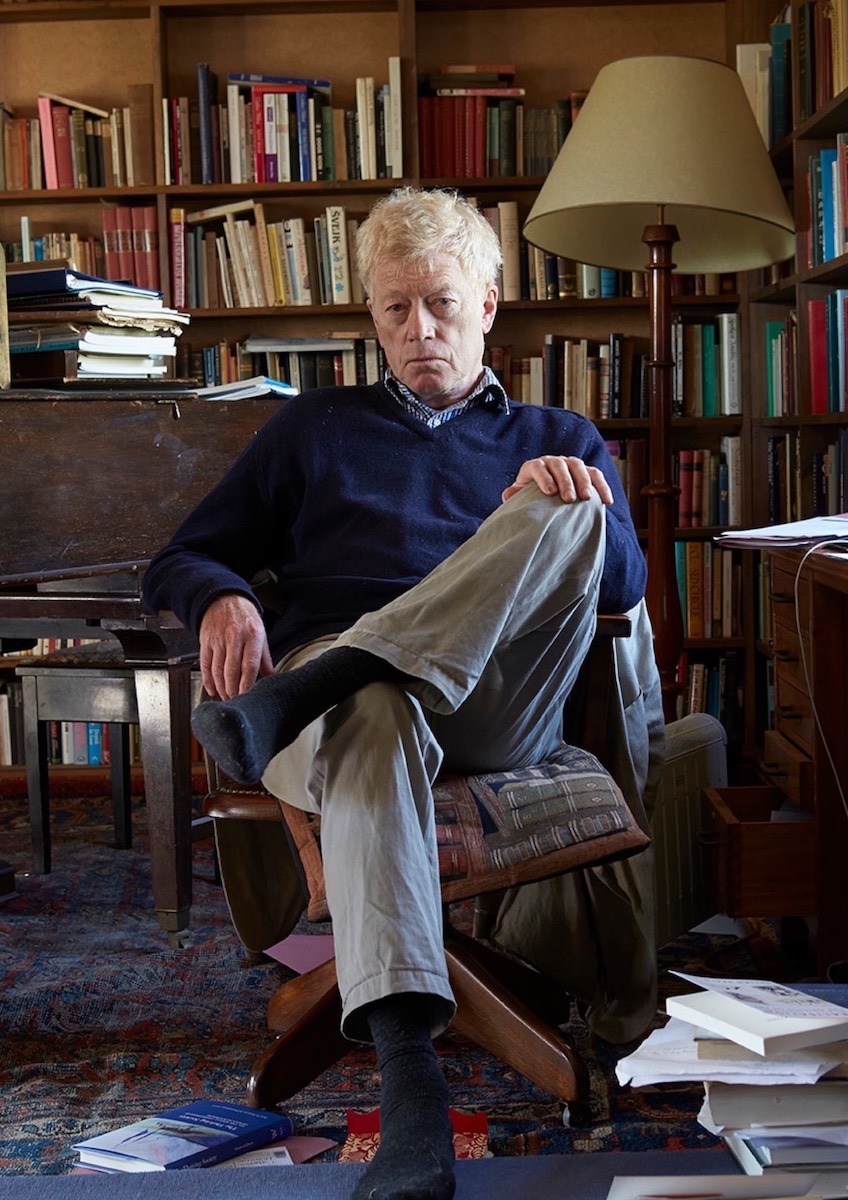
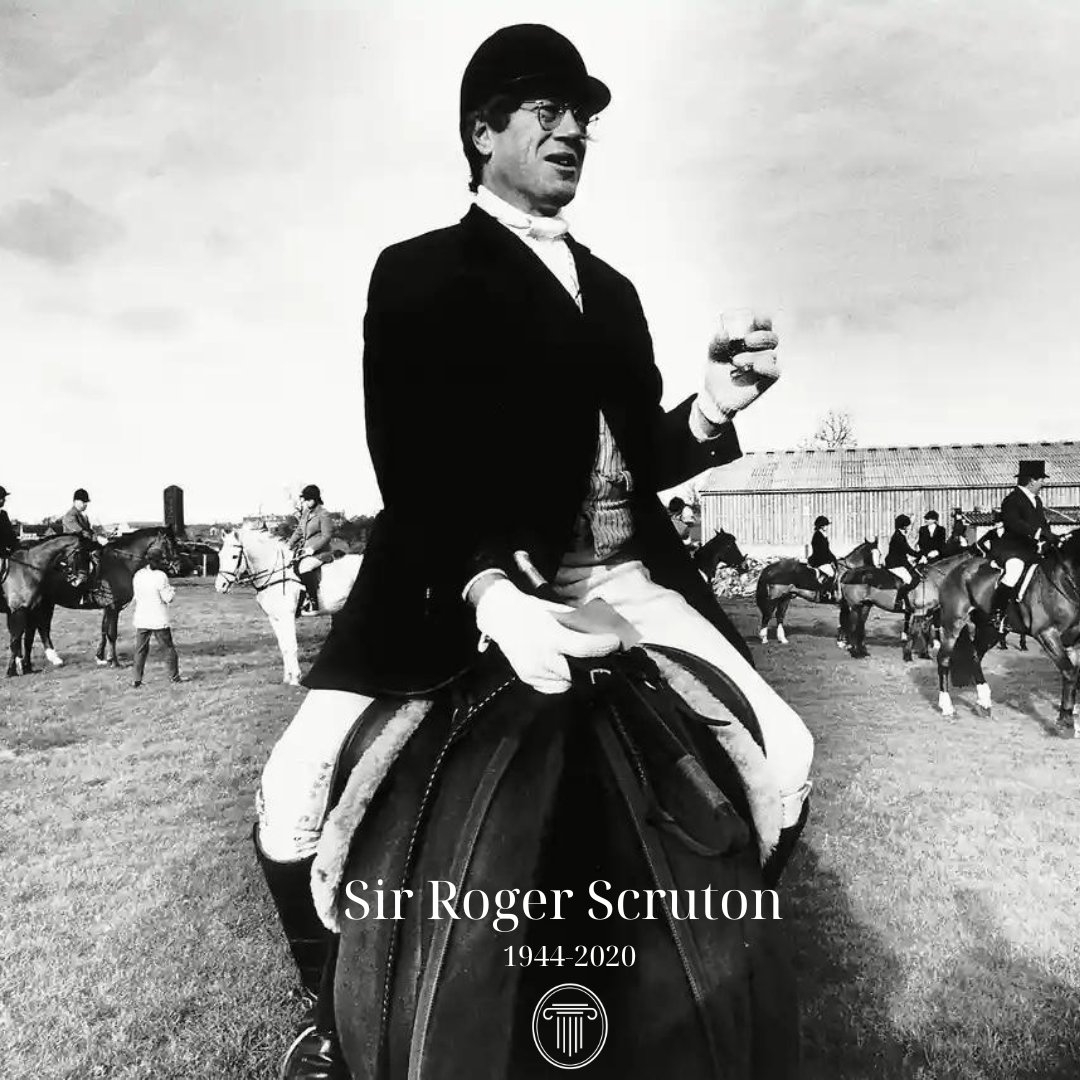
SIR ROGER SCRUTON
"Beauty is a value, as important as truth and goodness."
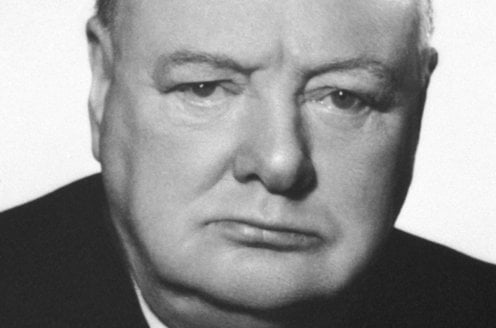
SIR WINSTON CHURCHILL
"A gentleman does not have a ham sandwich without mustard."
J.R.R. TOLKIEN
"If more of us valued food and cheer and song above hoarded gold, it would be a merrier world."
JOHN MASEFIELD
"When the midnight strikes in the belfry dark/And the white goose quakes at the fox’s bark/We saddle the horse that is hayless, oatless/Hoofless and pranceless, kickless and coatless/We canter off for a midnight prowl/Whoo-hoo-hoo, says the hook-eared owl."
IKKYU
VIRGINIA WOOLF
OLD MISSION
JOHN QUINCY ADAMS
"However tiresome to others, the most indefatigable orator is never tedious to himself. The sound of his own voice never loses its harmony to his own ear; and among the delusions, which self-love is ever assiduous in attempting to pass upon virtue, he fancies himself to be sounding the sweetest tones."
SIR KENNETH GRAHAME
"Take the Adventure, heed the call, now, ere the irrevocable moment passes! ‘Tis but a banging of the door behind you, a blithesome step forward, and you are out of the old life and into the new! Then some day, some day long hence, jog home here if you will, when the cup has been drained and the play has been played, and sit down by your quiet river with a store of goodly memories for company."
JIM HARRISON
"Barring love I'll take my life in large doses alone--rivers, forests, fish, grouse, mountains. Dogs."
WILLIAM WORDSWORTH
WALT WHITMAN
The spotted hawk swoops by and accuses me, he complains of my gab and my loitering. I too am not a bit tamed, I too am untranslatable, I sound my barbaric yawp over the roofs of the world. The last scud of day holds back for me, It flings my likeness after the rest and true as any on the shadow’d wilds, It coaxes me to the vapor and the dusk. I depart as air, I shake my white locks at the runaway sun, I effuse my flesh in eddies, and drift it in lacy jags. I bequeath myself to the dirt to grow from the grass I love, If you want me again look for me under your boot-soles. You will hardly know who I am or what I mean, But I shall be good health to you nevertheless, And filter and fibre your blood. Failing to fetch me at first keep encouraged, Missing me one place search another, I stop somewhere waiting for you.
SAMUEL ADAMS
"It is a very great mistake to imagine that the object of loyalty is the authority and interest of one individual man, however dignified by the applause or enriched by the success of popular actions."
TAO TE CHING, Lao Tzu
MARCUS AURELIUS
"Is your cucumber bitter? Throw it away. Are there briars in your path? Turn aside. That is enough. Do not go on and say, 'Why were things of this sort ever brought into this world?' neither intolerable nor everlasting - if thou bearest in mind that it has its limits, and if thou addest nothing to it in imagination. Pain is either an evil to the body (then let the body say what it thinks of it!)-or to the soul. But it is in the power of the soul to maintain its own serenity and tranquility."
VINCENT van GOGH
"What am I in the eyes of most people? A nonentity or an oddity or a disagreeable person — someone who has and will have no position in society, in short a little lower than the lowest. Very well — assuming that everything is indeed like that, then through my work I’d like to show what there is in the heart of such an oddity, such a nobody. This is my ambition, which is based less on resentment than on love in spite of everything, based more on a feeling of serenity than on passion. Even though I’m often in a mess, inside me there’s still a calm, pure harmony and music. In the poorest little house, in the filthiest corner, I see paintings or drawings. And my mind turns in that direction as if with an irresistible urge. As time passes, other things are increasingly excluded, and the more they are the faster my eyes see the picturesque. Art demands persistent work, work in spite of everything, and unceasing observation."
RICK LEACH (1975-1978)
48 career games started; 2,176 rushing yards, 34 touchdowns; 4,284 passing yards, 48 touchdowns; 7-2 career record versus Michigan State, Notre Dame, and Ohio combined; three-time All-American, All-Big Ten, and Heisman finalist
RICHARD ADAMS
"One cloud feels lonely."
JOHN SINGER SARGENT
"Cultivate an ever continuous power of observation. Wherever you are, be always ready to make slight notes of postures, groups and incidents. Store up in the mind a continuous stream of observations."
WINSLOW HOMER
The Lone Boat, North Woods Club, Adirondacks, 1892
THOMAS BABINGTON MACAULEY
And how can man die better / Than facing fearful odds / For the ashes of his fathers / And the temples of his gods
WATERHOUSE, BOREAS, 1903
WHITE HORSES Far out at sea / There are horses to ride, / Little white horses / That race with the tide. / Their tossing manes / Are the white sea-foam, / And the lashing winds / Are driving them home- / To shadowy stables / Fast they must flee, / To the great green caverns / Down under the sea. Irene Pawsey
CINDY WILSON
UMBERTO LIMONGIELLO
"The euphony transformed me and inundated my soul in a roguish countenance, the likes of which I had know well in younger days. Such impishness soon drove out the complaints of the day."
F. SCOTT FITZGERALD
"I don't want to repeat my innocence. I want the pleasure of losing it again.” This Side of Paradise
RALPH WALDO EMERSON
"In skating over thin ice, our safety is in our speed."
ROBERT PLANT
GARY SNYDER
"There are those who love to get dirty and fix things. They drink coffee at dawn, beer after work. And those who stay clean, just appreciate things. At breakfast they have milk and juice at night. There are those who do both, they drink tea.”
IMMANUEL KANT
"Enlightenment is man's emergence from his self-imposed nonage. Nonage is the inability to use one's own understanding without another's guidance. This nonage is self-imposed if its cause lies not in lack of understanding but in indecision and lack of courage to use one's own mind without another's guidance. Dare to know! Sapere aude. 'Have the courage to use your own understanding,' is therefore the motto of the enlightenment."
DAN CAMPBELL
"We’re gonna kick you in the teeth, and when you punch us back we’re gonna smile at you, and when you knock us down we’re going to get up, and on the way, we’re going to bite a kneecap off. We’re going to stand up, and it’s going to take two more shots to knock us down. And on the way up, we’re going to take your other kneecap, and we’re going to get up, and it’s gonna take three shots to get us down. And when we do, we’re gonna take another hunk out of you."
THOMAS HUXLEY
"Sit down before fact as a little child, be prepared to give up every conceived notion, follow humbly wherever and whatever abysses nature leads, or you will learn nothing."
JOHN DRYDEN
"Bold knaves thrive without one grain of sense, but good men starve for want of impudence.”
WILLIAM BLAKE
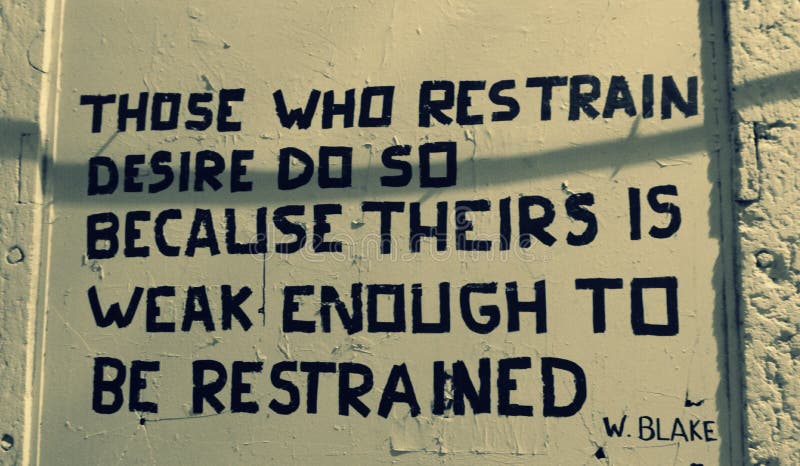
"Those who restrain desire do so because theirs is weak enough to be restrained."
HERMANN HESSE
"Whoever wants music instead of noise, joy instead of pleasure, soul instead of gold, creative work instead of business, passion instead of foolery, finds no home in this trivial world of ours."
GEORGE MACDONALD
"Certainly work is not always required of a man. There is such a thing as a sacred idleness, the cultivation of which is now fearfully neglected."
REV. DR. CORNEL WEST
"You have to have a habitual vision of greatness … you have to believe in fact that you will refuse to settle for mediocrity. You won’t confuse your financial security with your personal integrity, you won’t confuse your success with your greatness or your prosperity with your magnanimity … believe in fact that living is connected to giving.”
IT'S A WONDERFUL LIFE
"You see George, you've really had a wonderful life. Don't you see what a mistake it would be to just throw it away?"
WOODY
"There's a basic rule which runs through all kinds of music, kind of an unwritten rule. I don't know what it is, but I've got it."
MIGGY
"Exuberance is beauty." (William Blake)
Festina Lente
GARAGE SALINGER
JOHN RUSKIN
"Sunshine is delicious, rain is refreshing, wind braces us up, snow is exhilarating; there is really no such thing as bad weather, only different kinds of good weather."
Spitzweg, The Bookworm, 1850
"Literature is the most agreeable way of ignoring life.” Fernando Pessoa
WILLIAM F. BUCKLEY JR.
"[I]in the spiky fall season, days like today with the little chill that makes one feel freshly laundered ..."
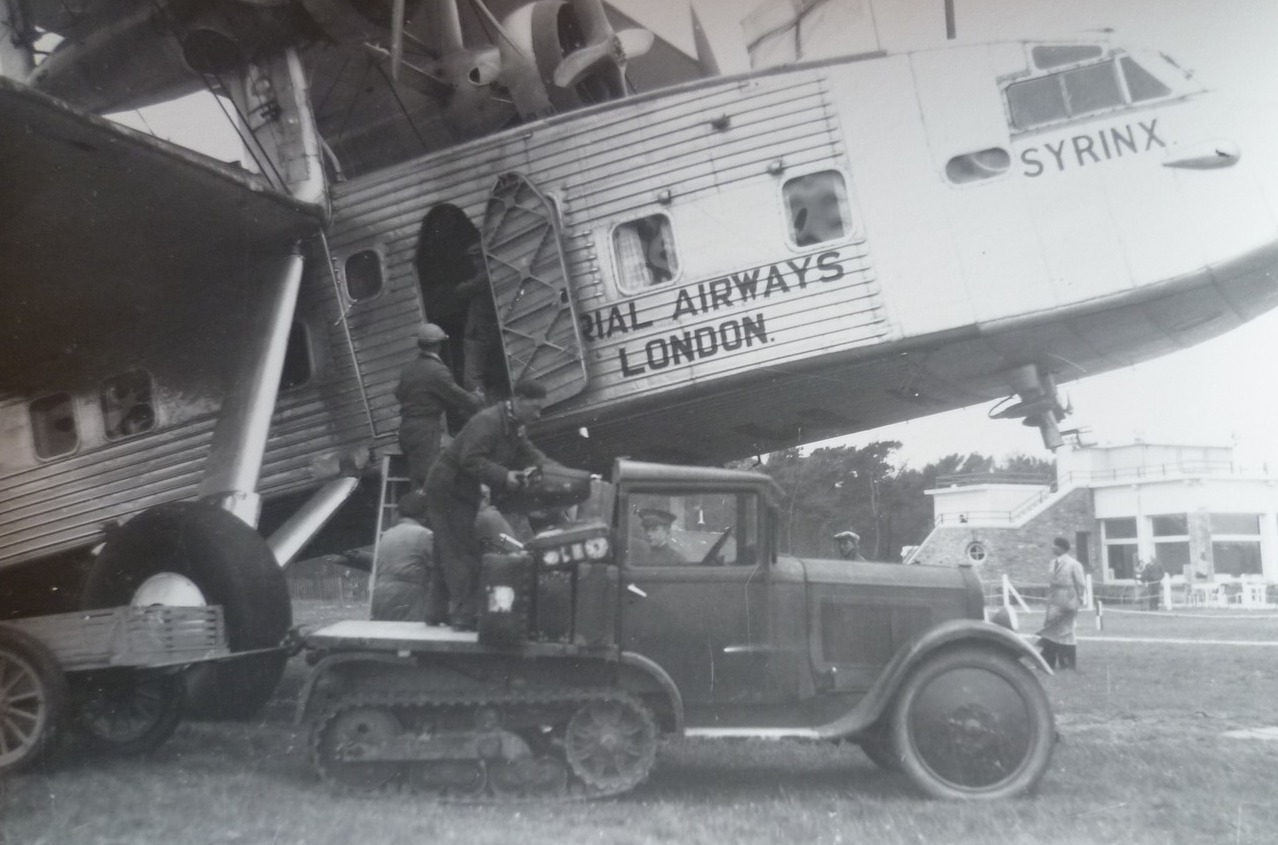
SYRINX
TINA WEYMOUTH
WALT WHITMAN
"Do I contradict myself? Very well then I contradict myself, (I am large, I contain multitudes)."
H.L. MENCKEN
"Every normal man must be tempted, at times, to spit on his hands, hoist the black flag, and begin slitting throats. But this business, alas, is fatal to the placid moods and fine other-worldliness of the poet."
FYODOR DOSTOEVSKY
"I say let the world go to hell, but I should always have my tea."
DUDLEY
"We all come from our own little planets. That's why we're all different. That's what makes life interesting."
HERMAN MELVILLE
"We're just dancing in the rain ..."
LEO TOLSTOY
"If, then, I were asked for the most important advice I could give, that which I considered to be the most useful to the men of our century, I should simply say: in the name of God, stop a moment, cease your work, look around you."
HAROLD BLOOM
"It is hard to go on living without some hope of encountering the extraordinary."
I'm reading ...
Unlikely General: "Mad" Anthony Wayne and the Battle for America
CURRENT MOON
ARTHUR RIMBAUD
"I have stretched ropes from steeple to steeple; Garlands from window to window; Golden chains from star to star ... And I dance."
RUMI
"When you do things from your soul, you feel a river moving in you, a joy.”
Shunryu Suzuki, "Beginner's Mind"
"In the beginner's mind there are many possibilities, but in the expert's there are few."
JIM HARRISON
¨The danger of civilization, of course, is that you will piss away your life on nonsense.¨
NEW ORDER
van EYCK, PORTRAIT of a MAN in a RED TURBAN, 1433
"The Poet is the Priest of The Invisible." Wallace Stevens
Atget, Notre-Dame de Paris, 1923
Technique.
"Technique is the proof of your seriousness." Wallace Stevens
TIGHT LINES!
W.B. Yeats
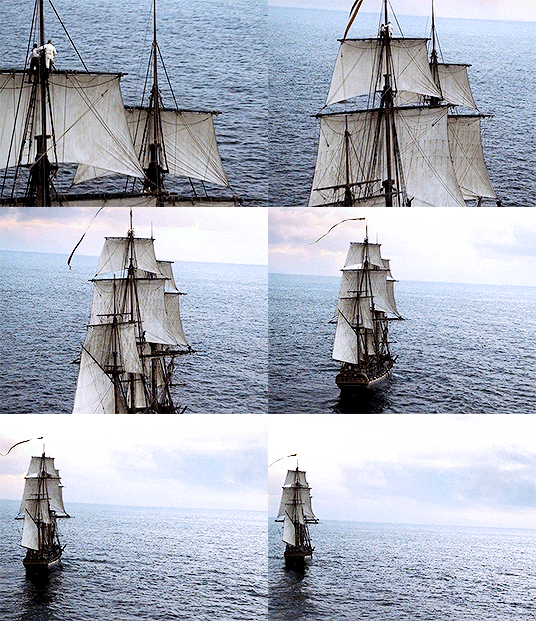
THE CAPTAIN
NICHOLAS HAWKSMOOR
"Whatever is goode in its kinde ought to be preserv'd in respect for antiquity, as well as our present advantage, for destruction can be profitable to none but such as live by it."
THOMAS PAINE
"Whatever is my right as a man is also the right of another; and it becomes my duty to guarantee as well as to possess."
LIBERTY
"...the imprisoned lightning"
WILLIAM F. BUCKLEY JR.
"The best defense against a usurpatory government is an assertive citizenry."
SIR PHILIP PULLMAN
"We don’t need a list of rights and wrongs, tables of dos and don’ts: we need books, time, and silence."
TRUE-BORN
THOMAS MERTON
C.S. LEWIS
“We may ignore, but we can nowhere evade, the presence of God. The world is crowded with him. He walks everywhere incognito.” (Thank you, Mr. Wade)