"I am not one who was born in the custody of wisdom. I am one who is fond of olden times and intense in quest of the sacred knowing of the ancients." Gustave Courbet
Showing posts with label david. Show all posts

30 August 2026

Happy Birthday, Jacques-Louis David

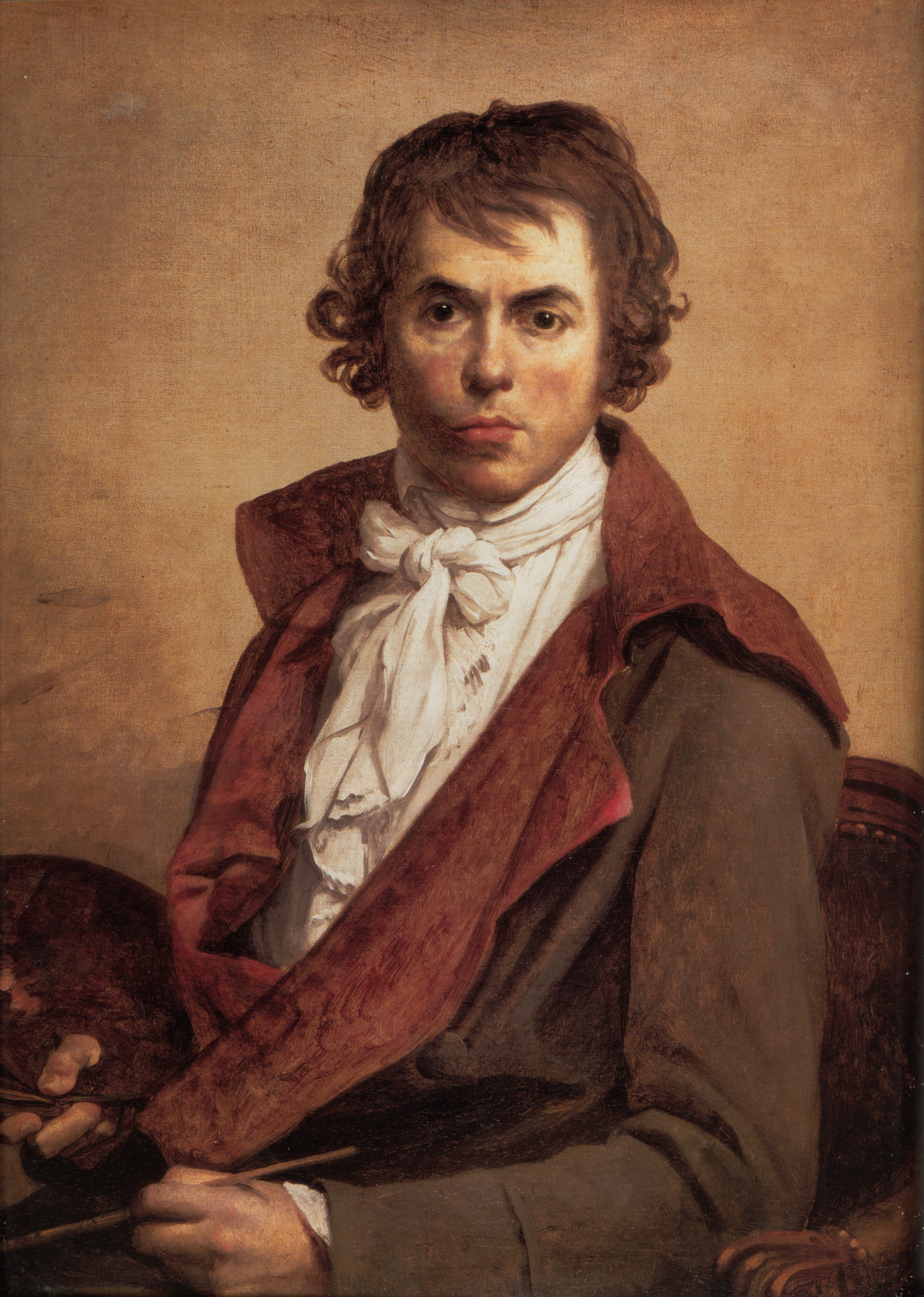
David, Self-Portrait, 1794


In the arts the way in which an idea is rendered, and the manner in which it is expressed, is much more important than the idea itself. The artist must be a philosopher. Socrates the skilled sculptor, Jean-Jacques the good musician, and the immortal Poussin, tracing on the canvas the sublime lessons of philosophy, are so many proofs that an artistic genius should have no other guide except the torch of reason.

Jacques-Louis David, born on this day in 1748

05 January 2025

Worship.

David, Adoration of the Wise Men, 1515


The Wise Men Visit the Messiah
2 After Jesus was born in Bethlehem in Judea, during the time of King Herod, Wise Men from the east came to Jerusalem 2 and asked, “Where is the one who has been born king of the Jews? We saw his star when it rose and have come to worship him.”

3 When King Herod heard this he was disturbed, and all Jerusalem with him. 4 When he had called together all the people’s chief priests and teachers of the law, he asked them where the Messiah was to be born. 5 “In Bethlehem in Judea,” they replied, “for this is what the prophet has written:

6 “‘But you, Bethlehem, in the land of Judah,
    are by no means least among the rulers of Judah;
for out of you will come a ruler
    who will shepherd my people Israel.’[b]”

7 Then Herod called the Wise Men secretly and found out from them the exact time the star had appeared. 8 He sent them to Bethlehem and said, “Go and search carefully for the child. As soon as you find him, report to me, so that I too may go and worship him.”

9 After they had heard the king, they went on their way, and the star they had seen when it rose went ahead of them until it stopped over the place where the child was. 10 When they saw the star, they were overjoyed. 11 On coming to the house, they saw the child with his mother Mary, and they bowed down and worshiped him. Then they opened their treasures and presented him with gifts of gold, frankincense and myrrh. 12 And having been warned in a dream not to go back to Herod, they returned to their country by another route.

The Escape to Egypt
13 When they had gone, an angel of the Lord appeared to Joseph in a dream. “Get up,” he said, “take the child and his mother and escape to Egypt. Stay there until I tell you, for Herod is going to search for the child to kill him.”

14 So he got up, took the child and his mother during the night and left for Egypt, 15 where he stayed until the death of Herod. And so was fulfilled what the Lord had said through the prophet: “Out of Egypt I called my son.”[c]

16 When Herod realized that he had been outwitted by the Wise Men, he was furious, and he gave orders to kill all the boys in Bethlehem and its vicinity who were two years old and under, in accordance with the time he had learned from the Wise Men. 17 Then what was said through the prophet Jeremiah was fulfilled:

18 “A voice is heard in Ramah,
    weeping and great mourning,
Rachel weeping for her children
    and refusing to be comforted,
    because they are no more.”[d]

The Return to Nazareth
19 After Herod died, an angel of the Lord appeared in a dream to Joseph in Egypt 20 and said, “Get up, take the child and his mother and go to the land of Israel, for those who were trying to take the child’s life are dead.”

21 So he got up, took the child and his mother and went to the land of Israel. 22 But when he heard that Archelaus was reigning in Judea in place of his father Herod, he was afraid to go there. Having been warned in a dream, he withdrew to the district of Galilee, 23 and he went and lived in a town called Nazareth. So was fulfilled what was said through the prophets, that he would be called a Nazarene.
19 November 2024

Rapture.

Goines, Garlic, 1977


Elizabeth David, from French Country Cooking ...

GARLIC
Anyone who may be alarmed by the quantities of garlic used in some of the recipes in this book, particularly in the Catalan and Provencal dishes, may be interested in the following story of the beautiful mannequin who found out how to indulge her insatiable appetite for garlic and at the same time keep her job. That girl was perfectly right. Eating garlic is a question of habit and digestion. There is also the indisputable fact that garlic changes its character according to the amount used. Half a clove crushed into the salad dressing has a more penetrating aroma than a J lb stewed with a chicken.

As a matter of fact, the best way of cooking that Poulet Bearnais of which Ford Madox Ford writes, is to place the peeled cloves of garlic (by all means use 2 lb if you can face peeling so much) underneath the chicken before putting it on to roast. The perfume coming from the kitchen while the roasting is going on is indescribably delicious. The chicken (or, for that matter, a leg of mutton) will be permeated with the flavour, but not unduly so; those who enjoy it may eat the garlic, inv pregnated with the juice from the roast, while those who do not can do without.
I came yesterday, also in Fitzroy Street, at a party, upon a young lady who was the type of young lady I did not think one ever could meet. She was one of those ravishing and, like the syrens of the Mediter/ ranean and Ulysses, fabulous beings who display new creations to the sound of harps, shawms and teacups. What made it all the more astounding was that she was introduced to me as being one of the best cooks in London - a real cordon bleu, and then some. She was, as you might expect, divinely tall and appeared to appear through such mists as surrounded Venus saving a warrior. But I found that she really could talk, if awfully, and at last she told me something that I did not know - about garlic. . . .

As do - as must - all good cooks, she used quantities of that bulb. It occurred to me at once that this was London and her work was social. Garlic is all very well on the bridge between Beaucaire and Tarascon or in the arena at Nimes amongst sixteen thousand civilized beings. . . . But in an atelier de couture in the neighbourhood of Hanover Square! . . . The lady answered mysteriously: No: there is no objection if only you take enough and train your organs to the assimilation. The perfume of allium officinale attends only on those timorous creatures who have not the courage as it were to wallow in that vegetable. I used to know a London literary lady who had that amount of civilization so that when she ate abroad she carried with her, in a hermetically sealed silver container, a single clove of the principal ingredient of a'ioli. With this she would rub her plate, her knife, her fork and the bread beside her place at the table. This, she claimed, satisfied her yearnings. But it did not enchant her friends or her neighbours at table.

My instructress said that that served her right. She herself, at the outset of her professional career, had had the cowardice o adopt exactly that stratagem that, amongst those in London who have seen the light, is not uncommon. But when she went to her studio the outcry amongst her comrades, attendants, employers, clients and the very conductor of the bus that took her to Oxford Circus had been something dreadful to hear. Not St Plothinus nor any martyr of Lyons had been so miscalled by those vulgarians.

So she had determined to resign her post and had gone home and cooked for herself a Poulet Beamais, the main garniture of which is a kilo - 2 lb - of garlic per chicken, you eating the stewed cloves as if they were haricots blancs. It had been a Friday before a Bank Holiday, so that the mannequins at that fashionable place would not be re quired for a whole week.

Gloomily, but with what rapture internally, she had for that space of time lived on hardly anything else but the usually eschewed bulb. Then she set out gloomily towards the place that she so beautified but that she must leave for ever. Whilst she had been buttoning her gloves she had kissed an old aunt whose protests had usually been as clamant as those of her studio/mates. The old lady had merely complimented her on her looks. At the studio there had been no outcry, and there too she had been congratulated on the improvement, if possible, of her skin, her hair, her carriage. . . .

She had solved the great problem; she had schooled her organs to assimilate, not to protest against, the sacred herb. . . .'

Provence by Ford Madox Ford (1938)

09 July 2024

Assimilate.

Goines, Garlic, 1977


Elizabeth David, from French Country Cooking ...
GARLIC
Anyone who may be alarmed by the quantities of garlic used in some of the recipes in this book, particularly in the Catalan and Provencal dishes, may be interested in the following story of the beautiful mannequin who found out how to indulge her insatiable appetite for garlic and at the same time keep her job. That girl was perfectly right. Eating garlic is a question of habit and digestion. There is also the indisputable fact that garlic changes its character according to the amount used. Half a clove crushed into the salad dressing has a more penetrating aroma than a J lb stewed with a chicken.

As a matter of fact, the best way of cooking that Poulet Bearnais of which Ford Madox Ford writes, is to place the peeled cloves of garlic (by all means use 2 lb if you can face peeling so much) underneath the chicken before putting it on to roast. The perfume coming from the kitchen while the roasting is going on is indescribably delicious. The chicken (or, for that matter, a leg of mutton) will be permeated with the flavour, but not unduly so; those who enjoy it may eat the garlic, inv pregnated with the juice from the roast, while those who do not can do without.
I came yesterday, also in Fitzroy Street, at a party, upon a young lady who was the type of young lady I did not think one ever could meet. She was one of those ravishing and, like the syrens of the Mediter/ ranean and Ulysses, fabulous beings who display new creations to the sound of harps, shawms and teacups. What made it all the more astounding was that she was introduced to me as being one of the best cooks in London - a real cordon bleu, and then some. She was, as you might expect, divinely tall and appeared to appear through such mists as surrounded Venus saving a warrior. But I found that she really could talk, if awfully, and at last she told me something that I did not know - about garlic. . . .

As do - as must - all good cooks, she used quantities of that bulb. It occurred to me at once that this was London and her work was social. Garlic is all very well on the bridge between Beaucaire and Tarascon or in the arena at Nimes amongst sixteen thousand civilized beings. . . . But in an atelier de couture in the neighbourhood of Hanover Square! . . . The lady answered mysteriously: No: there is no objection if only you take enough and train your organs to the assimilation. The perfume of allium officinale attends only on those timorous creatures who have not the courage as it were to wallow in that vegetable. I used to know a London literary lady who had that amount of civilization so that when she ate abroad she carried with her, in a hermetically sealed silver container, a single clove of the principal ingredient of a'ioli. With this she would rub her plate, her knife, her fork and the bread beside her place at the table. This, she claimed, satisfied her yearnings. But it did not enchant her friends or her neighbours at table.

My instructress said that that served her right. She herself, at the outset of her professional career, had had the cowardice o adopt exactly that stratagem that, amongst those in London who have seen the light, is not uncommon. But when she went to her studio the outcry amongst her comrades, attendants, employers, clients and the very conductor of the bus that took her to Oxford Circus had been something dreadful to hear. Not St Plothinus nor any martyr of Lyons had been so miscalled by those vulgarians.

So she had determined to resign her post and had gone home and cooked for herself a Poulet Beamais, the main garniture of which is a kilo - 2 lb - of garlic per chicken, you eating the stewed cloves as if they were haricots blancs. It had been a Friday before a Bank Holiday, so that the mannequins at that fashionable place would not be re quired for a whole week.

Gloomily, but with what rapture internally, she had for that space of time lived on hardly anything else but the usually eschewed bulb. Then she set out gloomily towards the place that she so beautified but that she must leave for ever. Whilst she had been buttoning her gloves she had kissed an old aunt whose protests had usually been as clamant as those of her studio/mates. The old lady had merely complimented her on her looks. At the studio there had been no outcry, and there too she had been congratulated on the improvement, if possible, of her skin, her hair, her carriage. . . .

She had solved the great problem; she had schooled her organs to assimilate, not to protest against, the sacred herb. . . .'

Provence by Ford Madox Ford (1938)

13 July 2022

Watch.

David, The Death of Marat, 1793


Don’t be deceived when they tell you things are better now. Even if there’s no poverty to be seen because the poverty’s been hidden. Even if you ever got more wages and could afford to buy more of these new and useless goods which industries foist on you and even if it seems to you that you never had so much, that is only the slogan of those who still have much more than you. Don’t be taken in when they paternally pat you on the shoulder and say that there’s no inequality worth speaking of and no more reason to fight because if you believe them they will be completely in charge in their marble homes and granite banks from which they rob the people of the world under the pretense of bringing them culture. Watch out, for as soon as it pleases them they’ll send you out to protect their gold in wars whose weapons, rapidly developed by servile scientists, will become more and more deadly until they can with a flick of the finger tear a million of you to pieces.

Jean-Paul Marat

30 August 2021

Happy Birthday, David

David, Napoleon Bonaparte, 1798


Jacques-Louis David was born on this day in 1748.
In the arts the way in which an idea is rendered, and the manner in which it is expressed, is much more important than the idea itself. To give a body and a perfect form to one's thought, this – and only this – is to be an artist. 

Jacques-Louis David
The David episode from Simon Schama's masterpiece, Power of Art ...

15 May 2021

Important.

David, Self-Portrait, 1794


In the arts the way in which an idea is rendered, and the manner in which it is expressed, is much more important than the idea itself. The artist must be a philosopher. Socrates the skilled sculptor, Jean-Jacques the good musician, and the immortal Poussin, tracing on the canvas the sublime lessons of philosophy, are so many proofs that an artistic genius should have no other guide except the torch of reason.

Jacques-Louis David

30 August 2020

Studio.

Happy Birthday, David

David, The Death of Socrates, 1787


Jacques-Louis David was born on this day in 1748.

The artist must be a philosopher. Socrates the skilled sculptor, Jean-Jacques [Rousseau] the good musician, and the immortal Poussin, tracing on the canvas the sublime lessons of philosophy, are so many proofs that an artistic genius should have no other guide except the torch of reason.

Jacques-Louis David

The David episode from Simon Schama's BBC masterpiece, Power of Art ...

30 August 2019

Happy Birthday, David

David, Self-portrait, 1794


Jacques-Louis David was born on this date in 1748.

To give a body and a perfect form to one's thought, this - and only this - is to be an artist.

Jacques-Louis David

Simon Schama's Power of Art episode on David ...

30 August 2017

Happy birthday, David.

David, Alphonse Leroy, 1783


Jaques-Louis David was born on this day in 1748.

The David episode of Simon Schama's Power of Art ...

30 August 2016

Happy birthday, David.

David, Self-Portrait, 1794


The artist must be a philosopher. Socrates the skilled sculptor, Rousseau the good musician, and the immortal Poussin, tracing on the canvas the sublime lessons of philosophy, are so many proofs that an artistic genius should have no other guide except the torch of reason.

Jacques-Louis David

The David episode from Simon Schama's epic, Power of Art ...





























































