"I am not one who was born in the custody of wisdom. I am one who is fond of olden times and intense in quest of the sacred knowing of the ancients." Gustave Courbet

13 January 2018

Absorbs.

Churchill, Self-portrait, 1920


The whole world is open with its treasures. The simplest objects have their beauty. Every land, every parish, has its own tale to tell.  The vain racket of the tourist gives place to the the calm enjoyment of the philosopher ... even if you cannot portray it as you see it, you feel it, you know it, and you admire it forever.  The tired parts of the mind can be rested and strengthened, not merely by rest, but by using other parts.  To restore psychic equilibrium, we should bring into use those parts of the mind which direct both eye and hand.  I know of nothing, which, without exhausting the body more entirely absorbs the mind, time stands respectfully aside, and it is only after many hesitations that luncheon knocks gruffly at the door.  Best of all and easiest to procure are sketching and painting in all their forms.

Winston Churchill

Dunkirk.

Dunkirk dogfights ...

First ...


Second ...

Churchill: Blood, Sweat, and Oil Paint

Another masterpiece from the BBC ...

11 January 2018

Lyle Lovett, "Step Into This House"

Cocteau Twins, "Pearly-Dewdrops Drops"

Grand.


On this day in 1908, Theodore Roosevelt made The Grand Canyon a National Monument.

In the Grand Canyon, Arizona has a natural wonder which, so far as I know, is in kind absolutely unparalleled throughout the rest of the world. I want to ask you to do one thing in connection with it in your own interest and in the interest of the country to keep this great wonder of nature as it now is. I was delighted to learn of the wisdom of the Santa Fe railroad people in deciding not to build their hotel on the brink of the canyon. I hope you will not have a building of any kind, not a summer cottage, a hotel, or anything else, to mar the wonderful grandeur, the sublimity, the great loneliness and beauty of the canyon. Leave it as it is. You can not improve on it. The ages have been at work on it, and man can only mar it. What you can do is to keep it for your children, your children’s children, and for all who come after you, as one of the great sights which every American if he can travel at all should see. We have gotten past the stage, my fellow-citizens, when we are to be pardoned if we treat any part of our country as something to be skinned for two or three years for the use of the present generation, whether it is the forest, the water, the scenery. Whatever it is, handle it so that your children’s children will get the benefit of it. If you deal with irrigation, apply it under circumstances that will make it of benefit, not to the speculator who hopes to get profit out of it for two or three years, but handle it so that it will be of use to the home-maker, to the man who comes to live here, and to have his children stay after him. Keep the forests in the same way. Preserve the forests by use; preserve them for the ranchman and the stockman, for the people of the Territory, for the people of the region round about. Preserve them for that use, but use them so that they will not be squandered, that they will not be wasted, so that they will be of benefit to the Arizona of 1953 as well as the Arizona of 1903.

To the Indians here I want to say a word of welcome. In my regiment I had a good many Indians. They were good enough to fight and to die, and they are good enough to have me treat them exactly as squarely as any white man. There are many problems in connection with them. We must save them from corruption and from brutality; and I regret to say that at times we must save them from unregulated Eastern philanthropy. All I ask is a square deal for every man. Give him a fair chance. Do not let him wrong any one, and do not let him be wronged. I believe in you. I am glad to see you. I wish you well with all my heart, and I know that your future will justify all the hopes we have.

Theodore Roosevelt

Stubble.


All the trees look like stubble on winter's chin ...

John Hiatt, from "Ride My Pony"

Can't.

Enjoy'd.


TO the MUSES

Whether on Ida's shady brow,
        Or in the chambers of the East,
The chambers of the sun, that now
        From ancient melody have ceas'd;

Whether in Heav'n ye wander fair,
        Or the green corners of the earth,
Or the blue regions of the air,
        Where the melodious winds have birth;

Whether on crystal rocks ye rove,
        Beneath the bosom of the sea
Wand'ring in many a coral grove,
        Fair Nine, forsaking Poetry!

How have you left the ancient love
        That bards of old enjoy'd in you!
The languid strings do scarcely move!
        The sound is forc'd, the notes are few!

William Blake

Work.


The truth is that the more we understand about the human brain, the better able we are to describe what free action really is. At present, scientists distinguish between the amygdala, the most primitive part of the brain, conditioned to sensitise us to potential danger; the limbic system, sometimes called the “social brain,” which is responsible for much of our emotional life; and the prefrontal cortex, which is analytical and capable of dispassionately weighing the consequences of alternative choices.  The tensions between these three form the arena within which personal freedom is won or lost.

Patterns of behaviour are shaped by neural pathways connecting different parts of the brain, but not all of them are good for us. So, for instance, we might turn to drugs or binge eating or thrill-seeking to distract us from some of the unhappy chemicals – fears and anxieties, for instance – that are also part of the architecture of the brain. The more often we do so, the more myelin gets wrapped around the pathway, and the more rapid and instinctive the behaviour. So the more often we behave in certain ways, the harder it is to break the habit and create a new and different pathway. To do so requires the acquisition of new habits, acted on consistently for an extended period of time. Current scientific thinking suggests that a minimum of 66 days is needed to form a new habit.

So we now have a scientific way of explaining the hardening taking place in Pharaoh’s heart. Having established a pattern of response to the first five plagues, he would find it progressively more difficult at every level – neuro-scientifically, psychologically and politically – to change. The same is true of every bad habit and political decision. Almost all our structures, mental and social, tend to reinforce previous patterns of behaviour. So our freedom diminishes every time we fail to exercise it.

If so, then today’s parsha and contemporary science tell the same story: that freedom is not a given, nor is it an absolute. We have to work for it. We acquire it slowly in stages, and we can lose it, as Pharaoh lost his, and as drug addicts, workaholics, and people addicted to computer games lose theirs. In one of the most famous opening lines in all literature, Jean-Jacques Rousseau wrote, at the beginning of The Social Contract, that “Man is born free and everywhere he is in chains.” In fact, the opposite is true. Our early character is determined partly by DNA – the genetic heritage of our parents and theirs – partly by our home and upbringing, partly by our friends, and partly by the surrounding culture. We are not born free. We have to work hard to achieve freedom.

That takes rituals, whose repeated performance creates new neural pathways and new rapid-response behaviour. It requires a certain calibrated distance from the surrounding culture, if we are not to be swept away by social fads and fashions that seem liberating now but destructive in retrospect. It needs a mental mindset that pauses before any significant action and asks, “Should I do this? May I do this? What rules of conduct should I bring to bear?” It involves an internalised narrative of identity, so that we can ask of any course of action, “Is this who I am and what I stand for?”

Rabbi Lord Jonathan Sacks

Thank you, Cultural Offering.

Willing.


It's important for the explorer to be willing to be led astray.

Roger von Oech

10 January 2018

Sensations.


John Keats’ letter to Benjamin Bailey, 22 November 1817

I am running my head into a Subject which I am certain I could not do justice to under five years study and 3 vols octavo—and moreover long to be talking about the Imagination— I am certain of nothing but of the holiness of the Heart’s affections and the truth of Imagination—What the imagination seizes as Beauty must be truth—whether it existed before or not—for I have the same Idea of all our Passions as of Love they are all in their sublime, creative of essential Beauty—In a Word, you may know my favorite Speculation by my first Book and the little song I sent in my last—which is a representation from the fancy of the probable mode of operating in these Matters—The Imagination may be compared to Adam’s dream—he awoke and found it truth. I am the more zealous in this affair, because I have never yet been able to perceive how any thing can be known for truth by consequitive reasoning—and yet it must be—Can it be that even the greatest Philosopher ever arrived at his goal without putting aside numerous objections—However it may be, O for a Life of Sensations rather than of Thoughts! It is ‘a Vision in the form of Youth’ a Shadow of reality to come—and this consideration has further convinced me for it has come as auxiliary to another favorite Speculation of mine, that we shall enjoy ourselves here after by having what we called happiness on Earth repeated in a finer tone and so repeated—And yet such a fate can only befall those who delight in sensation rather than hunger as you do after Truth—Adam’s dream will do here and seems to be a conviction that Imagination and its empyreal reflection is the same as human Life and its spiritual repetition.  But as I was saying—the simple imaginative Mind may have its rewards in the repetion of its own silent Working coming continually on the spirit with a fine suddenness—to compare great things with small—have you never by being surprised with an old Melody—in a delicious place—by a delicious voice, felt over again your very speculations and surmises at the time it first operated on your soul—do you not remember forming to yourself the singer’s face more beautiful that it was possible and yet with the elevation of the Moment you did not think so—even then you were mounted on the Wings of Imagination so high—that the Prototype must be here after—that delicious face you will see—What a time! I am continually running away from the subject—sure this cannot be exactly the case with a complex Mind—one that is imaginative and at the same time careful of its fruits—who would exist partly on sensation partly on thought—to whom it is necessary that years should bring the philosophic Mind—such an one I consider your’s and therefore it is necessary to your eternal Happiness that you not only drink this old Wine of Heaven which I shall call the redigestion of our most ethereal Musings on Earth; but also increase in knowledge and know all things.

Excellent.

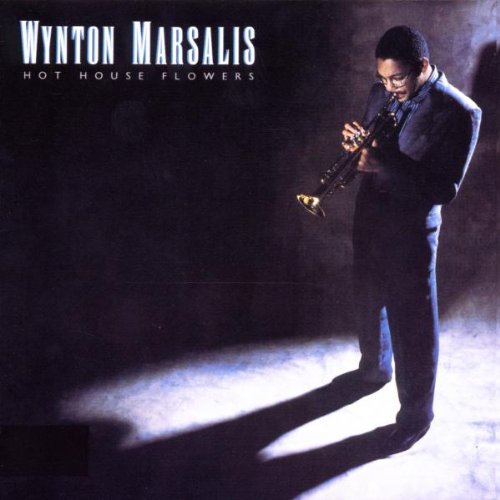
An excellent (and 5th grader-approved) album ...

John Fahey, "How Green Was My Valley"

Technique.


Technique is the proof of your seriousness.

Wallace Stevens

Happy birthday, Fagen.


Donald Fagen was born on this day 1948.

Steely Dan, "FM" ...

Affinity.


Art is not an end in itself. It introduces the soul into a higher spiritual order, which it expresses and in some sense explains. Music and art and poetry attune the soul to God because they induce a kind of contact with the Creator and Ruler of the Universe. The genius of the artist finds its way by the affinity of creative sympathy, or conaturality, into the living law that rules the universe. This law is nothing but the secret gravitation that draws all things to God as to their center. Since all true art lays bare the action of this same law in the depths of our own nature, it makes us alive to the tremendous mystery of being, in which we ourselves, together with all other living and existing things, come forth from the depths of God and return again to him. An art that does not produce something of this is not worthy of its name.

Thomas Merton

Washing.


Whitefish Review's Brian Schott interviews Russell Chatham and Rob Stern ...

Rob Stern: Mood is everything. Sometimes it’s the only thing.

Russell Chatham: If you could translate one medium to another medium i.e. visceral response to colors and shapes and forms to words, it’s like poetry. It’s like trying to translate poetry to prose. You can’t do it because it can only exist in its natural form. So a painting at its very best trans- mits its message in a nonverbal way, that you can’t really discuss it. You can’t explain it in words. And scholars are constantly trying to explain paintings in words and you can’t really. I mean you can try. It doesn’t hurt anything. You can go ahead — hey, give it your best shot.

Brian Schott: Right.

RC: But that’s not going to be it.

RS: Sometimes the more you try to explain a painting, just the stu- pider you look. It’s like, “Oh, it’s such a vision of strength!” It’s like a violin solo or something. You just close your eyes and melt into it and you can’t explain it.

RC: Exactly. It’s like somebody asked me the other day. They said that musicians or composers have over the centuries talked about certain melodic constructs being seen in their mind as if it was in color. And I listen to classical music relentlessly, compulsively, and they asked me if I saw the music in color and I said, “No, I don’t.” Right or wrong, I don’t care. That’s not how I listen to music. I respond because I don’t understand music. I tried to study music theory and piano and I couldn’t really understand. It’s too complicated. It’s mathematics. It’s just too complicated. I respond to it out of an emotional basis. So certain pieces of music evoke certain emotional responses and that’s as far as I can get.

RS: When you’re composing something, at least for me, I never say I want this to look a certain way.

RC: No, I never do either.

RS: I always say I want this to feel a certain way. I want it to make me feel a certain way.

RC: I think if you do that — if I’m listening to some piece of music — I tend to like a great number of great composers — I feel like the music is washing over me and I’m just crazed at how beautiful it is.

RS: Yes, you can’t sit there and go, “Oh, I really like how that trumpet over there goes high and the guitar goes over here like this.” You are completely immune to the process.

RC: It’s like this. I think to myself, if I can make somebody feel this painting the way I am now feeling about this piece of music, I’ll be happy.

RS: Right, right.

RC: Certainly like Mozart — what was it Benny Goodman played? Clarinet concerto. It’s like the purity of the notes. I am thinking to myself, I can even listen to this ten times in one day and never get tired of it and I’ll cry every fucking time that song plays.

09 January 2018

Excellent.

An excellent album ...

Know.


To know what you prefer instead of humbly saying Amen to what the world tells you you ought to prefer, is to have kept your soul alive.

Robert Louis Stevenson

Bach, The Art of Fugue, BWV 1080

Glenn Gould performs the Fuga a 3 Soggetti (Contrapunctus XIV) ...

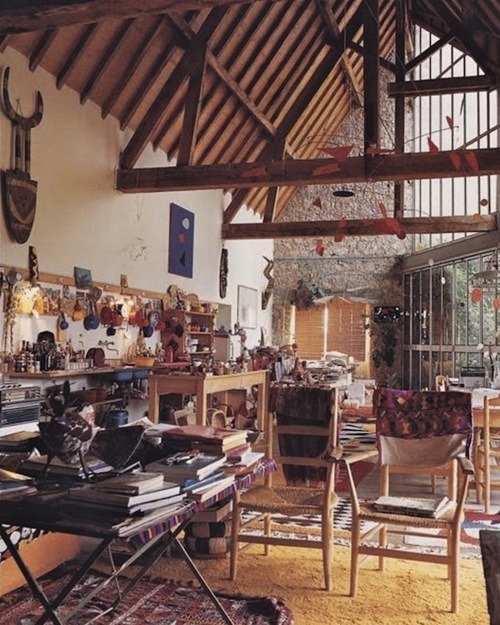
Studio.

Alexander Calder's studio ...

Honor.


Everybody is so talented nowadays that the only people I care to honor as deserving real distinction are those who remain in obscurity.

Thomas Hardy

Happy birthday, Page.


Jimmy Page was born on this day in 1944.

Led Zeppelin, "Over the Hills and Far Away"

Unknown.

Hansen, The Wander Entering the Unknown Forest, 1970

Typography.

Routine.


Routine, in an intelligent man, is a sign of ambition.

W.H. Auden

08 January 2018

Live.


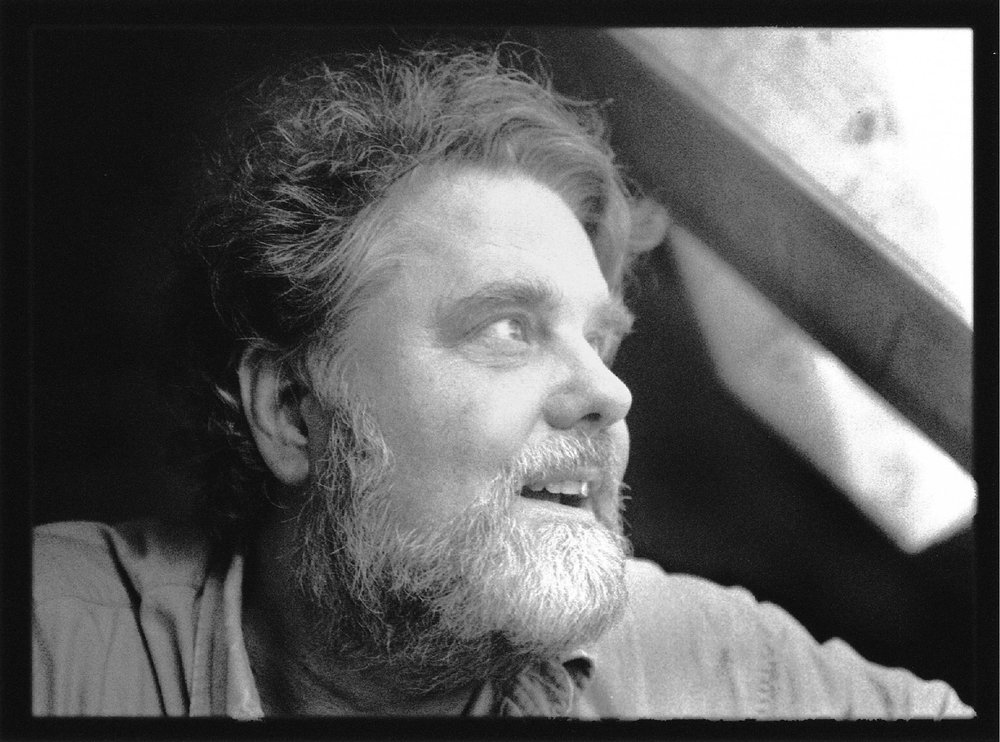
Coleman Barks interviewed by The Sun ...

Lawler: Do you see Rumi as a mystic, an artist, or both?

Barks: Rumi is really unusual, because he’s a master of poetry and such an enlightened human being. The most gifted artists are usually so independent that they can’t surrender their mind. Think of Vladimir Nabokov: so proud of himself and enjoying being Nabokov, and just a hairbreadth away from enlightenment. Mozart is interesting on this subject. He says, “Neither a lofty degree of intelligence nor imagination nor both together go to the making of a genius. Love, love, love, that is the soul of genius.”

To live in the heart sounds so simple. But if it is not lived, then those are just empty words. Rumi and Bawa would say that’s the work we are here to do. We’re here to dissolve the ego and live in the heart with compassion and kindness. The Dalai Lama has said, “My religion is kindness.”

Dream.


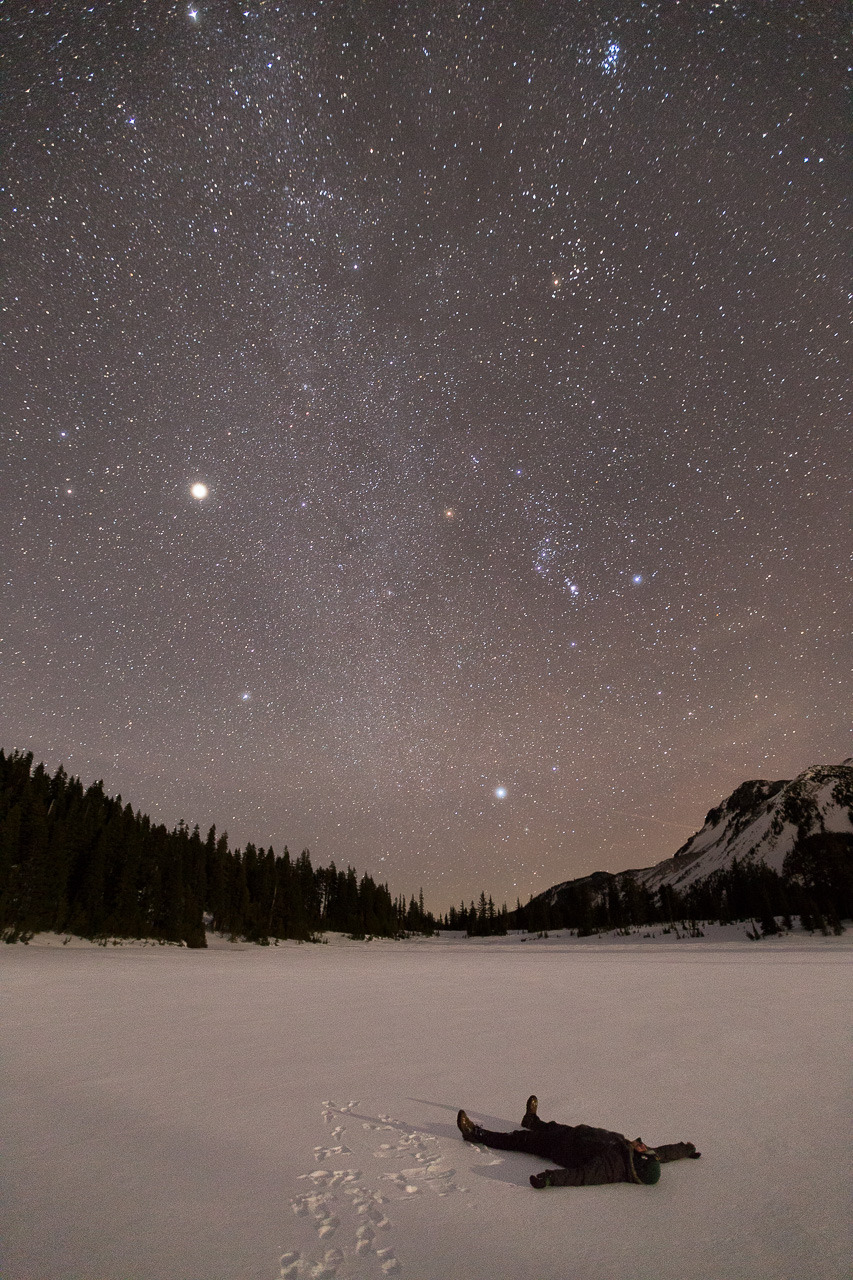
Stars.

Intertwined.


PERHAPS the TRUTH DEPENDS on a WALK AROUND the LAKE

Sharing time on bar stools.
Stories conversed back and forth.
A deeper connection formed over frosty brews.
Departing from the establishment,
walking with lights in our hands.
Stories in our hearts.
For hours we walk the length of the lake,
connecting over stories, sorrows, and feelings of disconnection.
Sharing all of ourselves in those hours.
The friendship shifting into something more,
emotions intertwined with honest concern.
Becoming another part of myself.
I looked into your eyes and saw my own face.
The night we took that walk around the lake,
was the night I realized you are a part of me forever.
The truths we shared will keep us always intertwined.

Wendell Berry

Peace.


BACK to the REEDBED!

Time to ignore sensible advice,

to untie the knots our culture

ties us with.  Cut to the quick!

Put cotton in both sentimental 

ears.  Go back into the reedbed.

Let cane sugar rise again in you.

No rules or daily duties.  Those

do not bring the peace of silence.

Rumi

Happy birthday, Bowie.


David Bowie was born on this day in 1947.

Tin Machine, "I Can't Read"

Laughter.


Cultural Offering has Scruton on laughter, togetherness, and mutual tolerance of all-too-human defects.

Joy.


The SCHOOLBOY

I love to rise in a summer morn,
When the birds sing on every tree;
The distant huntsman winds his horn,
And the skylark sings with me:
O what sweet company!

But to go to school in a summer morn, -
O it drives all joy away!
Under a cruel eye outworn,
The little ones spend the day
In sighing and dismay.

Ah then at times I drooping sit,
And spend many an anxious hour;
Nor in my book can I take delight,
Nor sit in learning's bower,
Worn through with the dreary shower.

How can the bird that is born for joy
Sit in a cage and sing?
How can a child, when fears annoy,
But droop his tender wing,
And forget his youthful spring!

O father and mother if buds are nipped,
And blossoms blown away;
And if the tender plants are stripped
Of their joy in the springing day,
By sorrow and care's dismay, -

How shall the summer arise in joy,
Or the summer fruits appear?
Or how shall we gather what griefs destroy,
Or bless the mellowing year,
When the blasts of winter appear?


William Blake

Perspective.

Oneiric.


Despite what Archie Bunker said, Edith was never a dingbat.  Dingbat is a printer’s term for a device that divides text, recognizing some pause deeper than the space between paragraphs, but less profound than the full stop at the end of a chapter.  Dingbats dance in the gap.  Dingbats come out in the indecisive twilight.  I made the dingbats used on the following pages with a monster Magic Marker on blank postcards bought at the Tru-Valu Hardware in Provincetown, Massachusetts.  They are greatly reduced from the postcards, and some of them have migrated to the margins of Book IV to relieve the monumental daunt of a long poem.  I don’t guess they’re technically dingbats there. Swimmers.

Dingbats are helpful when you’re not making sustained, connected sense.  Just put in a dingbat, and there’s oneiric coherence.  Dingbats let possibly awkward transitions move in graceful ellipsis.  They should become part of a freshman composition, and children could make them new as they learn penmanship.

Coleman Barks, from the Preface to The Soul of Rumi

07 January 2018

Invigorates.


Drink deep or be careful how you taste this winter vintage. The first sip may chill, but a full draught warms and invigorates.

John Burroughs