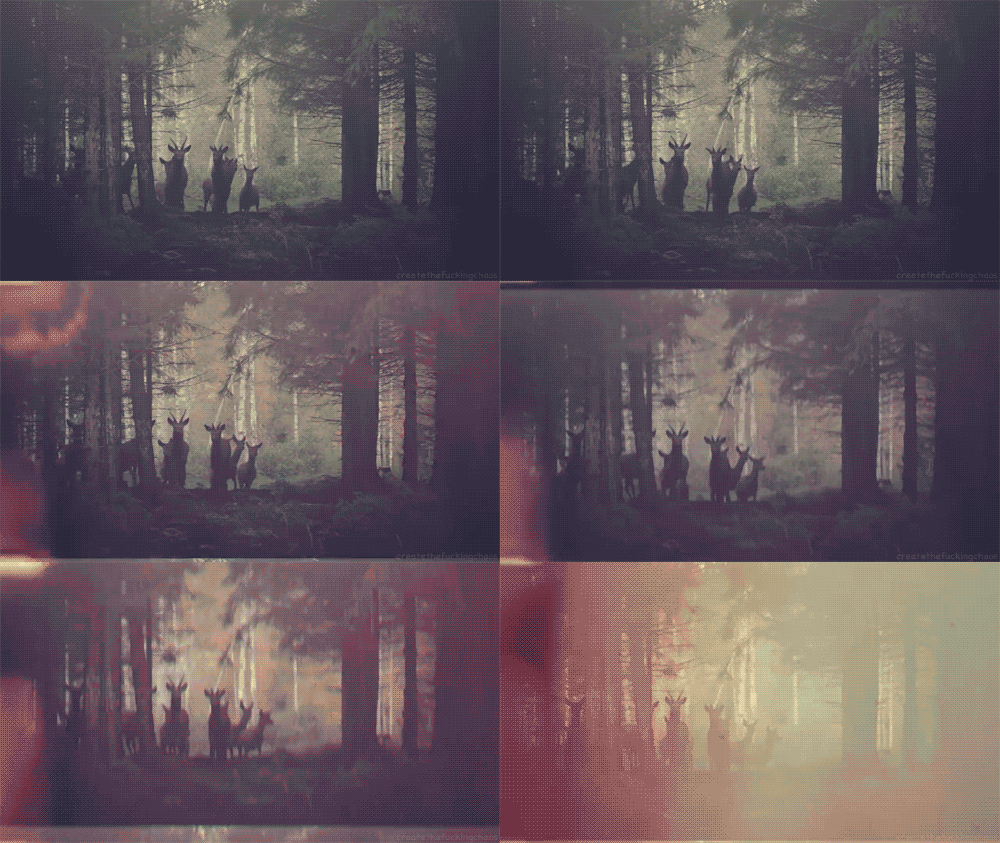
"I am not one who was born in the custody of wisdom. I am one who is fond of olden times and intense in quest of the sacred knowing of the ancients." Gustave Courbet
Showing posts with label Hansen. Show all posts

08 March 2025

River.

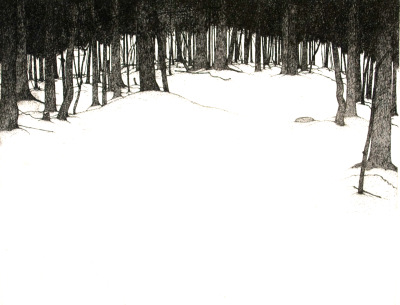
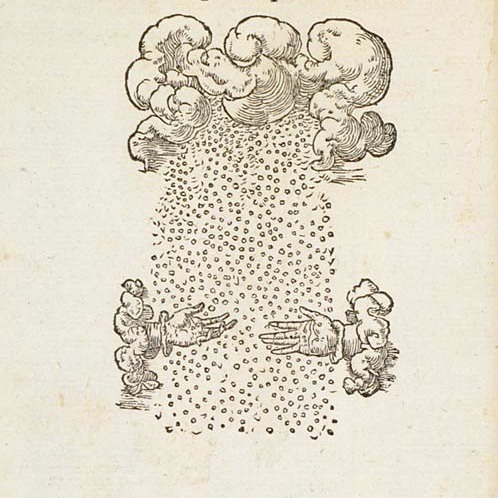
Hansen, The Milky Way, 1898


LOST in the MILKY WAY

Some of us are like trees that grow with a spiral grain
as if prepared for the path of  the spirit’s journey
to the world of all souls.

It is not an easy path.
A dog stands at the opening constellation
past the great helping hand.

The dog wants to know,
did you ever harm an animal, hurt any creature,
did you take a life you didn’t eat?

This is the first on your map. There is another
my people made of  the great beyond
that lies farther away than this galaxy.

It is a world that can’t be imagined by ordinary means.
After this first one,
the next could be a map of  forever.

It could be a cartography
shining only at some times of  the year
like a great web of finery

some spider pulled from herself
to help you recall your true following
your first white breath in the cold.

The next door opens and Old Woman
counts your scars. She is interested in how you have been
hurt and not in anything akin to sin.

From between stars are the words we now refuse;
loneliness, longing, whatever suffering
might follow your life into the sky.

Once those are gone, the life you had
against your own will, the hope, even the prayers
take you one more bend around the river of sky.
 
Linda Hogan

08 April 2023

Best.

Hansen, July Evening, 1992


In actual thickets there is ideally a stump to sit on and enough brambles so that you may frame the surrounding landscape in the apertures formed by branches. If you sit there long enough the natural world that surrounds you resumes its activities, either forgetting that you are there or accepting the idea that you are harmless because you are behaving harmlessly. Best of all you can see out and no one else can see in.

Jim Harrison, from "The Road," in Off to the Side: A Memoir

29 October 2022

Prepared.

Hansen, Sunset, 1996


Let your walks now be a little more adventurous; ascend the hills. If, about the last of October, you ascend any hill in the outskirts of our town, and probably of yours, and look over the forest, you may see——well, what I have endeavored to describe. All this you surely will see, and much more, if you are prepared to see it,—if you look for it. Otherwise, regular and universal as this phenomenon is, whether you stand on the hill-top or in the hollow, you will think for threescore years and ten that all the wood is, at this season, sear and brown. Objects are concealed from our view, not so much because they are out of the course of our visual ray as because we do not bring our minds and eyes to bear on them; for there is no power to see in the eye itself, any more than in any other jelly. We do not realize how far and widely, or how near and narrowly, we are to look. The greater part of the phenomena of Nature are for this reason concealed from us all our lives. The gardener sees only the gardener’s garden. Here, too, as in political economy, the supply answers to the demand. Nature does not cast pearls before swine. There is just as much beauty visible to us in the landscape as we are prepared to appreciate,—not a grain more. The actual objects which one man will see from a particular hill-top are just as different from those which another will see as the beholders are different. 

Henry David Thoreau, from "Autumn Tints"

29 March 2022

Goodbye.

Hansen, The Forest, The Stream, and The Wanderer, 1973


A WALK

Sunday the only day we don't work:
Mules farting around the meadow,
                            Murphy fishing,
The tent flaps in the warm
Early sun: I've eaten breakfast and I'll
                              Take a walk
To Benson Lake. Packed a lunch,
Goodbye. Hopping on creekbed boulders
Up the rock throat three miles
                              Puite Creek –
In steep gorge glacier-slick rattlesnake country
Jump, land by a pool, trout skitter,
The clear sky. Deer tracks.
Bad place by a falls, boulders big as houses,
Lunch tied to belt,
I stemmed up a crack and almost fell
But rolled out safe on a ledge
                              and ambled on.
Quail chicks freeze underfoot, color of stone
Then run cheep! away, hen quail fussing.
Craggy west end of Benson Lake – after edging
Past dark creek pools on a long white slope –
Lookt down in the ice-black lake
                             lined with cliff
From far above: deep shimmering trout.
A lone duck in a gunsightpass
                             steep side hill
Through slide-aspen and talus, to the east end,
Down to grass, wading a wide smooth stream
Into camp. At last.
            By the rusty three-year-
Ago left-behind cookstove
Of the old trail crew,
Stoppt and swam and ate my lunch.

Gary Snyder

It's sandwich time.

26 March 2022

Contact.

Hansen, The Wanderer in the Forest, 1973


Nobody in the Pleistocene jogged for 42 minutes three days a week; lifted weights every Tuesday and Friday with a bullying (but otherwise nice) personal trainer, and played tennis at 11 A.M. Saturday mornings. Not hunters. We swung between extremes: sprinted when chased or when chasing (once in a while in an extremely exerting way), and walked about aimlessly the rest of the time. Marathon running is a modern abomination (particularly when done without emotional stimuli). This is another application of the barbell strategy: plenty of idleness, some high intensity. The data shows that long, very long walks combined with high intensity exercise outperforms just running. I am not talking about "brisk walks" of the type you read about in the Science section of the New York Times. I mean walking without making any effort, except of course to kill boredom. What's more, consider the negative correlation between caloric expenditures and intake: we hunted in response of hunger; we did not eat breakfast to hunt, which had to accentuate the energy deficits. If you deprive an organism of stressors, you affect its epigenetics and gene expression-- some genes are up-regulated (or down-regulated) by contact with the environment. A person who does not face stressors will not survive should he encounters them. Just consider what happens to someone's strength after he spends a year in bed, or someone growing up in a sterilized environment who, one day, takes the Tokyo subway where riders are squeezed like sardines. Why am I using evolutionary arguments? Not because of the optimality of evolution --but entirely for epistemological reasons, how we should deal with a complex system with opaque causal links and complicated interactions. Mother Nature is not perfect, but has been so far proven smarter than humans, certainly much smarter than biologists.

Nassim Nicholas Taleb, from "Why I Walk"

24 February 2022

Ends.

Hansen, A River, Forest, and The Wanderer, 1976


IN the MOUNTAINS

Bramble stream, white rocks jutting out.
Heaven cold, red leaves scarce. No rain

up here where the mountain road ends,
sky stains robes empty kingfisher-blue.

Wang Wei

17 February 2022

Surged.

Hansen, A Beautiful Winter Day, 1973


RAIN

Toward evening, as the light failed
and the pear tree at my window darkened,
I put down my book and stood at the open door,
the first raindrops gusting in the eaves,
a smell of wet clay in the wind.
Sixty years ago, lying beside my father,
half asleep, on a bed of pine boughs as rain
drummed against our tent, I heard
for the first time a loon’s sudden wail
drifting across that remote lake—
a loneliness like no other,
though what I heard as inconsolable
may have been only the sound of something
untamed and nameless
singing itself to the wilderness around it
and to us until we slept. And thinking of my father
and of good companions gone
into oblivion, I heard the steady sound of rain
and the soft lapping of water, and did not know
whether it was grief or joy or something other
that surged against my heart
and held me listening there so long and late.

Peter Everwine

25 November 2020

So.

Hansen, Forest and Clearing, 1977


DIRGE in WOODS

A wind sways the pines,
         And below
Not a breath of wild air;
Still as the mosses that glow
On the flooring and over the lines
Of the roots here and there.
The pine-tree drops its dead;
They are quiet, as under the sea.
Overhead, overhead
Rushes life in a race,
As the clouds the clouds chase;
         And we go,
And we drop like the fruits of the tree,
         Even we,
         Even so.

George Meredith

13 September 2020

Thoughts.

Hansen, September Sunset, 1980


ODE: INTIMATIONS of IMMORTALITY from RECOLLECTIONS of EARLY CHILDHOOD

   The child is father of the man;
And I could wish my days to be
   Bound each to each by natural piety.

There was a time when meadow, grove, and stream,
       The earth, and every common sight,
                          To me did seem
                      Apparelled in celestial light,
            The glory and the freshness of a dream.
It is not now as it hath been of yore;—
                      Turn wheresoe'er I may,
                          By night or day.
The things which I have seen I now can see no more.

                      The Rainbow comes and goes,
                      And lovely is the Rose,
                      The Moon doth with delight
       Look round her when the heavens are bare,
                      Waters on a starry night
                      Are beautiful and fair;
       The sunshine is a glorious birth;
       But yet I know, where'er I go,
That there hath past away a glory from the earth.

Now, while the birds thus sing a joyous song,
       And while the young lambs bound
                      As to the tabor's sound,
To me alone there came a thought of grief:
A timely utterance gave that thought relief,
                      And I again am strong:
The cataracts blow their trumpets from the steep;
No more shall grief of mine the season wrong;
I hear the Echoes through the mountains throng,
       The Winds come to me from the fields of sleep,
                      And all the earth is gay;
                           Land and sea
                Give themselves up to jollity,
                      And with the heart of May
                 Doth every Beast keep holiday;—
                      Thou Child of Joy,
Shout round me, let me hear thy shouts, thou happy Shepherd-boy.

Ye blessèd creatures, I have heard the call
      Ye to each other make; I see
The heavens laugh with you in your jubilee;
      My heart is at your festival,
            My head hath its coronal,
The fulness of your bliss, I feel—I feel it all.
                      Oh evil day! if I were sullen
                      While Earth herself is adorning,
                         This sweet May-morning,
                      And the Children are culling
                         On every side,
In a thousand valleys far and wide,
                      Fresh flowers; while the sun shines warm,
And the Babe leaps up on his Mother's arm:—
                      I hear, I hear, with joy I hear!
                      —But there's a Tree, of many, one,
A single field which I have looked upon,
Both of them speak of something that is gone;
                      The Pansy at my feet
                      Doth the same tale repeat:
Whither is fled the visionary gleam?
Where is it now, the glory and the dream?

Our birth is but a sleep and a forgetting:
The Soul that rises with us, our life's Star,
                      Hath had elsewhere its setting,
                         And cometh from afar:
                      Not in entire forgetfulness,
                      And not in utter nakedness,
But trailing clouds of glory do we come
                      From God, who is our home:
Heaven lies about us in our infancy!
Shades of the prison-house begin to close
                      Upon the growing Boy,
But he beholds the light, and whence it flows,
                      He sees it in his joy;
The Youth, who daily farther from the east
                      Must travel, still is Nature's Priest,
                      And by the vision splendid
                      Is on his way attended;
At length the Man perceives it die away,
And fade into the light of common day.

Earth fills her lap with pleasures of her own;
Yearnings she hath in her own natural kind,
                      And, even with something of a Mother's mind,
                      And no unworthy aim,
The homely Nurse doth all she can
To make her Foster-child, her Inmate Man,
                      Forget the glories he hath known,
And that imperial palace whence he came.

Behold the Child among his new-born blisses,
A six years' Darling of a pigmy size!
See, where 'mid work of his own hand he lies,
Fretted by sallies of his mother's kisses,
With light upon him from his father's eyes!
See, at his feet, some little plan or chart,
Some fragment from his dream of human life,
Shaped by himself with newly-learn{e}d art
                      A wedding or a festival,
                      A mourning or a funeral;
                         And this hath now his heart,
                      And unto this he frames his song:
                         Then will he fit his tongue
To dialogues of business, love, or strife;
                      But it will not be long
                      Ere this be thrown aside,
                      And with new joy and pride
The little Actor cons another part;
Filling from time to time his "humorous stage"
With all the Persons, down to palsied Age,
That Life brings with her in her equipage;
                      As if his whole vocation
                      Were endless imitation.

Thou, whose exterior semblance doth belie
                      Thy Soul's immensity;
Thou best Philosopher, who yet dost keep
Thy heritage, thou Eye among the blind,
That, deaf and silent, read'st the eternal deep,
Haunted for ever by the eternal mind,—
                      Mighty Prophet! Seer blest!
                      On whom those truths do rest,
Which we are toiling all our lives to find,
In darkness lost, the darkness of the grave;
Thou, over whom thy Immortality
Broods like the Day, a Master o'er a Slave,
A Presence which is not to be put by;
Thou little Child, yet glorious in the might
Of heaven-born freedom on thy being's height,
Why with such earnest pains dost thou provoke
The years to bring the inevitable yoke,
Thus blindly with thy blessedness at strife?
Full soon thy Soul shall have her earthly freight,
And custom lie upon thee with a weight,
Heavy as frost, and deep almost as life!

                      O joy! that in our embers
                      Is something that doth live,
                      That Nature yet remembers
What was so fugitive!
The thought of our past years in me doth breed
Perpetual benediction: not indeed
For that which is most worthy to be blest;
Delight and liberty, the simple creed
Of Childhood, whether busy or at rest,
With new-fledged hope still fluttering in his breast:—
                      Not for these I raise
                      The song of thanks and praise
                But for those obstinate questionings
                Of sense and outward things,
                Fallings from us, vanishings;
                Blank misgivings of a Creature
Moving about in worlds not realised,
High instincts before which our mortal Nature
Did tremble like a guilty thing surprised:
                      But for those first affections,
                      Those shadowy recollections,
                Which, be they what they may
Are yet the fountain-light of all our day,
Are yet a master-light of all our seeing;
                Uphold us, cherish, and have power to make
Our noisy years seem moments in the being
Of the eternal Silence: truths that wake,
                To perish never;
Which neither listlessness, nor mad endeavour,
                      Nor Man nor Boy,
Nor all that is at enmity with joy,
Can utterly abolish or destroy!
                Hence in a season of calm weather
                      Though inland far we be,
Our Souls have sight of that immortal sea
                      Which brought us hither,
                Can in a moment travel thither,
And see the Children sport upon the shore,
And hear the mighty waters rolling evermore.

Then sing, ye Birds, sing, sing a joyous song!
                      And let the young Lambs bound
                      As to the tabor's sound!
We in thought will join your throng,
                      Ye that pipe and ye that play,
                      Ye that through your hearts to-day
                      Feel the gladness of the May!
What though the radiance which was once so bright
Be now for ever taken from my sight,
                Though nothing can bring back the hour
Of splendour in the grass, of glory in the flower;
                      We will grieve not, rather find
                      Strength in what remains behind;
                      In the primal sympathy
                      Which having been must ever be;
                      In the soothing thoughts that spring
                      Out of human suffering;
                      In the faith that looks through death,
In years that bring the philosophic mind.
And O, ye Fountains, Meadows, Hills, and Groves,
Forebode not any severing of our loves!
Yet in my heart of hearts I feel your might;
I only have relinquished one delight
To live beneath your more habitual sway.
I love the Brooks which down their channels fret,
Even more than when I tripped lightly as they;
The innocent brightness of a new-born Day
                      Is lovely yet;
The Clouds that gather round the setting sun
Do take a sober colouring from an eye
That hath kept watch o'er man's mortality;
Another race hath been, and other palms are won.
Thanks to the human heart by which we live,
Thanks to its tenderness, its joys, and fears,
To me the meanest flower that blows can give
Thoughts that do often lie too deep for tears.

William Wordsworth

09 August 2020

Librarians.

Hansen, Alder Forest #2, 2001


Some men are daylight readers, who peruse the ambiguous wording of clouds or the individual letter shapes of wandering birds. Some, like myself, are librarians of the night, whose ephemeral documents consist of root-inscribed bones or whatever rustles in the thickets upon solitary walks.

Loren Eiseley, The Unexpected Universe

07 August 2020

Never.

Hansen, Meadow, 1973


Once I heard wolves in full moonlight.
A huge storm visited the cabin, also green northern lights.
The sky split open in the west, and beyond the storm
the wolves were howling within the thunder.
The earth was forcing me to not forget her.
I never recovered from that night.
This all would never happen again.

Jim Harrison

10 May 2020

Retreat.

Hansen, The Meadow, 1973


PASTORAL FANCIES

Sweet pastime here my mind so entertains,
Abiding pleasaunce, and heart-feeding joys,
To meet this blithsome day these painted plains,
These singing maids, and chubby laughing boys,
Which hay-time and the summer here employs,—
My rod and line doth all neglected lie;
A higher joy my former sport destroys:
Nature this day doth bait the hook, and I
The glad fish am, that’s to be caught thereby.
This silken grass, these pleasant flowers in bloom,
Among these tasty molehills that do lie
Like summer cushions, for all guests that come;
Those little feathered folk, that sing and fly
Above these trees, in that so gentle sky,
Where not a cloud dares soil its heavenly light;
And this smooth river softly grieving bye—
All fill mine eyes with so divine a sight,
As makes me sigh that it should e’er be night.
In sooth, methinks the choice I most should prize
Were in these meadows of delight to dwell,
To share the joyaunce heaven elsewhere denies,
The calmness that doth relish passing well,
The quiet conscience, that aye bears the bell,
And happy musing Nature would supply,
Leaving no room for troubles to rebel:
Here would I think all day, at night would lie,
The hay my bed, my coverlid the sky.
So would I live, as nature might command,
Taking with Providence my wholesome meals;
Plucking the savory peascod from the land,
Where rustic lad oft dainty dinner steals.
For drink, I’d his me where the moss conceals
The little spring so chary from the sun,
Then lie, and listen to the merry peals
Of distant bells—all other noises shun;
Then court the Muses till the day be done.
Here would high joys my lowly choice requite;
For garden plot, I’d choose this flow’ry lea;
Here I in culling nosegays would delight,
The lambtoe tuft, the paler culverkey:
The cricket’s mirth were talk enough for me,
When talk I needed; and when warmed to pray,
The little birds my choristers should be,
Who wear one suit for worship and for play,
And make the whole year long one sabbath-day.
A thymy hill should be my cushioned seat;
An aged thorn, with wild hops intertwined,
My bower, where I from noontide might retreat;
A hollow oak would shield me from the wind,
Or, as might hap, I better shed might find
In gentle spot, where fewer paths intrude,
The hut of shepherd swain, with rushes lined:
There would I tenant be to Solitude,
Seeking life’s gentlest joys, to shun the rude.
Bidding a long farewell to every trouble,
The envy and the hate of evil men;
Feeling cares lessen, happiness redouble,
And all I lost as if ’twere found again.
Vain life unseen; the past alone known then:
No worldly intercourse my mind should have
To lure me backward to its crowded den;
Here would I live and die, and only crave
The home I chose might also be my grave.

John Clare

08 May 2020

Up-hill.

Hansen, Winter and the Wanderer, 1980


UP-HILL

Does the road wind up-hill all the way?
   Yes, to the very end.
Will the day’s journey take the whole long day?
   From morn to night, my friend.

But is there for the night a resting-place?
   A roof for when the slow dark hours begin.
May not the darkness hide it from my face?
   You cannot miss that inn.

Shall I meet other wayfarers at night?
   Those who have gone before.
Then must I knock, or call when just in sight?
   They will not keep you standing at that door.

Shall I find comfort, travel-sore and weak?
   Of labour you shall find the sum.
Will there be beds for me and all who seek?
   Yea, beds for all who come.

Christina Rosetti

13 March 2020

Bell-notes.

Hansen, The Pond, 1976


Hansen, The Pond, Spring, 1979


Hansen, The Pond, Nightfall, 1980


The POND

Cold, wet leaves
Floating on moss-coloured water   
And the croaking of frogs—
Cracked bell-notes in the twilight.

Amy Lowell

12 March 2020

Vice-versa.

Hansen, The Woodcutter, 1985


INTAKE INTERVIEW

What is today’s date?
Who is the President?
How great a danger do you pose, on a scale of one to ten?
What does “people who live in glass houses” mean?
Every symphony is a suicide postponed, true or false?
Should each individual snowflake be held accountable for the avalanche?
Name five rivers.
What do you see yourself doing in ten minutes?
How about some lovely soft Thorazine music?
If you could have half an hour with your father, what would you say to him?
What should you do if I fall asleep?
Are you still following in his mastodon footsteps?
What is the moral of “Mary Had a Little Lamb”?
What about his Everest shadow?
Would you compare your education to a disease so rare no one else has ever had it, or the deliberate extermination of indigenous populations?
Which is more puzzling, the existence of suffering or its frequent absence?
Should an odd number be sacrificed to the gods of the sky, and an even to those of the underworld, or vice-versa?
Would you visit a country where nobody talks?
What would you have done differently?
Why are you here?

Franz Wright

09 January 2018

04 January 2018

Gathering.


The small wind whispers through the leafless hedge
Most sharp and chill, where the light snowy flakes
Rest on each twig and spike of wither'd sedge,
Resembling scatter'd feathers;--vainly breaks
The pale split sunbeam through the frowning cloud,
On Winter's frowns below--from day to day
Unmelted still he spreads his hoary shroud,
In dithering pride on the pale traveller's way,
Who, croodling, hastens from the storm behind
Fast gathering deep and black, again to find
His cottage-fire and corner's sheltering bounds;
Where, haply, such uncomfortable days
Make musical the wood-sap's frizzling sounds,
And hoarse loud bellows puffing up the blaze.

John Clare

30 April 2016

Soul.

Hansen, Sunset, 2000


A CULTURE IS NO BETTER THAN ITS WOODS

Sylvan meant savage in those primal woods
Piero di Cosimo so loved to draw,
Where nudes, bears, lions, sows with women's heads,
Mounted and murdered and ate each other raw,
Nor thought the lightning-kindled bush to tame  
But, flabbergasted, fled the useful flame.

Reduced to patches owned by hunting squires
Of villages with ovens and a stocks,
They whispered still of most unsocial fires,
Though Crown and Mitre warned their silly flocks  
The pasture’s humdrum rhythms to approve
And to abhor the license of the grove.

Guilty intention still looks for a hotel
That wants no details and surrenders none;
A wood is that, and throws in charm as well,  
And many a semi-innocent, undone,
Has blamed its nightingales who round the deed
Sang with such sweetness of a happy greed.

Those birds, of course, did nothing of the sort,
And, as for sylvan nature, if you take  
A snapshot at a picnic, O how short
And lower-ordersy the Gang will look
By those vast lives that never took another
And are not scared of gods, ghosts, or stepmother.

Among these coffins of its by-and-by  
The Public can (it cannot on a coast)
Bridle its skirt-and-bargain-chasing eye,
And where should an austere philologist
Relax but in the very world of shade
From which the matter of his field was made.  

Old sounds re-educate an ear grown coarse,
As Pan’s green father suddenly raps out
A burst of undecipherable Morse,
And cuckoos mock in Welsh, and doves create
In rustic English over all they do  
To rear their modern family of two.

Now here, now there, some loosened element,
A fruit in vigor or a dying leaf,
Utters its private idiom for descent,
And late man, listening through his latter grief,  
Hears, close or far, the oldest of his joys,
Exactly as it was, the water noise.

A well-kempt forest begs Our Lady's grace;
Someone is not disgusted, or at least
Is laying bets upon the human race  
Retaining enough decency to last;
The trees encountered on a country stroll
Reveal a lot about a country's soul.

A small grove massacred to the last ash,
An oak with heart-rot, give away the show:  
This great society is going to smash;
They cannot fool us with how fast they go,
How much they cost each other and the gods.
A culture is no better than its woods.

W.H. Auden

12 April 2016

Every.


Do not despise your own place and hour. Every place is under the stars, every place is the center of the world.

John Burroughs

11 April 2016

Powerful.

Hansen, Six Poppies, 1988


There is no greater block to world peace or inner peace than fear. What we fear we tend to develop an unreasoning hatred for, so we come to hate and fear. This not only injures us psychologically and aggravates world tension, but through such negative concentration we tend to attract the things we fear. If we fear nothing and radiate love, we can expect good things to come. How much this world needs the message and example of love and of faith!  If you realized how powerful your thoughts are, you would never think a defeatist or negative thought. Since we create through thought, we need to concentrate very strongly on positive thoughts. If you think you can’t do something, you can’t. But if you think you can, you may be surprised to discover that you can. It is important that our thoughts be constantly for the best that could happen in a situation — for the good things we would like to see happen.

Peace Pilgrim

Thank you, Jessica.