Coleman Barks speaks on Rumi and ecstatic poetry ...
Showing posts with label Barks. Show all posts
Showing posts with label Barks. Show all posts
18 June 2019


08 April 2019
Practice.

to my longing
I'm just as ecstatic as they are,
but with nothing to say!
Please universal soul, practice
some song or something through me!
Rumi
08 January 2018
Live.

Coleman Barks interviewed by The Sun ...
Lawler: Do you see Rumi as a mystic, an artist, or both?
Barks: Rumi is really unusual, because he’s a master of poetry and such an enlightened human being. The most gifted artists are usually so independent that they can’t surrender their mind. Think of Vladimir Nabokov: so proud of himself and enjoying being Nabokov, and just a hairbreadth away from enlightenment. Mozart is interesting on this subject. He says, “Neither a lofty degree of intelligence nor imagination nor both together go to the making of a genius. Love, love, love, that is the soul of genius.”
To live in the heart sounds so simple. But if it is not lived, then those are just empty words. Rumi and Bawa would say that’s the work we are here to do. We’re here to dissolve the ego and live in the heart with compassion and kindness. The Dalai Lama has said, “My religion is kindness.”
To live in the heart sounds so simple. But if it is not lived, then those are just empty words. Rumi and Bawa would say that’s the work we are here to do. We’re here to dissolve the ego and live in the heart with compassion and kindness. The Dalai Lama has said, “My religion is kindness.”
Peace.

Time to ignore sensible advice,
to untie the knots our culture
ties us with. Cut to the quick!
Put cotton in both sentimental
ears. Go back into the reedbed.
Let cane sugar rise again in you.
No rules or daily duties. Those
do not bring the peace of silence.
Rumi
Oneiric.
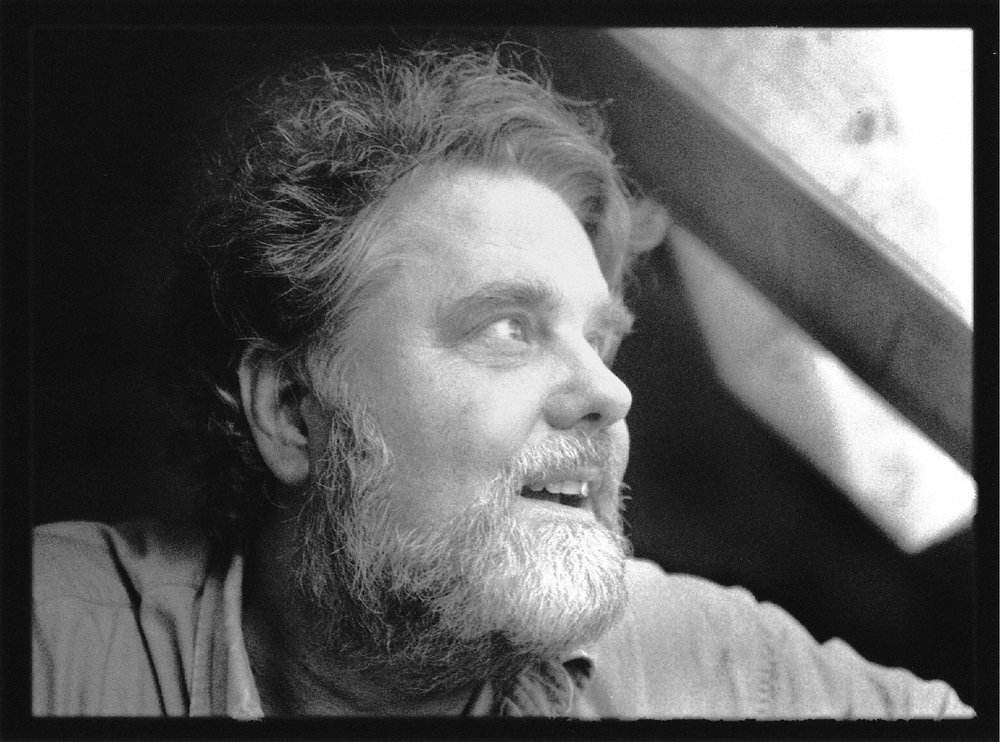
Despite what Archie Bunker said, Edith was never a dingbat. Dingbat is a printer’s term for a device that divides text, recognizing some pause deeper than the space between paragraphs, but less profound than the full stop at the end of a chapter. Dingbats dance in the gap. Dingbats come out in the indecisive twilight. I made the dingbats used on the following pages with a monster Magic Marker on blank postcards bought at the Tru-Valu Hardware in Provincetown, Massachusetts. They are greatly reduced from the postcards, and some of them have migrated to the margins of Book IV to relieve the monumental daunt of a long poem. I don’t guess they’re technically dingbats there. Swimmers.
Dingbats are helpful when you’re not making sustained, connected sense. Just put in a dingbat, and there’s oneiric coherence. Dingbats let possibly awkward transitions move in graceful ellipsis. They should become part of a freshman composition, and children could make them new as they learn penmanship.
Coleman Barks, from the Preface to The Soul of Rumi
07 January 2018
Mingling.
Boubat, Parc de Saint-Cloud, 1981

Some Claims About Poetry and Consciousness
Fana and Baqa: Two Streamings Across the Doorsill of Rumi’s Poetry
No one can say what the inner life is, but poetry tries to, and no one can say what poetry is, but let’s be bold and claim that there are two major streamings in consciousness, particularly in the ecstatic life, and in Rumi’s poetry: call the fana and baqa, Arabic words that refer to the play and intersection of human with devine.
Rumi’s poetry occurs in that opening, a dervish doorway these energies move through in either direction. A movement out, a movement in. Fana is the streaming that moves from the human out into mystery -- the annihilation, the orgasmic expansion, the dissolving swoon in the the all. The gnat becomes buttermilk; a chickpea disappears into the flavor of the soup; a dead mule decays into salt flat, the infant turns to the breast. These wild and boundaryless absorptions are the images and the kind poem Rumi is most well known for, a drunken clairvoyant tavern voice that announces, “Whoever brought me here will have to take me home.”
“What was in that candle’s light that opened and consumed me so quickly!” That is the moth’s question after fana, after it becomes flame. The king’s falcon circles in the empty sky. There is an extravagance in the magnificent disintegration of fana. In one wheat grain a thousand sheaf stacks. Which is literally true: a single wheat seed can, after a few years, become thousands of stacks and sheaves. But it’s that special praise for the natural abundance of existence that identifies this state. Three hundred billion galaxies might seem a bit gaudy to some, but not to this awareness; in fana what is here can never be said extravagantly enough.
Fana is what opens our wings, what makes boredom and hurt disappear. We break to pieces inside it, dancing and perfectly free. We are the dreamer streaming into the loving nowhere of night. Rapt, we are the devouring worm who, through grace becomes an entire orchard, the wholeness of the trunks, the leaves, the fruit, and the growing. Fana is the dissolution just before our commotion and mad night prayers become silence. Rumi often associates surrender with the joy of falling into the freedom of sleep. It’s human-becoming-God, the Ana ‘l-Haqq (“I am the truth”) of Al-Hallaj Mansour. The arms open outward. This is the ocean with no shore into which the dewdrop falls.
My friend, the poet Daniel Abdal-Hayy Moore, scolds me for not saying outright that fana is annihilation in Allah. I avoid God-words, not altogether, but whenever I can, because they seem to take away the freshness of experience and put it inside a specific system. Rumi’s poetry belongs to everyone, and his impulse toward experience rather than any language or doctrine about it: our lives as text, rather than any book, be it Qur’an, Gospel, upanishad, or sutra.
There is a fierce desolation in fana, though, that I may not be communicating. Abdal-Hayy is right. The absence experienced in fana is complete. There is no soft focus around anything. It’s the hard-edged jelal (“majesty”) desert words of Shams. I have much to learn in these matters.
Baqa goes the other way across the doorsill. The Arabic word means “a living within:” it is the walk back down the Qaf Mountain, where the vision came; life lived with clarity and reason; the turning again toward what somehow always was. The concentration of a night of stars into one needle’s eye. A refinement, companionship, two people walking along some particular county road. The absorbing work of this day. The precise painting of a piece of trim. The arms folding inward across the chest and the bow to one another. Courtesy and craftsmanship. God-becoming-human. The qualities associated with this motion are honesty, sobriety, carefulness, a clarity Rumi sometimes calls “reason,” compassion, and work within a community. Baqa is also a return from expansion into each’s unique individuation work, into pain and effort, confusion and dark comedy: the end of a frayed rope, the deep knowing of absence.
Baqa is where animal and angel meet in an awkward but truly human dance. It’s a breathtaking birth, the dying and then being born again that all religions know is the essence of soul growth. It can be overheard in the poetry as a conversation between Julaluddin and the mystery.
Baqa might say:
Friend, our closeness is this:
Anywhere you put your foot feel me
In the firmness under you
while fana asks, in the same quatrain:
How is it with this love,
I see your world, but not you?
Baqa is felt in Rumi’s spring-morning poems, very present, green and alive with camaraderie of a picnic by the water.
Stay together, friends.
Don’t scatter and sleep.
Our friendship is made
Of being awake.
The waterwheel accepts water
And turns and gives it away, weeping.
That way it stays in the garden …
Stay here, quivering with each moment
Like a drop of mercury.
You feel a tremulous intensity within limits. Bodhisattval service walking to the well. The common joy of ducks riding a flooded river. Kindness and acts of anonymous helping. Baqa brings the next stage in the process of prayer: there’s the opening into annihilation, then the coming back to tend specific people. A melody, the little German band coming up through Beethoven’s Ninth. This is the ocean come to court the drop! A fall to the knees, the frustrating satisfaction of the spoken word.
By letting these two conditions, fana and baqa, flow and exist simultaneously in his poetry, Rumi is saying that they are one thing, the core of one true human being, which he was and out of which these poems are spoken. This is how alive his model of the human psyche is, where the secular and the sacred are always mingling, the mythic and the ordinary, dream vision and ordinary street life.
Coleman Barks, from the Preface to The Soul of Rumi
26 April 2017
Surrendered.
Be helpless and dumbfounded,
unable to say yes or no.
Then a stretcher will come
from grace to gather us up.
We are too dull-eyed to see the beauty.
If we say "Yes we can," we'll be lying.
If we say "No, we don't see it,"
that "No" will behead us
and shut tight our window into spirit.
So let us not be sure of anything,
beside ourselves, and only that, so
miraculous beings come running to help.
Crazed, lying in a zero-circle, mute,
we will be saying finally,
with tremendous eloquence, "Lead us."
When we've totally surrendered to that beauty,
we'll become a mighty kindness.
unable to say yes or no.
Then a stretcher will come
from grace to gather us up.
We are too dull-eyed to see the beauty.
If we say "Yes we can," we'll be lying.
If we say "No, we don't see it,"
that "No" will behead us
and shut tight our window into spirit.
So let us not be sure of anything,
beside ourselves, and only that, so
miraculous beings come running to help.
Crazed, lying in a zero-circle, mute,
we will be saying finally,
with tremendous eloquence, "Lead us."
When we've totally surrendered to that beauty,
we'll become a mighty kindness.
Rumi
30 July 2016
Fly.

Don’t worry about saving these songs!
And if one of our instruments breaks,
it doesn’t matter.
We have fallen into the place
where everything is music.
The strumming and the flute notes
rise into the atmosphere,
and even if the whole world’s harp
should burn up, there will still be
hidden instruments playing.
So the candle flickers and goes out.
We have a piece of flint, and a spark.
This singing art is sea foam.
The graceful movements come from a pearl
somewhere on the ocean floor.
Poems reach up like spindrift and the edge
of driftwood along the beach, wanting!
They derive
from a slow and powerful root
that we can’t see.
Stop the words now.
Open the window in the centre of your chest,
and let the spirits fly in and out.
22 June 2016
Good.
When Jalal ad-Din Rumi spoke his poems spontaneously, in
Persia, in the thirteenth century, there was always music nearby. There had to be, because the poetry and
music were a part of an experiment they did with the deep listening, or sama. That listening was meant to remind us of
what a healthy soul feels like – what the opening heart might be – and what it
is to access an intelligence within, and perhaps without, our personality. So it is good to have music closeby.
Coleman "Cappadocia" Barks
21 June 2016
Guide.

This being human is a guest house.
Every morning a new arrival.
Every morning a new arrival.
A joy, a depression, a meanness,
some momentary awareness comes
as an unexpected visitor.
some momentary awareness comes
as an unexpected visitor.
Welcome and entertain them all!
Even if they are a crowd of sorrows,
who violently sweep your house
empty of its furniture,
still, treat each guest honorably.
He may be clearing you out
for some new delight.
Even if they are a crowd of sorrows,
who violently sweep your house
empty of its furniture,
still, treat each guest honorably.
He may be clearing you out
for some new delight.
The dark thought, the shame, the malice.
meet them at the door laughing and invite them in.
meet them at the door laughing and invite them in.
Be grateful for whatever comes.
because each has been sent
as a guide from beyond.
Rumi
18 February 2016
Hungry.

Rumi says that God exists between a human being and what he
or she wants. So that when asking for what you really want, you have to live
out your desire-body and live through it, and then the desire changes as you
become more conscious of it. Rumi's work has brought a lot of happiness because
he is so consciously and hilariously alive. His vibrancy is just so real, and
it keeps reminding me of the experience, as a kid, of coming out of a movie
feeling more hungry for my own life.
Coleman Barks
08 February 2016
Longing.
Love Dogs
One night a man was crying,
“Allah, Allah!”
His lips grew sweet with the praising,
until a cynic said,
“So! I have heard you
calling out, but have you ever
gotten any response?”
The man had no answer for that.
He quit praying and fell into a confused sleep.
He dreamed he saw Khidr, the guide of souls,
in a thick, green foliage,
“Why did you stop praising?”
“Because I’ve never heard anything back.”
“This longing you express
is the return message.”
The grief you cry out from
draws you toward union.
Your pure sadness that wants help
is the secret cup.
Listen to the moan of a dog for its master.
That whining is the connection.
There are love dogs no one knows the names of.
Give your life to be one of them.
“Allah, Allah!”
His lips grew sweet with the praising,
until a cynic said,
“So! I have heard you
calling out, but have you ever
gotten any response?”
The man had no answer for that.
He quit praying and fell into a confused sleep.
He dreamed he saw Khidr, the guide of souls,
in a thick, green foliage,
“Why did you stop praising?”
“Because I’ve never heard anything back.”
“This longing you express
is the return message.”
The grief you cry out from
draws you toward union.
Your pure sadness that wants help
is the secret cup.
Listen to the moan of a dog for its master.
That whining is the connection.
There are love dogs no one knows the names of.
Give your life to be one of them.
Rumi
Coleman Barks performs a poem by Rumi, "Love Dogs," musical accompaniment by Eugene Friesen and Arto Tuncboyaciyan.
Coleman Barks performs a poem by Rumi, "Love Dogs," musical accompaniment by Eugene Friesen and Arto Tuncboyaciyan.
04 February 2016
As.
Maruyama, Water Sculpture, 2009

The great human questions arose. What is the purpose of
desire? What is a dream? A song? How do we know the depth of silence in another
human being? What is the heart? What is it to be a true human being? What is
the source of the universe and how do these individual awarenesses connect to
that? They asked the Faustian question in many guises: What is it at bottom
that holds the world together? How do we balance surrender and discipline? This
high level of continuous question-and-answer permeated the poetry and music,
the movement, and each activity of the community. They knew that answers might
not come in discursive form, but rather in music, in image, in dream, and in
the events of life as they occur. Stop weaving and watch how the patterns improve.
Coleman Barks
17 January 2016
Rumi.
Noted translator and poet Coleman Barks, a Distinguished
Visiting Fellow in the UCSB College of Creative Studies, presents the poetry of
13th century Afghan-born Sufi mystic and poet, Jelaluddin Rumi.
13 March 2015
Moves.

The Many Wines
God has given us a dark wine so potent
that, we leave the two worlds.
God made Majnun love Layla so much
that just her dog would cause confusion in him.
There are thousands of wines
that can take over our minds.
Don't think all ecstasies are the same.
Jesus was lost in his love for God.
His donkey was drunk with barley.
Every object, every being,
is a jar full of delight.
Be a connoisseur, and taste with caution.
Any wine will get you high.
Judge like a king, and choose the purest,
not the ones adulterated with fear,
or some urgency about "what's needed."
Drink the wine that moves you
as a camel moves when it's been untied,
and is just ambling about.
and is just ambling about.
Rumi, translated by Coleman Barks
05 March 2015
Deep.

[Poetry has] a social function to remind us of our deep self
and a core of joy and grief; [it helps] us live in that place rather than in
some other less deep place. I love the Cherokee greeting; in the morning, they
greet each other and say, ‘How deep is your well?’ Sometimes their well’s not
very deep, and sometimes it is, and poetry puts you in that place where it goes
down to the water table.
Coleman Barks
12 January 2015
See.
Born and raised
in Chattanooga, Tennessee, Coleman Barks taught poetry and creative writing at
the University of Georgia for 30 years. A prolific translator of the works of
13th century mystic poet, Jalaluddin Rumi, Barks has been a student of Sufism
since the late 1970s.
In this episode of Sounds of Poetry, Barks explains that he translates Rumi through his own personality and experience. A poet in his own right, Barks believes he is “in a kind of apprenticeship” with Rumi. “He’s an enlightened being and I’m not enlightened. But within his glance I see, I see how it might be,” says Barks.
In this episode of Sounds of Poetry, Barks explains that he translates Rumi through his own personality and experience. A poet in his own right, Barks believes he is “in a kind of apprenticeship” with Rumi. “He’s an enlightened being and I’m not enlightened. But within his glance I see, I see how it might be,” says Barks.
With Mary Oliver ...
CONNECT
Subscribe to:
Posts (Atom)