"I am not one who was born in the custody of wisdom. I am one who is fond of olden times and intense in quest of the sacred knowing of the ancients." Gustave Courbet
Showing posts with label adventure. Show all posts

07 June 2024

Adventure.

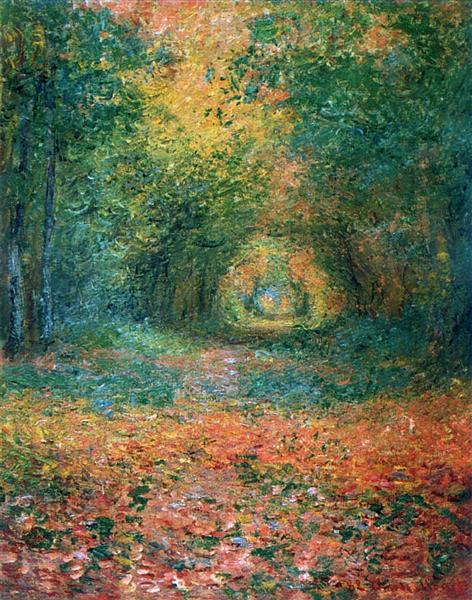
Monet, The Undergrowth in the Forest of Saint-Germain, 1882


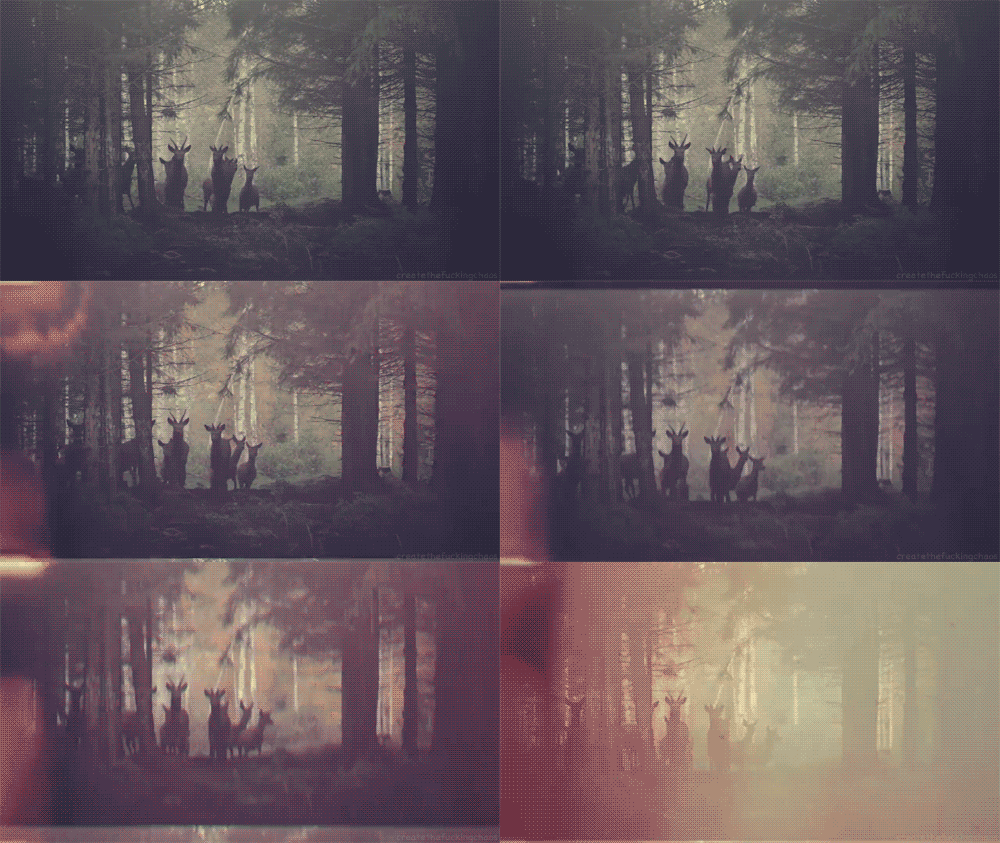
They thought that it would be a disgrace to go forth as a group. Each entered the forest at a point that he himself had chosen, where it was darkest and there was no path. If there is a path it is someone else’s path and you are not on the adventure.

Joseph Campbell

18 January 2022

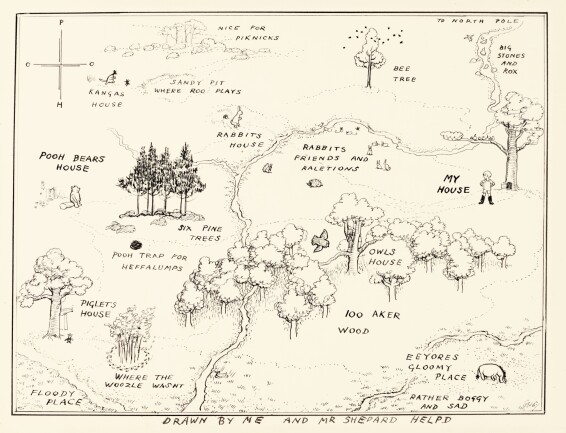
Happy Birthday, Milne


A.A. Milne was born on this date in 1882.

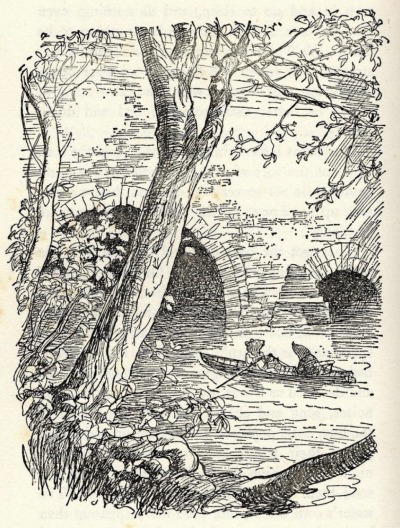
One fine day Pooh had stumped up to the top of the Forest to see if his friend Christopher Robin was interested in Bears at all. At breakfast that morning (a simple meal of marmalade spread lightly over a honeycomb or two) he had suddenly thought of a new song. It began like this: 

    “Sing Ho! For the life of a Bear.” 

    When he had got as far as this, he scratched his head, and thought to himself “That's a very good start for a song, but what about the second line?” He tried singing “Ho,” two or three times, but it didn't seem to help. “Perhaps it would be better,” he thought, “if I sang Hi for the life of a Bear.” So he sang it... but it wasn't. “Very well, then,” he said, “I shall sing that first line twice, and perhaps if I sing it very quickly, I shall find myself singing the third and fourth lines before I have time to think of them, and that will be a Good Song. Now then:
Sing Ho! for the life of a Bear! 
I don't much mind if it rains or snows, 
'Cos I've got a lot of honey on my nice new nose! 
I don't much care if it snows or thaws, 
'Cos I've got a lot of honey on my nice clean paws! 
Sing Ho! for a Bear! 
Sing Ho! for a Pooh! 
And I'll have a little something in an hour or two! 
    He was so pleased with this song that he sang it all the way to the top of the Forest, “and if I go on singing it much longer,” he thought, “it will be time for the little something, and then the last line won't be true.” So he turned it into a hum instead. 

    Christopher Robin was sitting outside his door, putting on his Big Boots. As soon as he saw the Big Boots, Pooh knew that an Adventure was going to happen, and he brushed the honey off his nose with the back of his paw, and spruced himself up as well as he could, so as to look Ready for Anything.

27 December 2021

Life.

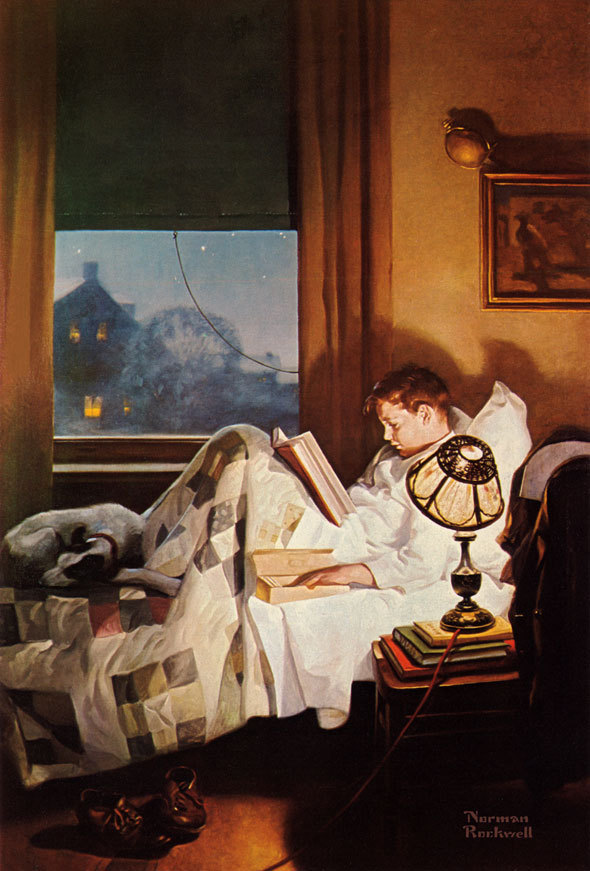
Rockwell, Child Reading by Lamp Light, 1926


Life is two things. Life is morality – life is adventure. Squire and master. Adventure rules, and morality looks up the trains in the Bradshaw. Morality tells you what is right, and adventure moves you. If morality means anything it means keeping bounds, respecting implications, respecting implicit bounds. If individuality means anything it means breaking bounds – adventure.

H.G. Wells

18 August 2020

Accustomed.


The very basic core of a man’s living spirit is his passion for adventure. The joy of life comes from our encounters with new experiences, and hence there is no greater joy than to have an endlessly changing horizon, for each day to have a new and different sun. If you want to get more out of life, you must lose your inclination for monotonous security and adopt a helter-skelter style of life that will at first appear to you to be crazy. But once you become accustomed to such a life you will see its full meaning and its incredible beauty.

Jon Krakauer, from Into the Wild

Thank you, Wendy.

15 May 2020

Happy Birthday, Norgay


Tenzig Norgay was born on this day in 1914.

At 3:30 AM the two men began to brew up liquids for their summit push. First light allowed Tenzing to point out to Hillary the glowing Thyangboche Monastery in the valley far below and by 6:30 the pair had slung on their oxygen gear and set off up the ridge with Tenzing in the lead. On surpassing Tenzing and Lambert’s high point from the year before they began to encounter unconsolidated snow on the ridge. At 9 AM they reached the South Summit and were able to discard their empty twenty pound oxygen tanks and start on fresh cylinders. From here they found good snow conditions and continued toward the summit, stopping occasionally to clear ice from each others breathing tubes. Just below the summit they encountered a forty foot vertical section of rock. Hillary took the lead and through superhuman effort was able to labor up a chimney created between the rock and a vertical cornice of snow. Continuing on and carefully belaying each other one at a time they labored up the ridge. One hump of snow led to another and finally there was nothing beyond but the plains of Tibet fading toward the curved violet horizon. They were on the summit!

Hillary offered a congratulatory handshake to Tenzing but that was not sufficient. Tenzing threw himself at Hillary and gave him a hearty Sherpa hug. Hillary took some photos while Tenzing knelt down and buried a small pencil (given to him by his daughter Nima) and an offering of sweets in the summit snow, then he said a short prayer.


Standing up, Tenzing thought of Irvine and Mallory back in 1924 and scanned the summit for evidence of their attempt. Nothing. A gentle breeze caressed the climbers. On his head Tenzing wore the balaclava given to him by the crazy Earl Denman, around his neck was a scarf belonging to his great friend Raymond Lambert. His Swiss reindeer skin boots were on their third expedition and the wool socks that he wore were hand-knitted by his wife Ang Lahmu. He owed the entire sum of his expedition salary to friends back in Darjeeling.


Tenzing gazed down at his Solo Khumbu Valley where he had spent his childhood wondering at the far away summit on which he now stood. He marveled over the high pastures where he had grazed his father’s yaks as a child and knew that the Wheel had come full circle. For Tenzing Norgay it had been the shortest of distances, but a long journey indeed.


CONNECT

The BBC's documentary on Norgay's guiding of Sir Edmund Hillary to the summit of Everest in 1953, The Race for Everest ...

30 March 2020

Beginner's.


In the beginner's mind there are many possibilities, but in the expert's there are few.

Shunryo Suzuki

18 July 2019

Thought.


MAYBE ALONE ON MY BIKE

I listen, and the mountain lakes
hear snowflakes come on those winter wings
only the owls are awake to see,
their radar gaze and furred ears
alert. In that stillness a meaning shakes;

And I have thought (maybe alone
on my bike, quaintly on a cold
evening pedaling home), Think!--
the splendor of our life, its current unknown
as those mountains, the scene no one sees.

O citizens of our great amnesty:
we might have died. We live. Marvels
coast by, great veers and swoops of air
so bright the lamps waver in tears,
and I hear in the chain a chuckle I like to hear.

William Stafford

17 January 2019

Yes.


It’s important to live life with the experience, and therefore the knowledge, of its mystery and of your own mystery. This gives life a new radiance, a new harmony, a new splendor. Thinking in mythological terms helps to put you in accord with the inevitables of this vale of tears. You learn to recognize the positive values in what appear to be the negative moments and aspects of your life. The big question is whether you are going to be able to say a hearty yes to your adventure.

Joseph Campbell

12 January 2019

Happy birthday, London.


Jack London was born on this day in 1876.

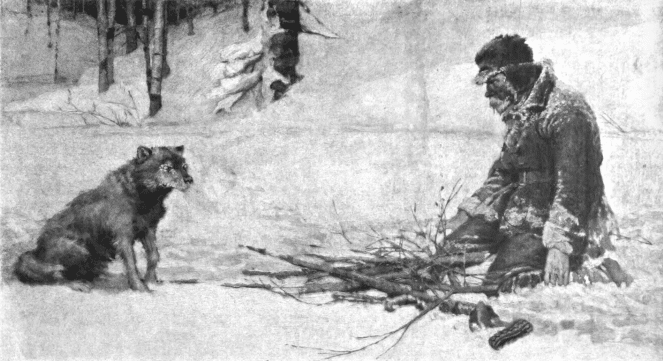
He worked slowly and carefully, keenly aware of his danger. Gradually, as the flame grew stronger, he increased the size of the twigs with which he fed it. He squatted in the snow, pulling the twigs out from their entanglement in the brush and feeding directly to the flame. He knew there must be no failure. When it is seventy-five below zero, a man must not fail in his first attempt to build a fire -- that is, if his feet are wet. If his feet are dry, and he fails, he can run along the trail for half a mile and restore his circulation. But the circulation of wet and freezing feet cannot be restored by running when it is seventy-five below. No matter how fast he runs, the wet feet will freeze the harder.

All this the man knew. The old-timer on Sulphur Creek had told him about it the previous fall, and now he was appreciating the advice. Already all sensation had gone out of his feet. To build the fire he had been forced to remove his mittens, and the fingers had quickly gone numb. His pace of four miles an hour had kept his heart pumping blood to the surface of his body and to all the extremities. But the instant he stopped, the action of the pump eased down. The cold of space smote the unprotected tip of the planet, and he, being on that unprotected tip, received the full force of the blow. The blood of his body recoiled before it. The blood was alive, like the dog, and like the dog it wanted to hide away and cover itself up from the fearful cold. So long as he walked four miles an hour, he pumped that blood, willy-nilly, to the surface; but now it ebbed away and sank down into the recesses of his body. The extremities were the first to feel its absence. His wet feet froze the faster, and his exposed fingers numbed the faster, though they had not yet begun to freeze. Nose and cheeks were already freezing, while the skin of all his body chilled as it lost its blood.

But he was safe. Toes and nose and cheeks would be only touched by the frost, for the fire was beginning to burn with strength. He was feeding it with twigs the size of his finger. In another minute he would be able to feed it with branches the size of his wrist, and then he could remove his wet foot-gear, and, while it dried, he could keep his naked feet warm by the fire, rubbing them at first, of course, with snow. The fire was a success. He was safe. He remembered the advice of the old-timer on Sulphur Creek, and smiled. The old-timer had been very serious in laying down the law that no man must travel alone in the Klondike after fifty below. Well, here he was; he had had the accident; he was alone; and he had saved himself. Those old-timers were rather womanish, some of them, he thought. All a man had to do was to keep his head, and he was all right. Any man who was a man could travel alone. But it was surprising, the rapidity with which his cheeks and nose were freezing. And he had not thought his fingers could go lifeless in so short a time. Lifeless they were, for he could scarcely make them move together to grip a twig, and they seemed remote from his body and from him. When he touched a twig, he had to look and see whether or not he had hold of it. The wires were pretty well down between him and his finger-ends.

All of which counted for little. There was the fire, snapping and crackling and promising life with every dancing flame. He started to untie his moccasins. They were coated with ice; the thick German socks were like sheaths of iron halfway to the knees; and the moccasin strings were like rods of steel all twisted and knotted as by some conflagration. For a moment he tugged with his numb fingers, then, realizing the folly of it, he drew his sheath-knife.

But before he could cut the strings, it happened. 

Jack London, from "To Build a Fire"

21 May 2018

Depend.


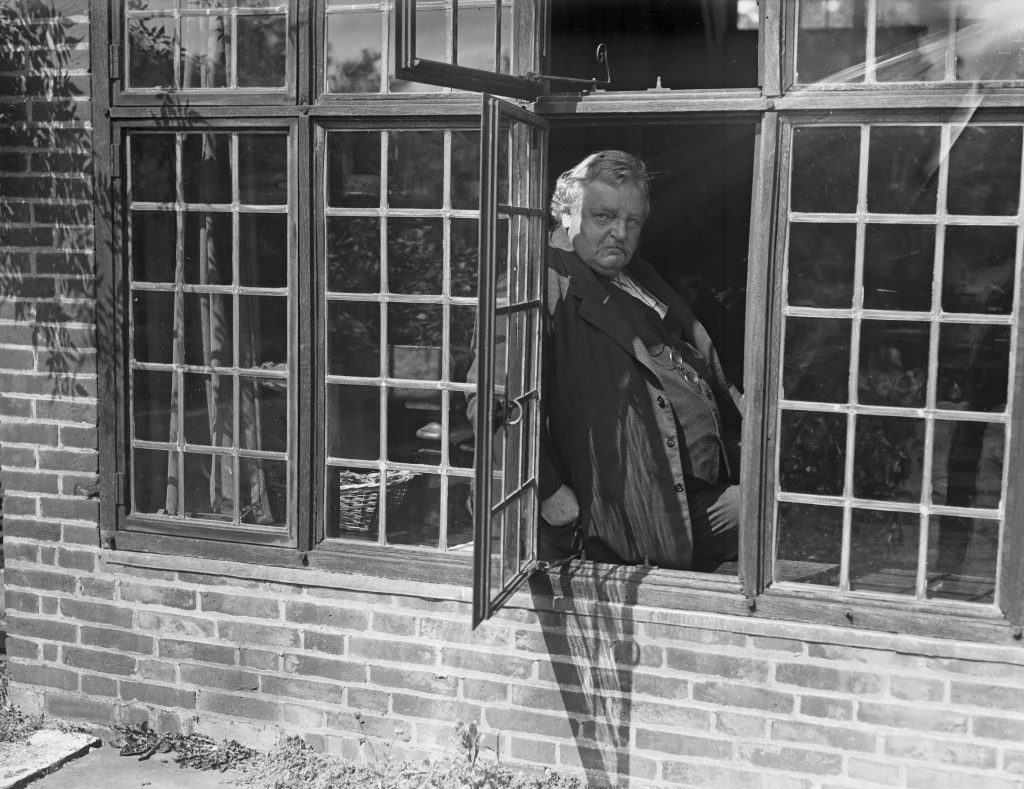
For even the most dehumanized modern fantasies depend on some older and simpler figure; the adventures may be mad, but the adventurer must be sane.

G. K. Chesterton

10 April 2018

Willing.


Art is an adventure into an unknown world, which can be explored only by those willing to take risks.

Mark Rothko

06 February 2018

Fate.

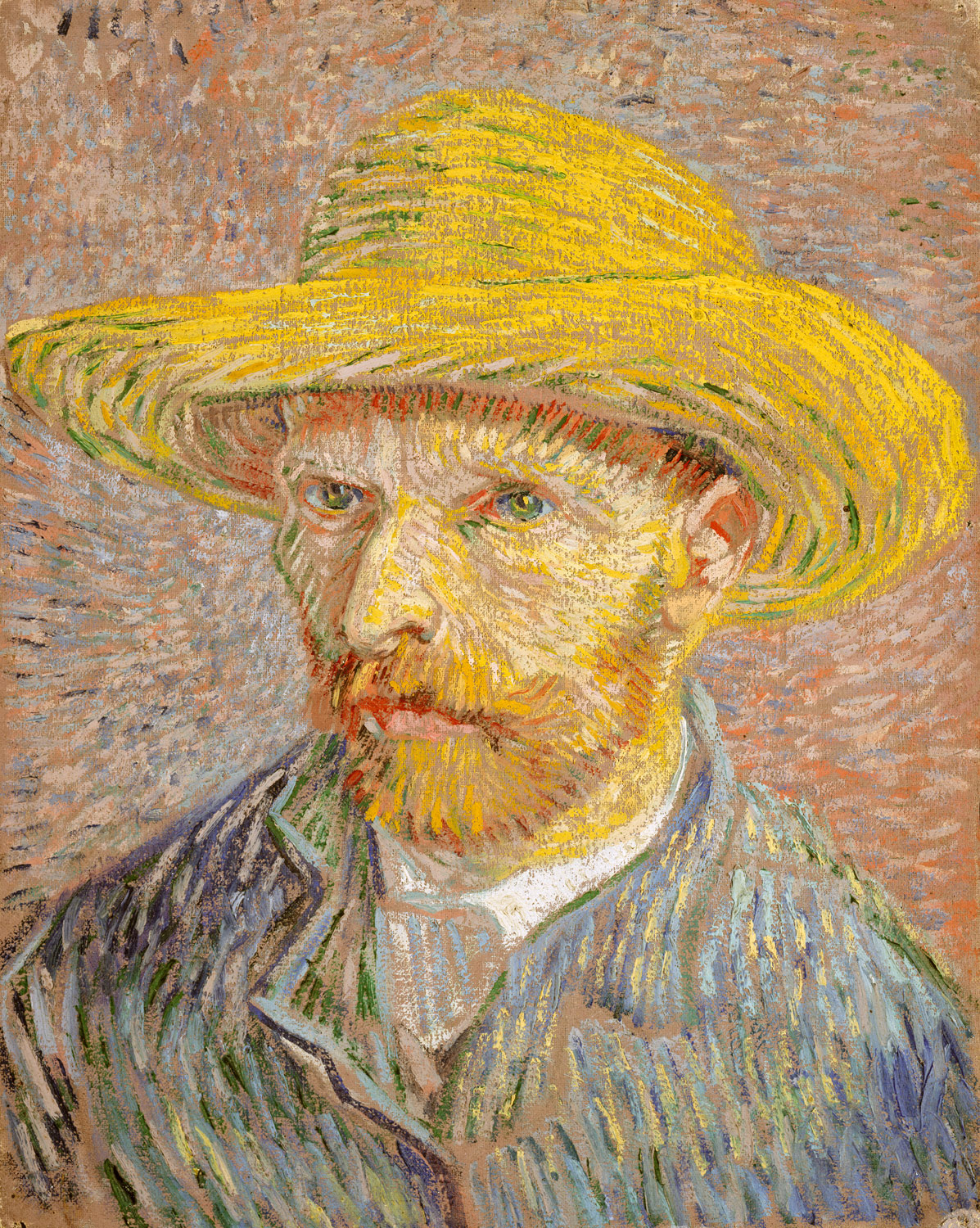
van Gogh, Self-portrait with Straw Hat, 1887


I am not an adventurer by choice but by fate.

Vincent van Gogh

29 December 2017

Notice.


Adventures come to the adventurous, and mysterious things fall in the way of those who, with wonder and imagination, are on the watch for them; but the majority of people go past the doors that are half ajar, thinking them closed, and fail to notice the faint stirrings of the great curtain that hangs ever in the form of appearances between them and the world of causes behind.

Algernon Blackwood

28 December 2017

Instinct.


The man flung a look back along the way he had come. The Yukon lay a mile wide and hidden under three feet of ice. On top of this ice were as many feet of snow. It was all pure white, rolling in gentle undulations where the ice-jams of the freeze-up had formed. North and south, as far as his eye could see, it was unbroken white, save for a dark hair-line that curved and twisted from around the spruce-covered island to the south, and that curved and twisted away into the north, where it disappeared behind another spruce-covered island. This dark hair-line was the trail -- the main trail -- that led south five hundred miles to the Chilcoot Pass, Dyea, and salt water; and that led north seventy miles to Dawson, and still on to the north a thousand miles to Nulato, and finally to St. Michael on Bering Sea, a thousand miles and half a thousand more.

But all this -- the mysterious, far-reaching hair-line trail, the absence of sun from the sky, the tremendous cold, and the strangeness and weirdness of it all -- made no impression on the man. It was not because he was long used to it. He was a newcomer in the land, a chechaquo, and this was his first winter. The trouble with him was that he was without imagination. He was quick and alert in the things of life, but only in the things, and not in the significances. Fifty degrees below zero meant eighty-odd degrees of frost. Such fact impressed him as being cold and uncomfortable, and that was all. It did not lead him to meditate upon his frailty as a creature of temperature, and upon man's frailty in general, able only to live within certain narrow limits of heat and cold; and from there on it did not lead him to the conjectural field of immortality and man's place in the universe. Fifty degrees below zero stood for a bite of frost that hurt and that must be guarded against by the use of mittens, ear-flaps, warm moccasins, and thick socks. Fifty degrees below zero was to him just precisely fifty degrees below zero. That there should be anything more to it than that was a thought that never entered his head.

As he turned to go on, he spat speculatively. There was a sharp, explosive crackle that startled him. He spat again. And again, in the air, before it could fall to the snow, the spittle crackled. He knew that at fifty below spittle crackled on the snow, but this spittle had crackled in the air. Undoubtedly it was colder than fifty below -- how much colder he did not know. But the temperature did not matter. He was bound for the old claim on the left fork of Henderson Creek, where the boys were already. They had come over across the divide from the Indian Creek country, while he had come the roundabout way to take a look at the possibilities of getting out logs in the spring from the islands in the Yukon. He would be in to camp by six o'clock; a bit after dark, it was true, but the boys would be there, a fire would be going, and a hot supper would be ready. As for lunch, he pressed his hand against the protruding bundle under his jacket. It was also under his shirt, wrapped up in a handkerchief and lying against the naked skin. It was the only way to keep the biscuits from freezing. He smiled agreeably to himself as he thought of those biscuits, each cut open and sopped in bacon grease, and each enclosing a generous slice of fried bacon.

He plunged in among the big spruce trees. The trail was faint. A foot of snow had fallen since the last sled had passed over, and he was glad he was without a sled, travelling light. In fact, he carried nothing but the lunch wrapped in the handkerchief. He was surprised, however, at the cold. It certainly was cold, he concluded, as he rubbed his numb nose and cheek-bones with his mittened hand. He was a warm-whiskered man, but the hair on his face did not protect the high cheek-bones and the eager nose that thrust itself aggressively into the frosty air.

At the man's heels trotted a dog, a big native husky, the proper wolf-dog, gray-coated and without any visible or temperamental difference from its brother, the wild wolf. The animal was depressed by the tremendous cold. It knew that it was no time for travelling. Its instinct told it a truer tale than was told to the man by the man's judgment. In reality, it was not merely colder than fifty below zero; it was colder than sixty below, than seventy below. It was seventy-five below zero. Since the freezing-point is thirty-two above zero, it meant that one hundred and seven degrees of frost obtained. The dog did not know anything about thermometers. Possibly in its brain there was no sharp consciousness of a condition of very cold such as was in the man's brain. But the brute had its instinct. It experienced a vague but menacing apprehension that subdued it and made it slink along at the man's heels, and that made it question eagerly every unwonted movement of the man as if expecting him to go into camp or to seek shelter somewhere and build a fire. The dog had learned fire, and it wanted fire, or else to burrow under the snow and cuddle its warmth away from the air.

The frozen moisture of its breathing had settled on its fur in a fine powder of frost, and especially were its jowls, muzzle, and eyelashes whitened by its crystalled breath. The man's red beard and mustache were likewise frosted, but more solidly, the deposit taking the form of ice and increasing with every warm, moist breath he exhaled. Also, the man was chewing tobacco, and the muzzle of ice held his lips so rigidly that he was unable to clear his chin when he expelled the juice. The result was that a crystal beard of the color and solidity of amber was increasing its length on his chin. If he fell down it would shatter itself, like glass, into brittle fragments. But he did not mind the appendage. It was the penalty all tobacco-chewers paid in that country, and he had been out before in two cold snaps. They had not been so cold as this, he knew, but by the spirit thermometer at Sixty Mile he knew they had been registered at fifty below and at fifty-five.

Jack London, from "To Build a Fire"

CONNECT

14 November 2017

Happy birthday, Moby-Dick.

Herman Melville's Moby-Dick was published on this day in 1851.


The edition illustrated by Rockwell Kent is indispensable, but as an electronic text, Lit2Go is great, too ... HERE.

15 July 2017

Beyond.


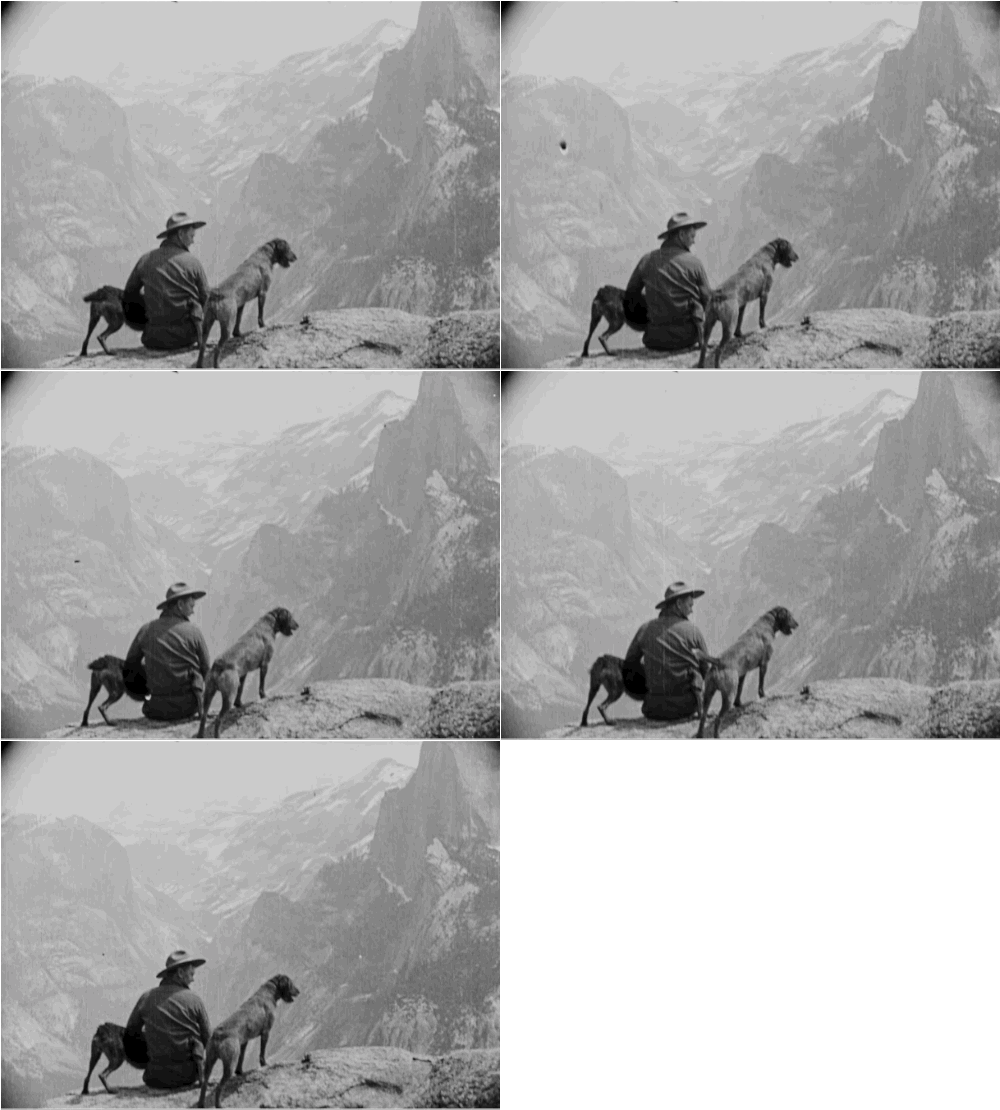
Beyond the wall of the unreal city, there is another world waiting for you. It is the old true world of the deserts, the mountains, the forests, the islands, the shores, the open plains. Go there. Be there. Walk gently and quietly deep within it.

Edward Abbey

05 October 2016

Solo.


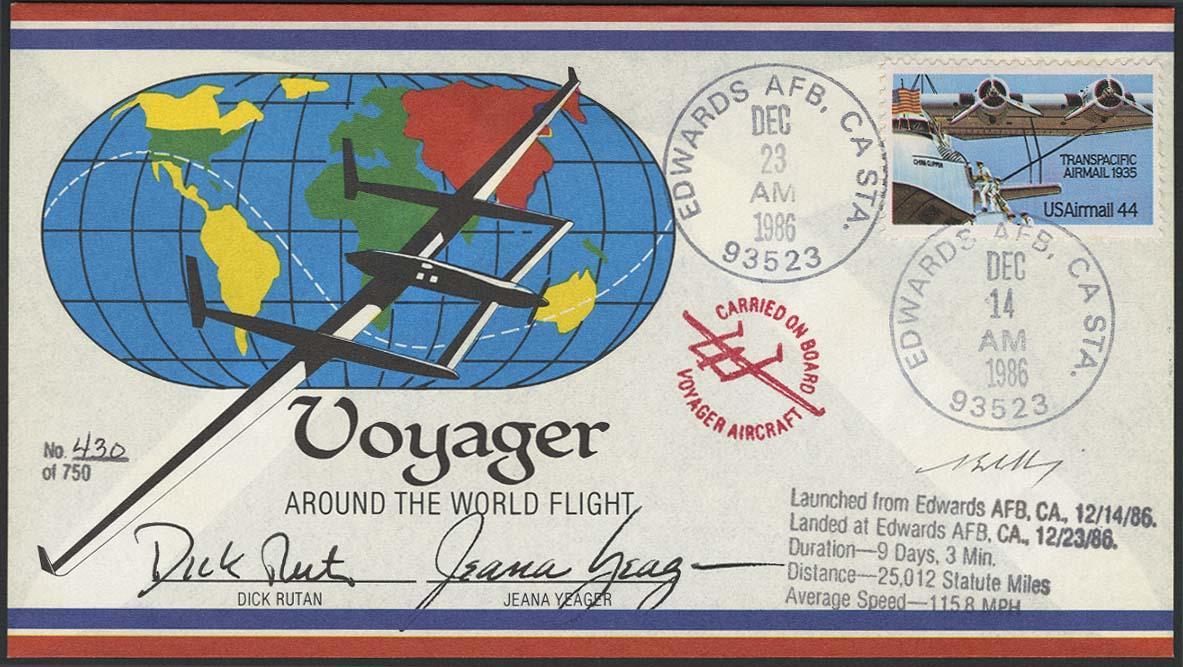
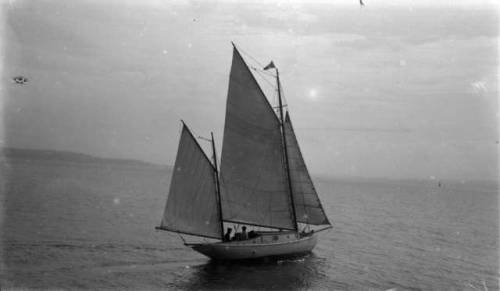
Franz Romer wasn’t much of a talker. It was 1928 and the 29-year-old German man had just completed a 58-day solo crossing of the Atlantic in a kayak that looked a bit like a sailing canoe. His landing in the U.S. Virgin Islands was uneventful, but as word got out of his accomplishment, people clamored to celebrate him. It was the longest and most dangerous leg of his journey that had begun in Lisbon, Portugal. You’d think he’d be in want of human connection, but beyond general pleasantries, Romer proved to not be much of a storyteller.

Even for a boy who grew up enamored of the sea, the crossing must have been brutal. It wasn’t even his idea to begin with. Though a merchant seaman and licensed navigator, Romer was also an aviator. It was the mid-1920s and he concocted an audacious goal. He wanted to fly solo across the Atlantic Ocean, from Germany to New York. It’s not clear if he couldn’t round up the sponsors, or if Charles Lindbergh’s 1927 flight beat him to the punch. But riffing from the trans-Atlantic mania, Klepper Kayaks made Romer an alternate proposal: be the first person on record to kayak solo from Europe to the Americas.