"I am not one who was born in the custody of wisdom. I am one who is fond of olden times and intense in quest of the sacred knowing of the ancients." Gustave Courbet
Showing posts with label Thanksgiving. Show all posts

27 November 2025

Hurrah.

Currier & Ives, Home to Thanksgiving, 1867


OVER THE RIVER and THROUGH the WOOD

Over the river, and through the wood,
To Grandfather’s house we go;
The horse knows the way,
To carry the sleigh,
Through the white and drifted snow.

Over the river, and through the wood,
To Grandfather’s house away!
We would not stop
For doll or top, For it is Thanksgiving Day.

Over the river, and through the wood,
Oh, how the wind does blow!
It stings the toes,
And bites the nose,
As over the ground we go.

Over the river, and through the wood,
With a clear blue winter sky,
The dogs do bark,
And children hark,
As we go jingling by.

Over the river, and through the wood,
To have a first-rate play –
Hear the bells ring,
“Ting a ling ding!”
Hurray for Thanksgiving Day!

Over the river, and through the wood,
No matter for winds that blow
Or if we get
The sleigh upset
Into a bank of snow.

Over the river, and through the wood,
To see little John and Ann;
We will kiss them all,
And play snowball,
And stay as long as we can.

Over the river, and through the wood,
Trot fast my dapple grey!
Spring over the ground,
Like a hunting-hound,
For ’tis Thanksgiving Day!

Over the river, and through the wood,
And straight through the barnyard gate;
We seem to go
Extremely slow,
It is so hard to wait!

Over the river, and through the wood –
Old Jowler hears our bells;
He shakes his pow,
With a loud bow-wow,
And thus the news he tells.

Over the river, and through the wood,
When Grandmother sees us come,
She will say, “O, dear,
The children are here,
Bring pie for everyone.”

Over the river, and through the wood,
Now Grandmother’s cap I spy!
Hurrah for the fun!
Is the pudding done?
Hurrah for the pumpkin pie!

Lydia Maria Child

Brian Bazier performs your accompaniment on the tubaccordion ...

Ice-Cold.


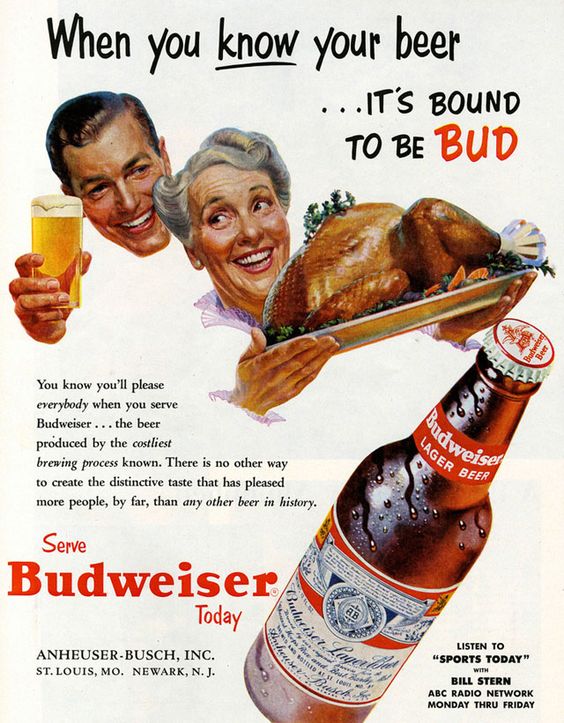
Getting ready for the Lions game, Dad would always set out creamed herring, extra sharp Pinconning cheddar, Triscuits, and "ice-cold" Bud.  

"It's gotta be ice-cold!"

Thanks, Pop.

Tradition.


Vintage Detroit looks at the Lions' Thanksgiving tradition ...
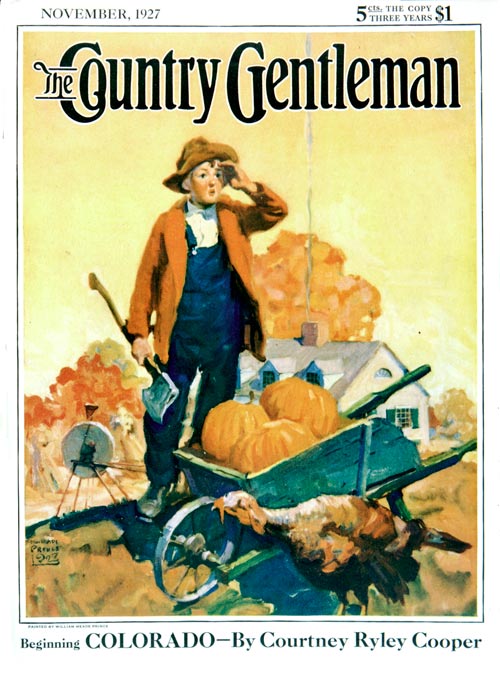
The tradition began in 1934, during the team’s first season in Detroit. Then-owner G.A. “Dick” Richards, who had recently moved the franchise from Portsmouth, Ohio, was struggling to draw fans. Despite fielding a competitive team, the Lions couldn’t lure attention away from baseball’s powerhouse Detroit Tigers.

Richards, who also owned a radio station, decided to stage a bold publicity stunt: a Thanksgiving Day game. He convinced the NBC Radio Network to broadcast it nationally—an unprecedented move at the time. On November 29, 1934, the Lions hosted the defending champion Chicago Bears at University of Detroit Stadium.

The result? A sellout crowd of 26,000 fans, with thousands more turned away at the gates. The Bears won 19–16, but Detroit’s holiday football experiment was a resounding success. A new tradition was born.

Telemann, Tafelmusik

Jordi Savall leads The Georgian Sinfonietta in a performance of the Suite in B-Major (TWV 55:B 1) ...

Blest.

Wyeth, N.C., An Early Thanksgiving, 1926


EPITAPHIUM MEUM 
Certain Verses left by the Honoured William Bradford Esq.; Governour of the Jurisdic

From my years young in days of youth,
God did make known to me his truth,
And call'd me from my native place
For to enjoy the means of grace
In wilderness he did me guide,
And in strange lands for me provide.
In fears and wants, through weal and woe,
As pilgrim passed I to and fro:
Oft left of them whom I did trust;
How vain it is to rest on dust!
A man of sorrows I have been,
And many changes I have seen.
Wars, wants, peace, plenty have I known;
And some advanc'd, others thrown down.
The humble, poor, cheerful and glad;
Rich, discontent, sower and sad:
When fears with sorrows have been mixed,
Consolations came betwixt.
Faint not, poor soul, in God still trust,
Fear not the things thou suffer must;
For, whom he loves he doth chastise,
And then all tears wipes from their eyes.
Farewell, dear children, whom I love,
Your better father is above:
When I am gone, he can supply;
To him I leave you when I die.
Fear him in truth, walk in his ways,
And he will bless you all your days.
My days are spent, old age is come,
My strength it fails, my glass near run:
Now I will wait when work is done,
Until my happy change shall come,
When from my labors I shall rest
With Christ above for to be blest.

William Bradford

Remember.

Wyeth, Corn Harvest, 1934


The odor of the coming feast fills the air.  Go! Remember God's bounty in the year. String the pearls of your favor. Hide the dark parts, except so far as they are breaking out in light. Give this one day to thanks, to joy, to gratitude. And, on such a day as this, while you participate in the bounties of your table, remember that there is that which God will esteem even more as a thanksgiving. Forgive your enemies. Settle the differences that have vexed the year. Humble yourselves one toward another. Tell God, as you go home, that, in requital of his great goodness and county to you, you cleanse your heart and wash your hands; you sacrifice your enmities; you augment your charities. Look upon the poor among you, and forget not the stranger. 

Henry Ward Beecher, from "The Family as an American Institution"

26 November 2025

Long-Playing.

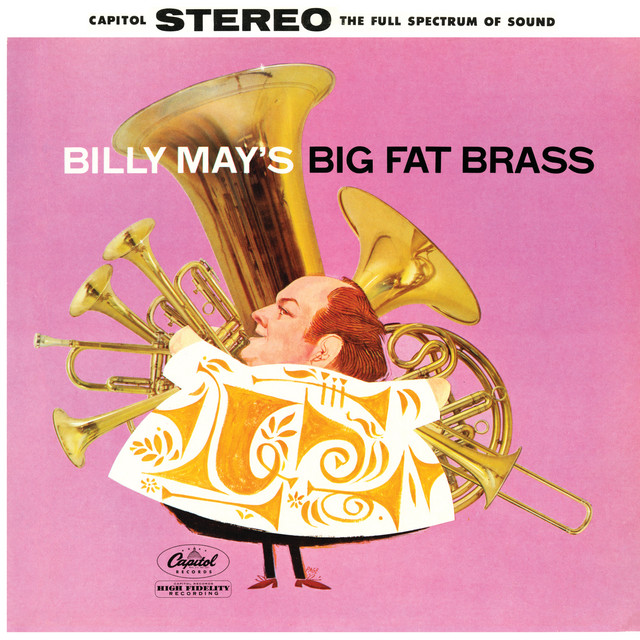
Another Amateur Night is upon us.  Stay in and pile thirteen hours of long-playing, microgrooved, nonbreakable stereophonic platters on the hi-fi ...


Designed for dancing with no interruption between numbers.

Kurt suggests a worthy addition ...
Abundance.


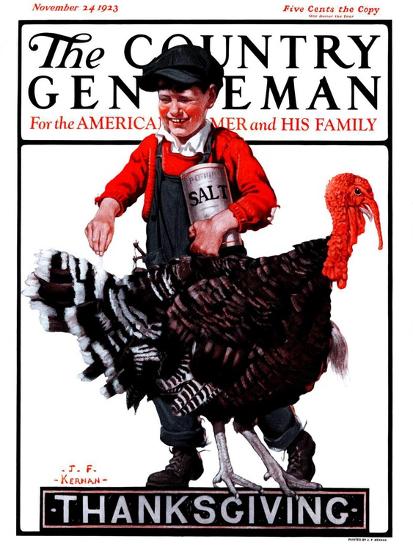
In the corner of the great kitchen, during all these days, the jolly old oven roared and crackled in great volcanic billows of flame, snapping and gurgling as if the old fellow entered with joyful sympathy into the frolic of the hour; and then, his great heart being once warmed up, he brooded over successive generations of pies and cakes, which went in raw and came out cooked, till butteries and dressers and shelves and pantries were literally crowded with a jostling abundance.

A great cold northern chamber, where the sun never shone, and where in winter the snow sifted in at the window cracks, and ice and frost reigned with undisputed sway, was fitted up to be the storehouse of these surplus treasures. There, frozen solid, and thus well preserved in their icy fetters, they formed a great repository for all the winter months; and the pies baked at Thanksgiving often came out fresh and good with the violets of April.

Harriet Beecher Stowe, from "How We Kept Thanksgiving at Oldtown"

Blest.

Wyeth, N.C., An Early Thanksgiving, 1926


EPITAPHIUM MEUM 
Certain Verses left by the Honoured William Bradford Esq.; Governour of the Jurisdic

From my years young in days of youth,
God did make known to me his truth,
And call'd me from my native place
For to enjoy the means of grace
In wilderness he did me guide,
And in strange lands for me provide.
In fears and wants, through weal and woe,
As pilgrim passed I to and fro:
Oft left of them whom I did trust;
How vain it is to rest on dust!
A man of sorrows I have been,
And many changes I have seen.
Wars, wants, peace, plenty have I known;
And some advanc'd, others thrown down.
The humble, poor, cheerful and glad;
Rich, discontent, sower and sad:
When fears with sorrows have been mixed,
Consolations came betwixt.
Faint not, poor soul, in God still trust,
Fear not the things thou suffer must;
For, whom he loves he doth chastise,
And then all tears wipes from their eyes.
Farewell, dear children, whom I love,
Your better father is above:
When I am gone, he can supply;
To him I leave you when I die.
Fear him in truth, walk in his ways,
And he will bless you all your days.
My days are spent, old age is come,
My strength it fails, my glass near run:
Now I will wait when work is done,
Until my happy change shall come,
When from my labors I shall rest
With Christ above for to be blest.

William Bradford

25 November 2025

Nourishes.


Tradition is often flatly opposed to what is ordinary, to what is mere routine. But convention, which is a mere repetition of familiar routines, follows the line of least resistance. One goes through an act, without trying to understand the meaning of it all, merely because everyone else does the same. Tradition, which is always old, is at the same time ever new because it is always reviving - born again in each new generation, to be lived and applied in a new and particular way. Convention is simply the ossification of social customs. The activities of conventional people are merely excuses for not acting in a more integrally human way. Tradition nourishes the life of the spirit; convention merely disguises its interior decay.

Thomas Merton, from No Man Is an Island

24 November 2025

Enjoyment.


I am grateful for what I am and have. My thanksgiving is perpetual. It is surprising how contented one can be with nothing definite - only a sense of existence. Well, anything for variety. I am ready to try this for the next ten thousand years, and exhaust it. How sweet to think of! my extremities well charred, and my intellectual part too, so that there is no danger of worm or rot for a long while. My breath is sweet to me. O how I laugh when I think of my vague indefinite riches. No run on my bank can drain it, for my wealth is not possession but enjoyment.

Henry David Thoreau, from a letter to Harrison Blake, December 6, 1853.

23 November 2025

Blessing.

Wyeth, N.C., Mayflower Compact, 1940


lt was answered that all great and honourable actions are accompanied with great difficulties and must be both enterprised and overcome with answerable courages. It was granted the dangers were great, but not desperate. The difficulties were many, but not invincible. For though there were many of them likely, yet they were not certain. It might be sundry of the things feared might never befall; others by provident care and the use of good means might in a great measure be prevented; and all of them, through the help of God, by fortitude and patience might either be borne or overcome. True it was that such attempts were not to he made and undertaken without good ground and reason, not rashly or lightly as many have done for curiosity or hope of gain, etc. But their condition was not ordinary, their ends were good and honourable, their calling lawful and urgent; and therefore they might expect the blessing of God in their proceeding. Yea, though they should lose their lives in this action, yet might they have comfort in the same and their endeavours would be honourable. 

William Bradford, from Of Plymouth Plantation

22 November 2025

Manna.

Curtis, Klamath Lake Marshes, Native American, 1923


Roads and Kingdoms on the sacred grain of the Northwoods ...
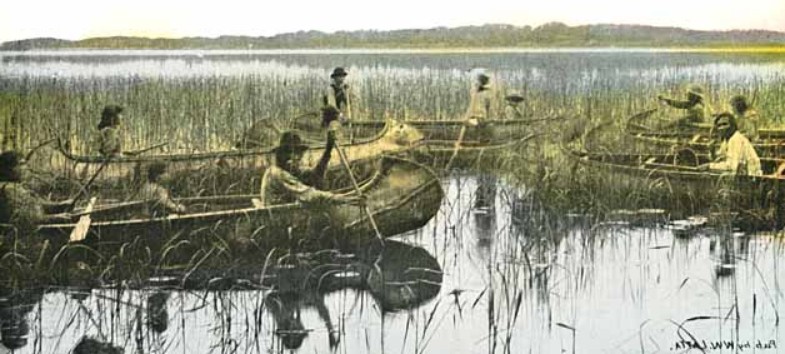
Wild rice is Anishinaabeg soul food. The Anishinaabeg, also known as the Chippewa or Ojibwe, use it as a staple like any other starch, as flour for breads, in soups with beans and meat, as stuffing for birds, and even chilled with cream for dessert. But it’s more than just an important food: wild rice is a sacred grass, the foretold grain, this tribe’s manna.

09 November 2025

Liquor.


Lucy Buffett's Oyster Dressing is a long-standing tradition in our house (but I've yet to surpass the quality and longevity of Mum's sage dressing, the technique of which will remain a family secret) ...

INGREDIENTS
  • 12 tablespoons/1 1/2 sticks unsalted butter, divided, plus more for baking dish
  • 1 (8-inch-square) baked and cooled cornbread, preferably on the sweet side
  • 15 slices white or wheat bread, toasted and cooled
  • ½ large white onion, finely chopped
  • 2 celery ribs, finely chopped
  • ½ large green bell pepper, finely chopped
  • ½ cup chicken broth, plus more as needed
  • 2 dozen freshly shucked or jarred oysters, preferably Gulf oysters, drained and coarsely chopped (reserve the oyster liquor)
  • ¼ cup freshly squeezed lemon juice
  • 1 tablespoon hot sauce, preferably Crystal
  • ¼ cup fresh flat-leaf parsley, finely chopped
  • 1 tablespoon fresh sage, finely chopped, or 1 teaspoon ground sage
  • 1 ½ teaspoons truffle salt or sea salt
  • ½ teaspoon ground white pepper
PREPARATION
  1. Heat oven to 350 degrees. 
  2. Butter a 9-by 13-inch baking dish.
  3. Crumble cornbread into a large bowl. Tear toasted white or wheat bread into very small pieces, add to cornbread, and toss to combine
  4. Melt 8 tablespoons butter in a large sauté pan over medium heat. Add onion, celery and bell pepper; sauté, stirring occasionally, for 3 minutes. Cover pan and cook, stirring occasionally, until vegetables are almost translucent, 5 to 6 minutes. Remove cover, add broth, and cook, scraping up any browned bits from the bottom of the pan, for 2 to 3 minutes. Continue to cook mixture for 1 more minute, then remove from heat, add to bread mixture, and stir to combine.
  5. In a medium bowl, stir together oysters, lemon juice, hot sauce, parsley, sage, salt and white pepper. Add to bread mixture and stir well to combine. If dressing seems too dry, add a little oyster liquor and up to 1/2 cup more chicken broth; mixture should be very moist.
  6. Pour dressing into greased baking dish (cast iron skillet. -Ed.). Cut remaining 4 tablespoons butter into small pieces and scatter over top of dressing. Bake until top and sides are browned, 40 to 45 minutes.

28 November 2024

Promise.

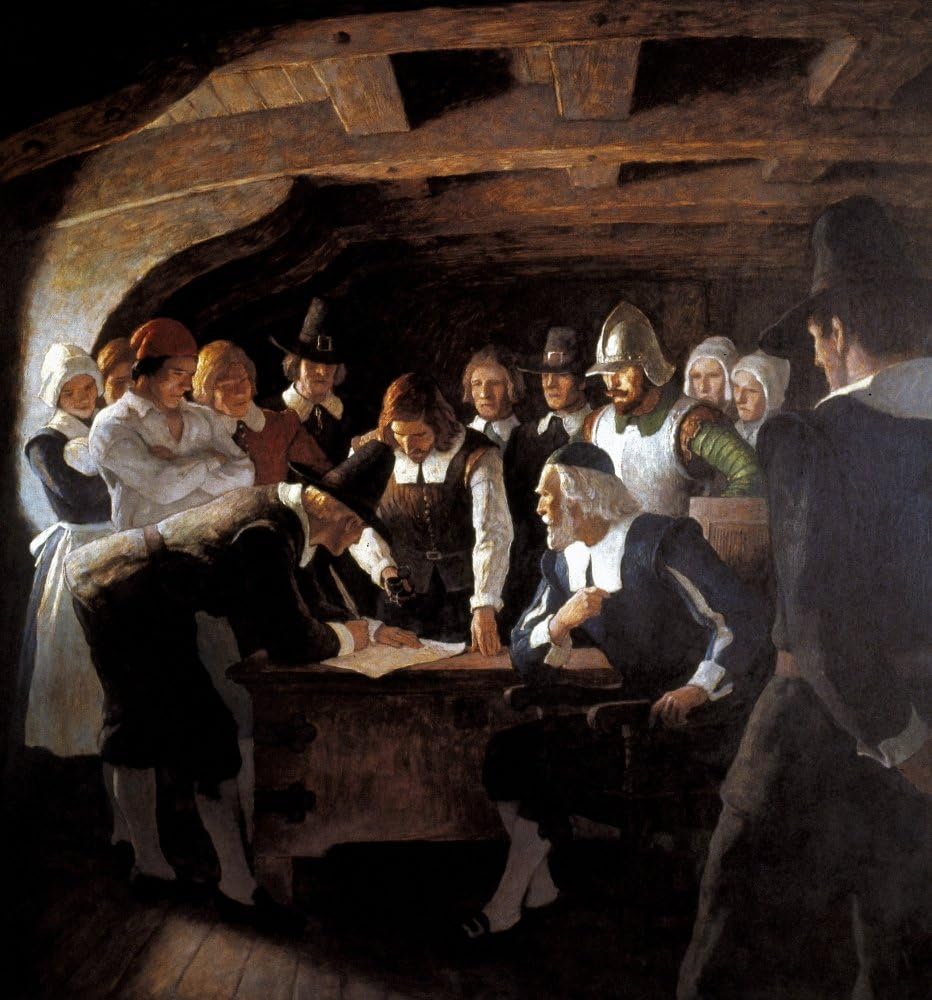
Gauthier, Signing the Compact, 1859


In the name of God, Amen. We, whose names are underwritten, the Loyal Subjects of our dread Sovereign Lord King James, by the Grace of God, of Great Britain, France, and Ireland, King, Defender of the Faith, &c. Having undertaken for the Glory of God, and Advancement of the Christian Faith, and the Honour of our King and Country, a Voyage to plant the first Colony in the northern Parts of Virginia; Do by these Presents, solemnly and mutually, in the Presence of God and one another, covenant and combine ourselves together into a civil Body Politick, for our better Ordering and Preservation, and Furtherance of the Ends aforesaid: And by Virtue hereof do enact, constitute, and frame, such just and equal Laws, Ordinances, Acts, Constitutions, and Officers, from time to time, as shall be thought most meet and convenient for the general Good of the Colony; unto which we promise all due Submission and Obedience.

In witness whereof we have hereunto subscribed our names at Cape-Cod the eleventh of November, in the Reign of our Sovereign Lord King James, of England, France, and Ireland, the eighteenth, and of Scotland the fifty-fourth, Anno Domini; 1620.or

John Carver 
William Bradford
Edward Winslow
William Brewster
Isaac Allerton
Myles Standish
John Alden
John Turner
Francis Eaton
James Chilton
John Craxton
John Billington
Moses Fletcher
John Goodman
Samuel Fuller
Christopher Martin
William Mullins
William White
Richard Warren
John Howland
Stephen Hopkins
Digery Priest
Thomas Williams
Gilbert Winslow
Edmund Margesson
Peter Brown
Richard Britteridge
George Soule
Edward Tilly
John Tilly
Francis Cooke
Thomas Rogers
Thomas Tinker
John Ridgdale
Edward Fuller
Richard Clark
Richard Gardiner
Mr. John Allerton
Thomas English
Edward Doten
Edward Liester

Invitingly.


Countless Victorian-era engravings notwithstanding, the Pilgrims did not spend the day sitting around a long table draped with a white linen cloth, clasping each other’s hands in prayer as a few curious Indians looked on. Instead of an English affair, the First Thanksgiving soon became an overwhelmingly Native celebration when Massasoit and a hundred Pokanokets (more than twice the entire English population of Plymouth) arrived at the settlement with five freshly killed deer. Even if all the Pilgrims’ furniture was brought out into the sunshine, most of the celebrants stood, squatted, or sat on the ground as they clustered around outdoor fires, where the deer and birds turned on wooden spits and where pottages—stews into which varieties of meats and vegetables were thrown—simmered invitingly.

27 November 2024

Free.

Conscience.


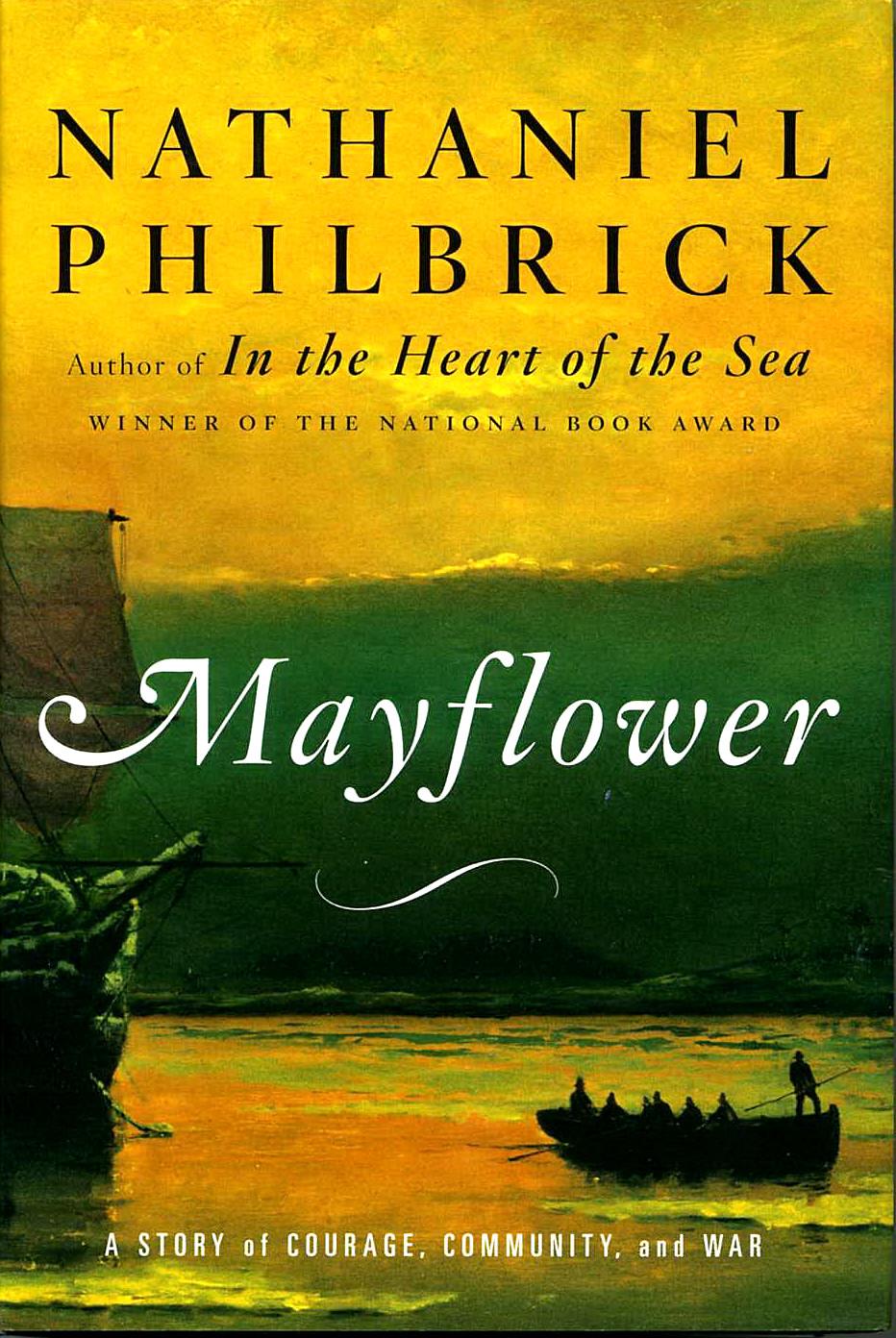
It is easy to mock past attempts to venerate and sanctify the Pilgrims, especially given what their sons and grandsons did to the Native Americans. And yet, we must look with something more than cynicism at a people who maintained more than half a century of peace with their Native neighbors. The great mystery of this story is how America emerged from the terrible darkness of King Philip’s War to become the United States. A possible answer resides in the character of the man who has been called America’s first Indian fighter, Benjamin Church.

In the years after King Philip’s War, as the country came to be defined by its relentless push west, a new American type came into being: the frontiersman. As a roughneck intermediary between civilization and savagery, the frontiersman had a natural distrust of authority and relied on his own instincts, bravery, and skill to survive. What makes Church unique is that he was one of the first New Englanders to embrace the wilderness his forefathers had shunned. When war erupted in June 1675, he was the right man in the right place to become a truly archetypal American.

Out of the annealing flame of one of the most horrendous wars ever fought in North America, he forged an identity that was part Pilgrim, part mariner, part Indian, and altogether his own. That so many characters from American history and literature resemble him — from Daniel Boone to Davy Crockett to Natty Bumppo to Rambo — does nothing to diminish the stunning originality of the persona he creates in Entertaining Passages Relating to Philip’s War. That Church according to Church is too brave, too cunning, and too good to be true is beside the point. America was destined to become a nation of self-fashioned and self-promoting men. Church personifies what would become a recurrent American type: the indignant critic of authority who, despite his best intentions, finds himself dragged into moral compromise, violence, and tragedy.  What makes his story so special, I believe, is that he shows us how the nightmare of wilderness warfare might one day give rise to a society that promises liberty and justice for all.

Early in the war, Church railed against the Plymouth officials’ decision to enslave the Indians who surrendered at Dartmouth.  But by the end of the war, as he relentlessly pursued Philip through the swamps of Plymouth Colony, he had become New England’s premier slave catcher.  Late in life, Church remained proud of his role in bringing an end to the fighting.  But unlike the Puritan historians and other memorialists, such as Mary Rowlandson, who saw the ultimate course of the conflict as inevitable and just, Church had his doubts – and therein resides whatever promise this story holds for America.

Church concludes his account of the war with a vignette. In January 1677, the Plymouth magistrates asked him to lead a few minor mop-up operations. Over the course of the winter he succeeded in capturing several additional Indians. One of the captives was an old man to whom Church took an immediate liking, and he asked the Indian his name.

“Conscience.”

“Conscience,” the old man replied. “Conscience,” Church repeated with a smile; “then the war is over, for that was what they were searching for, it being much wanting.”

Church was supposed to deliver the old man to Plymouth, where he would undoubtedly have been shipped off as a slave to the West Indies. Instead, Church asked him where he wanted to live out the rest of his life. The Indian told him the name of an Englishman in Swansea he had known before the war. Church made some inquiries, and soon Conscience had a new home.

It was a small victory to be sure, but in the winter of 1677 it was the best that Benjamin Church could do.