13 September 2020


Thoughts.
Hansen, September Sunset, 1980

ODE: INTIMATIONS of IMMORTALITY from RECOLLECTIONS of EARLY CHILDHOOD
The child is father of the man;
And I could wish my days to be
Bound each to each by natural piety.
There was a time when meadow, grove, and stream,
The earth, and every common sight,
To me did seem
Apparelled in celestial light,
The glory and the freshness of a dream.
It is not now as it hath been of yore;—
Turn wheresoe'er I may,
By night or day.
The things which I have seen I now can see no more.
The Rainbow comes and goes,
And lovely is the Rose,
The Moon doth with delight
Look round her when the heavens are bare,
Waters on a starry night
Are beautiful and fair;
The sunshine is a glorious birth;
But yet I know, where'er I go,
That there hath past away a glory from the earth.
Now, while the birds thus sing a joyous song,
And while the young lambs bound
As to the tabor's sound,
To me alone there came a thought of grief:
A timely utterance gave that thought relief,
And I again am strong:
The cataracts blow their trumpets from the steep;
No more shall grief of mine the season wrong;
I hear the Echoes through the mountains throng,
The Winds come to me from the fields of sleep,
And all the earth is gay;
Land and sea
Give themselves up to jollity,
And with the heart of May
Doth every Beast keep holiday;—
Thou Child of Joy,
Shout round me, let me hear thy shouts, thou happy Shepherd-boy.
Ye blessèd creatures, I have heard the call
Ye to each other make; I see
The heavens laugh with you in your jubilee;
My heart is at your festival,
My head hath its coronal,
The fulness of your bliss, I feel—I feel it all.
Oh evil day! if I were sullen
While Earth herself is adorning,
This sweet May-morning,
And the Children are culling
On every side,
In a thousand valleys far and wide,
Fresh flowers; while the sun shines warm,
And the Babe leaps up on his Mother's arm:—
I hear, I hear, with joy I hear!
—But there's a Tree, of many, one,
A single field which I have looked upon,
Both of them speak of something that is gone;
The Pansy at my feet
Doth the same tale repeat:
Whither is fled the visionary gleam?
Where is it now, the glory and the dream?
Our birth is but a sleep and a forgetting:
The Soul that rises with us, our life's Star,
Hath had elsewhere its setting,
And cometh from afar:
Not in entire forgetfulness,
And not in utter nakedness,
But trailing clouds of glory do we come
From God, who is our home:
Heaven lies about us in our infancy!
Shades of the prison-house begin to close
Upon the growing Boy,
But he beholds the light, and whence it flows,
He sees it in his joy;
The Youth, who daily farther from the east
Must travel, still is Nature's Priest,
And by the vision splendid
Is on his way attended;
At length the Man perceives it die away,
And fade into the light of common day.
Earth fills her lap with pleasures of her own;
Yearnings she hath in her own natural kind,
And, even with something of a Mother's mind,
And no unworthy aim,
The homely Nurse doth all she can
To make her Foster-child, her Inmate Man,
Forget the glories he hath known,
And that imperial palace whence he came.
Behold the Child among his new-born blisses,
A six years' Darling of a pigmy size!
See, where 'mid work of his own hand he lies,
Fretted by sallies of his mother's kisses,
With light upon him from his father's eyes!
See, at his feet, some little plan or chart,
Some fragment from his dream of human life,
Shaped by himself with newly-learn{e}d art
A wedding or a festival,
A mourning or a funeral;
And this hath now his heart,
And unto this he frames his song:
Then will he fit his tongue
To dialogues of business, love, or strife;
But it will not be long
Ere this be thrown aside,
And with new joy and pride
The little Actor cons another part;
Filling from time to time his "humorous stage"
With all the Persons, down to palsied Age,
That Life brings with her in her equipage;
As if his whole vocation
Were endless imitation.
Thou, whose exterior semblance doth belie
Thy Soul's immensity;
Thou best Philosopher, who yet dost keep
Thy heritage, thou Eye among the blind,
That, deaf and silent, read'st the eternal deep,
Haunted for ever by the eternal mind,—
Mighty Prophet! Seer blest!
On whom those truths do rest,
Which we are toiling all our lives to find,
In darkness lost, the darkness of the grave;
Thou, over whom thy Immortality
Broods like the Day, a Master o'er a Slave,
A Presence which is not to be put by;
Thou little Child, yet glorious in the might
Of heaven-born freedom on thy being's height,
Why with such earnest pains dost thou provoke
The years to bring the inevitable yoke,
Thus blindly with thy blessedness at strife?
Full soon thy Soul shall have her earthly freight,
And custom lie upon thee with a weight,
Heavy as frost, and deep almost as life!
O joy! that in our embers
Is something that doth live,
That Nature yet remembers
What was so fugitive!
The thought of our past years in me doth breed
Perpetual benediction: not indeed
For that which is most worthy to be blest;
Delight and liberty, the simple creed
Of Childhood, whether busy or at rest,
With new-fledged hope still fluttering in his breast:—
Not for these I raise
The song of thanks and praise
But for those obstinate questionings
Of sense and outward things,
Fallings from us, vanishings;
Blank misgivings of a Creature
Moving about in worlds not realised,
High instincts before which our mortal Nature
Did tremble like a guilty thing surprised:
But for those first affections,
Those shadowy recollections,
Which, be they what they may
Are yet the fountain-light of all our day,
Are yet a master-light of all our seeing;
Uphold us, cherish, and have power to make
Our noisy years seem moments in the being
Of the eternal Silence: truths that wake,
To perish never;
Which neither listlessness, nor mad endeavour,
Nor Man nor Boy,
Nor all that is at enmity with joy,
Can utterly abolish or destroy!
Hence in a season of calm weather
Though inland far we be,
Our Souls have sight of that immortal sea
Which brought us hither,
Can in a moment travel thither,
And see the Children sport upon the shore,
And hear the mighty waters rolling evermore.
Then sing, ye Birds, sing, sing a joyous song!
And let the young Lambs bound
As to the tabor's sound!
We in thought will join your throng,
Ye that pipe and ye that play,
Ye that through your hearts to-day
Feel the gladness of the May!
What though the radiance which was once so bright
Be now for ever taken from my sight,
Though nothing can bring back the hour
Of splendour in the grass, of glory in the flower;
We will grieve not, rather find
Strength in what remains behind;
In the primal sympathy
Which having been must ever be;
In the soothing thoughts that spring
Out of human suffering;
In the faith that looks through death,
In years that bring the philosophic mind.
And O, ye Fountains, Meadows, Hills, and Groves,
Forebode not any severing of our loves!
Yet in my heart of hearts I feel your might;
I only have relinquished one delight
To live beneath your more habitual sway.
I love the Brooks which down their channels fret,
Even more than when I tripped lightly as they;
The innocent brightness of a new-born Day
Is lovely yet;
The Clouds that gather round the setting sun
Do take a sober colouring from an eye
That hath kept watch o'er man's mortality;
Another race hath been, and other palms are won.
Thanks to the human heart by which we live,
Thanks to its tenderness, its joys, and fears,
To me the meanest flower that blows can give
Thoughts that do often lie too deep for tears.
William Wordsworth
ODE: INTIMATIONS of IMMORTALITY from RECOLLECTIONS of EARLY CHILDHOOD
The child is father of the man;
And I could wish my days to be
Bound each to each by natural piety.
There was a time when meadow, grove, and stream,
The earth, and every common sight,
To me did seem
Apparelled in celestial light,
The glory and the freshness of a dream.
It is not now as it hath been of yore;—
Turn wheresoe'er I may,
By night or day.
The things which I have seen I now can see no more.
The Rainbow comes and goes,
And lovely is the Rose,
The Moon doth with delight
Look round her when the heavens are bare,
Waters on a starry night
Are beautiful and fair;
The sunshine is a glorious birth;
But yet I know, where'er I go,
That there hath past away a glory from the earth.
Now, while the birds thus sing a joyous song,
And while the young lambs bound
As to the tabor's sound,
To me alone there came a thought of grief:
A timely utterance gave that thought relief,
And I again am strong:
The cataracts blow their trumpets from the steep;
No more shall grief of mine the season wrong;
I hear the Echoes through the mountains throng,
The Winds come to me from the fields of sleep,
And all the earth is gay;
Land and sea
Give themselves up to jollity,
And with the heart of May
Doth every Beast keep holiday;—
Thou Child of Joy,
Shout round me, let me hear thy shouts, thou happy Shepherd-boy.
Ye blessèd creatures, I have heard the call
Ye to each other make; I see
The heavens laugh with you in your jubilee;
My heart is at your festival,
My head hath its coronal,
The fulness of your bliss, I feel—I feel it all.
Oh evil day! if I were sullen
While Earth herself is adorning,
This sweet May-morning,
And the Children are culling
On every side,
In a thousand valleys far and wide,
Fresh flowers; while the sun shines warm,
And the Babe leaps up on his Mother's arm:—
I hear, I hear, with joy I hear!
—But there's a Tree, of many, one,
A single field which I have looked upon,
Both of them speak of something that is gone;
The Pansy at my feet
Doth the same tale repeat:
Whither is fled the visionary gleam?
Where is it now, the glory and the dream?
Our birth is but a sleep and a forgetting:
The Soul that rises with us, our life's Star,
Hath had elsewhere its setting,
And cometh from afar:
Not in entire forgetfulness,
And not in utter nakedness,
But trailing clouds of glory do we come
From God, who is our home:
Heaven lies about us in our infancy!
Shades of the prison-house begin to close
Upon the growing Boy,
But he beholds the light, and whence it flows,
He sees it in his joy;
The Youth, who daily farther from the east
Must travel, still is Nature's Priest,
And by the vision splendid
Is on his way attended;
At length the Man perceives it die away,
And fade into the light of common day.
Earth fills her lap with pleasures of her own;
Yearnings she hath in her own natural kind,
And, even with something of a Mother's mind,
And no unworthy aim,
The homely Nurse doth all she can
To make her Foster-child, her Inmate Man,
Forget the glories he hath known,
And that imperial palace whence he came.
Behold the Child among his new-born blisses,
A six years' Darling of a pigmy size!
See, where 'mid work of his own hand he lies,
Fretted by sallies of his mother's kisses,
With light upon him from his father's eyes!
See, at his feet, some little plan or chart,
Some fragment from his dream of human life,
Shaped by himself with newly-learn{e}d art
A wedding or a festival,
A mourning or a funeral;
And this hath now his heart,
And unto this he frames his song:
Then will he fit his tongue
To dialogues of business, love, or strife;
But it will not be long
Ere this be thrown aside,
And with new joy and pride
The little Actor cons another part;
Filling from time to time his "humorous stage"
With all the Persons, down to palsied Age,
That Life brings with her in her equipage;
As if his whole vocation
Were endless imitation.
Thou, whose exterior semblance doth belie
Thy Soul's immensity;
Thou best Philosopher, who yet dost keep
Thy heritage, thou Eye among the blind,
That, deaf and silent, read'st the eternal deep,
Haunted for ever by the eternal mind,—
Mighty Prophet! Seer blest!
On whom those truths do rest,
Which we are toiling all our lives to find,
In darkness lost, the darkness of the grave;
Thou, over whom thy Immortality
Broods like the Day, a Master o'er a Slave,
A Presence which is not to be put by;
Thou little Child, yet glorious in the might
Of heaven-born freedom on thy being's height,
Why with such earnest pains dost thou provoke
The years to bring the inevitable yoke,
Thus blindly with thy blessedness at strife?
Full soon thy Soul shall have her earthly freight,
And custom lie upon thee with a weight,
Heavy as frost, and deep almost as life!
O joy! that in our embers
Is something that doth live,
That Nature yet remembers
What was so fugitive!
The thought of our past years in me doth breed
Perpetual benediction: not indeed
For that which is most worthy to be blest;
Delight and liberty, the simple creed
Of Childhood, whether busy or at rest,
With new-fledged hope still fluttering in his breast:—
Not for these I raise
The song of thanks and praise
But for those obstinate questionings
Of sense and outward things,
Fallings from us, vanishings;
Blank misgivings of a Creature
Moving about in worlds not realised,
High instincts before which our mortal Nature
Did tremble like a guilty thing surprised:
But for those first affections,
Those shadowy recollections,
Which, be they what they may
Are yet the fountain-light of all our day,
Are yet a master-light of all our seeing;
Uphold us, cherish, and have power to make
Our noisy years seem moments in the being
Of the eternal Silence: truths that wake,
To perish never;
Which neither listlessness, nor mad endeavour,
Nor Man nor Boy,
Nor all that is at enmity with joy,
Can utterly abolish or destroy!
Hence in a season of calm weather
Though inland far we be,
Our Souls have sight of that immortal sea
Which brought us hither,
Can in a moment travel thither,
And see the Children sport upon the shore,
And hear the mighty waters rolling evermore.
Then sing, ye Birds, sing, sing a joyous song!
And let the young Lambs bound
As to the tabor's sound!
We in thought will join your throng,
Ye that pipe and ye that play,
Ye that through your hearts to-day
Feel the gladness of the May!
What though the radiance which was once so bright
Be now for ever taken from my sight,
Though nothing can bring back the hour
Of splendour in the grass, of glory in the flower;
We will grieve not, rather find
Strength in what remains behind;
In the primal sympathy
Which having been must ever be;
In the soothing thoughts that spring
Out of human suffering;
In the faith that looks through death,
In years that bring the philosophic mind.
And O, ye Fountains, Meadows, Hills, and Groves,
Forebode not any severing of our loves!
Yet in my heart of hearts I feel your might;
I only have relinquished one delight
To live beneath your more habitual sway.
I love the Brooks which down their channels fret,
Even more than when I tripped lightly as they;
The innocent brightness of a new-born Day
Is lovely yet;
The Clouds that gather round the setting sun
Do take a sober colouring from an eye
That hath kept watch o'er man's mortality;
Another race hath been, and other palms are won.
Thanks to the human heart by which we live,
Thanks to its tenderness, its joys, and fears,
To me the meanest flower that blows can give
Thoughts that do often lie too deep for tears.
William Wordsworth
Excellent.
An excellent documentary ...
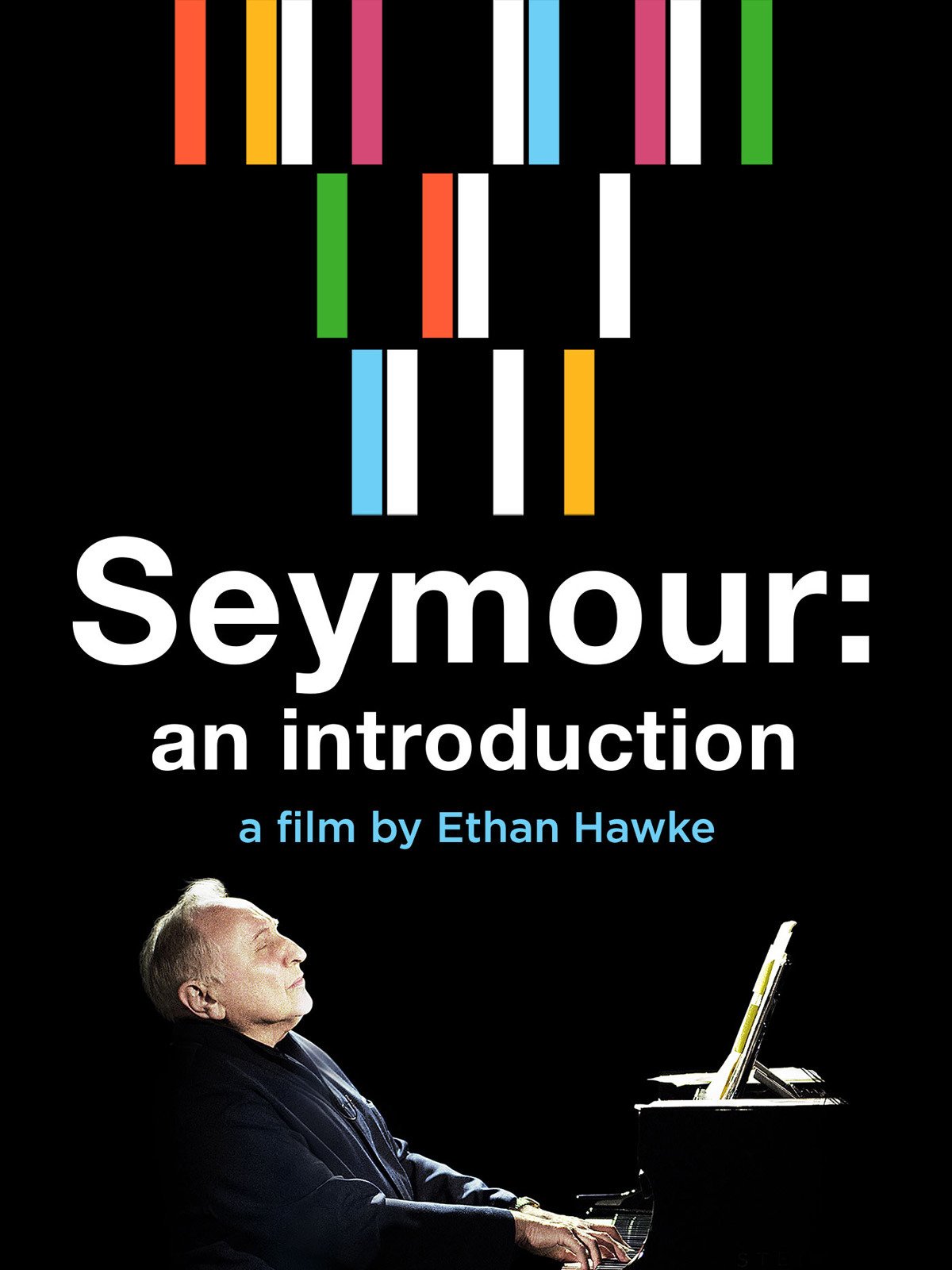
Don't miss this discussion that Ethan Hawke and Seymour Bernstein have about the documentary Seymour: An Introduction ...
All serious artists begin by devoting their lives to a passion because they love it. Music isn’t a way of life for me, it is my life. So when I practice, I’m integrating my emotional, intellectual and physical worlds. Now if artists were conscious of doing that, they would direct that integration into their social world. Musicians train themselves to listen to what is coming out of their instrument, so that it matches what their inner world is experiencing. That teaches them to listen to people speaking in a very intense and involved fashion. There’s a correlation there. I think artists get into trouble or become neurotic when they don’t carry the hard-earned discipline from their art into the social world. Many try to do just the opposite by bringing the social world into their art. I don’t think that works because the social world is very unpredictable, but our art is very predictable.
Seymour Bernstein
12 September 2020
Toots Hibbert, Rest In Peace

"54-46 Was My Number" with the Rock & Roll Rooster ...
Thank you, Casey.
Quick.
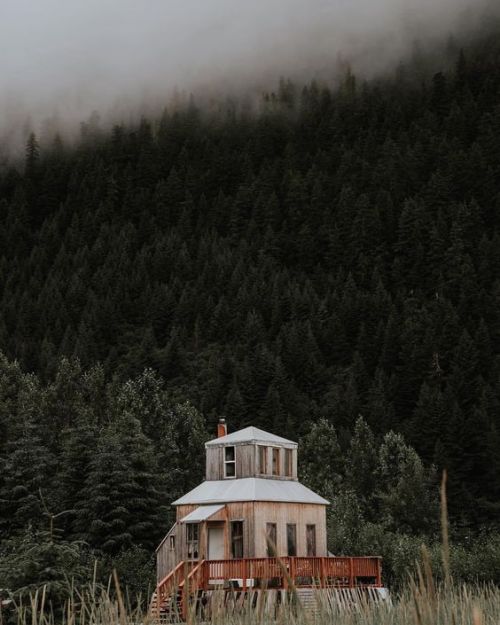
Chatham, Sweetgrass Spring Evening, 1991

Has it ever struck you that life is all memory, except for the one present moment that goes by you so quick you hardly catch it going?
Tennessee Williams
Has it ever struck you that life is all memory, except for the one present moment that goes by you so quick you hardly catch it going?
Tennessee Williams
Happy Birthday, Lawrence

D.H. Lawrence was born yesterday in 1885.
The first (poem) of the day, fellas ...
I never saw a wild thing
sorry for itself.
A small bird will drop frozen dead from a bough
without ever having felt sorry for itself.
D.H. Lawrence
... Indians.
11 September 2020
Heroes.
Frederick the Great

Gratitude.

FDNY Engine 28 Firefighter Mike Kehoe headed up on September 11, 2001.
In normal life we hardly realize how much more we receive than we give, and life cannot be rich without such gratitude. It is so easy to overestimate the importance of our own achievements compared with what we owe to the help of others.
Dietrich Bonhoeffer
10 September 2020
Pleasure.

Beware the fury of a patient man.
There is a pleasure sure in being mad which none but madmen know.
John Dryden
Happy Birthday, Purcell
Closterman, Henry Purcell, 1695

Henry Purcell was born on this date in 1659.
Jean Tubéry conducts La Fenice performing Come Ye Sons of Art, Z. 323
Henry Purcell was born on this date in 1659.
Jean Tubéry conducts La Fenice performing Come Ye Sons of Art, Z. 323
09 September 2020

Live.

Friedrich Nietzsche
08 September 2020


Two-way.

Epictetus
07 September 2020
Scouts.
Curtis, Custer’s Scouts Accompanying the Photographer on His Investigative Tour of the Little Big Horn Battlefield, 1907

Pictured (l-r): Goes Ahead, Hairy Moccasin, White Man Runs Him, Curtis, and his Crow interpreter Alexander B. Upshaw

Faithful.

Go tell the Spartans,
Thou that passeth by,
That faithful to their precepts,
Here we lie
Simonides of Ceos

Happy Birthday, Butterfield
Butterfield, Keble College, Oxford, 1870
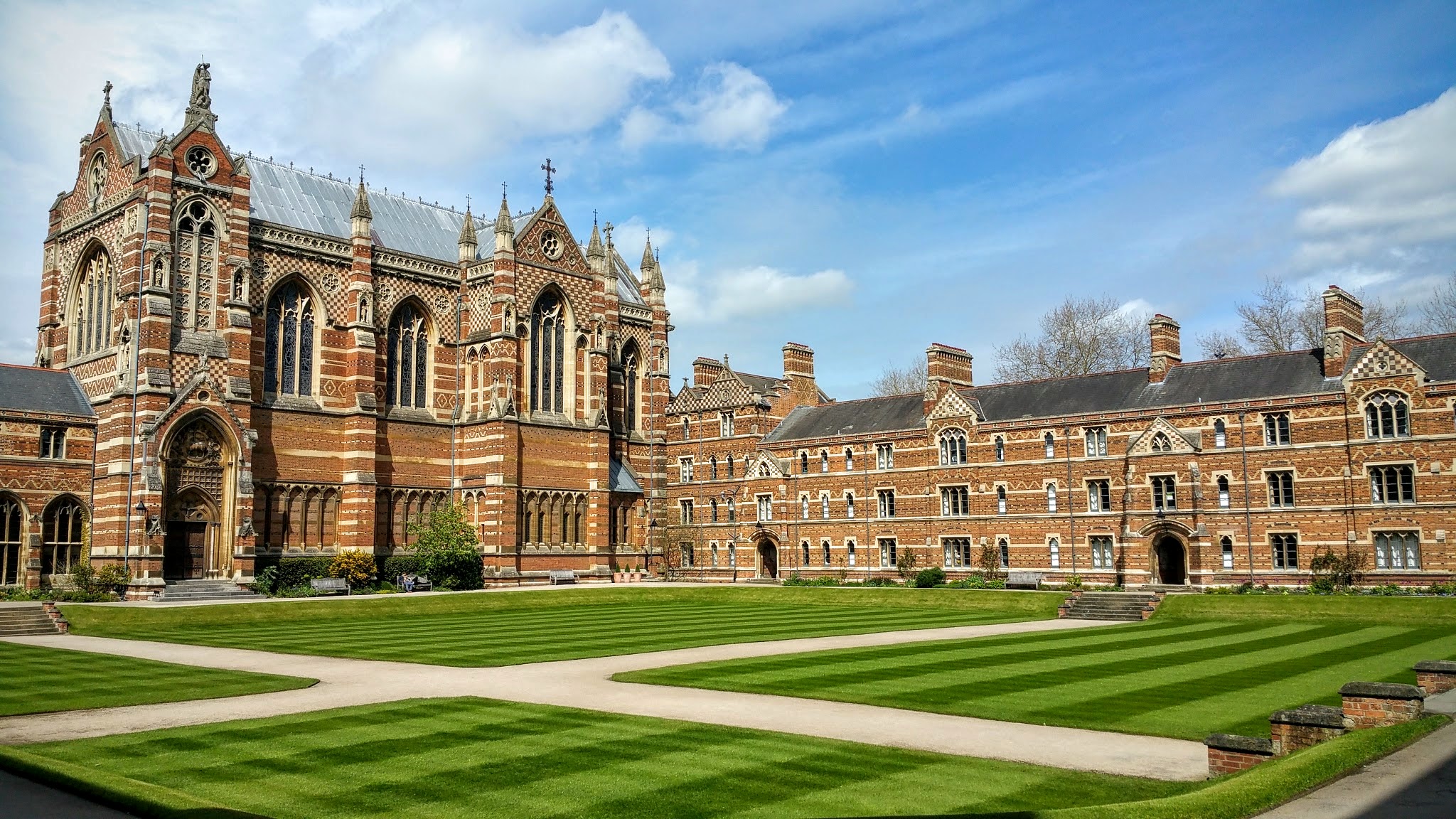
William Butterfield was born on this day in 1814.
William Butterfield was born on this day in 1814.
Slow.

Hundreds of fans have attended a special kind of musical happening at a church in Germany: a chord change in an organ piece that is supposed to last for an entirety of 639 years.
The performance of the Organ/ASLSP (As Slow As Possible) composition began in September 2001 at the St Burchardi church in the eastern town of Halberstadt and is supposed to end in 2640 — if all goes well.
CONNECT
The Longest Piece of Music ...
06 September 2020
Surrendered.
Wyeth, Stair Window, 1954
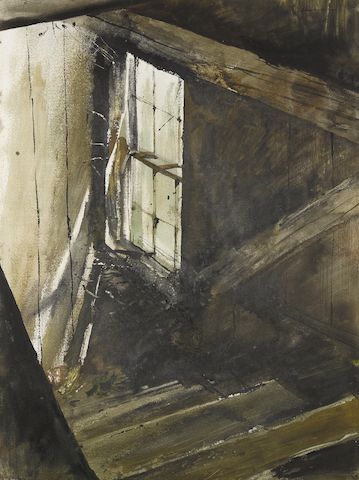
I do an awful lot of thinking and dreaming about things in the past and the future - the timelessness of the rocks and the hills - all the people who have existed there. I surrendered to a world of my imagination, re-enacting all those wonderful tales my father would read aloud to me.
Andrew Wyeth
Wonder.
I’m very concerned that our society is much more interested in information than wonder – in noise, rather than silence.
Fred Rogers
Mister Rogers from 1994 and 1997 ...
Fred Rogers
Mister Rogers from 1994 and 1997 ...
05 September 2020

Happy Birthday, Mercury

Freddie Mercury was born on this day in 1946.
My soul is painted like the wings of butterflies
Fairy tales of yesterday, grow but never die
I can fly, my friends
"Tie Your Mother Down" ...
Improvisations ...


03 September 2020
Common.

It was precisely to avoid moral compromise that composer and conductor Herbert Zipper (1904-1997) contrived a scheme to bring music to his fellow inmates untainted by Nazi involvement. Imprisoned in the Dachau concentration camp in 1938, he used his job of lugging cement as cover to scavenge for discarded wood, metal and wire. From these remnants prisoners assigned to the woodworking shop clandestinely built makeshift instruments that were then shared by the 14 members of the prisoner music ensemble Zipper formed. Every Sunday afternoon, they would gather in secret in an unused latrine to rehearse; they would spend the next three hours playing a consecutive series of 15-minute concerts for 20 to 30 inmates at a time. Beyond providing entertainment and distraction, the performances restored to the listeners a measure of dignity and self-worth.
Such was also the case for many artists and musicians imprisoned at the hybrid ghetto and concentration camp of Terezin (or Theresienstadt). The Nazis promoted it as a model town for Jewish resettlement, a place where creative pursuits were supported and encouraged; in reality, Terezin was part of a propaganda campaign to deceive the Red Cross and other humanitarian visitors about the regime’s ongoing extermination of the Jews. Many of the exploited musicians, writers and artists imprisoned at Terezin were sent to Auschwitz and gassed; but they managed to document the daily horrors of their lives in numerous drawings, literary sketches and musical compositions that they hid in affirmation of art’s ability to bear witness, even if they did not live to do it themselves.
In all these ways, they tuned their music to their inner needs, to sustain and nurture themselves, day by day. Today, during the pandemic, our own creative persistence honors the resilience and determination of those who came before us. Our common denominator is music.
CONNECT

Happy Birthday, Locatelli
Troost, Pietro Locatelli, 1733
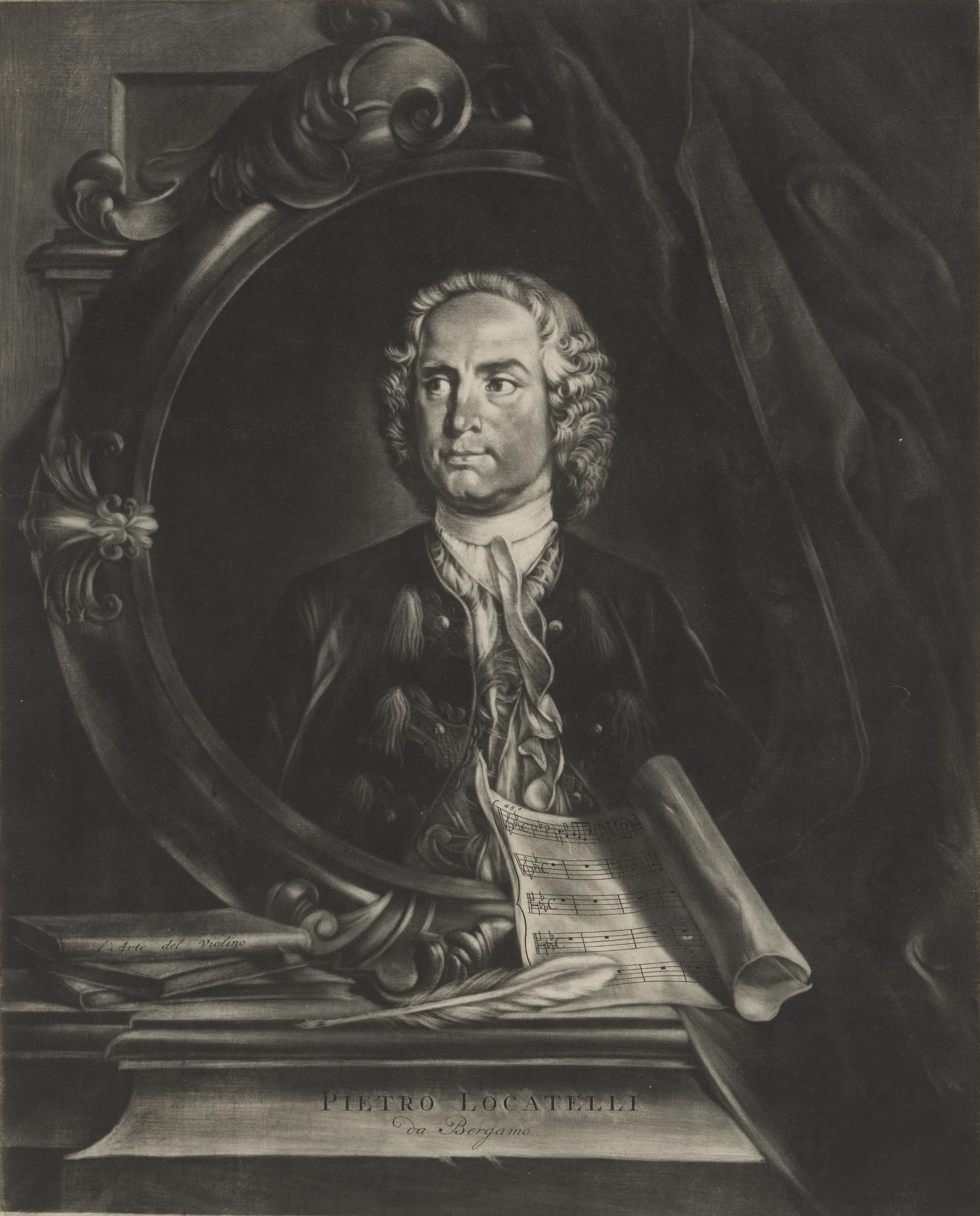
Pietro Locatelli was born on this day in 1764.
Asia Safikhanova, flute, and Vasiliy Antipov, lute, perform the Adagio from the Flute Sonata in C, Op. 2, No. 1 ...
02 September 2020

Subscribe to:
Posts (Atom)