"I am not one who was born in the custody of wisdom. I am one who is fond of olden times and intense in quest of the sacred knowing of the ancients." Gustave Courbet
Showing posts with label humanity. Show all posts

30 May 2024

Act.


I saw a stop sign, and it occurred to me that just as no one expects a stop sign to stop a car, I shouldn’t expect words to substitute for experience. That’s not their job, although words certainly can be misused in that way. The job of words is to direct us toward experience, to round out experience, to facilitate experience, and to give us ways to share at least pale shadows of that experience with those we love. And the job of words is to help us learn to be — and act — human.

31 July 2023

Happy Birthday, Levi


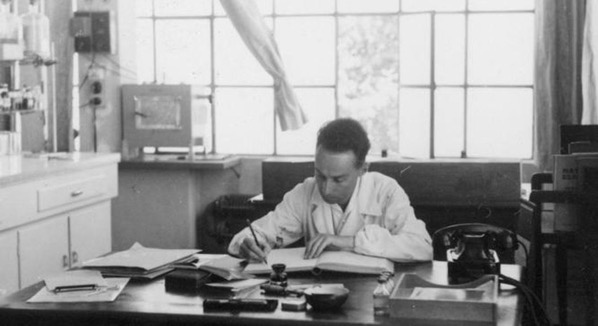
Even in this place one can survive, and therefore one must want to survive, to tell the story, to bear witness; and that to survive we must force ourselves to save at least the skeleton, the scaffolding, the form of civilization. We are slaves, deprived of every right, exposed to every insult, condemned to certain death, but we still possess one power, and we must defend it with all our strength for it is the last — the power to refuse our consent.

Primo Levi, born on this day in 1919, from Survival in Auschwitz

04 December 2022

Forever.


In a recent post, Kurt points to an article on a form of mass-murder being committed in classrooms today.

In the movie, Amadeus, there is a spirited dialog that Mozart has with Baron Von Swieten over themes and appropriate content for the masses ...
VON SWIETEN

Mozart, music is not the issue here.  No one doubts your talent. It is  your judgment of literature that's in question. Even with the politics taken out, this thing would still remain a vulgar farce. Why waste your spirit on such rubbish?  Surely you can choose more elevated themes?


MOZART
Elevated?  What does that mean?  Elevated! The only thing a man should elevate is - oh, excuse me. I'm sorry.  I'm stupid. But I am fed up to the teeth with elevated things! Old dead  legends! How can we go on forever writing about gods and legends?

VON SWIETEN (aroused)
Because they do. They go on forever - at least what they represent. The eternal in us, not the ephemeral. Opera is here to ennoble us. You and me, just as much as His Majesty.
It's always been happening, the battle continues today, and the good guys are losing, horribly.

Being a sixth-grade teacher, I'm privileged to have a front row seat for some of the most vulgar, rightfully childish, but genuinely funny behavior I've ever witnessed -- I consider it a perk of my position.  To return the favor, I'm an evangelist for Mozart, Caravaggio, and Stevenson.  Missionary work takes perseverance and patience, key to conversion being experience, which leads to dialog, which leads to exploration, which leads to choice, which leads to understanding and growth.

This is where the battle is being lost.  Kids are missing experiences with greatness.  I took my sixth-grade class to a school-sponsored book fair recently and was saddened (though not shocked) to see that there wasn't a single volume of classic literature among the offerings.  My classroom is thought to be a rarity, an exception, a "nerd clubhouse," even an oddity, sometimes called inappropriate for the age I teach because of the types of literature, music, and art that we explore, discuss, and think about.  Students today know nothing about Jim Hawkins, Medusa, and the Jupiter Symphony because not only have their parents missed those boats, but their teachers have as well (see a recent post on the value of real music).  

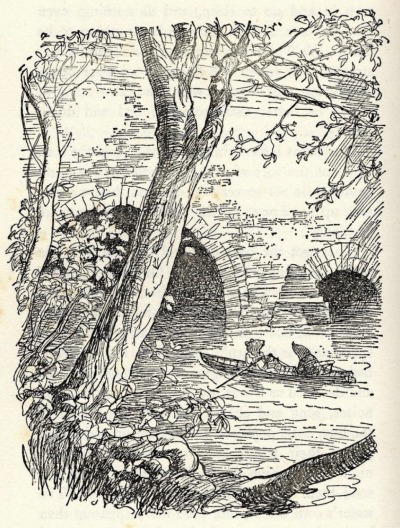
In an effort to devote more time to reading and math, our district has decided to cut the time devoted to science and social studies taught in a year in half -- one semester of science, one semester of social studies.  And still, I defy you to find a copy of Kidnapped, The Last of the Mohicans, or The Wind in the Willows on a classroom bookshelf, let alone in the library, er -- excuse me -- Media Center.

Sir Philip Pullman says that the best way to teach kids the value of good literature isn't to drill them with lessons on plot sequence, character types, and conflict, but to leave good literature lying around to be explored, without surveillance, without judgement, without commitment, in hopes that kids will find a lifeline and grab hold.  This might be the only hope. 

Kids need to be told stories, not by appeasers, but by crusaders who care about their hearts and souls, by those willing to use courage and take the time to read to kids, sing to kids, dance to Mozart with kids; showing the not only The Way, but the purpose and the benefit of The Way.

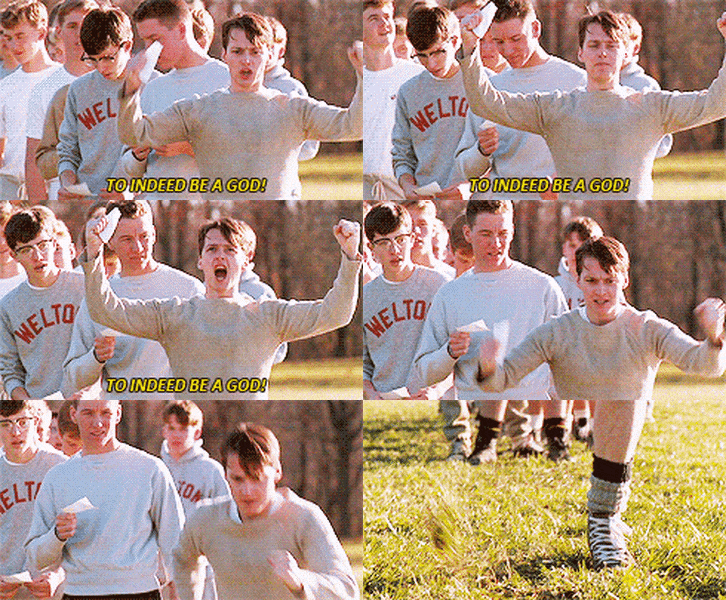
A scene from Dead Poets Society ...
We don't read and write poetry because it's cute. We read and write poetry because we are members of the human race. And the human race is filled with passion.

Medicine, law, business, engineering, these are all noble pursuits, and necessary to sustain life.  But poetry, beauty,  romance, love, these are what we stay alive for. To quote from Whitman:

"O me, o life of the questions of these recurring, 
Of the endless trains of the faithless, of cities filled with the foolish …

What good amid these, o me, o life? 

Answer: 
That you are here. That life exists, and identity.
That the powerful play goes on, and you may contribute a verse ...

16 June 2021

Impression.


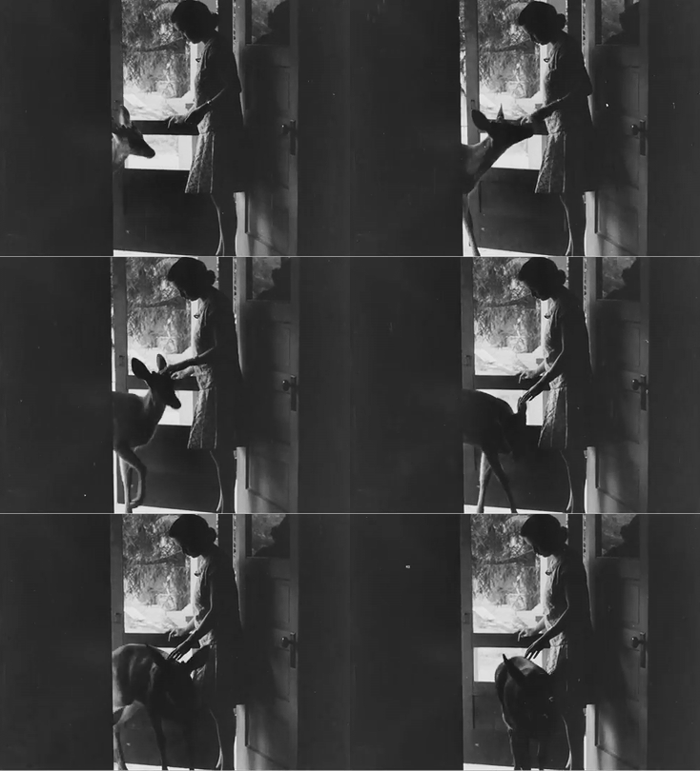
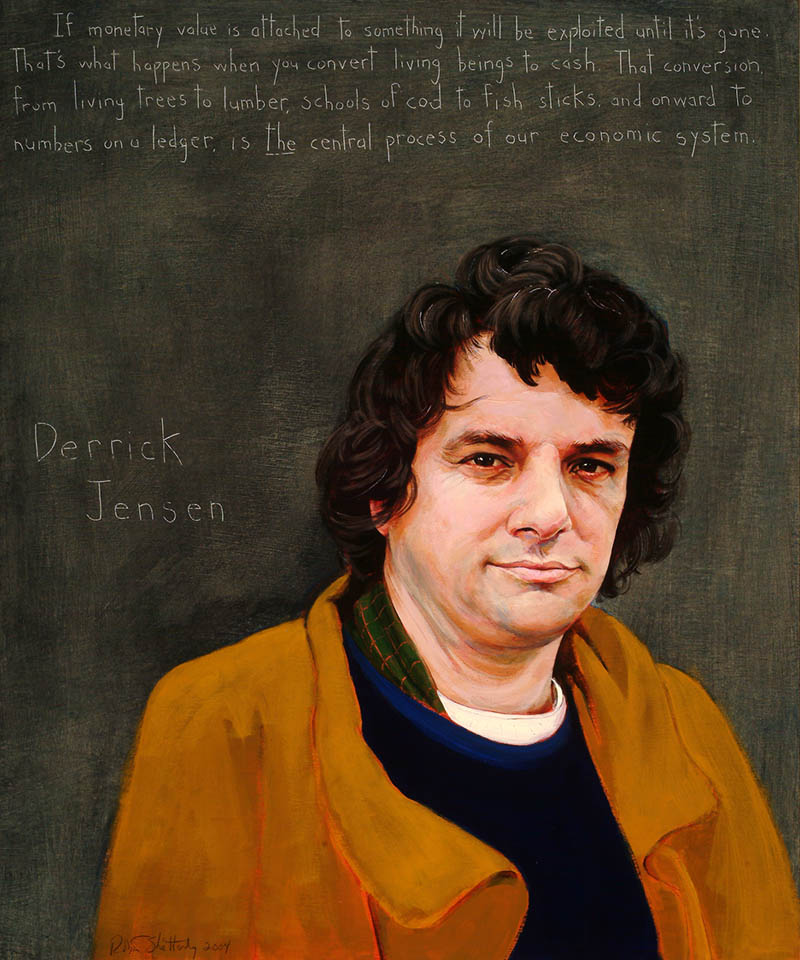
Touch is a reciprocal action, a gesture of exchange with the world. To make an impression is also to receive one.

Robert Macfarlane, from The Old Ways: A Journey on Foot

Thanks for the picture, Kurtastrophe.

25 February 2021

Dualism.


The idea that scientific method is the only method of discovering the truth has a lot to be said for it, if you mean by truth how the world ultimately is as a system of organized matter, but I defend cognitive dualism: that world can be understood completely in another way which also has its truths which are not translatable into the truths of science. So we have to look at the different ways we organize this material that science explains for us.

The assault on the human world in the name of science is more pseudo-science than science, and rejoices in its bald, unmoralized image of "what we really are".  What we really are from the scientific point of view is precisely what we really aren't. The identification of any object in the first-person case is ruled out by the enterprise of scientific explanation. So science cannot tell me who I am, let alone where, when, or how.

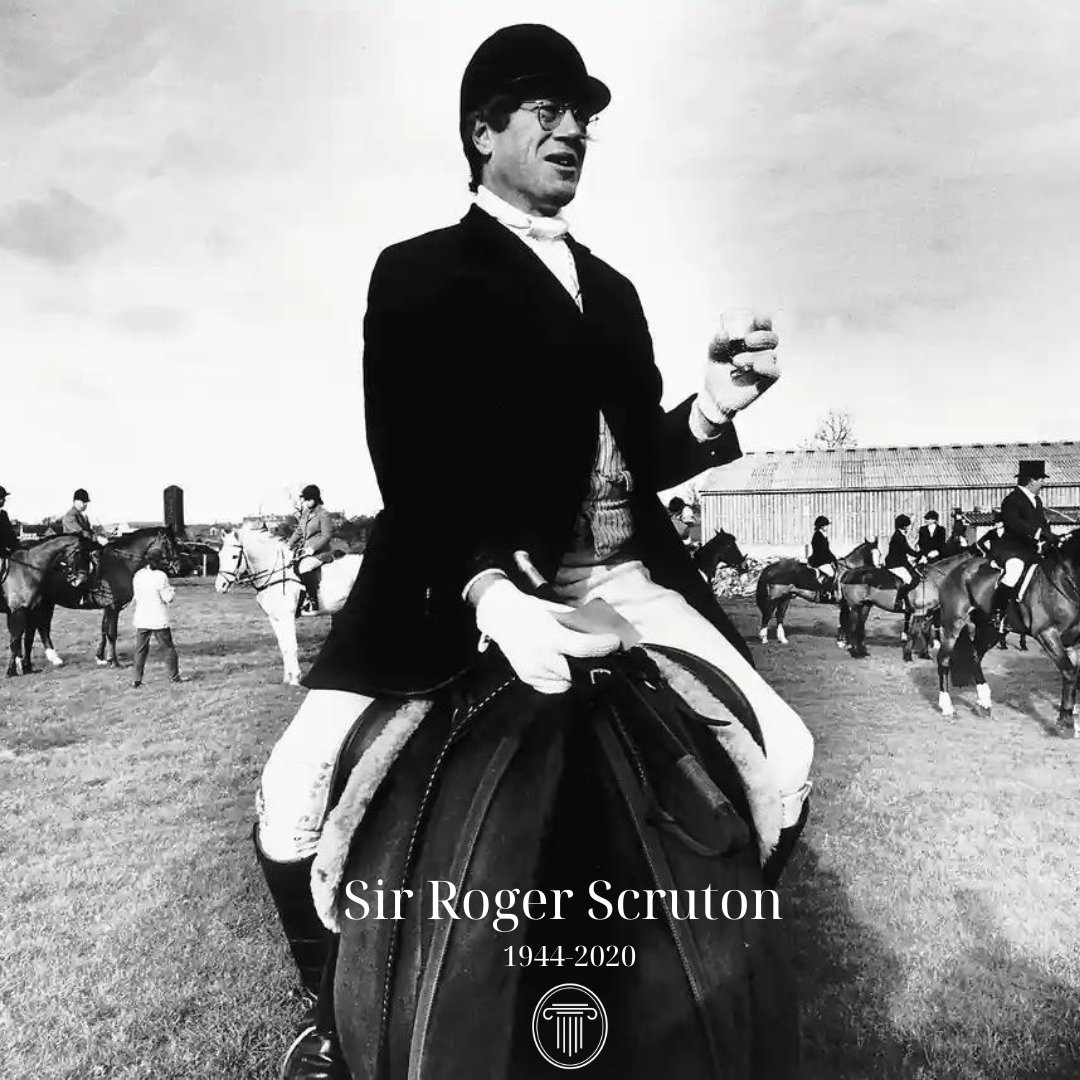
Sir Roger Scruton, from The Soul of the World

03 September 2020

Common.


It was precisely to avoid moral compromise that composer and conductor Herbert Zipper (1904-1997) contrived a scheme to bring music to his fellow inmates untainted by Nazi involvement. Imprisoned in the Dachau concentration camp in 1938, he used his job of lugging cement as cover to scavenge for discarded wood, metal and wire. From these remnants prisoners assigned to the woodworking shop clandestinely built makeshift instruments that were then shared by the 14 members of the prisoner music ensemble Zipper formed. Every Sunday afternoon, they would gather in secret in an unused latrine to rehearse; they would spend the next three hours playing a consecutive series of 15-minute concerts for 20 to 30 inmates at a time. Beyond providing entertainment and distraction, the performances restored to the listeners a measure of dignity and self-worth.

Such was also the case for many artists and musicians imprisoned at the hybrid ghetto and concentration camp of Terezin (or Theresienstadt). The Nazis promoted it as a model town for Jewish resettlement, a place where creative pursuits were supported and encouraged; in reality, Terezin was part of a propaganda campaign to deceive the Red Cross and other humanitarian visitors about the regime’s ongoing extermination of the Jews. Many of the exploited musicians, writers and artists imprisoned at Terezin were sent to Auschwitz and gassed; but they managed to document the daily horrors of their lives in numerous drawings, literary sketches and musical compositions that they hid in affirmation of art’s ability to bear witness, even if they did not live to do it themselves.

In all these ways, they tuned their music to their inner needs, to sustain and nurture themselves, day by day. Today, during the pandemic, our own creative persistence honors the resilience and determination of those who came before us. Our common denominator is music.

CONNECT

08 July 2019

Majesty.


Understand this clearly: you can teach a man to draw a straight line, and to carve it; and to copy and carve any number of given lines or forms, with admirable speed and perfect precision; and you find his work perfect of its kind: but if you ask him to think about any of those forms, to consider if he cannot find any better in his own head, he stops; his execution becomes hesitating; he thinks, and ten to one he thinks wrong; ten to one he makes a mistake in the first touch he gives to his work as a thinking being. But you have made a man of him for all that. He was only a machine before, an animated tool.

And observe, you are put to stern choice in this matter. You must either make a tool of the creature, or a man of him. You cannot make both. Men were not intended to work with the accuracy of tools, to be precise and perfect in all their actions. If you will have that precision out of them, and make their fingers measure degrees like cogwheels, and their arms strike curves like compasses, you must unhumanize them. All the energy of their spirits must be given to make cogs and compasses of themselves.  On the other hand, if you will make a man of the working creature, you cannot make a tool. Let him but begin to imagine, to think, to try to do anything worth doing; and the engine-turned precision is lost at once. Out come all his roughness; all his dullness, all his incapability; shame upon shame, failure upon failure, pause after pause: but out comes the whole majesty of him also, and we know the height of it only, when we see the clouds settling upon him.

John Ruskin

15 January 2019

All.


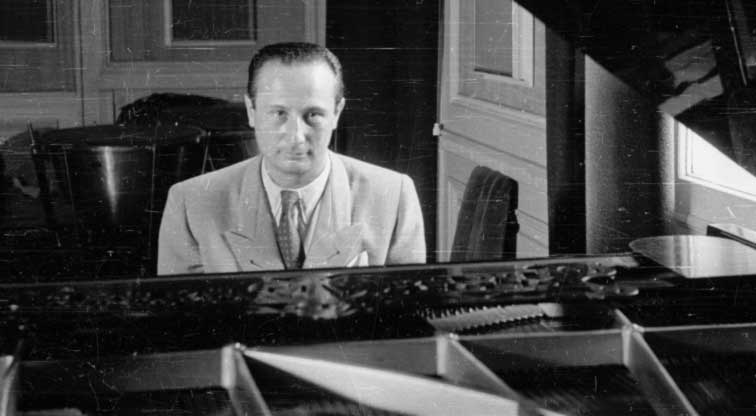
The workers went along with the Nazis, the Church stood by and watched, the middle classes were too cowardly to do anything, and so were the leading intellectuals. We allowed the unions to be abolished, the various religious denominations to be suppressed, there was no freedom of speech in the press or on the radio. Finally we let ourselves be driven into war. We were content for Germany to do without democratic representation and put up with pseudo-representation by people with no real say in anything. Ideals can’t be betrayed with impunity, and now we must all take the consequences.

Władysław Szpilman, from The Pianist: The Extraordinary True Story of One Man's Survival in Warsaw

27 January 2017

Must.


There may be times when we are powerless to prevent injustice, but there must never be a time when we fail to protest.  We must take sides.  Neutrality helps the oppressor, never the victim. Silence encourages the tormentor, never the tormented. Sometimes we must interfere. When human lives are endangered, when human dignity is in jeopardy, national borders and sensitivities become irrelevant. Wherever men and women are persecuted because of their race, religion, or political views, that place must - at that moment - become the center of the universe.

Elie Wiesel