"I am not one who was born in the custody of wisdom. I am one who is fond of olden times and intense in quest of the sacred knowing of the ancients." Gustave Courbet

07 March 2018

Dream.

Lee, First Prairie Sunset, n/d


The PRAIRIE

These are the gardens of the Desert, these
The unshorn fields, boundless and beautiful,
For which the speech of England has no name—
The Prairies. I behold them for the first,
And my heart swells, while the dilated sight
Takes in the encircling vastness. Lo! they stretch,
In airy undulations, far away,
As if the ocean, in his gentlest swell,
Stood still, with all his rounded billows fixed,
And motionless forever. —Motionless?—
No—they are all unchained again. The clouds
Sweep over with their shadows, and, beneath,
The surface rolls and fluctuates to the eye;
Dark hollows seem to glide along and chase
The sunny ridges. Breezes of the South!
Who toss the golden and the flame-like flowers,
And pass the prairie-hawk that, poised on high,
Flaps his broad wings, yet moves not—ye have played
Among the palms of Mexico and vines
Of Texas, and have crisped the limpid brooks
That from the fountains of Sonora glide
Into the calm Pacific—have ye fanned
A nobler or a lovelier scene than this?
Man hath no power in all this glorious work:
The hand that built the firmament hath heaved
And smoothed these verdant swells, and sown their slopes
With herbage, planted them with island groves,
And hedged them round with forests. Fitting floor
For this magnificent temple of the sky—
With flowers whose glory and whose multitude
Rival the constellations! The great heavens
Seem to stoop down upon the scene in love,—
A nearer vault, and of a tenderer blue,
Than that which bends above our eastern hills.
 As o’er the verdant waste I guide my steed,
Among the high rank grass that sweeps his sides
The hollow beating of his footsteps seems
A sacrilegious sound. I think of those
Upon whose rest he tramples. Are they here—
The dead of other days?—and did the dust
Of these fair solitudes once stir with life
And burn with passion? Let the mighty mounds
That overlook the rivers, or that rise
In the dim forest crowded with old oaks,
Answer. A race, that long has passed away,
Built them;—a disciplined and populous race
Heaped, with long toil, the earth, while yet the Greek
Was hewing the Pentelicus to forms
Of symmetry, and rearing on its rock
The glittering Parthenon. These ample fields
Nourished their harvest, here their herds were fed,
When haply by their stalls the bison lowed,
And bowed his maned shoulder to the yoke.
All day this desert murmured with their toils,
Till twilight blushed, and lovers walked, and wooed
In a forgotten language, and old tunes,
From instruments of unremembered form,
Gave the soft winds a voice. The red man came—
The roaming hunter tribes, warlike and fierce,
And the mound-builders vanished from the earth.
The solitude of centuries untold
Has settled where they dwelt. The prairie-wolf
Hunts in their meadows, and his fresh-dug den
Yawns by my path. The gopher mines the ground
Where stood their swarming cities. All is gone;
All—save the piles of earth that hold their bones,
The platforms where they worshipped unknown gods,
The barriers which they builded from the soil
To keep the foe at bay—till o’er the walls
The wild beleaguerers broke, and, one by one,
The strongholds of the plain were forced, and heaped
With corpses. The brown vultures of the wood
Flocked to those vast uncovered sepulchres,
And sat unscared and silent at their feast.
Haply some solitary fugitive,
Lurking in marsh and forest, till the sense
Of desolation and of fear became
Bitterer than death, yielded himself to die.
Man’s better nature triumphed then. Kind words
Welcomed and soothed him; the rude conquerors
Seated the captive with their chiefs; he chose
A bride among their maidens, and at length
Seemed to forget—yet ne’er forgot—the wife
Of his first love, and her sweet little ones,
Butchered, amid their shrieks, with all his race.
 Thus change the forms of being. Thus arise
Races of living things, glorious in strength,
And perish, as the quickening breath of God
Fills them, or is withdrawn. The red man, too,
Has left the blooming wilds he ranged so long,
And, nearer to the Rocky Mountains, sought
A wilder hunting-ground. The beaver builds
No longer by these streams, but far away,
On waters whose blue surface ne’er gave back
The white man’s face—among Missouri’s springs,
And pools whose issues swell the Oregon—
He rears his little Venice. In these plains
The bison feeds no more. Twice twenty leagues
Beyond remotest smoke of hunter’s camp,
Roams the majestic brute, in herds that shake
The earth with thundering steps—yet here I meet
His ancient footprints stamped beside the pool.
 Still this great solitude is quick with life.
Myriads of insects, gaudy as the flowers
They flutter over, gentle quadrupeds,
And birds, that scarce have learned the fear of man,
Are here, and sliding reptiles of the ground,
Startlingly beautiful. The graceful deer
Bounds to the wood at my approach. The bee,
A more adventurous colonist than man,
With whom he came across the eastern deep,
Fills the savannas with his murmurings,
And hides his sweets, as in the golden age,
Within the hollow oak. I listen long
To his domestic hum, and think I hear
The sound of that advancing multitude
Which soon shall fill these deserts. From the ground
Comes up the laugh of children, the soft voice
Of maidens, and the sweet and solemn hymn
Of Sabbath worshippers. The low of herds
Blends with the rustling of the heavy grain
Over the dark brown furrows. All at once
A fresher winds sweeps by, and breaks my dream,
And I am in the wilderness alone.

William Cullen Bryant

Happy birthday, Ravel.


Maurice Ravel was born on this day in 1875.

Jukka-Pekka Saraste leads the WDR Sinfonieorchester Köln in Daphnis et Chloe ...

Warren Zevon, "Trouble Waiting to Happen"

For my "Usual Suspects."  Thank you, boys, it's never boring.


06 March 2018

Chopin, Etude Op. 10, No. 3

Evgeny Kissin performs ...

Glorious.


To-night the very horses springing by
Toss gold from whitened nostrils. In a dream
The streets that narrow to the westward gleam
Like rows of golden palaces; and high
From all the crowded chimneys tower and die
A thousand aureoles. Down in the west
The brimming plains beneath the sunset rest,
One burning sea of gold. Soon, soon shall fly
The glorious vision, and the hours shall feel
A mightier master; soon from height to height,
With silence and the sharp unpitying stars,
Stern creeping frosts, and winds that touch like steel,
Out of the depth beyond the eastern bars,
Glittering and still shall come the awful night.

Archibald Lampman

Happy birthday, Gilmour.


David Gilmour was born on this day in 1946.

"The Blue"

INXS, "Dancing on the Jetty"

Happy birthday, Michelangelo.

Michelangelo, David (detail), 1504


Michelangelo Buonarotti was born on this day in 1475.

Poets and painters have the power to dare -- to dare to do whatever they may approve of.

Michelangelo Buonarotti

Rather.


The world is too much with us; late and soon,
Getting and spending, we lay waste our powers;—
Little we see in Nature that is ours;
We have given our hearts away, a sordid boon!
This Sea that bares her bosom to the moon;
The winds that will be howling at all hours,
And are up-gathered now like sleeping flowers;
For this, for everything, we are out of tune;
It moves us not. Great God! I’d rather be
A Pagan suckled in a creed outworn;
So might I, standing on this pleasant lea,
Have glimpses that would make me less forlorn;
Have sight of Proteus rising from the sea;
Or hear old Triton blow his wreathèd horn.

William Wordsworth

Thanks to Cultural Offering for the picture.

Enter.


What are those of the known, but to ascend and enter the Unknown?

Walt Whitman

Accept.


There's a kind of saying that you don't understand its meaning, "I don't believe it. It's too crazy. I'm not going to accept it." You'll have to accept it. It's the way nature works. If you want to know how nature works, we looked at it, carefully. Looking at it, that's the way it looks. You don't like it? Go somewhere else, to another universe where the rules are simpler, philosophically more pleasing, more psychologically easy. I can't help it, okay? If I'm going to tell you honestly what the world looks like to the human beings who have struggled as hard as they can to understand it, I can only tell you what it looks like.

Richard Feynman

Ostranenie.

Longing.


Years earlier, when my father decided I was old enough to go fishing with him, we walked down the road past the Favorite Tree, where we had our rope swing, past the big sycamore, where my uncle Phil had carved his son Tom’s name in the most beautiful letters deep into the massive tree’s trunk, past the bull oak, where there was always a Hereford or two dozing in the deep shade, on to Papa’s gate, past the spring from which we drew our drinking water, stopping finally at a small wooded flat near the double creeks.

The equipment was wholly primitive: a three-part steel telescoping pole, well used and dented, and a tiny, ratchety skeleton reel with a short length of waxed line. It didn’t matter. It was enough to drop the bait into the holes. The basic skill was to avoid frightening the fish.

My father made me sit away from the creek while he looked for bait. A yellow jacket cruised by, and he stunned it with his hat, then impaled it on the hook. I cowered, remembering the nest we had inadvertently disturbed earlier in the summer while gathering firewood. I was stung more than 100 times.

My father leaned very slowly forward, cautiously lowering his bait. Within seconds he was lifting a wiggling 7-inch trout into the air. He turned and grabbed it, smacked it on the head with a stick, and put it in his creel. He caught two or three more, then motioned for me to come over to where he knelt, behind the shrub he’d used for concealment. “I’ll hold you,” he said, “and you can look down and see them.” He slowly leaned me out over the hole. Six or seven fish darted about, some rushing under the watercress, others nervously facing the current in the deepest part of the pool.

He must have held me there for a long time, because it’s one of the clearest images I have from my early childhood. The sun had managed to get through a hole in the trees above, and the little pool, hardly as large as an old fashioned mattress, had a laughing quality, as if lit from within. The water flowing into it murmured softly, like a particularly delicate Chopin etude.

I watched the deep red tendrils of dead watercress wave in the current below; on the surface, the new growth was bright green and bursting with life. The bottom was half gravel, half sand, heavily flecked with sparkling fool’s gold. And the trout were dark and alert, drifting back, waving in the flow, then shooting forward. My father, whom I loved so much, held me there as if time had stopped.

What did the little boy see? Was it a window through which he sensed the shape of his whole life? Or a cosmic mystery, dimly perceived but glimpsed for one split second in a fragile, vanishing element? What was it about this insignificant place that forged such a longing that no matter how wide a circle the boy turned, the man traveled, he would forever seek to return to it?

Russell Chatham

CONNECT

Thanks, Dad.

Haydn, Symphony No. 92 in G Major, Hob. I:92, "Oxford"

Nikolaus Harnoncourt conducts the Concentus Musicus Wien ...

03 March 2018

Shame.

The world grew up ... hell of a shame.

Attention.


ENTERING the KINGDOM

The crows see me.   
They stretch their glossy necks    
In the tallest branches    
Of green trees. I am    
Possibly dangerous, I am    
Entering the kingdom.

The dream of my life   
Is to lie down by a slow river    
And stare at the light in the trees–    
To learn something by being nothing    
A little while but the rich    
Lens of attention.

But the crows puff their feathers and cry   
Between me and the sun,    
And I should go now.    
They know me for what I am.    
No dreamer,    
No eater of leaves.

Mary Oliver

Excellent.

Excellent albums ...

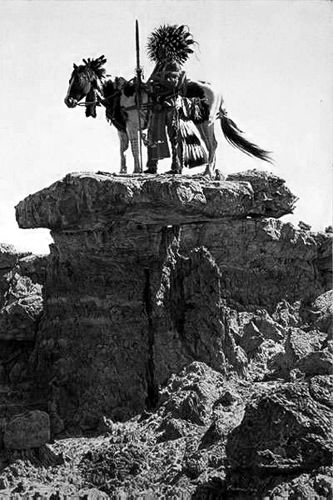
Ceremony.


The Dog-Man (Dog Soldier) Society was organized after the organization of the other societies, by a young man without influence, but who was chosen by the great Prophet. One morning the young man went through the entire camp and to the center of the camp circle, announcing that he was about to form a society. No one was anxious to join him, so he was alone all that day. The other medicine-men had had no difficulty in establishing their societies, but this young man, when his turn came to organize, was ridiculed, for he was not a medicine-man, and had no influence to induce others to follow his leadership.

At evening he was sad, and he sat in the midst of the whole camp. He prayed to the Great Prophet and the Great Medicine Man to assist him. At sunset he began to sing a sacred song. While he sang the people noticed that now and then the large and small dogs throughout the camp whined and howled and were restless. The people in their lodges fell asleep. The man sang from sunset to midnight; then he began to wail. The people were all sleeping in their lodges and did not hear him. Again he sang; then he walked out to the opening of the camp-circle, singing as he went. At the opening of the camp-circle he ceased singing and went out. All the dogs of the whole camp followed him, both male and female, some carrying in their mouths their puppies. Four times he sang before he reached his destination at daybreak. As the sun rose he and all the dogs arrived at a river bottom which was partly timbered and level.

The man sat down by a tree that leaned toward the north. Immediately the dogs ran from him and arranged themselves in the form of a semicircle about him, like the shape of the camp-circle they had left; then they lay down to rest; as the dogs lay down, by some mysterious power, there sprang up over the man in the center of the circle a lodge. The lodge included the leaning tree by which the man sat; there were three other saplings, trimmed at the base with the boughs left at the top. The lodge was formed of the skins of the buffalo. As soon as the lodge appeared, all the dogs rushed towards it. As they entered the lodge they turned into human beings, dressed like members of the Dog-Men Society. The Dog Men began to sing, and the man listened very attentively and learned several songs from them, their ceremony, and their dancing forms.

The camp circle and the center lodge had the appearance of a real camp circle for three long days. The Dog Men blessed the man and promised that he should be successful in all of his undertakings and that his people, his society, and his band would become the greatest of all if he carried out their instructions.

W.S. Campbell, from The Cheyenne Dog Soldiers: Warriors of Indian Territory

02 March 2018

Setting.

Ryan Bingham, "Bread and Water"

HAPPY FRIDAY!

Joe Strummer & The Mescaleros, "Yalla Yalla"

And.


The earth, like the sun, like the air, belongs to everyone -- and to no one.

Edward Abbey

Excellent.

An excellent book ...


They had all night, and the whole of the moon, and five miles of country to hide in.  We chased them through all of the world, through jungles, swamps and tundra, across pampas plains and steppes of wheat and plateaux of shooting stars, while hares made love in the silver grasses, and the large hot moon climbed over us, raising tides in my head of night and summer that moves there even yet.

Excellent.

An excellent book ...


The awesome warriors were armed to the teeth with revolvers and bows ... proud, haughty, defiant as should become those who are to grant favors, not beg them.

Happy.

HAPPY FRIDAY!

01 March 2018

Cloud.

Levitan, Cloud, 1878

Shaman.


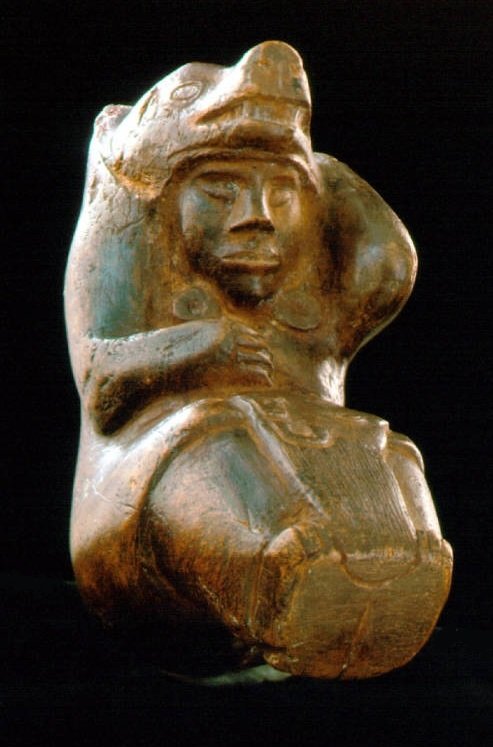
The Hopewell Shaman of Newark, also known as the Wray figurine, is a small stone sculpture representing a shaman, or spiritual leader, of the Hopewell culture (100 B.C. to A.D. 500). It was discovered in 1881 at the base of the largest burial mound at the Newark Earthworks.

It is a unique naturalistic carving of a man, or woman, wearing bear regalia, including a bear's head and paws. The shaman's left hand is holding the bear's head as if caught in the act of lowering the mask over his face to complete his transformation into a bear spirit. In many tribal societies, the shaman served as a combination of priest, rabbi, and healer. The shaman was believed to be able to bring rain for the crops or aid hunters in locating game animals.

Nicholas Cresswell, while visiting the Delaware Indians of Coshocton in 1775, witnessed a similar figure in person.  He wrote:

"Saw an Indian Conjuror dressed in a Coat of Bearskin with a Visor mask made of wood, frightful enough to scare the Devil."

CONNECT

Dr. Brad Lepper further explains the Shaman of Newark ... HERE.

Dr. Lepper's fascinating talk, Newark Earthworks: Wonder of the Ancient World ...


Jim Harrison on "giving voice to the bear" (at the 31:17 mark of this interview) ... HERE.

Priest, "Diamonds and Rust"

Most.

Blueness.


The cyanometer, invented in the 18th century by the Swiss scientist Horace-Bénédict de Saussure, had one evanescent purpose: to measure the blueness of the sky.

CONNECT

Tuh.

Art.


NO RUBBER TOMAHAWKS SOLD HERE.

Happy birthday, Chopin.


Frédéric Chopin was born on this day in 1810.


When one does a thing, it appears good, otherwise one would not write it. Only later comes reflection, and one discards or accepts the thing. Time is the best censor, and patience a most excellent teacher.

Frédéric Chopin

Vladimir Horowitz performs the Mazurka in B minor Opus. 33, No. 4 ...