"I am not one who was born in the custody of wisdom. I am one who is fond of olden times and intense in quest of the sacred knowing of the ancients." Gustave Courbet
Showing posts with label humility. Show all posts

22 September 2025

Smallness.


Dr. Patrick L. Plaisance, Ph.D., on social media humility ...
Our traditional understanding of humility, going back to Socrates, Augustine, and other classical philosophers, has emphasized modesty, or how good we are at handling our intellectual limitations. Its focus has largely emphasized self-abnegation or one’s “smallness.” 

24 June 2023

Do.


Ari Weizweig contemplates the lessons that a life in food has bestowed on him ...
Working with artisan food is, as it ought to be, incredibly humbling. No matter what we do, problems will happen, flavors will change, imperfections will abound, seasons will still shift. I learned a long time ago that to get dinner for six out to a table successfully requires an amazing amount of things to go as they should, and dozens of people (including me) to do our jobs well. To have the salt right on every dish when it’s cooked to order, to time all six main courses, appetizers, drinks, and desserts—all of which are coming from different stations; for the host to greet with the right energy, the bartender to get the garnish just right in every cocktail, and the food runner to carry the plates. That doesn’t even count the work of the baker, the brewer, the farmer, and the fisherperson. The food world taught me how small a presence each of us are in the world, how the world revolves—but never around us. As Michael Gelb writes, "True humility emerges from a sense of wonder and awe. It’s an appreciation that our time on earth is limited but that there’s something timeless at the core of every being. Embracing humility liberates us from the egotism that drives both perfectionism and self-sabotage, opening us to a deeper experience of self-worth."

... and the transformation he continues to realize ...

It really was just luck that I came into cooking for a living, but I know enough to know that there’s more to the story than just good fortune. Doors open, but more often than not, most of us—me included—find a wealth of good reasons not to walk through them. I could easily have fallen into the unhealthy version of the food business that’s getting so much bad press of late. Or I could have just quietly kept my head down and “done my job,” stayed for a year or so, and then gone back to Grad School like my mom wanted me to. I had any number of advantages that my middle-class, Jewish, learning-focused family afforded me. But still, as Dr. Angela Duckworth writes, “Our potential is one thing. What we do with it is quite another.”

You will all pretty surely have heard the Zen saying, “When the student is ready the teacher will appear.”

30 May 2023

Grace.

Caravaggio, Narcissus, 1600


Humility, which Burke ranked high among the virtues, is the only effectual restraint upon this congenital vanity; yet our world has nearly forgotten the nature of humility. Submission to the dictates of humility formerly was made palatable to man by the doctrine of grace; that elaborate doctrine has been overwhelmed by modern presumption.

Russell Kirk, from The Conservative Mind

19 January 2023

Modest.


The approbation of others is a stimulus of which one must sometimes be wary. The feeling of one's own strength makes one modest. 

Paul Cezanne

02 December 2022

Learn.


Ari Weinzweig on humility ...
Humbleness, for me, would include awe, inspiration, openness, beginner’s mind, appreciation, acceptance, reality checks… It’s knowing how little I know, remembering how many mistakes I’ve made, and then reminding myself, twice, that those shortfalls are what humanity and creative pursuit of new things is about. It’s about learning from everyone. Seeing beauty in everything. Appreciating our achievements. Finding the flaws in all we’ve done, but doing it from the loving supportive place of what Julia Cameron called being a “believing mirror,” though in this case for oneself. It’s understanding that everything we do matters, but that at the same time we’re almost insignificant. It’s knowing we mess up daily but we’re still good people. It’s realizing that the more you learn, as James Baldwin said, “You learn how little you know.”

07 July 2022

Through.

Ruskin, Self-Portrait, 1861


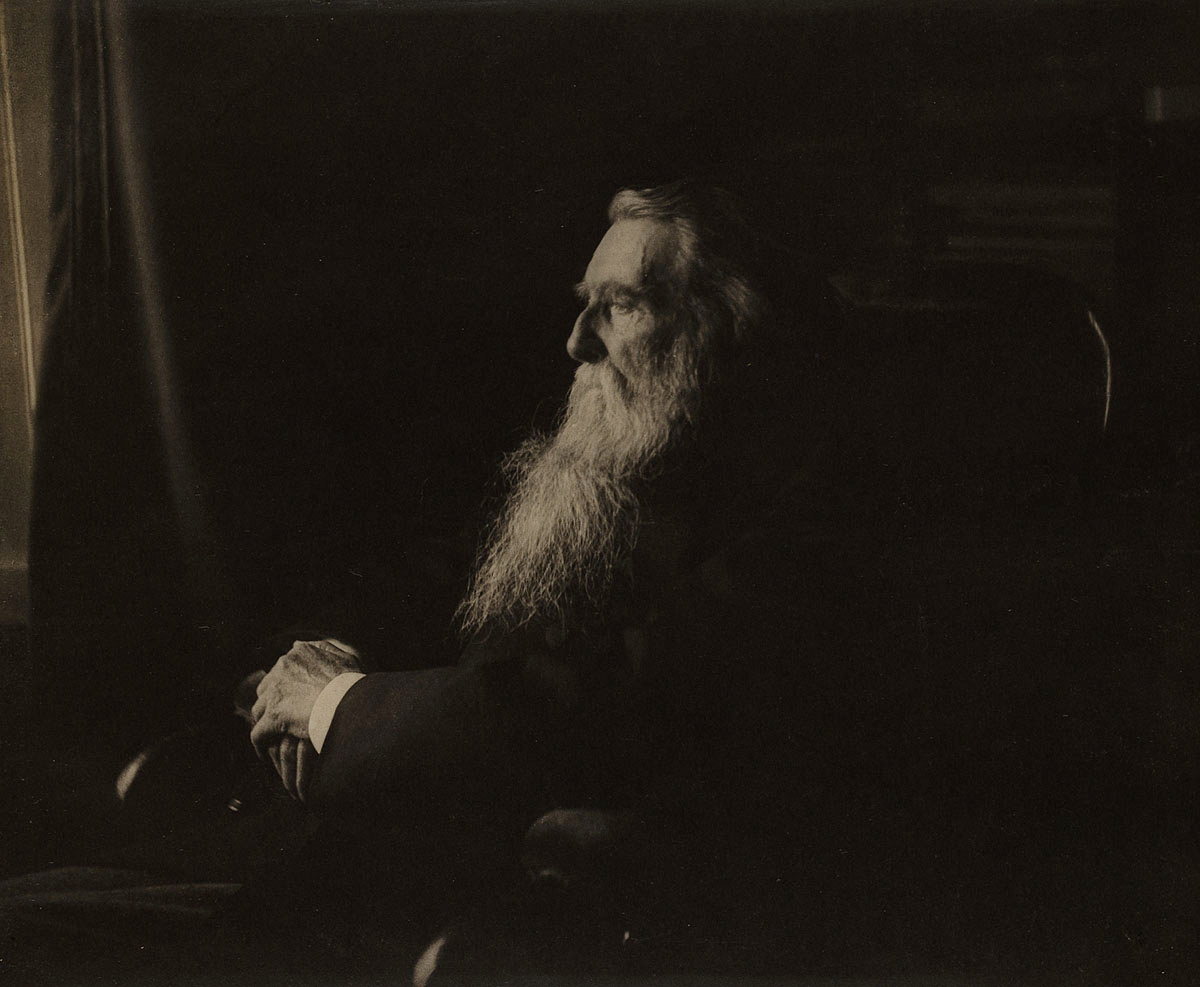
I believe that the first test of a great man is his humility. I don't mean by humility, doubt of his power. But really great men have a curious feeling that the greatness is not of them, but through them. And they see something divine in every other man and are endlessly, foolishly, incredibly merciful.

John Ruskin

09 April 2022

Performer.

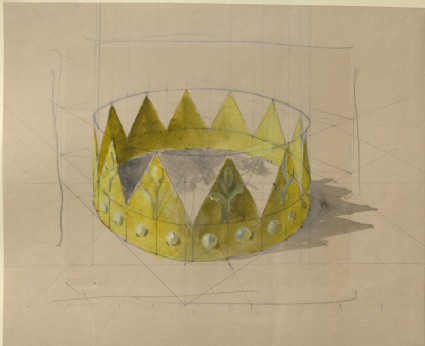
 Ruskin, Perspective Studies of a Paper Crown, 1870


As soon as one is aware of being “somebody,” to be watched and listened to with extra interest, input ceases, and the performer goes blind and deaf in his overanimation. The best seeing is done by the hunted and the hunter, the vulnerable and the hungry.  Self-importance is a thickened, occluding form of self-consciousness.

John Updike

29 May 2021

Unrealities.


In humility is the greatest freedom. As long as you have to defend the imaginary self that you think is important, you lose your peace of heart. As soon as you compare that shadow with the shadows of other people, you lose all joy, because you have begun to trade in unrealities and there is no joy in things that do not exist.

Thomas Merton

03 May 2021

Fruit.


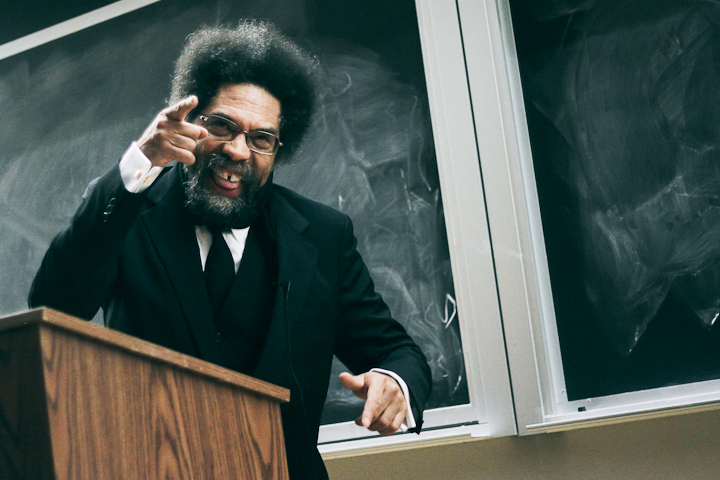
Humility is the fruit of inner security and wise maturity. To be humble is to be so sure of one's self and one's mission that one can forego calling excessive attention to one's self and status.

Rev. Dr. Cornel West

02 May 2021

Aware.


It is a great error to be superior to others….It is such pride as this that makes a man appear a fool, makes him abused by others, and invites disaster. A man who is truly versed in any art will of his own accord be clearly aware of his own deficiency; and therefore, his ambition being never satisfied, he ends by never being proud.

Yoshida Kenko, from Essays in Idleness

Thank you, Kurt.

15 April 2020

Modest.


When loneliness comes stalking, go into the fields, consider
the orderliness of the world. Notice
something you have never noticed before,

like the tambourine sound of the snow-cricket
whose pale green body is no longer than your thumb.

Stare hard at the hummingbird, in the summer rain,
shaking the water-sparks from its wings.

Let grief be your sister, she will whether or not.
Rise up from the stump of sorrow, and be green also,
like the diligent leaves.

A lifetime isn’t long enough for the beauty of this world
and the responsibilities of your life.

Scatter your flowers over the graves, and walk away.
Be good-natured and untidy in your exuberance.

In the glare of your mind, be modest
And beholden to what is tactile, and thrilling.

Live with the beetle, and the wind.

Mary Oliver

09 April 2020

Bow.


MYSTERIES, YES

Truly, we live with mysteries too marvelous
 to be understood.

How grass can be nourishing in the
mouths of the lambs.
How rivers and stones are forever
in allegiance with gravity
while we ourselves dream of rising.
How two hands touch and the bonds will
never be broken.
How people come, from delight or the
scars of damage,
to the comfort of a poem.

Let me keep my distance, always, from those
who think they have the answers.

Let me keep company always with those who say
“Look!” and laugh in astonishment,
and bow their heads.

Mary Oliver

28 March 2020

Old.


Dayton, Ohio,
August 7, 1865

To My Old Master, Colonel P.H. Anderson, Big Spring, Tennessee

Sir: 
I got your letter, and was glad to find that you had not forgotten Jourdon, and that you wanted me to come back and live with you again, promising to do better for me than anybody else can. I have often felt uneasy about you. I thought the Yankees would have hung you long before this, for harboring Rebs they found at your house. I suppose they never heard about your going to Colonel Martin’s to kill the Union soldier that was left by his company in their stable. Although you shot at me twice before I left you, I did not want to hear of your being hurt, and am glad you are still living. It would do me good to go back to the dear old home again, and see Miss Mary and Miss Martha and Allen, Esther, Green, and Lee. Give my love to them all, and tell them I hope we will meet in the better world, if not in this. I would have gone back to see you all when I was working in the Nashville Hospital, but one of the neighbors told me that Henry intended to shoot me if he ever got a chance.

I want to know particularly what the good chance is you propose to give me. I am doing tolerably well here. I get twenty-five dollars a month, with victuals and clothing; have a comfortable home for Mandy,—the folks call her Mrs. Anderson,—and the children—Milly, Jane, and Grundy—go to school and are learning well. The teacher says Grundy has a head for a preacher. They go to Sunday school, and Mandy and me attend church regularly. We are kindly treated. Sometimes we overhear others saying, “Them colored people were slaves” down in Tennessee. The children feel hurt when they hear such remarks; but I tell them it was no disgrace in Tennessee to belong to Colonel Anderson. Many darkeys would have been proud, as I used to be, to call you master. Now if you will write and say what wages you will give me, I will be better able to decide whether it would be to my advantage to move back again.

As to my freedom, which you say I can have, there is nothing to be gained on that score, as I got my free papers in 1864 from the Provost-Marshal-General of the Department of Nashville. Mandy says she would be afraid to go back without some proof that you were disposed to treat us justly and kindly; and we have concluded to test your sincerity by asking you to send us our wages for the time we served you. This will make us forget and forgive old scores, and rely on your justice and friendship in the future. I served you faithfully for thirty-two years, and Mandy twenty years. At twenty-five dollars a month for me, and two dollars a week for Mandy, our earnings would amount to eleven thousand six hundred and eighty dollars. Add to this the interest for the time our wages have been kept back, and deduct what you paid for our clothing, and three doctor’s visits to me, and pulling a tooth for Mandy, and the balance will show what we are in justice entitled to. Please send the money by Adams’s Express, in care of V. Winters, Esq., Dayton, Ohio. If you fail to pay us for faithful labors in the past, we can have little faith in your promises in the future. We trust the good Maker has opened your eyes to the wrongs which you and your fathers have done to me and my fathers, in making us toil for you for generations without recompense. Here I draw my wages every Saturday night; but in Tennessee there was never any pay-day for the negroes any more than for the horses and cows. Surely there will be a day of reckoning for those who defraud the laborer of his hire.

In answering this letter, please state if there would be any safety for my Milly and Jane, who are now grown up, and both good-looking girls. You know how it was with poor Matilda and Catherine. I would rather stay here and starve—and die, if it come to that—than have my girls brought to shame by the violence and wickedness of their young masters. You will also please state if there has been any schools opened for the colored children in your neighborhood. The great desire of my life now is to give my children an education, and have them form virtuous habits.

Say howdy to George Carter, and thank him for taking the pistol from you when you were shooting at me.

From your old servant,
Jordon Anderson

CONNECT

15 January 2020

Past.


The imagination places the world of the future either far above us, or far below, or in a relation of metempsychosis to ourselves. We dream of traveling through the universe—but is not the universe within ourselves? The depths of our spirit are unknown to us—the mysterious way leads inwards. Eternity with its worlds—the past and future—is in ourselves or nowhere. The external world is the world of shadows—it throws its shadow into the realm of light. At present this realm certainly seems to us so dark inside, lonely, shapeless. But how entirely different it will seem to us—when this gloom is past, and the body of shadows has moved away. We will experience greater enjoyment than ever, for our spirit has been deprived.

Novalis

Know.


I examined the poets, and I look on them as people whose talent overawes both themselves and others, people who present themselves as wise men and are taken as such, when they are nothing of the sort.

From poets, I moved to artists. No one was more ignorant about the arts than I; no one was more convinced that artists possessed really beautiful secrets. However, I noticed that their condition was no better than that of the poets and that both of them have the same misconceptions. Because the most skillful among them excel in their specialty, they look upon themselves as the wisest of men. In my eyes, this presumption completely tarnished their knowledge. As a result, putting myself in the place of the oracle and asking myself what I would prefer to be — what I was or what they were, to know what they have learned or to know that I know nothing — I replied to myself and to the god: I wish to remain who I am.

We do not know — neither the sophists, nor the orators, nor the artists, nor I— what the True, the Good, and the Beautiful are. But there is this difference between us: although these people know nothing, they all believe they know something; whereas, I, if I know nothing, at least have no doubts about it. As a result, all this superiority in wisdom which the oracle has attributed to me reduces itself to the single point that I am strongly convinced that I am ignorant of what I do not know.

Socrates

08 January 2020

Through.


I believe the first test of a truly great man is his humility. I do not mean by humility doubt of his own power, or hesitation of speaking his opinions; but a right understanding of the relation between what he can do and say, and the rest of the world's sayings and doings. They have a curious under-sense of powerlessness, feeling that the greatness is not in them, but through them; that they could not do or be anything else than God made them — and they see something Divine and God-made in every other man they meet, and are endlessly, foolishly, incredibly merciful.

John Ruskin

24 July 2019

Poetry.


Something else an academic education will do for you. If you go along with it any considerable distance, it'll begin to give you an idea what size mind you have. What it'll fit and, maybe, what it won't. After a while, you'll have an idea what kind of thoughts your particular size mind should be wearing. For one thing, it may save you an extraordinary amount of time trying on ideas that don't suit you, aren't becoming to you. You'll begin to know your true measurements and dress your mind accordingly.

Among other things, you'll find that you're not the first person who was ever confused and frightened and even sickened by human behavior. You're by no means alone on that score, you'll be excited and stimulated to know. Many, many men have been just as troubled morally and spiritually as you are right now. Happily, some of them kept records of their troubles. You'll learn from them—if you want to. Just as someday, if you have something to offer, someone will learn something from you. It's a beautiful reciprocal arrangement. And it isn't education. It's history. It's poetry.

I'm not trying to tell you," he said, "that only educated and scholarly men are able to contribute something valuable to the world. It's not so. But I do say that educated and scholarly men, if they're brilliant and creative to begin with – which, unfortunately, is rarely the case – tend to leave infinitely more valuable records behind them than men do who are merely brilliant and creative. They tend to express themselves more clearly, and they usually have a passion for following their thoughts through to the end. And – most important – nine times out of ten they have more humility than the unscholarly thinker. Do you follow me at all?

J.D. Salinger, from The Catcher in the Rye

08 July 2019

Through.


I believe that the first test of a great man is his humility. I don't mean by humility, doubt of his power. But really great men have a curious feeling that the greatness is not of them, but through them. And they see something divine in every other man and are endlessly, foolishly, incredibly merciful.  A man wrapped up in himself is a very small parcel.

John Ruskin

01 May 2019

Authentic.

If your project needed $20 million in funding and you had to send someone to appear before the US Senate to get it, would you choose Microsoft CEO Steve Ballmer or the beloved children’s television show host Fred “Mr.” Rogers? I imagine most people would choose Ballmer for his energy, experience closing big deals, and, more importantly, his aggressive go-getter style. Mr. Rogers, on the other hand, was mild-mannered, talked slowly, and the epitome of the nice-guy approach. It’s easy to think his gift was communicating with children, not adults. It’s easy to assume he had no place in the world of money, power, and influence. It’s easy to be mistaken. In 1969, Fred Rogers addressed the Senate for a mere six minutes and ensured $20 million in funding for PBS. How’d he do it? With authenticity and emotional intelligence.

Anyone who is authentic and emotionally intelligent can use this to have great influence over others. When used to influence others, emotional intelligence requires knowing your strengths and your present emotional state (self-awareness); knowing how to manage the moment you are in (self-management); knowing what’s important to your audience and how they’ll perceive your message (social awareness); and knowing how to forge a connection with decision makers (relationship management). These skills can be developed individually through simple practice.

On the 1st of May in 1969, Mr. Rogers addressed the Senate to argue that $20 million in funding for PBS should not be cut. John Pastore, the Senator from Rhode Island who led the hearing, had never seen nor hear of Mr. Rogers’ television show. It took Mr. Rogers just six minutes to convince the gruff and impatient Senator from Rhode Island that the $20 million was well worth it.

CONNECT