"I am not one who was born in the custody of wisdom. I am one who is fond of olden times and intense in quest of the sacred knowing of the ancients." Gustave Courbet
Showing posts with label Aristotle. Show all posts

27 September 2025

Responsibility.


Steve adds to Kurt's discussion ... 
Life ultimately means taking the responsibility to find the right answer to its problems and to fulfill the tasks which it constantly sets for each individual.  
Eudaimonic orientation is not pleasuring-seeking, rather talents are put to work for a larger purpose: to serve.  By making the most of personal skills, giving provides a greater willingness to help, regardless of costs. The result is a byproduct of that action, though not its sole aim.  Pushed to develop and refine the process, a commitment to growth and development is its own reward, the spirit of eudaimonia. It's the opposite of virtue-signalling hedonics.

08 December 2024

Nothing.

Bernini, Damned Soul, 1619


Criticism is something we can avoid easily by saying nothing, doing nothing, and being nothing.


Aristotle

07 January 2024

Activity.

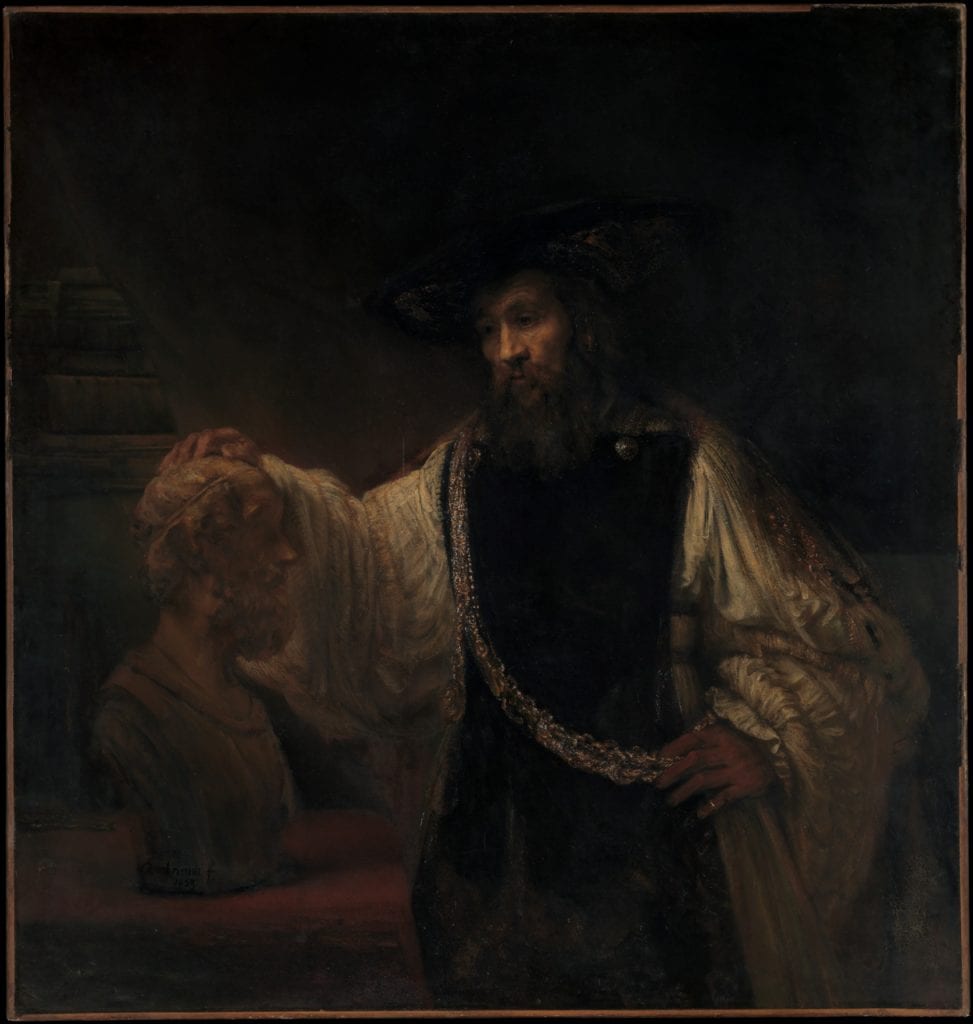
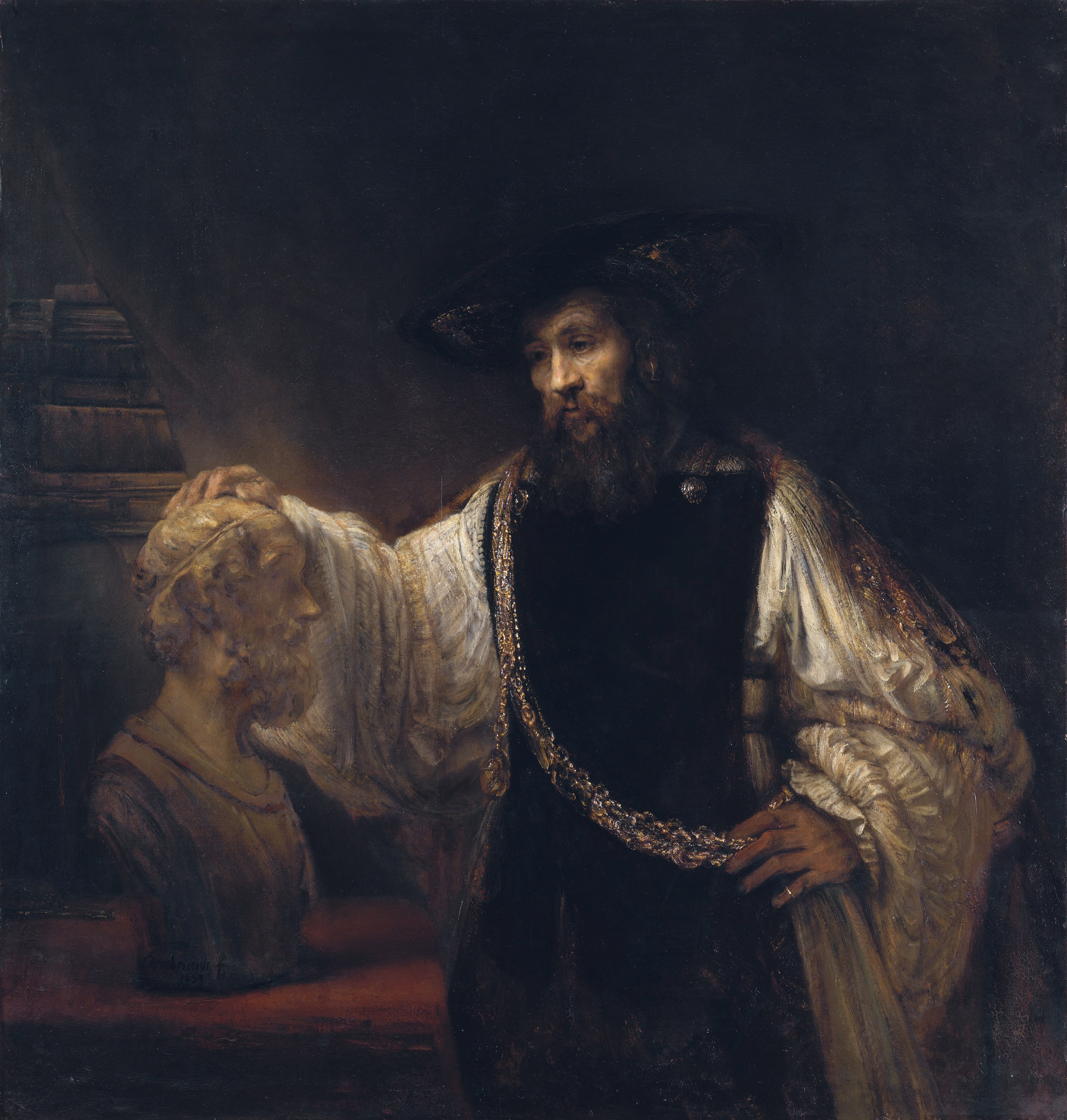
Rembrandt, Aristotle with a Bust of Homer, 1653


This is the principal point:  with what kind of activity is man to occupy his leisure?

Aristotle

04 June 2023

Ludic.


Aristotle said, "Nature requires us not only to be able to work well but also to idle well."  Sigh. It's so hard. The Idea of the Idle which disses and rejects the clock is an ambition harder than it seems. To really play is to let go of the hand of the clock, to dive deep into the fathoms of time — a state of water this, deep play, with affinities to music, art, sex, deep drinking and deep thought. It is chancey, risky, fluxy, underwater world where immersion in the moment is all. This wild time is far richer, though far flukier, than clock-time, this is time enlivened and various, time as fast and slow as a waterfall's cascade. It is not necessarily easy to be in, for its waters are uncontrolled by a clock, uncommanded and uncharted. Without a clock you are on your own and it is a difficult but rich experience, this, the beautiful duress of ludic creativity — idlesse oblige."

Jay Griffiths, from A Sideways Look at Time

24 April 2022

Questions.


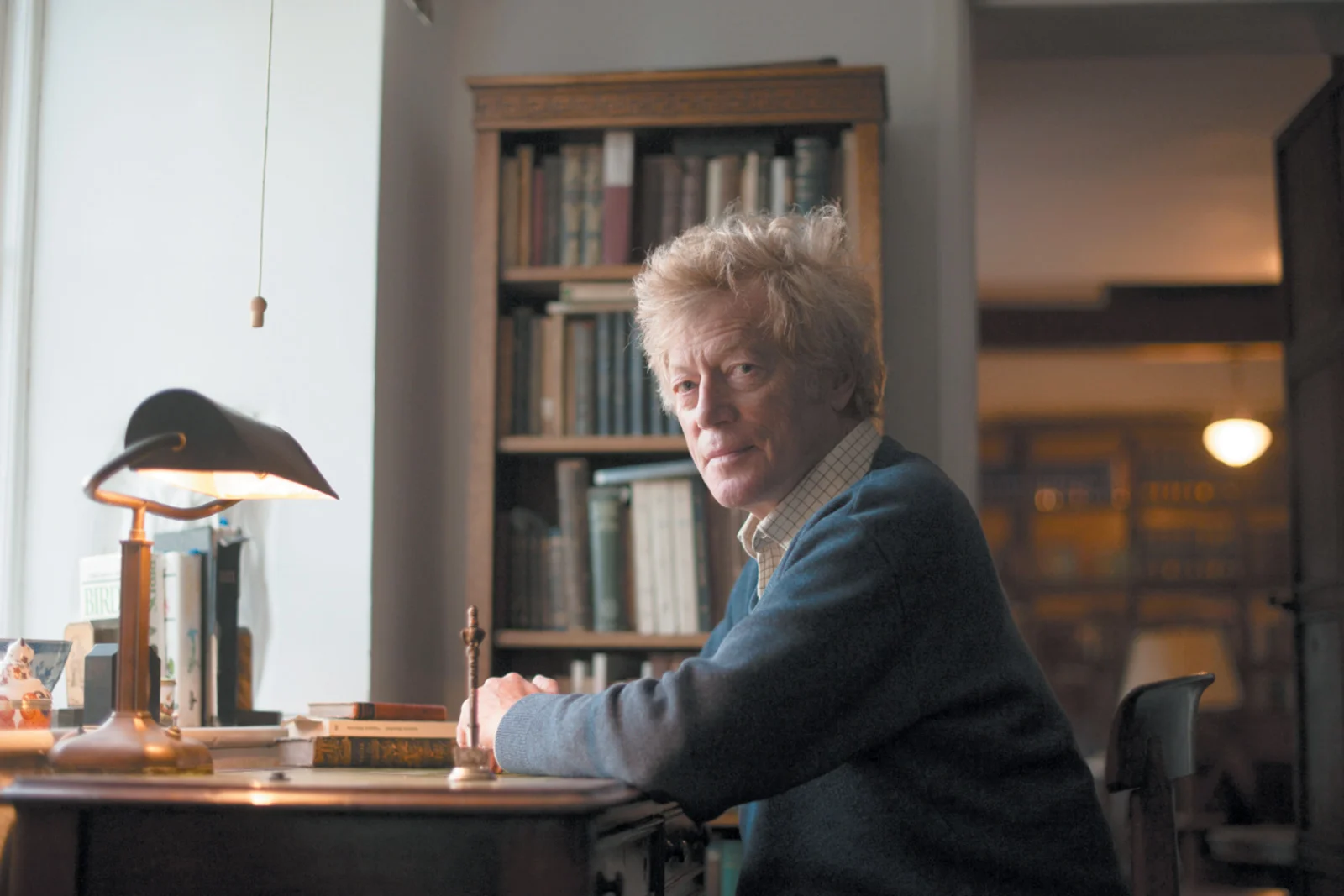
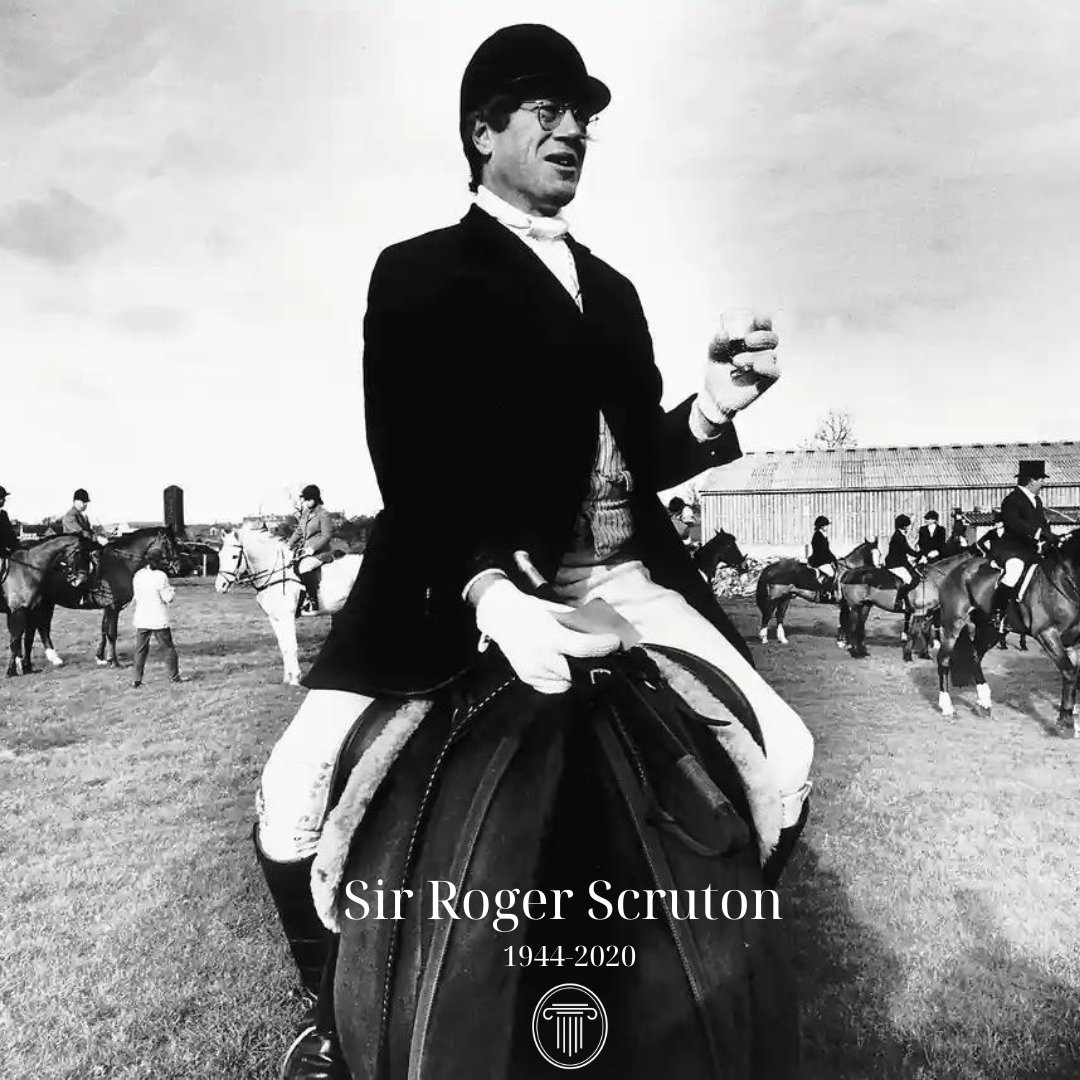
Sir Roger Scruton on the questions that have no answers ...
Not all questions have an answer. In mathematics and science we solve our problems as well as create them. But in art and philosophy things are not so simple. Hamlet's great soliloquy starts with the line: "To be or not to be: that is the question." The play revolves around that question. Would it be better not to exist? Is there anything in human life that makes it worthwhile? When, confronted by the extent of human treachery and scheming, we fall into complete contempt towards our species, is there some trick of thought, some perception, some argument or some appeal to higher authority that will restore the will to live?

When I look at the great artists of the past, I am often struck by the extent to which their work has evolved in response to a question. Milton asked himself how the flawed world in which he lived could be the work of a supremely good God and his answer was Paradise Lost. Bach asked himself how variants and permutations flow from the basic moves in music and his answer was The Art of Fugue. Rembrandt asked himself how the soul is revealed in the flesh and what the lights and textures of our bodies mean, and his answer was his extraordinary series of self-portraits. In art it is always as though the question is what the work of art is really about.

Milton's poem implants the question of man's relation to God in the centre of our consciousness. It does not answer the question but instead creates wonder and awe in response to it. Wonder and awe are the diet of the artist and without them the world would be far less meaningful to us than it is.

The same is true of philosophy. Although there are philosophers who give answers, it is usually their questions and not their answers that have survived. Plato asked how it is that we can think about the property of redness and not just about red things. How can finite human minds gain access to universal realities? Plato's question is still with us, even though few people today would accept his answer to it. Aristotle asked how it is that there can be time and change in an ordered universe. Is there a prime mover who sets it all in motion? Few would accept Aristotle's answer to this question: but the question remains. How can there be time, change, process and becoming, in a world that could as easily have been permanently at rest? 
CONNECT

01 September 2021

Shame.


He who cannot be a good follower cannot be a good leader.

Aristotle

Shame on you, President Biden.

14 August 2021

Resonance.

Dossi, Jupiter, Mercury, and Virtue, 1524


The triple combination is mirrored at Jupiter's canvas, where three butterflies share in the process of creation. The insect under Jupiter's brush nears completion; the one to the right seems to rest on the picture's surface, whilst the uppermost butterfly is the most lively and three-dimensional. Life emerges in successive phases that are intimately linked, like frames from a film or a cartoon. In his "Allegory of Music", Dossi had used similar techniques to subdivide his theme. The history of music, from primal sound to the High Renaissance, was telescoped into a single scenario. A blow of hammer to anvil (the musical equivalent to Jupiter's painting) set creativity in train. The action is merely implied, though its after-effect is visible as a resonance of tiny notes from the anvil. The cause was evidently a rebounding hammer in Tubalcain's hand, poised to strike again. Musical sounds coalesced into a circle or triangle, as notated staves prescribing the formal progressions in time and pitch. Of course, nothing really changes in the static painting. 


If the music were heard, we might sense a kind of movement in the flow of melody through time. The Aristotelian "Problemata", printed for the first time in 1498, had puzzled over our response to music:
"Why is sound the only sensation which excites the feelings? Even melody without words has feeling. But this is not the case for colour, or smell, or taste. Is it because they have none of the motion which sound excites in us?  Now these motions stimulate action, and this action is the sign of feeling."

CONNECT 

08 May 2021

Illumination.


No merely critical standpoint can build, let alone "conserve" anything. One can lament the fire ravaging Notre Dame, but a dislike of fire confers exactly none of the knowledge required to build—or indeed, rebuild—that magnificent monument of Western culture. For that, you need architectural-mathematical understanding, aesthetic vision, as well as stone-carvers, carpenters, vitrailleurs, and so forth. Lamenting the Cathedral’s destruction is one thing; rebuilding it is another.

Sir Roger understood that. You can’t counter nihilism, you can’t defeat the iconoclasts, by critique alone. Indeed, even to focus primarily on critique is already to concede that the game is one of tearing-down, one of destruction.  

Once, when I asked him about how to build, and rebuild, he playfully replied: we can’t be about "debunking". Rather, we need "bunking". 

We need to know how to build.

Culture, he went on to say, is simply "the things we have loved". 

Love is the only principle capable of conserving, of transmitting, or of building, anything at all.

So-called conservatives too often think it is enough to be right: right about the economy, right about systems of government, right about civic association, right about fundamental freedoms and dignity. 

But being right isn’t enough. When you have young people burning cities and convinced that their culture is intrinsically oppressive, that its fundamental principles are perverse—then, it is safe to say to conservatives (as the meme goes)—you had one job, and you failed. 

A culture does not, it cannot, continue without mechanisms for its own transmission. The West, terrible though it is to say, no longer has those. 

Sir Roger understood that. He understood that the only way to pass along a culture, the only way to conserve those things we love, is actually to pass them along—to share that love, to instill it in another, and in the young especially. Naturally, Sir Roger knew this was a bedrock philosophical insight of the Western tradition, wonderfully articulated in Aristotle’s De anima, and taken up by Augustine, Dante, the Enlightenment, and elsewhere: that is, that an act of will follows, and only follows, the illumination of intellect. 
09 March 2020

Mark.


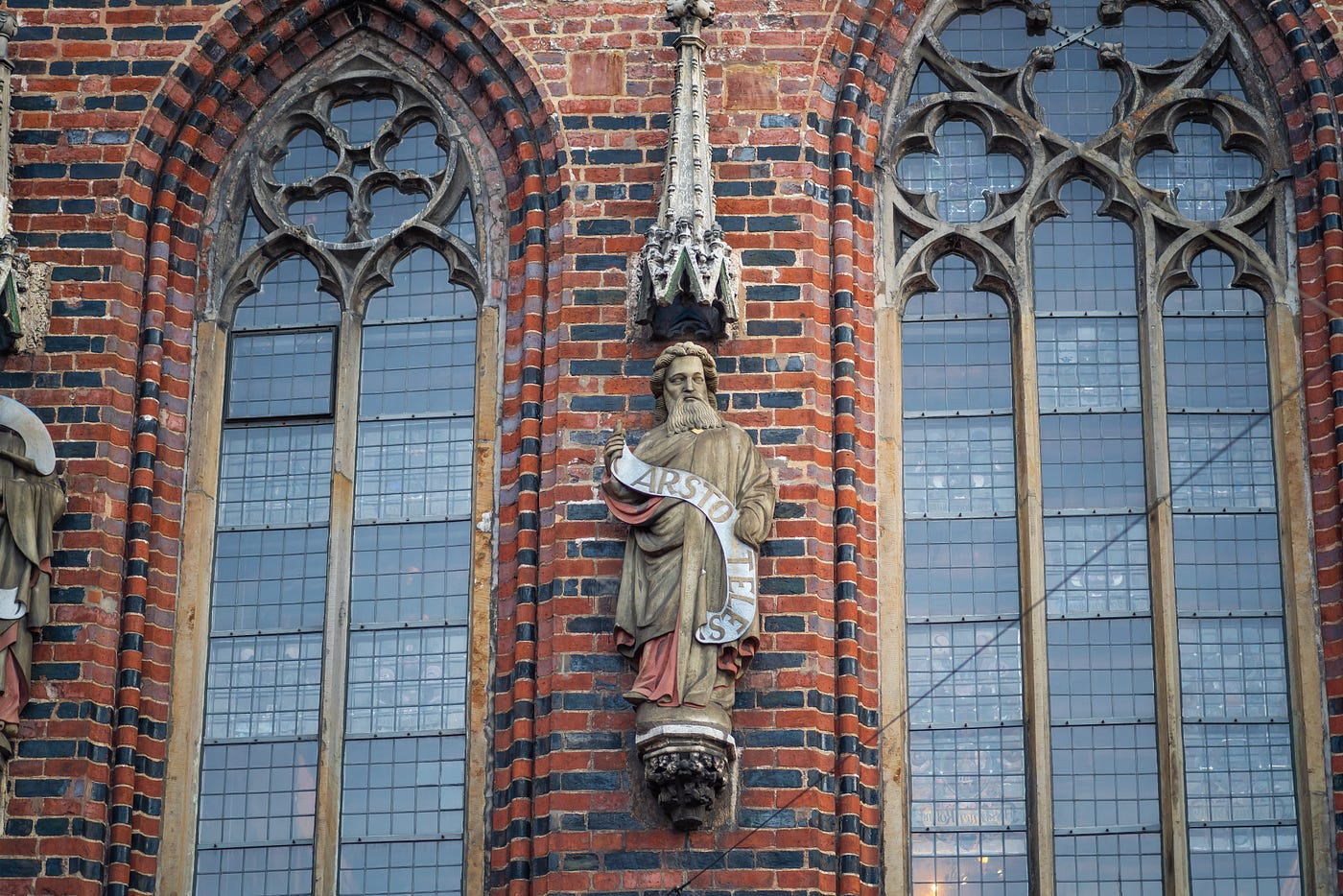
It is the mark of an educated mind to expect that amount of exactness in each kind which the nature of the particular subject admits. For it is similar to expect a mathematician to speak persuasively or for an orator to furnish clear proofs!

Each person judges well what they know and is thus a good critic of those things. For each thing in specific, someone must be educated to be a critic; to be a critic in general, one must be educated about everything.

Aristotle

Thank you, Bella.

29 February 2020

Pleasure.


All men take a natural pleasure in learning quickly words which denote something; and so those words are pleasantest which give us new knowledge. Strange words have no meaning for us; common terms we know already; it is metaphor which gives us most of this pleasure. Thus, when the poet calls old age "a dried stalk," he gives us a new perception by means of the common genus; for both the things have lost their bloom. A simile, as has been said before, is a metaphor with a preface; for this reason it is less pleasing because it is more lengthy; nor does it affirm that this is that; and so the mind does not even inquire into the matter. It follows that a smart style, and a smart enthymeme, are those which give us a new and rapid perception.

Aristotle, from Rhetoric

27 February 2020

Own.


Practical life is not necessarily directed toward other people, as some think; and it is not the case that practical thoughts are only those which result from action for the sake of what ensues. On the contrary, much more practical are those mental activities and reflections which have their goal in themselves and take place for their own sake.

Aristotle

11 August 2019

Challenge.

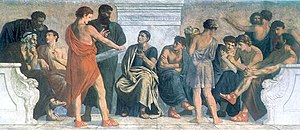
Spangenberg, Aristotle's School, 1883


Grades don’t prepare children for the “real world” — unless one has in mind a world where interest in learning and quality of thinking are unimportant.  Nor are grades a necessary part of schooling, any more than paddling or taking extended dictation could be described that way.  Still, it takes courage to do right by kids in an era when the quantitative matters more than the qualitative, when meeting (someone else’s) standards counts for more than exploring ideas, and when anything “rigorous” is automatically assumed to be valuable.  We have to be willing to challenge the conventional wisdom, which in this case means asking not how to improve grades but how to jettison them once and for all.

Alfie Kohn, from "The Case Against Grades"

18 August 2018

Delights.

Sargent, Bivouac, 1911


Whosoever delights in solitude is either a wild beast or a god.

Aristotle

17 April 2018

Delighted.


Whosoever is delighted in solitude is either a wild beast or a god.     

Aristotle

13 March 2018

Excellence.


Excellence is never an accident. It is always the result of high intention, sincere effort, and intelligent execution; it represents the wise choice of many alternatives - choice, not chance, determines your destiny.

Aristotle

07 August 2017

Virtuous.

Homer, The Nooning, 1872


Happiness does not lie in amusement; it would, indeed, be strange if the end were amusement, and one were to take trouble and suffer hardship all one's life in order to amuse oneself. For, in a word, everything that we choose we choose for the sake of something else--except happiness, which is an end. Now to exert oneself and work for the sake of amusement seems silly and utterly childish. But to amuse oneself in order that one may exert oneself, as Anacharsis puts it, seems right; for amusement is a sort of relaxation, and we need relaxation because we cannot work continuously. Relaxation, then, is not an end; for it is taken for the sake of activity.

The happy life is thought to be virtuous; now a virtuous life requires exertion, and does not consist in amusement. And we say that serious things are better than laughable things and those connected with amusement, and that the activity of the better of any two things--whether it be two elements of our being or two men--is the more serious; but the activity of the better is ipso facto superior and more of the nature of happiness. And any chance person--even a slave--can enjoy the bodily pleasures no less than the best man; but no one assigns to a slave a share in happiness--unless he assigns to him also a share in human life. For happiness does not lie in such occupations, but, as we have said before, in virtuous activities.

Aristotle

CONNECT

11 April 2016

Free.

Rembrandt, Aristotle Contemplating the Bust of Homer, 1653


For it is owing to their wonder that men both now begin and at first began to philosophize; they wondered originally at the obvious difficulties, then advanced little by little and stated difficulties about the greater matters, e.g. about the phenomena of the moon and those of the sun and of the stars, and about the genesis of the universe. And a man who is puzzled and wonders thinks himself ignorant (whence even the lover of myth is in a sense a lover of Wisdom, for the myth is composed of wonders); therefore since they philosophized order to escape from ignorance, evidently they were pursuing science in order to know, and not for any utilitarian end. And this is confirmed by the facts; for it was when almost all the necessities of life and the things that make for comfort and recreation had been secured, that such knowledge began to be sought. Evidently then we do not seek it for the sake of any other advantage; but as the man is free, we say, who exists for his own sake and not for another's, so we pursue this as the only free science, for it alone exists for its own sake. 

Aristotle

10 February 2016

Criticism.

Bernini, Damned Soul, 1619


Criticism is something we can avoid easily by saying nothing, doing nothing, and being nothing.


Aristotle

05 February 2016

10 April 2010

Eudaimonia

Happiness. 

Flourishing. 

Well-being. 

An earlier post posed the question, "Who are you?" For me, this is a difficult question to ask. I've been thinking about it a great deal as I have been reading Derrick Jensen's book, Walking On Water: Reading, Writing, Revolution. The book speaks of the Aristotelian idea of eudaimonia ... well-being; how well we match our actions with our natural gifts to be. Ahhh ... that's better. 

Thomas Jefferson's concept of "tranquil permanent felicity" is in accord with Aristotle and Jenson. Jefferson was, at least philosophically, a man of temperance. In his pursuit of happiness he espoused "a just equilibrium of the passions."
My temperament is sanguine. I steer my bark with Hope in the head, leaving fear astern. My hopes indeed sometimes fail; but not oftener than the forebodings of the gloomy. There are, I acknowledge, even in the happiest life, some terrible convulsions, heavy set-offs against the opposite page of the account. I have often wondered for what good end the sensations of Grief could be intended. All our other passions, within proper bounds, have a useful object. 
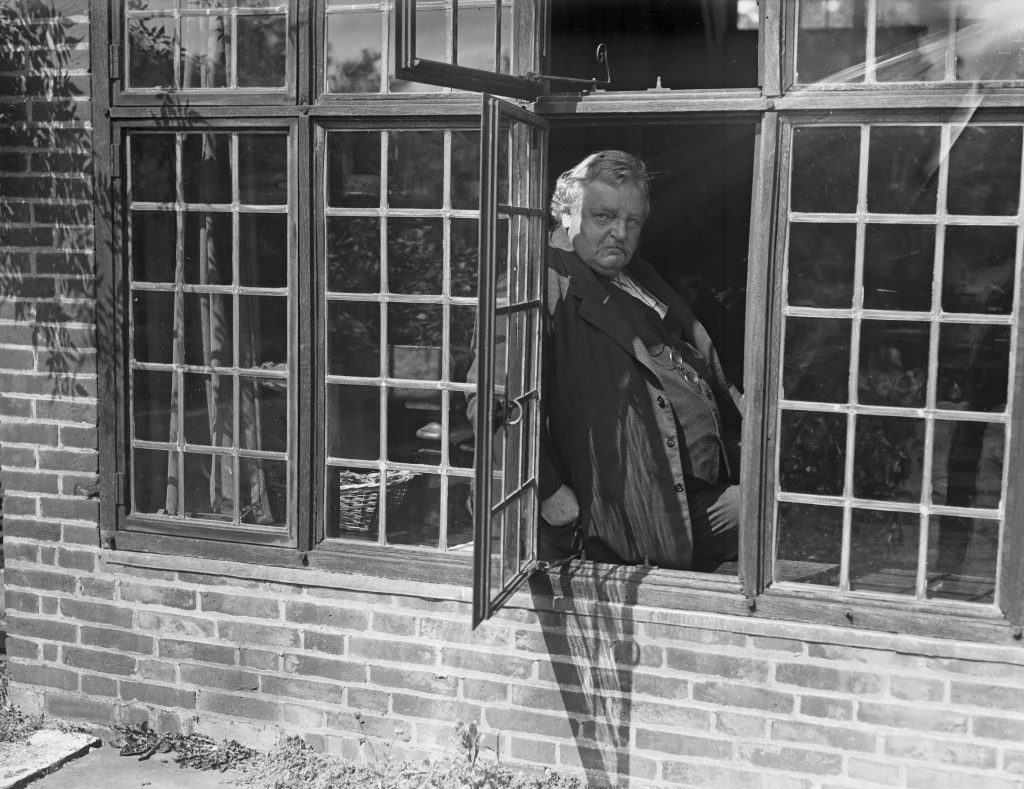
His sense of ease came as a result of what he called a balanced imagination. He knew that disorder, as far as the spirit is concerned, disrupted the hope of attaining any notion of hope. 

As Andrew Burstein wrote in his book, Jefferson’s Secrets: Death & Desire at Monticello, "Happiness can just as easily be said to derive from life of the body as the mind." 

Leonardo ... "The world needs dreamers. The world needs doers. But the world really needs dreamers who do." 

This is where it is starting to come together for me. Jensen makes a convincing argument that "eudaimonia" ... happiness, well-being (which works better for me as being well) ... is actually "fittingness," how well your actions match your gifts. Match who you are. Gifts. Talents. Moral good-use. Virtue. Hmmm ... I'm learning. 

An informative article on eudaimonia here.