"I am not one who was born in the custody of wisdom. I am one who is fond of olden times and intense in quest of the sacred knowing of the ancients." Gustave Courbet
Showing posts with label There's No School Like No School. Show all posts

01 September 2019

Extends.

Eisenstadt, Children at a Puppet Show, 1963


After having thus taken each individual one by one into its powerful hands, and having molded him as it pleases, the sovereign power extends its arms over the entire society; it covers the surface of society with a network of small, complicated, minute, and uniform rules, which the most original minds and the most vigorous souls cannot break through to go beyond the crowd; it does not break wills, but it softens them, bends them and directs them; it rarely forces action, but it constantly opposes your acting; it does not destroy, it prevents birth; it does not tyrannize, it hinders, it represses, it enervates, it extinguishes, it stupefies, and finally it reduces each nation to being nothing more than a flock of timid and industrious animals, of which the government is the shepherd.

Alexis de Tocqueville, 1840

11 August 2019

Challenge.

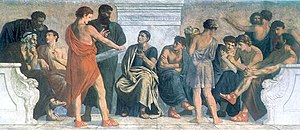
Spangenberg, Aristotle's School, 1883


Grades don’t prepare children for the “real world” — unless one has in mind a world where interest in learning and quality of thinking are unimportant.  Nor are grades a necessary part of schooling, any more than paddling or taking extended dictation could be described that way.  Still, it takes courage to do right by kids in an era when the quantitative matters more than the qualitative, when meeting (someone else’s) standards counts for more than exploring ideas, and when anything “rigorous” is automatically assumed to be valuable.  We have to be willing to challenge the conventional wisdom, which in this case means asking not how to improve grades but how to jettison them once and for all.

Alfie Kohn, from "The Case Against Grades"

14 July 2019

Individual.

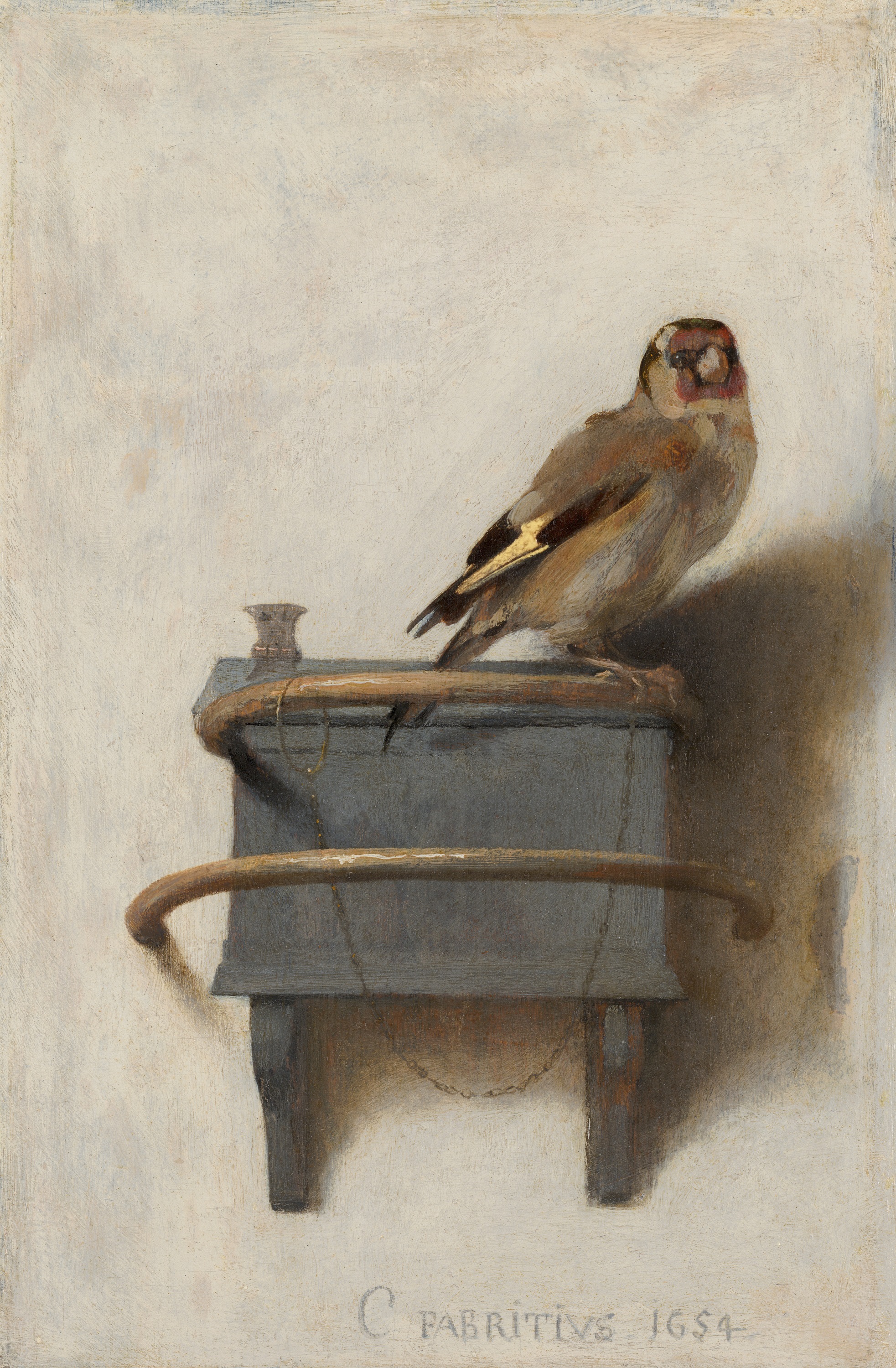
Fabritius, The Goldfinch, 1654


I've noticed a fascinating phenomenon in my thirty years of teaching: schools and schooling are increasingly irrelevant to the great enterprises of the planet. No one believes anymore that scientists are trained in science classes or politicians in civics classes or poets in English classes. The truth is that schools don't really teach anything except how to obey orders. This is a great mystery to me because thousands of humane, caring people work in schools as teachers and aides and administrators, but the abstract logic of the institution overwhelms their individual contributions. Although teachers to care and do work very, very hard, the institution is psychopathic -- it has no conscience. It rings a bell and the young man in the middle of writing a poem must close his notebook and move to a different cell where he must memorize that humans and monkeys derive from a common ancestor.

Mass schooling damages children. We don’t need any more of it. And under the guise that it is the same thing as education, it has been picking our pockets just as Socrates predicted it would thousands of years ago. One of the surest ways to recognize real education is by the fact that it doesn’t cost very much, doesn’t depend on expensive toys or gadgets. The experiences that produce it and the self-awareness that propels it are nearly free. It is hard to turn a dollar on education. But schooling is a wonderful hustle, getting sharper all the time.

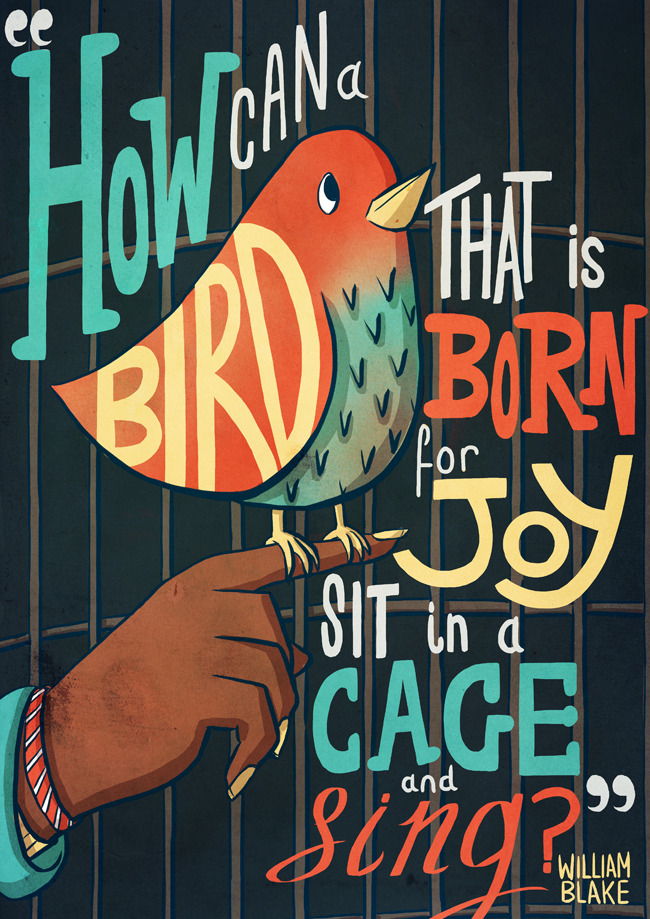
Children learn what they live. Put kids in a class and they will live out their lives in an invisible cage, isolated from their chance at community; interrupt kids with bells and horns all the time and they will learn that nothing is important or worth finishing; ridicule them and they will retreat from human association; shame them and they will find a hundred ways to get even. The habits taught in large-scale organizations are deadly.  Good students wait for a teacher to tell them what to do. This is the most important lesson of them all: we must wait for other people, better trained than ourselves, to make the meanings of our lives. The expert makes all the important choices; only I, the teacher, can determine what my kids must study, or rather, only the people who pay me can make those decisions, which I then enforce.  When you take the free will out of education, that turns it into schooling.  That seemed crazy on the face of it, but slowly I began to realize that the bells and the confinement, the crazy sequences, the age-segregation, the lack of privacy, the constant surveillance, and all the rest of the national curriculum of schooling were designed exactly as if someone had set out to prevent children from learning how to think and act, to coax them into addiction and dependent behavior.

What, after all this time, is the purpose of mass schooling supposed to be? Reading, writing, and arithmetic can’t be the answer, because properly approached those things take less than a hundred hours to transmit — and we have abundant evidence that each is readily self-taught in the right setting and time. Why, then, are we locking kids up in an involuntary network with strangers for twelve years? Surely not so a few of them can get rich? Even if it worked that way, and I doubt that it does, why wouldn’t any sane community look on such an education as positively wrong? It divides and classifies people, demanding that they compulsively compete with each other, and publicly labels the losers by literally de-grading them, identifying them as “low-class” material. And the bottom line for the winners is that they can buy more stuff! I don’t believe that anyone who thinks about that feels comfortable with such a silly conclusion. I can’t help feeling that if we could only answer the question of what it is that we want from these kids we lock up, we would suddenly see where we took a wrong turn. I have enough faith in American imagination and resourcefulness to believe that at that point we’d come up with a better way — in fact, a whole supermarket of better ways.  

Regimentation, methodization, systematization, standardization, organization, coordination, disciplined arrangements, conformity -- these things are at the very heart of our national state policies, and are the poison that has killed our families and left individual survivors in a numbed, angry, nearly hysterical condition.  Private time is absolutely essential if a private identity is going to develop, and private time is equally essential to the development of a code of private values, without which we aren’t really individuals at all.  Trust in families and in neighborhoods and individuals to make sense of the important question, "What is education for?" If some of them answer differently from what you might prefer, that's really not your business, and it shouldn't be your problem. Our type of schooling has deliberately concealed the fact that such a question must be framed and not taken for granted if anything beyond a mockery of democracy is to be nurtured. It is illegitimate to have an expert answer that question for you.

All global ambitions are based on a definition of productivity and the good life so alienated from common human reality that I am convinced it is wrong and that most people would agree with me if they could perceive an alternative. We might be able to see that if we regained a hold on a philosophy that locates meaning where meaning is genuinely to be found — in families, in friends, in the passage of seasons, in nature, in simple ceremonies and rituals, in curiosity, generosity, compassion, and service to others, in a decent independence and privacy, in all the free and inexpensive things out of which real families, real friends, and real communities are built — then we would be so self-sufficient we would not even need the material “sufficiency” which our global “experts” are so insistent we be concerned about.

Whatever an education is, it should make you a unique individual, not a conformist; it should furnish you with an original spirit with which to tackle the big challenges; it should allow you to find values which will be your road map through life; it should make you spiritually rich, a person who loves whatever you are doing, wherever you are, whomever you are with; it should teach you what is important, how to live and how to die.  I've concluded that genius is as common as dirt. We suppress genius because we haven't yet figured out how to manage a population of educated men and women.  I urge you to examine in your own mind the assumptions which must lay behind using the police power to insist that once-sovereign spirits have no choice but to submit to being schooled by strangers.  The solution, I think, is simple and glorious. Let them manage themselves.  People are less than whole unless they gather themselves voluntarily into groups of souls in harmony. Gathering themselves to pursue individual, family, and community dreams consistent with their private humanity is what makes them whole; only slaves are gathered by others.  Free will allows infinite numbers of human stories to be written in which a personal you is the main character. The sciences, on the other hand, hard or soft, assume that purpose and free will are hogwash; given enough data, everything will be seen as explainable, predetermined, and predictable.

I don’t think we’ll get rid of schools any time soon, certainly not in my lifetime, but if we’re going to change what’s rapidly becoming a disaster of ignorance, we need to realize that the institution “schools” very well, but it does not “educate”; that’s inherent in the design of the thing. It’s not the fault of bad teachers or too little money spent.  People who read too many books get quirky. We can't have too much eccentricity or it would bankrupt us. Market research depends on people behaving as if they were all alike.  It's like a malicious person lifting a photograph from the developing chemicals too early, and then pronouncing the photographer incompetent.  

I feel ashamed that so many of us cannot imagine a better way to do things than locking children up all day in cells instead of letting them grow up knowing their families, mingling with the world, assuming real obligations, striving to be independent and self-reliant and free.

John Taylor Gatto, from Dumbing Us Down: The Hidden Curriculum of Compulsory Schooling

08 May 2019

Look.


Homogeneity is the rule. All television shows must look alike. All hamburgers must come from fast-food franchises and taste alike. States should mandate curricula for all their schools. Washington should dictate in turn to the states. Department heads should choose all the books for their teachers. Textbook manufacturers should flatten out all the peculiarities of authorship.  Newspapers should all read alike, and, if we can manage it, they should all be owned by only a few media conglomerates, and should hash out the same articles from three or four wire services. The language of the articles should be reduced to the blank stupidity of the Dick and Jane readers. The Congress passes laws. Oh, pass laws, pass many laws! All little children should attend state-supervised day care centers and watch public pablum on television. Do not look at the stars.

Anthony Esolen, from Ten Ways to Destroy the Imagination of Your Child

16 January 2019

Delusive.


Men little think how immorally they act in rashly meddling with what they do not understand. Their delusive good intention is no sort of excuse for their presumption. They who truly mean well must be fearful of acting ill.

Edmund Burke

14 October 2018

Freedom.


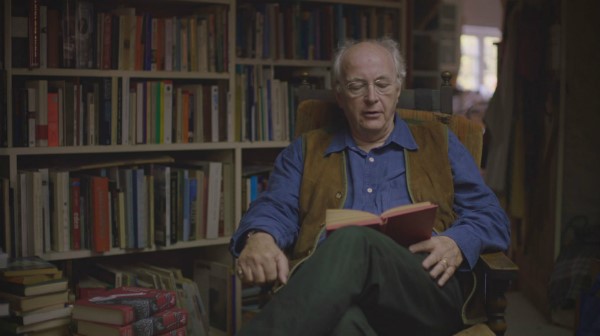
You won’t get critical thinkers and independent thinkers by following a rigid curriculum in schools with marks for expected answers. There’s got to be a freedom for teachers to leave the curriculum occasionally and to ask questions for which there isn’t a prescribed answer with a certain number of points allocated to it. They’ve got to take risks and we’ve got to allow children the freedom not to know about things.

Philip Pullman

23 June 2018

Time.


The people in my class, including me, do not need to be taught. We need simply to be encouraged, to be given heart, to be allowed to grow into our own large hearts. We do not need to be governed by external schedules—by the ticking of the ubiquitous classroom clock—nor told what and when we need to learn, nor what we need to express, but instead we need to be given time, not as a constraint, but as a gift in a supportive place where we can explore what we want and who we are, with the assistance of others who care about us also.

Derrick Jensen

05 January 2018

Free.

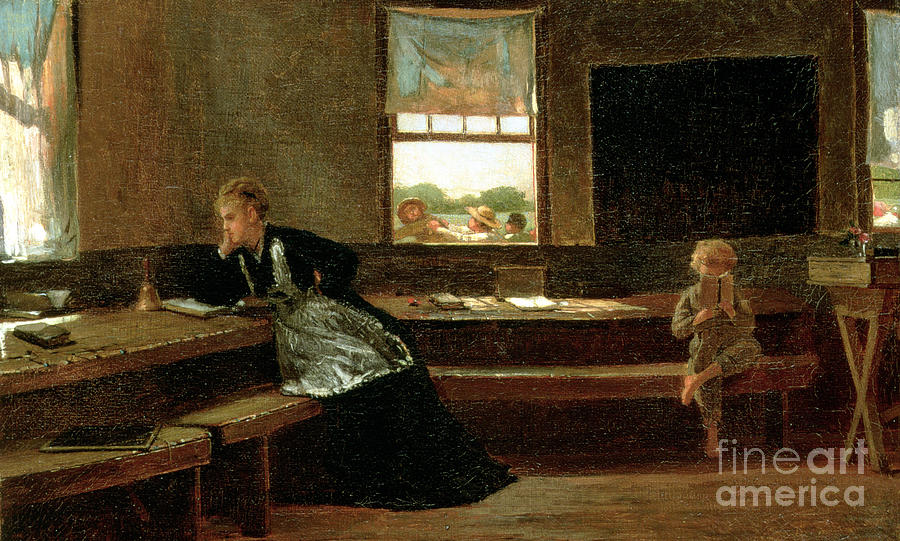
Homer, Noon Recess, 1873


I've noticed a fascinating phenomenon in my thirty years of teaching: schools and schooling are increasingly irrelevant to the great enterprises of the planet. No one believes anymore that scientists are trained in science classes or politicians in civics classes or poets in English classes. The truth is that schools don't really teach anything except how to obey orders. This is a great mystery to me because thousands of humane, caring people work in schools as teachers and aides and administrators, but the abstract logic of the institution overwhelms their individual contributions. Although teachers to care and do work very, very hard, the institution is psychopathic -- it has no conscience. It rings a bell and the young man in the middle of writing a poem must close his notebook and move to a different cell where he must memorize that humans and monkeys derive from a common ancestor.

Whatever an education is, it should make you a unique individual, not a conformist; it should furnish you with an original spirit with which to tackle the big challenges; it should allow you to find values which will be your roadmap through life; it should make you spiritually rich, a person who loves whatever you are doing, wherever you are, whomever you are with; it should teach you what is important, how to live and how to die.

Children learn what they live. Put kids in a class and they will live out their lives in an invisible cage, isolated from their chance at community; interrupt kids with bells and horns all the time and they will learn that nothing is important or worth finishing; ridicule them and they will retreat from human association; shame them and they will find a hundred ways to get even. The habits taught in large-scale organizations are deadly.

I feel ashamed that so many of us cannot imagine a better way to do things than locking children up all day in cells instead of letting them grow up knowing their families, mingling with the world, assuming real obligations, striving to be independent and self-reliant and free.

John Taylor Gatto, from Dumbing Us Down

12 January 2017

Experience.


Your teacher cannot bridge the gap between what you know and what you want to know. For his words to ‘educate’ you, you must welcome them, think about them, find somewhere for your mind to organize them, and remember them. Your learning is your job, not your teacher’s job. And all you need to start with is desire. You don’t need a schoolteacher to get knowledge – you can get it from looking at the world, from watching films, from conversations, from reading, from asking questions, from experience.
People who have never gone to school have never developed negative attitudes toward exploring their world. Unfortunately, you probably have. It’s not your fault if you don’t immediately want to run out and watch ladybugs with a magnifying glass. It might take time before your desire to learn surfaces from beneath the layers of guilt – the voices insisting, I should learn this, I have to learn that. Give yourself time. Don’t push. You’ll recover.

In the end, the secret to learning is so simple: forget about it. Think only about whatever you love. Follow it, do it, dream it. One day, you will glance up at your collection of Japanese literature, or trip over the solar oven you built, and it will hit you: learning was there all the time, happening by itself.

Grace LLewellyn

23 October 2016

Solution.

Peter Hutton is a school principal with a radical solution, no school bell, no school levels, staff selection and curriculum is even decided by students. Result? No bullying, collaboration, innovation in school dynamics.

01 September 2016

Until.


NOTHING IS SO DIFFICULT AS TO BE ALIVE!!!!!! which is the ONLY THING WHICH YOU CANNOT LEARN ever,from anyone,anywhere: it must come out of you;and it never can,until you have KNOCKED DOWN AND CARRIED OUT all the teachable swill of Cambridge etc.

E. E. Cummings

05 August 2016

Learning.


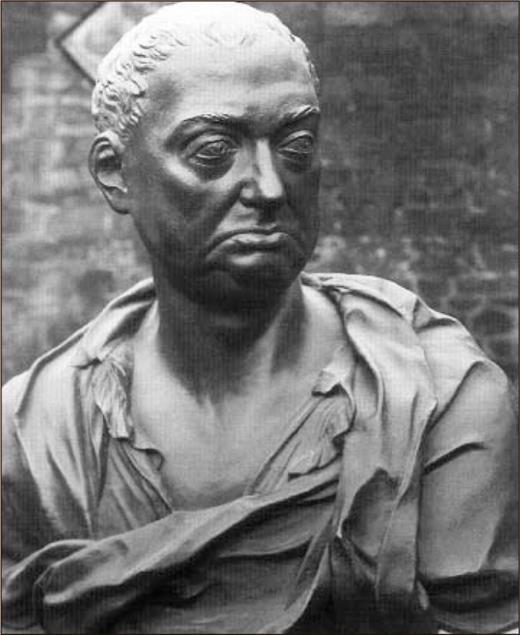
I’ve kept this Yoda on my desk for 10 years now as a reminder that rules aren’t everything and that sometimes people should receive points for trying something new, for breaking the rules, and for engaging in playful curiosity. In the past few years of my teaching career, I’ve inevitably found myself facing a jury of questioning teenagers who wonder why they’re doing something they’ve never had to do before. They aren’t used to play, and they want their worksheets. Year after year, I give what I call my “Yoda Speech.” I hold up my Yoda bust and tell the story of his creation. I tell my students that it’s a reminder to always question the way things are, to take risks, to learn for the sake of learning. I watch as their expressions change from frustration to understanding to respect because they’ve each encountered someone who didn’t understand when they tried to do something new. It is at this moment when I think they realize how much they have missed learning as play.

CONNECT

Thanks, Jess!

24 June 2016

Free.

Spitzweg, The Bookworm, 1850


The difference between schools and libraries:

To begin with, libraries are usually comfortable, clean, and quiet. They are orderly places where you can actually read instead of just pretending to read.

For some reason libraries are never age-segregated, nor do they presume to segregate readers by questionable tests of ability…. The librarian doesn’t tell me what to read, doesn’t tell me what sequence of reading I have to follow, doesn’t grade my reading. The librarian trusts me to have a worthwhile purpose of my own. I appreciate that and trust the library in return.

Some other significant differences between libraries and schools: the librarian lets me ask my own questions and helps me when I want help, not when she decides I need it. If I feel like reading all day long, that’s okay with the librarian, who doesn’t compel me to stop at intervals by ringing a bell in my ear. The library keeps its nose out of my home. It doesn’t send letters to my family, nor does it issue orders on how I should use my reading time at home.

The library doesn’t play favorites; it’s a democratic place as seems proper in a democracy. If the books I want are available, I get them, even if that decision deprives someone more gifted and talented than I am. The library never humiliates me by posting ranked lists of good readers. It presumes good reading is its own reward and doesn’t need to be held up as an object lesson to bad readers….

The library never makes predictions about my future based on my past reading habits. It tolerates eccentric reading because it realizes free men and women are often very eccentric.

Thank you, Austin Kleon.

Thanks for pointing the way, Kurt.

15 June 2016

Awake.


Where the mind is without fear
and the head is held high,
Where knowledge is free;
Where the world has not been broken
up into fragments by narrow domestic
walls;
Where words come out from the
depth of truth;
Where tireless striving
stretches its arms towards
perfection;
Where the clear stream of reason
has not lost its way into the
dreary desert sand of dead habit;
Where the mind is led forward
by thee into ever-widening
thought and action–
into that heaven of freedom,
my Father,
Let my country awake.

Rabindranath Tagore