12 October 2025


Happy Birthday, Ralph Vaughan Williams
Kelly, Ralph Vaughan Williams, 1961

I have always found it difficult to study. I have learnt almost entirely what I have learnt by trying it out on the dog.
Ralph Vaughan Williams, born on this day in 1872
The Norddeutschen Rundfunks Radiophilharmonie, under the baton of Andrew Manze, performs "Serenade to Music"...
.
Read.

No such thing as spare time.
No such thing as free time.
No such thing as down time.
All you got is life time ... go.
Henry Rollins
11 October 2025
Owing.

The Reverend Dr. Cornel West, interviewed on The Skeptic's Guide to Enlightenment ...
My beloved mother had a favorite a moment in the biblical text that’s Thessalonian, the fifth chapter, where Paul talks about being thankful in all circumstances. You say, how could that be? That makes absolutely no sense. Thankful, gratitude, piety, and acknowledgement of the blessings owing to the sources for good in your life in terms of the kind of father and mother that you had, over which you had no control, or the kind of grandparents you had, or the kind of friends you encounter, or the kind of text that you read, the kind of music that you listen to.We’re grateful for Beethoven. Grateful for Aretha Franklin. Why? Because they’re sources of good in our lives. We’re thankful for Schiller, we’re thankful for Paul Salaam and his torturous poetic wrestling with catastrophe. We’re thankful to Mark Twain and Herman Melville and Tony Morrison and Chekhov. Of course, Chekhov is my favorite, so I won’t go anywhere beyond that. That’s about as deep as you can get.But you’re thankful that they laid bare in their lives and in their works and with their words the source of joy. That’s a love and a joy that go hand in hand. Yes, with the sense of joy and gratitude and thankfulness.
Kurt has Buckley on the same.
Happy Birthday, Joseph Alsop

The cocktail hour, now so drearily interminable in most American houses, is the moment of maximum danger. One stands around forever with nothing to eat but horrible canapés. The simplest measure of self-protection is to eat a piece or two of bacon before going out to dinner.
Joseph Alsop, born on this day in 1910
Mercifully, he was spared the fruit and chocolate that today's "foodies" put on their charcuterie "boreds."
09 October 2025
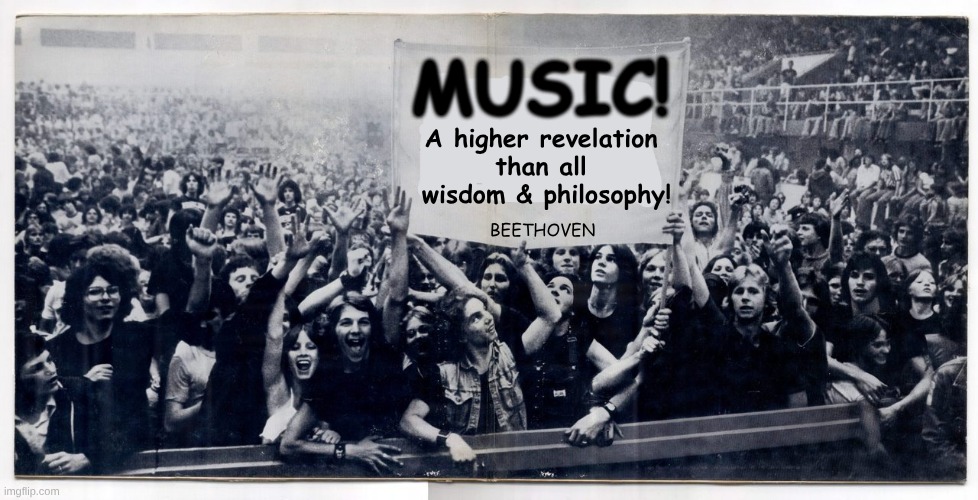

Beethoven, Piano Concerto No. 5 in E-Flat Major, Op. 73
Jan Lisiecki performs the second movement, Adagio un poco mosso, with the Academy of St. Martin in the Fields ...
Happy Birthday, Bruce Catton
Go up along the eastern side of Lake Michigan, steer northeast when the land bends away at Point Betsie, and you come before long to Sleeping Bear Point–an incredible flat-topped sand dune rising five hundred feet above the level of the lake and going north for two miles or more. It looks out over the dark water and the islands that lie just offshore, and in the late afternoon the sunlight strikes it and the golden sand turns white, with a pink overlay when the light is just so, and little cloud shadows slide along its face, blue-gray as evening sets in. Sleeping Bear looks eternal, although it is not; this lake took its present shape no more than two or three thousand years ago, and Sleeping Bear is slowly drifting off to the east as the wind shifts its grains of sand, swirling them up one side and dropping them on the other; in a few centuries it will be very different, if indeed it is there at all. Yet if this is a reminder that this part of the earth is still being remodeled it is also a hint that the spirit back of the remodeling may be worth knowing. In the way this shining dune looks west toward the storms and the sunsets there is a profound serenity, an unworried affirmation that comes from seeing beyond time and mischance. A woman I know says that to look at the Sleeping Bear late in the day is to feel the same emotion that comes when you listen to Beethoven’s Emperor Concerto, and she is entirely right. The message is the same. The only trouble is that you have to compose a planet, or great music, to say it persuasively. Maybe man–some men, anyway–was made in the image of God, after all.
Bruce Catton, born on this day in 1899, from the excellent book, Waiting for the Morning Train

08 October 2025
Willing.
Alexander Volkov on "The Process" ...
We really teach ourselves. If you want to learn, you will always find someone to learn from, be they dead or alive, great or unknown. You will learn from everything you see and hear around you, if you are willing to pay attention. Perhaps, during my formative years, I have made a lot of unnecessary mistakes, but at the same time I have had the enormous advantage of picking my own teachers.

Maples, n/d

Autumn Wind, n/d

October Wind, n/d

Reflections, n/d

Maple Moon Road, n/d

Better.

Books won't stay banned. They won't burn. Ideas won't go to jail. In the long run of history, the censor and the inquisitor have always lost. The only sure weapon against bad ideas is better ideas.
Alfred Whitney Griswold
07 October 2025
Welcome.
Shikler, John F. Kennedy, 1970

Can a nation organized and governed such as ours endure? That is the real question. Have we the nerve and the will? Can we carry through in an age where we will witness not only new breakthroughs in weapons of destruction – but also a race for mastery of the sky and the rain, the ocean and the tides, the far side of space and the inside of men’s minds? We and the Russians now have the power to destroy with one blow one-quarter of the earth’s population – a feat not accomplished since Cain slew Abel.
For the Russian peasant has looked up from his hoe to fling Sputnik into outer space – opening not a new frontier of hope for all mankind, but a new and somber frontier of fear. We cannot hope to escape a prolonged and powerful competition with Soviet power – a competition which demands that we act from enlightened impulses but never act impulsively.
Can we meet this test of survival and still maintain our traditions of literary freedom and dissent? I think we can. For it is the enduring faith of the American tradition that there is no real conflict between freedom and security – between liberty and abundance. Through centuries of crises, the American tradition has demonstrated, on the contrary, that freedom is the ally of security – and that liberty is the architect of abundance.
So let the debate go on – and may the best ideas prevail.
For only in this way can we as a self-governing people choose wisely and thoughtfully in our task of self-government. And it is only in this way that we can demonstrate once again that freedom is the handmaiden of security – and that the truth will make us free.
The Communists, on the other hand, have no such inner strength – and this is one of our advantages. When a Russian novelist questions some of the basic tenets of Soviet society, his name is reviled and his book is banned. Foreign ideas and books are resisted like a plague, not considered on their merits. The world as it is reported in Soviet books must correspond with the world as it is viewed through the eyes of the party. No critic of the regime, no independent thinker, is given a passport to travel. No citizen advances in the Communist community without rigid adherence to party dogma. All this, in the long run, can only lead to weakness.
I want to make sure that never happens in this country. I want to make sure we know all the facts and hear all the alternatives and listen to all the criticisms. Let us welcome controversial books and controversial authors. For the "Bill of Rights" is the guardian of our security as well as our liberty. Let us not be afraid of debate or dissent – let us not avoid criticism or non-conformity – let us encourage it. For if we should ever abandon these basic American traditions in the name of fighting Communism, what would it profit us to win the whole world when we would have lost our own soul?
But to keep that faith alive – to keep that message meaningful at a time of doubt and despair and disunity – will require more thought and more effort on your part in the press – and on our part in government – than ever before. It will require leadership better equipped than any since Lincoln’s Day to make clear to our people the vast spectrum of our challenges.
John F. Kennedy, from his remarks made at the Cleveland Press Book and Author Luncheon, Cleveland, Ohio, April 16, 1959
Whither leadership?
Happy Birthday, James Whitcomb Riley
Sargent, Portrait of James Whitcomb Riley, 1903

WHEN the FROST is ON the PUNKIN
When the frost is on the punkin and the fodder’s in the shock,
And you hear the kyouck and gobble of the struttin’ turkey-cock,
And the clackin’ of the guineys, and the cluckin’ of the hens,
And the rooster’s hallylooyer as he tiptoes on the fence;
O, it’s then’s the times a feller is a-feelin’ at his best,
With the risin’ sun to greet him from a night of peaceful rest,
As he leaves the house, bareheaded, and goes out to feed the stock,
When the frost is on the punkin and the fodder’s in the shock.
They’s something kindo’ harty-like about the atmusfere
When the heat of summer’s over and the coolin’ fall is here—
Of course we miss the flowers, and the blossums on the trees,
And the mumble of the hummin’-birds and buzzin’ of the bees;
But the air’s so appetizin’; and the landscape through the haze
Of a crisp and sunny morning of the airly autumn days
Is a pictur’ that no painter has the colorin’ to mock—
When the frost is on the punkin and the fodder’s in the shock.
The husky, rusty russel of the tossels of the corn,
And the raspin’ of the tangled leaves, as golden as the morn;
The stubble in the furries—kindo’ lonesome-like, but still
A-preachin’ sermuns to us of the barns they growed to fill;
The strawstack in the medder, and the reaper in the shed;
The hosses in theyr stalls below—the clover over-head!—
O, it sets my hart a-clickin’ like the tickin’ of a clock,
When the frost is on the punkin and the fodder’s in the shock!
Then your apples all is gethered, and the ones a feller keeps
Is poured around the celler-floor in red and yeller heaps;
And your cider-makin’ ’s over, and your wimmern-folks is through
With their mince and apple-butter, and theyr souse and saussage, too! ...
I don’t know how to tell it—but ef sich a thing could be
As the Angels wantin’ boardin’, and they’d call around on me—
I’d want to ’commodate ’em—all the whole-indurin’ flock—
When the frost is on the punkin and the fodder’s in the shock!
James Whitcomb Rilet, born on this day in 1849
06 October 2025

05 October 2025

Fancies.

However tiresome to others, the most indefatigable orator is never tedious to himself. The sound of his own voice never loses its harmony to his own ear; and among the delusions, which self-love is ever assiduous in attempting to pass upon virtue, he fancies himself to be sounding the sweetest tones.
Old-Fashioned.
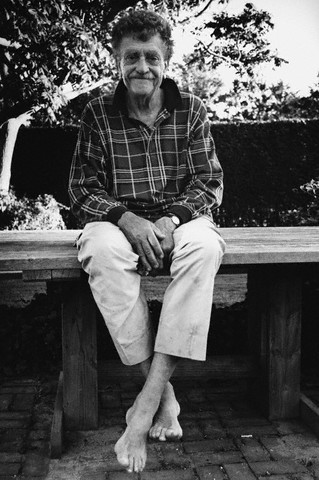
All these people talk so eloquently about getting back to good old-fashioned values. Well, as an old poop I can remember back to when we had those old-fashioned values, and I say let's get back to the good old-fashioned First Amendment of the good old-fashioned Constitution of the United States -- and to hell with the censors! Give me knowledge or give me death!
Kurt Vonnegut, from his briefing on the Attorney General’s Commission on Pornography, January 16, 1986
One.

I have lived in this tree, in this same hollow," the owl said, "for more years than anyone can remember. But now, when the wind blows hard in winter and rocks the forest, I sit here in the dark, and from deep down in the bole, near the roots, I hear a new sound. It is the sound of strands of wood creaking in the cold and snapping one by one. The limbs are falling; the tree is old, and it is dying. Yet I cannot bring myself, after so many years, to leave, to find a new home and move into it, perhaps to fight for it. I, too, have grown old. One of these days, one of these years, the tree will fall, and when it does, if I am still alive, I will fall with it.
Robert C. O'Brien, from Mrs. Frisby and the Rats of NIMH
Jimmy Buffett, "Tides"
Every sailor's son
Is taught when they are young
That the pull of the moon lingers on
Something we can't escape
From Bimini 'round the cape
Mix in the wind and the sea and sing along.
To whom it may concern
I've always tried to learn
That the good days need to last
Season with a lot of laughter
Here and in the ever after
With poetry and painters from my past ...
Birdcall.

CELESTIAL MUSIC
I have a friend who still believes in heaven.
Not a stupid person, yet with all she knows, she literally talks to God.
She thinks someone listens in heaven.
On earth she's unusually competent.
Brave too, able to face unpleasantness.
We found a caterpillar dying in the dirt, greedy ants crawling over it.
I'm always moved by disaster, always eager to oppose vitality
But timid also, quick to shut my eyes.
Whereas my friend was able to watch, to let events play out
According to nature. For my sake she intervened
Brushing a few ants off the torn thing, and set it down
Across the road.
My friend says I shut my eyes to God, that nothing else explains
My aversion to reality. She says I'm like the child who
Buries her head in the pillow
So as not to see, the child who tells herself
That light causes sadness-
My friend is like the mother. Patient, urging me
To wake up an adult like herself, a courageous person-
In my dreams, my friend reproaches me. We're walking
On the same road, except it's winter now;
She's telling me that when you love the world you hear celestial music:
Look up, she says. When I look up, nothing.
Only clouds, snow, a white business in the trees
Like brides leaping to a great height-
Then I'm afraid for her; I see her
Caught in a net deliberately cast over the earth-
In reality, we sit by the side of the road, watching the sun set;
From time to time, the silence pierced by a birdcall.
It's this moment we're trying to explain, the fact
That we're at ease with death, with solitude.
My friend draws a circle in the dirt; inside, the caterpillar doesn't move.
She's always trying to make something whole, something beautiful, an image
Capable of life apart from her.
We're very quiet. It's peaceful sitting here, not speaking, The composition
Fixed, the road turning suddenly dark, the air
Going cool, here and there the rocks shining and glittering-
It's this stillness we both love.
The love of form is a love of endings.
John Donne
Guard.

Experience should teach us to be most on our guard to protect liberty when the Government’s purposes are beneficent. Men born to freedom are naturally alert to repel invasion of their liberty by evil-minded rulers. The greatest dangers to liberty lurk in insidious encroachment by men of zeal, well-meaning but without understanding.
Supreme Court Justice Louis Brandeis, from Olmstead v. U.S. (1928)
Delivering.

This year marks the 50th anniversary of the sinking and loss of all hands aboard the Edmund Fitzgerald. Kirkus reviews John U. Bacon's latest, The Gales of November: The Untold Story of the Edmund Fitzgerald.
He opens with an overview of the Great Lakes, whose waves and currents turn out to be as nasty as those in salt water. Between 1875 and 1975, they claimed at least 6,000 ships and 30,000 sailors—averaging one shipwreck a week. As Bacon writes in arresting prose, “These freighters battled waves twenty feet or more, faced eighty-mile-per-hour winds, and crashed into lighthouses, ports, piers, bridges, shoals, jagged shores, and each other. They faced fires and explosions onboard, hundreds of tons of ice weighing their ships down, water flooding into their pilothouses and cargo holds, and fog, the one element that could make even the most seasoned mariner stop in his tracks, praying for luck.”
Narrowing his focus, Bacon describes the mines of Minnesota and Wisconsin that required massive carriers to transport their ore south to refineries in Chicago and Buffalo and points in between. The carriers were designed primarily for profit (carrying the maximum load) and to pass through narrow locks leading from Lake Superior to Lake Huron. Designers paid less attention to their ability to handle the Great Lakes on bad days. Since no crewman survived, details of the disaster are spotty, but Bacon makes the most of them, delivering biographies of crewmen, their duties, descriptions of the storm, increasingly fraught messages from the Fitzgerald before they ceased, interviews with victims’ families, and a discussion of the lessons learned. The author makes the Fitzgerald the centerpiece of a broad account of Great Lakes shipping, the careers and daily lives of the crews—and the industries, cities, and bars that feed them—and tales of other sinkings.
The book will be released Tuesday, October 7.
Bacon discusses the book with Dave LewAllen ..
On November 4, Bacon will speak at the Gerald R. Ford Presidential Foundation.
Exaggerating.
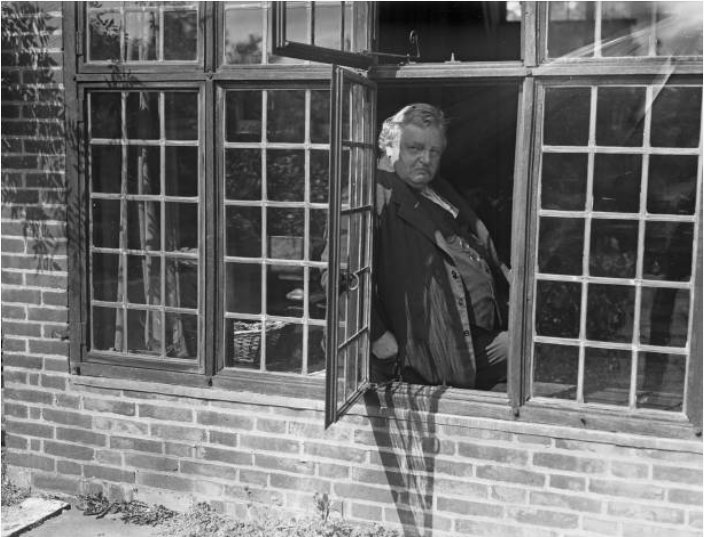
The saint is a medicine because he is an antidote. Indeed that is why the saint is often a martyr; he is mistaken for a poison because he is an antidote. He will generally be found restoring the world to sanity by exaggerating whatever the world neglects, which is by no means always the same element in every age. Yet each generation seeks its saint by instinct; and he is not what the people want, but rather what the people need. Therefore it is the paradox of history that each generation is converted by the saint who contradicts it most.
G.K. Chesterton, from St. Thomas Aquinas: The Dumb Ox
Thanks, Dave.
Happy Birthday, Denis Diderot
Levitzky, Denis Diderot, 1773

As long as the centuries continue to unfold, the number of books will grow continually, and one can predict that a time will come when it will be almost as difficult to learn anything from books as from the direct study of the whole universe. It will be almost as convenient to search for some bit of truth concealed in nature as it will be to find it hidden away in an immense multitude of bound volumes.
Denis Diderot, born on this day in 1713, from Encyclopedia
04 October 2025



Poet-Calling.

OCTOBER’S PORCH
October sun —
soul-stirring
October air —
wood-burning
October quiet —
ease-giving
October birds —
poet-calling
October trees —
edge-trembling
October light —
serene-slanting
October colors —
eye-calming
October leaves —
art-sparking
Terri Guillemets
Recognized.

Be silent and listen: have you recognized your madness and do you admit it? Have you noticed that all your foundations are completely mired in madness? Do you not want to recognize your madness and welcome it in a friendly manner? You wanted to accept everything. So accept madness too. Let the light of your madness shine, and it will suddenly dawn on you. Madness is not to be despised and not to be feared, but instead you should give it life. If you want to find paths, you should also not spurn madness, since it makes up such a great part of your nature. Be glad that you can recognize it, for you will thus avoid becoming its victim. Madness is a special form of the spirit and clings to all teachings and philosophies, but even more to daily life, since life itself is full of craziness and at bottom utterly illogical. Man strives toward reason only so that he can make rules for himself. Life itself has no rules. That is its mystery and its unknown law. What you call knowledge is an attempt to impose something comprehensible on life.
C.G. Jung, from The Red Book
Fulfillment.
Cole, The Course of Empire Destruction, 1836
James Marriot covering the ongoing end ...
For centuries, almost all educated and intelligent people have believed that literature and learning are among the highest purposes and deepest consolations of human existence.The classics have been preserved over the centuries because they contain, in Matthew Arnold’s famous phrase, “the best that has been thought and said”.The greatest novels and poems enrich our sense of the human experience by imaginatively putting us inside other minds and taking us to other times and other places. By reading non-fiction — science, history, philosophy, travel writing — we become deeply acquainted with our place in the extraordinary and complicated world we are privileged to inhabit.Smartphones are robbing of us of these consolations.The epidemic of anxiety, depression and purposeless afflicting young people in the twenty-first century is often linked to the isolation and negative social comparison fostered by smartphones.It is also a direct product of the pointlessness, fragmentation and triviality of the culture of the screen which is wholly unequipped to speak to the deep human needs for curiosity, narrative, deep attention and artistic fulfillment.
Too late. We've sacrificed the collective soul of children to the gods of narcissism and distraction. The only hope I can see is through increased limits restricting access, if not prohibition.
Until then, leave great books lying around (the best solution), let kids catch you reading, provide for alternatives to screens (magazines, graphic novels, audiobooks). Instead of coffee shops and tattoo parlors, spend a day at the library or a bookstore (peaking of pointlessness and fragmented, have you seen the offerings at a school book fair recently? It's been years since I've seen a classic literature title.).
Invisible.
van Eyck, Man in a Red Turban, 1433

The MAN on the DUMP
Day creeps down. The moon is creeping up.
The sun is a corbeil of flowers the moon Blanche
Places there, a bouquet. Ho-ho ... The dump is full
Of images. Days pass like papers from a press.
The bouquets come here in the papers. So the sun,
And so the moon, both come, and the janitor’s poems
Of every day, the wrapper on the can of pears,
The cat in the paper-bag, the corset, the box
From Esthonia: the tiger chest, for tea.
The freshness of night has been fresh a long time.
The freshness of morning, the blowing of day, one says
That it puffs as Cornelius Nepos reads, it puffs
More than, less than or it puffs like this or that.
The green smacks in the eye, the dew in the green
Smacks like fresh water in a can, like the sea
On a cocoanut—how many men have copied dew
For buttons, how many women have covered themselves
With dew, dew dresses, stones and chains of dew, heads
Of the floweriest flowers dewed with the dewiest dew.
One grows to hate these things except on the dump.
Now, in the time of spring (azaleas, trilliums,
Myrtle, viburnums, daffodils, blue phlox),
Between that disgust and this, between the things
That are on the dump (azaleas and so on)
And those that will be (azaleas and so on),
One feels the purifying change. One rejects
The trash.
That’s the moment when the moon creeps up
To the bubbling of bassoons. That’s the time
One looks at the elephant-colorings of tires.
Everything is shed; and the moon comes up as the moon
(All its images are in the dump) and you see
As a man (not like an image of a man),
You see the moon rise in the empty sky.
One sits and beats an old tin can, lard pail.
One beats and beats for that which one believes.
That’s what one wants to get near. Could it after all
Be merely oneself, as superior as the ear
To a crow’s voice? Did the nightingale torture the ear,
Peck the heart and scratch the mind? And does the ear
Solace itself in peevish birds? Is it peace,
Is it a philosopher’s honeymoon, one finds
On the dump? Is it to sit among mattresses of the dead,
Bottles, pots, shoes and grass and murmur aptest eve:
Is it to hear the blatter of grackles and say
Invisible priest; is it to eject, to pull
The day to pieces and cry stanza my stone?
Where was it one first heard of the truth? The the.
Wallace Stevens
Faking.
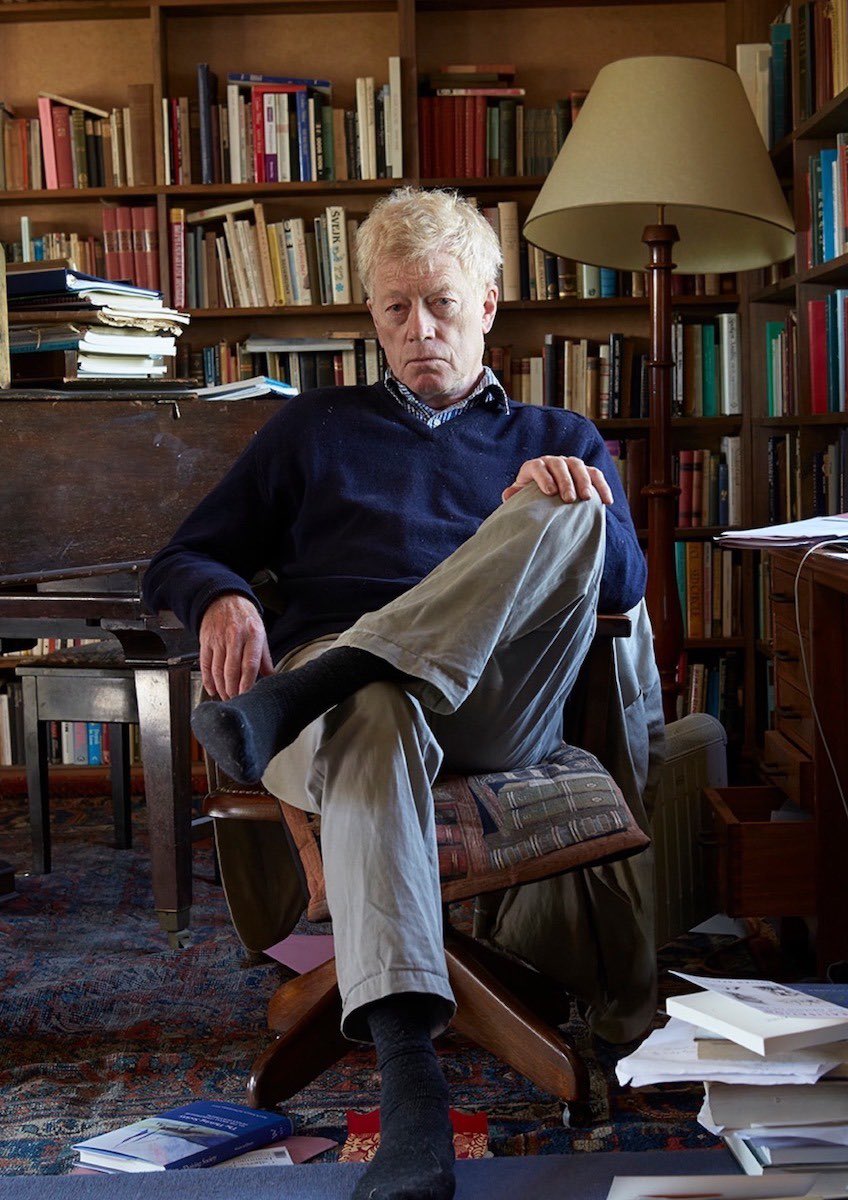
Faking depends on a measure of complicity between the perpetrator and the victim, who together conspire to believe what they don’t believe and to feel what they are incapable of feeling. There are fake beliefs, fake opinions, fake kinds of expertise. There is also fake emotion, which comes about when people debase the forms and the language in which true feeling can take root, so that they are no longer fully aware of the difference between the true and the false. Kitsch is one very important example of this. The kitsch work of art is not a response to the real world, but a fabrication designed to replace it. Yet both producer and consumer conspire to persuade each other that what they feel in and through the kitsch work of art is something deep, important and real.
Anyone can lie. One need only have the requisite intention — in other words, to say something with the intention to deceive. Faking, by contrast, is an achievement. To fake things you have to take people in, yourself included. In an important sense, therefore, faking is not something that can be intended, even though it comes about through intentional actions. The liar can pretend to be shocked when his lies are exposed, but his pretense is merely a continuation of his lying strategy. The fake really is shocked when he is exposed, since he had created around himself a community of trust, of which he himself was a member. Understanding this phenomenon is, it seems to me, integral to understanding how a high culture works, and how it can become corrupted.
Sir Roger Scruton, from "How Modern Art Became Trapped By Its Urge to Shock"
Faking. The marching orders of a whole culture.
Choose the authentic over hype.
Happy Birthday, Jean-François Millet
Millet, The Church at Arbonne, 1880
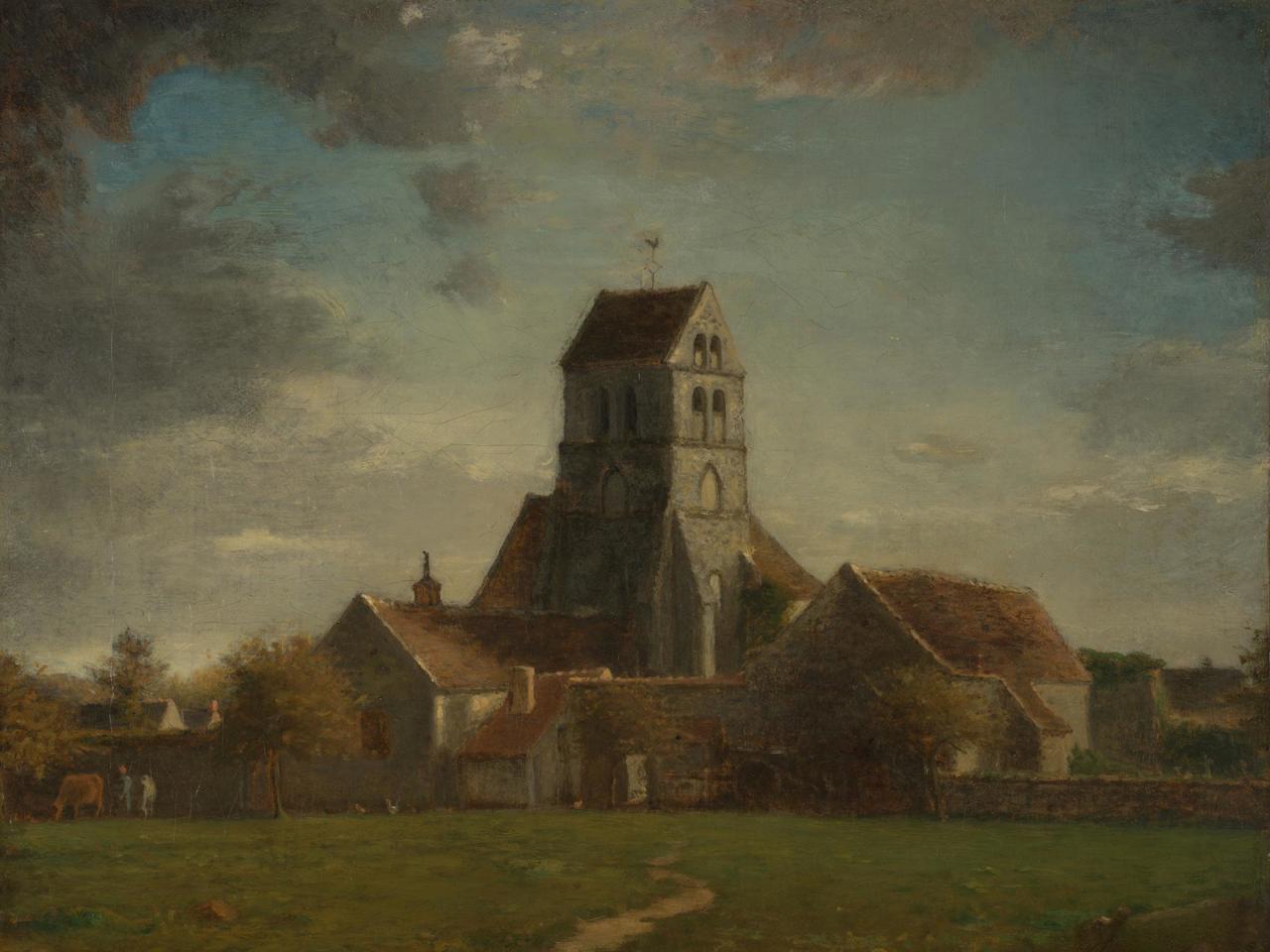
It is the treating of the commonplace with the feelings of the sublime that gives to art its true power. Art will never come except from some small disregarded corner where an isolated and inspired man is studying the mysteries of nature.
Jean-Francois Millet, born on this day in 1814
03 October 2025

Happy Birthday, Pierre Bonnard
Bonnard, Sunlight, 1923
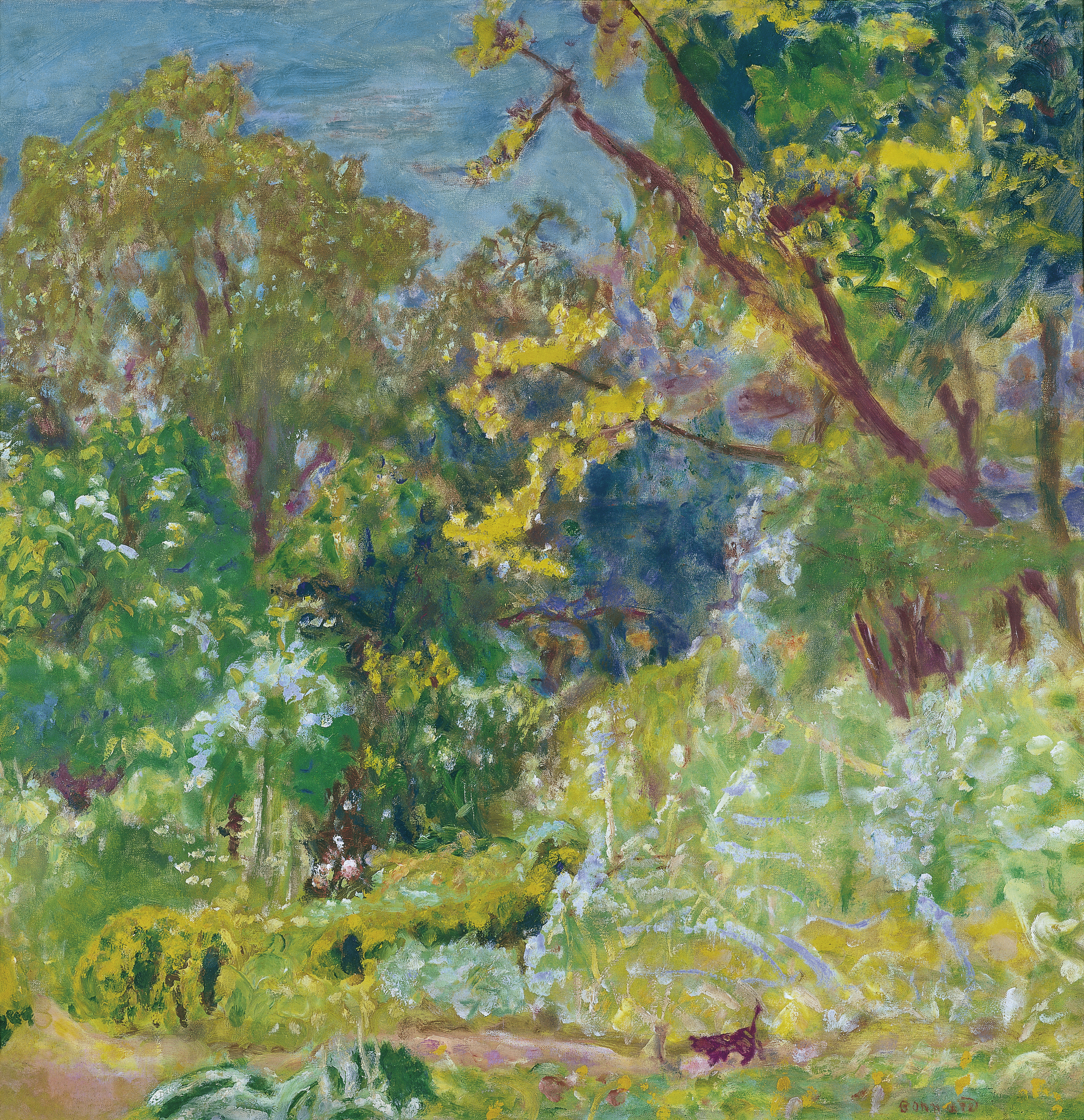
Speaking, when you have something to say, is like looking. But who looks? If people could see properly, and see the whole, they would all be painters. And it's because people have no idea how to look, so they hardly ever understand.
Pierre Bonnard, born on this day in 1867
02 October 2025
Read.
Martin knew it was autumn again, for Dog ran into the house bringing wind and frost and a smell of apples turned to cider under trees. In dark clock-springs of hair, Dog fetched goldenrod, dust of farewell-summer, acorn-husk, hair of squirrel, feather of departed robin, sawdust from fresh-cut cordwood, and leaves like charcoals shaken from a blaze of maple trees. Dog jumped. Showers of brittle fern, blackberry vine, marsh-grass sprang over the bed where Martin shouted. No doubt, no doubt of it at all, this incredible beast was October!
“Here, boy, here!”
And Dog settled to warm Martin’s body with all the bonfires and subtle burnings of the season, to fill the room with soft or heavy, wet or dry odors of far-traveling. In spring, he smelled of lilac, iris, lawn-mowered grass; in summer, ice cream-mustached, he came pungent with firecracker, Roman candle, pinwheel, baked by the sun. But autumn! Autumn!
“Dog, what’s it like outside?”
And lying there, Dog told as he always told. Lying there, Martin found autumn as in the old days before sickness bleached him white on his bed. Here was his contact, his carry-all, the quick-moving part of himself he sent with a yell to run and return, circle and scent, collect and deliver the time and texture of worlds in town, country, by creek, river, lake, down-cellar, up-attic, in closet or coal-bin. Ten dozen times a day he was gifted with sunflower seed, cinder-path, milkweed, horse-chestnut, or full flame-smell of pumpkin. Through the loomings of the universe Dog shuttled; the design was hid in his pelt. Put out your hand, it was there. . . .
“And where did you go this morning?”
But he knew without hearing where Dog had rattled down hills where autumn lay in cereal crispness, where children lay in funeral pyres, in rustling heaps, the leaf-buried but watchful dead, as Dog and the world blew by. Martin trembled his fingers, searched the thick fur, read the long journey. Through stubbled fields, over glitters of ravine creek, down marbled spread of cemetery yard, into woods. In the great season of spices and rare incense, now Martin ran through his emissary, around, about, and home!
The bedroom door opened ...
Ray Bradbury, from "The Emissary"
Happy Birthday, Wallace Stevens

It is the unknown that excites the ardor of scholars,
Who, in the known alone,
Would shrivel up with boredom.
The way through the world
Is more difficult to find than the way beyond it.
Wallace Stevens, born on this day in 1879
01 October 2025
Happy Birthday, Vladimir Horowitz
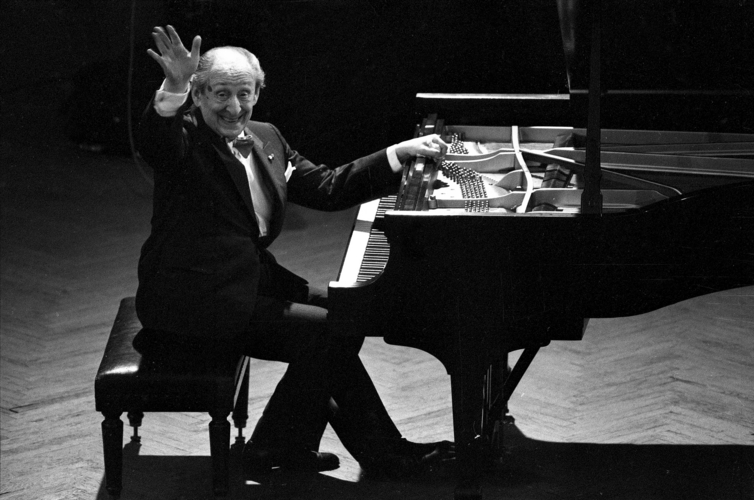
I am a 19th-century Romantic. I am the last. I take terrible risks. Because my playing is very clear, when I make a mistake, you hear it. But the score is not a bible, and I am never afraid to dare. The music is behind those dots. You search for it, and that is what I mean by the grand manner. I play, so to speak, from the other side of the score, looking back.
Vladimir Horowitz born on this day in 1903
Schumann's "Träumerei"...
Smoky-Smelling.
Wyeth, Henriette, Jamie’s Pumpkins, 1968
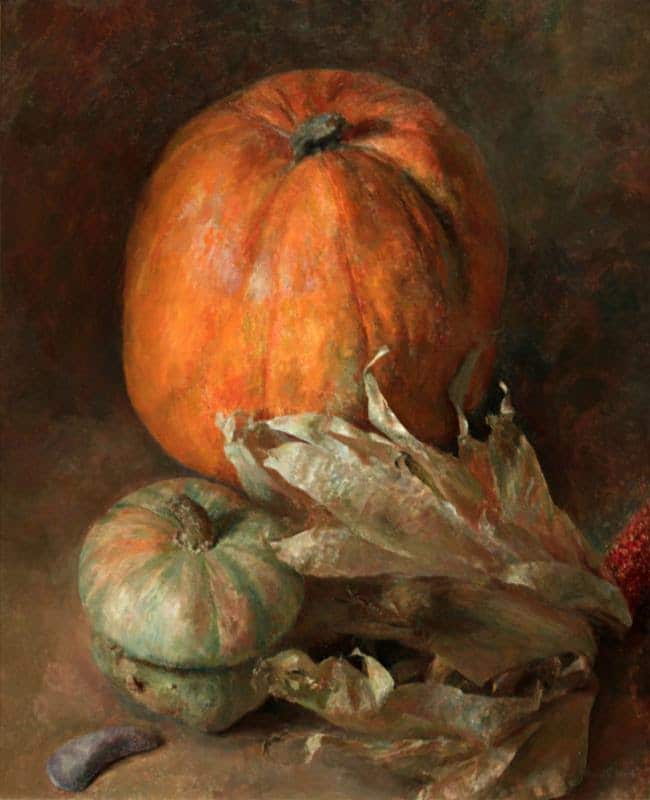
First of all, it was October, a rare month for boys. Not that all months aren’t rare. But there be bad and good, as the pirates say. Take September, a bad month: school begins. Consider August, a good month: school hasn’t begun yet. July, well, July’s really fine: there’s no chance in the world for school. June, no doubting it, June’s best of all, for the school doors spring wide and September’s a billion years away.
But you take October, now. School’s been on a month and you’re riding easier in the reins, jogging along. You got time to think of the garbage you’ll dump on old man Prickett’s porch, or the hairy-ape costume you’ll wear to the YMCA the last night of the month. And if it’s around October twentieth and everything smoky-smelling and the sky orange and ash gray at twilight, it seems Halloween will never come in a fall of broomsticks and a soft flap of bedsheets around corners.
Ray Bradbury, from Something Wicked This Way Comes
Thank you, Kurt, for introducing me to Bradbury all those years ago. Autumn wouldn't be the same without him. I remember.
Subscribe to:
Posts (Atom)

































































































































