02 July 2025
Know.
03 November 2024
Aware.
03 September 2024
02 September 2024
Critical.
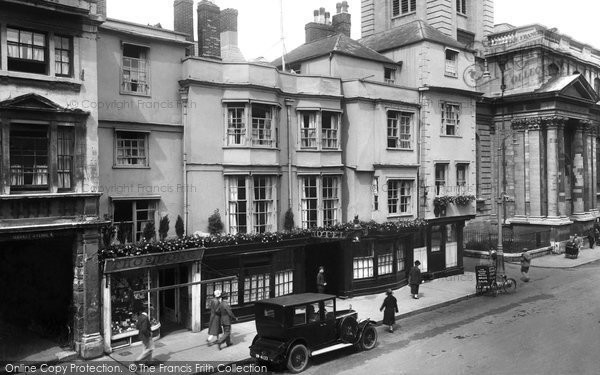
But members of the Inklings also created a moment in literary in the Mitre almost 80 years ago, when Charles Williams, one of the leading Inklings, invited his mutual friends CS Lewis and TS Eliot, along with another Inkling, Father Gervase Mathew, to tea at the Mitre Hotel one afternoon in 1945.‘Mr Lewis,’ Eliot exclaimed, ‘you are a much older man than you appear in photographs!’ The meeting could only go downhill after that. ‘I must tell you,’ Eliot continued, ‘I consider A Preface to Paradise Lost your best book.’Lewis was in disbelief, it is said. He had dedicated that book to Charles Williams, but in it had been highly critical of Eliot. Lewis had once dismissed ‘The Waste Land’ as ‘infernal poetry’ and ‘The Love Song of J Alfred Prufrock’ as ‘pleasantly unpleasant’, an ‘example of the decay of proper feelings’ and morally dangerous.
Only Blanche appreciated Eliot.
15 January 2024
Far.
“All the stuff that’s been here that has kept us from winning. If we really want to go where we want to go, we have to get this stuff out. The last bit of losing has to get out of here,” Dan Campbell
— The Winning Difference (@thewinningdiff1) January 15, 2024
A leader knows the effort, habits and attitude you need to be successful. pic.twitter.com/ugisT3OXH5
3 years ago. Hard knocks 2021.
— Restore the Roar 🦁 (@DETROlTLions313) January 15, 2024
Lions started the season 0-10 after hiring Dan Campbell and trading for Goff.
Pretty sweet looking back on this I’d say… pic.twitter.com/dzGbFur9Br
For the record.. that game was EXACTLY what Dan Campbell told you.
— Chris’ Crappy Takes (@crappy_takes) January 15, 2024
And don’t worry… we still have all the receipts from everybody that mocked him after this press conference.pic.twitter.com/XWR9v2altK
— Detroit Alejandro (@alexdf71) January 15, 2024
Career <50% from 50+Who had us kicking a 50+ FG?
Dan Campbell that’s who.
pic.twitter.com/RzcBa5fP0z
“You’re good enough for Detroit, Jared Goff” - Dan Campbell with an epic locker room speech
— PropSwap (@PropSwap) January 15, 2024
pic.twitter.com/WjOzZ4mSlM
03 January 2024
Appreciation.
23 September 2022
Fly.
15 November 2020
16 November 2018
Dance.
I
Time present and time past
Are both perhaps present in time future
And time future contained in time past.
If all time is eternally present
All time is unredeemable.
What might have been is an abstraction
Remaining a perpetual possibility
Only in a world of speculation.
What might have been and what has been
Point to one end, which is always present.
Footfalls echo in the memory
Down the passage which we did not take
Towards the door we never opened
Into the rose-garden. My words echo
Thus, in your mind.
But to what purpose
Disturbing the dust on a bowl of rose-leaves
I do not know.
Other echoes
Inhabit the garden. Shall we follow?
Quick, said the bird, find them, find them,
Round the corner. Through the first gate,
Into our first world, shall we follow
The deception of the thrush? Into our first world.
There they were, dignified, invisible,
Moving without pressure, over the dead leaves,
In the autumn heat, through the vibrant air,
And the bird called, in response to
The unheard music hidden in the shrubbery,
And the unseen eyebeam crossed, for the roses
Had the look of flowers that are looked at.
There they were as our guests, accepted and accepting.
So we moved, and they, in a formal pattern,
Along the empty alley, into the box circle,
To look down into the drained pool.
Dry the pool, dry concrete, brown edged,
And the pool was filled with water out of sunlight,
And the lotos rose, quietly, quietly,
The surface glittered out of heart of light,
And they were behind us, reflected in the pool.
Then a cloud passed, and the pool was empty.
Go, said the bird, for the leaves were full of children,
Hidden excitedly, containing laughter.
Go, go, go, said the bird: human kind
Cannot bear very much reality.
Time past and time future
What might have been and what has been
Point to one end, which is always present.
II
Garlic and sapphires in the mud
Clot the bedded axle-tree.
The trilling wire in the blood
Sings below inveterate scars
Appeasing long forgotten wars.
The dance along the artery
The circulation of the lymph
Are figured in the drift of stars
Ascend to summer in the tree
We move above the moving tree
In light upon the figured leaf
And hear upon the sodden floor
Below, the boarhound and the boar
Pursue their pattern as before
But reconciled among the stars.
At the still point of the turning world. Neither flesh nor fleshless;
Neither from nor towards; at the still point, there the dance is,
But neither arrest nor movement. And do not call it fixity,
Where past and future are gathered. Neither movement from nor towards,
Neither ascent nor decline. Except for the point, the still point,
There would be no dance, and there is only the dance.
I can only say, there we have been: but I cannot say where.
And I cannot say, how long, for that is to place it in time.
The inner freedom from the practical desire,
The release from action and suffering, release from the inner
And the outer compulsion, yet surrounded
By a grace of sense, a white light still and moving,
Erhebung without motion, concentration
Without elimination, both a new world
And the old made explicit, understood
In the completion of its partial ecstasy,
The resolution of its partial horror.
Yet the enchainment of past and future
Woven in the weakness of the changing body,
Protects mankind from heaven and damnation
Which flesh cannot endure.
Time past and time future
Allow but a little consciousness.
To be conscious is not to be in time
But only in time can the moment in the rose-garden,
The moment in the arbour where the rain beat,
The moment in the draughty church at smokefall
Be remembered; involved with past and future.
Only through time time is conquered.
III
Here is a place of disaffection
Time before and time after
In a dim light: neither daylight
Investing form with lucid stillness
Turning shadow into transient beauty
Wtih slow rotation suggesting permanence
Nor darkness to purify the soul
Emptying the sensual with deprivation
Cleansing affection from the temporal.
Neither plentitude nor vacancy. Only a flicker
Over the strained time-ridden faces
Distracted from distraction by distraction
Filled with fancies and empty of meaning
Tumid apathy with no concentration
Men and bits of paper, whirled by the cold wind
That blows before and after time,
Wind in and out of unwholesome lungs
Time before and time after.
Eructation of unhealthy souls
Into the faded air, the torpid
Driven on the wind that sweeps the gloomy hills of London,
Hampstead and Clerkenwell, Campden and Putney,
Highgate, Primrose and Ludgate. Not here
Not here the darkness, in this twittering world.
Descend lower, descend only
Into the world of perpetual solitude,
World not world, but that which is not world,
Internal darkness, deprivation
And destitution of all property,
Dessication of the world of sense,
Evacuation of the world of fancy,
Inoperancy of the world of spirit;
This is the one way, and the other
Is the same, not in movement
But abstention from movement; while the world moves
In appetency, on its metalled ways
Of time past and time future.
IV
Time and the bell have buried the day,
the black cloud carries the sun away.
Will the sunflower turn to us, will the clematis
Stray down, bend to us; tendril and spray
Clutch and cling?
Chill
Fingers of yew be curled
Down on us? After the kingfisher’s wing
Has answered light to light, and is silent, the light is still
At the still point of the turning world.
V
Words move, music moves
Only in time; but that which is only living
Can only die. Words, after speech, reach
Into the silence. Only by the form, the pattern,
Can words or music reach
The stillness, as a Chinese jar still
Moves perpetually in its stillness.
Not the stillness of the violin, while the note lasts,
Not that only, but the co-existence,
Or say that the end precedes the beginning,
And the end and the beginning were always there
Before the beginning and after the end.
And all is always now. Words strain,
Crack and sometimes break, under the burden,
Under the tension, slip, slide, perish,
Will not stay still. Shrieking voices
Scolding, mocking, or merely chattering,
Always assail them. The Word in the desert
Is most attacked by voices of temptation,
The crying shadow in the funeral dance,
The loud lament of the disconsolate chimera.
The detail of the pattern is movement,
As in the figure of the ten stairs.
Desire itself is movement
Not in itself desirable;
Love is itself unmoving,
Only the cause and end of movement,
Timeless, and undesiring
Except in the aspect of time
Caught in the form of limitation
Between un-being and being.
Sudden in a shaft of sunlight
Even while the dust moves
There rises the hidden laughter
Of children in the foliage
Quick now, here, now, always —
Ridiculous the waste sad time
Stretching before and after.
T.S. Eliot
04 October 2018
Dare.
S’io credesse che mia risposta fosse
A persona che mai tornasse al mondo,
Questa fiamma staria senza piu scosse.
Ma perciocche giammai di questo fondo
Non torno vivo alcun, s’i’odo il vero,
Senza tema d’infamia ti rispondo.
Let us go then, you and I,
When the evening is spread out against the sky
Like a patient etherized upon a table;
Let us go, through certain half-deserted streets,
The muttering retreats
Of restless nights in one-night cheap hotels
And sawdust restaurants with oyster-shells:
Streets that follow like a tedious argument
Of insidious intent
To lead you to an overwhelming question…
Oh, do not ask, “What is it?”
Let us go and make our visit.
In the room the women come and go
Talking of Michelangelo.
The yellow fog that rubs its back upon the window-panes,
The yellow smoke that rubs its muzzle on the window-panes
Licked its tongue into the corners of the evening,
Lingered upon the pools that stand in drains,
Let fall upon its back the soot that falls from chimneys,
Slipped by the terrace, made a sudden leap,
And seeing that it was a soft October night,
Curled once about the house, and fell asleep.
And indeed there will be time
For the yellow smoke that slides along the street,
Rubbing its back upon the window-panes;
There will be time, there will be time
To prepare a face to meet the faces that you meet;
There will be time to murder and create,
And time for all the works and days of hands
That lift and drop a question on your plate;
Time for you and time for me,
And time yet for a hundred indecisions,
And for a hundred visions and revisions,
Before the taking of a toast and tea.
In the room the women come and go
Talking of Michelangelo.
And indeed there will be time
To wonder, “Do I dare?” and, “Do I dare?”
Time to turn back and descend the stair,
With a bald spot in the middle of my hair—
[They will say: “How his hair is growing thin!”]
My morning coat, my collar mounting firmly to the chin,
My necktie rich and modest, but asserted by a simple pin—
[They will say: “But how his arms and legs are thin!”]
Do I dare
Disturb the universe?
In a minute there is time
For decisions and revisions which a minute will reverse.
For I have known them all already, known them all—
Have known the evenings, mornings, afternoons,
I have measured out my life with coffee spoons;
I know the voices dying with a dying fall
Beneath the music from a farther room.
So how should I presume?
And I have known the eyes already, known them all—
The eyes that fix you in a formulated phrase,
And when I am formulated, sprawling on a pin,
When I am pinned and wriggling on the wall,
Then how should I begin
To spit out all the butt-ends of my days and ways?
And how should I presume?
And I have known the arms already, known them all—
Arms that are braceleted and white and bare
[But in the lamplight, downed with light brown hair!]
Is it perfume from a dress
That makes me so digress?
Arms that lie along a table, or wrap about a shawl.
And should I then presume?
And how should I begin?
. . . . .
Shall I say, I have gone at dusk through narrow streets
And watched the smoke that rises from the pipes
Of lonely men in shirt-sleeves, leaning out of windows? …
I should have been a pair of ragged claws
Scuttling across the floors of silent seas.
. . . . .
And the afternoon, the evening, sleeps so peacefully!
Smoothed by long fingers,
Asleep… tired… or it malingers,
Stretched on the floor, here beside you and me.
Should I, after tea and cakes and ices,
Have the strength to force the moment to its crisis?
But though I have wept and fasted, wept and prayed,
Though I have seen my head [grown slightly bald] brought in upon a platter,
I am no prophet—and here’s no great matter;
I have seen the moment of my greatness flicker,
And I have seen the eternal Footman hold my coat, and snicker,
And in short, I was afraid.
And would it have been worth it, after all,
After the cups, the marmalade, the tea,
Among the porcelain, among some talk of you and me,
Would it have been worth while,
To have bitten off the matter with a smile,
To have squeezed the universe into a ball
To roll it toward some overwhelming question,
To say: “I am Lazarus, come from the dead,
Come back to tell you all, I shall tell you all”—
If one, settling a pillow by her head,
Should say: “That is not what I meant at all.
That is not it, at all.”
And would it have been worth it, after all,
Would it have been worth while,
After the sunsets and the dooryards and the sprinkled streets,
After the novels, after the teacups, after the skirts that trail along the floor—
And this, and so much more?—
It is impossible to say just what I mean!
But as if a magic lantern threw the nerves in patterns on a screen:
Would it have been worth while
If one, settling a pillow or throwing off a shawl,
And turning toward the window, should say:
“That is not it at all,
That is not what I meant, at all.”
. . . . .
No! I am not Prince Hamlet, nor was meant to be;
Am an attendant lord, one that will do
To swell a progress, start a scene or two,
Advise the prince; no doubt, an easy tool,
Deferential, glad to be of use,
Politic, cautious, and meticulous;
Full of high sentence, but a bit obtuse;
At times, indeed, almost ridiculous—
Almost, at times, the Fool.
I grow old… I grow old…
I shall wear the bottoms of my trousers rolled.
Shall I part my hair behind? Do I dare to eat a peach?
I shall wear white flannel trousers, and walk upon the beach.
I have heard the mermaids singing, each to each.
I do not think that they will sing to me.
I have seen them riding seaward on the waves
Combing the white hair of the waves blown back
When the wind blows the water white and black.
We have lingered in the chambers of the sea
By sea-girls wreathed with seaweed red and brown
Till human voices wake us, and we drown.
T.S. Eliot
26 September 2018
Happy birthday, Eliot.
The vast accumulations of knowledge—or at least of information—deposited by the nineteenth century have been responsible for an equally vast ignorance. When there is so much to be known, when there are so many fields of knowledge in which the same words are used with different meanings, when every one knows a little about a great many things, it becomes increasingly difficult for anyone to know whether he knows what he is talking about or not. And when we do not know, or when we do not know enough, we tend always to substitute emotions for thoughts.
T.S. Eliot
08 December 2017
01 November 2017
Join.
O May I join the choir invisible
Of those immortal dead who live again
In minds made better by their presence: live
In pulses stirr’d to generosity,
In deeds of daring rectitude, in scorn
For miserable aims that end with self,
In thoughts sublime that pierce the night like stars,
And with their mild persistence urge man’s search
To vaster issues.
So to live is heaven:
To make undying music in the world,
Breathing as beauteous order that controls
With growing sway the growing life of man.
So we inherit that sweet purity
For which we struggled, fail’d, and agoniz’d
With widening retrospect that bred despair.
Rebellious flesh that would not be subdued,
A vicious parent shaming still its child,
Poor anxious penitence, is quick dissolv’d;
Its discords, quench’d by meeting harmonies,
Die in the large and charitable air.
And all our rarer, better, truer self,
That sobb’d religiously in yearning song,
That watch’d to ease the burthen of the world,
Laboriously tracing what must be,
And what may yet be better,—saw within
A worthier image for the sanctuary,
And shap’d it forth before the multitude,
Divinely human, raising worship so
To higher reverence more mix’d with love,—
That better self shall live till human Time
Shall fold its eyelids, and the human sky
Be gather’d like a scroll within the tomb Unread forever.
This is life to come,
Which martyr’d men have made more glorious
For us who strive to follow. May I reach
That purest heaven, be to other souls
The cup of strength in some great agony,
Enkindle generous ardor, feed pure love,
Beget the smiles that have no cruelty,
Be the sweet presence of a good diffus’d,
And in diffusion ever more intense!
So shall I join the choir invisible
Whose music is the gladness of the world.
George Eliot
15 August 2017
Go.
Let us go and make our visit.


.jpg)