"I am not one who was born in the custody of wisdom. I am one who is fond of olden times and intense in quest of the sacred knowing of the ancients." Gustave Courbet
Showing posts with label Orwell. Show all posts

06 May 2025

Wild.

Drasler, Reading Glass, 2005


At some time in the future, if the human mind becomes something totally different from what it is now, we may learn to separate literary creation from intellectual honesty. At present we know only that the imagination, like certain wild animals, will not breed in captivity. 

George Orwell, from The Prevention of Literature

15 March 2025

Demand.


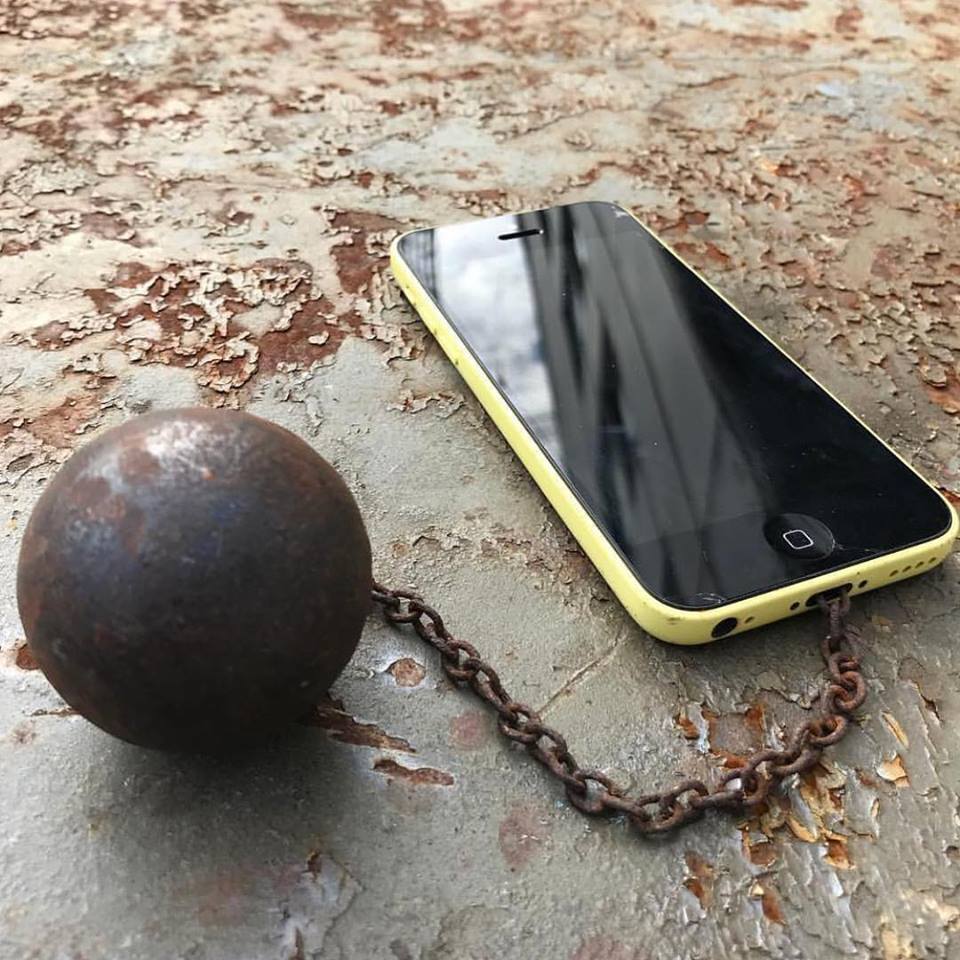
In a healthy world there would be no demand for tinned food, aspirins, gramophones, gas-pipe chairs, machine guns, daily newspapers, telephones, motor-cars, etc. etc.; and on the other hand there would be a constant demand for the things the machine cannot produce ...


But meanwhile the machine is here, and its corrupting effects are almost irresistible. One inveighs against it, but one goes on using it. Even a bare-arse savage, given the change, will learn the vices of civilization within a few months.

George Orwell, from The Road to Wigan Pier

09 November 2024

Understand.


The Party seeks power entirely for its own sake. We are not interested in the good of others; we are interested solely in power, pure power. What pure power means you will understand presently. We are different from the oligarchies of the past in that we know what we are doing. All the others, even those who resembled ourselves, were cowards and hypocrites. The German Nazis and the Russian Communists came very close to us in their methods, but they never had the courage to recognize their own motives. They pretended, perhaps they even believed, that they had seized power unwillingly and for a limited time, and that just around the corner there lay a paradise where human beings would be free and equal. We are not like that. We know that no one ever seizes power with the intention of relinquishing it. Power is not a means; it is an end. One does not establish a dictatorship in order to safeguard a revolution; one makes the revolution in order to establish the dictatorship. The object of persecution is persecution. The object of torture is torture. The object of power is power. Now you begin to understand me.

George Orwell, from 1984

19 February 2024

Only.


People can foresee the future only when it coincides with their own wishes, and the most grossly obvious facts can be ignored when they are unwelcome.

29 January 2023

Hearing.


The law is no protection. Governments make laws, but whether they are carried out, and how the police behave, depends on the general temper in the country. If large numbers of people are interested in freedom of speech, there will be freedom of speech, even if the law forbids it; if public opinion is sluggish, inconvenient minorities will be persecuted, even if laws exist to protect them. The decline in the desire for individual liberty has not been so sharp as I would have predicted six years ago, when the war was starting, but still there has been a decline. The notion that certain opinions cannot safely be allowed a hearing is growing. It is given currency by intellectuals who confuse the issue by not distinguishing between democratic opposition and open rebellion, and it is reflected in our growing indifference to tyranny and injustice abroad. And even those who declare themselves to be in favour of freedom of opinion generally drop their claim when it is their own adversaries who are being prosecuted.

George Orwell, from "Freedom of the Park"

Just read and keep reading.

15 June 2021

Hold.


He picked up the children’s history book and looked at the portrait of Big Brother which formed its frontispiece. The hypnotic eyes gazed into his own. It was as though some huge force were pressing down upon you—something that penetrated inside your skull, battering against your brain, frightening you out of your beliefs, persuading you, almost, to deny the evidence of your senses. In the end the Party would announce that two and two made five, and you would have to believe it. It was inevitable that they should make that claim sooner or later: the logic of their position demanded it. Not merely the validity of experience, but the very existence of external reality, was tacitly denied by their philosophy. The heresy of heresies was common sense. And what was terrifying was not that they would kill you for thinking otherwise, but that they might be right. For, after all, how do we know that two and two make four? Or that the force of gravity works? Or that the past is unchangeable? If both the past and the external world exist only in the mind, and if the mind itself is controllable what then?

The Party told you to reject the evidence of your eyes and ears. It was their final, most essential command. His heart sank as he thought of the enormous power arrayed against him, the ease with which any Party intellectual would overthrow him in debate, the subtle arguments which he would not be able to understand, much less answer. And yet he was in the right! They were wrong and he was right. The obvious, the silly, and the true had got to be defended. Truisms are true, hold on to that! The solid world exists, its laws do not change. Stones are hard, water is wet, objects unsupported fall towards the earth’s centre. With the feeling that he was speaking to O’Brien, and also that he was setting forth an important axiom, he wrote:
Freedom is the freedom to say that two plus two make four. If that is granted, all else follows.
George Orwell, from 1984

10 July 2020

Eternity.

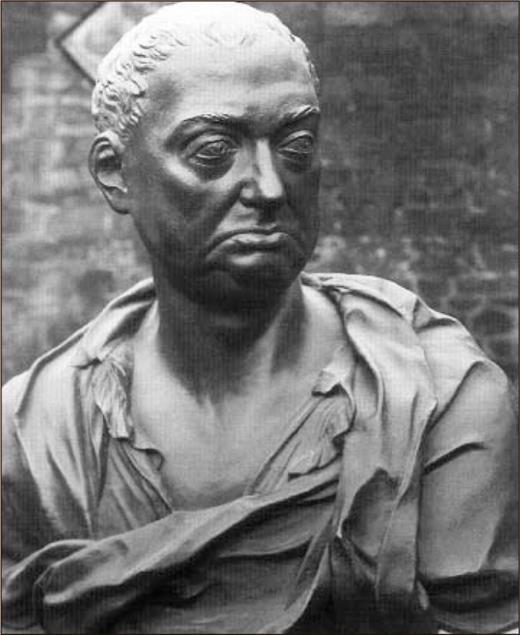
Rembrandt, Old Man, 1652


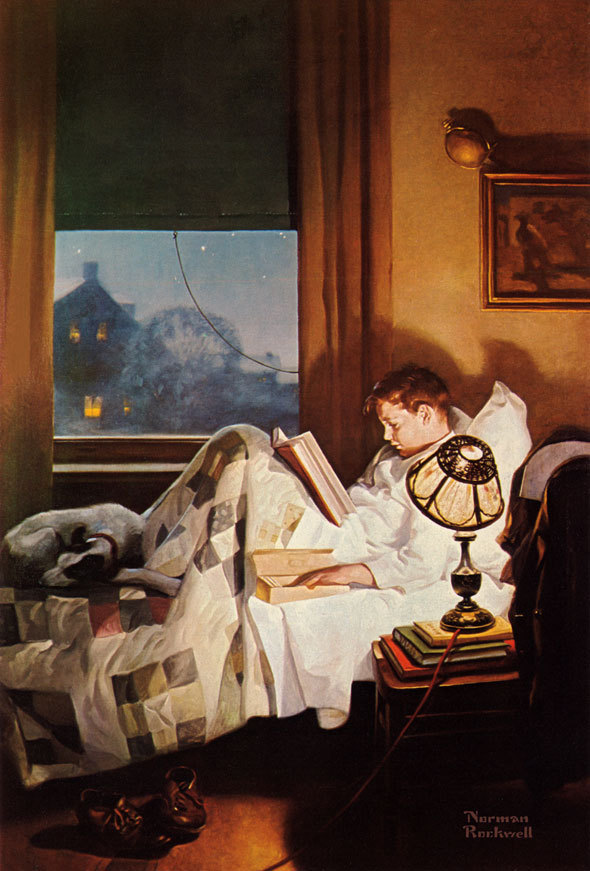
Winston stopped reading, chiefly in order to appreciate the fact that he was reading, in comfort and safety. He was alone: no telescreen, no ear at the keyhole, no nervous impulse to glance over his shoulder or cover the page with his hand. The sweet summer air played against his cheek. From somewhere far away there floated the faint shouts of children: in the room itself there was no sound except the insect voice of the clock. He settled deeper into the arm-chair and put his feet up on the fender. It was bliss, it was eternity.

George Orwell, from 1984

26 January 2020

Strong.


George Orwell's "A Nice Cup of Tea" ...

If you look up "tea" in the first cookery book that comes to hand you will probably find that it is unmentioned; or at most you will find a few lines of sketchy instructions which give no ruling on several of the most important points.
This is curious, not only because tea is one of the main stays of civilization in this country, as well as in Eire, Australia and New Zealand, but because the best manner of making it is the subject of violent disputes.

When I look through my own recipe for the perfect cup of tea, I find no fewer than eleven outstanding points. On perhaps two of them there would be pretty general agreement, but at least four others are acutely controversial. Here are my own eleven rules, every one of which I regard as golden:
  • First of all, one should use Indian or Ceylonese tea. China tea has virtues which are not to be despised nowadays — it is economical, and one can drink it without milk — but there is not much stimulation in it. One does not feel wiser, braver or more optimistic after drinking it. Anyone who has used that comforting phrase "a nice cup of tea" invariably means Indian tea.
  • Secondly, tea should be made in small quantities — that is, in a teapot. Tea out of an urn is always tasteless, while army tea, made in a cauldron, tastes of grease and whitewash. The teapot should be made of china or earthenware. Silver or Britanniaware teapots produce inferior tea and enamel pots are worse; though curiously enough a pewter teapot (a rarity nowadays) is not so bad.
  • Thirdly, the pot should be warmed beforehand. This is better done by placing it on the hob than by the usual method of swilling it out with hot water.
  • Fourthly, the tea should be strong. For a pot holding a quart, if you are going to fill it nearly to the brim, six heaped teaspoons would be about right. In a time of rationing, this is not an idea that can be realized on every day of the week, but I maintain that one strong cup of tea is better than twenty weak ones. All true tea lovers not only like their tea strong, but like it a little stronger with each year that passes — a fact which is recognized in the extra ration issued to old-age pensioners.
  • Fifthly, the tea should be put straight into the pot. No strainers, muslin bags or other devices to imprison the tea. In some countries teapots are fitted with little dangling baskets under the spout to catch the stray leaves, which are supposed to be harmful. Actually one can swallow tea-leaves in considerable quantities without ill effect, and if the tea is not loose in the pot it never infuses properly.
  • Sixthly, one should take the teapot to the kettle and not the other way about. The water should be actually boiling at the moment of impact, which means that one should keep it on the flame while one pours. Some people add that one should only use water that has been freshly brought to the boil, but I have never noticed that it makes any difference.
  • Seventhly, after making the tea, one should stir it, or better, give the pot a good shake, afterwards allowing the leaves to settle.
  • Eighthly, one should drink out of a good breakfast cup — that is, the cylindrical type of cup, not the flat, shallow type. The breakfast cup holds more, and with the other kind one's tea is always half cold before one has well started on it.
  • Ninthly, one should pour the cream off the milk before using it for tea. Milk that is too creamy always gives tea a sickly taste.
  • Tenthly, one should pour tea into the cup first. This is one of the most controversial points of all; indeed in every family in Britain there are probably two schools of thought on the subject. The milk-first school can bring forward some fairly strong arguments, but I maintain that my own argument is unanswerable. This is that, by putting the tea in first and stirring as one pours, one can exactly regulate the amount of milk whereas one is liable to put in too much milk if one does it the other way round.
  • Lastly, tea — unless one is drinking it in the Russian style — should be drunk without sugar. I know very well that I am in a minority here. But still, how can you call yourself a true tea lover if you destroy the flavour of your tea by putting sugar in it? It would be equally reasonable to put in pepper or salt. Tea is meant to be bitter, just as beer is meant to be bitter. If you sweeten it, you are no longer tasting the tea, you are merely tasting the sugar; you could make a very similar drink by dissolving sugar in plain hot water.
Some people would answer that they don't like tea in itself, that they only drink it in order to be warmed and stimulated, and they need sugar to take the taste away. To those misguided people I would say: Try drinking tea without sugar for, say, a fortnight and it is very unlikely that you will ever want to ruin your tea by sweetening it again.

These are not the only controversial points to arise in connection with tea drinking, but they are sufficient to show how subtilized the whole business has become. There is also the mysterious social etiquette surrounding the teapot (why is it considered vulgar to drink out of your saucer, for instance?) and much might be written about the subsidiary uses of tea leaves, such as telling fortunes, predicting the arrival of visitors, feeding rabbits, healing burns and sweeping the carpet. It is worth paying attention to such details as warming the pot and using water that is really boiling, so as to make quite sure of wringing out of one's ration the twenty good, strong cups of that two ounces, properly handled, ought to represent.

22 August 2019

Freedom.


The relative freedom which we enjoy depends of public opinion. The law is no protection. Governments make laws, but whether they are carried out, and how the police behave, depends on the general temper in the country. If large numbers of people are interested in freedom of speech, there will be freedom of speech, even if the law forbids it; if public opinion is sluggish, inconvenient minorities will be persecuted, even if laws exist to protect them.

George Orwell

27 July 2018

Mechanization.


To begin with, there is the frightful debauchery of taste that has already been effected by a century of mechanization. This is almost too obvious and too generally admitted to need pointing out. But as a single instance, take taste in its narrowest sense - the taste for decent food. In the highly mechanical countries, thanks to tinned food, cold storage, synthetic flavoring matters, etc., the palate it almost a dead organ. As you can see by looking at any greengrocer’s shop, what the majority of English people mean by an apple is a lump of highly-colored cotton wool from America or Australia; they will devour these things, apparently with pleasure, and let the English apples rot under the trees. It is the shiny, standardized, machine-made look of the American apple that appeals to them; the superior taste of the English apple is something they simply do not notice. Or look at the factory-made, foil wrapped cheeses and ‘blended’ butter in an grocer’s; look at the hideous rows of tins which usurp more and more of the space in any food-shop, even a dairy; look at a sixpenny Swiss roll or a twopenny ice-cream; look at the filthy chemical by-product that people will pour down their throats under the name of beer. Wherever you look you will see some slick machine-made article triumphing over the old-fashioned article that still tastes of something other than sawdust. And what applies to food applies also to furniture, houses, clothes, books, amusements and everything else that makes up our environment. These are now millions of people, and they are increasing every year, to whom the blaring of a radio is not only a more acceptable but a more normal background to their thoughts than the lowing of cattle or the song of birds. The mechanization of the world could never proceed very far while taste, even the taste-buds of the tongue, remained uncorrupted, because in that case most of the products of the machine would be simply unwanted. In a healthy world there would be no demand for tinned food, aspirins, gramophones, gas-pipe chairs, machine guns, daily newspapers, telephones, motor-cars, etc. etc.; and on the other hand there would be a constant demand for the things the machine cannot produce. But meanwhile the machine is here, and its corrupting effects are almost irresistible. One inveighs against it, but one goes on using it. Even a bare-arse savage, given the change, will learn the vices of civilization within a few months. Mechanization leads to the decay of taste, the decay of taste leads to demand for machine-made articles and hence to more mechanization, and so a vicious circle is established.

George Orwell, from The Road to Wigan Pier

17 August 2017

Perception.


2. Aesthetic Enthusiasm
Perception of beauty in the external world, or, on the other hand, in words and their right arrangement. Pleasure in the impact of one sound on another, in the firmness of good prose or the rhythm of a good story. Desire to share an experience which one feels is valuable and ought not to be missed. The aesthetic motive is very feeble in a lot of writers, but even a pamphleteer or writer of textbooks will have pet words and phrases which appeal to him for non-utilitarian reasons; or he may feel strongly about typography, width of margins, etc. Above the level of a railway guide, no book is quite free from aesthetic considerations.

George Orwell, from the essay, "Why I Write"

08 November 2016

Power.


We know that no one ever seizes power with the intention of relinquishing it. Power is not a means; it is an end. One does not establish a dictatorship in order to safeguard a revolution; one makes the revolution in order to establish the dictatorship. The object of persecution is persecution. The object of torture is torture. The object of power is power. Now you begin to understand me.

George Orwell, 1984

22 June 2015

Details.


These are not the only controversial points to arise in connexion with tea drinking, but they are sufficient to show how subtilized the whole business has become. There is also the mysterious social etiquette surrounding the teapot (why is it considered vulgar to drink out of your saucer, for instance?) and much might be written about the subsidiary uses of tea leaves, such as telling fortunes, predicting the arrival of visitors, feeding rabbits, healing burns and sweeping the carpet. It is worth paying attention to such details as warming the pot and using water that is really boiling, so as to make quite sure of wringing out of one’s ration the twenty good, strong cups of that two ounces, properly handled, ought to represent.

George Orwell