Uncle Thomas was the first to draw my attention to the possibilities of the old bureau. He was pottering about the house one afternoon, having ordered me to keep at his heels for company—he was a man who hated to be left one minute alone,—when his eye fell on it. "H'm! Sheraton!" he remarked. (He had a smattering of most things, this uncle, especially the vocabularies.) Then he let down the flap, and examined the empty pigeon-holes and dusty paneling. "Fine bit of inlay," he went on: "good work, all of it. I know the sort. There's a secret drawer in there somewhere." Then as I breathlessly drew near, he suddenly exclaimed: "By Jove, I do want to smoke!" And, wheeling round, he abruptly fled for the garden, leaving me with the cup dashed from my lips. What a strange thing, I mused, was this smoking, that takes a man suddenly, be he in the court, the camp, or the grove, grips him like an Afreet, and whirls him off to do its imperious behests! Would it be even so with myself, I wondered, in those unknown grown-up years to come?
But I had no time to waste in vain speculations. My whole being was still vibrating to those magic syllables 'secret drawer'; and that particular chord had been touched that never fails to thrill responsive to such words as cave, trap-door, sliding-panel, bullion, ingots, or Spanish dollars. For, besides its own special bliss, who ever heard of a secret drawer with nothing in it? And O I did want money so badly! I mentally ran over the list of demands which were pressing me the most imperiously.
First, there was the pipe I wanted to give George Jannaway. George, who was Martha's young man, was a shepherd, and a great ally of mine; and the last fair he was at, when he bought his sweetheart fairings, as a right-minded shepherd should, he had purchased a lovely snake expressly for me; one of the wooden sort, with joints, waggling deliciously in the hand; with yellow spots on a green ground, sticky and strong-smelling, as a fresh-painted snake ought to be; and with a red-flannel tongue pasted cunningly into its jaws. I loved it much, and took it to bed with me every night, till what time its spinal cord was loosed and it fell apart, and went the way of all mortal joys. I thought it very nice of George to think of me at the fair, and that's why I wanted to give him a pipe. When the young year was chill and lambing-time was on, George inhabited a little wooden house on wheels, far out on the wintry downs, and saw no faces but such as were sheepish and woolly and mute; and when he and Martha were married, she was going to carry his dinner out to him every day, two miles; and after it, perhaps he would smoke my pipe. It seemed an idyllic sort of existence, for both the parties concerned; but a pipe of quality, a pipe fitted to be part of a life such as this, could not be procured (so Martha informed me) for a smaller sum than eighteenpence. And meantime——!
Then there was the fourpence I owed Edward; not that he was bothering me for it, but I knew he was in need of it himself, to pay back Selina, who wanted it to make up a sum of two shillings, to buy Harold an ironclad for his approaching birthday,—H.M.S. Majestic, now lying uselessly careened in the toyshop window, just when her country had such sore need of her. And then there was that boy in the village who had caught a young squirrel, and I had never yet possessed one, and he wanted a shilling for it, but I knew that for ninepence in cash—but what was the good of these sorry threadbare reflections? I had wants enough to exhaust any possible find of bullion, even if it amounted to half a sovereign. My only hope now lay in the magic drawer, and here I was, standing and letting the precious minutes slip by! Whether 'findings' of this sort could, morally speaking, be considered 'keepings,' was a point that did not occur to me.
The room was very still as I approached the bureau; possessed, it seemed to be, by a sort of hush of expectation. The faint odour of orris-root that floated forth as I let down the flap, seemed to identify itself with the yellows and browns of the old wood, till hue and scent were of one quality and interchangeable. Even so, ere this, the pot-pourri had mixed itself with the tints of the old brocade, and brocade and pot-pourri had long been one. With expectant fingers I explored the empty pigeon-holes and sounded the depths of the softly-sliding drawers. No books that I knew of gave any general recipe for a quest like this; but the glory, should I succeed unaided, would be all the greater.
To him who is destined to arrive, the fates never fail to afford, on the way, their small encouragements. In less than two minutes, I had come across a rusty button-hook. This was truly magnificent. In the nursery there existed, indeed, a general button-hook, common to either sex; but none of us possessed a private and special button-hook, to lend or to refuse as suited the high humour of the moment. I pocketed the treasure carefully, and proceeded. At the back of another drawer, three old foreign stamps told me I was surely on the highroad to fortune.
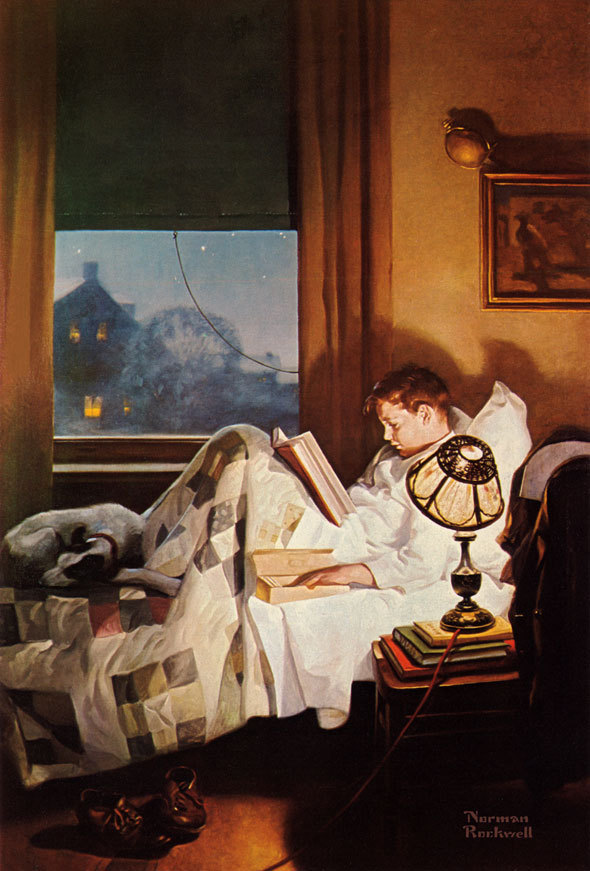
Following on these bracing incentives, came a dull blank period of unrewarded search. In vain I removed all the drawers and felt over every inch of the smooth surfaces, from front to back. Never a knob, spring or projection met the thrilling finger-tips; unyielding the old bureau stood, stoutly guarding its secret, if secret it really had. I began to grow weary and disheartened. This was not the first time that Uncle Thomas had proved shallow, uninformed, a guide into blind alleys where the echoes mocked you. Was it any good persisting longer? Was anything any good whatever? In my mind I began to review past disappointments, and life seemed one long record of failure and of non-arrival. Disillusioned and depressed, I left my work and went to the window. The light was ebbing from the room, and seemed outside to be collecting itself on the horizon for its concentrated effort of sunset. Far down the garden, Uncle Thomas was holding Edward in the air reversed, and smacking him. Edward, gurgling hysterically, was striking blind fists in the direction where he judged his uncle's stomach should rightly be; the contents of his pockets—a motley show—were strewing the lawn. Somehow, though I had been put through a similar performance myself an hour or two ago, it all seemed very far away and cut off from me.
Westwards the clouds were massing themselves in a low violet bank; below them, to north and south, as far round as eye could reach, a narrow streak of gold ran out and stretched away, straight along the horizon. Somewhere very far off, a horn was blowing, clear and thin; it sounded like the golden streak grown audible, while the gold seemed the visible sound. It pricked my ebbing courage, this blended strain of music and colour. I turned for a last effort; and Fortune thereupon, as if half-ashamed of the unworthy game she had been playing with me, relented, opening her clenched fist. Hardly had I put my hand once more to the obdurate wood, when with a sort of small sigh, almost a sob—as it were—of relief, the secret drawer sprang open.