"I am not one who was born in the custody of wisdom. I am one who is fond of olden times and intense in quest of the sacred knowing of the ancients." Gustave Courbet
Showing posts with label Alexander. Show all posts

05 September 2026

Know.


CHAPTER 3, BEING ALIVE

The search which we make for this quality, in our own lives, is the central search of any person, and the crux of any individual person’s story. It is the search for those moments and situations when we are most alive.

We know now what the quality without a name is like, in feeling and in character. But so far, concretely, we have not seen this quality in any system larger than a tree, a pond, a bench. Yet it can be in anything – in buildings, animals, plants, cities, streets, the wilderness – and in ourselves. We shall begin to understand it concretely, in all these larger pieces of the world, only when we first understand it in ourselves.

It is, for instance, the wild smile of the gypsies dancing in the road.

The broad brim of the big hat, like arms spread wide, open to the world, confident, huge, … the embrace of the child’s arms about the grass … it is the solid and entrenched repose of the old man lighting a cigarette: hands on his knees, solid, resting, waiting, listening.

In our lives, this quality without a name is the most precious thing we ever have.

And I am free to the extent I have this quality in me.

One man is free at that one instant when you see in him a certain smile and you know he is himself, and perfectly at home within himself. Imagine him especially, perhaps and for one instant utterly oblivious to everything but what is in him and around him at that second.

This wild freedom, this passion comes into our lives in the instant we let go.

It is when all our forces can move freely in us. In nature, this quality is almost automatic, because there are no images to interfere with natural processes of making things. But in all of our creations, the possibility occurs that images can interfere with the natural necessary order of a thing. And, most of all, this way that images distort the things we make, is familiar in ourselves. For we ourselves are, like our works, the products of our own creation. And we are only free, and have the quality without a name in us, when we give up the images which guide our lives.

Yet each of us faces the fear of letting go. The fear of being exactly what one is, of letting the forces flow freely; of letting the configuration of one’s person adjust truly to these forces.

Our letting go is stifled, all the time, so long as we have ideas and opinions of ourselves, which make us hug too tightly to our images of how to live, and bottle up these forces.

So long as we are still bottled up, like this, there is a tightness about the mouth, a nervous tension in the eyes, and stiffness and a brittleness in the way we walk, the way we move.

And yet, until one does let go, in is impossible to be alive. The stereotypes are restricted; there are very different configurations. The infinite variety of actual people, with their vastly and utterly different, require a huge creation, to find the resolution of the person; and in finding this resolution truly, one must above all be free of the stereotypes.

The great film, Ikiru – “to live” – describes it in the life of an old man.

“He has sat for thirty years behind a counter, preventing things from happening. And he finds out that he is to die of cancer of the stomach, in six months. He tries to live; he seeks enjoyment; it doesn’t amount to much. And finally, against all obstacles, he helps to make a park in a dirty slum of Tokyo. He has lost his fear, because he knows that he is going to die; he works and works and works, there is no stopping him, because he is no longer afraid of anyone, or anything. He has no longer anything to lose, and so in this short time gains everything; and then dies, in the snow, swinging on a child’s swing in the park which he has made, and singing.”

Each of us lives most fully “on the wire,” in the face of death, daring to do the very thing which fear prevents us from.

A few years ago a family of hire wire artists had a terrible fall from the high wire, in the middle of the performance. All of them were killed or maimed, except the father, who escaped with broken legs. But even after losing all his children in the fall, a few months later he was back to work, in the circus, on the wire again.

Someone asked him in an interview, how could he bring himself to do it, after such a terrible accident. He answered: “On the wire, that’s living … all the rest is waiting.”

Of course for most of us it is not quite so literal.

The fear which prevents us from being ourselves, from being that one person unique in all the world, from coming to life -- that may mean nothing greater than the fear of giving up the image of a certain job, an image of a certain kind of family life.

One man can be as free in lighting up a cigarette, as that old man dancing on the wire. Another travelling with the gypsies. A handkerchief around your head; a horsedrawn yellow caravan, pulled up in a field; a rabbit stew simmering and bubbling outside the caravan, licking and sucking your fingers as you eat spoonfuls of the stew.

It has above all to do with the elements.

The wind, the soft rain; sitting on the back of an old truck moving clothes and baskets of old possessions while the gentle rain is falling, laughing, crouching, under a shawl to keep from getting wet. Eating a loaf of bread, torn in pieces, hunks of cheese cut crudely with a hatchet which is lying in the corner; red flowers glistening in the rain alongside the road; banging on the window of the truck to shout some joke.

Nothing to keep. Nothing to lose. No possessions, no security, no concern about possessions, an no concern about security; in this mood it is possible to do exactly what makes sense, and nothing else: there are no hidden fears, no morals, no rules, no undercurrent of constraint, no subtle sense of concern for the form of what the people around you are doing, and above all no concern for what you are yourself, no subtle fear of other people’s ridicule, no subtle train of fears which can connect the smallest triviality with bankruptcy and loss of love and loss of friends and death, no ties, no suits, no outward elements of majesty at all. Only the laughter and the rain.

And it happens when our inner forces are resolved.

And when a person’s forces are resolved, it makers us feel at home, because we know by some sixth sense, that there are no other unexpected forces lurking underground. He acts according to the nature of the situations he is in, without distorting them. There are no guiding images in his behavior, no hidden forces; he is simply free. And so, we feel relaxed and peaceful in his company. Of course, in practice we often don’t know what our inner forces might be.

We live, for months, for years, acting in a certain way, not knowing whether we are free or not, doubting, not even sure when we are successfully resolved, and when we aren’t.

Yet still there are those special secret moments in our lives, when we smile unexpectedly – when all over forces are resolved.

A woman can often see these moments in us, better than a man, better than we ourselves even.

When we know these moments, when we smile, when we let go, when we are not on guard at all – these are the moments when our most important forces show themselves; whatever you are doing at such a moment, hold on to it, repeat it – for that certain smile is the best knowledge that we ever have of what our hidden forces are, and where they lie; and how they can be loosed.

We cannot be aware of these most precious moments when they are actually happening.

In fact, the conscious effort to attain this quality, or to be free, or to be anything, the glance which this creates, will always spoil it.

It is, instead, when we forget ourselves completely, playing the fool perhaps among a group of friends, our swimming out to sea, or walking simply, or trying to finish something later at night over a table with a group of friends, cigarette stuck in the lower lip, eyes tired, earnest concentration.

All these moments in my own life – I only know them now, in retrospect.

Yet each of us knows from experience the feeling which this quality creates in us.

It is the time when we are most right, most just, most sad, most hilarious.


Christopher Alexander, The Timeless Way of Building

More here.

01 December 2024

23 October 2024

Tether.


Eliza Gabbert lays the groundwork for looking at the essay as realm ...
I think this is important: memories and ideas happen in a place. An essay is a place for ideas; it has to feel like a place. It has to give one the feeling of entering a room. 

The architect Christopher Alexander has written that “the experience of entering a building influences the way you feel inside the building.” “If the transition is too abrupt there is no feeling of arrival.” He cites a report called “Fairs, Exhibits, Pavilions, and their Audiences,” in which the authors describe observing people drift in and out of various exhibits, impassive and unengaged. There was one exhibit, however, where visitors had to cross a “huge, deep-pile, bright orange carpet on the way in.” The exhibit itself was no better than the others, they said, but people lingered there because they’d made a journey of sorts to enter. They’d crossed a kind of Willy Wonka or Wizard of Oz threshold, into a different realm. They felt changed. 

Another experiment showed people judge houses with greater degrees of transition between inside and outside to be more “houselike.” If there is a courtyard or a partially hidden garden or a curving pathway to the front entrance, the house exhibits more “houseness.” The transitional space makes room for a shift in mood, for what Alexander calls “ambiguous territories” and “intimacy gradients”—increasing degrees of closeness, as you reach the inner realm. The vogue for conversation pits exploited this phenomenon. The act of descending, getting closer to the earth, is metaphysical; it changes how you speak and think. It is literally profound.

Later ...

My favorite museums are house museums, like the Isabella Stewart Gardner in Boston, or Peggy Guggenheim’s house in Venice, repurposed spaces with multiple paths through, plenty of nooks and intimacy gradients, rooms with lots of light and plants that feel like the outdoors, or outdoor spaces with partial walls and ceilings that feel like rooms. The space of the essay does have edges, but the edges are a little bit ragged and open. As you start to explore the territory, it’s like you’re tethered to a tree in the courtyard, but the tether can be rather long. The tree is the idea you’re building your house or your essay around. You can wander rather far from the original tree, but only so far. Your reader can feel the tether too. It is sometimes slack and sometimes taut. The variance in tension is pleasurable. You want the tether to get very taut sometimes—you have wandered very far from the tree.

We call attention to the tether whenever we make a transition. Think of an essay in very short sections or fragments. Each break yanks the tether, as if the tree is calling you back. This effect can be very intentional, as in Mary-Kim Arnold’s book-length essay, Litany for the Long Moment, which uses as its structural scaffolding the questionnaire from a Korean tv show that reunites separated families. There’s poignancy to the pull of the tether each time we return to a question. “who are you looking for?” this book asks itself several times, attempting to answer and then asking again. “when do you miss your mother or family the most?” “did you ever face any difficulty in your life and how did you overcome it? please explain in detail.” Again: “who are you looking for?” again: “how did you overcome it?” The book ends with three attempts at Question 14: “write a letter to your mother.” In parentheses: “(a long letter.)” The first attempt is half a page. The question repeats. The second is a little longer. The question repeats. The third is the longest. The stop of the tether each time we read the question, the choke of it, forces us to feel the difficulty in the material for the writer. When the structure is apparent, the reader and the writer are in the same place. 

11 June 2024

Solution.


Each pattern describes a problem which occurs over and over again in our environment, and then describes the core of the solu­tion to that problem, in such a way that you can use this solution a mil­lion times over, without ever doing it the same way twice.

The pattern concept can usefully be contrasted with the idea of a rule. A rule indicates what is to be done in a given situation. A pattern raises issues that may need attention and provides ideas and examples of what could be done to address them. Thus, while a rule bypasses people’s intu­itions, a pattern calls upon these intuitions and attempts to educate and strengthen them in the process of solving the problem. 

Christopher Alexander, from A Pattern Language

Functionality.


The important thing is that, in architecture, this is not merely a hunch but a testable empirical result. It means that the objects that are most profound functionally (when I say objects, I mean buildings, streets, door knobs, shelf, room, dome, bridge) are the ones which also promote the greatest feeling in us. This is a very peculiar thing. At first it sounds like rank sentimentality; and you just say, It can't be true. Why should it be true? And yet, it's a discovery which accords very well with the era that we live in. Because we are living in a period where that is perhaps the most noticeable and most problematic feature of our world is that feeling has been removed from it. When I make a joke in reference to this horrible meeting hall that we are in, maybe I am beating a dead horse, but I mean really, the problem is that whatever feeling there is in here is obviously not a profound positive feeling. And this is what we have come to expect in our modern world. The failure of that profound feeling to exist in the world around us at small scales, large scales, middle scales, here, there and everywhere, is tragic. It's the thing that we miss. Of course, people have been writing about this for many decades. Writers have, of course, made this known. We all know it. The difficulty is that people don't seem to know what to do about it. If anything, at the moment, (I'm talking now again about my own discipline, of architecture) the problem is getting worse. It's not getting better. The world that is being built is more and more unfeeling. We are in a sense more lost, more fragmented, more sort of wandering about in this lonely desert than before.

18 June 2022

Establish.


A good morning window looks out on some kind of constant object or growing thing, which reflects the changes of season and the weather, and allows a person to establish the mood of the day as soon as he wakes up.

Christopher Alexander, from A Pattern Language, “Sleeping to the East”

22 January 2019

Between.

Alexander, Snow Scene Through a Winter Window, 1880


The room was suddenly rich and the great bay-window was

Spawning snow and pink roses against it
Soundlessly collateral and incompatible:
World is suddener than we fancy it.

World is crazier and more of it than we think,

Incorrigibly plural. I peel and portion
A tangerine and spit the pips and feel
The drunkenness of things being various.

And the fire flames with a bubbling sound for world

Is more spiteful and gay than one supposes –
On the tongue on the eyes on the ears in the palms of one’s hands –
There is more than glass between the snow and the huge roses.

Louis Macneice

05 April 2018

Resolved.


BEING ALIVE

The search which we make for this quality, in our own lives, is the central search of any person, and the crux of any individual person’s story. It is the search for those moments and situations when we are most alive.

We know now what the quality without a name is like, in feeling and in character. But so far, concretely, we have not seen this quality in any system larger than a tree, a pond, a bench. Yet it can be in anything – in buildings, animals, plants, cities, streets, the wilderness – and in ourselves. We shall begin to understand it concretely, in all these larger pieces of the world, only when we first understand it in ourselves.

It is, for instance, the wild smile of the gypsies dancing in the road.

The broad brim of the big hat, like arms spread wide, open to the world, confident, huge, … the embrace of the child’s arms about the grass … it is the solid and entrenched repose of the old man lighting a cigarette: hands on his knees, solid, resting, waiting, listening.

In our lives, this quality without a name is the most precious thing we ever have.

And I am free to the extent I have this quality in me.

One man is free at that one instant when you see in him a certain smile and you know he is himself, and perfectly at home within himself. Imagine him especially, perhaps and for one instant utterly oblivious to everything but what is in him and around him at that second.

This wild freedom, this passion comes into our lives in the instant we let go.

It is when all our forces can move freely in us. In nature, this quality is almost automatic, because there are no images to interfere with natural processes of making things. But in all of our creations, the possibility occurs that images can interfere with the natural necessary order of a thing. And, most of all, this way that images distort the things we make, is familiar in ourselves. For we ourselves are, like our works, the products of our own creation. And we are only free, and have the quality without a name in us, when we give up the images which guide our lives.

Yet each of us faces the fear of letting go. The fear of being exactly what one is, of letting the forces flow freely; of letting the configuration of one’s person adjust truly to these forces.

Our letting go is stifled, all the time, so long as we have ideas and opinions of ourselves, which make us hug too tightly to our images of how to live, and bottle up these forces.

So long as we are still bottled up, like this, there is a tightness about the mouth, a nervous tension in the eyes, and stiffness and a brittleness in the way we walk, the way we move.

And yet, until one does let go, in is impossible to be alive. The stereotypes are restricted; there are very different configurations. The infinite variety of actual people, with their vastly and utterly different, require a huge creation, to find the resolution of the person; and in finding this resolution truly, one must above all be free of the stereotypes.

The great film, Ikiru – “to live” – describes it in the life of an old man.

“He has sat for thirty years behind a counter, preventing things from happening. And he finds out that he is to die of cancer of the stomach, in six months. He tries to live; he seeks enjoyment; it doesn’t amount to much. And finally, against all obstacles, he helps to make a park in a dirty slum of Tokyo. He has lost his fear, because he knows that he is going to die; he works and works and works, there is no stopping him, because he is no longer afraid of anyone, or anything. He has no longer anything to lose, and so in this short time gains everything; and then dies, in the snow, swinging on a child’s swing in the park which he has made, and singing.”

Each of us lives most fully “on the wire,” in the face of death, daring to do the very thing which fear prevents us from.

A few years ago a family of hire wire artists had a terrible fall from the high wire, in the middle of the performance. All of them were killed or maimed, except the father, who escaped with broken legs. But even after losing all his children in the fall, a few months later he was back to work, in the circus, on the wire again.

Someone asked him in an interview, how could he bring himself to do it, after such a terrible accident. He answered: “On the wire, that’s living … all the rest is waiting.”

Of course for most of us it is not quite so literal.

The fear which prevents us from being ourselves, from being that one person unique in all the world, from coming to life -- that may mean nothing greater than the fear of giving up the image of a certain job, an image of a certain kind of family life.

One man can be as free in lighting up a cigarette, as that old man dancing on the wire. Another travelling with the gypsies. A handkerchief around your head; a horsedrawn yellow caravan, pulled up in a field; a rabbit stew simmering and bubbling outside the caravan, licking and sucking your fingers as you eat spoonfuls of the stew.

It has above all to do with the elements.

The wind, the soft rain; sitting on the back of an old truck moving clothes and baskets of old possessions while the gentle rain is falling, laughing, crouching, under a shawl to keep from getting wet. Eating a loaf of bread, torn in pieces, hunks of cheese cut crudely with a hatchet which is lying in the corner; red flowers glistening in the rain alongside the road; banging on the window of the truck to shout some joke.

Nothing to keep. Nothing to lose. No possessions, no security, no concern about possessions, and no concern about security; in this mood it is possible to do exactly what makes sense, and nothing else: there are no hidden fears, no morals, no rules, no undercurrent of constraint, no subtle sense of concern for the form of what the people around you are doing, and above all no concern for what you are yourself, no subtle fear of other people’s ridicule, no subtle train of fears which can connect the smallest triviality with bankruptcy and loss of love and loss of friends and death, no ties, no suits, no outward elements of majesty at all. Only the laughter and the rain.

And it happens when our inner forces are resolved.

And when a person’s forces are resolved, it makers us feel at home, because we know by some sixth sense, that there are no other unexpected forces lurking underground. He acts according to the nature of the situations he is in, without distorting them. There are no guiding images in his behavior, no hidden forces; he is simply free. And so, we feel relaxed and peaceful in his company. Of course, in practice we often don’t know what our inner forces might be.

We live, for months, for years, acting in a certain way, not knowing whether we are free or not, doubting, not even sure when we are successfully resolved, and when we aren’t.

Yet still there are those special secret moments in our lives, when we smile unexpectedly – when all over forces are resolved.

A woman can often see these moments in us, better than a man, better than we ourselves even.

When we know these moments, when we smile, when we let go, when we are not on guard at all – these are the moments when our most important forces show themselves; whatever you are doing at such a moment, hold on to it, repeat it – for that certain smile is the best knowledge that we ever have of what our hidden forces are, and where they lie; and how they can be loosed.

We cannot be aware of these most precious moments when they are actually happening.

In fact, the conscious effort to attain this quality, or to be free, or to be anything, the glance which this creates, will always spoil it.

It is, instead, when we forget ourselves completely, playing the fool perhaps among a group of friends, our swimming out to sea, or walking simply, or trying to finish something later at night over a table with a group of friends, cigarette stuck in the lower lip, eyes tired, earnest concentration.

All these moments in my own life – I only know them now, in retrospect.

Yet each of us knows from experience the feeling which this quality creates in us.

It is the time when we are most right, most just, most sad, most hilarious.

Christopher Alexander, from The Timeless Way of Building

24 January 2018

Quality.

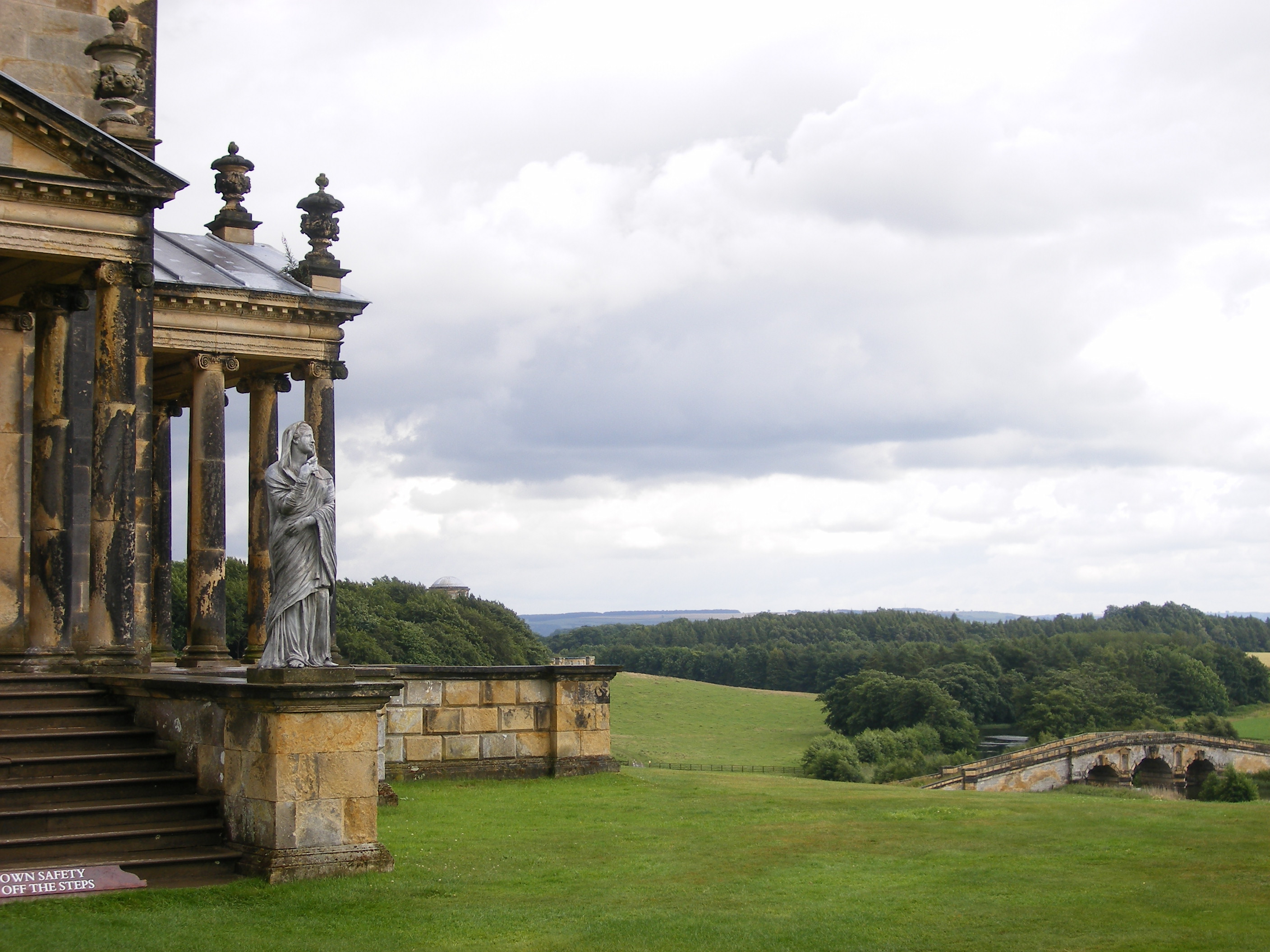
Vanbrugh, Temple of the Four Winds, Castle Howard, York, 1724


To seek the timeless way we must first know the quality without a name.

There is a central quality which is the root criterion of life and spirit ...


... in a man, a town, a building, or a wilderness.


This quality is objective and precise, but it cannot be named.

Christopher Alexander

29 March 2017

Statements.


The activity we call building creates the physical order of the world, constantly, unendingly, day after day. Our world is dominated by the order we create.  Although we are responsible for the creation of order on this enormous scale, we hardly even know what the word "order" means. Issues which were straightforward in other ages – such as spirit, for example, or the life that can exist in stone – are inadmissible for us.

The Nature of the Universe:
(i) all space and matter, organic or inorganic, has some degree of life in it, and the matter/space is more alive or less alive according to its structure or arrangement.
(ii) all matter/space has some degree of "self" in it, and that this self, or anyway some aspect of the personal, is something which infuses all matter/space, and everything we know as matter but now think to be mechanical.

I have come to believe that architecture is so agonizingly disturbed because we – the architects of our time – are struggling with a conception of the world, a world-picture, that essentially makes it impossible to make buildings well. This worldview is the mechanist-rationalist worldview.

More precisely, I believe that the mistake and confusion in our picture of the art of building has come from our conception of what matter is.

Our idea of matter is essentially governed by our idea of order.  Our impression of matter is governed by our idea of how space can be arranged; and that in turn is governed by our idea of how orderly arrangement in space creates matter.  So it is the nature of order which lies at the root of the problem of architecture.

Although science gives us a way of seeing order as a producer of effects – in particular because the scientific view of things shows us the geometry of matter as if it were part of a machine, a machine which can do certain things – we still do not have a way of seeing the order of a thing which simply exists.

With this mechanistic viewpoint, the picture of the world as a machine doesn't have an "I" in it.  Of course it is still there in our experience.  But it isn't part of the picture we have of how things are.  Also, The picture of the world we have from physics, because it is built only out of mental machines, no longer has any definite feeling of value in it; value has become sidelined as a matter of opinion, not intrinsic to the nature of the world at all.

The real nature of this deep order hinges on a simple and fundamental question: What kinds of statements do we recognize as being true or false?

Christopher Alexander, from The Phenomenon of Life: The Nature of Order

13 October 2016

Forces.


There are those special secret moments in our lives when we smile unexpectedly -- when all our forces are resolved. When we know these moments, when we smile, when we are not on guard at all -- these are the moments when our most important forces show themselves.  Whatever it is you are doing at such a moment, hold on to it, repeat it, for that certain smile is the best knowledge that we ever have of what our hidden forces are, and where they lie, and how they can be loosed.

Christopher Alexander

01 December 2015

Surroundings.

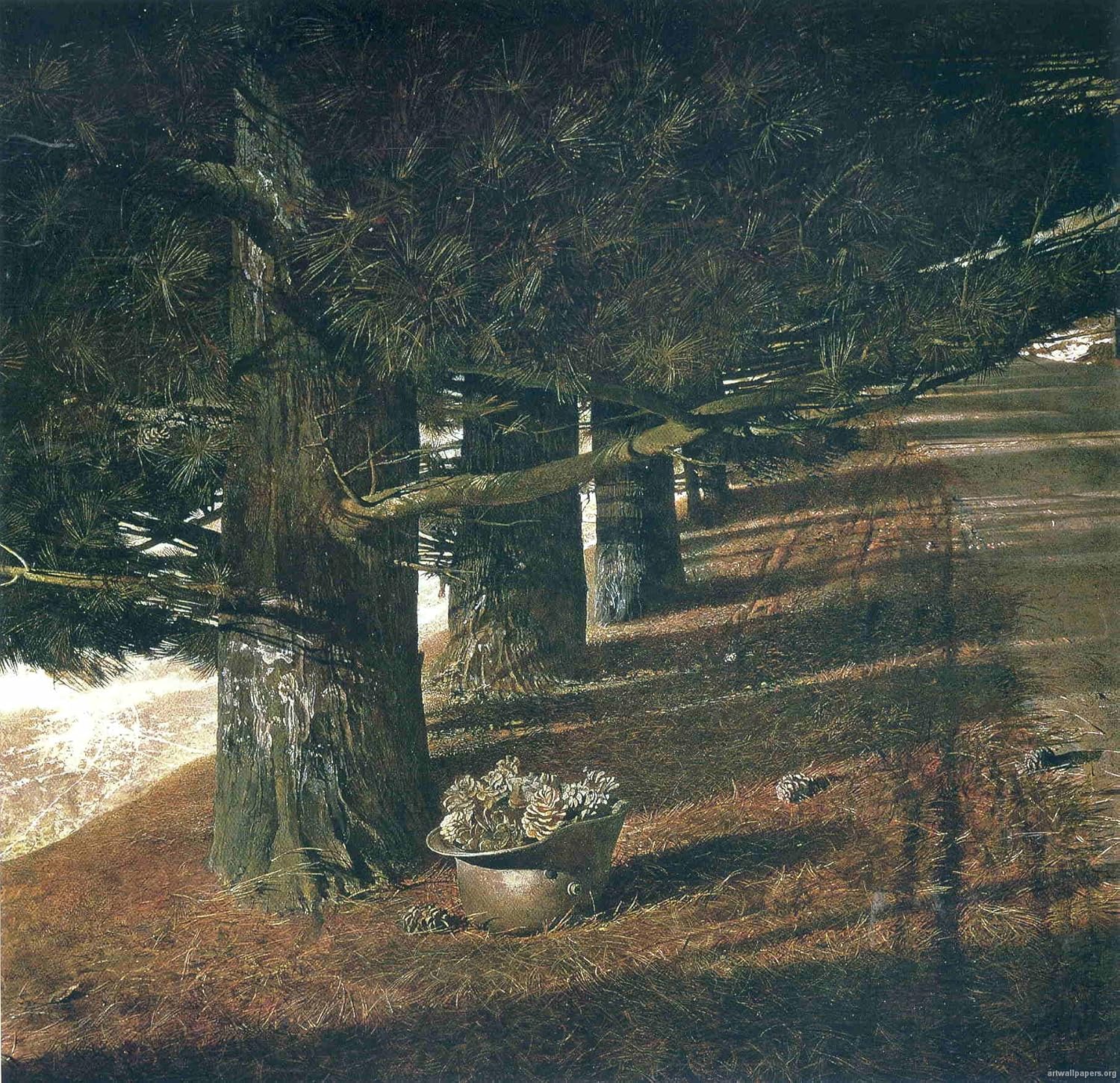
Wyeth, Pine Baron, 1976


A man is alive when he is wholehearted, true to himself, true to his own inner forces, and able to act freely according to the nature of the situations he is in. To be happy, and to be alive in this sense, are almost the same. Of course, a man who is alive is not always happy in the sense of feeling pleasant; experiences of joy are balanced by experiences of sorrow. But the experiences are all deeply felt; and above all, the man is whole and conscious of being real. This state cannot be reached merely by inner work.  There is a myth, sometimes widespread, that a person need do only inner work, in order to be alive like this; that a man is entirely responsible for his own problems; and that to cure himself, he need only change himself. This teaching has some value, since it is so easy for a man to imagine that his problems are caused by "others". But it is a one-sided and mistaken view, which also maintains the arrogance of the belief that the individual is self-sufficient, and not dependent in any essential way on his surroundings.  The fact is, a person is so far formed by his surroundings, that his state of harmony depends entirely on his harmony with his surroundings.

Christopher Alexander

03 September 2015

Resolved.


We live, for months, for years, acting in a certain way, not knowing whether we are free or not, doubting, not even sure when we are successfully resolved, and when we aren’t.

Yet still there are those special secret moments in our lives, when we smile unexpectedly – when all over, forces are resolved.

Christopher Alexander