Showing posts with label May. Show all posts
Showing posts with label May. Show all posts
09 June 2026


18 May 2024
Lawk.
Gainsborough, Landscape in Suffolk, 1750

How beautiful May and its morning comes in!
The song of the maidens you hear them begin,
To sing the old ballads while cowslips they pull,
While the dew of the morning fills many pips full.
The closes are spangled with cowslips like gold,
Girls cram in their aprons what baskets can't hold;
And still gather on to the heat of the day,
Till force often throws the last handful away.
Then beneath an old hawthorn they sit one and all,
And make the May garlands and round cuck a ball
Of cowslips and blossoms so showy and sweet,
And laugh when they think of the swains they shall meet.
Then to finish the garland they trudge away home,
And beg from each garden the flowers then in bloom;
Then beneath the old eldern, beside the old wall,
They sit out to make it, maids, misses, and all.
The ribbons the ploughmen bought maids at the fair,
Are sure to be seen in a garland so fair;
And dolls from the children they dress up and take,
While children laugh loud at the show they will make.
Then they take round the garland to shew at each door,
With kerchief to hide the fine flowers cover'd o'er;
At cottages also, when willing to pay,
The maidens their much admired garland display.
Then at duck under water adown the long road,
They run with their dresses all flying abroad;
And ribbons all colours how sweet they appear!
May seems to begin the new life of the year.
Then the garland on ropes is hung high over all,
One end to a tree and one hooked to a wall;
Where they cuck the ball over till day is nigh gone,
And then tea and cakes and the dancing comes on.
And then, lawk! what dancing and laughing is there,
While the fiddler makes faces within the arm chair;
And then comes the cushion, the girls they all shriek
And fly to the door from the old fiddler's squeak;
But the doors they are fastened, so all must kneel down
And take the rude kiss from the unmannerly clown.
Thus the May games are ended, to their houses they roam,
With the sweetheart she chooses each maiden goes home.
John Clare
11 February 2024
Prerequisite.
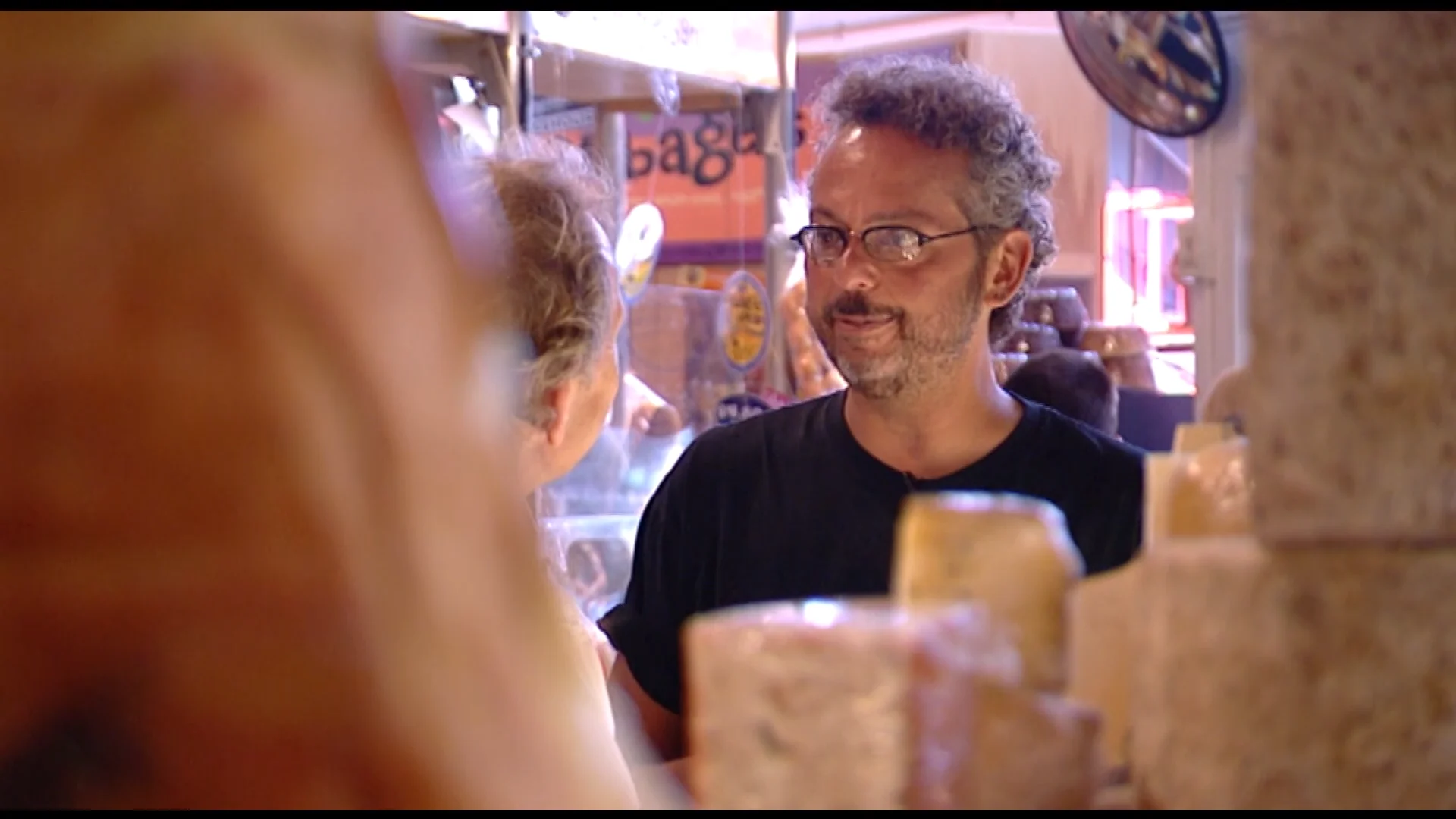
Had I read Shahn’s “Nonconformity” piece—which was taken from a talk he had given at Harvard the previous spring—it would have made clear why Paul and I were onto something in those early years at the Deli. Shahn is adamant in his belief that those who really do something special are almost certainly going to be nonconformists. And, he makes clear, that’s a good thing:NONCONFORMITY is not only a desirable thing, it is an actual thing. One need only remark that all art is based upon nonconformity … and that every great historic change has been based upon nonconformity, has been bought either with the blood or with the reputation of nonconformists. Without nonconformity we would have had no Bill of Rights nor Magna Carta, no public education system … no science at all, no philosophy, and considerably fewer religions. … to create anything at all in any field, and especially anything of outstanding worth, requires nonconformity.A few months ago, I wrote a bunch about courage; this piece reflects what courage often looks like when it’s put into practice. In the context of what Ben Shahn was advocating all the way back in 1957, it’s about nonconformity. With the benefit of hindsight, I can see clearly that creative and caring nonconformity is an essential element of what has made our business what it is. And, as Shahn says so strongly in his essay, it is a critical component of anything really special. Going with the flow, sticking with the mainstream may be easier, and often leads to short-term “success,” but it rarely has the kind of memorable impact that Paul and I (and probably you) were after. I agree with Ben Shahn—whether it’s art, or business, or basketball, or anything else, he makes clear, it’s the nonconformists that we remember many years later.I’ll share more about Ben Shahn here in a bit, but when I think about courage and conformity, I can’t help but return to the words of 20th-century psychologist Rollo May. In the fall of 1975, May published the tenth of what would eventually be 15 books he authored. In it, May writes,Many people feel they are powerless to do anything effective with their lives. It takes courage to break out of the settled mold, but most find conformity more comfortable. This is why the opposite of courage in our society is not cowardice, it's conformity.Next year will mark the 50th anniversary of the release of Dr. May’s book, but the challenge he poses for us is just as important today. As May reminds us, “No nation of liberty is made up of conformists.” And, I would suggest, the same holds true for companies as well: No free thinking, creatively inclusive organization is made mostly of conformists. Still, it is a challenge to embrace nonconformity and live it day by day. Social pressure comes at us from all sides. We’d been in business at Zingerman’s for something like 10 years—doing millions of dollars a year in sales, with over a hundred staff members and a good bit of national press to boot—before I had the courage to tell my mother clearly and unequivocally, that, despite her desires, I was not going to go to law school. Getting to greatness almost always requires us to push back against others’ expectations. Nonconformity, it’s become clear to me, is an essential prerequisite for making great things happen.Secret #17, in Building a Great Business, is entitled “A Recipe for Making Something Special.” In it, I share:I have a natural attraction to the strange and different, the trendsetters, the people and organizations that have the emotional and intellectual wherewithal to do something special. In a world of increasing sameness, what I’m almost always drawn to are the places where there’s that special energy, a sense of aliveness, of something cool, creative, and compelling. … Wherever you find ’em, they’re the businesses that are the total opposite of those standardized settings in strip malls and chain stores.Considering special things, breaking molds, and not simply conforming to social norms, this week marks the one-year anniversary of the formal rollout of the Zingerman’s Perpetual Purpose Trust (ZPPT). If you were to ask me, “How does it feel, a year down the road, to have chosen a path to the future that is far less traveled—to have given something you have been a part of for so long to the organization?” I’d answer enthusiastically, “It feels good!” It is intellectually, ethically, and spiritually almost exactly what I had long imagined, hoped for, and worked for. Honestly, it’s pretty awesome. And yet, truth be told, I still have those critical voices going in my head. While great things begin with nonconformity, there is a cost. For me at least, it causes me concern and self-doubt. I love to do things differently, but even when I do, I still doubt myself. Mostly, I’ve learned to just brush the voices aside, but when something significant happens, they start back in: Would we regret the decision to essentially gift the “Zingerman’s brand” to the organization? Why would we do this when we could have gotten so much more money for the brand by selling it to some big mainstream business like everyone else does?Fortunately, I’ve mostly learned to let the voices have their say, and then keep going ahead anyway. Nonconformity or not, I know in my gut that the criticisms I hear in my head are not even remotely close to reality. I share them here because I believe it’s important to know that everyone has some version of these voices. And that when we opt not to conform to the norm, the voices will nearly always kick in. While, on Instagram, it may look like everyone else is happily cruising along, my experience is that nearly every person I’ve met is, in their own way, struggling. Seth Godin, who has made a wonderful life out of cultivating nonconformity and effectively encouraging the rest of us to do the same, writes,While we’re doing it, it’s easy to imagine that those around us are completely sure of themselves, moving forward in a well-lit space.In fact, if you visit a growing company, a useful school or anywhere that growth is happening, you’ll quickly see that everyone is stumbling forward in the shadows.That’s part of the deal.
02 June 2023
Oblivious.
Mantegna, Camera degli Sposi, Ducal Palace, Mantua, 1470


When you are completely caught up in something, you become oblivious to things around you, or to the passage of time. It is this absorption in what you are doing that frees your unconscious and releases your creative imagination.
Rollo May, from The Courage to Create
11 April 2023
Profoundly.

There can be no stronger proof of the impoverishment of our contemporary culture than the popular -- though profoundly mistaken -- definition of myth as falsehood.
Rollo May, from The Cry for Myth
24 September 2022
07 May 2022
Mistrelsy.
Constable, The Cornfield, 1825
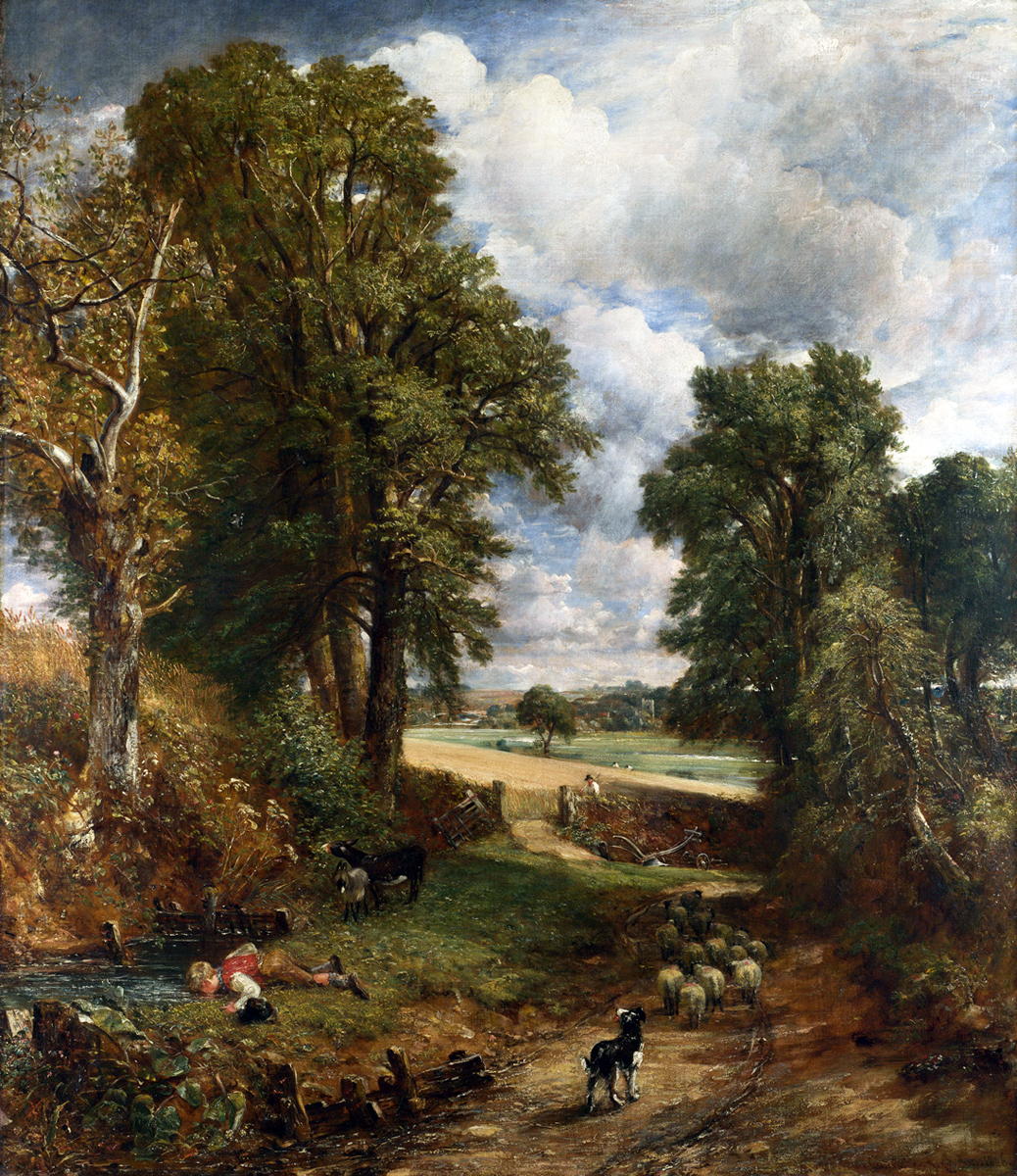
SHEPHERD'S CALENDAR: MAY
Come, Queen of Months! in company
With all thy merry mistrelsy: —
The restless cuckoo, absent long,
And twittering swallows' chimney-song;
With hedgerow crickets' notes, that run
From every bank that fronts the sun;
And swarthy bees, about the grass,
That stop with every bloom they pass,
And every minute, every hour,
Keep teazing weeds that wear a flower;
And Toil, and Childhood's humming joys!
For there is music in the noise
When village children, wild for sport,
In school-time's leisure, ever short,
Alternate catch the bounding ball;
Or run along the church-yard wall,
Capp'd with rude figured slabs, whose claims
In time's bad memory have no names;
Or race around the nooky church;
Or raise loud echoes in the porch;
Throw pebbles o'er the weather-cock,
Viewing with jealous eyes the clock;
Or leap o'er grave-stones' leaning heights,
Uncheck'd by melancholy sights,
Though green grass swells in many a heap
Where kin, and friends, and parents sleep.
They think not, in their jovial cry,
The time will come, when they shall lie
As lowly and as still as they;
While other boys above them play,
Heedless, as they are now, to know
The unconscious dust that lies below.
The driving boy, beside his team,
Of May-month's beauty now will dream,
And cock his hat, and turn his eye
On flower, and tree, and deepening sky;
And oft burst loud in fits of song,
And whistle as he reels along;
Cracking his whip in starts of joy —
A happy, dirty, driving boy.
The youth, who leaves his corner stool
Betimes for neighbouring village-school,
Where, as a mark to guide him right,
The church spire's all the way in sight,
With cheerings from his parents given,
Beneath the joyous smiles of Heaven
Saunters, with many an idle stand,
With satchel swinging in his hand,
And gazes, as he passes by,
On every thing that meets his eye.
Young lambs seem tempting him to play,
Dancing and bleating in his way;
With trembling tails and pointed ears
They follow him, and lose their fears;
He smiles upon their sunny faces,
And fain would join their happy races.
The birds, that sing on bush and tree,
Seem chirping for his company; —
And all — in fancy's idle whim —
Seem keeping holiday, but him.
He lolls upon each resting stile,
To see the fields so sweetly smile —
To see the wheat grow green and long;
And lists the weeder's toiling song,
Or short note of the changing thrush
Above him in the white-thorn bush,
That o'er the leaning stile bends low
Its blooming mockery of snow.
Each hedge is cover'd thick with green;
And where the hedger late hath been,
Young tender shoots begin to grow
From out the mossy stumps below.
But woodmen still on Spring intrude,
And thin the shadow's solitude;
With sharpen'd axes felling down
The oak-trees budding into brown,
Which, as they crash upon the ground,
A crowd of labourers gather round.
These, mixing 'mong the shadows dark,
Rip off the crackling, staining bark;
Depriving yearly, when they come,
The green woodpecker of his home,
Who early in the Spring began,
Far from the sight of troubling man,
To bore his round holes in each tree
In fancy's sweet security;
Now, startled by the woodman's noise,
He wakes from all his dreary joys.
The blue-bells too, that thickly bloom
Where man was never known to come;
And stooping lilies of the valley,
That love with shades and dews to dally,
And bending droop on slender threads,
With broad hood-leaves above their heads,
Like white-robed maids, in summer hours,
Beneath umbrellas shunning showers; —
These, from the bark-men's crushing treads,
Oft perish in their blooming beds.
Stripp'd of its boughs and bark, in white
The trunk shines in the mellow light
Beneath the green surviving trees,
That wave above it in the breeze,
And, waking whispers, slowly bend,
As if they mourn'd their fallen friend.
Each morning, now, the weeders meet
To cut the thistle from the wheat,
And ruin, in the sunny hours,
Full many a wild weed with its flowers; —
Corn-poppies, that in crimson dwell,
Call'd " Head-achs, " from their sickly smell;
And charlocks, yellow as the sun,
That o'er the May-fields quickly run;
And " Iron-weed, " content to share
The meanest spot that Spring can spare —
E'en roads, where danger hourly comes,
Are not without its purple blooms,
Whose leaves, with threat'ning thistles round
Thick set, that have no strength to wound,
Shrink into childhood's eager hold
Like hair; and, with its eye of gold
And scarlet-starry points of flowers,
Pimpernel, dreading nights and showers,
Oft call'd " the Shepherd's Weather-glass, "
That sleeps till suns have dried the grass,
Then wakes, and spreads its creeping bloom
Till clouds with threatening shadows come —
Then close it shuts to sleep again:
Which weeders see, and talk of rain;
And boys, that mark them shut so soon,
Call " John that goes to bed at noon: "
And fumitory too — a name
That Superstition holds to fame —
Whose red and purple mottled flowers
Are cropp'd by maids in weeding hours,
To boil in water, milk, and whey,
For washes on a holiday,
To make their beauty fair and sleek,
And scare the tan from Summer's cheek;
And simple small " Forget-me-not, "
Eyed with a pin's-head yellow spot
I' the middle of its tender blue,
That gains from poets notice due: —
These flowers, that toil by crowds destroys,
Robbing them of their lowly joys,
Had met the May with hopes as sweet
As those her suns in gardens meet;
And oft the dame will feel inclined,
As Childhood's memory comes to mind,
To turn her hook away, and spare
The blooms it loved to gather there!
— Now young girls whisper things of love,
And from the old dames' hearing move;
Oft making " love-knots " in the shade,
Of blue-green oat or wheaten blade;
Or, trying simple charms and spells
Which rural Superstition tells,
They pull the little blossom threads
From out the knotweed's button heads,
And put the husk, with many a smile,
In their white bosoms for a while, —
Then, if they guess aright the swain
Their loves' sweet fancies try to gain,
'Tis said, that ere it lies an hour,
'Twill blossom with a second flower,
And from their bosom's handkerchief
Bloom as it ne'er had lost a leaf.
— But signs appear that token wet,
While they are 'neath the bushes met;
The girls are glad with hopes of play,
And harp upon the holiday: —
A high blue bird is seen to swim
Along the wheat, when skies grow dim
With clouds; slow as the gales of Spring
In motion, with dark-shadow'd wing
Beneath the coming storm he sails:
And lonely chirp the wheat-hid quails,
That come to live with Spring again,
But leave when Summer browns the grain;
They start the young girl's joys afloat,
With " wet my foot " — their yearly note: —
So fancy doth the sound explain,
And oft it proves a sign of rain!
The thresher, dull as winter days,
And lost to all that Spring displays,
Still 'mid his barn-dust forced to stand,
Swings round his flail with weary hand;
While o'er his head shades thickly creep,
That hide the blinking owl asleep,
And bats, in cobweb-corners bred,
Sharing till night their murky bed.
The sunshine trickles on the floor
Through ev'ry crevice of the door:
This makes his barn, where shadows dwell,
As irksome as a prisoner's cell;
And, whilst he seeks his daily meal,
As school-boys from their task will steal,
So will he stand with fond delay
To see the daisy in his way,
Or wild weeds flowering on the wall; —
For these to memory still recall
The joys, the sports that come with Spring, —
The twirling top, the marble ring,
The jingling halfpence hustled up
At pitch and toss, the eager stoop
To pick up heads , the smuggled plays
'Neath hovels upon sabbath-days, —
The sitting down, when school was o'er,
Upon the threshold of the door,
Picking from mallows, sport to please,
Each crumpled seed he call'd a cheese,
And hunting from the stack-yard sod
The stinking henbane's belted pod,
By youth's warm fancies sweetly led
To christen them his loaves of bread.
He sees, while rocking down the street
With weary hands and crimpling feet,
Young children at the self-same games,
And hears the self-same boyish names
Still floating on each happy tongue:
Touch'd with the simple scene so strong,
Tears almost start, and many a sigh
Regrets the happiness gone by;
Thus, in sweet Nature's holiday,
His heart is sad while all is gay.
How lovely now are lanes and balks,
For lovers in their Sunday-walks!
The daisy and the butter-cup —
For which the laughing children stoop
A hundred times throughout the day,
In their rude romping Summer play —
So thickly now the pasture crowd,
In a gold and silver sheeted cloud,
As if the drops of April showers
Had woo'd the sun, and changed to flowers.
The brook resumes her Summer dresses,
Purling 'neath grass and water-cresses,
And mint and flagleaf, swording high
Their blooms to the unheeding eye;
The Summer tracks about its brink
Are fresh again where cattle drink;
And on its sunny bank the swain
Stretches his idle length again;
While all that lives enjoys the birth
Of frolic Summer's laughing mirth.
John Clare
30 April 2022
Prosper.
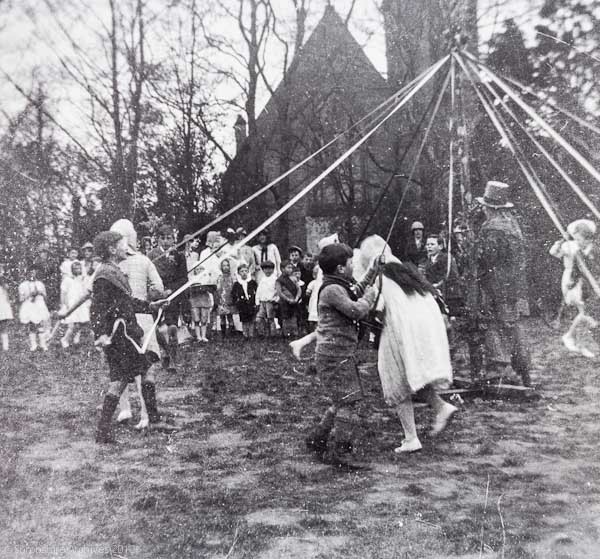
OLD MAY SONG
All in this pleasant evening, together come are we,
For the Summer springs so fresh, green, and gay;
We shall not sing you May again until another year,
For to draw these cold winters away,
We’ll tell you of a blossom and buds on every tree,
Drawing near to the merry month of May.
Rise up, the master of this house, put on your chain of gold,
For the Summer springs so fresh, green, and gay;
We hope you’re not offended, with your house we make so bold,
Drawing near to the merry month of May.
Rise up, the mistress of this house, with gold along your breast,
For the Summer springs so fresh, green, and gay;
And if your body be asleep, we hope your soul’s at rest,
Drawing near to the merry month of May.
Rise up, the children of this house, all in your rich attire,
For the Summer springs so fresh, green, and gay;
For every hair upon your head shines like a silver wire,
Drawing near to the merry month of May.
God bless this house and harbour, your riches and your store,
For the Summer springs so fresh, green, and gay;
We hope the Lord will prosper you, both now and evermore,
Drawing near to the merry month of May.
So now we’re going to leave you, in peace and plenty here,
For the Summer springs so fresh, green, and gay.
We shall not sing you May again until another year,
To draw you these cold winters away.
Anonymous
23 May 2021
Techniques.
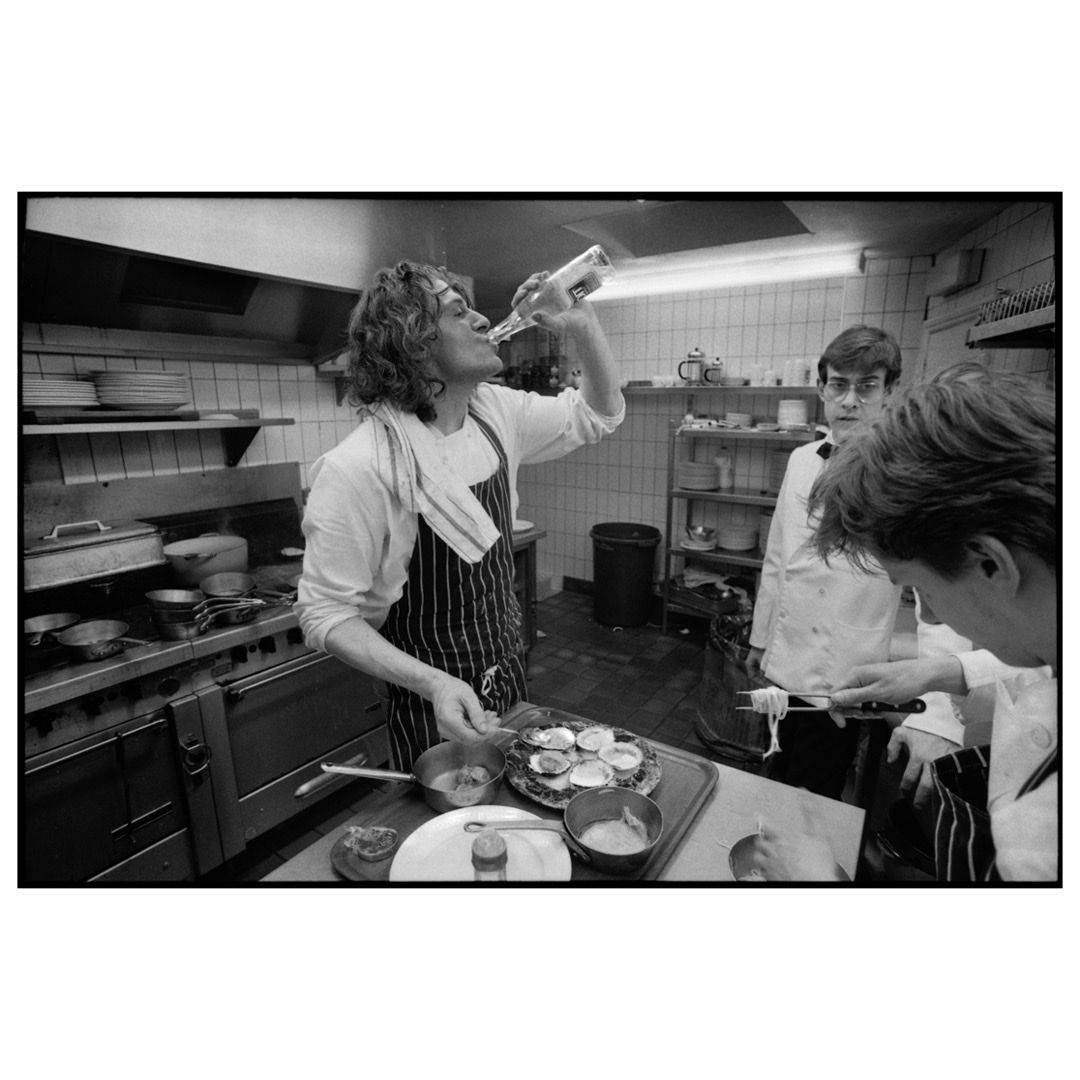
Tools and techniques ought to be an extension of consciousness, but they can just as easily be a protection from consciousness. Then the tools become defense mechanisms against the unconscious.
Rollo May
06 November 2018

27 November 2017
Fine-honed.

Receptivity requires a nimbleness, a fine-honed sensitivity in order to let one's self be the vehicle of whatever vision may emerge.
Rollo May
10 October 2017
Timing.

The receptivity of the artist must never be confused with passivity or laziness. Receptivity is the artist's holding him or herself alive and open to hear what being may speak. Such receptivity requires a nimbleness, a fine honed sensitivity in order to let one's self be the vehicle of whatever vision may emerge. It is the opposite of the authoritarian demands impelled by "will power." It requires a high degree of attention, as when a diver is poised on the end of a springboard, not jumping but holding his or her muscles in sensitive balance for the right second. It is an active listening, keyed to hear the answer, alert to to see whatever can bee glimpsed when the vision or the words to come. It is a waiting for the birthing process to begin to move in its own organic time. It is necessary that the artist have this sense of timing, that he or she respect these periods of receptivity as part of the mystery of creativity and creation.
Rollo May, from The Courage to Create
04 November 2016
Fine-honed.
Coburn, Notre Dame, 1908
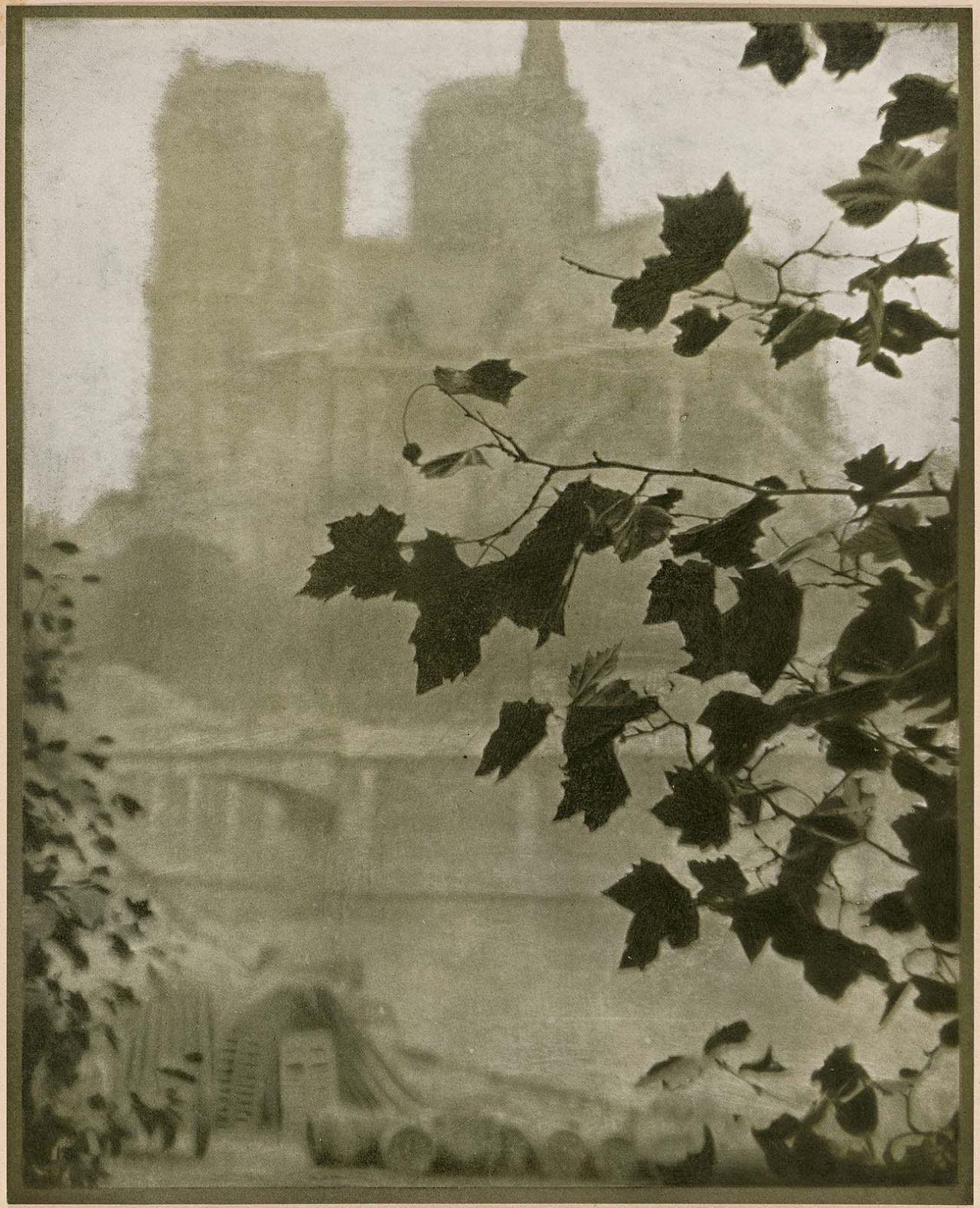
Receptivity requires a nimbleness, a fine-honed sensitivity
in order to let one's self be the vehicle of whatever vision may emerge.
Rollo May
Rollo May
Subscribe to:
Posts (Atom)