Showing posts with label Burke. Show all posts
Showing posts with label Burke. Show all posts
16 July 2023


08 November 2022
Whilst.
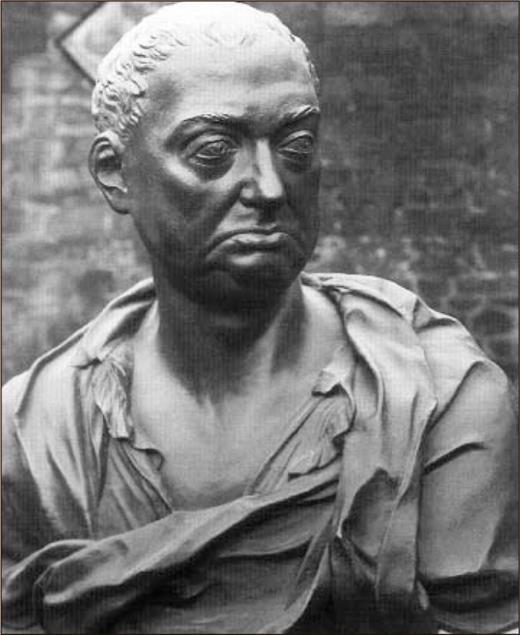
Barry, Edmund Burke, 1774

You will smile here at the consistency of those democratists who, when they are not on their guard, treat the humbler part of the community with the greatest contempt, whilst, at the same time they pretend to make them the depositories of all power.
Edmund Burke, from Reflections on the Revolution in France
09 October 2022
Limit.

There is a limit at which forbearance ceases to be a virtue.
Edmund Burke, from "Observations on a Late Publication on the Present State of the Nation," 1769
20 February 2022
Air.

Manners are of more importance than laws. Manners are what vex or soothe, corrupt or purify, exalt or debase, barbarize or refine us, by a constant, steady, uniform, insensible operation, like that of the air we breathe.
Edmund Burke
27 July 2021
Degrees.
Barry, Edmund Burke, 1774

We must all obey the great law of change. It is the most powerful law of nature, and the means perhaps of its conservation. All we can do, and that human wisdom can do, is to provide that the change shall proceed by insensible degrees. This has all the benefits which may be in change, without any of the inconveniences of mutation.
Edmund Burke
23 July 2021
Odious.

We do not draw the moral lessons we might from history. On the contrary, without care it may be used to vitiate our minds and to destroy our happiness. In history a great volume is unrolled for our instruction, drawing the materials of future wisdom from the past errors and infirmities of mankind. It may, in the perversion, serve for a magazine, furnishing offensive and defensive weapons for parties in church and state, and supplying the means of keeping alive, or reviving dissentions and animosities, and adding fuel to civil fury. History consists, for the greater part, of the miseries brought upon the world by price, ambition, avarice, revenge, lust, sedition, hypocrisy, ungoverned zeal, and all the train of disorderly appetites, which shake the public with the same troublous storms that toss the private state, and render life unsweet.
These vices are the causes of those storms. Religion, morals, laws, prerogatives, privileges, liberties, rights of men, are the pretexts. The pretexts are always found in some specious appearance of a real good. You would not secure men from tyranny and sedition, by rooting out of the mind the principles to which these fraudulent pretexts apply? If you did, you would root out every thing that is valuable in the human breast. As these are the pretexts, so the ordinary actors and instruments in great public evils are kings, priests, magistrates, senates, parliaments, national assemblies, judges, and captains. You would not cure the evil by resolving, that there should be no more monarchs, nor ministers of state, nor of the gospel; no interpreters of law; no general officers; no public councils. You might change the names. The things in some shape must remain. A certain quantum of power must always exist in the community, in some hands, and under some appellation. Wise men will apply their remedies to vices, not to names; to the causes of evil which are permanent, not to the occasional organs by which they act, and the transitory modes in which they appear. Otherwise you will be wise historically, a fool in practice. Seldom have two ages the same fashion in their pretexts and the same modes of mischief. Wickedness is a little more inventive. Whilst you are discussing fashion, the fashion is gone by. The very same vice assumes a new body. The spirit transmigrates; and, far from losing its principle of life by the change of its appearance, it is renovated in its new organs with the fresh vigour of a juvenile activity. It walks abroad; it continues its ravages; whilst you are gibbeting the carcass, or demolishing the tomb. You are terrifying yourself with ghosts and apparitions, whilst your house is the haunt of robbers. It is thus with all those, who, attending only to the shell and husk of history, think they are waging war with intolerance, pride, and cruelty, whilst, under colour of abhorring the ill principles of antiquated parties, they are authorizing and feeding the same odious vices in different factions, and perhaps in worse.
Edmund Burke, from Reflections on the Revolution in France
31 October 2020
Excellent.
An excellent book ...

Costica Bradatan's reviews ...
To be a respectable scholar today is to specialize in a well-defined, rather narrow subfield, and to stay away from generalist pronouncements. Someone once observed about Leo Strauss that his knowledge was so extraordinary, and covered so many fields, that his colleagues considered him incompetent. Indeed, a reputation for encyclopedism can ruin one’s career. The credo of today’s academic orthodoxy was formulated more than a century ago by Max Weber: “Limitation to specialized work, with a renunciation of the Faustian universality of man which it involves, is a condition of any valuable work in the modern world”. Ironically, Weber was a compulsively Faustian man himself, shuttling between history, law, sociology, philosophy and political theory, among other fields.
That we recognize ourselves in an ancient dispute pitting specialized knowledge against polymathy is no accident. As Peter Burke shows persuasively in The Polymath, the debate has always been part of the West’s self-representation, recurring and amplifying over the centuries, “always the same in essence yet always different in emphases and circumstances”. Whenever we oppose experts to amateurs, theory to practice, pure to applied knowledge, detail to the big picture, we partake in an argument that started in archaic Greece. Burke uses Isaiah Berlin’s distinction between “the fox”, who “knows many things”, and the “hedgehog”, who “knows one great thing”, to emphasize what it is fundamentally at stake.
What has kept the debate alive is that, just as the West has typically valued rigour and expertise, it has at the same time been awed by an ideal of universal knowledge. Heraclitus may have poked fun at the polymath Pythagoras, but his fellow Greeks revered a muse called Polymatheia. A good education in antiquity was enkyklios paideia (which gave us our “encyclopedia”), an ambitious project that demanded the student go through the whole circle of knowledge. Much of our own “liberal arts” education runs along similar lines. People during the Renaissance may have occasionally smiled at Leonardo da Vinci’s unrealistic projects, but they admired him all the same. They could not help recognizing in him the embodiment of an ideal that was only too dear to them, just as it is to us. Dr Faustus was meant to be a dark, repellant figure (“Doctor Fausto, that great sodomite and nigromancer”, noted the deputy Bürgermeister of Nuremberg, in 1532, as he denied the scholar entry to the city), yet he has become one of our paradigmatic heroes. When, about a hundred years ago, Oswald Spengler needed a name to describe what modern Western civilization was essentially about, he came up with the term “Faustian”. We have been calling polymaths names (“amateurs” and “frauds” and worse), and yet we’ve never wanted to be without them.
Polymathy has played such an important part in the West’s intellectual and cultural history that Burke can only afford to cover the past six centuries. He works with a list of 500 polymaths, ranging from Filippo Brunelleschi and Nicholas of Cusa to Umberto Eco, Oliver Sacks, Susan Sontag and Tzvetan Todorov. In the first part of the book, Burke discusses his polymaths chronologically, grouping them under a specific zeitgeist (“The Age of the ‘Renaissance Man’, 1400–1600”; “The Age of ‘Monsters of Erudition’, 1600–1700”; “The Age of the ‘Man of Letters’, 1700–1850”; “The Age of Territoriality, 1850–2000”). What Burke seeks to provide here, however, is more than a collection of individual portraits of polymaths, picturesque, inspiring or influential as they may have been. One of the book’s major ambitions is to describe “some intellectual and social trends and so to answer general questions about forms of social organization and climates of opinion that are favorable or unfavorable to polymathic endeavors”.
In an important sense, polymathy is boundlessness in action; it is part of the polymath’s job description to disregard disciplinary boundaries and conventions, labels and classifications. There is something rebellious and anti-establishment at the core of any polymathic project. That is why polymathy, as a cultural and historical phenomenon, is difficult to systematize and to study with any degree of thoroughness. How is one to map out an insurrection against, say, the dominion of maps? That makes Burke’s efforts all the more remarkable.
16 January 2019
Delusive.
Men little think how immorally they act in rashly meddling with what they do not understand. Their delusive good intention is no sort of excuse for their presumption. They who truly mean well must be fearful of acting ill.
Edmund Burke
Subscribe to:
Posts (Atom)