"I am not one who was born in the custody of wisdom. I am one who is fond of olden times and intense in quest of the sacred knowing of the ancients." Gustave Courbet
Showing posts with label Cole. Show all posts

22 February 2025

Fencing.


The Bodleian has fencing maps ...
In Robert Frost’s poem "Mending Wall" two neighbours walk the shared boundaries of their properties, checking on the condition of the wall separating their land and making repairs where necessary. At one point the narrator teases his neighbour on the need for the wall, “My apple trees will never come across and eat the cones under his pines, I tell him”. The neighbour replies, simply and memorably, “Good fences make good neighbours”.

Frost loves the phrase so much that it’s repeated again, to close the poem, and I’m reminded of this when looking at these two estate maps, of Down Manor from 1718 and Mowden Hall, 1762, both in Essex. Both are typical examples of an estate plan, are in manuscript form and show the holdings and field names of each estate (with sizes in acres, roods and perches). The connection with Frost comes with both showing boundaries in two different colours, according to ownership and according to responsibility of maintenance, to mark the outer boundaries of each estate. Any boundary dispute in the future would be easily settled with reference to the map. The importance of boundary fences are obvious, the need to keep animals out of certain fields and in others, as a way of separating good land from not so good and as a way of marking the limit of your land from your neighbour. The Down Manor map nicely calls the fencing surrounding the property "Out fencing."

01 February 2025

24 April 2024

Sweeps.

Cole, Clouds, 1838


SKY

I should have begun with this: the sky.
A window minus sill, frame, and panes.
An aperture, nothing more,
but wide open.

I don't have to wait for a starry night,
I don't have to crane my neck
to get a look at it.
I've got the sky behind my back, at hand, and on my eyelids.
The sky binds me tight
and sweeps me off my feet.

Even the highest mountains
are no closer to the sky
than the deepest valleys.
There's no more of it in one place
than another.
A mole is no less in seventh heaven
than the owl spreading her wings.
The object that falls in an abyss
falls from sky to sky.

Grainy, gritty, liquid,
inflamed, or volatile
patches of sky, specks of sky,
gusts and heaps of sky.
The sky is everywhere,
even in the dark beneath your skin.
I eat the sky, I excrete the sky.
I'm a trap within a trap,
an inhabited inhabitant,
an embrace embraced,
a question answering a question.

Division into sky and earth —
it's not the proper way
to contemplate this wholeness.
It simply lets me go on living
at a more exact address
where I can be reached promptly
if I'm sought.
My identifying features
are rapture and despair.

Wislawa Szymborska

01 February 2024

Happy Birthday, Cole

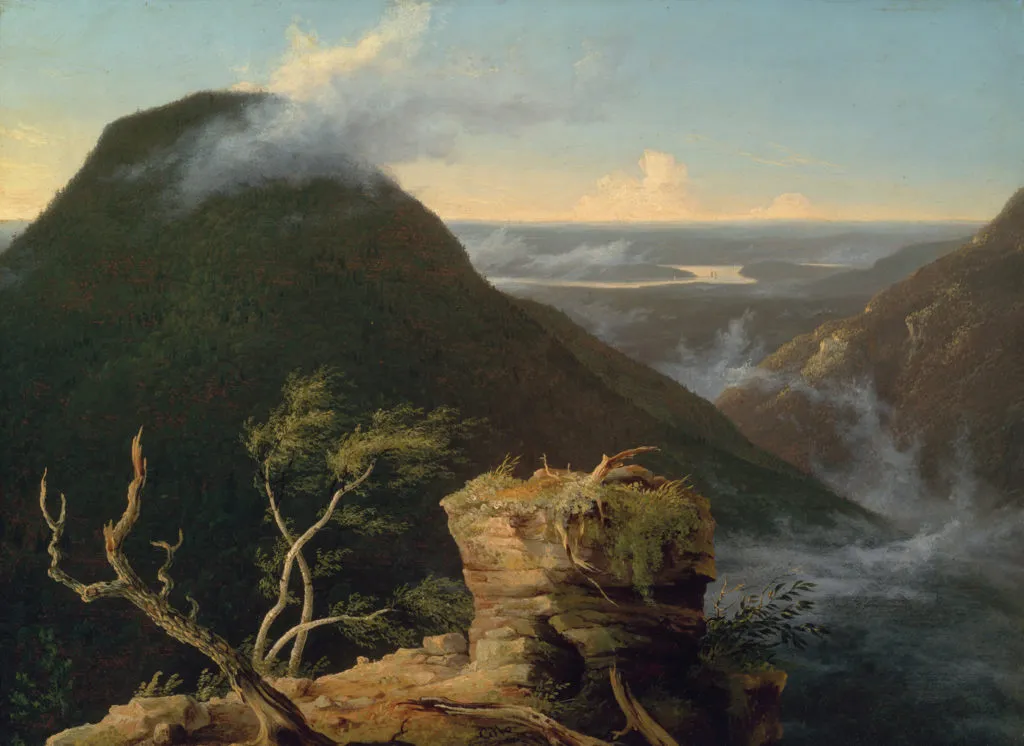
Cole, View of the Round-Top in the Catskill Mountains (Sunny Morning on the Hudson), 1827


Thomas Cole was born on this day in 1801.

01 February 2023

Happy Birthday, Cole

Cole, View of the Round-Top in the Catskill Mountains (Sunny Morning on the Hudson), 1827


Amid those scenes of solitude the mind is cast into the contemplation of eternal things. 

Thomas Cole, born on this day in 1801

24 December 2021

Joy.

Cole, The Angel Appearing to the Shepherds, 1834


LUKE 2:8-10
8 And there were in the same country shepherds abiding in the field, keeping watch over their flock by night.

9 And, lo, the angel of the Lord came upon them, and the glory of the Lord shone round about them: and they were sore afraid.

10 And the angel said unto them, Fear not: for, behold, I bring you good tidings of great joy, which shall be to all people.

01 February 2021

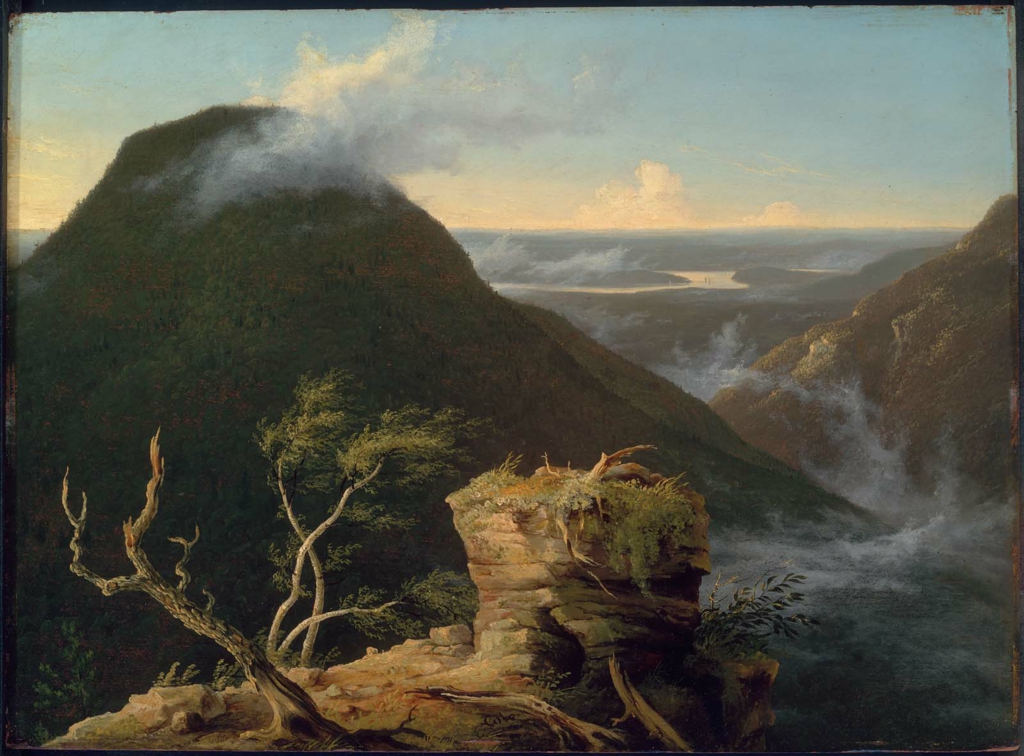
Happy Birthday, Cole

Cole, View of the Round-Top in the Catskill Mountains, 1827


Thomas Cole was born on this day in 1801.

How I have walked, day after day, and all alone, to see if there was not something among the old things that was new! Nature is still predominant, and there are those who regret that with the improvements of cultivation the sublimity of the wilderness should pass away: for those scenes of solitude from which the hand of nature has never been lifted, affect the mind with a more deep toned emotion than aught which the hand of man has touched. Amid them the consequent associations are of God the creator-they are his undefiled works, and the mind is cast into the contemplation of eternal things.  None know how often the hand of God is seen in a wilderness but them that rove it for a man's life.  

Rural nature is full of spirit-quickening.  It is, in fact, the exhaustless mine from which the poet and the painter have brought such wondrous treasures-an unfailing fountain of intellectual enjoyment, where all may drink, and be awakened to a deeper feeling of the works of genius, and a keener perception of the beauty of our existence. For those whose days are all consumed in the low pursuits of avarice, or the gaudy frivolities of fashion, unobservant of nature's loveliness, are unconscious of the harmony of creation.  Overall, rocks, wood and water, brooded the spirit of repose, and the silent energy of nature stirred the soul to its innermost depths.

Amid those scenes of solitude, the mind is cast into the contemplation of eternal things.  To walk with nature as a poet is the necessary condition of a perfect artist.  If I live to be old enough, I may sit down under some bush, the last left in the utilitarian world, and feel thankful that intellect in its march has spared one vestige of the ancient forest for me to die by.

We are still in Eden; the wall that shuts us out is our own ignorance and folly.

Thomas Cole

20 April 2019

Progress.

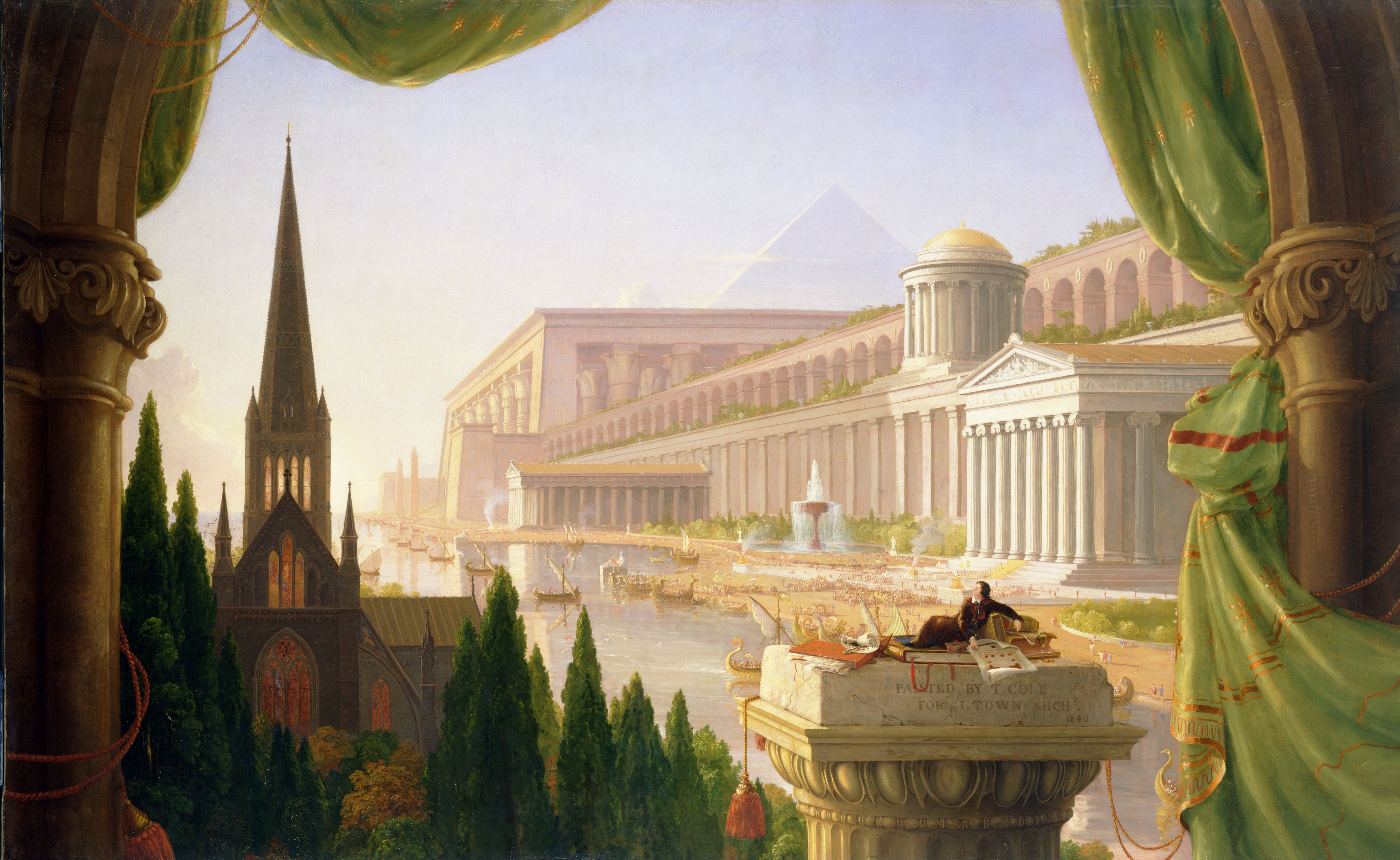
Cole, The Architect's Dream, 1840


Forget calling it Western civilization for a moment. Instead think of a kind of party platform with a bunch of planks:
  • Support for human rights
  • Belief in the rule of law
  • Dedication to democracy
  • Free speech
  • Freedom of conscience
  • Admiration for science and the scientific method
  • Curiosity about other cultures
  • Property rights
  • Tolerance or celebration of technological and/or cultural innovation
I’ll be generous and stipulate that 90 percent of the people who are offended by pride in Western civilization actually believe — or think they believe — in most or all of these things. They just have a problem connecting the dots, so I’ll try.

Where do they think most of these ideas come from? Where were they most successfully put into action? What civilization today or in some bygone era manifests these values more? Chinese civilization? Islamic civilization? Aztec? African? Indian? Persian? Turkish?


I’m not trying to belittle any of those cultures, nor deny their contributions to human history. I’m not even trying to argue – here, at least — that Western civilization is objectively superior in some scientific or God’s-eye-view sense. As with the debates over nationalism, there’s no arguing — and no reason to argue — with a French patriot about whether or not America is “better” than France. I would think less of a Spaniard who didn’t love Spain more than he or she loves France. It’s like arguing whose family is better, we love what is ours. As Bill Buckley liked to say, De gustibus non est disputandum.


Western civilization is a work in progress because that’s what civilization means. If you want a Cliff’s Notes version of what my book was about it’s simply this: Every generation, humans start from scratch. As Hannah Arendt said, every generation Western civilization is invaded by barbarians — we call them “children.” As babies we come into the world with the same programming as Viking, Hun or caveman babies. These barbarians need to be civilized and that’s a job primarily done by families, which is why the days are long and the years are short. We teach barbarians how to be citizens in the broadest sense of the word, through formal education, religious teaching, social norms and the modeling of proper behavior. In other words, we assimilate people into a culture.

As Alan Wolfe writes in his discussion of Immanuel Kant:

As cultivating a field yields a better product, the arts and sciences cultivate us by improving the quality of who we are. No wonder, then, that when we look for a term that expresses the way we improve upon nature, we use “culture,” which has the same root as “cultivate.” And civilization—expressed in German not only as Zivilisation but also as Kultur — far from corrupting our soul, makes it possible for us to bring good out of evil.
The way you sustain and improve upon a culture is by fostering a sense of gratitude for what is best about it. You celebrate the good in your story while putting the bad in the correct context. Conservatism is gratitude, and as I noted on Fox the other night, one of the most compelling things in reaction the fire of Notre Dame was seeing how many people recognized their own ingratitude for this jewel of their own civilization. The Church was in peril because the French took it for granted. But, like that feeling one gets deep in the soul when a loved one in peril, millions were overcome with a sense of what they might lose. And now France is devoting itself to restoring what was almost lost.
Has Western civilization made mistakes? Sure (cue the Monty Python skit about Rome). Terrible things have been done in its name, a statement one can make about every civilization that has ever existed. But to say that the mistakes define us more than the accomplishments is suicidally stupid. And if you subscribe to those planks I mentioned above, I’d like to suggest that telling people they’re bigots for taking pride in the civilization that brought them forth better than any other is like taking a sledgehammer to the soapbox you’re standing on.


And to do it in the name of virtue tweeting is one of the purer forms of asininity.


CONNECT

01 February 2019

Happy birthday, Cole.

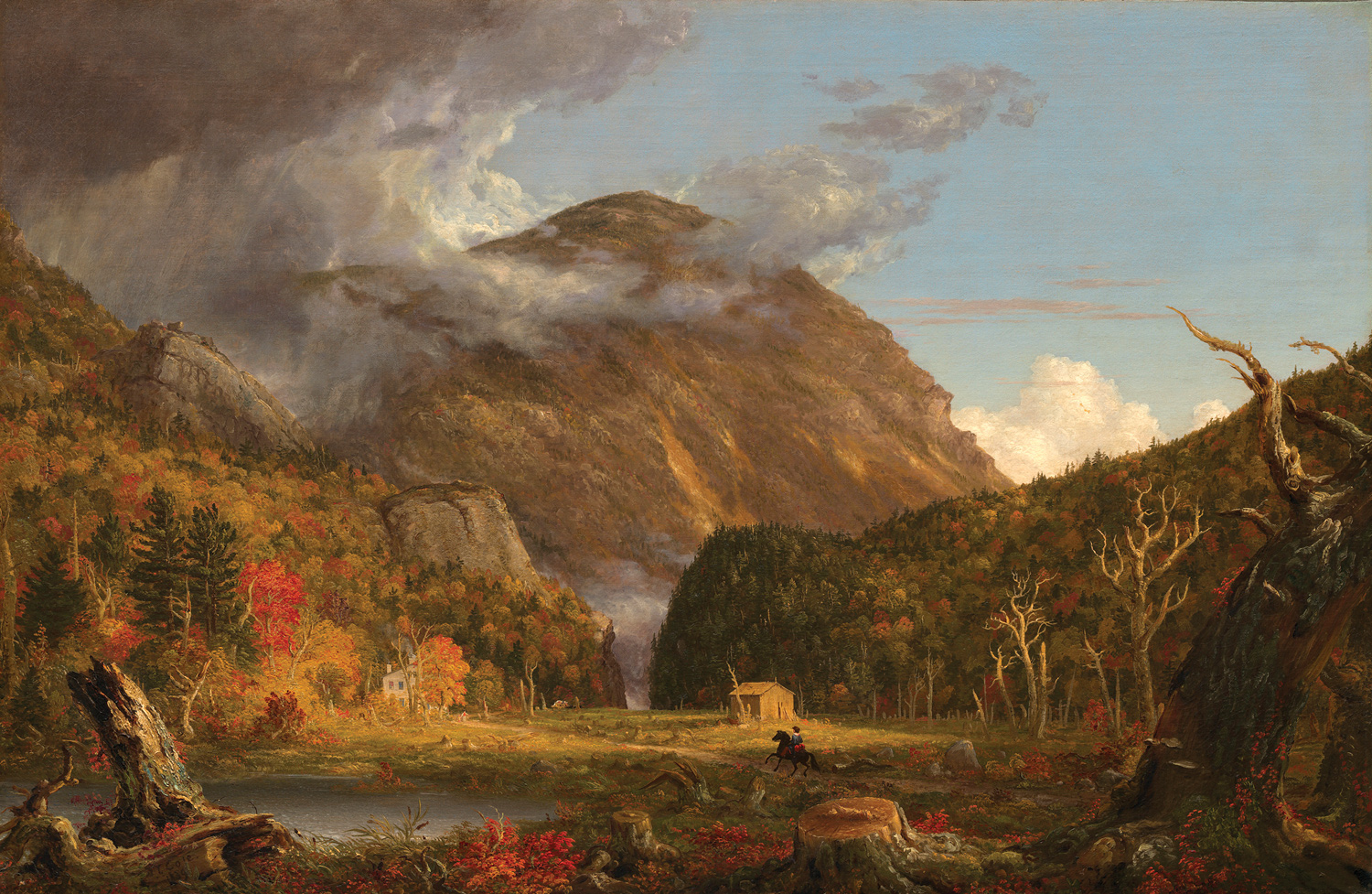
Cole, White Mountain Notch, 1839


Thomas Cole was born on this day in 1801.

Amid those scenes of solitude the mind is cast into the contemplation of eternal things.

Thomas Cole

23 January 2019

Unknown.

Cole, View from Mount Holyoke, Northampton, Massachusetts, after a Thunderstorm—The Oxbow (detail), 1836


The familiar, precisely because it is familiar, remains unknown.

Georg Wilhelm Friedrich Hegel

24 April 2018

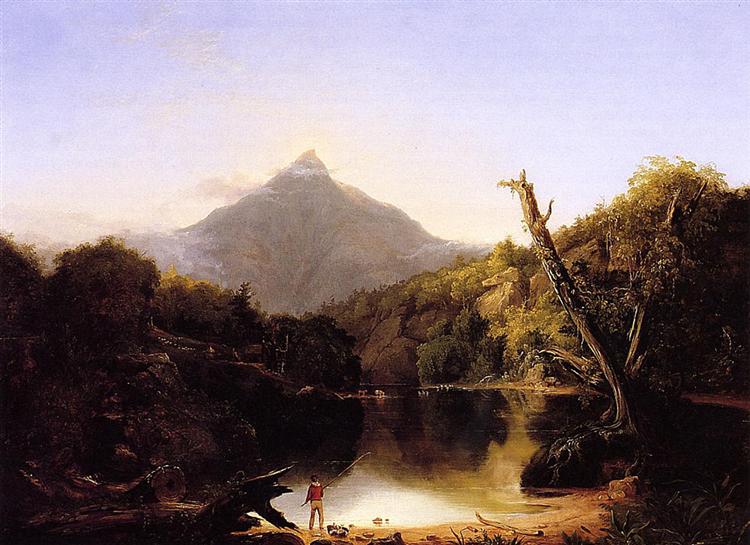
Temper.

Cole, Mount Chocorua, New Hampshire, 1827


It is generally admitted that the liberal arts tend to soften our manners; but they do more--they carry with them the power to mend our hearts.

Poetry and Painting sublime and purify thought, by grasping the past, the present, and the future--they give the mind a foretaste of its immortality, and thus prepare it for performing an exalted part amid the realities of life. And rural nature is full of the same quickening spirit--it is, in fact, the exhaustless mine from which the poet and the painter have brought such wondrous treasures--an unfailing fountain of intellectual enjoyment, where all may drink, and be awakened to a deeper feeling of the works of genius, and a keener perception of the beauty of our existence. For those whose days are all consumed in the low pursuits of avarice, or the gaudy frivolities of fashion, unobservant of nature's loveliness, are unconscious of the harmony of creation--

Heaven's roof to them Is but a painted ceiling hung with lamps; No more--that lights them to their purposes-- They wander 'loose about;' they nothing see, Themselves except, and creatures like themselves, Short lived, short sighted.

What to them is the page of the poet where he describes or personifies the skies, the mountains, or the streams, if those objects themselves have never awakened observation or excited pleasure? What to them is the wild Salvator Rosa, or the aerial Claude Lorrain?

There is in the human mind an almost inseparable connection between the beautiful and the good, so that if we contemplate the one the other seems present; and an excellent author has said, "it is difficult to look at any objects with pleasure--unless where it arises from brutal and tumultuous emotions--without feeling that disposition of mind which tends towards kindness and benevolence; and surely, whatever creates such a disposition, by increasing our pleasures and enjoyments, cannot be too much cultivated."

It would seem unnecessary to those who can see and feel, for me to expatiate on the loveliness of verdant fields, the sublimity of lofty mountains, or the varied magnificence of the sky; but that the number of those who seek enjoyment in such sources is comparatively small. From the indifference with which the multitude regard the beauties of nature, it might be inferred that she had been unnecessarily lavish in adorning this world for beings who take no pleasure in its adornment. Who in grovelling pursuits forget their glorious heritage. Why was the earth made so beautiful, or the sun so clad in glory at his rising and setting, when all might be unrobed of beauty without affecting the insensate multitude, so they can be "lighted to their purposes?"

It has not been in vain--the good, the enlightened of all ages and nations, have found pleasure and consolation in the beauty of the rural earth. Prophets of old retired into the solitudes of nature to wait the inspiration of heaven. It was on Mount Horeb that Elijah witnessed the mighty wind, the earthquake, and the fire; and heard the "still small voice"--that voice is YET heard among the mountains! St. John preached in the desert;--the wilderness is YET a fitting place to speak of God. The solitary Anchorites of Syria and Egypt, though ignorant that the busy world is man's noblest sphere of usefulness, well knew how congenial to religious musings are the pathless solitudes.

He who looks on nature with a "loving eye," cannot move from his dwelling without the salutation of beauty; even in the city the deep blue sky and the drifting clouds appeal to him. And if to escape its turmoil--if only to obtain a free horizon, land and water in the play of light and shadow yields delight--let him be transported to those favored regions, where the features of the earth are more varied, or yet add the sunset, that wreath of glory daily bound around the world, and he, indeed, drinks from pleasure's purest cup. The delight such a man experiences is not merely sensual, or selfish, that passes with the occasion leaving no trace behind; but in gazing on the pure creations of the Almighty, he feels a calm religious tone steal through his mind, and when he has turned to mingle with his fellow men, the chords which have been struck in that sweet communion cease not to vibrate.

In what has been said I have alluded to wild and uncultivated scenery; but the cultivated must not be forgotten, for it is still more important to man in his social capacity--necessarily bringing him in contact with the cultured; it encompasses our homes, and, though devoid of the stern sublimity of the wild, its quieter spirit steals tenderly into our bosoms mingled with a thousand domestic affections and heart-touching associations--human hands have wrought, and human deeds hallowed all around.

And it is here that taste, which is the perception of the beautiful, and the knowledge of the principles on which nature works, can be applied, and our dwelling-places made fitting for refined and intellectual beings.

If, then, it is indeed true that the contemplation of scenery can be so abundant a source of delight and improvement, a taste for it is certainly worthy of particular cultivation; for the capacity for enjoyment increases with the knowledge of the true means of obtaining it.

In this age, when a meager utilitarianism seems ready to absorb every feeling and sentiment, and what is sometimes called improvement in its march makes us fear that the bright and tender flowers of the imagination shall all be crushed beneath its iron tramp, it would be well to cultivate the oasis that yet remains to us, and thus preserve the germs of a future and a purer system. And now, when the sway of fashion is extending widely over society--poisoning the healthful streams of true refinement, and turning men from the love of simplicity and beauty, to a senseless idolatry of their own follies--to lead them gently into the pleasant paths of Taste would be an object worthy of the highest efforts of genius and benevolence. The spirit of our society is to contrive but not to enjoy--toiling to produce more toil-accumulating in order to aggrandize. The pleasures of the imagination, among which the love of scenery holds a conspicuous place, will alone temper the harshness of such a state; and, like the atmosphere that softens the most rugged forms of the landscape, cast a veil of tender beauty over the asperities of life.

Thomas Cole

CONNECT

01 February 2018

Happy birthday, Cole.

Cole, View of the Round-Top in the Catskill Mountains, 1827


Thomas Cole was born on this day in 1801.

To walk with nature as a poet is the necessary condition of a perfect artist.

Thomas Cole