"I am not one who was born in the custody of wisdom. I am one who is fond of olden times and intense in quest of the sacred knowing of the ancients." Gustave Courbet
Showing posts sorted by date for query old pile. Sort by relevance Show all posts

29 March 2026

Treasures.

Hamilton of Finnart, Stirling Castle, 1496


On the following morning, the sun darted his beams from over the hills through the low lattice window. I rose at an early hour, and looked out between the branches of eglantine which overhung the casement. To my surprise Scott was already up and forth, seated on a fragment of stone, and chatting with the workmen employed on the new building. I had supposed, after the time he had wasted upon me yesterday, he would be closely occupied this morning, but he appeared like a man of leisure, who had nothing to do but bask in the sunshine and amuse himself.

I soon dressed myself and joined him. He talked about his proposed plans of Abbotsford; happy would it have been for him could he have contented himself with his delightful little vine-covered cottage, and the simple, yet hearty and hospitable style, in which he lived at the time of my visit. The great pile of Abbotsford, with the huge expense it entailed upon him, of servants, retainers, guests, and baronial style, was a drain upon his purse, a tax upon his exertions, and a weight upon his mind, that finally crushed him.

As yet, however, all was in embryo and perspective, and Scott pleased himself with picturing out his future residence, as he would one of the fanciful creations of his own romances. "It was one of his air castles," he said, "which he was reducing to solid stone and mortar." About the place were strewed various morsels from the ruins of Melrose Abbey, which were to be incorporated in his mansion. He had already constructed out of similar materials a kind of Gothic shrine over a spring, and had surmounted it by a small stone cross.

Among the relics from the Abbey which lay scattered before us, was a most quaint and antique little lion, either of red stone, or painted red, which hit my fancy. I forgot whose cognizance it was; but I shall never forget the delightful observations concerning old Melrose to which it accidentally gave rise. The Abbey was evidently a pile that called up all Scott's poetic and romantic feelings; and one to which he was enthusiastically attached by the most fanciful and delightful of his early associations. He spoke of it, I may say, with affection. "There is no telling," said he, "what treasures are hid in that glorious old pile. It is a famous place for antiquarian plunder; there are such rich bits of old time sculpture for the architect, and old time story for the poet. There is as rare picking in it as a Stilton cheese, and in the same taste—the mouldier the better."

Washington Irving, from "Abbotsford and Newstead Abbey"

24 February 2026

Treasures.


On the following morning, the sun darted his beams from over the hills through the low lattice window. I rose at an early hour, and looked out between the branches of eglantine which overhung the casement. To my surprise Scott was already up and forth, seated on a fragment of stone, and chatting with the workmen employed on the new building. I had supposed, after the time he had wasted upon me yesterday, he would be closely occupied this morning, but he appeared like a man of leisure, who had nothing to do but bask in the sunshine and amuse himself.

I soon dressed myself and joined him. He talked about his proposed plans of Abbotsford; happy would it have been for him could he have contented himself with his delightful little vine-covered cottage, and the simple, yet hearty and hospitable style, in which he lived at the time of my visit. The great pile of Abbotsford, with the huge expense it entailed upon him, of servants, retainers, guests, and baronial style, was a drain upon his purse, a tax upon his exertions, and a weight upon his mind, that finally crushed him.

As yet, however, all was in embryo and perspective, and Scott pleased himself with picturing out his future residence, as he would one of the fanciful creations of his own romances. "It was one of his air castles," he said, "which he was reducing to solid stone and mortar." About the place were strewed various morsels from the ruins of Melrose Abbey, which were to be incorporated in his mansion. He had already constructed out of similar materials a kind of Gothic shrine over a spring, and had surmounted it by a small stone cross.

Among the relics from the Abbey which lay scattered before us, was a most quaint and antique little lion, either of red stone, or painted red, which hit my fancy. I forgot whose cognizance it was; but I shall never forget the delightful observations concerning old Melrose to which it accidentally gave rise. The Abbey was evidently a pile that called up all Scott's poetic and romantic feelings; and one to which he was enthusiastically attached by the most fanciful and delightful of his early associations. He spoke of it, I may say, with affection. "There is no telling," said he, "what treasures are hid in that glorious old pile. It is a famous place for antiquarian plunder; there are such rich bits of old time sculpture for the architect, and old time story for the poet. There is as rare picking in it as a Stilton cheese, and in the same taste—the mouldier the better."

Washington Irving, from "Abbotsford and Newstead Abbey"

Thanks to Walker's Arms for the image.

07 January 2026

Treasures.

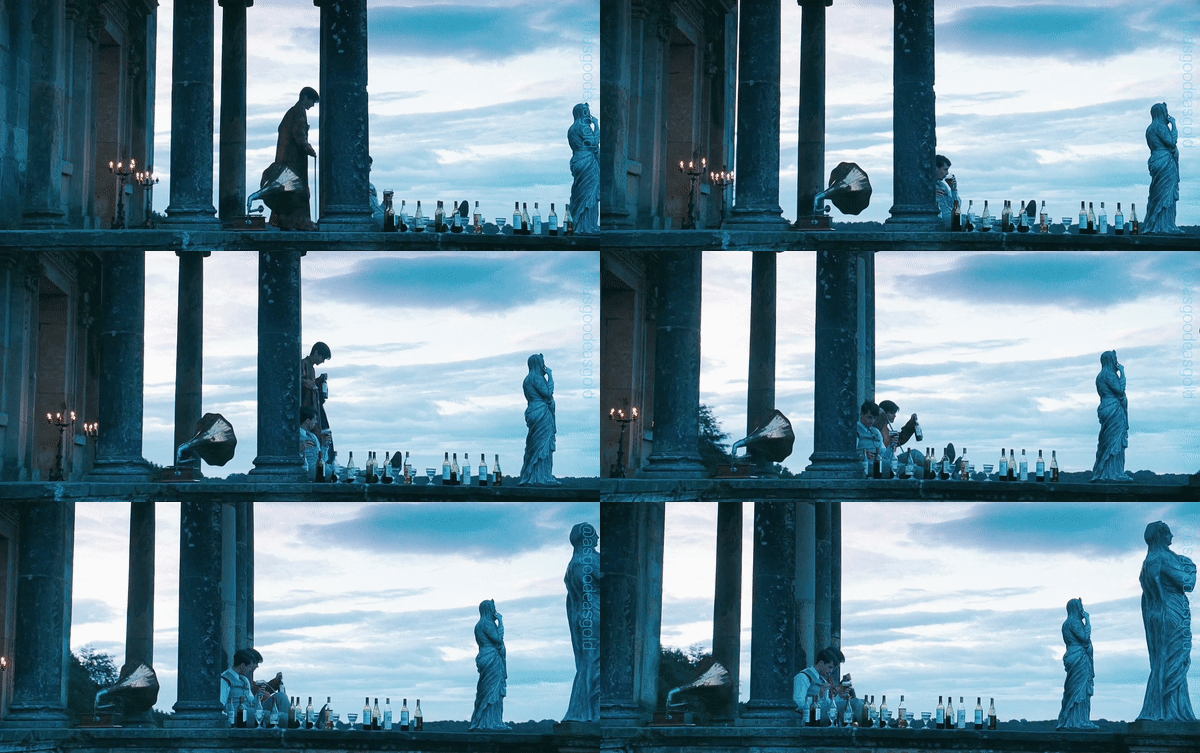
Vanbrugh, The Temple of the Four Winds, Castle Howard, 1738


On the following morning, the sun darted his beams from over the hills through the low lattice window. I rose at an early hour, and looked out between the branches of eglantine which overhung the casement. To my surprise Scott was already up and forth, seated on a fragment of stone, and chatting with the workmen employed on the new building. I had supposed, after the time he had wasted upon me yesterday, he would be closely occupied this morning, but he appeared like a man of leisure, who had nothing to do but bask in the sunshine and amuse himself.

I soon dressed myself and joined him. He talked about his proposed plans of Abbotsford; happy would it have been for him could he have contented himself with his delightful little vine-covered cottage, and the simple, yet hearty and hospitable style, in which he lived at the time of my visit. The great pile of Abbotsford, with the huge expense it entailed upon him, of servants, retainers, guests, and baronial style, was a drain upon his purse, a tax upon his exertions, and a weight upon his mind, that finally crushed him.

As yet, however, all was in embryo and perspective, and Scott pleased himself with picturing out his future residence, as he would one of the fanciful creations of his own romances. "It was one of his air castles," he said, "which he was reducing to solid stone and mortar." About the place were strewed various morsels from the ruins of Melrose Abbey, which were to be incorporated in his mansion. He had already constructed out of similar materials a kind of Gothic shrine over a spring, and had surmounted it by a small stone cross.

Among the relics from the Abbey which lay scattered before us, was a most quaint and antique little lion, either of red stone, or painted red, which hit my fancy. I forgot whose cognizance it was; but I shall never forget the delightful observations concerning old Melrose to which it accidentally gave rise. The Abbey was evidently a pile that called up all Scott's poetic and romantic feelings; and one to which he was enthusiastically attached by the most fanciful and delightful of his early associations. He spoke of it, I may say, with affection. "There is no telling," said he, "what treasures are hid in that glorious old pile. It is a famous place for antiquarian plunder; there are such rich bits of old time sculpture for the architect, and old time story for the poet. There is as rare picking in it as a Stilton cheese, and in the same taste—the mouldier the better."

Washington Irving, from "Abbotsford and Newstead Abbey"

29 December 2025

Off.


Have you ever thought
      That snow grows old?
      It falls
      Young, dancing, light,
      Fresh, innocent, white,
      Peering in windows,
      Perched on the sills,
      Off again, flown again,
      Driven of wind at its will...
      Blown here and there...
      Frivolous, fair.

It falls
      More and more
      Serious, old,
      More and more...
      Hard and cold...
      Flakes fall and stay,
      Weep and dance not,
      Pile higher and higher,
      Howl and shriek in the gale...

A shaft of sun — a smile...
      A cloud of rain — tears...
      Softer, weak,
      Unresisting, gray,
      Kinder now, but very old,
      Flows stiffly down the hill
      And off to sea.

Have you ever thought
      That snow grows old?

Jeanne Goodstein

19 June 2025

Embutidos.


Saveur has your guide to embutidos ...
The robust, funky meat — streaked with sweet, nutty fat — gets its characteristic flavor from a combination of the pigs’ all-acorn diet, and their moderately active life roaming free-range through oak forests on the Spain-Portugal border.

When it comes to hams and sausages, kids, anything that Italy does, Spain does better.  

For best results, pair the jamon with gildas. Skewer the following on an old-fashioned wooden toothpick:

  1. An Spanish anchovy filet (I bet my lungs, even if you think you don't care for anchovies, try the Ortiz brand)
  2. A pitted Manzanilla olive stuffed with a generous sliver of garlic or manchego
  3. A guindilla pepper
  4. Prepare a copious pile of skewers and drizzle with Desierto Picual
  5. Consume lustily with the ham
Wash your hands well, put the needle down on the Gipsy Kings' Tierra Gitana album, then wash it all down with rioja quaffed straight from the bottle, repeating as needed.

03 April 2025

Happy Birthday, Irving

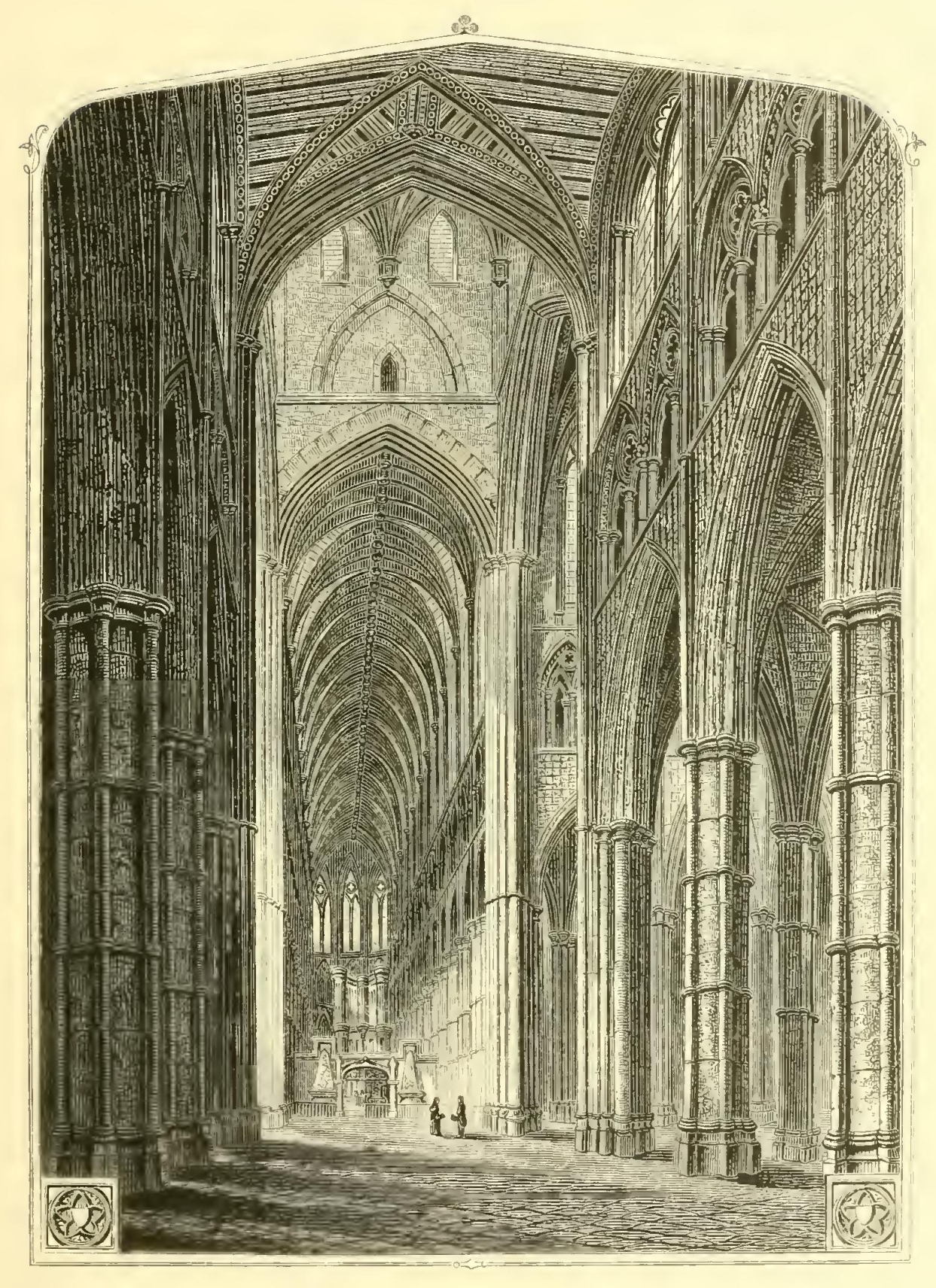
White, The Author in Westminster Abbey, 1864


There are certain half-dreaming moods of mind in which we naturally steal away from noise and glare, and seek some quiet haunt where we may indulge our reveries and build our air castles undisturbed. In such a mood I was loitering about the old gray cloisters of Westminster Abbey, enjoying that luxury of wandering thought which one is apt to dignify with the name of reflection, when suddenly an irruption of madcap boys from Westminster school, playing at football, broke in upon the monastic stillness of the place, making the vaulted passages and mouldering tombs echo with their merriment. I sought to take refuge from their noise by penetrating still deeper into the solitudes of the pile, and applied to one of the vergers for admission to the library. He conducted me through a portal rich with the crumbling sculpture of former ages, which opened upon a gloomy passage leading to the chapter-house and the chamber in which Doomsday Book is deposited. Just within the passage is a small door on the left. To this the verger applied a key; it was double locked, and opened with some difficulty, as if seldom used. We now ascended a dark narrow staircase, and, passing through a second door, entered the library.

I found myself in a lofty antique hall, the roof supported by massive joists of old English oak. It was soberly lighted by a row of Gothic windows at a considerable height from the floor, and which apparently opened upon the roofs of the cloisters. An ancient picture of some reverend dignitary of the Church in his robes hung over the fireplace. Around the hall and in a small gallery were the books, arranged in carved oaken cases. They consisted principally of old polemical writers, and were much more worn by time than use. In the centre of the library was a solitary table with two or three books on it, an inkstand without ink, and a few pens parched by long disuse. The place seemed fitted for quiet study and profound meditation. It was buried deep among the massive walls of the abbey and shut up from the tumult of the world. I could only hear now and then the shouts of the school-boys faintly swelling from the cloisters, and the sound of a bell tolling for prayers echoing soberly along the roofs of the abbey. By degrees the shouts of merriment grew fainter and fainter, and at length died away; the bell ceased to toll, and a profound silence reigned through the dusky hall.

I had taken down a little thick quarto, curiously bound in parchment, with brass clasps, and seated myself at the table in a venerable elbow-chair. Instead of reading, however, I was beguiled by the solemn monastic air and lifeless quiet of the place, into a train of musing. As I looked around upon the old volumes in their mouldering covers, thus ranged on the shelves and apparently never disturbed in their repose, I could not but consider the library a kind of literary catacomb, where authors, like mummies, are piously entombed and left to blacken and moulder in dusty oblivion.

How much, thought I, has each of these volumes, now thrust aside with such indifference, cost some aching head! how many weary days! how many sleepless nights! How have their authors buried themselves in the solitude of cells and cloisters, shut themselves up from the face of man, and the still more blessed face of Nature; and devoted themselves to painful research and intense reflection! And all for what? To occupy an inch of dusty shelf—to have the titles of their works read now and then in a future age by some drowsy churchman or casual straggler like myself, and in another age to be lost even to remembrance. Such is the amount of this boasted immortality. A mere temporary rumor, a local sound; like the tone of that bell which has tolled among these towers, filling the ear for a moment, lingering transiently in echo, and then passing away, like a thing that was not!

While I sat half-murmuring, half-meditating, these unprofitable speculations with my head resting on my hand, I was thrumming with the other hand upon the quarto, until I accidentally loosened the clasps; when, to my utter astonishment, the little book gave two or three yawns, like one awaking from a deep sleep, then a husky hem, and at length began to talk. At first its voice was very hoarse and broken, being much troubled by a cobweb which some studious spider had woven across it, and having probably contracted a cold from long exposure to the chills and damps of the abbey. In a short time, however, it became more distinct, and I soon found it an exceedingly fluent, conversable little tome. Its language, to be sure, was rather quaint and obsolete, and its pronunciation what, in the present day, would be deemed barbarous; but I shall endeavor, as far as I am able, to render it in modern parlance.

Washington Irving, born on this day in 1783, from "The Mutability of Literature," found in The Sketch Book of Geoffrey Crayon, Gent.

18 March 2025

Treasures.


On the following morning, the sun darted his beams from over the hills through the low lattice window. I rose at an early hour, and looked out between the branches of eglantine which overhung the casement. To my surprise Scott was already up and forth, seated on a fragment of stone, and chatting with the workmen employed on the new building. I had supposed, after the time he had wasted upon me yesterday, he would be closely occupied this morning, but he appeared like a man of leisure, who had nothing to do but bask in the sunshine and amuse himself.

I soon dressed myself and joined him. He talked about his proposed plans of Abbotsford; happy would it have been for him could he have contented himself with his delightful little vine-covered cottage, and the simple, yet hearty and hospitable style, in which he lived at the time of my visit. The great pile of Abbotsford, with the huge expense it entailed upon him, of servants, retainers, guests, and baronial style, was a drain upon his purse, a tax upon his exertions, and a weight upon his mind, that finally crushed him.

As yet, however, all was in embryo and perspective, and Scott pleased himself with picturing out his future residence, as he would one of the fanciful creations of his own romances. "It was one of his air castles," he said, "which he was reducing to solid stone and mortar." About the place were strewed various morsels from the ruins of Melrose Abbey, which were to be incorporated in his mansion. He had already constructed out of similar materials a kind of Gothic shrine over a spring, and had surmounted it by a small stone cross.

Among the relics from the Abbey which lay scattered before us, was a most quaint and antique little lion, either of red stone, or painted red, which hit my fancy. I forgot whose cognizance it was; but I shall never forget the delightful observations concerning old Melrose to which it accidentally gave rise. The Abbey was evidently a pile that called up all Scott's poetic and romantic feelings; and one to which he was enthusiastically attached by the most fanciful and delightful of his early associations. He spoke of it, I may say, with affection. "There is no telling," said he, "what treasures are hid in that glorious old pile. It is a famous place for antiquarian plunder; there are such rich bits of old time sculpture for the architect, and old time story for the poet. There is as rare picking in it as a Stilton cheese, and in the same taste—the mouldier the better."

Washington Irving, from "Abbotsford and Newstead Abbey"

01 December 2024

Felicity.


From "Christmas," found in Washington Irving's The Sketchbook of Geoffrey Crayon ...
Of all the old festivals, however, that of Christmas awakens the strongest and most heartfelt associations. There is a tone of solemn and sacred feeling that blends with our conviviality, and lifts the spirit to a state of hallowed and elevated enjoyment. The services of the church about this season are extremely tender and inspiring. They dwell on the beautiful story of the origin of our faith, and the pastoral scenes that accompanied its announcement. They gradually increase in fervour and pathos during the season of Advent, until they break forth in full jubilee on the morning that brought peace and good-will to men. I do not know a grander effect of music on the moral feelings than to hear the full choir and the pealing organ performing a Christmas anthem in a cathedral, and filling every part of the vast pile with triumphant harmony.

It is a beautiful arrangement, also, derived from days of yore, that this festival, which commemorates the announcement of the religion of peace and love, has been made the season for gathering together of family connections, and drawing closer again those bands of kindred hearts which the cares and pleasures and sorrows of the world are continually operating to cast loose; of calling back the children of a family who have launched forth in life, and wandered widely asunder, once more to assemble about the paternal hearth, that rallying-place of the affections, there to grow young and loving again among the endearing mementoes of childhood.

There is something in the very season of the year that gives a charm to the festivity of Christmas. At other times we derive a great portion of our pleasures from the mere beauties of nature. Our feelings sally forth and dissipate themselves over the sunny landscape, and we "live abroad and everywhere." The song of the bird, the murmur of the stream, the breathing fragrance of spring, the soft voluptuousness of summer, the golden pomp of autumn; earth with its mantle of refreshing green, and heaven with its deep delicious blue and its cloudy magnificence, all fill us with mute but exquisite delight, and we revel in the luxury of mere sensation. But in the depth of winter, when nature lies despoiled of every charm, and wrapped in her shroud of sheeted snow, we turn for our gratifications to moral sources. The dreariness and desolation of the landscape, the short gloomy days and darksome nights, while they circumscribe our wanderings, shut in our feelings also from rambling abroad, and make us more keenly disposed for the pleasures of the social circle. Our thoughts are more concentrated; our friendly sympathies more aroused. We feel more sensibly the charm of each other's society, and are brought more closely together by dependence on each other for enjoyment. Heart calleth unto heart; and we draw our pleasures from the deep wells of living kindness, which lie in the quiet recesses of our bosoms; and which, when resorted to, furnish forth the pure element of domestic felicity.

The pitchy gloom without makes the heart dilate on entering the room filled with the glow and warmth of the evening fire. The ruddy blaze diffuses an artificial summer and sunshine through the room, and lights up each countenance into a kindlier welcome. Where does the honest face of hospitality expand into a broader and more cordial smile—where is the shy glance of love more sweetly eloquent—than by the winter fireside? and as the hollow blast of wintry wind rushes through the hall, claps the distant door, whistles about the casement, and rumbles down the chimney, what can be more grateful than that feeling of sober and sheltered security with which we look round upon the comfortable chamber and the scene of domestic hilarity?

01 September 2024

Treasures.


On the following morning, the sun darted his beams from over the hills through the low lattice window. I rose at an early hour, and looked out between the branches of eglantine which overhung the casement. To my surprise Scott was already up and forth, seated on a fragment of stone, and chatting with the workmen employed on the new building. I had supposed, after the time he had wasted upon me yesterday, he would be closely occupied this morning, but he appeared like a man of leisure, who had nothing to do but bask in the sunshine and amuse himself.

I soon dressed myself and joined him. He talked about his proposed plans of Abbotsford; happy would it have been for him could he have contented himself with his delightful little vine-covered cottage, and the simple, yet hearty and hospitable style, in which he lived at the time of my visit. The great pile of Abbotsford, with the huge expense it entailed upon him, of servants, retainers, guests, and baronial style, was a drain upon his purse, a tax upon his exertions, and a weight upon his mind, that finally crushed him.

As yet, however, all was in embryo and perspective, and Scott pleased himself with picturing out his future residence, as he would one of the fanciful creations of his own romances. "It was one of his air castles," he said, "which he was reducing to solid stone and mortar." About the place were strewed various morsels from the ruins of Melrose Abbey, which were to be incorporated in his mansion. He had already constructed out of similar materials a kind of Gothic shrine over a spring, and had surmounted it by a small stone cross.

Among the relics from the Abbey which lay scattered before us, was a most quaint and antique little lion, either of red stone, or painted red, which hit my fancy. I forgot whose cognizance it was; but I shall never forget the delightful observations concerning old Melrose to which it accidentally gave rise. The Abbey was evidently a pile that called up all Scott's poetic and romantic feelings; and one to which he was enthusiastically attached by the most fanciful and delightful of his early associations. He spoke of it, I may say, with affection. "There is no telling," said he, "what treasures are hid in that glorious old pile. It is a famous place for antiquarian plunder; there are such rich bits of old time sculpture for the architect, and old time story for the poet. There is as rare picking in it as a Stilton cheese, and in the same taste—the mouldier the better."

Washington Irving, from "Abbotsford and Newstead Abbey"

Thanks to Walker's Arms for the image.

10 July 2024

Imagining.

Walker's Arms inspired me to go wondering about the East Banqueting House at Chipping Campden, imagining the combination of a banqueting hall and a library on that top level ...
In the seventeenth century, Sir Baptist’s guests would have retired to these houses for their "banquet" (or dessert course) at the end of the meal, to drink rare wines, eat dried fruit and sweetmeats and admire his domain. 


On the following morning, the sun darted his beams from over the hills through the low lattice window. I rose at an early hour, and looked out between the branches of eglantine which overhung the casement. To my surprise Scott was already up and forth, seated on a fragment of stone, and chatting with the workmen employed on the new building. I had supposed, after the time he had wasted upon me yesterday, he would be closely occupied this morning, but he appeared like a man of leisure, who had nothing to do but bask in the sunshine and amuse himself.

I soon dressed myself and joined him. He talked about his proposed plans of Abbotsford; happy would it have been for him could he have contented himself with his delightful little vine-covered cottage, and the simple, yet hearty and hospitable style, in which he lived at the time of my visit. The great pile of Abbotsford, with the huge expense it entailed upon him, of servants, retainers, guests, and baronial style, was a drain upon his purse, a tax upon his exertions, and a weight upon his mind, that finally crushed him.

As yet, however, all was in embryo and perspective, and Scott pleased himself with picturing out his future residence, as he would one of the fanciful creations of his own romances. "It was one of his air castles," he said, "which he was reducing to solid stone and mortar." About the place were strewed various morsels from the ruins of Melrose Abbey, which were to be incorporated in his mansion. He had already constructed out of similar materials a kind of Gothic shrine over a spring, and had surmounted it by a small stone cross.

Among the relics from the Abbey which lay scattered before us, was a most quaint and antique little lion, either of red stone, or painted red, which hit my fancy. I forgot whose cognizance it was; but I shall never forget the delightful observations concerning old Melrose to which it accidentally gave rise. The Abbey was evidently a pile that called up all Scott's poetic and romantic feelings; and one to which he was enthusiastically attached by the most fanciful and delightful of his early associations. He spoke of it, I may say, with affection. "There is no telling," said he, "what treasures are hid in that glorious old pile. It is a famous place for antiquarian plunder; there are such rich bits of old time sculpture for the architect, and old time story for the poet. There is as rare picking in it as a Stilton cheese, and in the same taste—the mouldier the better."

Washington Irving, from "Abbotsford and Newstead Abbey"

31 May 2024

Treasures.

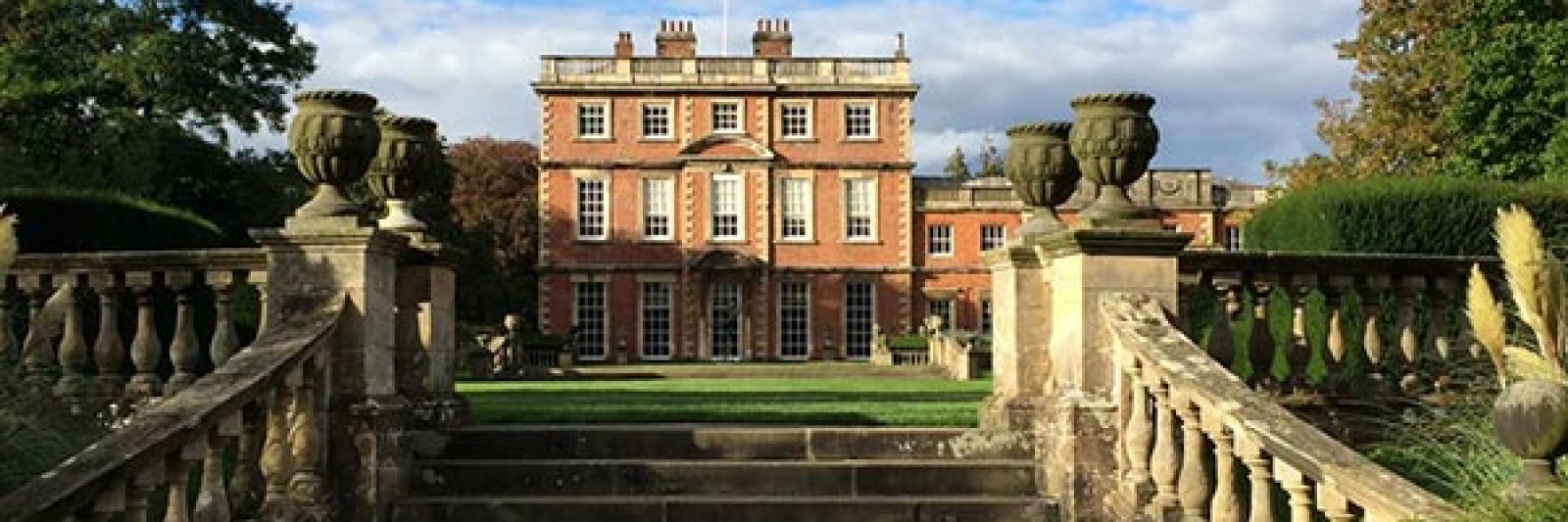
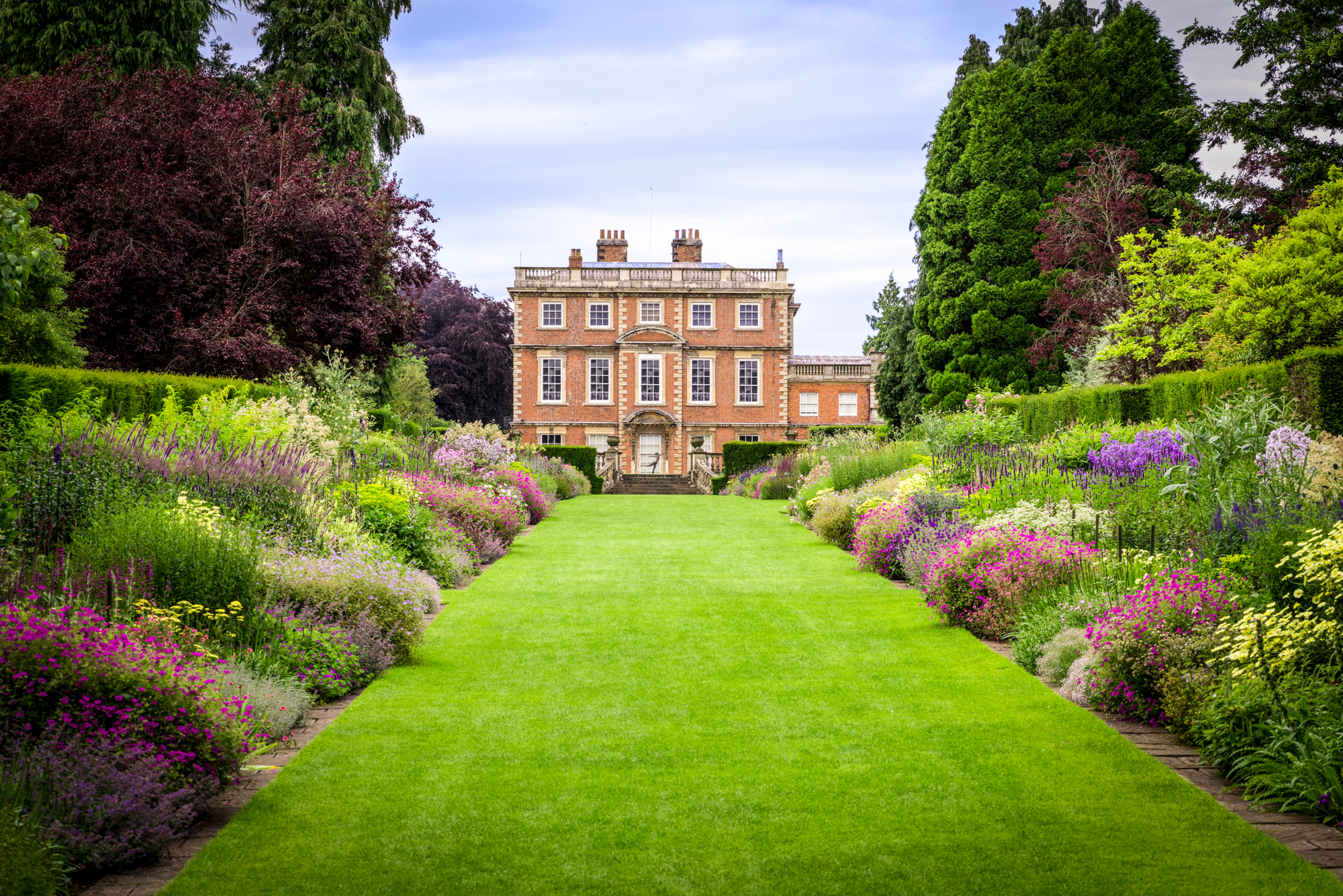
Wren, Newby Hall, 1695


On the following morning, the sun darted his beams from over the hills through the low lattice window. I rose at an early hour, and looked out between the branches of eglantine which overhung the casement. To my surprise Scott was already up and forth, seated on a fragment of stone, and chatting with the workmen employed on the new building. I had supposed, after the time he had wasted upon me yesterday, he would be closely occupied this morning, but he appeared like a man of leisure, who had nothing to do but bask in the sunshine and amuse himself.

I soon dressed myself and joined him. He talked about his proposed plans of Abbotsford; happy would it have been for him could he have contented himself with his delightful little vine-covered cottage, and the simple, yet hearty and hospitable style, in which he lived at the time of my visit. The great pile of Abbotsford, with the huge expense it entailed upon him, of servants, retainers, guests, and baronial style, was a drain upon his purse, a tax upon his exertions, and a weight upon his mind, that finally crushed him.

As yet, however, all was in embryo and perspective, and Scott pleased himself with picturing out his future residence, as he would one of the fanciful creations of his own romances. "It was one of his air castles," he said, "which he was reducing to solid stone and mortar." About the place were strewed various morsels from the ruins of Melrose Abbey, which were to be incorporated in his mansion. He had already constructed out of similar materials a kind of Gothic shrine over a spring, and had surmounted it by a small stone cross.

Among the relics from the Abbey which lay scattered before us, was a most quaint and antique little lion, either of red stone, or painted red, which hit my fancy. I forgot whose cognizance it was; but I shall never forget the delightful observations concerning old Melrose to which it accidentally gave rise. The Abbey was evidently a pile that called up all Scott's poetic and romantic feelings; and one to which he was enthusiastically attached by the most fanciful and delightful of his early associations. He spoke of it, I may say, with affection. "There is no telling," said he, "what treasures are hid in that glorious old pile. It is a famous place for antiquarian plunder; there are such rich bits of old time sculpture for the architect, and old time story for the poet. There is as rare picking in it as a Stilton cheese, and in the same taste—the mouldier the better."

Washington Irving, from "Abbotsford and Newstead Abbey"

Thanks to Walker's Arms for kindling this flame.

07 April 2024

Happy Birthday, Wordsworth

Haydon, William Wordsworth, 1818


The OLD CUMBERLAND BEGGAR

I saw an aged Beggar in my walk;
And he was seated, by the highway side,
On a low structure of rude masonry
Built at the foot of a huge hill, that they
Who lead their horses down the steep rough road
May thence remount at ease. The aged Man
Had placed his staff across the broad smooth stone
That overlays the pile; and, from a bag
All white with flour, the dole of village dames,
He drew his scraps and fragments, one by one;
And scanned them with a fixed and serious look
Of idle computation. In the sun,
Upon the second step of that small pile,
Surrounded by those wild unpeopled hills,
He sat, and ate his food in solitude:
And ever, scattered from his palsied hand,
That, still attempting to prevent the waste,
Was baffled still, the crumbs in little showers
Fell on the ground; and the small mountain birds,
Not venturing yet to peck their destined meal,
Approached within the length of half his staff.

Him from my childhood have I known; and then
He was so old, he seems not older now;
He travels on, a solitary Man,
So helpless in appearance, that for him
The sauntering Horseman-traveller does not throw
With careless hand his alms upon the ground,
But stops,—that he may safely lodge the coin
Within the old Man's hat; nor quits him so,
But still when he has given his horse the rein
Towards the aged Beggar turns a look
Side-long—and half-reverted. She who tends
The Toll-gate, when in summer at her door
She turns her wheel, if on the road she sees
The aged Beggar coming, quits her work,
And lifts the latch for him that he may pass.
The Post-boy, when his rattling wheels o'ertake
The aged Beggar in the woody lane,
Shouts to him from behind; and, if perchance
The old Man does not change his course, the Boy
Turns with less noisy wheels to the road-side,
And passes gently by,—without a curse
Upon his lips, or anger at his heart.
He travels on, a solitary Man,—
His age has no companion. On the ground
His eyes are turned, and, as he moves along,
They move along the ground; and, evermore,
Instead of common and habitual sight
Of fields with rural works, of hill and dale,
And the blue sky, one little span of earth
Is all his prospect. Thus, from day to day,
Bowbent, his eyes for ever on the ground,
He plies his weary journey; seeing still,
And never knowing that he sees, some straw,
Some scattered leaf, or marks which, in one track,
The nails of cart or chariot wheel have left
Impressed on the white road,—in the same line,
At distance still the same. Poor Traveller!
His staff trails with him; scarcely do his feet
Disturb the summer dust; he is so still
In look and motion, that the cottage curs,
Ere he have passed the door, will turn away,
Weary of barking at him. Boys and Girls,
The vacant and the busy, Maids and Youths,
And Urchins newly breeched—all pass him by:
Him even the slow-paced Waggon leaves behind.

But deem not this Man useless.—Statesmen! ye
Who are so restless in your wisdom, ye
Who have a broom still ready in your hands
To rid the world of nuisances; ye proud,
Heart-swoln, while in your pride ye contemplate
Your talents, power, and wisdom, deem him not
A burthen of the earth. 'Tis Nature's law
That none, the meanest of created things,
Of forms created the most vile and brute,
The dullest or most noxious, should exist
Divorced from good—a spirit and pulse of good,
A life and soul to every mode of being
Inseparably linked. While thus he creeps
From door to door, the Villagers in him
Behold a record which together binds
Past deeds and offices of charity,
Else unremembered, and so keeps alive
The kindly mood in hearts which lapse of years,
And that half-wisdom half-experience gives,
Make slow to feel, and by sure steps resign
To selfishness and cold oblivious cares.
Among the farms and solitary huts,
Hamlets and thinly-scattered villages,
Where'er the aged Beggar takes his rounds,
The mild necessity of use compels
To acts of love; and habit does the work
Of reason; yet prepares that after joy
Which reason cherishes. And thus the soul,
By that sweet taste of pleasure unpursued,
Doth find itself insensibly disposed
To virtue and true goodness. Some there are,
By their good works exalted, lofty minds
And meditative, authors of delight
And happiness, which to the end of time
Will live, and spread, and kindle; minds like these,
In childhood, from this solitary Being,
This helpless Wanderer, have perchance received
(A thing more precious far than all that books
Or the solicitudes of love can do!)
That first mild touch of sympathy and thought,
In which they found their kindred with a world
Where want and sorrow were. The easy Man
Who sits at his own door,—and, like the pear
Which overhangs his head from the green wall,
Feeds in the sunshine; the robust and young,
The prosperous and unthinking, they who live
Sheltered, and flourish in a little grove
Of their own kindred;—all behold in him
A silent monitor, which on their minds
Must needs impress a transitory thought
Of self-congratulation, to the heart
Of each recalling his peculiar boons,
His charters and exemptions; and, perchance,
Though he to no one give the fortitude
And circumspection needful to preserve
His present blessings, and to husband up
The respite of the season, he, at least,
And 'tis no vulgar service, makes them felt.

Yet further.——Many, I believe, there are
Who live a life of virtuous decency,
Men who can hear the Decalogue and feel
No self-reproach; who of the moral law
Established in the land where they abide
Are strict observers; and not negligent,
Meanwhile, in any tenderness of heart
Or act of love to those with whom they dwell,
Their kindred, and the children of their blood.
Praise be to such, and to their slumbers peace!
—But of the poor man ask, the abject poor,
Go and demand of him, if there be here
In this cold abstinence from evil deeds,
And these inevitable charities,
Wherewith to satisfy the human soul?
No—Man is dear to Man; the poorest poor
Long for some moments in a weary life
When they can know and feel that they have been
Themselves the fathers and the dealers-out
Of some small blessings, have been kind to such
As needed kindness, for this single cause,
That we have all of us one human heart.
—Such pleasure is to one kind Being known,
My Neighbour, when with punctual care, each week
Duly as Friday comes, though prest herself
By her own wants, she from her chest of meal
Takes one unsparing handful for the scrip
Of this old Mendicant, and, from her door
Returning with exhilarated heart,
Sits by her fire and builds her hope in heaven.

Then let him pass, a blessing on his head!
And while in that vast solitude to which
The tide of things has led him, he appears
To breathe and live but for himself alone,
Unblamed, uninjured, let him bear about
The good which the benignant law of Heaven
Has hung around him; and, while life is his,
Still let him prompt the unlettered Villagers
To tender offices and pensive thoughts.
—Then let him pass, a blessing on his head!
And, long as he can wander, let him breathe
The freshness of the valleys; let his blood
Struggle with frosty air and winter snows;
And let the chartered wind that sweeps the heath
Beat his gray locks against his withered face.
Reverence the hope whose vital anxiousness
Gives the last human interest to his heart.
May never House, misnamed of Industry,
Make him a captive! for that pent-up din,
Those life-consuming sounds that clog the air,
Be his the natural silence of old age!
Let him be free of mountain solitudes;
And have around him, whether heard or not,
The pleasant melody of woodland birds.
Few are his pleasures: if his eyes have now
Been doomed so long to settle on the earth
That not without some effort they behold
The countenance of the horizontal sun,
Rising or setting, let the light at least
Find a free entrance to their languid orbs.
And let him, where and when he will, sit down
Beneath the trees, or by the grassy bank
Of high-way side, and with the little birds
Share his chance-gathered meal; and, finally,
As in the eye of Nature he has lived,
So in the eye of Nature let him die.

William Wordsworth, born on this day in 1770

03 April 2024

Happy Birthday, Irving

Leslie, A Portrait of Washington Irving, 1820


Among the relics from the Abbey which lay scattered before us, was a most quaint and antique little lion, either of red stone, or painted red, which hit my fancy. I forgot whose cognizance it was; but I shall never forget the delightful observations concerning old Melrose to which it accidentally gave rise. The Abbey was evidently a pile that called up all Scott’s poetic and romantic feelings; and one to which he was enthusiastically attached by the most fanciful and delightful of his early associations. He spoke of it, I may say, with affection. “There is no telling,” said he, “what treasures are hid in that glorious old pile. It is a famous place for antiquarian plunder; there are such rich bits of old time sculpture for the architect, and old time story for the poet. There is as rare picking in it as a Stilton cheese, and in the same taste—the mouldier the better.”

Washington Irving, born on this day in 1783, from Abbotsford and Newstead Abbey

18 November 2023

Splendor.


Washington Irving explores "Westminster Abbey" ...
On one of those sober and rather melancholy days in the latter part of autumn when the shadows of morning and evening almost mingle together, and throw a gloom over the decline of the year, I passed several hours in rambling about Westminster Abbey. There was something congenial to the season in the mournful magnificence of the old pile, and as I passed its threshold it seemed like stepping back into the regions of antiquity and losing myself among the shades of former ages.

I entered from the inner court of Westminster School, through a long, low, vaulted passage that had an almost subterranean look, being dimly lighted in one part by circular perforations in the massive walls. Through this dark avenue I had a distant view of the cloisters, with the figure of an old verger in his black gown moving along their shadowy vaults, and seeming like a spectre from one of the neighboring tombs. The approach to the abbey through these gloomy monastic remains prepares the mind for its solemn contemplation. The cloisters still retain something of the quiet and seclusion of former days. The gray walls are discolored by damps and crumbling with age; a coat of hoary moss has gathered over the inscriptions of the mural monuments, and obscured the death’s heads and other funeral emblems. The sharp touches of the chisel are gone from the rich tracery of the arches; the roses which adorned the keystones have lost their leafy beauty; everything bears marks of the gradual dilapidations of time, which yet has something touching and pleasing in its very decay.

The sun was pouring down a yellow autumnal ray into the square of the cloisters, beaming upon a scanty plot of grass in the centre, and lighting up an angle of the vaulted passage with a kind of dusky splendor. From between the arcades the eye glanced up to a bit of blue sky or a passing cloud, and beheld the sun-gilt pinnacles of the abbey towering into the azure heaven.

21 June 2023

Summer.

Chatham, Summer Storm, 1998


SOLSTICE LITANY

  1
The Saturday morning meadowlark
came in from high up
with her song gliding into tall grass
still singing. How I'd like
to glide around singing in the summer
then to go south to where I already was
and find fields full of meadowlarks
in winter. But when walking my dog
I want four legs to keep up with her
as she thunders down the hill at top speed
then belly flops into the deep pond.
Lark or dog I crave the impossible.
I'm just human. All too human.

      2
I was nineteen and mentally
infirm when I saw the prophet Isaiah.
The hem of his robe was as wide
as the horizon and his trunk and face
were thousands of feet up in the air.
Maybe he appeared because I had read him
so much and opened too many ancient doors.
I was cooking my life in a cracked clay
pot that was leaking. I had found
secrets I didn't deserve to know.
When the battle for the mind is finally
over it's late June, green and raining.

      3
A violent windstorm the night before
the solstice. The house creaked and yawned.
I thought the morning might bring a bald earth,
bald as a man's bald head but not shiny.
But dawn was fine with a few downed trees,
the yellow rosebush splendidly intact.
The grass was all there dotted with Black
Angus cattle. The grass is indestructible
except to fire but now it's too green to burn.
What did the cattle do in this storm?
They stood with their butts toward the wind,
erect Buddhists waiting for nothing in particular.
I was in bed cringing at gusts,
imagining the contents of earth all blowing
north and piled up where the wind stopped,
the pile sky-high. No one can climb it.
A gopher comes out of a hole as if nothing happened.

      4
The sun should be a couple of million miles
closer today. It wouldn't hurt anything
and anyway this cold rainy June is hard
on me and the nesting birds. My own nest
is stupidly uncomfortable, the chair
of many years. The old windows don't keep
the weather out, the wet wind whipping
my hair. A very old robin drops dead
on the lawn, a first for me. Millions
of birds die but we never see it—they like
privacy in this holy, fatal moment or so
I think. We can't tell each other when we die.
Others must carry the message to and fro.
"He's gone," they'll say. While writing an average poem
destined to disappear among the millions of poems
written now by mortally average poets.

      5
Solstice at the cabin deep in the forest.
The full moon shines in the river, there are pale
green northern lights. A huge thunderstorm
comes slowly from the west. Lightning strikes
a nearby tamarack bursting into flame.
I go into the cabin feeling unworthy.
At dawn the tree is still smoldering
in this place the gods touched earth.

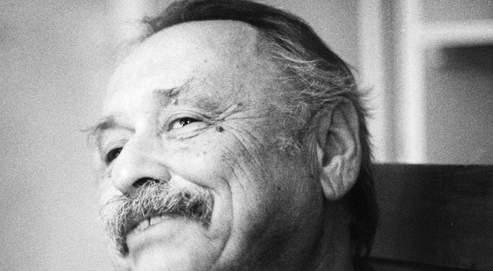
Jim Harrison

07 June 2023

Treasures.

Alkerton Grange ...


On the following morning, the sun darted his beams from over the hills through the low lattice window. I rose at an early hour, and looked out between the branches of eglantine which overhung the casement. To my surprise Scott was already up and forth, seated on a fragment of stone, and chatting with the workmen employed on the new building. I had supposed, after the time he had wasted upon me yesterday, he would be closely occupied this morning, but he appeared like a man of leisure, who had nothing to do but bask in the sunshine and amuse himself.

I soon dressed myself and joined him. He talked about his proposed plans of Abbotsford; happy would it have been for him could he have contented himself with his delightful little vine-covered cottage, and the simple, yet hearty and hospitable style, in which he lived at the time of my visit. The great pile of Abbotsford, with the huge expense it entailed upon him, of servants, retainers, guests, and baronial style, was a drain upon his purse, a tax upon his exertions, and a weight upon his mind, that finally crushed him.

As yet, however, all was in embryo and perspective, and Scott pleased himself with picturing out his future residence, as he would one of the fanciful creations of his own romances. "It was one of his air castles," he said, "which he was reducing to solid stone and mortar." About the place were strewed various morsels from the ruins of Melrose Abbey, which were to be incorporated in his mansion. He had already constructed out of similar materials a kind of Gothic shrine over a spring, and had surmounted it by a small stone cross.

Among the relics from the Abbey which lay scattered before us, was a most quaint and antique little lion, either of red stone, or painted red, which hit my fancy. I forgot whose cognizance it was; but I shall never forget the delightful observations concerning old Melrose to which it accidentally gave rise. The Abbey was evidently a pile that called up all Scott's poetic and romantic feelings; and one to which he was enthusiastically attached by the most fanciful and delightful of his early associations. He spoke of it, I may say, with affection. "There is no telling," said he, "what treasures are hid in that glorious old pile. It is a famous place for antiquarian plunder; there are such rich bits of old time sculpture for the architect, and old time story for the poet. There is as rare picking in it as a Stilton cheese, and in the same taste—the mouldier the better."

Washington Irving, from "Abbotsford and Newstead Abbey"

03 February 2023

Joys.


SNOW-BOUND: A WINTER IDYLL

“Announced by all the trumpets of the sky,
Arrives the snow, and, driving o’er the fields,
Seems nowhere to alight: the whited air
Hides hills and woods, the river and the heaven,
And veils the farm-house at the garden’s end.
The sled and traveller stopped, the courier’s feet
Delayed, all friends shut out, the housemates sit
Around the radiant fireplace, enclosed
In a tumultuous privacy of Storm.”
EMERSON, The Snow Storm.
The sun that brief December day
Rose cheerless over hills of gray,
And, darkly circled, gave at noon
A sadder light than waning moon.
Slow tracing down the thickening sky
Its mute and ominous prophecy,
A portent seeming less than threat,
It sank from sight before it set.
A chill no coat, however stout,
Of homespun stuff could quite shut out,
A hard, dull bitterness of cold,
That checked, mid-vein, the circling race
Of life-blood in the sharpened face,
The coming of the snow-storm told.
The wind blew east; we heard the roar
Of Ocean on his wintry shore,
And felt the strong pulse throbbing there
Beat with low rhythm our inland air.

Meanwhile we did our nightly chores,—
Brought in the wood from out of doors,
Littered the stalls, and from the mows
Raked down the herd’s-grass for the cows;
Heard the horse whinnying for his corn;
And, sharply clashing horn on horn,
Impatient down the stanchion rows
The cattle shake their walnut bows;
While, peering from his early perch
Upon the scaffold’s pole of birch,
The cock his crested helmet bent
And down his querulous challenge sent.

Unwarmed by any sunset light
The gray day darkened into night,
A night made hoary with the swarm
And whirl-dance of the blinding storm,
As zigzag, wavering to and fro,
Crossed and recrossed the wingëd snow:
And ere the early bedtime came
The white drift piled the window-frame,
And through the glass the clothes-line posts
Looked in like tall and sheeted ghosts.

So all night long the storm roared on:
The morning broke without a sun;
In tiny spherule traced with lines
Of Nature’s geometric signs,
In starry flake, and pellicle,
All day the hoary meteor fell;
And, when the second morning shone,
We looked upon a world unknown,
On nothing we could call our own.
Around the glistening wonder bent
The blue walls of the firmament,
No cloud above, no earth below,—
A universe of sky and snow!
The old familiar sights of ours
Took marvellous shapes; strange domes and towers
Rose up where sty or corn-crib stood,
Or garden-wall, or belt of wood;
A smooth white mound the brush-pile showed,
A fenceless drift what once was road;
The bridle-post an old man sat
With loose-flung coat and high cocked hat;
The well-curb had a Chinese roof;
And even the long sweep, high aloof,
In its slant splendor, seemed to tell
Of Pisa’s leaning miracle.

A prompt, decisive man, no breath
Our father wasted: “Boys, a path!”
Well pleased, (for when did farmer boy
Count such a summons less than joy?)
Our buskins on our feet we drew;
With mittened hands, and caps drawn low,
To guard our necks and ears from snow,
We cut the solid whiteness through.
And, where the drift was deepest, made
A tunnel walled and overlaid
With dazzling crystal: we had read
Of rare Aladdin’s wondrous cave,
And to our own his name we gave,
With many a wish the luck were ours
To test his lamp’s supernal powers.
We reached the barn with merry din,
And roused the prisoned brutes within.
The old horse thrust his long head out,
And grave with wonder gazed about;
The cock his lusty greeting said,
And forth his speckled harem led;
The oxen lashed their tails, and hooked,
And mild reproach of hunger looked;
The hornëd patriarch of the sheep,
Like Egypt’s Amun roused from sleep,
Shook his sage head with gesture mute,
And emphasized with stamp of foot.

All day the gusty north-wind bore
The loosening drift its breath before;
Low circling round its southern zone,
The sun through dazzling snow-mist shone.
No church-bell lent its Christian tone
To the savage air, no social smoke
Curled over woods of snow-hung oak.
A solitude made more intense
By dreary-voicëd elements,
The shrieking of the mindless wind,
The moaning tree-boughs swaying blind,
And on the glass the unmeaning beat
Of ghostly finger-tips of sleet.
Beyond the circle of our hearth
No welcome sound of toil or mirth
Unbound the spell, and testified
Of human life and thought outside.
We minded that the sharpest ear
The buried brooklet could not hear,
The music of whose liquid lip
Had been to us companionship,
And, in our lonely life, had grown
To have an almost human tone.

As night drew on, and, from the crest
Of wooded knolls that ridged the west,
The sun, a snow-blown traveller, sank
From sight beneath the smothering bank,
We piled, with care, our nightly stack
Of wood against the chimney-back,—
The oaken log, green, huge, and thick,
And on its top the stout back-stick;
The knotty forestick laid apart,
And filled between with curious art
The ragged brush; then, hovering near,
We watched the first red blaze appear,
Heard the sharp crackle, caught the gleam
On whitewashed wall and sagging beam,
Until the old, rude-furnished room
Burst, flower-like, into rosy bloom;
While radiant with a mimic flame
Outside the sparkling drift became,
And through the bare-boughed lilac-tree
Our own warm hearth seemed blazing free.
The crane and pendent trammels showed,
The Turks’ heads on the andirons glowed;
While childish fancy, prompt to tell
The meaning of the miracle,
Whispered the old rhyme: “Under the tree,
When fire outdoors burns merrily,
There the witches are making tea.”

The moon above the eastern wood
Shone at its full; the hill-range stood
Transfigured in the silver flood,
Its blown snows flashing cold and keen,
Dead white, save where some sharp ravine
Took shadow, or the sombre green
Of hemlocks turned to pitchy black
Against the whiteness at their back.
For such a world and such a night
Most fitting that unwarming light,
Which only seemed where’er it fell
To make the coldness visible.

Shut in from all the world without,
We sat the clean-winged hearth about,
Content to let the north-wind roar
In baffled rage at pane and door,
While the red logs before us beat
The frost-line back with tropic heat;
And ever, when a louder blast
Shook beam and rafter as it passed,
The merrier up its roaring draught
The great throat of the chimney laughed;
The house-dog on his paws outspread
Laid to the fire his drowsy head,
The cat’s dark silhouette on the wall
A couchant tiger’s seemed to fall;
And, for the winter fireside meet,
Between the andirons’ straddling feet,
The mug of cider simmered slow,
The apples sputtered in a row,
And, close at hand, the basket stood
With nuts from brown October’s wood.

What matter how the night behaved?
What matter how the north-wind raved?
Blow high, blow low, not all its snow
Could quench our hearth-fire’s ruddy glow.
O Time and Change!—with hair as gray
As was my sire’s that winter day,
How strange it seems, with so much gone
Of life and love, to still live on!
Ah, brother! only I and thou
Are left of all that circle now,—
The dear home faces whereupon
That fitful firelight paled and shone.
Henceforward, listen as we will,
The voices of that hearth are still;
Look where we may, the wide earth o’er,
Those lighted faces smile no more.
We tread the paths their feet have worn,
     We sit beneath their orchard trees,
     We hear, like them, the hum of bees
And rustle of the bladed corn;
We turn the pages that they read,
     Their written words we linger o’er,
But in the sun they cast no shade,
No voice is heard, no sign is made,
     No step is on the conscious floor!
Yet Love will dream, and Faith will trust,
(Since He who knows our need is just,)
That somehow, somewhere, meet we must.
Alas for him who never sees
The stars shine through his cypress-trees!
Who, hopeless, lays his dead away,
Nor looks to see the breaking day
Across the mournful marbles play!
Who hath not learned, in hours of faith,
     The truth to flesh and sense unknown,
That Life is ever lord of Death,
     And Love can never lose its own!
We sped the time with stories old,
Wrought puzzles out, and riddles told,
Or stammered from our school-book lore
“The Chief of Gambia’s golden shore.”
How often since, when all the land
Was clay in Slavery’s shaping hand,
As if a far-blown trumpet stirred
The languorous sin-sick air, I heard:
“Does not the voice of reason cry,
     Claim the first right which Nature gave,
From the red scourge of bondage to fly,
     Nor deign to live a burdened slave!“
Our father rode again his ride
On Memphremagog’s wooded side;
Sat down again to moose and samp
In trapper’s hut and Indian camp;
Lived o’er the old idyllic ease
Beneath St. François’ hemlock-trees;
Again for him the moonlight shone
On Norman cap and bodiced zone;
Again he heard the violin play
Which led the village dance away.
And mingled in its merry whirl
The grandam and the laughing girl.
Or, nearer home, our steps he led
Where Salisbury’s level marshes spread
     Mile-wide as flies the laden bee;
Where merry mowers, hale and strong,
Swept, scythe on scythe, their swaths along
     The low green prairies of the sea.
We shared the fishing off Boar’s Head,
     And round the rocky Isles of Shoals
     The hake-broil on the drift-wood coals;
The chowder on the sand-beach made,
Dipped by the hungry, steaming hot,
With spoons of clam-shell from the pot.
We heard the tales of witchcraft old,
And dream and sign and marvel told
To sleepy listeners as they lay
Stretched idly on the salted hay,
Adrift along the winding shores,
When favoring breezes deigned to blow
The square sail of the gundelow
And idle lay the useless oars.

Our mother, while she turned her wheel
Or run the new-knit stocking-heel,
Told how the Indian hordes came down
At midnight on Concheco town,
And how her own great-uncle bore
His cruel scalp-mark to fourscore.
Recalling, in her fitting phrase,
     So rich and picturesque and free
     (The common unrhymed poetry
Of simple life and country ways,)
The story of her early days,—
She made us welcome to her home;
Old hearths grew wide to give us room;
We stole with her a frightened look
At the gray wizard’s conjuring-book,
The fame whereof went far and wide
Through all the simple country side;
We heard the hawks at twilight play,
The boat-horn on Piscataqua,
The loon’s weird laughter far away;
We fished her little trout-brook, knew
What flowers in wood and meadow grew,
What sunny hillsides autumn-brown
She climbed to shake the ripe nuts down,
Saw where in sheltered cove and bay,
The ducks’ black squadron anchored lay,
And heard the wild-geese calling loud
Beneath the gray November cloud.

Then, haply, with a look more grave,
And soberer tone, some tale she gave
From painful Sewel’s ancient tome,
Beloved in every Quaker home,
Of faith fire-winged by martyrdom,
Or Chalkley’s Journal, old and quaint,—
Gentlest of skippers, rare sea-saint!—
Who, when the dreary calms prevailed,
And water-butt and bread-cask failed,
And cruel, hungry eyes pursued
His portly presence mad for food,
With dark hints muttered under breath
Of casting lots for life or death,
Offered, if Heaven withheld supplies,
To be himself the sacrifice.
Then, suddenly, as if to save
The good man from his living grave,
A ripple on the water grew,
A school of porpoise flashed in view.
“Take, eat,” he said, “and be content;
These fishes in my stead are sent
By Him who gave the tangled ram
To spare the child of Abraham.”

Our uncle, innocent of books,
Was rich in lore of fields and brooks,
The ancient teachers never dumb
Of Nature’s unhoused lyceum.
In moons and tides and weather wise,
He read the clouds as prophecies,
And foul or fair could well divine,
By many an occult hint and sign,
Holding the cunning-warded keys
To all the woodcraft mysteries;
Himself to Nature’s heart so near
That all her voices in his ear
Of beast or bird had meanings clear,
Like Apollonius of old,
Who knew the tales the sparrows told,
Or Hermes, who interpreted
What the sage cranes of Nilus said;
A simple, guileless, childlike man,
Content to live where life began;
Strong only on his native grounds,
The little world of sights and sounds
Whose girdle was the parish bounds,
Whereof his fondly partial pride
The common features magnified,
As Surrey hills to mountains grew
In White of Selborne’s loving view,—
He told how teal and loon he shot,
And how the eagle’s eggs he got,
The feats on pond and river done,
The prodigies of rod and gun;
Till, warming with the tales he told,
Forgotten was the outside cold,
The bitter wind unheeded blew,
From ripening corn the pigeons flew,
The partridge drummed i’ the wood, the mink
Went fishing down the river-brink.
In fields with bean or clover gay,
The woodchuck, like a hermit gray,
     Peered from the doorway of his cell;
The muskrat plied the mason’s trade,
And tier by tier his mud-walls laid;
And from the shagbark overhead
     The grizzled squirrel dropped his shell.

Next, the dear aunt, whose smile of cheer
And voice in dreams I see and hear,—
The sweetest woman ever Fate
Perverse denied a household mate,
Who, lonely, homeless, not the less
Found peace in love’s unselfishness,
And welcome wheresoe’er she went,
A calm and gracious element,
Whose presence seemed the sweet income
And womanly atmosphere of home,—
Called up her girlhood memories,
The huskings and the apple-bees,
The sleigh-rides and the summer sails,
Weaving through all the poor details
And homespun warp of circumstance
A golden woof-thread of romance.
For well she kept her genial mood
And simple faith of maidenhood;
Before her still a cloud-land lay,
The mirage loomed across her way;
The morning dew, that dries so soon
With others, glistened at her noon;
Through years of toil and soil and care,
From glossy tress to thin gray hair,
All unprofaned she held apart
The virgin fancies of the heart.
Be shame to him of woman born
Who hath for such but thought of scorn.

There, too, our elder sister plied
Her evening task the stand beside;
A full, rich nature, free to trust,
Truthful and almost sternly just,
Impulsive, earnest, prompt to act,
And make her generous thought a fact,
Keeping with many a light disguise
The secret of self-sacrifice.
O heart sore-tried! thou hast the best
That Heaven itself could give thee,—rest,
Rest from all bitter thoughts and things!
     How many a poor one’s blessing went
     With thee beneath the low green tent
Whose curtain never outward swings!

As one who held herself a part
Of all she saw, and let her heart
     Against the household bosom lean,
Upon the motley-braided mat
Our youngest and our dearest sat,
Lifting her large, sweet, asking eyes,
  Now bathed in the unfading green
And holy peace of Paradise.
Oh, looking from some heavenly hill,
     Or from the shade of saintly palms,
     Or silver reach of river calms,
Do those large eyes behold me still?
With me one little year ago:—
The chill weight of the winter snow
     For months upon her grave has lain;
And now, when summer south-winds blow
     And brier and harebell bloom again,
I tread the pleasant paths we trod,
I see the violet-sprinkled sod
Whereon she leaned, too frail and weak
The hillside flowers she loved to seek,
Yet following me where’er I went
With dark eyes full of love’s content.
The birds are glad; the brier-rose fills
The air with sweetness; all the hills
Stretch green to June’s unclouded sky;
But still I wait with ear and eye
For something gone which should be nigh,
A loss in all familiar things,
In flower that blooms, and bird that sings.
And yet, dear heart! remembering thee,
     Am I not richer than of old?
Safe in thy immortality,
     What change can reach the wealth I hold?
     What chance can mar the pearl and gold
Thy love hath left in trust with me?
And while in life’s late afternoon,
     Where cool and long the shadows grow,
I walk to meet the night that soon
     Shall shape and shadow overflow,
I cannot feel that thou art far,
Since near at need the angels are;
And when the sunset gates unbar,
     Shall I not see thee waiting stand,
And, white against the evening star,
     The welcome of thy beckoning hand?

Brisk wielder of the birch and rule,
The master of the district school
Held at the fire his favored place,
Its warm glow lit a laughing face
Fresh-hued and fair, where scarce appeared
The uncertain prophecy of beard.
He teased the mitten-blinded cat,
Played cross-pins on my uncle’s hat,
Sang songs, and told us what befalls
In classic Dartmouth’s college halls.
Born the wild Northern hills among,
From whence his yeoman father wrung
By patient toil subsistence scant,
Not competence and yet not want,
He early gained the power to pay
His cheerful, self-reliant way;
Could doff at ease his scholar’s gown
To peddle wares from town to town;
Or through the long vacation’s reach
In lonely lowland districts teach,
Where all the droll experience found
At stranger hearths in boarding round,
The moonlit skater’s keen delight,
The sleigh-drive through the frosty night,
The rustic party, with its rough
Accompaniment of blind-man’s-buff,
And whirling-plate, and forfeits paid,
His winter task a pastime made.
Happy the snow-locked homes wherein
He tuned his merry violin,
Or played the athlete in the barn,
Or held the good dame’s winding-yarn,
Or mirth-provoking versions told
Of classic legends rare and old,
Wherein the scenes of Greece and Rome
Had all the commonplace of home,
And little seemed at best the odds
’Twixt Yankee pedlers and old gods;
Where Pindus-born Arachthus took
The guise of any grist-mill brook,
And dread Olympus at his will
Became a huckleberry hill.

A careless boy that night he seemed;
     But at his desk he had the look
And air of one who wisely schemed,
     And hostage from the future took
     In trainëd thought and lore of book.
Large-brained, clear-eyed, of such as he
Shall Freedom’s young apostles be,
Who, following in War’s bloody trail,
Shall every lingering wrong assail;
All chains from limb and spirit strike,
Uplift the black and white alike;
Scatter before their swift advance
The darkness and the ignorance,
The pride, the lust, the squalid sloth,
Which nurtured Treason’s monstrous growth,
Made murder pastime, and the hell
Of prison-torture possible;
The cruel lie of caste refute,
Old forms remould, and substitute
For Slavery’s lash the freeman’s will,
For blind routine, wise-handed skill;
A school-house plant on every hill,
Stretching in radiate nerve-lines thence
The quick wires of intelligence;
Till North and South together brought
Shall own the same electric thought,
In peace a common flag salute,
And, side by side in labor’s free
And unresentful rivalry,
Harvest the fields wherein they fought.

Another guest that winter night
Flashed back from lustrous eyes the light.
Unmarked by time, and yet not young,
The honeyed music of her tongue
And words of meekness scarcely told
A nature passionate and bold,
Strong, self-concentred, spurning guide,
Its milder features dwarfed beside
Her unbent will’s majestic pride.
She sat among us, at the best,
A not unfeared, half-welcome guest,
Rebuking with her cultured phrase
Our homeliness of words and ways.
A certain pard-like, treacherous grace
Swayed the lithe limbs and drooped the lash,
Lent the white teeth their dazzling flash;
And under low brows, black with night,
Rayed out at times a dangerous light;
The sharp heat-lightnings of her face
Presaging ill to him whom Fate
Condemned to share her love or hate.
A woman tropical, intense
In thought and act, in soul and sense,
She blended in a like degree
The vixen and the devotee,
Revealing with each freak or feint
     The temper of Petruchio’s Kate,
The raptures of Siena’s saint.
Her tapering hand and rounded wrist
Had facile power to form a fist;
The warm, dark languish of her eyes
Was never safe from wrath’s surprise.
Brows saintly calm and lips devout
Knew every change of scowl and pout;
And the sweet voice had notes more high
And shrill for social battle-cry.

Since then what old cathedral town
Has missed her pilgrim staff and gown,
What convent-gate has held its lock
Against the challenge of her knock!
Through Smyrna’s plague-hushed thoroughfares,
Up sea-set Malta’s rocky stairs,
Gray olive slopes of hills that hem
Thy tombs and shrines, Jerusalem,
Or startling on her desert throne
The crazy Queen of Lebanon
With claims fantastic as her own,
Her tireless feet have held their way;
And still, unrestful, bowed, and gray,
She watches under Eastern skies,
     With hope each day renewed and fresh,
     The Lord’s quick coming in the flesh,
Whereof she dreams and prophesies!

Where’er her troubled path may be,
     The Lord’s sweet pity with her go!
The outward wayward life we see,
     The hidden springs we may not know.
Nor is it given us to discern
     What threads the fatal sisters spun,
     Through what ancestral years has run
The sorrow with the woman born,
What forged her cruel chain of moods,
What set her feet in solitudes,
And held the love within her mute,
What mingled madness in the blood,
     A life-long discord and annoy,
     Water of tears with oil of joy,
And hid within the folded bud
     Perversities of flower and fruit.
It is not ours to separate
The tangled skein of will and fate,
To show what metes and bounds should stand
Upon the soul’s debatable land,
And between choice and Providence
Divide the circle of events;
But He who knows our frame is just,
Merciful and compassionate,
And full of sweet assurances
And hope for all the language is,
That He remembereth we are dust!

At last the great logs, crumbling low,
Sent out a dull and duller glow,
The bull’s-eye watch that hung in view,
Ticking its weary circuit through,
Pointed with mutely warning sign
Its black hand to the hour of nine.
That sign the pleasant circle broke:
My uncle ceased his pipe to smoke,
Knocked from its bowl the refuse gray,
And laid it tenderly away;
Then roused himself to safely cover
The dull red brands with ashes over.
And while, with care, our mother laid
The work aside, her steps she stayed
One moment, seeking to express
Her grateful sense of happiness
For food and shelter, warmth and health,
And love’s contentment more than wealth,
With simple wishes (not the weak,
Vain prayers which no fulfilment seek,
But such as warm the generous heart,
O’er-prompt to do with Heaven its part)
That none might lack, that bitter night,
For bread and clothing, warmth and light.

Within our beds awhile we heard
The wind that round the gables roared,
With now and then a ruder shock,
Which made our very bedsteads rock.
We heard the loosened clapboards tost,
The board-nails snapping in the frost;
And on us, through the unplastered wall,
Felt the light sifted snow-flakes fall.
But sleep stole on, as sleep will do
When hearts are light and life is new;
Faint and more faint the murmurs grew,
Till in the summer-land of dreams
They softened to the sound of streams,
Low stir of leaves, and dip of oars,
And lapsing waves on quiet shores.

Next morn we wakened with the shout
Of merry voices high and clear;
And saw the teamsters drawing near
To break the drifted highways out.
Down the long hillside treading slow
We saw the half-buried oxen go,
Shaking the snow from heads uptost,
Their straining nostrils white with frost.
Before our door the straggling train
Drew up, an added team to gain.
The elders threshed their hands a-cold,
     Passed, with the cider-mug, their jokes
     From lip to lip; the younger folks
Down the loose snow-banks, wrestling, rolled,
Then toiled again the cavalcade
     O’er windy hill, through clogged ravine,
     And woodland paths that wound between
Low drooping pine-boughs winter-weighed.
From every barn a team afoot,
At every house a new recruit,
Where, drawn by Nature’s subtlest law,
Haply the watchful young men saw
Sweet doorway pictures of the curls
And curious eyes of merry girls,
Lifting their hands in mock defence
Against the snow-ball’s compliments,
And reading in each missive tost
The charm with Eden never lost.

We heard once more the sleigh-bells’ sound;
     And, following where the teamsters led,
The wise old Doctor went his round,
Just pausing at our door to say,
In the brief autocratic way
Of one who, prompt at Duty’s call,
Was free to urge her claim on all,
     That some poor neighbor sick abed
At night our mother’s aid would need.
For, one in generous thought and deed,
     What mattered in the sufferer’s sight
     The Quaker matron’s inward light,
The Doctor’s mail of Calvin’s creed?
All hearts confess the saints elect
     Who, twain in faith, in love agree,
And melt not in an acid sect
     The Christian pearl of charity!

So days went on: a week had passed
Since the great world was heard from last.
The Almanac we studied o’er,
Read and reread our little store
Of books and pamphlets, scarce a score;
One harmless novel, mostly hid
From younger eyes, a book forbid,
And poetry, (or good or bad,
A single book was all we had,)
Where Ellwood’s meek, drab-skirted Muse,
     A stranger to the heathen Nine,
     Sang, with a somewhat nasal whine,
The wars of David and the Jews.
At last the floundering carrier bore
The village paper to our door.
Lo! broadening outward as we read,
To warmer zones the horizon spread
In panoramic length unrolled
We saw the marvels that it told.
Before us passed the painted Creeks,
     And daft McGregor on his raids
     In Costa Rica’s everglades.
And up Taygetos winding slow
Rode Ypsilanti’s Mainote Greeks,
A Turk’s head at each saddle-bow!
Welcome to us its week-old news,
Its corner for the rustic Muse,
     Its monthly gauge of snow and rain,
Its record, mingling in a breath
The wedding bell and dirge of death:
Jest, anecdote, and love-lorn tale,
The latest culprit sent to jail;
Its hue and cry of stolen and lost,
Its vendue sales and goods at cost,
     And traffic calling loud for gain.
We felt the stir of hall and street,
The pulse of life that round us beat;
The chill embargo of the snow
Was melted in the genial glow;
Wide swung again our ice-locked door,
And all the world was ours once more!

Clasp, Angel of the backword look
     And folded wings of ashen gray
     And voice of echoes far away,
The brazen covers of thy book;
The weird palimpsest old and vast,
Wherein thou hid’st the spectral past;
Where, closely mingling, pale and glow
The characters of joy and woe;
The monographs of outlived years,
Or smile-illumed or dim with tears,
     Green hills of life that slope to death,
And haunts of home, whose vistaed trees
Shade off to mournful cypresses
     With the white amaranths underneath.
Even while I look, I can but heed
     The restless sands’ incessant fall,
Importunate hours that hours succeed,
Each clamorous with its own sharp need,
     And duty keeping pace with all.
Shut down and clasp with heavy lids;
I hear again the voice that bids
The dreamer leave his dream midway
For larger hopes and graver fears:
Life greatens in these later years,
The century’s aloe flowers to-day!

Yet, haply, in some lull of life,
Some Truce of God which breaks its strife,
The worldling’s eyes shall gather dew,
     Dreaming in throngful city ways
Of winter joys his boyhood knew;
And dear and early friends—the few
Who yet remain—shall pause to view
     These Flemish pictures of old days;
Sit with me by the homestead hearth,
And stretch the hands of memory forth
     To warm them at the wood-fire’s blaze!
And thanks untraced to lips unknown
Shall greet me like the odors blown
From unseen meadows newly mown,
Or lilies floating in some pond,
Wood-fringed, the wayside gaze beyond;
The traveller owns the grateful sense
Of sweetness near, he knows not whence,
And, pausing, takes with forehead bare
The benediction of the air.

John Greenleaf Whittier