"I am not one who was born in the custody of wisdom. I am one who is fond of olden times and intense in quest of the sacred knowing of the ancients." Gustave Courbet
Showing posts with label 'TIS Winter. Show all posts

01 February 2026

Look.


CEREMONY UPON CANDLEMAS EVE

Down with the rosemary, and so
Down with the bays and misletoe ;
Down with the holly, ivy, all,
Wherewith ye dress'd the Christmas Hall :
That so the superstitious find
No one least branch there left behind :
For look, how many leaves there be
Neglected, there (maids, trust to me)
So many goblins you shall see.

Robert Herrick

17 January 2026

Meeting.

Loth, Old Peasant Lighting a Pipe, 1660


"I wonder, old man, smelling of the wind,
Your face leathered, eyes glassy,
Blowing mist on weathered fingers --
Who am I meeting?"

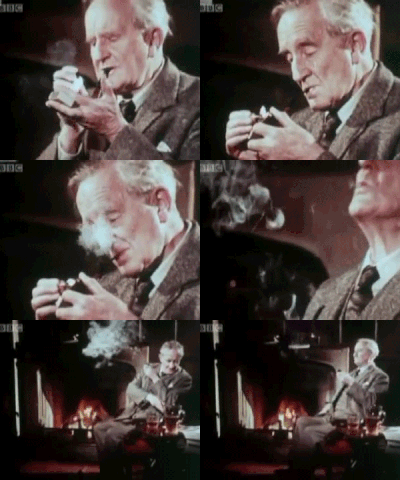
Lighting his pipe 
With an ember from the fire, 
He whispered --
"I am Winter."

11 January 2026

Winter-Sound.


NO POSSUM, NO SOP, NO TATERS

He is not here, the old sun,
As absent as if we were asleep.

The field is frozen. The leaves are dry.
Bad is final in this light.

In this bleak air the broken stalks
Have arms without hands. They have trunks

Without legs or, for that, without heads.
They have heads in which a captive cry

Is merely the moving of a tongue.
Snow sparkles like eyesight falling to earth,

Like seeing fallen brightly away.
The leaves hop, scraping on the ground.

It is deep January. The sky is hard.
The stalks are firmly rooted in ice.

It is in this solitude, a syllable,
Out of these gawky flitterings,

Intones its single emptiness,
The savagest hollow of winter-sound.

It is here, in this bad, that we reach
The last purity of the knowledge of good.

The crow looks rusty as he rises up.
Bright is the malice in his eye...

One joins him there for company,
But at a distance, in another tree.

Wallace Stevens

04 January 2026

Beholds.

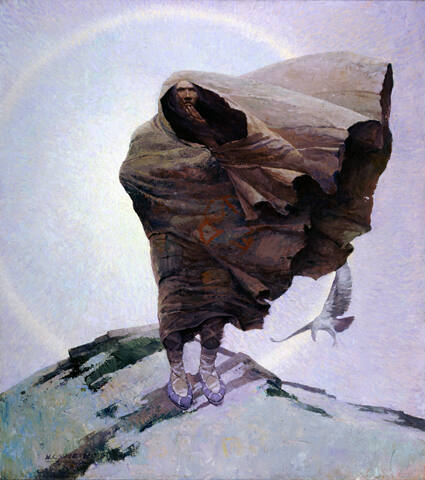
Wyeth, N.C., Winter, Bringer of Cold, 1909


SNOW MAN

One must have a mind of winter
To regard the frost and the boughs
Of the pine-trees crusted with snow;

And have been cold a long time
To behold the junipers shagged with ice,
The spruces rough in the distant glitter

Of the January sun; and not to think
Of any misery in the sound of the wind,
In the sound of a few leaves,

Which is the sound of the land
Full of the same wind
That is blowing in the same bare place

For the listener, who listens in the snow,
And, nothing himself, beholds
Nothing that is not there and the nothing that is.

Wallace Stevens

Twelve.

Hillingford, Preparing the Yule Log, 1883


Hever Castle and Gardens has your instructions ...
Pagan Scandinavia celebrated a winter festival called Yule, held in the late December to early January period. Yule logs were originally lit to honour Thor, the god of thunder, with the belief that each spark from the fire represented a new pig or calf that would be born during the coming year. Feasting would continue until the log burned out, which could take as many as twelve days. During the medieval period the yule log was lit on Christmas Eve.

Parry, Welcome Yule!

The Tenet Vocal Artists perform ...

02 January 2026

Story.

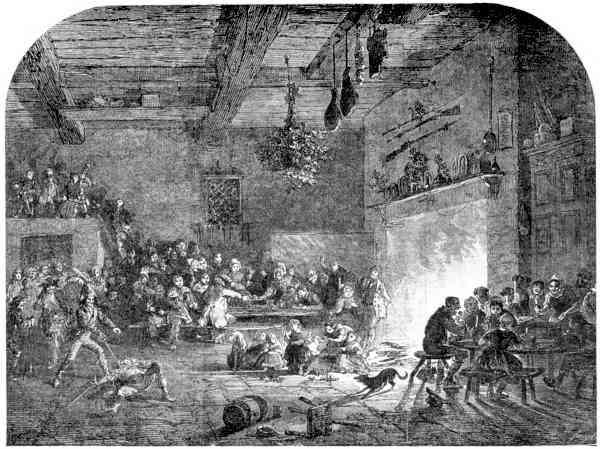
Spenser, January from "The Shepherd's Calendar," 1597


The SHEPHERD'S CALENDAR: JANUARY
WINTER'S DAY

Withering and keen the winter comes
While comfort flyes to close shut rooms
And sees the snow in feathers pass
Winnowing by the window glass
And unfelt tempests howl and beat
Above his head in corner seat
And musing oer the changing scene
Farmers behind the tavern screen
Sit-or wi elbow idly prest
On hob reclines the corners guest
Reading the news to mark again
The bankrupt lists or price of grain
Or old moores anual prophecys
That many a theme for talk supplys
Whose almanacks thumbd pages swarm
Wi frost and snow and many a storm
And wisdom gossipd from the stars
Of polities and bloody wars
He shakes his head and still proceeds
Neer doubting once of what he reads
All wonders are wi faith supplyd
Bible at once and weather guide
Puffing the while his red tipt pipe
Dreaming oer troubles nearly ripe
Yet not quite lost in profits way
He'll turn to next years harvest day
And winters leisure to regale
Hopes better times and sips his ale
While labour still pursues his way
And braves the tempest as he may
The thresher first thro darkness deep
Awakes the mornings winter sleep
Scaring the owlet from her prey
Long before she dreams of day
That blinks above head on the snow
Watching the mice that squeaks below
And foddering boys sojourn again
By ryhme hung hedge and frozen plain
Shuffling thro the sinking snows
Blowing his fingers as he goes
To where the stock in bellowings hoarse
Call for their meals in dreary close
And print full many a hungry track
Round circling hedge that guards the stack
Wi higgling tug he cuts the hay
And bares the forkfull loads away
And morn and evening daily throws
The little heaps upon the snows
The shepherd too in great coat wrapt
And straw bands round his stockings lapt
Wi plodding dog that sheltering steals
To shun the wind behind his heels
Takes rough and smooth the winter weather
And paces thro the snow together
While in the fields the lonly plough
Enjoys its frozen sabbath now
And horses too pass time away
In leisures hungry holiday
Rubbing and lunging round the yard
Dreaming no doubt of summer sward
As near wi idle pace they draw
To brouze the upheapd cribs of straw
While whining hogs wi hungry roar
Crowd around the kitchen door
Or when their scanty meal is done
Creep in the straw the cold to shun
And old hens scratting all the day
Seeks curnels chance may throw away
Pausing to pick the seed and grain
Then dusting up the chaff again
While in the barn holes hid from view
The cats their patient watch pursue
For birds which want in flocks will draw
From woods and fields to pick the straw
The soodling boy that saunters round
The yard on homward dutys bound
Now fills the troughs for noisy hogs
Oft asking aid from barking dogs
That tuggles at each flopping ear
Of such as scramble on too near
Or circld round wi thirsty stock
That for his swinging labours flock
At clanking pump his station takes
Half hid in mist their breathing makes
Or at the pond before the door
Which every night leaves frozen oer
Wi heavy beetle1 splinters round
The glossy ice wi jarring sound
While huddling geese as half asleep
Doth round the imprisond water creep
Silent and sad to wait his aid
And soon as ere a hole is made
They din his ears wi pleasures cry
And hiss at all that ventures nigh
Splashing wi jealous joys & vain
Their fill ere it be froze again
And woodstack climbs at maids desire
Throwing down faggots for the fire
Where stealing time he often stands
To warm his half froze tingling hands
The schoolboy still in dithering joys
Pastime in leisure hours employs
And be the weather as it may
Is never at a loss for play
Rolling up giant heaps of snow
As noontide frets its little thaw
Making rude things of various names
Snow men or aught their fancy frames
Till numbd wi cold they quake away
And join at hotter sports to play
Kicking wi many a flying bound
The football oer the frozen ground
Or seeking bright glib ice to play
To sailing slide the hours away
As smooth and quick as shadows run
When clouds in autumn pass the sun
Some hurrying rambles eager take
To skait upon the meadow lake
Scaring the snipe from her retreat
From shelving banks unfrozen seat
Or running brook where icy spars
Which the pale sunlight specks wi stars
Shoots crizzling oer the restless tide
To many a likness petrified
Where fancy often stoops to pore
And turns again to wonder more
The more hen too wi fear opprest
Starts from her reedy shelterd nest
Bustling to get from foes away
And scarcly flies more fast then they
Skaiting along wi curving springs
Wi arms spread out like herons wings
They race away for pleasures sake
A hunters speed along the lake
And oft neath trees where ice is thin
Meet narrow scapes from breaking in
Again the robin waxes tame
And ventures pitys crumbs to claim
Picking the trifles off the snow
Which dames on purpose daily throw
And perching on the window sill
Where memory recolecting still
Knows the last winters broken pane
And there he hops and peeps again
The clouds of starnels dailey fly
Blackening thro the evening sky
To whittleseas1 reed wooded mere
And ozier holts by rivers near
And many a mingld swathy crowd
Rook crow and jackdaw noising loud
Fly too and fro to dreary fen
Dull winters weary flight agen
Flopping on heavy wings away
As soon as morning wakens grey
And when the sun sets round and red
Returns to naked woods to bed
Wood pigeons too in flocks appear
By hunger tamd from timid fear
They mid the sheep unstartld steal
And share wi them a scanty meal
Picking the green leaves want bestows
Of turnips sprouting thro the snows
The ickles from the cottage eaves
Which cold nights freakish labour leaves
Fret in the sun a partial thaw
Pattring on the pitted snow
But soon as ere hes out of sight
They eke afresh their tails at night
The sun soon creepeth out of sight
Behind the woods-and running night
Makes haste to shut the days dull eye
And grizzles oer the chilly sky
Dark deep and thick by day forsook
As cottage chimneys sooty nook
While maidens fresh as summer roses
Joining from the distant closes
Haste home wi yokes and swinging pail
And thresher too sets by his flail
And leaves the mice at peace agen
To fill their holes wi stolen grain
And owlets glad his toils are oer
Swoops by him as he shuts the door
The shepherd seeks his cottage warm
And tucks his hook beneath his arm
And weary in the cold to roam
Scenting the track that leadeth home
His dog wi swifter pace proceeds
And barks to urge his masters speed
Then turns and looks him in the face
And trotts before Wi mending pace
Till out of whistle from the swain
He sits him down and barks again
Anxious to greet the opend door
And meet the cottage fire once more
The robin that wi nimble eye
Glegs round a danger to espy
Now pops from out the opend door
From crumbs half left upon the floor
Nor wipes his bill on perching chair
Nor stays to clean a feather there
Scard at the cat that sliveth in
A chance from evenings glooms to win
To jump on chairs or tables nigh
Seeking what plunder may supply
The childerns litterd scraps to thieve
Or aught that negligence may leave
Creeping when huswives cease to watch
Or dairey doors are off the latch
On cheese or butter to regale
Or new milk reeking in .the pale
The hedger now in leathern coat
From woodland wilds and fields remote
After a journey far and slow
Knocks from his shoes the caking snow
And opes the welcome creaking door
Throwing his faggot on the floor
And at his listening wifes desire
To eke afresh the blazing fire
Wi sharp bill cuts the hazel bands
Then sets him down to warm his hands
And tell in labours happy way
His story of the passing day
While as the warm blaze cracks and gleams
The supper reeks in savoury steams
Or keetle simmers merrily
And tinkling cups are set for tea
Thus doth the winters dreary day
From morn to evening wear away.

John Clare
01 February 2025

Dream.

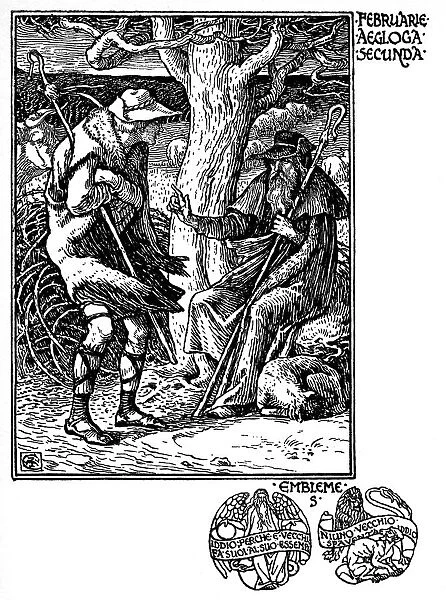
Crane, The Shepherd's Calendar: February, 1898


THE SHEPHERD'S CALENDAR: FEBRUARY

The snow has left the cottage top;
The thatch moss grows in brighter green;
And eaves in quick succession drop,
Where grinning icicles have been,
Pit-patting with a pleasant noise
In tubs set by the cottage-door;
While ducks and geese, with happy joys,
Plunge in the yard-pond brimming o'er.

The sun peeps through the window-pane;
Which children mark with laughing eye,
And in the wet street steal again
To tell each other spring is nigh:
Then, as young hope the past recalls,
In playing groups they often draw,
To build beside the sunny walls
Their spring-time huts of sticks or straw.

And oft in pleasure's dreams they hie
Round homesteads by the village side,
Scratching the hedgerow mosses by,
Where painted pooty shells abide,
Mistaking oft the ivy spray
For leaves that come with budding spring,
And wondering, in their search for play,
Why birds delay to build and sing.

The milkmaid singing leaves her bed,
As glad as happy thoughts can be,
While magpies chatter o'er her head
As jocund in the change as she:
Her cows around the closes stray,
Nor lingering wait the foddering-boy,
Tossing the molehills in their play,
And staring round with frolic joy.

The shepherd now is often seen
Near warm banks o'er his hook to bend,
Or o'er a gate or stile to lean,
Chattering to a passing friend:
Ploughmen go whistling to their toils,
And yoke again the rested plough;
And, mingling o'er the mellow soils,
Boys shout, and whips are noising now.

The barking dogs, by lane and wood,
Drive sheep afield from foddering ground;
And Echo, in her summer mood,
Briskly mocks the cheering sound.
The flocks, as from a prison broke,
Shake their wet fleeces in the sun,
While, following fast, a misty smoke
Reeks from the moist grass as they run.

No more behind his master's heels
The dog creeps on his winter-pace;
But cocks his tail, and o'er the fields
Runs many a wild and random chase,
Following, in spite of chiding calls,
The startled cat with harmless glee,
Scaring her up the weed-green walls,
Or mossy mottled apple-tree.

As crows from morning perches fly,
He barks and follows them in vain;
E'en larks will catch his nimble eye,
And off he starts and barks again,
With breathless haste and blinded guess,
Oft following where the hare hath gone,
Forgetting, in his joy's excess,
His frolic puppy-days are done.

The hedgehog, from his hollow root,
Sees the wood-moss clear of snow,
And hunts the hedge for fallen fruit--
Crab, hip, and winter-bitten sloe;
But often checked by sudden fears,
As shepherd-dog his haunt espies,
He rolls up in a ball of spears,
And all his barking rage defies.

The gladdened swine bolt from the sty,
And round the yard in freedom run,
Or stretching in their slumbers lie
Beside the cottage in the sun.
The young horse whinnies to his mate,
And, sickening from the thresher's door,
Rubs at the straw-yard's banded gate,
Longing for freedom on the moor.

The small birds think their wants are o'er,
To see the snow-hills fret again,
And, from the barn's chaff-littered door,
Betake them to the greening plain.
The woodman's robin startles coy,
Nor longer to his elbow comes,
To peck, with hunger's eager joy,
'Mong mossy stulps the littered crumbs.

'Neath hedge and walls that screen the wind,
The gnats for play will flock together;
And e'en poor flies some hope will find
To venture in the mocking weather;
From out their hiding-holes again,
With feeble pace, they often creep
Along the sun-warmed window-pane,
Like dreaming things that walk in sleep.

The mavis thrush with wild delight,
Upon the orchard's dripping tree,
Mutters, to see the day so bright,
Fragments of young Hope's poesy:
And oft Dame stops her buzzing wheel
To hear the robin's note once more,
Who tootles while he pecks his meal
From sweetbrier hips beside the door.

The sunbeams on the hedges lie,
The south wind murmurs summer-soft;
The maids hang out white clothes to dry
Around the elder-skirted croft:
A calm of pleasure listens round,
And almost whispers winter by;
While Fancy dreams of summer's sound,
And quiet rapture fills the eye.

Thus Nature of the spring will dream
While south winds thaw; but soon again
Frost breathes upon the stiffening stream,
And numbs it into ice: the plain
Soon wears its mourning garb of white;
And icicles, that fret at noon,
Will eke their icy tails at night
Beneath the chilly stars and moon.

Nature soon sickens of her joys,
And all is sad and dumb again.
Save merry shouts of sliding boys
About the frozen furrowed plain.
The foddering-boy forgets his song,
And silent goes with folded arms;
And croodling shepherds bend along,
Crouching to the whizzing storms.

John Clare

24 January 2025

Passing.


A SHEPHERD'S CALENDAR: JANUARY

Withering and keen the winter comes
While comfort flyes to close shut rooms
And sees the snow in feathers pass
Winnowing by the window glass
And unfelt tempests howl and beat
Above his head in corner seat
And musing oer the changing scene
Farmers behind the tavern screen
Sit-or wi elbow idly prest
On hob reclines the corners guest
Reading the news to mark again
The bankrupt lists or price of grain
Or old moores anual prophecys
That many a theme for talk supplys
Whose almanacks thumbd pages swarm
Wi frost and snow and many a storm
And wisdom gossipd from the stars
Of polities and bloody wars
He shakes his head and still proceeds
Neer doubting once of what he reads
All wonders are wi faith supplyd
Bible at once and weather guide
Puffing the while his red tipt pipe
Dreaming oer troubles nearly ripe
Yet not quite lost in profits way
He’ll turn to next years harvest day
And winters leisure to regale
Hopes better times and sips his ale
While labour still pursues his way
And braves the tempest as he may
The thresher first thro darkness deep
Awakes the mornings winter sleep
Scaring the owlet from her prey
Long before she dreams of day
That blinks above head on the snow
Watching the mice that squeaks below
And foddering boys sojourn again
By ryhme hung hedge and frozen plain
Shuffling thro the sinking snows
Blowing his fingers as he goes
To where the stock in bellowings hoarse
Call for their meals in dreary close
And print full many a hungry track
Round circling hedge that guards the stack
Wi higgling tug he cuts the hay
And bares the forkfull loads away
And morn and evening daily throws
The little heaps upon the snows
The shepherd too in great coat wrapt
And straw bands round his stockings lapt
Wi plodding dog that sheltering steals
To shun the wind behind his heels
Takes rough and smooth the winter weather
And paces thro the snow together
While in the fields the lonly plough
Enjoys its frozen sabbath now
And horses too pass time away
In leisures hungry holiday
Rubbing and lunging round the yard
Dreaming no doubt of summer sward
As near wi idle pace they draw
To brouze the upheapd cribs of straw
While whining hogs wi hungry roar
Crowd around the kitchen door
Or when their scanty meal is done
Creep in the straw the cold to shun
And old hens scratting all the day
Seeks curnels chance may throw away
Pausing to pick the seed and grain
Then dusting up the chaff again
While in the barn holes hid from view
The cats their patient watch pursue
For birds which want in flocks will draw
From woods and fields to pick the straw
The soodling boy that saunters round
The yard on homward dutys bound
Now fills the troughs for noisy hogs
Oft asking aid from barking dogs
That tuggles at each flopping ear
Of such as scramble on too near
Or circld round wi thirsty stock
That for his swinging labours flock
At clanking pump his station takes
Half hid in mist their breathing makes
Or at the pond before the door
Which every night leaves frozen oer
Wi heavy beetle1 splinters round
The glossy ice wi jarring sound
While huddling geese as half asleep
Doth round the imprisond water creep
Silent and sad to wait his aid
And soon as ere a hole is made
They din his ears wi pleasures cry
And hiss at all that ventures nigh
Splashing wi jealous joys & vain
Their fill ere it be froze again
And woodstack climbs at maids desire
Throwing down faggots for the fire
Where stealing time he often stands
To warm his half froze tingling hands
The schoolboy still in dithering joys
Pastime in leisure hours employs
And be the weather as it may
Is never at a loss for play
Rolling up giant heaps of snow
As noontide frets its little thaw
Making rude things of various names
Snow men or aught their fancy frames
Till numbd wi cold they quake away
And join at hotter sports to play
Kicking wi many a flying bound
The football oer the frozen ground
Or seeking bright glib ice to play
To sailing slide the hours away
As smooth and quick as shadows run
When clouds in autumn pass the sun
Some hurrying rambles eager take
To skait upon the meadow lake
Scaring the snipe from her retreat
From shelving banks unfrozen seat
Or running brook where icy spars
Which the pale sunlight specks wi stars
Shoots crizzling oer the restless tide
To many a likness petrified
Where fancy often stoops to pore
And turns again to wonder more
The more hen too wi fear opprest
Starts from her reedy shelterd nest
Bustling to get from foes away
And scarcly flies more fast then they
Skaiting along wi curving springs
Wi arms spread out like herons wings
They race away for pleasures sake
A hunters speed along the lake
And oft neath trees where ice is thin
Meet narrow scapes from breaking in
Again the robin waxes tame
And ventures pitys crumbs to claim
Picking the trifles off the snow
Which dames on purpose daily throw
And perching on the window sill
Where memory recolecting still
Knows the last winters broken pane
And there he hops and peeps again
The clouds of starnels dailey fly
Blackening thro the evening sky
To whittleseas1 reed wooded mere
And ozier holts by rivers near
And many a mingld swathy crowd
Rook crow and jackdaw noising loud
Fly too and fro to dreary fen
Dull winters weary flight agen
Flopping on heavy wings away
As soon as morning wakens grey
And when the sun sets round and red
Returns to naked woods to bed
Wood pigeons too in flocks appear
By hunger tamd from timid fear
They mid the sheep unstartld steal
And share wi them a scanty meal
Picking the green leaves want bestows
Of turnips sprouting thro the snows
The ickles from the cottage eaves
Which cold nights freakish labour leaves
Fret in the sun a partial thaw
Pattring on the pitted snow
But soon as ere hes out of sight
They eke afresh their tails at night
The sun soon creepeth out of sight
Behind the woods-and running night
Makes haste to shut the days dull eye
And grizzles oer the chilly sky
Dark deep and thick by day forsook
As cottage chimneys sooty nook
While maidens fresh as summer roses
Joining from the distant closes
Haste home wi yokes and swinging pail
And thresher too sets by his flail
And leaves the mice at peace agen
To fill their holes wi stolen grain
And owlets glad his toils are oer
Swoops by him as he shuts the door
The shepherd seeks his cottage warm
And tucks his hook beneath his arm
And weary in the cold to roam
Scenting the track that leadeth home
His dog wi swifter pace proceeds
And barks to urge his masters speed
Then turns and looks him in the face
And trotts before Wi mending pace
Till out of whistle from the swain
He sits him down and barks again
Anxious to greet the opend door
And meet the cottage fire once more
The robin that wi nimble eye
Glegs round a danger to espy
Now pops from out the opend door
From crumbs half left upon the floor
Nor wipes his bill on perching chair
Nor stays to clean a feather there
Scard at the cat that sliveth in
A chance from evenings glooms to win
To jump on chairs or tables nigh
Seeking what plunder may supply
The childerns litterd scraps to thieve
Or aught that negligence may leave
Creeping when huswives cease to watch
Or dairey doors are off the latch
On cheese or butter to regale
Or new milk reeking in .the pale
The hedger now in leathern coat
From woodland wilds and fields remote
After a journey far and slow
Knocks from his shoes the caking snow
And opes the welcome creaking door
Throwing his faggot on the floor
And at his listening wifes desire
To eke afresh the blazing fire
Wi sharp bill cuts the hazel bands
Then sets him down to warm his hands
And tell in labours happy way
His story of the passing day
While as the warm blaze cracks and gleams
The supper reeks in savoury steams
Or keetle simmers merrily
And tinkling cups are set for tea
Thus doth the winters dreary day
From morn to evening wear away.

John Clare

22 January 2025

Full.


It is the life of the crystal, the architect of the flake, the fire of the frost, the soul of the sunbeam. This crisp winter air is full of it. 

John Burroughs, from "Winter Sunshine"

Thanks to Walker's Arms for the view.  What a great site.

21 December 2024

Pleasures.

Wyeth, North Light, 1996


Let there be a cottage, a real cottage, a white cottage, embowered with flowering shrubs, so chosen as to unfold a succession of flowers upon the walls, and clustering round the windows through all the months of spring, summer, and autumn—beginning, in fact, with May roses, and ending with jasmine. Let it, however, not be spring, nor summer, nor autumn—but winter, in his sternest shape. This is a most important point in the science of happiness. And I am surprised to see people overlook it, and think it matter of congratulation that winter is going; or, if coming, is not likely to be a severe one. On the contrary, I put up a petition annually, for as much snow, hail, frost, or storm, of one kind or other, as the skies can possibly afford us. Surely every body is aware of the divine pleasures which attend a winter fire-side: candles at four o'clock, warm hearth-rugs, tea, a fair tea-maker, shutters closed, curtains flowing in ample draperies on the floor, whilst the wind and rain are raging audibly without.

Miracle.

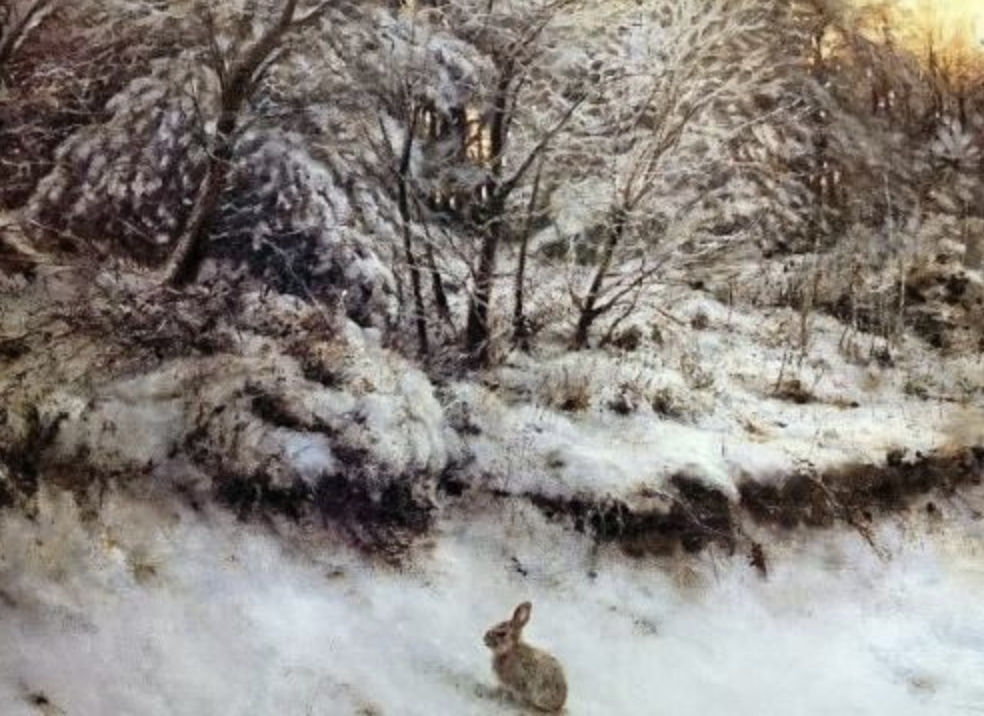
Poortvliet, Hare, 1976


Look up at the miracle of the falling snow, - the air a dizzy maze of whirling, eddying flakes, noiselessly transforming the world, the exquisite crystals dropping in ditch and gutter, and disguising in the same suit of spotless livery all objects upon which they fall. How novel and fine the first drifts! The old, dilapidated fence is suddenly set off with the most fantastic ruffles, scalloped and fluted after an unheard-of fashion! Looking down a long line of decrepit stone wall, in the trimming of which the wind had fairly run riot, I saw, as for the first time, what a severe yet master artist old Winter is. Ah, a severe artist! How stern the woods look, dark and cold and as rigid against the horizon as iron!

John Burroghs, from "The Snow-Walkers"

Jethro Tull, "Ring Out Solstice Bells"

27 January 2024

Go.

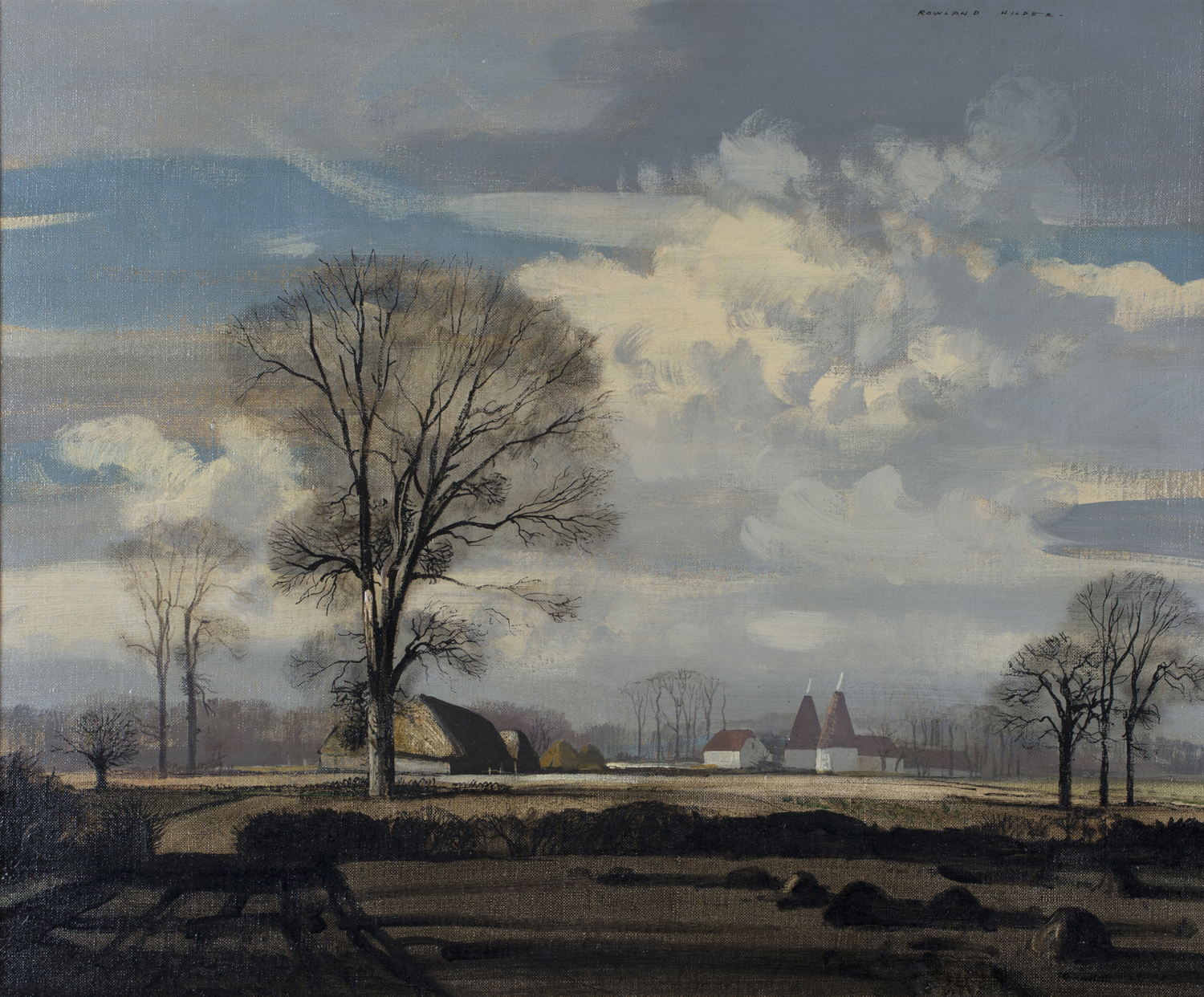
Hilder, Kentish Oast Houses,1952


WINTER EVENING

The crib stock fothered, horses suppered up,
And cows in sheds all littered down in straw,
The threshers gone, the owls are left to whoop,
The ducks go waddling with distended craw
Through little hole made in the hen-roost door,
And geese with idle gabble never o`er
Bait careless hog until he tumbles down,
Insult provoking spite to noise the more;
While fowl high-perched blink with contemptuous frown
On all the noise and bother heard below;
Over the stable-ridge in crowds,the crow,
With jackdaws intermixed, known by their noise,
To the warm woods behind the village go;
And whistling home for bed go weary boys.

John Clare
21 December 2023

Half-Lit.

Poortvliet, Deer in the Woods, n/d


SINGING to DEER

At solstice, the woods were bright in a snowy way, the sky pearl gray above the stately maples and gnarled burr oaks. An Alaskan marooned in the urban Midwest, it took me years to find this nearby patch of relatively undisturbed land where I can sense the power of wildness. Now I go there often, watching the seasons unfold their changeful unchanging patterns in the increasingly familiar forest.

I especially like to walk among the sleeping trees in the half-lit silence of winter dawns. The trail I follow winds and twists, new patches of mixed woodland appearing at every turn. That morning, I reached a point where the path turns sharply left to follow a small ravine. In spring, ephemeral ponds—lively with salamanders, loud with frogs—form in the creases of the forest there. But in frozen winter, I expected nothing beyond silence and wind.

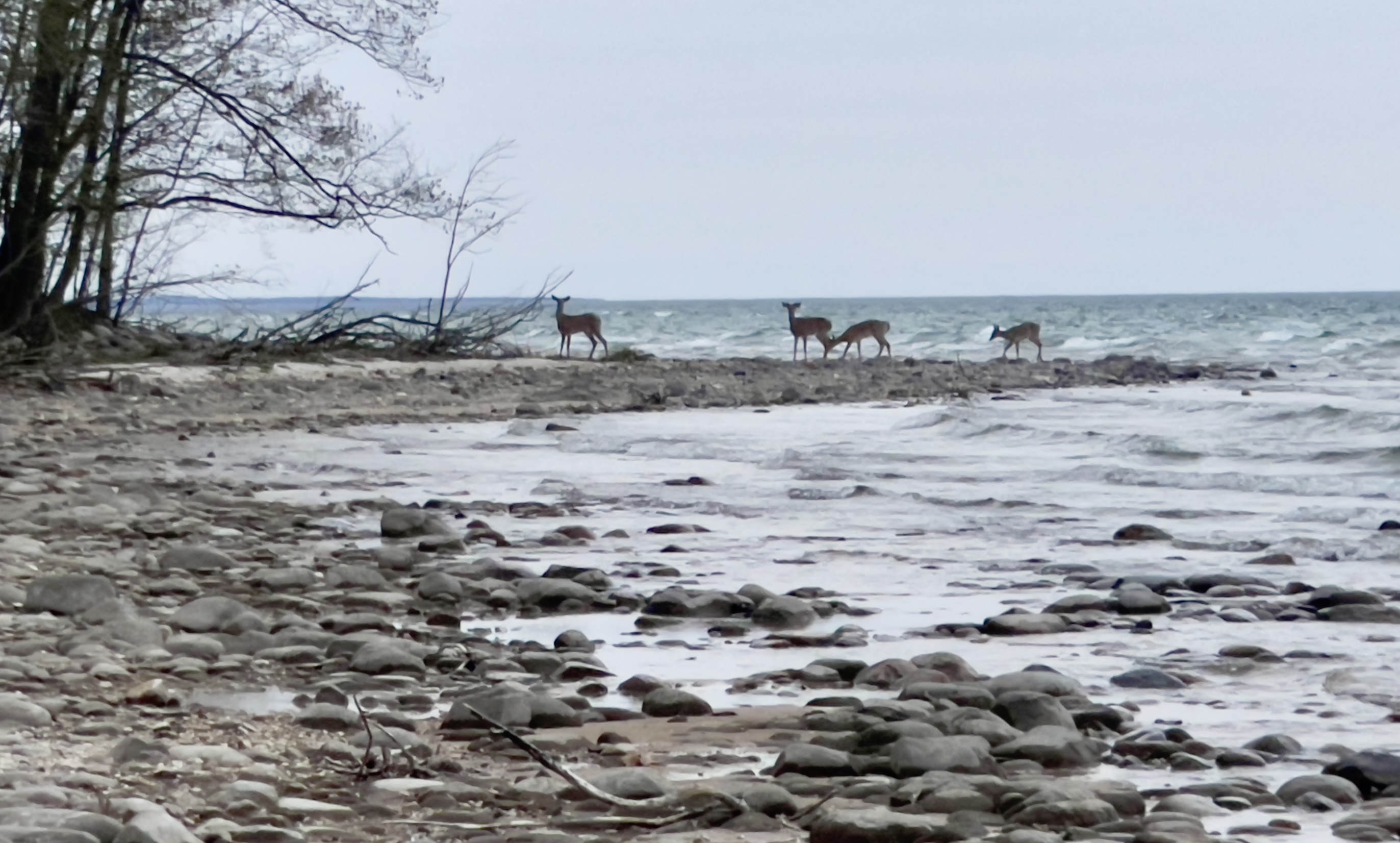
So I did not see them at first, three deer beside three empty larches. When I made them out—gray-dun hides against a gray-dun world—they were motionless, white tails aloft like flags of distress. I stopped in my tracks, thinking how lucky I was to meet the animal my Celtic forebears called the spirit of wildness on that auspicious day.

I often encounter deer on my morning walks. The woods are close enough to roads and homes that we humans are no strangers to them. But like any animal of the suburban wild—squirrel or opossum or raccoon—the deer keep their distance. An instant after they see me, they bound silently away, their white-flag tails on high alert.

But this morning, the deer only stared at me across the ravine. To the left stood a tall stately doe; to the right, an older heavier one; in the center, one of the previous spring’s fawns, all gangly adolescence. Huge soft ears held high, they cast dark liquid gazes at me.

And did not run.

Desire burst in my heart: to speak to the deer, to tell them how beautiful they were, to thank them for bringing wildness to the edge of the vast city. To speak from my heart, my own little wild heart, to theirs. To celebrate the season with them.

But I stood silent, for I do not speak the language of deer. I stared silently at them, awaiting the inevitable flight. But moments stretched out like fingers of light from the rising sun, and the deer did not run away.

Then, for no reason I can easily explain, I began to sing, my voice loud in the silent forest. A plaintive minor-keyed medieval song sprang to my lips, a holiday carol I’ve known since girlhood. Lo how a rose e’er blooming, from tender stem hath sprung. . . It came a floweret bright, amidst the snows of winter, when half-spent was the night.

I thought the sound of my voice would frighten the deer away, but I wanted to speak to them, and music seemed the only way.

Just as I expected, they began to move. But not swiftly. And not into the forest. Not away from me at all.

No. One slow step at a time, the deer moved towards me.

When I started singing, they were perhaps fifty feet away. By the time I began the second verse, they were half that distance. By the time I finished the song, the deer stood just across the ravine.

In the sudden silence at the song’s end, three tails went suddenly up again, sounding a silent alert. So I began another song. Tails went down, ears moved slightly forward. Dawn light emblazoned lemon and melon stripes upon the snow as three deer listened to carol after carol after carol.

A quarter-hour passed and still they did not move. I kept singing.

It was not the deer but me who ended our encounter. The sky had moved from pearl to sherbet to azure, and I had promises to keep. I thanked the deer for listening to my dawn chorus. The sound of my words shook them awake. Tails went up, forelegs tucked up, and in an instant they were gone.

In the silence, I stared into the gray forest. Only a few months earlier, standing below a high-massed mountain glacier I have known since childhood, now shrinking fast away, its ancient snows surging down to the gray sea in cold torrents, I had felt overwhelmed with hopelessness. Do we only take from nature, giving nothing in return? If so, what use are we? Why should the universe continue to provide for us, if we are such ungrateful children?

But there on the edge of a tiny ravine, hope washed over me like light. Perhaps there is a reason for our being. Perhaps what we give our lovely blue earth is song. Beauty. Art. Perhaps that is the reason we were created: to entertain the universe. Perhaps the great spirit is amused and touched, thrilled and delighted by our childlike creativity. Today we leave art to the professionals: to those with beautiful voices and firm bodies and exciting visions. But perhaps art is not frozen moments of perfection but the process of creation itself. Perhaps we were put here to pleasure the world, making art as spontaneously and joyfully as children drawing great yellow suns with wax crayons. Perhaps we should all be singing more, and dancing, and painting with bright colors, and chanting out poems. Perhaps we silly wonderful amateurs most please the universe when we act that way.

Patricia Monaghan

28 December 2022

The Oyster Months Notebook, revised December 2022

'Tis Winter and the Oyster Months issue forth a crisp and frigid dirge ...

Ring out, wild bells, to the wild sky,
The flying cloud, the frosty light;
The year is dying in the night;
Ring out, wild bells, and let him die.

Ring out the old, ring in the new,
Ring, happy bells, across the snow:
The year is going, let him go;
Ring out the false, ring in the true.

Ring out the grief that saps the mind,
For those that here we see no more,
Ring out the feud of rich and poor,
Ring in redress to all mankind.

Ring out a slowly dying cause,
And ancient forms of party strife;
Ring in the nobler modes of life,
With sweeter manners, purer laws.

Ring out the want, the care, the sin,
The faithless coldness of the times;
Ring out, ring out my mournful rhymes,
But ring the fuller minstrel in.

Alfred, Lord Tennyson

'Tis Winter. 

REVISED December 2022 ...

Nicola Matteis: Most ravishing things (Music from the Books of Ayres)
Theatrum Affectuum


The Art of Resonance: Archlute & Theorbo Music of the Italian Seicento
Luca Pianca


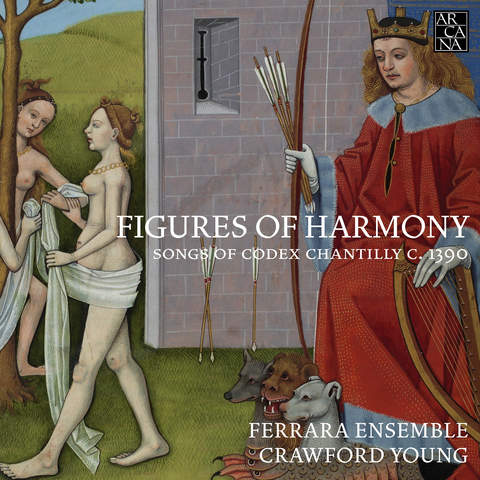
Figures of Harmony: Songs of Codex Chantilly c. 1390
Ferrara Ensemble and Crawford Young


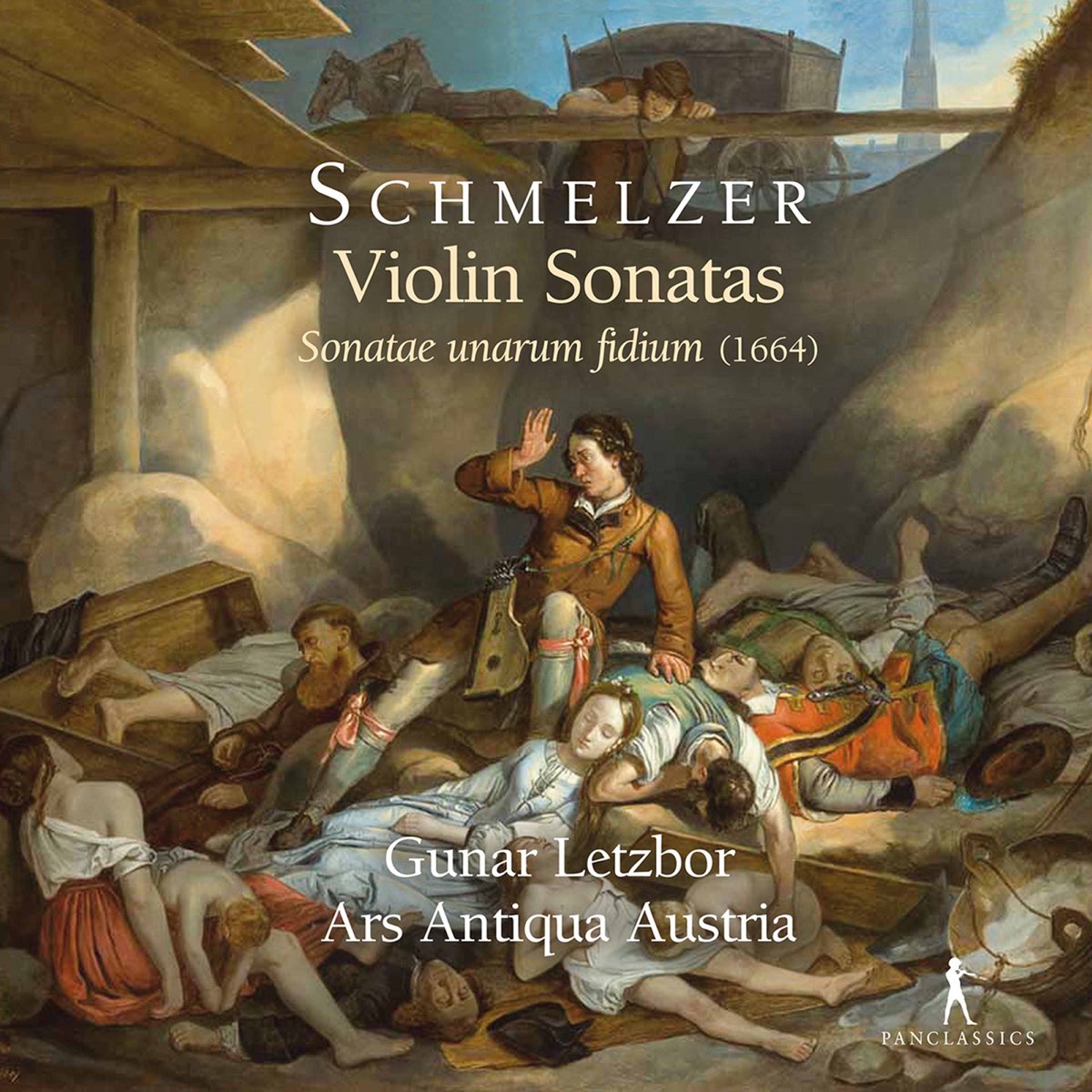
Schmelzer: Violin Sonatas
Gunar Letzbor & Ars Antiqua Austria


Zelenka: Sonates pour Deux Hautbois et Basson
Ensemble Zefiro


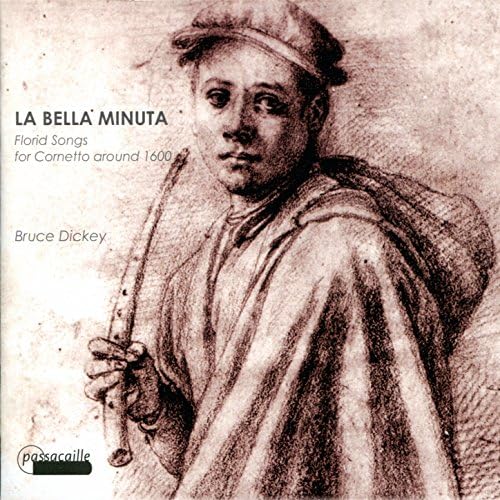
La Bella Minuta: Florid Songs for Cornetto, ca.1600
Liuwe Tamminga & Bruce Dickey


Brade, G. Gabrieli & Scheidt: Tuba mirum
Les Sacqueboutiers and Renaud Delaigue


REVISED October 2022 ...

A Meeting Place: Medieval & Renaissance Music for Lute & Ud
August Denhard and Münir Nurettin Beken 


Notker Balbulus: Sequnezen, Tropen & Gregorianischer Choral aud dem Kloster St. Gallen
Ordo Virtutum and Stefan Morent 


Johann Rosenmüller in Exile
Acronym and Jesse Blumberg


Thomas Morley: Fantasies to Two Voices
Jonathan Dunford & Jérôme Chaboseau


Biber: Harmonia artificioso
Musica Antiqua Köln and Reinhard Goebel


Joseph Bodin De Boismortier: The Complete Opus 37 Trio Sonatas (1732) for Flute, Viola da Gamba and Chamber Organ
Flauti Diversi


Die Weisheit des Alters: Ars moriendi im Minnesang
Ensemble Für Frühe musik Augsburg


REVISED September 2022 ...

Philipp Friedrich Buchner: Plectrum Musicum
Parnassi Musici


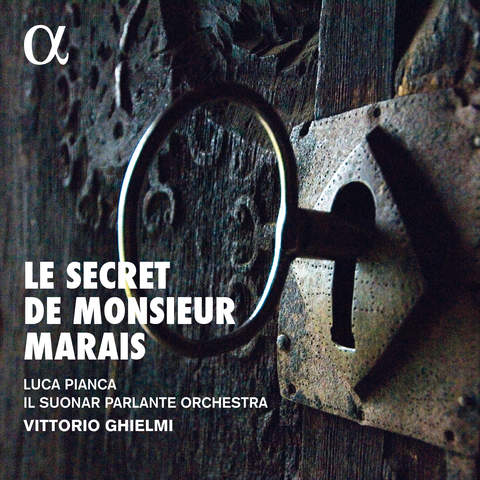
Le Secret de Monsieur Marais
Vittorio Ghielmi, Luca Pianca, Il Suonar Parlante Orchestra


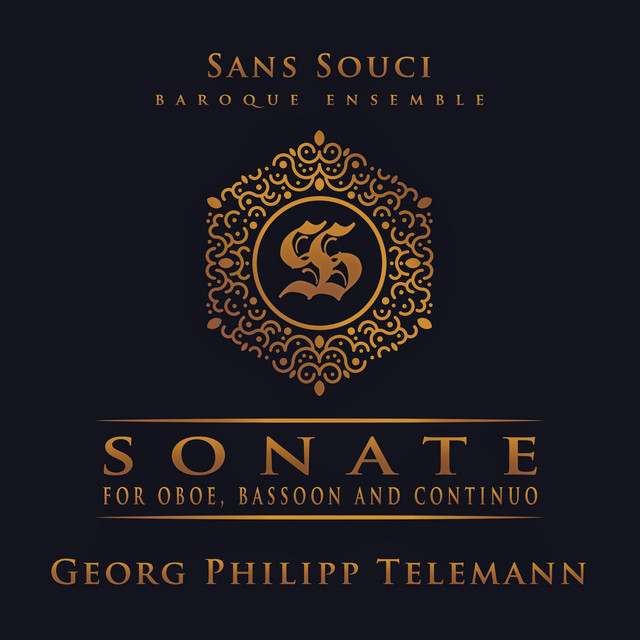
Telemann: Sonate for Oboe, Bassoon, and Continuo
Sans Souci


Johann Jakob Walther: Hortulus Chelicus
Sills, Dirst, Dirst, and Wang (no offense)


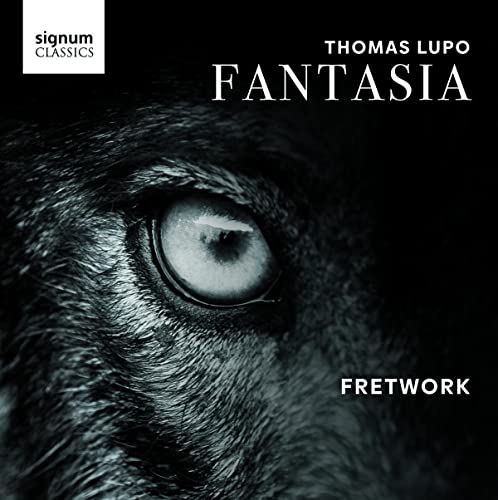
Thomas Lupo: Fantasia
Fretwork


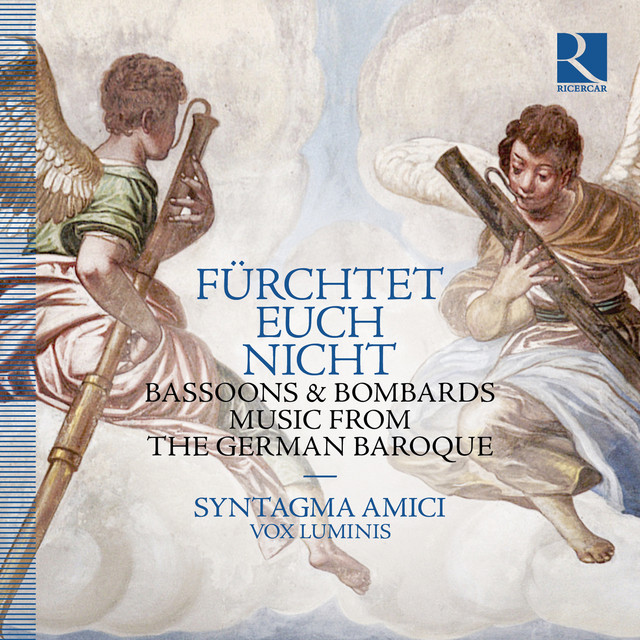
Fürchtet Euch Nicht: Bassoons & Bombards Music from the German Baroque
Syntagma Amici, Vox Lumini


Johann Georg Weichenberger: Lute Works 
Joachim Held


REVISED March 2022 ...

Fantasia! Dialogue for One
Pauline Oostenrijk


February 2022 ...

Jacon van Eyck: Der Fluyten Lust-hof
Erik Bosgraaf


Marin Marais: Pieces de Viole de Cinq Livre
Jordi Savall, Ton Koopmann, Hopkinson Smith, Christophe Coin, Anne Gallet


The Cosmopolitan: Songs by Oswald von Wolkenstein
Ensemble Leones, Marc Lewis


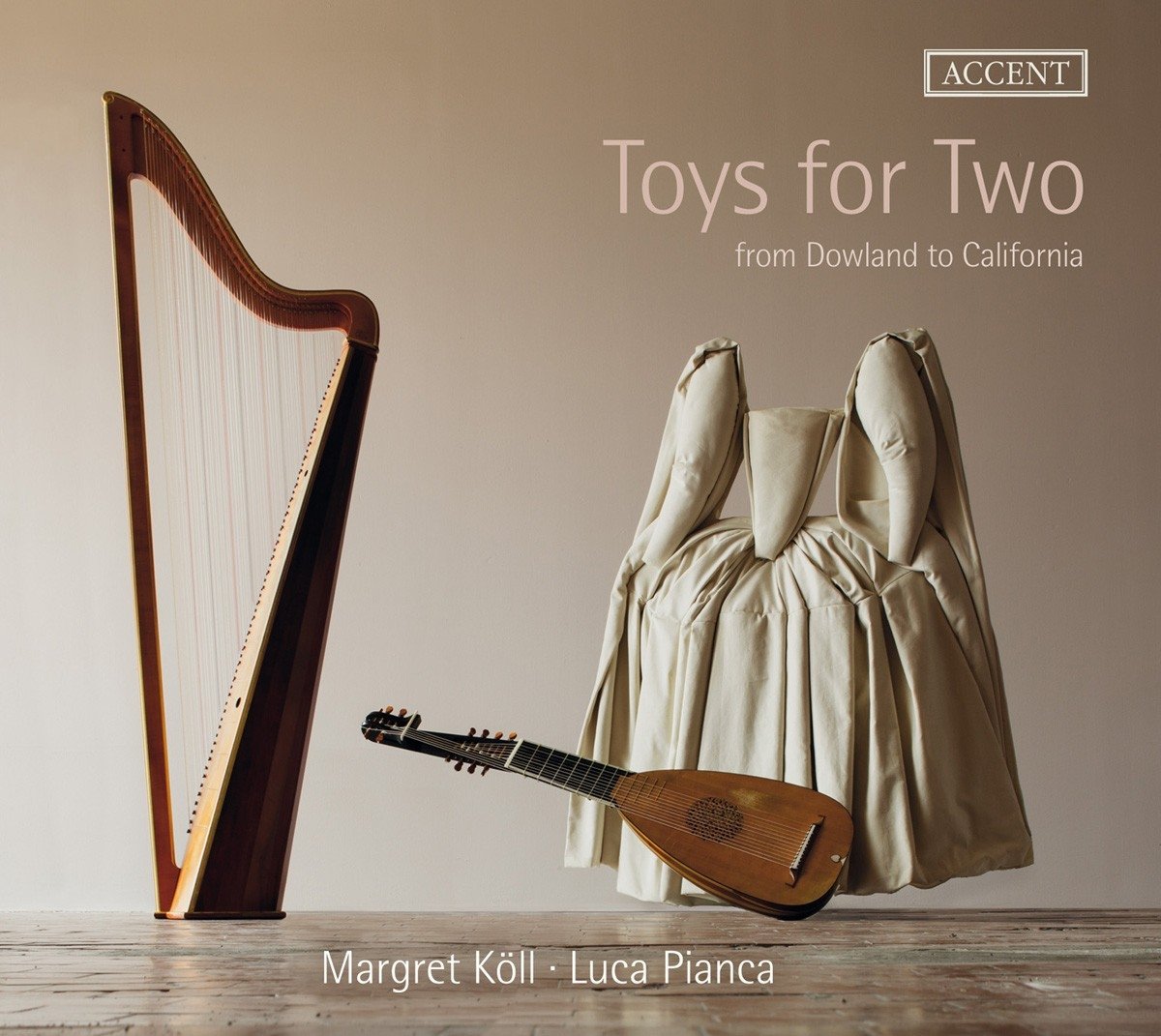
Toys for Two: Dowland to California
Margaret Koll and Luca Pianca


REVISED January 2022 ...

Scheidt: Ludi Musici
L'Acheron, Francois Joubert-Caillet


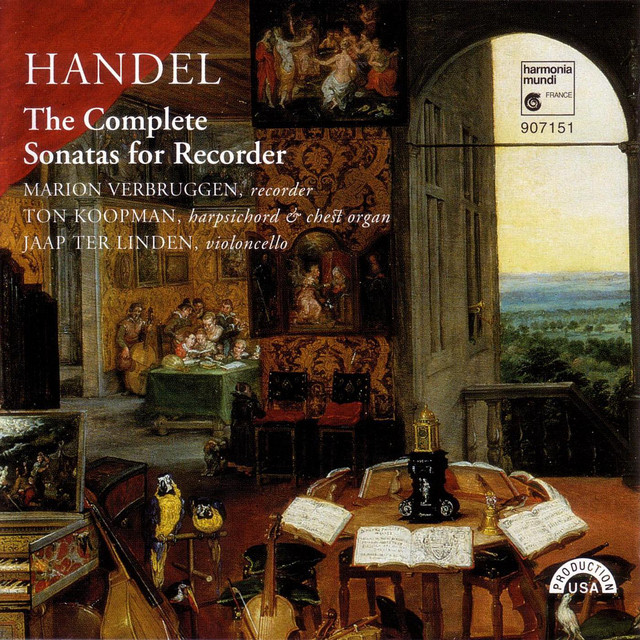
Handel: The Complete Sonatas for Recorder
Marion Verbruggen, Ton Koopman and Jaap ter Linden


Buxtehude: Complete Chamber Music
Ton Koopman


Songs of Olden Times: Estonian Folk Hymns and Runic Songs
Heinavanker


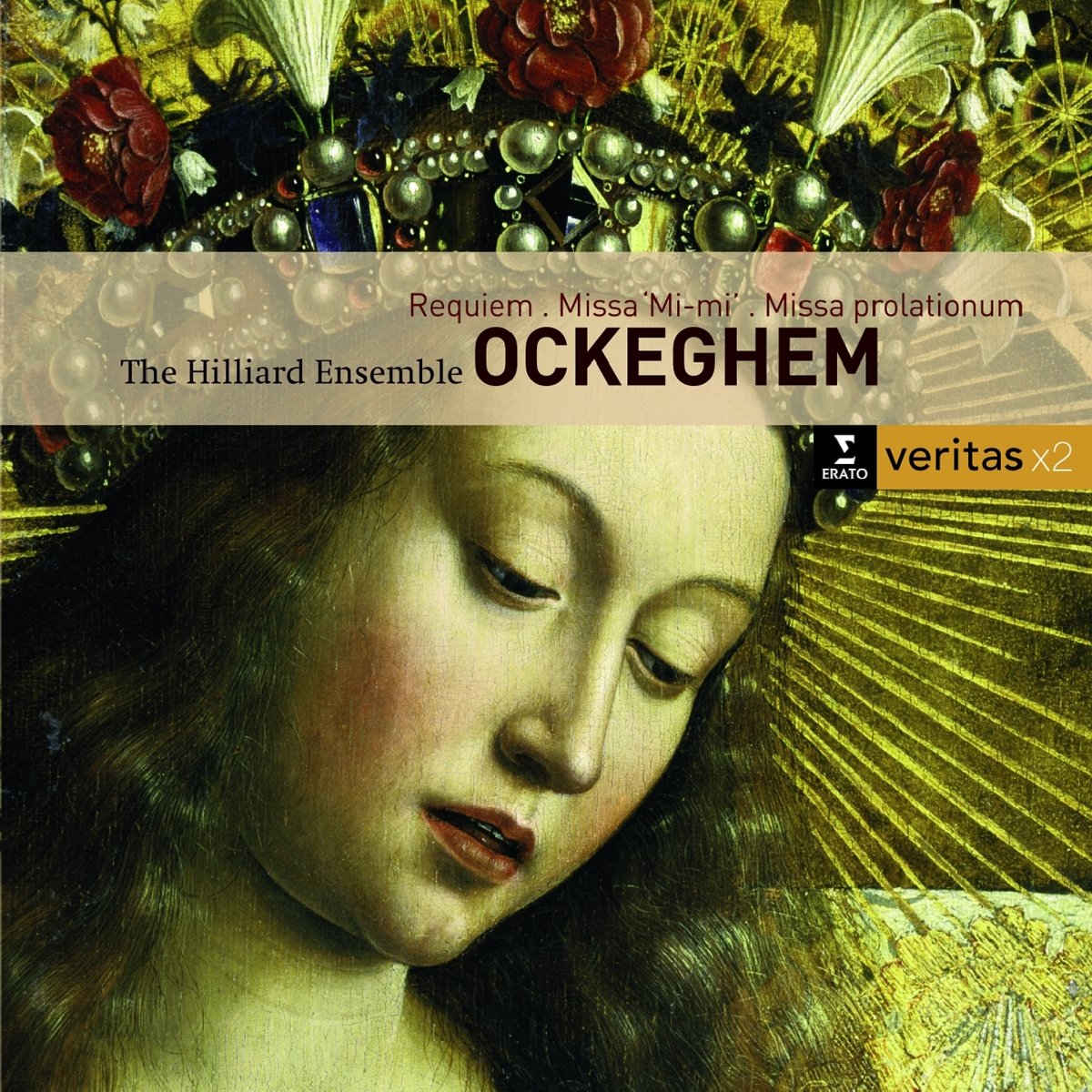
Ockeghem: Requiem; Missa Mi-Mi; Missa Prolationum
Hilliard Ensemble


REVISED November 2021 ...

Masters of the Baroque Hurdy-Gurdy
Matthias Loibner


Weiss: Sonatas for Transverse Flute and Lute
Duo Inventio


Holborne: Pieces for Lute
Federico Marincola


THE ORIGINAL COLLECTION (Autumn 2020):

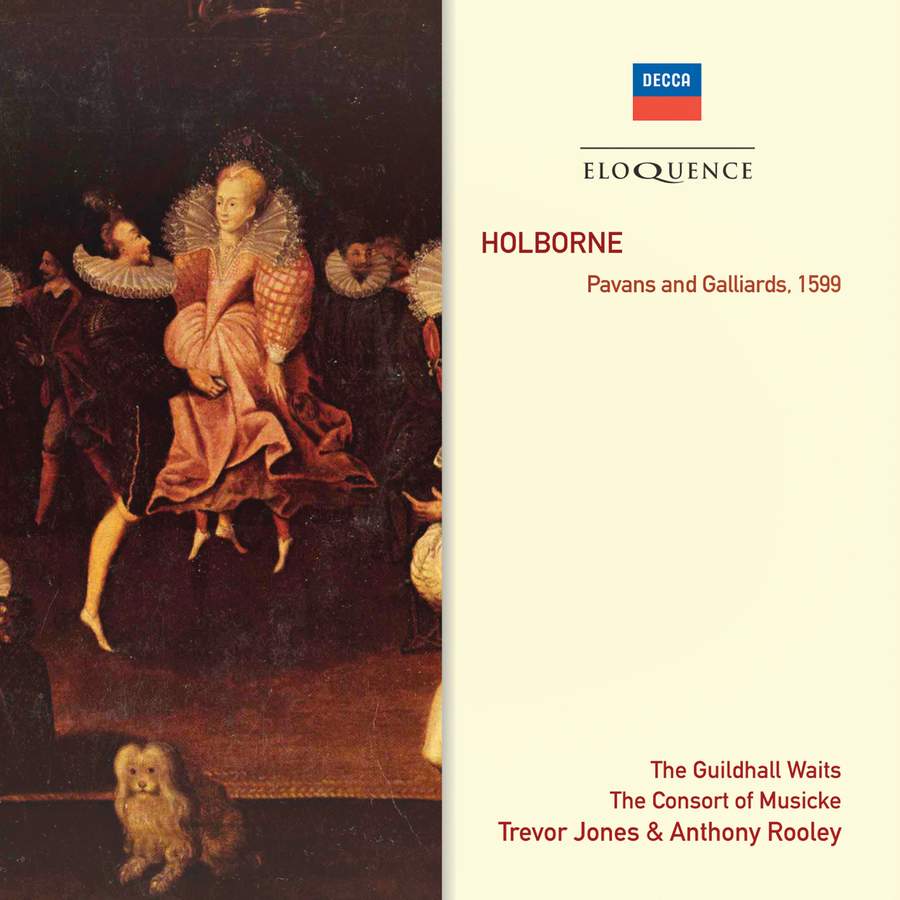
Holborne: Pavans and Galliards, 1599
The Consort of Musicke & The Guildhall Waits, Anthony Rooley & Trevor Jones


Purcell: Sonatas Of 3 Parts, 1683
Pavlo Beznosiuk, Rachel Podger, Christophe Coin, Christopher Hogwood


Telemann: Trio Sonatas
Erik Bosgraaf (recorder), Dmitry Sinkovksy (violin)


German Lute Music of the 18th Century
Alberto Crugnola