INTRODUCTION
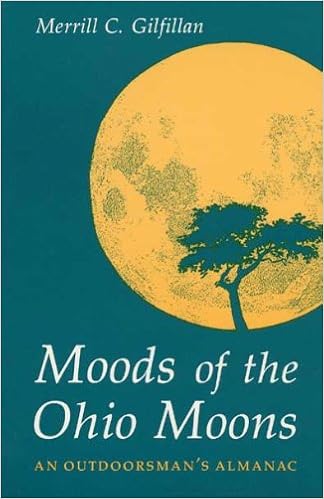
For almost thirty years I have written an outdoor column
devoted primarily to describing and creating moods about the world of nature. These
columns were informed by a rural background and more than sixty years of
outdoor experience as contained in field notes made at the time. They tap
undying memories. These twelve essays, one for each month, relate incidents and
events that contributed heavily to the mood of the time. They are based on
columns that appeared in the Columbus Metro Parks News, Ohio Conservation
Bulletin Mood of the Month, Wonderful World of Ohio Magazine Outdoor Ohio, and Columbus
Dispatch “It’s the Season” as well as in Country Living magazine articles.
Observation
is more of the mind than of vision; our attitude is the secret of original
observation. I choose the subjective approach to outdoor enjoyment. I did this
after training in zoology and doing twenty years of field work as a wildlife
biologist. I first became aware of the great difference between the subjective
and objective methods when I read Van Wyck Brook’s New England: Indian Summer,
a literary history, wherein the author points out that poets are often more
accurate in their observations of nature than scientists. Early American poets
described a hemlock woods so well that the description endures 150 years later,
whereas contemporary scientific descriptions have been revised many times and
still cannot match the revelations of the poet. The differences were so profound that I began to notice and
compare.
Another
example leading me to subjective observation occurs in James Agee’s Let Us Now
Praise Famous Men. In the third
“On the Porch” sequence with which he ends the book. Agee relates an experience that he and the photographer
Walker Evans shared while awaiting sleep on the front porch of an Alabama
sharecropper’s cabin. They heard
an unknown night call, one that was repeated, then answered by a fellow
creature. Agee’s description of
the unknown sound and of the dialogue between the two calling creatures, his
discussion of it, and the nurturing of the theme much as a composer might have
developed it are superb. They lend
a dimension to the mysterious event (and thus to all existence) that mere
identification could never have given and increase the enjoyment beyond
reckoning. Agee’s personal,
subjective treatment of the event is what renders it distinctive.
The
final proof of the value of subjective enjoyment came from reading Marcel
Proust’s Remembrance of Things Past.
Proust would occasionally experience an unaccountable feeling of great
happiness, ecstasy, certainty, release from his almost constant anxiety, and
the purest joy he had ever know.
He noted that this state was triggered by commonplace experiences. One day, for example, he ate a cookie
dipped in herb tea and had the instant transport to this pleasant state. He was puzzled and haunted by the
mystery, and he sought an answer to the riddle.
Other
experiences that affected him similarly included stepping on an uneven
cobblestone street in a strange city, hearing a certain musical phrase,
observing the glow of eventide on a restaurant wall, opening a childhood book,
seeing a row of tall trees on a distant skyline. There was no reasoned solution to account for this state,
and he began to earnestly seek an answer to bring peace of mind and
understanding to himself.
Eventually
he found the answer. Individuals
change constantly; reason is not equipped to deal with inner change resulting
from the gradual accumulation of one’s past. Only the sensual, the sense-receiving endowment, which
remains the same throughout life, can recollect the past in a tranquil state. Some of these sensual impressions at
times of great joy slip into the subconscious mind unperceived by the
individual and thus are untainted by thought.
Recollection,
free of association with the present, recalls completely the freshness of the
actual moment of occurrence.
During this magical spell of a return to the past, Proust actually lived
in the hopeful atmosphere of that fertile time and had choices available to him
then. He had stumbled onto a way
to go home again, only the trip couldn’t be willfully recalled. It occurred when, by chance, some sensual
experience opened the door of the subconscious for a brief return to the
past. This sensual recall is the
only reality to an intelligent, imaginative person, Proust writes, for it is
wholly and solely his, a completely individual experience. Many reject it until too late because
it is their own and they undervalue themselves.
Such
experience is the heart of individuality.
Since it is not subject to willed recall, it is necessary to explore the
subconscious level of understanding.
There the answer may be found, and it is yours alone to find. Here is Proust’s message for nature
observers: In observing nature, he
writes, we pay more attention to the object than to our impression of it, thus
ignoring the really original aspect, our own “view” of it. In other words, we should learn to seek
our own original view of what we observe.
We should live in a manner that will stock our subconscious storehouse
with an abundance of original sensual impressions, which may later surface in
our consciousness. Thus we may
find the reality (truth) that was intended for us from the beginning. Do not die before the truth intended
for you – your own individuality – is revealed to you.
To me, this is convincing proof of the value of the
subjective method. The scientific
method is necessary to gain facts, but the manner in which one experiences the
facts is what will determine their final value to the individual, and, perhaps,
to society. It eventually occurred
to me that from my experience I had personally discovered romanticism two
hundred years after the movement had its first stirrings. Initially I didn’t recognize it because
of my strong personal involvement in pursuing the subjective approach, but the
knowledge had grown out of my dedicated pursuit. It became apparent that each individual must experience the
romantic movement for himself or herself.
When the discovery comes as a result of strong personal involvement, the
person is convinced much more so that if he or she had studied the movement and
intellectually decided to follow it.
The
elements of this method are simplicity, a reliance on spontaneous sensual and
emotional reaction to experience for the most creative pleasure, and a return
to nature, supplemented by imaginative interpretation. This results in a highly personal
vision, one which may be mystical and often highly symbolic. The method lends force and vitality to
the person and to the pursuit.
Thus, the heart of romanticism—the subjective approach—gives man a sense
of his energy and of his limitations.
It is the purest realism, contrary to its critics, for it is entirely
the individual’s own. It enables
him to identify fully with the world about him and to express what he
experiences lyrically and often dramatically, coloring his observations with
richness and variety. Balanced
with a sound basic knowledge of the outdoors, it permits the individual to make
creative growth, to move away from cold conformity. He becomes a more natural person.
The
subjective approach has brought me great personal satisfaction and pleasure; it
has resulted in a greater understanding and appreciation of nature. In the process, I became what I was
originally intended to be when I switched from an objective, scientific
attitude to a highly personal subjective one: I am much more natural and at ease following natural gifts
than following a learned approach.
Each
person should learn to read his or her own book. Contacts with Mother Nature are an excellent place to
start. The enjoyment of the
outdoors should be purely subjective for the greatest personal reward.
The
order of the material in each essay is as follows: weather, diagnostic events, vegetation, birds, mammals,
other wildlife, agriculture, the wild harvest, and finally, a summary of the
mood of the month. There may be
repetition from month to month because there is repetition in the events of
nature. Each month has ins mood
established primarily by the cycles of nature and only secondarily by man. The Indian moon names are purely of the
North American continent; they arose from living with nature rather than
exploiting it.
The
wild harvest is important simply because it comes from untended nature. Carl O. Sauer, a cultural geographer,
writes of the evolution of agriculture in relation to the development of man,
and he emphasizes the importance of the wild harvest to early man and its contribution
to the development of farming.
Sauer’s strong feeling for this development helps to explain why so many
have such a strong atavistic urge to participate in planting and harvesting,
and in gathering wild harvest.
I
have included much on agriculture because of its importance to the landscape we
view, and also because of my farm background, which greatly influenced my
attitude toward the world of nature.
Man’s relation to the soil is strong because of this early contact with
the earth. It accounts for the
need to get back to nature. For
this reason, all forms of outdoor activity are dealt with, the many forms of
nature study and the various ways of the ancient harvest: hunting, trapping, fishing, and
gathering wild plant products—potherbs, roots, fruits, and nuts. Modern man has such great need to
reestablish relations with the earth that any form of enjoying the outdoors is
extremely valuable to society; all should be encouraged.
Phenology
and the sense of seasonal progression are of constant concern since they
contribute so greatly to the mood of any given time. Old sayings and folklore are also included as an important
part of the mood process. Finally,
the trends of land use and wildlife populations are mentioned because they are
interrelated and so striking to the observer.
One
of the most intriguing aspects of nature study involves time. Time has been defined as the sequential
arrangement of events or as the interval between events. This arrangement gives a sense of
progress, order, and change to existence.
Time and space cannot be separated. Our experiences in space are meaningless without a sense of
time.
Time
is an unending flow, one with which we change. But, if a person constantly changes, what endures? Memory! The present is meaningless without reference to the past and
anticipation of the future. Human
life might be defined as the consciousness of time. Therefore, time is highly personal, and the subjective
attitude is extremely crucial for human identity.
Since
subjectivity is the reality of time, one’s attitude and awareness cause it to
go fast or slow, or cause one person to be keenly aware of its passing and another
to be unconscious of its flux.
Time flows continuously, and our sense of it is colored by
association. Dynamic, unique
events are milestones in our memory.
The
inner world of experience and memory exhibits a structure causally determined
by significant subjective associations rather than by objective connections to
which we usually attribute it.
Values and emotion strongly color memory and influence our sense of
time. The serial order of time may
be changed by memory. Time is
meaningful only within the context of personal experience; it thus becomes qualitative whereas
scientific, measured time is purely quantitative.
Memory is the self; it is creative
imagination. In memory, the
quality of an experience is preserved in its original state; there it attains
an eternal essence and becomes more real, in a sense, than the original
event. Memory research, as it
might be called, can turn up rich and unsuspected facts of one’s self and one’s
world, and outdoor study can amplify such efforts. Indian moon names illustrate the relationship between nature
and the seasons. The Indians,
entirely dependent on nature, had ample time to observe, and important events
lodged in their memory, coloring it by dynamic association. Hence, their subjective moon names
capture an eternal essence of the time, revealing far more about the period
than the European names for the months.
In
the time of primitive man, regular occurrence of the changing phases of the
moon was one of the most readily observable events in their world, and it
became the most logical means of dividing time. It was short step from using the cycle of the moon as a unit
of time to using names to distinguish one moon from another, and the moon names
that evolved were rich in meaning.
The names grew from conditions and characteristics of the particular
moon period, such as changes or beauty or danger, and these conditions led to
hope, joy, fear, or dread—attitudes expressed with wistfulness, gentleness, or
harshness. They served as reminders
from one generation to another of the important events for the tribe during
particular moon phases. Moon names
thus tell much about the people who devised them and of the region in which
they originated. The names reflect
and preserve a sense of values.