"I am not one who was born in the custody of wisdom. I am one who is fond of olden times and intense in quest of the sacred knowing of the ancients." Gustave Courbet
Showing posts with label painting. Show all posts

08 June 2021

Inspiration.


My theme is memory, that winged host that soared about me one grey morning of war-time.

These memories, which are my life--for we possess nothing certainly except the past--were always with me. Like the pigeons of St. Mark's, they were everywhere, under my feet, singly, in pairs, in little honey-voiced congregations, nodding, strutting, winking, rolling the tender feathers of their necks, perching sometimes, if I stood still, on my shoulder or pecking a broken biscuit from between my lips; until, suddenly, the noon gun boomed and in a moment, with a flutter and sweep of wings, the pavement was bare and the whole sky above dark with a tumult of fowl. Thus it was that morning.

These memories are the memorials and pledges of the vital hours of a lifetime. These hours of afflatus in the human spirit, the springs of art, are, in their mystery, akin to the epochs of history, when a race which for centuries has lived content, unknown, behind its own frontiers, digging, eating, sleeping, begetting, doing what was requisite for survival and nothing else, will, for a generation or two, stupefy the world; commit all manner of crimes, perhaps; follow the wildest chimeras, go down in the end in agony, but leave behind a record of new heights scaled and new rewards won for all mankind; the vision fades, the soul sickens, and the routine of survival starts again.

The human soul enjoys these rare, classic periods, but, apart from them, we are seldom single or unique; we keep company in this world with a hoard of abstractions and reflections and counterfeits of ourselves--the sensual man, the economic man, the man of reason, the beast, the machine and the sleep-walker, and heaven knows what besides, all in our own image, indistinguishable from ourselves to the outward eye. We get borne along, out of sight in the press, unresisting, till we get the chance to drop behind unnoticed, or to dodge down a side street, pause, breathe freely and take our bearings, or to push ahead, outdistance, our shadows, lead them a dance, so that when at length they catch up with us, they look at one another askance, knowing we have a secret we shall never share.

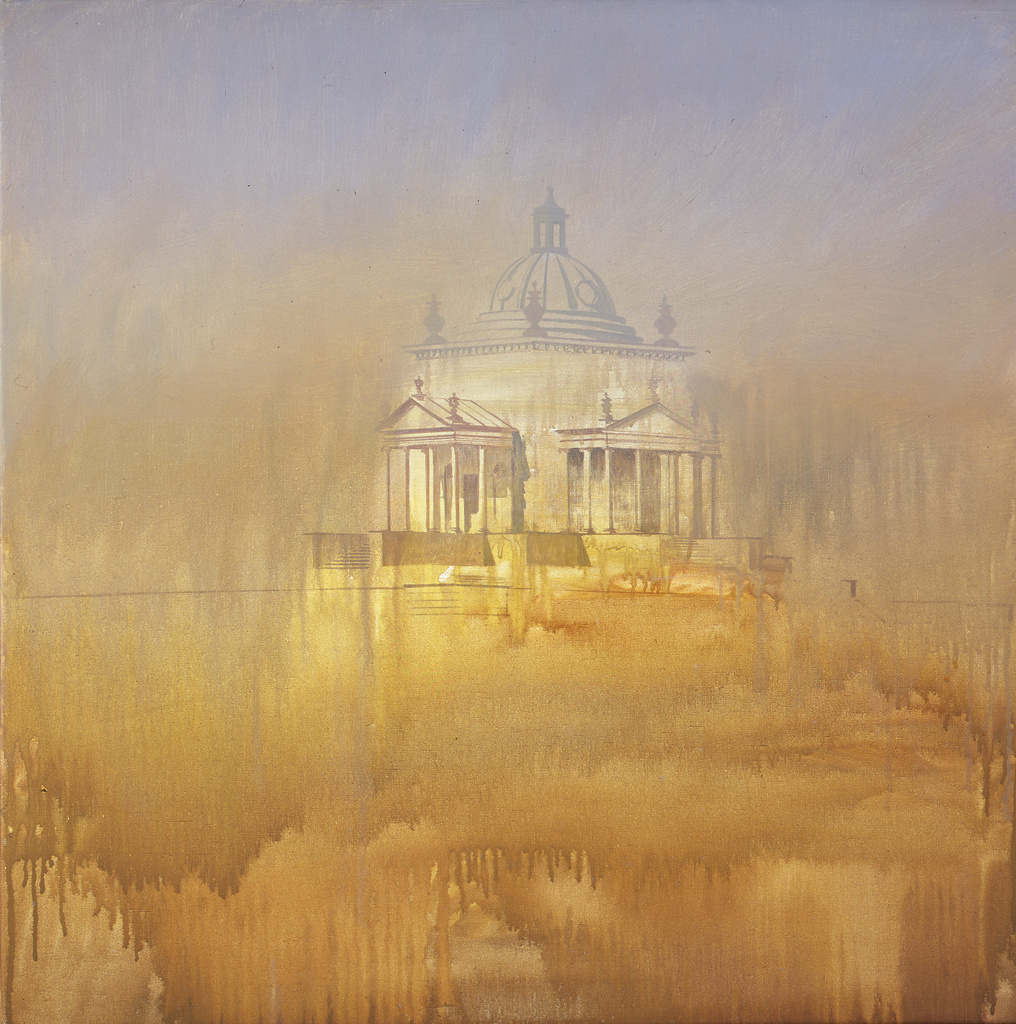
For nearly ten years I was thus borne along a road outwardly full of change and incident, but never during that time, except sometimes in my painting--and that at longer and longer intervals--did I come alive as I had been during the time of my friendship with Sebastian. I took it to be youth, not life, that I was losing. My work upheld me, for I had chosen to do what I could do well, did better daily, and liked doing; incidentally it was something which no one else at that time was attempting to do. I became an architectural painter. I have always loved building, holding it to be not only the highest achievement of man but one in which, at the moment of consummation, things were most clearly taken out of his hands and perfected, without his intention, by other means, and I regarded men as something much less than the buildings they made and inhabited, as mere lodgers and short-term sub-lessees of small importance in the long, fruitful life of their homes.

More even than the work of the great architects, I loved buildings that grew silently with the centuries, catching and keeping the best of each generation, while time curbed the artist's pride and the Philistine's vulgarity, and repaired the clumsiness of the dull workman. In such buildings England abounded, and in the last decade of their grandeur, Englishmen seemed for the first time to become conscious of what before was taken for granted, and to salute their achievements at the moment of extinction. Hence my prosperity, far beyond my merits; my work had nothing to recommend it except my growing technical skill, enthusiasm for my subject and independence of popular notions.

The financial slump of the period, which left many painters without employment, served to enhance my success, which was, indeed, itself a symptom of the decline. When the water-holes were dry people sought to drink at the mirage. After my first exhibition I was called to all parts of the country to make portraits of houses that were soon to be deserted or debased; indeed, my arrival seemed often to be only a few paces ahead of the auctioneers, a presage of doom.

I published three splendid folios--Ryder's Country Seats, Ryder's English Homes, and Ryder's Village and Provincial Architecture, which each sold its thousand copies at five guineas apiece. I seldom failed to please, for there was no conflict between myself and my patrons; we both wanted the same thing. But as the years passed I began to mourn the loss of something I had known in the drawing-room of Marchmain House and once or twice since, the intensity and singleness and the belief that it was not all done by hand--in a word, the inspiration.

Evelyn Waugh, from Brideshead Revisited

19 December 2019

Revelation.


Rilke said that Rodin had grown beyond the sound and limits of a name so that the work became nameless, “even as a plain is nameless, or a sea, which has a name only upon a map, in books and among people, but in reality is only expanse, movement, and depth.” Painting for me has been largely an innocent obsession, an act of faith, a vocation; I was raised with it and live with it, as do others in my family. Phil, Mireille, and my cousin Tom still paint constantly, and still visit the ranch. To an enormous degree we all owe this pastime to Piazzoni. The great Gauguin asked, “Who are we? Where do we come from? Where are we going?” These questions have been largely answered for me through genetic happenstance, enhanced by the love of my parents, aunt, and uncle. I owe them everything. I don’t know if I can ever become a great painter like my grandfather, but I feel worthy of him, and I believe my best work lies ahead. As my friend Harrison once said, “Art is not a sack race.” In any case, by now my imagination has become so entangled with Papa’s that his way of viewing nature’s inner life has to some degree become mine, and my vision is frequently an almost unconscious homage to him. When I wander into my silent living room in the morning before leaving to paint, I look upon the Piazzonis on the walls around me as testaments to honor, love and beauty. They seem like the dawn itself, a perfect presence, perhaps the sun or the grass or the birds. I feel the ghost; I am the three-year-old on the couch again, drawn by the mystery, hoping for the revelation. I always say the same thing, “Thank you, Papa.”

Russell Chatham

CONNECT

24 November 2019

Legacy.


“Confusion and loneliness became frequent demons, and I was troubled by the question of whether or not there was a place for me in the world,” Chatham wrote in One Hundred Paintings. “I had no notion of earning money by being a painter, or of being anything other than a person compelled to fish all the time.”

Chatham was a humble raconteur, a realist who delighted as much in nature’s immense beauty as he did in being irreverent. In the forward to One Hundred Paintings, Harrison wrote, “Along with others, I have spent a great deal of time worrying about Chatham. For a long time I thought he had too much humility to survive, and in some respects he nearly didn’t.”
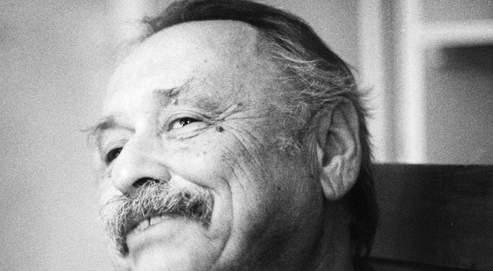
Chatham, who some believe lived in the shadow of his peers, leaves a legacy not soon forgotten. “How many times have I heard the phrase, as one speeds over the blacktop, “It looks like a Chatham,’” as the sun rakes the valley cottonwoods, or a moon rises over a stand of fir, backed by an impressive range,” Collector says.

“Russ had an extraordinarily diverse and creative personality, a world view of remarkable freshness and originality,” McGuane says. “It would take a kind of cultural archaeology to find all the things he’d done, all the places he’d been. It was a very big life.”

CONNECT

23 November 2019

Precision.


Chatham began to paint and began to fish as a little boy in California. While one could argue that his writing — and his cooking — were of equal caliber, the painting and fishing were how most people knew him best.

All four disciplines require precision, and Chatham, despite the physique of a dancing bear, had precision in large quantities. Even so, the long laundry list of accomplishments doesn’t get to who Russell was.

His humor was as broad and bawdy as his life. I will always remember him laughing loudly. Anyone who knew him heard that laugh frequently — heard it and saw it, his big wide grin giving in to the full-on guffaw. I will remember him, too, sitting in a child’s sand-box, completely entranced in the world of his then-four-year-old son Paul; painting in his hideaway studio in Livingston that looked like a machine shop from the outside; eating, and eating, and drinking, and drinking more. (“My girlfriend tells me I drink too much,” he told me one night in my living room, sitting next to several very empty French bottles that had very recently held very good red wine. “But I reject that. Because after long research, I have discovered that I drink just enough.”)

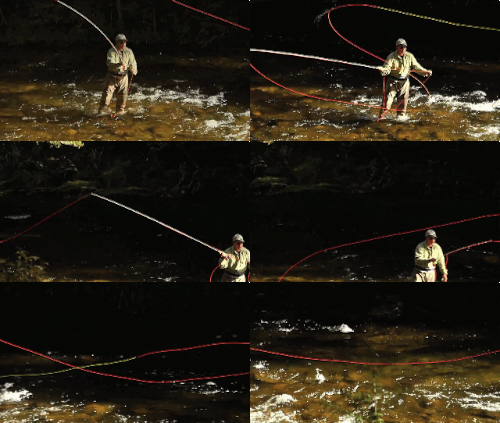
But most of all I will remember him walking the banks of a little creek in the back country of central Montana, eyes glued to the water’s surface, a tiny fly rod in his huge right hand.

CONNECT

15 November 2019

True.


“I give an honest response to landscapes,” he says. “I have it pass through me.” Like Tomales Bay and its tides, I think, or the push-pull seasons of Montana summer, Montana winter.

“I deliver a version that is still true—but it’s mine,” he says.

I think what he is saying is he doesn’t mean to shape or bend us; doesn’t need to convince or persuade us to see what he sees. He is just painting true to himself. And we follow.

His middle name may as well be nostalgia; his birthright is the elegy. He was but 5 years old when the man who was probably the most influential in his life, his grandfather, the famous Italian-­American landscape painter, Gottardo Piazzoni, had a heart attack at breakfast with Russell one morning, pitching forward suddenly but managing to say, before he died, “Good-bye.”

Because of his grandfather, Russell carried a paint box and easel everywhere. He hunted quail and ducks and rabbits, and fished like a fiend. It was and still is the richest land in America, the fecund tidal sloughs delivering moon-gushing torrents of immeasurable nutrients. Back then, there were steelhead and silver salmon in those bays and creeks, lots of them, big ones, and he went after them, as well as the striped bass. And he painted. “By the time I was 19 I had painted a thousand paintings.”

My plan is to prepare a meal for him. But Russell tells me his neighbor is Evan Shively, one of the best chefs in the Bay Area, and thoughts of whatever simple offering I had in mind vaporize like a wisp of dry grass before a flame; and like a coward and a glutton both I say “O.K.”

CONNECT

16 October 2019

Mind.


Not everything in life can or should be explained. Part of every painting should be incomplete ... to be completed in the mind of the viewer.

Russell Chatham

18 June 2015

Voice.

Siken, Unfinishable (detail), 2005


The Language of Birds

1
A man saw a bird and found him beautiful. The bird had a song inside him, and feathers. Sometimes the man felt like the bird and sometimes the man felt like a stone—solid, inevitable—but mostly he felt like a bird, or that there was a bird inside him, or that something inside him was like a bird fluttering. This went on for a long time.

2
A man saw a bird and wanted to paint it. The problem, if there was one, was simply a problem with the question. Why paint a bird? Why do anything at all? Not how, because hows are easy—series or sequence, one foot after the other—but existentially why bother, what does it solve?
And just because you want to paint a bird, do actually paint a bird, it doesn’t mean you’ve accomplished anything. Who gets to measure the distance between experience and its representation? Who controls the lines of inquiry? We do. Anyone can.
Blackbird, he says. So be it, indexed and normative. But it isn’t a bird, it’s a man in a bird suit, blue shoulders instead of feathers, because he isn’t looking at a bird, real bird, as he paints, he is looking at his heart, which is impossible.
Unless his heart is a metaphor for his heart, as everything is a metaphor for itself, so that looking at the paint is like looking at a bird that isn’t there, with a song in its throat that you don’t want to hear but you paint anyway.
The hand is a voice that can sing what the voice will not, and the hand wants to do something useful. Sometimes, at night, in bed, before I fall asleep, I think about a poem I might write, someday, about my heart, says the heart.

3
They looked at the animals. They looked at the walls of the cave. This is earlier, these are different men. They painted in torchlight: red mostly, sometimes black—mammoth, lion, horse, bear—things on a wall, in profile or superimposed, dynamic and alert.
They weren’t animals but they looked like animals, enough like animals to make it confusing, meant something but the meaning was slippery: it wasn’t there but it remained, looked like the thing but wasn’t the thing—was a second thing, following a second set of rules—and it was too late: their power over it was no longer absolute.
What is alive and what isn’t and what should we do about it? Theories: about the nature of the thing. And of the soul. Because people die. The fear: that nothing survives. The greater fear: that something does.
The night sky is vast and wide.
They huddled closer, shoulder to shoulder, painted themselves in herds, all together and apart from the rest. They looked at the sky, and at the mud, and at their hands in the mud, and their dead friends in the mud. This went on for a long time.

4
To be a bird, or a flock of birds doing something together, one or many, starling or murmuration. To be a man on a hill, or all the men on all the hills, or half a man shivering in the flock of himself. These are some choices.
The night sky is vast and wide.
A man had two birds in his head—not in his throat, not in his chest—and the birds would sing all day never stopping. The man thought to himself, One of these birds is not my bird. The birds agreed.

Richard Siken

Thank You, Jessica.

01 April 2015

Best.

Wyeth, Dock Lights, 2003


I loved to sleep with the window open. Rainy nights were the best of all: I would open the window and put my head on the pillow and close my eyes and feel the wind on my face and listen to the trees sway and creak.

- Neil Gaiman, from The Ocean at the End of the Lane 

28 October 2014

Is.

Pollock, No. 31 (detail), 1950


Painting is self-discovery. Every good artist paints what he is.

Jackson Pollock

24 February 2014

Landscape.

Professor Emeritus James Cahill presents a series of lectures on early Chinese landscape painting ...


CONNECT