"I am not one who was born in the custody of wisdom. I am one who is fond of olden times and intense in quest of the sacred knowing of the ancients." Gustave Courbet
Showing posts with label conservation. Show all posts

26 July 2021

Adventure.


I'm proud to say that my sis has had an article published in Guy Harvey magazine detailing the efforts of the American Zoological Association's Florida Reef Tract Rescue Project.  

The article begins on page 42 of THIS link.

The Aquarium of the Pacific's "Florida Coral Rescue: A Great Adventure Story", a panel discussion my sister was a part of last year ...


Thanks, Mum.

06 May 2020

Excellent.

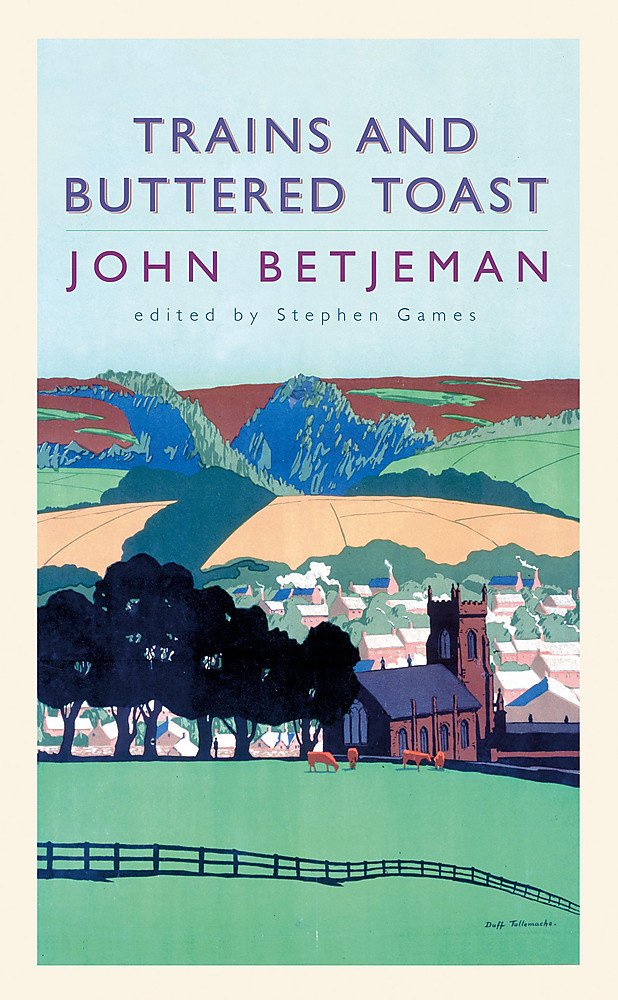
An excellent book ...


I shan't tell you where all the lovely places are, I want them to myself.  But I'll tell you where to look.

John Betjeman

13 April 2020

Progress.


INEXPENSIVE PROGRESS

Encase your legs in nylons,
Bestride your hills with pylons
O age without a soul;
Away with gentle willows
And all the elmy billows
That through your valleys roll.

Let's say goodbye to hedges
And roads with grassy edges
And winding country lanes;
Let all things travel faster
Where motor car is master
Till only Speed remains.

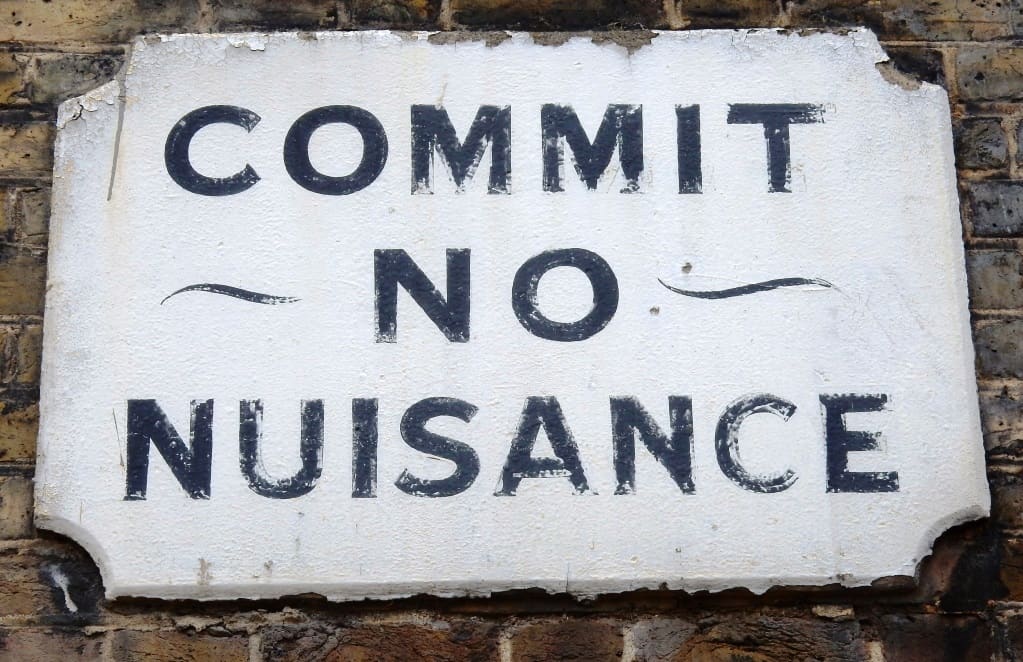
Destroy the ancient inn-signs
But strew the roads with tin signs
"Keep Left," "M4," "Keep Out!"
Command, instruction, warning,
Repetitive adorning
The rockeried roundabout;

For every raw obscenity
Must have its small "amenity,"
Its patch of shaven green,
And hoardings look a wonder
In banks of floribunda
With floodlights in between.

Leave no old village standing
Which could provide a landing
For aeroplanes to roar,
But spare such cheap defacements
As huts with shattered casements
Unlived-in since the war.

Let no provincial High Street
Which might be your or my street
Look as it used to do,
But let the chain stores place here
Their miles of black glass facia
And traffic thunder through.

And if there is some scenery,
Some unpretentious greenery,
Surviving anywhere,
It does not need protecting
For soon we'll be erecting
A Power Station there.

When all our roads are lighted
By concrete monsters sited
Like gallows overhead,
Bathed in the yellow vomit
Each monster belches from it,
We'll know that we are dead.

Sir John Betjeman

05 July 2018

Elegy.


Over the course of two languid seasons at Arches — beginning in 1956, 15 years before Congress changed its designation from national monument to national park — Abbey looked after the park and its visitors. But he also roamed and communed with the high desert of the Colorado Plateau, chronicling his experiences with a naturalist’s eye, a philosopher’s mind and a rebel’s heart. The result was “Desert Solitaire,” his most enduring work, which, despite tepid early sales, went on to garner critical acclaim and a place in the canon of American nature writing. It’s not just a love letter to the land; Abbey’s physically and psychologically vivid portrait of the desert became a rallying cry for its preservation against the forces of development. “Most of what I write about in this book is already gone or going under fast,” he lamented in the preface. “This is not a travel guide but an elegy. A memorial.”


CONNECT

25 April 2018

Purpose.


We are vanishing from the earth, yet I cannot think we are useless or Usen would not have created us. He created all tribes of men and certainly had a righteous purpose in creating each.

For each tribe of men Usen created He also made a home. In the land created for any particular tribe. He placed whatever would be best for the welfare of that tribe.

When Usen created the Apaches He also created their homes in the West. He gave to them such grain, fruits, and game as they needed to eat. To restore their health when disease attacked them He made many different herbs to grow. He taught them where to find these herbs, and how to prepare them for medicine. He gave them a pleasant climate and all they needed for clothing and shelter was at hand.

Thus it was in the beginning: the Apaches and their homes each created for the other by Usen himself. When they are taken from these homes they sicken and die. How long will it be until it is said, there are no Apaches?

Geronimo

Thank you, Clayton.

22 March 2018

Go.


Far spread the moorey ground a level scene
Bespread with rush and one eternal green
That never felt the rage of blundering plough
Though centurys wreathed springs blossoms on its brow
Still meeting plains that stretched them far away
In uncheckt shadows of green brown and grey
Unbounded freedom ruled the wandering scene
Nor fence of ownership crept in between
To hide the prospect of the following eye
Its only bondage was the circling sky
One mighty flat undwarfed by bush and tree
Spread its faint shadow of immensity
And lost itself which seemed to eke its bounds
In the blue mist the horizons edge surrounds

Now this sweet vision of my boyish hours
Free as spring clouds and wild as summer flowers
Is faded all—a hope that blossomed free
And hath been once no more shall ever be
Inclosure came and trampled on the grave
Of labours rights and left the poor a slave
And memory’s pride ere want to wealth did bow
Is both the shadow and the substance now

The sheep and cows were free to range as then
Where change might prompt nor felt the bonds of men
Cows went and came with evening morn and night
To the wild pasture as their common right
And sheep unfolded with the rising sun
Heard the swains shout and felt their freedom won
Tracked the red fallow field and heath and plain
Then met the brook and drank and roamed again
The brook that dribbled on as clear as glass
Beneath the roots they hid among the grass
While the glad shepherd traced their tracks along
Free as the lark and happy as her song

But now alls fled and flats of many a dye
That seemed to lengthen with the following eye
Moors loosing from the sight far smooth and blea
Where swopt the plover in its pleasure free
Are vanished now with commons wild and gay
As poets visions of life’s early day  
Mulberry bushes where the boy would run
To fill his hands with fruit are grubbed and done
And hedgerow briars—flower lovers overjoyed
Came and got flower pots—these are all destroyed
And sky bound mores in mangled garbs are left
Like mighty giants of their limbs bereft

Fence now meets fence in owners little bounds
Of field and meadow large as garden grounds
In little parcels little minds to please
With men and flocks imprisoned ill at ease
Each little path that led its pleasant way
As sweet as morning leading night astray
Where little flowers bloomed round a varied host
That travel felt delighted to be lost
Nor grudged the steps that he had taen as vain
When right roads traced his journeys and again
Nay on a broken tree hed sit awhile
To see the mores and fields and meadows smile
Sometimes with cowslaps smothered—then all white
With daiseys—then the summers splendid sight
Of cornfields crimson oer the 'headach' bloomd
Like splendid armys for the battle plumed
He gazed upon them with wild fancys eye
As fallen landscapes from an evening sky

These paths are stopt—the rude philistines thrall
Is laid upon them and destroyed them all
Each little tyrant with his little sign
Shows where man claims earth glows no more divine
But paths to freedom and to childhood dear
A board sticks up to notice “no road here
And on the tree with ivy overhung
The hated sign by vulgar taste is hung
As tho the very birds should learn to know
When they go there they must no further go
This with the poor scared freedom bade goodbye
And much they feel it in the smothered sigh
And birds and trees and flowers without a name
All sighed when lawless laws enclosure came
And dreams of plunder in such rebel schemes
Have found too truly that they were but dreams

John Clare

21 March 2018

Personal.

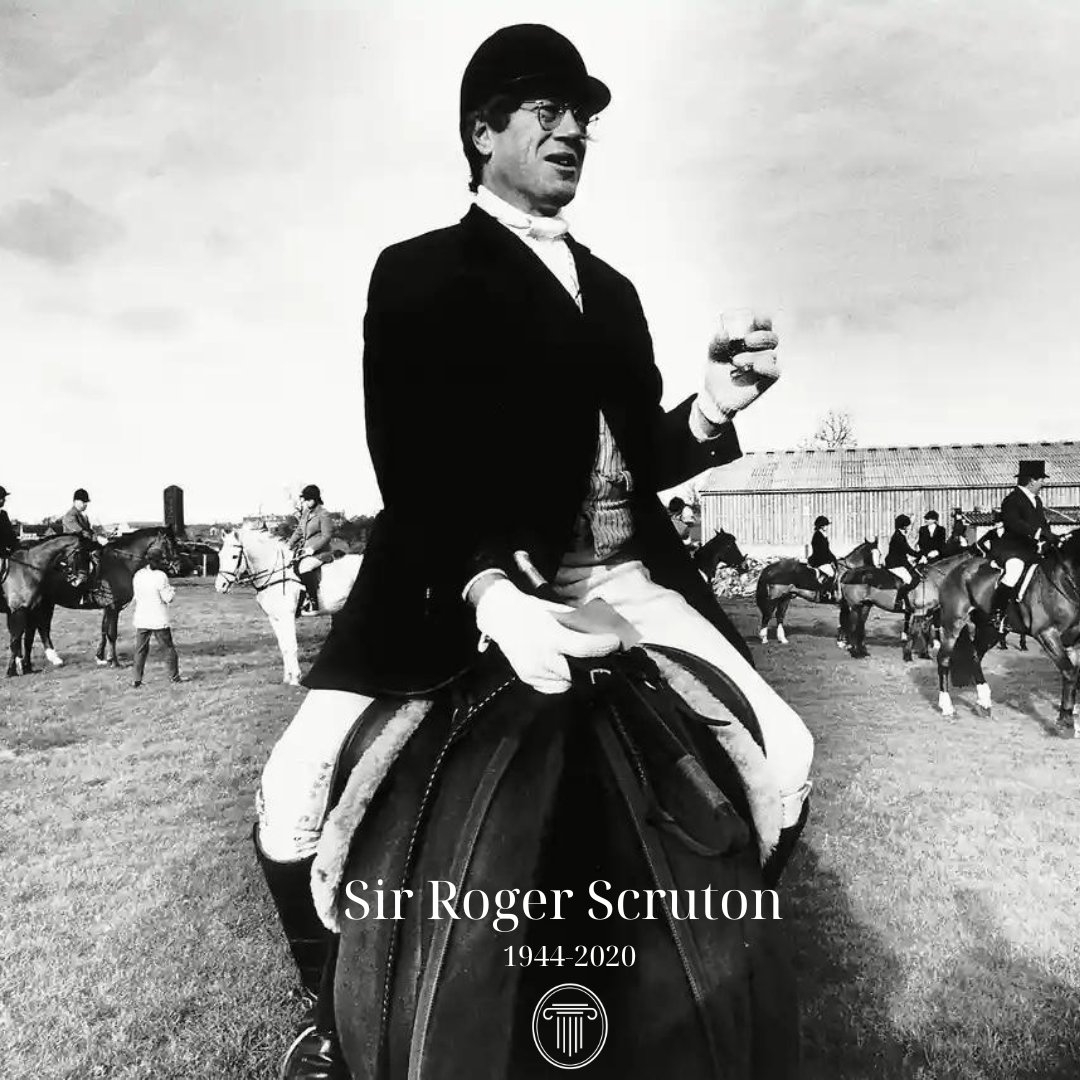
Roger Scruton argues that the only true conservationist and environmentalist is a Conservative. Conservatism is far better suited to tackle environmental problems than either liberalism or socialism; rather than entrusting the environment to unwieldy NGOs and international committees, we must all assume personal responsibility and foster local sovereignty.

11 February 2018

Defence.

Nicholson, On the Downs, 1924


Leftists are, on the whole, hostile to aesthetic solutions, dismissing them as cosy, comfortable or kitsch. They campaign against the classical revival in architecture as “pastiche,” and against the New Urbanism of people like Krier. They see the countryside conservationist movements as the work of privileged people trying to monopolize the views from their windows. Sometimes their arguments have a point; but their hostility to aesthetic judgement goes deeper than the arguments that occasionally justify it. Consensual solutions, like the old pattern books of vernacular architecture, which enabled people to slot their houses into a common street, and to build side by side without offending the neighbor, typify the conservative approach to society. These consensual solutions take the form of traditions, conventions, easy-going ways of accepting one’s lot and making common cause with one’s neighbors. They are quintessentially unthreatening, and contain no admonitions of the puritanical kind that appeal to leftists, whose fundamental desire is to shake people up, to undermine complacency, and to appear at those tranquil windows like a vision of the apocalypse. The reason why the environmental movement has been captured by the left is that it lends itself to this ambition. It provides terrifying scenarios, which seem to justify the total overthrow of existing orders, while encouraging the kind of control from the top that would put enlightened leftists at last in charge of the endarkened middle class. But it could be that the middle class, with its plodding adherence to aesthetic norms, might have had the solution to the environmental problem all along, and that it was only the growth of the modern state, with its arrogant schemes and inability to respond to its own massive failures, that has jeopardized our future.
That brings me to the second important motive from which conservatism arises, which is the love of home. This too is anathema to leftists. All attempts to build the love of home into some kind of political order offend against the cosmopolitan uprootedness of the left intellectual. What is worse, they smack of nationalism, of xenophobia, of those fundamental distinctions between “us” and “them” which are the natural effect of settlement and which cause people to do and think the appalling things of which leftists so much disapprove. Thanks to the love of home people defend their country from its internal enemies (McCarthyism); they campaign against illegal immigration (xenophobia); they resist multiculturalism (racism) and insist on bringing up their children in their own ancestral faith (Christian fundamentalism). All the lamentable habits of Middle America can be seen as expressions of this single instinct, and all are under attack for that very reason.

Yet it is the love of home that provides the most effective motive on which the environmental movement can call—more effective even than the habit of aesthetic judgement. I think that leftists, over the years, have become aware of the greatest weakness in their philosophy, which is that the ordinary citizen has no motive to go along with it. He may have a grievance against the person who got the job he was aiming for; but that does not make him an advocate of “social justice”; he may be interested in contributing to sports facilities at the local school, but that does not mean that he wants the state to own the children or dictate what can be taught to them. On the whole his motives are as the conservative supposes them to be: love for his family and his home, and a desire to get along fine with the neighbors. This love of home spreads outwards to include his country, its customs, and its flag; and it is this outreach of the homing instinct, which will awaken him, when prompted, to the environmentalist’s cause. It is precisely because conservatism, in its political form, is a systematic defence of the nation and its future, that environmentalism is the natural conservative cause.

Many environmentalists on the left will acknowledge that local loyalties and local concerns must be given a proper place in our decision-making, if we are to counter the adverse effects of the global economy. But they will tend to baulk at the suggestion that local loyalty should be seen in national, rather than communitarian, terms. However, there is a very good reason for emphasizing nationality. For nations are communities with a political shape. They are predisposed to assert their sovereignty, by translating the common sentiment of belonging into collective decisions and self-imposed laws. Nationality is a form of territorial attachment. But it is also a protolegislative arrangement. And it is through developing this idea, of a territorial sentiment that contains the seeds of sovereignty within itself, that conservatives make their distinctive contribution to ecological thinking.

Rather than attempt to rectify environmental and social problems on the global level, conservatives seek local controls, and a reassertion of local sovereignty over known and managed environments. This means affirming the right of nations to self-government, and to the adoption of policies that will chime with local loyalties and sentiments of national pride. The attachment to territory and the desire to protect that territory from erosion and waste remain a powerful motive, and one that is presupposed in all demands for sacrifice that issue from the mouths of politicians. For this motive is the simple and powerful one, of love for one’s home.

Roger Scruton

10 August 2017

Trans-generational.


Society is an association of the dead, the living, and the unborn. This carries with it a precious hint as to the responsibility of future generations. It arises from love. And love directed toward what is unknown must arise from what is known. The future is not known, nor are the people who will inhabit it. But the past is known. And the dead, our dead, are still the objects of love and veneration. It is by expending on them some part of our care that we care also for the unborn, for we plant in our hearts the trans-generational view of society. It is our best guarantee that we will be moderate in our present appetites in the interest of those who are yet to be.

Roger Scruton

29 December 2016

Monuments.


The White House declared two new national monuments in Utah and Nevada on Wednesday, setting aside 1.65 million acres of desert that includes landscapes sacred to several Native American groups, ancient rock art, and rare species’ habitat.