"I am not one who was born in the custody of wisdom. I am one who is fond of olden times and intense in quest of the sacred knowing of the ancients." Gustave Courbet
Showing posts with label Bashō. Show all posts

22 December 2024

Alone.


When we are alone on a starlit night; when by chance we see the migrating birds in autumn descending on a grove of junipers to rest and eat; when we see children in a moment when they are really children; when we know love in our own hearts; or when, like the Japanese poet Bashō we hear an old frog land in a quiet pond with a solitary splash—at such times the awakening, the turning inside out of all values, the “newness,” the emptiness and the purity of vision that make themselves evident, provide a glimpse of the cosmic dance.

Thomas Merton

03 February 2024

Paths.

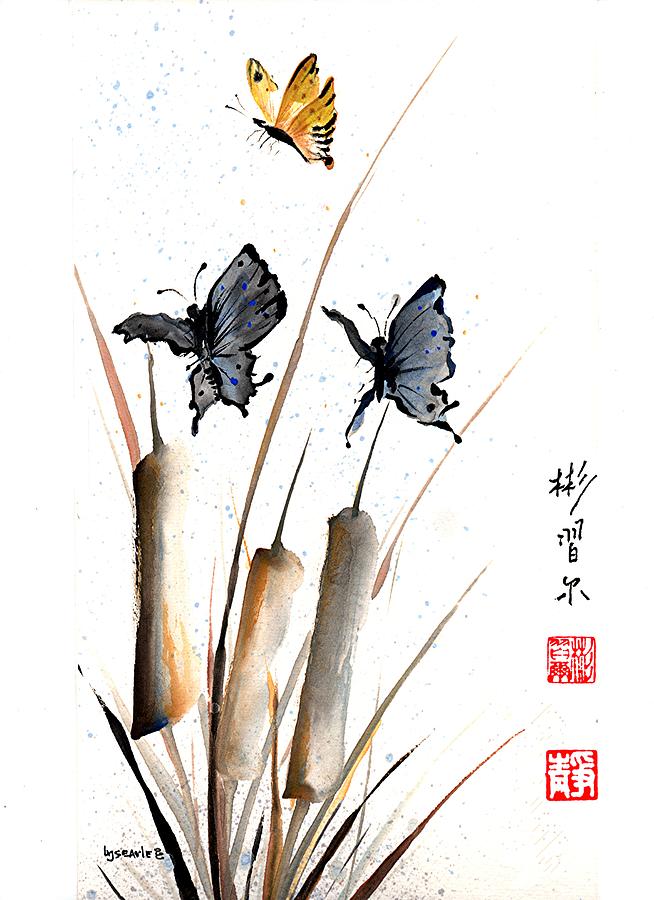
Searle, Echo of Silence, 2014


Jane Hershfield's essay on the haiku of Basho, "Seeing Through Words" ...
The haiku describes the poet’s inner state—yet without the explanatory headnote, its words appear no less external than those of the previous poem.  How then should it be understood?  
To read a haiku is to become its co-author, to place yourself inside its words until they reveal one of the proteus-shapes of your own life. The resulting experience may well differ widely between readers: haiku’s image-based language invites an almost limitless freedom of interpretation. Written near the end of Bashō’s life, “this road” can be read as a poem painting the landscape of loneliness or as a poem looking toward an unnavigable death. It can also be read as direct and immediate self-portrait: the uninhabited
autumn evening and empty road may themselves be the poet and what he feels. Understood in this last way, the haiku presents its author as a person outside any sense of the personal self. He has fallen into a world in which there is no walker, only path.

Paths mattered to Bashō, who could—like Wordsworth or John Muir—cover twenty or thirty miles a day by foot. In his youth, it seems he traveled only as circumstances required. In mid-life, he traveled by choice, following the example of earlier poet-wanderers he admired. By the end of his life, his journeying gives off the scent of an irrefusable restlessness, a simple incapacity to stay long at home. In the opening words of “Narrow Road to the Deep North,” a prose and haiku journal describing a trip of roughly 1500 miles undertaken by foot, boat, and horseback at the age of forty-five, Bashō wrote, “The moon and sun are travelers of a hundred generations. The years, coming and going, are wanderers too. Spending a lifetime adrift on boat decks, greeting old age while holding a horse by the mouth—for such a person, each day is a journey, and the journey itself becomes home.”

20 January 2024

Sound.

Innes, Winter Evening, 1887


Winter solitude —
in a world of one color
the sound of wind

Bashō

21 January 2022

Cracking.

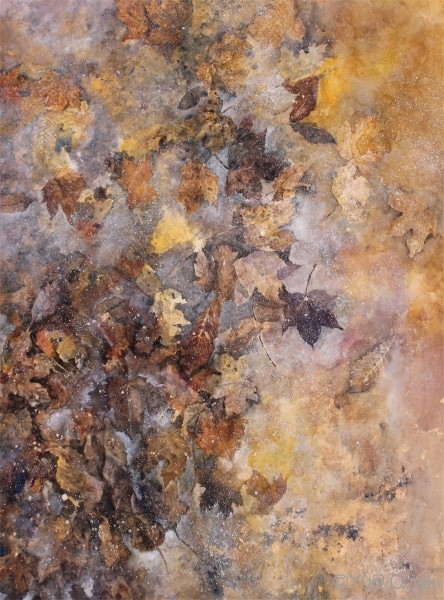
Ozaki, Frozen Puddle, n/d


Awakened at midnight
by the sound of the water jar
cracking from the ice

Basho

22 November 2020

Blindly.


In this mortal frame of mine, there is something, and this something is called a wind-swept spirit, for lack of a better name, for it is much like a thin drapery that is torn and swept away at the slightest stir of the wind. This something in me took to writing poetry years ago, merely to amuse itself at first, but finally making it its lifelong business. It must be admitted, however, that there were times when it sank into such dejection that it was almost ready to drop its pursuit, or again times when it was so puffed up with pride that it exulted in vain victories over others. Indeed, ever since it began to write poetry, it has never found peace with itself, always wavering between doubts of one kind and another. At one time it wanted to gain security by entering the service of a court, and at another it wished to measure the depth of its ignorance by trying to be a scholar, but it was prevented from either because of its unquenchable love of poetry. The fact is, it knows no other art than the art of writing poetry, and therefore, it hangs on to it more or less blindly.

Bashō

26 March 2019

Flood.

Andruskó, Trees, 1973


Not knowing
The name of the tree,
I stood in the flood
Of its sweet smell.

Bashō