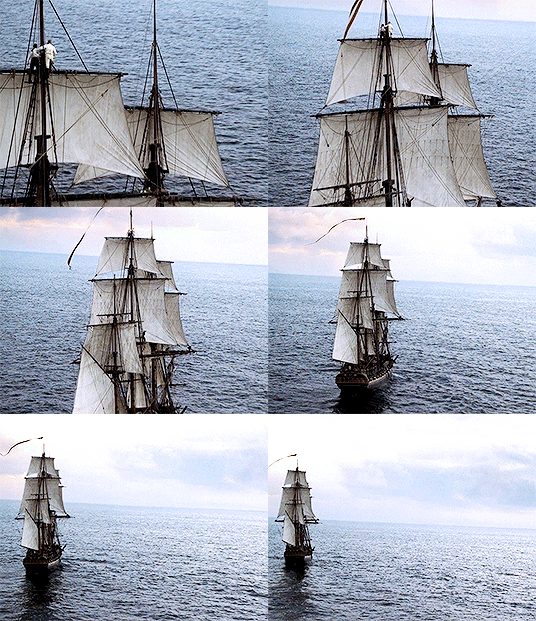
18 December 2010


Dangerous.

In things which are not immediately subject to religious or moral consideration, it is dangerous to be too long or too rigidly in the right.
- Samuel Johnson

Understood.

"There have been times when I think we do not desire heaven but more often I find myself wondering whether, in our heart of hearts, we have ever desired anything else. You may have noticed that the books you really love are bound together by a secret thread. You know very well what is the common quality that makes you love them, though you cannot put it into words: but most of your friends do not see it at all, and often wonder why, liking this, you should also like that. Again, you have stood before some landscape, which seems to embody what you've been looking for all your life; and then turned to the friend at your side who appears to be seeing what you saw - but at the first words a gulf yawns between you, and you realize that this landscape means something totally different to him, that he is pursuing an alien vision and cares nothing for the ineffable suggestion by which you were transported. Even in your hobbies, has there not always been some secret attraction which the others are curiously ignorant of - something, not to be identified with, but always on the verge of breaking through, the smell of cutwood in the workshop or the clap-clap of water aginst the boat's side? Are not all lifelong friendships born at the moment when at last you meet another human being who has some inkling (but faint and uncertain even in the best) of that something which you were born desiring, and which, beneath the flux of other desires and in all the momentary silences between the louder passions, night and day, year by year, from childhood to old age, you are looking for, watching for, listening for? You have never had it. All the things that have ever deeply possessed your soul have been but hints of it - tantalising glimpses, promises never quite fulfilled, echoes that died away just as they caught your ear. But if it should really become manifest - if there ever came an echo that did not die away but swelled into the sound itself - you would know it. Beyond all possibility of doubt you would say 'Here at last is the thing I was made for.' We cannot tell each other about it. It is the secret signature of each soul, the incommunicable and unappeasable want, the thing we desired before we met our wives or made our friends or chose our work, and which we shall still desire on our deathbeds, when the mind no longer knows wife or friend or work. While we are, this is. If we lose this, we lose all."
-C. S. Lewis, The Problem of Pain
Useful.
A very useful US weather map from NOAA.
Mouse of map for current observations. Click for trends.

Thanks, Dad.
Mouse of map for current observations. Click for trends.

Thanks, Dad.
Jack London, "To Build A Fire"

The old-timer on Sulphur Creek was right, he thought in the moment of controlled despair that ensued: after fifty below, a man should travel with a partner. He beat his hands, but failed in exciting any sensation. Suddenly he bared both hands, removing the mittens with his teeth. He caught the whole bunch between the heels of his hands. His arm-muscles not being frozen enabled him to press the hand-heels tightly against the matches. Then he scratched the bunch along his leg. It flared into flame, seventy sulphur matches at once! There was no wind to blow them out. He kept his head to one side to escape the strangling fumes, and held the blazing bunch to the birch-bark. As he so held it, he became aware of sensation in his hand. His flesh was burning. He could smell it. Deep down below the surface he could feel it. The sensation developed into pain that grew acute. And still he endured it, holding the flame of the matches clumsily to the bark that would not light readily because his own burning hands were in the way, absorbing most of the flame.
Read the rest of this Jack London masterpiece here.

17 December 2010
Out-of-balance.

I happen to like tannins—big red wines, very dark chocolates, and strong black tea all have them, and I like all of those. If you like a rounder, more balanced, more classically correct Darjeeling I'd say you should skip this one and go straight to a slightly calmer, better behaved, second flush tea. I like those a lot too. The one we've got from the Castleton Garden is very good. But first flush is still my first love. I've described it before (and I'm about to again here) as being "intentionally out of balance." It takes all the greenness, sharp edges, edgy beats, free jazz, cutting edge, slightly-crazy-but-in-a-supremely-endearing-way stuff about Darjeeling and puts it out front where you can get it, one amber-colored cup at a time. It's like speed without all the substance. Bold color without great contrast. Poetry with rhythm but no rhyme, or a sentence full of swear words but not much else (you know what I mean). Good stuff that stands out and understandably alienates a lot of people but is compelling to those ... to those, like me, for whom it's compelling.
Read the rest here.
Ari's archive.
Mecca.
Interesting.

A Really Big Lunch
By Jim Harrison
The New Yorker
Sep 6, 2004. Vol.80, Iss. 25
On our frequent American road trips, my friend Guy de la Valdene has invariably said at lunch, “These French fries are filthy,” but he always eats them anyway, and some of mine, too. Another friend, the painter Russell Chatham, likes to remind me that we pioneered the idea of ordering multiple entrees in restaurants back in the seventies-the theory being that if you order several entrees you can then avoid the terrible disappointment of having ordered the wrong thing while others at the table have inevitably ordered the right thing. The results can’t have been all that bad, since both of us are still more or less alive, though neither of us owns any spandex.
Is there an interior logic to overeating, or does gluttony, like sex, wander around in a messy void, utterly resistant to our attempts to make sense of it? Not very deep within us, the hungry heart howls, “Supersize me.” When I was a boy, in northern Michigan, feeding my grandfather’s pigs, I was amazed at their capacity. Before I was caught in the act and chided by my elders, I had empirically determined that the appetite of pigs was limitless. As I dawdled in the barnyard, the animals gazed at me as fondly as many of us do at great chefs. Life is brutishly short and we wish to eat well, and for this we must generally travel to large cities, or, better yet, to France.
Never before have the American people had their noses so deeply in one another’s business. If I announce that I and eleven other diners shared a thirty-seven-course lunch that likely cost as much as a new Volvo station wagon, those of a critical nature will let their minds run in tiny, aghast circles of condemnation. My response to them is that none of us twelve disciples of gourmandise wanted a new Volvo. We wanted only lunch, and since lunch lasted approximately eleven hours we saved money by not having to buy dinner. The defense rests.
Some would also think it excessive to travel all the way from Montana to Marc Meneau’s L’Esperance, in Burgundy, for lunch, but I don’t. Although there are signs of a culinary revolution in the United States, this much bandied renaissance is for people in cities such as New York, San Francisco, Seattle, and Chicago. When travelling across America over the past forty years, I’ve repeatedly sought extreme unction of a sort while in the midst of digestive death in the parking lots of restaurants. I’ve found it best, in these situations, to get some distance-to drive for a while, pull over, take a walk, fall to my knees, and pray for better food in the future.
I suspect that it’s inappropriate to strand myself on a high horse when it comes to what people eat. We have proved ourselves inept fools on so many mortal fronts-from our utter disregard of the natural world to our notions of ethnic virtue to the hellish marriage of politics and war-that perhaps we should be allowed to pick at garbage like happy crows. When I was growing up in the Calvinist Midwest, the assumption that we eat to live, not live to eat, was part of the Gospels. (With the exception, of course, of holiday feasts. Certain women were famous for their pie-making abilities, while certain men, like my father, were admired for being able to barbecue two hundred chickens at once for a church picnic.) I recall that working in the fields for ten hours a day required an ample breakfast and three big sandwiches for lunch. At the time, I don’t think I believed I was all that different from the other farm animals.
It’s a long road from a childhood in rural Michigan to being the sort of man who gets invited to a thirty-seven-course lunch. But, above all, a gourmand is one who is able to keep eating when no longer hungry, and a gourmand without a rich sense of the comic is a pathetic piggy, indeed. Once, at Taillevent, in Paris (a restaurant that is always referred to as a “temple of gastronomy”), I had the uncomfortable sense that I was in a funeral parlor. I heard no laughter except from my own table. And when I wanted a taste of Calvados as an entremets the waiter actually told me that I’d have to be patient until after the cheese course, an hour distant. Luckily, an intemperate French count who was at my table told the waiter to bring my Calvados immediately or he would slap his face; at those prices, you don’t want to be schooled. Haute cuisine has rules for those who love rules. Those rules have, for the most part, driven me into the arms of bistros. If I were given the dreary six months to live, I’d head at once to Lyons and make my way from bistro to bistro in a big stroller pushed by a vegetarian.
The thirty-seven-course lunch, which was held on November 17th of last year, was based on recipes by the great cooks and food writers of the past (among them Le Marechal de Richelieu, Nicolas de Bonnefons, Pierre de Lune, Massialot, La Varenne, Marin, Grimod de La Reyniere, Brillat-Savarin, Mercier, La Chapelle, Menon, and Careme), and drawn from seventeen cookbooks published between 1654 and 1823. It was food with a precise and determinable history. My host for the lunch was Gerard Oberle, a man of unquestionable genius, whom I had met a decade earlier at a wine-and-book festival near Saumur, on the Loire. I don’t recall seeing any books at the three-day party, where I was a wine judge, along with Alain Robbe-Grillet and Gerard Depardieu. (None of us was particularly startled when we were told that the wines had been “pre-judged” and were there for decoration only.) Early one morning, I discovered Oberle eating a sturdy platter of charcuterie on the patio of the chateau where we were staying. It took me a number of years to uncover all the aspects of his character-as if I were peeling the laminae from a giant Bermuda onion (which Gerard somewhat physically resembles, but then so does the Buddha). Gerard is a book collector and a dealer in illuminated manuscripts, a musicologist with a weekly program on Radio France, a novelist and an essayist, an “expert of experts” dealing with insurance fraud (assessing the actual value of private libraries destroyed by fire), a countertenor who once sang Purcell’s “Come Ye Sons of Art” while woodcock hunting in Michigan’s Upper Peninsula, a student of the history of French food who has produced a couple of what he calls “two-kilo” bibliographies on the subject, a wine and salami scholar, a former officer in a society for the protection of the integrity of fromages de tete (headcheese), a culinary eccentric, and a grand cook. Once, in Cancale, on the Brittany coast, where we were eating the rare and enormous seventy-year-old oysters known as pieds de cheval (horse’s feet), he remarked, “These would be difficult to eat in a car.”
Soon after I met Gerard, I visited his manor, in Burgundy, where he prepared a particularly interesting dish of ancient origin-a torte of fifty baby pigs’ noses. “Really a simple dish,” he said. As he explained it, you soak the pigs’ noses overnight in clear water, then simmer them for about two hours in red wine, herbs, and garlic. Later, you add potatoes and bake the dish with the upturned noses forming a delightful mosaic on the surface. Such dishes are usually only for the extremely curious or those with an agricultural background. I recall both of my grandmothers boiling pigs’ heads with herbs and onions to make a headcheese, for which the especially toothsome cheek, tongue, and neck meat was extracted, covered with the cooking liquid, and gelatinized in a glass dish.
By the time I met Gerard, I had already been exposed to excesses of every sort, including those of the film industry, and I had known a number of big eaters, myself included. But I had never met a truly refined big eater. Not long afterward, Gerard threw a dinner with fifty courses. Why? Because it was his fiftieth birthday. Why else? When I first read the menu, it seemed incomprehensible to me, though there was an interior logic-the meal was designed after one described in Petronius’ Satyricon.
This is not to say that Gerard concentrates on the arcane and the frivolous. In my dozen or so visits to his home, I’ve experienced many French standards, in versions better than any I’d had before. You know you are not in a restaurant when you enter Gerard’s kitchen and notice a wooden bowl with a kilo of black truffles waiting to be added to your all-time favorite dish, poulet demi-deuil, or “chicken in half-mourning.” The dead fowl has been honored by so many truffle slices, slid under its skin, that it appears to be wearing black (not to mention the large truffle stuffed in the bird’s cavity, to comfort its inner chicken). When I said, “Gerard, you shouldn’t have,” he replied, “I’m a bachelor. I have no heirs.”
Over the years, on my visits to France, Guy de la Valdene, Gerard, and I had discussed the possibilities for a “theme” meal, and we had read the menus of several that Gerard had already given. At a certain point, it began to seem entirely reasonable to plan a lunch that began with twenty-four courses and then urged itself upward. And no restaurant was more logical a location than L’Esperance, in the village of Saint-Pere-sous-Vezelay, a scant hour and a half from Gerard’s home, in the Morvan. Of all the great chefs in France, Marc Meneau, a very tall man who looms above his employees as did de Gaulle above his citizenry, is one of the least aggressive, apparently devoid of any interest in becoming a public figure. His restaurant, long a required destination for gourmands, is pure country French, elegantly set in a grand garden, with nothing whatsoever in its decor to intimidate the customer. (And it would soon regain the third Michelin star that it had lost in 1999.)
Gerard had known Meneau for years, and with Guy and me safely at home in the United States he proceeded to plan the feast, using his improbable library as the source. Having once sat in on an after-lunch confab on the “vrai ancien coq au vin” (reduce seven litres of Merlot down to one, whisk in the rooster blood, etc.), I can only imagine the countless hours of discussion that ensued between Gerard and Meneau.
When the morning of the event finally arrived, I wasn’t particularly hungry. This didn’t alarm me-many professional athletes before a big game feel that they would prefer to spend the day with their Tinkertoys or in the arms of Lucrezia Borgia. I had already been off my diet for two weeks, touring the French countryside with Guy and Peter Lewis, a Seattle restaurateur. Everywhere we went, we ate the best food available, with the excuse, not totally accurate, that we’d worked hard, saved our pennies, and had it coming. (The novelist Tom McGuane once noted that in the course of thirty-five years of correspondence between us I had lost a total of eighteen hundred pounds-so I was really “getting down there.”)
The day dawned cool and misty. There was a certain anxiety in the air at the manor, with Gerard watching to make sure that I didn’t partake of the breakfast that I thought I needed. All I wanted was a simple slab of the game pate from the evening before, but when I tried to sneak into the kitchen from the outside pantry door he was there in front of the fridge like a three-hundred-pound albino cat.
I’ve always felt that there is no lovelier village in France than Vezelay, and no lovelier religious building than its cathedral on the hill, the Madeleine of Vezelay. I’m not Catholic, but I’ve lit candles in that church in prayer for troubled friends, and it has always worked. At least, they’re all still showing vital signs. But I had no time to run up the steep hill and light a candle for my own digestion. The twelve of us sat down at noon. To my left was the vintner Didier Dagueneau, whose exquisite Pouilly-Fume we had been drinking since our initial Krug Grande Cuvee. The first time I met Didier, I was startled by his appearance, which is that of a Minnesotan pulp cutter. During the winter downtime at his vineyard, in Pouilly, he travels far north, toward the Arctic, to run the dozens of sled dogs that he owns and whose racket irritates his neighbors. To my right was Gilles Brezol, Gerard’s business partner and a man of sophisticated intelligence, who taught French for a year in Alabama and Nevada during the civil-rights upheaval. I’ve had dozens of meals with Gilles, who eats as much as I do but remains irritatingly slender. In fact, in this group of mostly book collectors and journalists sworn to secrecy no one was technically obese. Although the lunch had originally been planned for eleven, a twelfth guest, a beautifully tailored, elderly French gentleman, unknown to all of us, had been invited by Meneau, in accordance with the superstitious notion that any large group should include a stranger, who might very well be an angel in disguise.
Meneau came out of the kitchen; his only advice was “Courage” (or “coo-rahj,” as my phrase book likes to say). We began with a girlish delicacy-a clear soup made from poultry, diced vegetables, and crayfish-followed by tartines of foie gras, truffles, and lard. The next soup was a velvety cream of squab with cucumbers, served with cock-crest fritters. Then there was a soothing crayfish bisque, and I began to wonder how long we would be pursuing the soup motif.
But, oddly, I felt squeamish about the first of the hors d’oeuvres-oysters and cream of Camembert on toast, which proved to be the only course I couldn’t eat. (We all have our own food phobias, and a mixture of pungent cheese and oysters makes my little tummy recoil.) Next came a chilled jellied loaf of poultry on sorrel cream, followed by a private joke on me-fresh Baltic herring with mayonnaise. (According to my late mother, I was wild about herring from the age of two. Her family was Swedish, and the fish was a staple.) I loved the tart of calf’s brains with shelled peas but was not terribly fond of the omelette with sea urchin, a dish that Louis XV liked to prepare for himself-though it was certainly better than the cottage cheese with ketchup that Richard Nixon favored as a snack. (There is a well-founded rumor that George W. Bush nibbles on bologna with marshmallow bonbons.) A filet of sole with champagne sauce accompanied by monkfish livers was wonderful, as was the roasted pike spiked with parsley. I did pause to consider whether all of these hors d’oeuvres might dampen my appetite for the main courses. The wine steward noted my unrest, and a quick goblet of Montrachet tickled my enthusiasm upward. There were only two pure-blood Americans at the table, Peter Lewis and I, and we had agreed not to shame our own holy empire.
We headed into the “second service” without an appropriate break-say, a five-mile march through the mountains and an eight-hour nap. The courses, naturally, became more substantial. First came an oven-glazed brill served with fennel cream, anchovies, and roasted currants, then a stew of suckling pig that had been slow-cooked in a red-wine sauce thickened with its own blood, onions, and bacon. I leaped forward from this into a warm terrine of hare with preserved plums, and a poached eel with chicken wing tips and testicles in a pool of tarragon butter. But I only picked at my glazed partridge breasts, which were followed by a savory of eggs poached in Chimay ale, and then a mille-feuille of puff pastry sandwiched with sardines and leeks.
Now it was halftime, though there were no prancing cheerleaders. The menu advised us to “languish” in the salon and nibble on ravioli with carrots and cumin and thick slices of “Noirs eggs of puff pastry with squab hearts.” Instead, I went outside, where the grass was wet and my feet seemed to sink in even farther than usual. In the walled herb garden, I began to reflect that this kind of eating might not be a wise choice in the late autumn of my life. Perhaps I should fax the menu to my cardiologist in the States before proceeding? I soon realized that this was one of the ten million insincere impulses I’ve had in my life. I began to walk faster for a dozen yards and almost jumped a creek, but then thought better of it.
The “third service” loaded even bigger guns, or so it seemed, with its concentration on denser, heavier specialties that tried the patience of my long-fled appetite. From Massialot, we were offered a “light” stew of veal breast in a puree of ham and oysters in a pastry-covered casserole, and a not-so-light gratin of beef cheeks. La Varenne’s gray squab was boned, stuffed with sweetbreads, squab livers, and scallions, and spit-roasted. It was the Prince des Dombes who said, “Nothing arouses me but taste” (“Je ne me pique que de gout”). He would have been a disappointing match for a vigorous girl. You can imagine her hanging a rope ladder from her tower bedroom for knights-errant-or, better yet, woodchoppers and stable hands-to climb, while the Prince aroused himself in the kitchen. From his files, we had wild duck with black olives and orange zest, a buisson (bush) of crayfish with little slabs of grilled goose liver, a terrine of the tips of calves’ ears, hare cooked in port wine inside a calf’s bladder, crispy breaded asparagus, a sponge cake with fruit preserves, and cucumbers stewed in wine.
It was consoling to begin winding down with a swirl of turnips in sweetened wine, radishes preserved in vinegar, a warm salad with almonds, cream of grilled pistachios, meringues, macaroons, and chocolate cigarettes. These were simple warmups to the medley of desserts served to us in the salon: a rosette of almond milk with almonds; a soft cheese of fresh cream with quince jelly; rice whipped with sweetened egg whites and lemon peel; a grand ring-shaped cake, a savarin, flamed with Old Havana rum and served with preserved pineapple; little molds of various ice creams; and a “towering structure of every fruit imaginable in every manner imaginable.”
Sad to say, my notes from the meal are blurred and smeared by the cooked exudates of flora and fauna and the wines that rained down on us as if from the world’s best garden sprinkler. Reading through the veil of grease, I see that my favorites among the wines served were Chablis Les Clos, Montrachet 1989, Volnay-Champans 1969, Chateau Latour 1989, and Cote Rotie. Of course, any fool would love these great wines as he felt his wallet vaporize.
There. Time to do dishes. As Diderot said of a lunch at the fabulously wealthy Baron of Holbach’s home, “After lunch, one takes a little walk, or one digests, if it’s even possible.” Night had long since fallen, and I reflected that lunch had taken the same amount of time as a Varig flight from New York to Sao Paulo.
In the salon, my fellow-diners were yawning rather than gasping or sobbing. Was this another example of the banality of evil: a grievous sin committed-in this case, gluttony-and no one squirming with guilt? I have noticed that Frenchmen are far less susceptible to heart disease, in part because they don’t seem to experience the stress of self-doubt or regret. My mother, a Swedish Lutheran, liked to ask her five children, “What have you accomplished today?” If I’d told her, “I have eaten thirty-seven courses and drunk thirteen wines,” I would have been cast into outer darkness. But then this was the Iron Mom, who also said, with a tiny smile, in reference to my life’s work, “You’ve made quite a living out of your fibs.”
At midnight, while sipping a paltry brandy from the nineteen-twenties and smoking a Havana Churchill, I reflected that this was not the time to ponder eternal values. I was sitting next to Gerard, who was cherubically discussing the historical subtleties of certain courses. In a way, we were forensic anthropologists, doing arduous historical field work. How could we possibly understand the present without knowing what certain of our ancestors had consumed? Marc Meneau, his lovely wife, Francoise, and thirty-nine members of his staff had led us on a sombre and all-consuming journey into the past.
At dawn or a few hours thereafter, I felt relieved, on stepping out of the bathtub, that I hadn’t fallen on a hard surface and broken open like an overly mature muskmelon.
No question looms larger on a daily basis for many of us than “What’s for lunch?” and, when that has been resolved, “What’s for dinner?” There have been mutterings that the whole food thing has gone too far in America, but I think not. Good food is a benign weapon against the sodden way we live.
By the time I reached Paris the next afternoon and took a three-hour stroll, I was feeling a little peckish. I’d heard that certain quarrels had already arisen over our lunch, and I felt lucky that my capacity for the French language was limited to understanding only the gist of conversations-sort of the way the average American comprehends our government. On the phone, the natives were restless to the point of “scandal,” and from the tornado of rumors (everyone knows that men, not women, are the masters of gossip) I learned that many had found both the food and the service disappointing, the lack of “theatre” sad. (As for myself, I couldn’t make a judgment. I once helped to cook a whole steer and a barrel of corn for a picnic in Michigan and have eaten many ten-course dinners, but our French lunch had left those occasions in the numbered dust.) The most interesting rumor I heard was that the tab for the lunch had been picked up by a Louisiana billionaire, who couldn’t attend because a pelican had been sucked into an engine of his Gulfstream. This detail was so extraordinary that it seemed likely to be true.
That last evening in Paris, before my flight and the tonic Chicago-style hot dog that awaited me at O’Hare, Peter and I dined at Thoumieux, my old standby restaurant, near the Invalides. We had a simple Gigondas, and I ordered two vegetable courses, then relented at the last moment and added a duck confit. Long flights are physically exhausting, and good nutrition lays the foundation of life. On Air France, I was sunk in profound thought, or so I felt at the time. Like sex, bathing, sleeping, and drinking, the effects of food don’t last. The patterns are repeated but finite. Life is a near-death experience, and our devious minds will do anything to make it interesting.
Thanks to Sean Blog: Nachos Miles Hack Disc Clank Write Read Run Disc Golf Fish Eat
Ostreaphile.

Art is something we experience not to fill any basic needs but instead to learn about ourselves and our connections to the world. Food is rarely art. We eat to fill our bellies. We eat to sustain ourselves. We eat because we must. Oysters come pretty close to breaking this connection. No one fills up on them. They are taste sundered from satiation. We do not eat them to satisfy any needs—except for our need to experience.
Read the rest here.
I highly recommend this and this.
Los Lobos, "Cinnamon Girl"
I wanna live with a cinnamon girl
I could be happy the rest of my life
With a cinnamon girl
A dreamer of pictures, I run in the night
You see us together, chasing the moonlight
My cinnamon girl
I could be happy the rest of my life
With a cinnamon girl
A dreamer of pictures, I run in the night
You see us together, chasing the moonlight
My cinnamon girl
15 December 2010


Ophélie Gaillard.
Not on YouTube ...
Mozart at work.
van Gogh at work.
Michelangelo at work.
Frost at work.
Behold, an artist captured ...
Ophélie Gaillard's site can be found here.
Mozart at work.
van Gogh at work.
Michelangelo at work.
Frost at work.
Behold, an artist captured ...
Ophélie Gaillard's site can be found here.
13 December 2010
Hope.

Whatever the disasters that love may cause, we should suggest, love, judged in itself and without regard to contingencies, is a human good – perhaps the greatest of human goods. The important thing is to learn to love rightly and in the right frame of mind. Then the disasters, if they come, come as accidents and not by necessity. That is the response that should be made on behalf of religion too. Of course religion can lead to disasters, like the Thirty Years War. Of course people can believe in false gods and attach themselves to evil rituals. But that does not alter the fact that people have a need for reconciliation and forgiveness and that they find these things through allowing into their lives the light that is cast by sacred things. By opening ourselves to the sacred we are also constructing a community, so that the meanings and values that we find are shared with others. A religious community is not a scientific community. It contains idiocy, prejudice, ignorance and stupidity in all the proportions that these are displayed by mankind as a whole. But that is its great virtue: it can draw people, whatever their talents and intellectual powers, into a shared apprehension of their condition. It can teach humility and justice, and remind the one with power, knowledge, wealth or artistic talent, that he is the equal of the one beside him in the moment of worship, however ignorant, weak or sinful that person might be. And to both of them it offers hope.
Read the rest here.
12 December 2010
Esperanza.

Pablo Neruda always wrote in green ink ... the color of hope.
Oceanic dawn
at the center
of my life.
Waves like grapes,
the sky's solitude,
you fill me
and flood
the complete sea,
the undimished sky,
tempo
and space,
seafoam's white
battalions,
the orange earth,
the sun's
fiery waist
in agony,
so many
gifts and talents,
birds soaring into their dreams,
and the sea, the sea,
suspended
aroma,
chorus of rich, resonant salt,
and meanwhile,
we men,
touch the water,
struggling and hoping,
we touch the sea
hoping.
And the waves tell the firm coast;
"Everything will be fulfilled"
- Pablo Neruda
Geminids.

Though Ohio is certain to see nothing but snow in the sky, the Geminids will be shooting for the next two nights ...
This meteor shower gets the name "Geminids" because it appears to radiate from the constellation Gemini. An observer in the Northern Hemisphere can start seeing Geminid meteors as early as December 6, when one meteor every hour or so could be visible. During the next week, rates increase until a peak of 50-80 meteors per hour is attained on the night of December 13/14. The last Geminids are seen on December 18, when an observer might see a rate of one every hour or so.
Read the rest here.
Earth and Sky gives the true gen here.
Also ... watch for the lunar eclipse next week!
Here's a useful link ... navigate wisely, don't get lost.
Discovered.

"Spirit," said Scrooge, with an interest he had never felt before,"tell me if Tiny Tim will live."
"I see a vacant seat," replied the Ghost, "in the poor chimney-corner, and a crutch without an owner, carefully preserved. If these shadows remain unaltered by the Future, the child will die."
"No, no," said Scrooge. "Oh, no, kind Spirit. Say he will be spared."
"If these shadows remain unaltered by the Future, none other of my race," returned the Ghost, "will find him here. What then? If he be like to die, he had better do it, and decrease the surplus population."
Scrooge hung his head to hear his own words quoted by the Spirit, and was overcome with penitence and grief.
"Man," said the Ghost, "if man you be in heart, not adamant, forbear that wicked cant until you have discovered What the surplus is, and Where it is. Will you decide what men shall live, what men shall die? It may be, that in the sight of Heaven, you are more worthless and less fit to live than millions like this poor man's child. Oh God! To hear the Insect on the leaf pronouncing on the too much life among his hungry brothers in the dust."
Scrooge bent before the Ghost's rebuke, and trembling cast his eyes upon the ground. But he raised them speedily, on hearing his own name.
Read the rest here.
More on A Christmas Carol here and here.

Happy Birthday, Harrison.

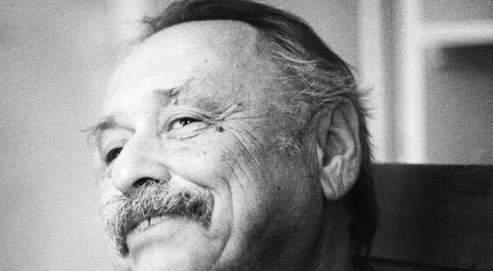
To write a poem you must first create a pen that will write what you want to say. For better or worse, this is the work of a lifetime.
-Jim Harrison, born December 11, 1937
Raise a bottle (skip the glass) to Ursa Major ... drink deeply.
White.
... the bright White Silence, clear and cold, under steely skies, is pitiless.
-Jack London, The White Silence


-Jack London, The White Silence


Praetorius, Mass for Christmas Morning

... a reconstructed Lutheran Christmas service ‘as it might have been celebrated around 1620’ and it includes contributions from Samuel Scheidt (1587-1654) and Johann Hermann Schein (1586-1630). But it was the prolific and talented Praetorius (born Michael Schulze) who single-handedly produced much of the Lutheran church music heard in northern Germany in the early 17th century.
A refreshing antidote to all those unimaginative festive compilations, this beautifully presented disc demands your attention this Christmas.
Program notes for the Mass can be found here.
Getchasum.
The melody for the Processional of this Mass was written by Martin Luther. Here's the Recessional ...
Throughout.

It was not uncommon for drinking to begin even before breakfast and it continued with every meal throughout the day. Seldom did anyone pass on the opportunity to down an ale. It was both the nourishment and refreshment common throughout that period's long work days. The quintessential colonist Benjamin Franklin described his earliest job in a print shop with frequent reference to ale. As a young apprentice, tending to the needs of the journeymen was one of his foremost duties. A right to take a portion of one's wages in ale was another custom these displaced Englishmen brought with them. Franklin's diary repeatedly mentions the times his work was interrupted as he was dispatched to fetch rations of ale. Although this job resulted in his early disdain for the beverage he soon developed a fondness. Even John Adams, first United States ambassador to the court of St.James was a beer drinker.
Read the rest here.
11 December 2010
Dusk.
Alexander Volkov, A Moment of Dusk

Winter Dusk
Dark frost was in the air without,
The dusk was still with cold and gloom,
When less than even a shadow came
And stood within the room.
But of the three around the fire,
None turned a questioning head to look,
Still read a clear voice, on and on,
Still stooped they o’er their book.
The children watched their mother’s eyes
Moving on softly line to line;
It seemed to listen too—that shade,
Yet made no outward sign.
The fire-flames crooned a tiny song,
No cold wind stirred the wintry tree;
The children both in Faërie dreamed
Beside their mother’s knee.
And nearer yet that spirit drew
Above that heedless one, intent
Only on what the simple words
Of her small story meant.
No voiceless sorrow grieved her mind,
No memory her bosom stirred,
Nor dreamed she, as she read to two,
’Twas surely three who heard.
Yet when, the story done, she smiled
From face to face, serene and clear,
A love, half dread, sprang up, as she
Leaned close and drew them near.
- Walter de la Mare

Winter Dusk
Dark frost was in the air without,
The dusk was still with cold and gloom,
When less than even a shadow came
And stood within the room.
But of the three around the fire,
None turned a questioning head to look,
Still read a clear voice, on and on,
Still stooped they o’er their book.
The children watched their mother’s eyes
Moving on softly line to line;
It seemed to listen too—that shade,
Yet made no outward sign.
The fire-flames crooned a tiny song,
No cold wind stirred the wintry tree;
The children both in Faërie dreamed
Beside their mother’s knee.
And nearer yet that spirit drew
Above that heedless one, intent
Only on what the simple words
Of her small story meant.
No voiceless sorrow grieved her mind,
No memory her bosom stirred,
Nor dreamed she, as she read to two,
’Twas surely three who heard.
Yet when, the story done, she smiled
From face to face, serene and clear,
A love, half dread, sprang up, as she
Leaned close and drew them near.
- Walter de la Mare

A Festival of Nine Lessons and Carols
In 1918, the then-new dean of King's Chapel, 34-year-old Eric Milner-White, wanted to try something innovative and beyond the standard liturgy of the Church of England. So, he wove together scripture and song, called on readers of various ages from school and town, and made up this truly magical progression that carries us from prophecy to fulfillment, from Old Testament foretelling to a birthday celebration.
Our Festival of Nine Lessons and Carols was first held on Christmas Eve 1918. It was planned by Eric Milner-White, who at the age of thirty-four had just been appointed Dean of King's, after experience as an army chaplain which had convinced him that the Church of England needed more imaginative worship. A revision of the Order of Service was made in 1919, involving rearrangement of the lessons, and from that date the service has always begun with the hymn 'Once in Royal David's City'.
The service was first broadcast in 1928 and, with the exception of 1930, has been broadcast annually, even during the Second World War, when the ancient glass (and also all heat) had been removed from the Chapel. Sometime in the early 1930's the BBC began broadcasting the service on the World Service. It is estimated that there are millions of listeners worldwide, including those to Radio Four in the United Kingdom.
More here and here.
Listen here on Christmas Eve.
Our Festival of Nine Lessons and Carols was first held on Christmas Eve 1918. It was planned by Eric Milner-White, who at the age of thirty-four had just been appointed Dean of King's, after experience as an army chaplain which had convinced him that the Church of England needed more imaginative worship. A revision of the Order of Service was made in 1919, involving rearrangement of the lessons, and from that date the service has always begun with the hymn 'Once in Royal David's City'.
The service was first broadcast in 1928 and, with the exception of 1930, has been broadcast annually, even during the Second World War, when the ancient glass (and also all heat) had been removed from the Chapel. Sometime in the early 1930's the BBC began broadcasting the service on the World Service. It is estimated that there are millions of listeners worldwide, including those to Radio Four in the United Kingdom.
More here and here.
Listen here on Christmas Eve.
Washington Irving's Old Christmas.

The pitchy gloom without makes the heart dilate on entering the room filled with the glow and warmth of the evening fire. The ruddy blaze diffuses an artificial summer and sunshine through the room, and lights up each countenance into a kindlier welcome. Where does the honest face of hospitality expand into a broader and more cordial smile--where is the shy glance of love more sweetly eloquent--than by the winter fireside? and as the hollow blast of wintry wind rushes through the hall, claps the distant door, whistles about the casement, and rumbles down the chimney, what can be more grateful than that feeling of sober and sheltered security with which we look around upon the comfortable chamber and the scene of domestic hilarity?
Do yourself a favor ... read the rest here, download the .pdf and enjoy the illustrations by Randolph Caldecott.
07 December 2010
Righteous.
Mr. Vice President, Mr. Speaker, Members of the Senate, and of the House of Representatives:
Yesterday, December 7th, 1941 -- a date which will live in infamy -- the United States of America was suddenly and deliberately attacked by naval and air forces of the Empire of Japan.
The United States was at peace with that nation and, at the solicitation of Japan, was still in conversation with its government and its emperor looking toward the maintenance of peace in the Pacific.
Indeed, one hour after Japanese air squadrons had commenced bombing in the American island of Oahu, the Japanese ambassador to the United States and his colleague delivered to our Secretary of State a formal reply to a recent American message. And while this reply stated that it seemed useless to continue the existing diplomatic negotiations, it contained no threat or hint of war or of armed attack.
It will be recorded that the distance of Hawaii from Japan makes it obvious that the attack was deliberately planned many days or even weeks ago. During the intervening time, the Japanese government has deliberately sought to deceive the United States by false statements and expressions of hope for continued peace.
The attack yesterday on the Hawaiian islands has caused severe damage to American naval and military forces. I regret to tell you that very many American lives have been lost. In addition, American ships have been reported torpedoed on the high seas between San Francisco and Honolulu.
Yesterday, the Japanese government also launched an attack against Malaya.
Last night, Japanese forces attacked Hong Kong.
Last night, Japanese forces attacked Guam.
Last night, Japanese forces attacked the Philippine Islands.
Last night, the Japanese attacked Wake Island.
And this morning, the Japanese attacked Midway Island.
Japan has, therefore, undertaken a surprise offensive extending throughout the Pacific area. The facts of yesterday and today speak for themselves. The people of the United States have already formed their opinions and well understand the implications to the very life and safety of our nation.
As commander in chief of the Army and Navy, I have directed that all measures be taken for our defense. But always will our whole nation remember the character of the onslaught against us.
No matter how long it may take us to overcome this premeditated invasion, the American people in their righteous might will win through to absolute victory.
I believe that I interpret the will of the Congress and of the people when I assert that we will not only defend ourselves to the uttermost, but will make it very certain that this form of treachery shall never again endanger us.
Hostilities exist. There is no blinking at the fact that our people, our territory, and our interests are in grave danger.
With confidence in our armed forces, with the unbounding determination of our people, we will gain the inevitable triumph -- so help us God.
I ask that the Congress declare that since the unprovoked and dastardly attack by Japan on Sunday, December 7th, 1941, a state of war has existed between the United States and the Japanese empire.
06 December 2010

05 December 2010
Tchaikovsky, "The Nutcracker"
Snowflakes ...
Vsevolojsky proposed The Nutcracker of Nuremberg based on the book L’Histoire d’un Casse Noisette (The Story of a Hazelnut-cracker) by Dumas père, itself based on E.T.A. Hoffmann's Nussknacker und Mausekönig (The Nutcracker and the King of the Mice). Ernst Theodor Amadeus Hoffmann (1776-1822) was born in Königsberg, East Prussia to a family with strong ties to the legal profession. Originally his middle name was Wilhelm, but he changed it to Amadeus in honor of Mozart. He went on to study law at the University of Königsberg. Despite his course of studies, Hoffmann was mostly interested in the arts, music, painting and literature. He became a civil servant and was very successful, but his personal life took control and he was forced to move from posting to posting on account of one local scandal or another. He was transferred from Königsberg to Glogau, to Posen to even lesser Plock and eventually to Warsaw with the influence of a friend. All the while he composed music and painted.In Warsaw, Hoffmann founded an orchestra and composed his first important piece, the incidental music to Kreuz an der Ostsee. With the arrival of Napoleon's rule, Hoffmann had to try and make a living in Warsaw as a professional musician. Refusing to take an oath of allegiance to France, he was deported to Berlin where he almost starved to death. He worked various odd jobs until, in 1808, he was offered the post of musical director in Bamberg, Southern Germany, a cultural shrine at the time. In Bamberg he was very active in the theater and also wrote his best music, the opera Undine. He also began to write literature.Leaving Bamberg in 1813 on account of the lost love of a 16 year old girl, Hoffmann’s career moved between Dresden and Leipzig, depending on the location of the opposing armies of The Napoleonic Wars. He drank heavily and it is said that he sold the rights to his first book, Fantasiestücke in Callots Manier for a cellar of wine.The final period of Hoffmann’s life began with his being recalled to Berlin to official duties, again with the help of Hippel. There he became chairman of the Kammergericht (Prussian Supreme Court) and continued to produce his fiction and criticism. Forever a part of his life, heavy drinking and overworking made Hoffmann’s living hard. He contracted digestive difficulties, degeneration of the liver and neural ailments, the treatment for which was applying red hot pokers to the base of his spine. Eventually on June 25, 1822 he died having just finished dictating the story Recovery. As a critic, Hoffmann was highly respected. He wrote under the name of Kreisler, he was one of the first to recognize the talent of J.S. Bach and he championed Beethoven.Hoffmann’s influence extended beyond literature into opera and dance where his works have inspired, among others, Coppélia, and Offenbach’s Tales of Hoffmann in addition to The Nutcracker.
Read more history of The Nutcracker here.
Vsevolojsky proposed The Nutcracker of Nuremberg based on the book L’Histoire d’un Casse Noisette (The Story of a Hazelnut-cracker) by Dumas père, itself based on E.T.A. Hoffmann's Nussknacker und Mausekönig (The Nutcracker and the King of the Mice). Ernst Theodor Amadeus Hoffmann (1776-1822) was born in Königsberg, East Prussia to a family with strong ties to the legal profession. Originally his middle name was Wilhelm, but he changed it to Amadeus in honor of Mozart. He went on to study law at the University of Königsberg. Despite his course of studies, Hoffmann was mostly interested in the arts, music, painting and literature. He became a civil servant and was very successful, but his personal life took control and he was forced to move from posting to posting on account of one local scandal or another. He was transferred from Königsberg to Glogau, to Posen to even lesser Plock and eventually to Warsaw with the influence of a friend. All the while he composed music and painted.In Warsaw, Hoffmann founded an orchestra and composed his first important piece, the incidental music to Kreuz an der Ostsee. With the arrival of Napoleon's rule, Hoffmann had to try and make a living in Warsaw as a professional musician. Refusing to take an oath of allegiance to France, he was deported to Berlin where he almost starved to death. He worked various odd jobs until, in 1808, he was offered the post of musical director in Bamberg, Southern Germany, a cultural shrine at the time. In Bamberg he was very active in the theater and also wrote his best music, the opera Undine. He also began to write literature.Leaving Bamberg in 1813 on account of the lost love of a 16 year old girl, Hoffmann’s career moved between Dresden and Leipzig, depending on the location of the opposing armies of The Napoleonic Wars. He drank heavily and it is said that he sold the rights to his first book, Fantasiestücke in Callots Manier for a cellar of wine.The final period of Hoffmann’s life began with his being recalled to Berlin to official duties, again with the help of Hippel. There he became chairman of the Kammergericht (Prussian Supreme Court) and continued to produce his fiction and criticism. Forever a part of his life, heavy drinking and overworking made Hoffmann’s living hard. He contracted digestive difficulties, degeneration of the liver and neural ailments, the treatment for which was applying red hot pokers to the base of his spine. Eventually on June 25, 1822 he died having just finished dictating the story Recovery. As a critic, Hoffmann was highly respected. He wrote under the name of Kreisler, he was one of the first to recognize the talent of J.S. Bach and he championed Beethoven.Hoffmann’s influence extended beyond literature into opera and dance where his works have inspired, among others, Coppélia, and Offenbach’s Tales of Hoffmann in addition to The Nutcracker.
Read more history of The Nutcracker here.
03 December 2010
Happy Birthday, Stuart.
Gilbert Stuart, John Adams, ca. 1800/1805

Although the second president was a patient sitter, the impish painter later delighted in telling a friend, "Isn't it like? Do you know what he is about to do? He is about to sneeze!" (Both the artist and the sitter habitually used snuff.)
Read the rest here.

Although the second president was a patient sitter, the impish painter later delighted in telling a friend, "Isn't it like? Do you know what he is about to do? He is about to sneeze!" (Both the artist and the sitter habitually used snuff.)
Read the rest here.
Relatives.

The whole concept of 'wild' was decidedly European, one not shared by the original inhabitants of this continent. What we called 'wilderness' was to the Indian a homeland, 'abiding loveliness' in Salish or Piegan. The land was not something to be feared or conquered, and 'wildlife' were neither wild nor alien; they were relatives.
- Doug Peacock, Grizzly Years: In Search of the American Wilderness
National Geographic has some family photos here.
02 December 2010
Live.

We are mere participants in natural cycles, not the kings of them.
- Jim Harrison
The austerity of a bleak and blustery, late-autumn day ... nature preparing to hibernate.
It's also dying.
Cyclical or linear, life is uncertain.
Yesterday ... a day that, beginning to end, was nothing like I planned or expected. It was a day that was filled with hours of immense joy and exhilaration; simple wonder and sublime beauty. It ended under the purple-gray weight of uncertainty, fear, and frustration. A time in which blessings were to be remembered ... and counted.

Control is an illusion ... so live.
Fully, though simply.
Boldly, though reverently.
What will be the last song you hear? The last story you read? The last sunset you watch?
Make it count. Don't get caught short.
Hold hands, fingers intertwined.
Smile big, cheek-straining smiles.
Hug long, earnest, authentic hugs.
Kiss warmly.
Listen patiently.
Love fervently.
Live ...

Brethren of the Rope.

They followed the shadowed turns of a path, then scrambled up the side of their beloved beech, grabbing thick branches and feeling for toeholds. A wintry wind whipped through the park, but by 10 p.m., aloft in the tree, it was as quiet as Manhattan gets. An occasional siren wailed, and a faint whistle could occasionally be heard from a Metro-North train emerging from the Park Avenue tunnel. The rumble of cars and trucks, though, washed into a high distant sound that blended with the rustle of the wind through the leaves.
About seven hours later, the brothers woke up as the sky began to brighten and reported that gusts of wind had rocked their hammocks for much of the night. In daylight, they showed off some of the tree’s features that they had come to appreciate most: the thick, leathery bark of its trunk, which provided climbing traction; the low, sweeping boughs that offered an easy path back to the ground; the dense foliage that gave cover from inquisitive eyes.
Read the rest here.
Happy Birthday, Seurat.
George Seurat, Le Jardinier, 1882.

Some say they see poetry in my paintings; I see only science.
- Georges Seurat
By nature as much a scientist as an artist, Seurat could not accept Monet's instinctive application of visual perception in the use of light. Using as a guide The Law of Contrasts and Similarities, a text on color by the chemist Chevreul, Seurat applied his earlier studies of black and white drawings to the use of color. He developed a specific color wheel based on the fragmentation of light and limited himself to the colors of the spectrum, working out careful compositions that fused design and color.
Read the rest here.
Seurat's complete works can be found here.
Look closely.

Some say they see poetry in my paintings; I see only science.
- Georges Seurat
By nature as much a scientist as an artist, Seurat could not accept Monet's instinctive application of visual perception in the use of light. Using as a guide The Law of Contrasts and Similarities, a text on color by the chemist Chevreul, Seurat applied his earlier studies of black and white drawings to the use of color. He developed a specific color wheel based on the fragmentation of light and limited himself to the colors of the spectrum, working out careful compositions that fused design and color.
Read the rest here.
Seurat's complete works can be found here.
Look closely.
01 December 2010


Mesmerized.

Snow in the air
long before the first flakes
started their long fall from the heavens
snow in the feel, the smell,
the texture of the air
feeling the falling barometer
the shift in the weather
Falling lightly at first, while
I stood at the sink,
mesmerized, watching
their dance downward
From Snow In The Air, by Raymond A. Foss
Subscribe to:
Posts (Atom)