"I am not one who was born in the custody of wisdom. I am one who is fond of olden times and intense in quest of the sacred knowing of the ancients." Gustave Courbet
Showing posts with label Just Before Dark. Show all posts

30 January 2023

Discovery.


When we are lost we lose our peripheries. Our thoughts zoom outward and infect the landscape. Years later you can revisit an area and find these thoughts still diseasing the same landscape. It requires a particular kind of behavior to heal the location.

Gullies, hummocks in swamps, swales in the middle of large fields, the small alluvial fan created by feeder creeks, undercut riverbanks, miniature springs, dense thickets on the tops of hills: like Bachelard's attics, seashells, drawers, cellars, these places are a balm to me. Magic (as opposed to the hocus-pocus of miracles) is equated to the quality of attentiveness. Perhaps magic is the quality of attentiveness, the ultimate attentiveness. D. H. Lawrence said that the only aristocracy is that of consciousness. Certain locations seem to demand consciousness. Once I sat still so long I was lucky enough to have a warbler sit on my elbow. Certain the dead also made brief visits.

Perhaps getting lost temporarily destroys the acquisitive sense. We tend to look at earth as an elaborate system out of which we may draw useful information. We “profit” from nature—that is the taught system. The natural world exists so that we may draw conclusions about it. This is the kind of soul-destroying bullshit that drove young people to lysergic acid in the sixties.

One night last summer I was lucky enough to see “time” herself—the moon shooting across the sky, the constellations adjusting wobbily, the sun rising and setting in seconds. I jumped in the river at daylight to come to my senses. Checked a calendar to make sure. No one really wants to be Hölderlin out in the garden with a foot of snow gathered on top of his head.

It is interesting to see the Nature Establishment and the Nature Anti-Establishment suffocating in the same avalanche of tedium and bitterness. There is insufficient street experience to see how bad the bad guys are. They forget it was greed that discovered the country, greed that propelled the westward movement, greed that shipped the blacks, greed that murdered the Indians, greed that daily shits on the heads of those who love nature. Why are we shit upon, they wonder.

I prefer places valued by no one else. The Upper Peninsula has many of these places that lack the drama and differentiation favored by the garden-variety nature buff. I have a personal stump back in a forest clearing. Someone, probably a deer hunter, has left a beer bottle beside the stump. I leave the beer bottle there to conceal the value of the stump.

It took me twenty years to see a timber wolf in the wild. I could have foreshortened this time period by going to Isle Royale or Canada but I wanted to see the wolf as part of a day rather than as a novelty. We startled each other. From this single incident I dreamt I found the wolf with her back broken on a logging road. I knelt down and she went inside me, becoming part of my body and skeleton.

The shock of being lost as a metaphor is the discovery that you've never been “found” in any meaningful sense. When you're lost you know who you are. You're the only one out there. One day I was dressed in camouflage and stalking a small group of sandhill cranes which were feeding on frogs in the pine barrens not far from my cabin. I got within a few yards of them after an hour of crawling. I said “good morning,” a phrase they were unfamiliar with; in fact, they were enraged and threatening. I made a little coyote yodel and they flapped skyward, the wind of their immense wings whooshing around my head. 

19 March 2022

Bigger.


I left the woods and made my way over to Hattie's Grille in Suttons Bay, my favorite restaurant in the vast expanse of northern Michigan, though there are three others that could also survive in the competitive atmosphere of Chicago, or the coasts—The Rowe Inn, Tapawingo, and the Walloon Lake Inn. Naturally there are other good places but they have largely neglected a responsibility of first-rate restaurants, which is to educate our palates. Jim Milliman is the owner and chef of Hattie's Grille, assisted by Alice Clayton, a birdlike young woman who is breathtakingly deft in the kitchen.

  When I arrived during the afternoon prep work Milliman was busy making three desserts, bread, and a pâté all at once. Then his wife, Beth, called and asked if he could whip up a white-chocolate mousse. He smiled and began chopping Belgian white chocolate. I poured a largish glass of Trefethen Cabernet, which is a steal, and was reminded again of the sheer speed that is demanded of the chef. I used to daydream of becoming one but the fantasy dissipates when reflecting on the exhaustion of preparing a dinner for ten. My own restaurant could only accept a daily party of four, at most. My hands are clumsy. I typed five novels with a single forefinger. Frankly, this limited my interest in revision.

  Milliman doesn't go in for fancy names for his creations; his smoked whitefish pâté is called just that, and a lovely dish of his devising, medallions of Maine lobster in a tequila sauce, carries no frilly adjectives. He is particularly skillful with seafood though I enjoy his pheasant potpie, the garlicked veal chop on a wild-rice pancake, his chicken thighs braised in stock, cream and shiitakes.

  I was strangely silent, sipping or gulping my wine, in hopes I would be asked what was bothering me.

  “What's bothering you?” asked Milliman, who is accustomed to me in full babble about food matters.

  I explained my thigh thoughts, ranging through culinary history down to the sociopolitical implications of exclusionary food faddism, the penchant for fey minimalism in the upwardly mobile groups. I finished with, “Do you think this all stands for something bigger?”

  “Absolutely,” Milliman said. Then we discussed approximately a hundred good ways to cook chicken thighs, branching out into turkey thighs (I favor the nutrition nag Jane Brody's way of poaching them in vermouth with fresh vegetables and a head of garlic). For duck thighs and legs you need go no further than Paula Wolfert's The Cooking of South-West France, or to Madeleine Kamman. Alice Waters bones rabbit thighs and grills them with pancètta and fresh sage. I prefer my thighs with two wines I got from Waters's husband, the wine merchant Stephen Singer: any Bandol, or a chianti called Isole.

Jim Harrison, from "What Have We Done with the Thighs?'

Attentiveness.


There is clearly not enough wilderness left for the rising number of people who say they desire it. It's not wilderness anyway if it only exists by our permission and stewardship. The famous Thoreau quote says “wildness,” not “wilderness.” We have become Europe and each, with a sense of privacy and tact, must secure his or her own wildness.

It strikes me that Peter Matthiessen has the best public understanding of the natural world; I say “public” because there might be someone out there who can still walk on water. It is the generalists who have the grace that translates; the specialist, like those tiny novels that emerge from the academy, want to be correct above all else. The specialist is part of a doubtless useful collective enterprise. We are fortunate to have generalists who make leaps for those of us who are too clumsy or lazy, or who have adjusted to the fact that we can't do everything: Hoagland, Abbey, Nabhan, Lopez, Schulteis, Peacock and his grizzlies, among others, but these come to mind.

 Getting lost is to sense the “animus” of nature. James Hillman said that animals we see in dreams are often “soul doctors.” When you first sense you are lost there is a goofy, tingling sensation. The mouth tends to dry up, the flesh becomes spongy. This can occur when you disbelieve your compass. Made in Germany, indeed! Post-Nazi terrorists dooming the poet to a night in the woods. But then the compass was only wrong on one occasion—a cheapish Taiwanese compass.

When we are lost we lose our peripheries. Our thoughts zoom outward and infect the landscape. Years later you can revisit an area and find these thoughts still diseasing the same landscape. It requires a particular kind of behavior to heal the location.

Gullies, hummocks in swamps, swales in the middle of large fields, the small alluvial fan created by feeder creeks, undercut riverbanks, miniature springs, dense thickets on the tops of hills: like Bachelard's attics, seashells, drawers, cellars, these places are a balm to me. Magic (as opposed to the hocus-pocus of miracles) is equated to the quality of attentiveness. Perhaps magic is the quality of attentiveness, the ultimate attentiveness. D. H. Lawrence said that the only aristocracy is that of consciousness. Certain locations seem to demand consciousness. Once I sat still so long I was lucky enough to have a warbler sit on my elbow. Certain of the dead also made brief visits.

Perhaps getting lost temporarily destroys the acquisitive sense. We tend to look at earth as an elaborate system out of which we may draw useful information. We “profit” from nature—that is the taught system. The natural world exists so that we may draw conclusions about it. This is the kind of soul-destroying bullshit that drove young people to lysergic acid in the sixties.

Jim Harrison, from "Passacaglia on Getting Lost"

04 September 2021

Resists.


Fly-fishing for trout offers an ideal match of the exacting and the aesthetically pleasant: to sit by a stream during the evening hatch and watch what trout are feeding on, then to draw from the hundreds of variations in your fly boxes a close approximation and catch a few trout. It's easily the most hypnotic of the outdoor sports. Once we began fishing in the Middle Branch of the Ontanagon at dawn. I was numbly depressed from having finished my second book of poems and had been sleepwalking and drinking for weeks. My friend, who is equally maniacal and has no pain threshold that is noticeable, insisted we eat a pound of bacon, refried beans and a dozen eggs for strength. We fished nonstop then from dawn to dark at ten in the evening. It was a fine day, cool with intermittent light rains and enough breeze to keep the mosquitoes away. I remember catching and releasing a half-dozen good brook trout from a pool where a small creek entered the river. We saw deer and many conical piles of bear shit that gave us pause, but then our local bears are harmless. We watched the rare and overwhelming sight of two adult bald eagles flying down the river course just above our heads, shrieking that we didn't belong there.

There is something about eating game that resists the homogeneity of taste found in even the best of our restaurants. A few years back when we were quite poor, lower-class by all the charts, we had a game dinner at our house. There were about twelve people contributing food, and with a check for a long poem I bought two cases of a white bordeaux. We ate, fixed in a number of ways, venison, duck, trout, woodcock, snipe, grouse, rabbit, and drank both cases of wine. I doubt you could buy the meal on earth.

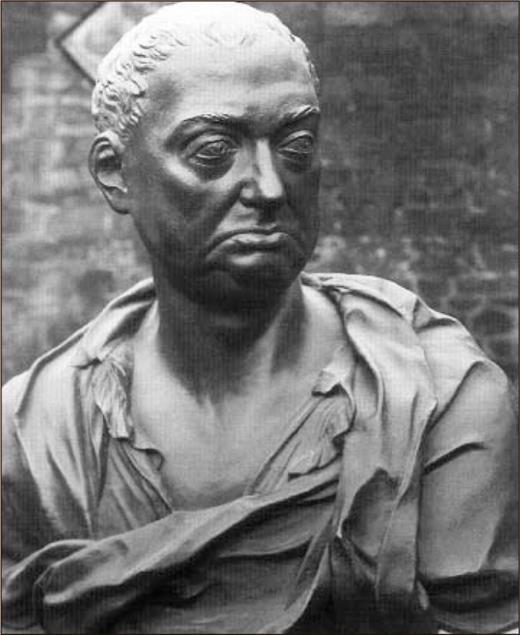
The French, however, are marvelous at game cookery. Two years ago I spent a week up in Normandy covering a stag hunt at the invitation of a friend, Guy de la Valdène. His family has a chateau near St. George and a breeding farm for racehorses. You do not go to Russia to eat, and I had just returned from a hungry trip to Moscow and Leningrad. Other than the notion that stag hunting seemed to me the pinnacle of stylishness in mammal hunting, the memorable part of the week was the eating, a vulgar word for what took place nightly in a local auberge. Despite my humble background I found I enjoyed saddle of wild boar, or a 1928 Anjou with fresh pâté de foie gras in slabs, trout laced with truffles, côtelettes of loin from a small forest deer called a chevreuil, pheasant baked under clay with wild mushrooms. It all reminded me of the bust of Balzac by Rodin at the Metropolitan in New York, the evidence in his immense, bulbous face of his legendary interest in food and wine. But moderation only makes sense to those whom such food is continually available. The stag hunt itself began after dawn, and the animal was brought to bay by the hounds at twilight, when the master of the hunt dispatched the stag with a silver dagger after the manner of some six centuries. All day we had been sipping Château Margaux straight from the bottle and not feeling even vaguely boorish.

Jim Harrison, from "A Sporting Life"

Some of the best meals I've ever eaten outside the home haven't been in restaurants, but seated on a log in the woods, afloat on a lake, or standing at a tailgate buffet-table.  Fresh air makes anything taste better.

Jim's right, glasses are for the fully-evolved. --Ed.

10 August 2021

Verities.


Let's all stop a moment in our busy day and return to some eternal verities. It's quite a mystery, albeit largely unacknowledged, to be alive, and, quite simply, in order to remain alive you must keep eating. My notion, scarcely original, is that if you eat badly you are very probably living badly. You tend to eat badly when you become inattentive to all but the immediate economic necessities, real or imagined, and food becomes an abstraction; you merely “fill up” in the manner that you fill a car with gasoline, no matter that some fey grease slinger has put raspberry puree on your pen-raised venison. You are still a nitwit bent over a trough.

Jim Harrison, from "Hunger, Real and Unreal"

06 August 2021

Packed.


Hollywood is not a kind and gentle place, but it's where my work takes me. On the first day of a recent meeting, we worked fourteen hours, a reminder that the place doesn't necessarily dollar up on the side of frivolity. This schedule continued for several days, until 1 felt like one of the well-known, three peeled throats of Cerberus, exhausted, fluttery, my imagination a mud puddle rather than a mighty river. To put it simply, I wasn't getting enough to eat. My partners (Harrison Ford and Douglas Wick) own the sharpish features of the underfed, features that any phrenologist will tell you reflect an interest in money and power rather than in the fruits of the imagination.

Anyway, in the middle of a serious point, I slipped into an out-of-body experience and was swept away to New York City, tracking myself as I left the therapist's office where I am treated for the usual obsessive-compulsive disorders. My first stop was the Ideal Lunch & Bar on Eighty-sixth Street, for a quick boiled pig hock, then on to the Papaya King hotdog stand on the corner of Eighty-sixth and Third for a quick frank with sauerkraut and mustard, down Third to Ray's for a slice of pizza with eggplant, then over to JG Melon for a simple rare burger and a double V.O. When I came to, I discovered that I had been talking with incisive brilliance and the meeting was over, which proves that even ghost food is better than none. Unfortunately, I don't have any of the notes.

The point is that there's no snack food in L.A. on the order of New York's. I ate very good dinners at Dan Tana's and at Osteria Orsini, where my table was presided over by the best waiter on the West Coast, the fabled Igor. The last night I agreed hesitantly to Chaya's, doubtful that a restaurant that “hot” could also be good. The meal was splendid, again highlighting the fact that I have never had an accurate intuition (raw-tuna salad, a pasta with peerless squid and slivered jalapeños, a small grilled chicken with a side of garlic the equal of any I've ever had, pommes frites, and a whole bottle of Château Montelena just for me).

Despite this grand send-off, I arrived home in a palsied state—tremors of exhaustion, near tears, that sort of thing. My wife noted a burnt-rubber scent coming out of my ears, firm evidence of my brain's drag racing with itself in film country. To set the brakes 1 wandered for hours in the woods, looking for morels, but it had been a dry, bitterly cold spring, and the mushrooms were scarce. At one point I walked three hours to find four morels. I did, however, gather enough to cook our annual spring rite, a simple sauté of the mushrooms, wild leeks, and sweetbreads. Regardless of this tonic for the body, I fired off inconsolably angry letters to no one in particular and lightly spanked the bird dogs for minor infractions, until I gave up on domestic life and packed north to the cabin, with three cartons of books on Native Americans and John Thorne's Simple Cooking. Native Americans are an obsession of mine, totally unshared by New York and Los Angeles for the average reason of moral vacuum. Native Americans are like good poetry, and it is particularly banal that we are dying from the lack of what both tell us.

Jim Harrison, from "Consciousness Dining"

28 July 2021

Simple.


While I have the gravest doubts about the durability of any of my writing, few can beat me at the graceful dance of knife, fork, and spoon across the plate or the capacity to make a pickle last as long as a sandwich. I have thought of rigging tiny lights to my eating utensils and getting myself filmed while eating in the near dark: imagine, if you will, the dancelike swirl of these points of light. Just last evening in my cabin, the performance took place over a humble, reduced-calorie Tuscan stew (very lean Muscovy duck, pancétta, white beans, copious garlic, fresh sage, and thyme). Since I was alone in the twilight, the applause rang a bit hollow.

To be sure, our limitations strangle us, letting us know who we are. On a semireligious level, normally we have a secret animal we favor, but this is dangerous territory. Never tell a government official your secret animal, since it will one day be used against you. On a more mundane plateau, if you were a boat, what kind of boat would you be? You must be honest, since I can't interrogate you, what with each of us being alone. No dream boats, grand sloops, ghostly galleons, if you please. As for me, and I'm doing the writing here, I have long confessed to being a tugboat: slow, rather stubby, persistent, functional, an estuarine creature that avoids open water.

Jim Harrison, from "The Tugboats of Costa Rica"

I'd be -- I am -- a simple Sunfish.

18 June 2021

Multiple-entrée.

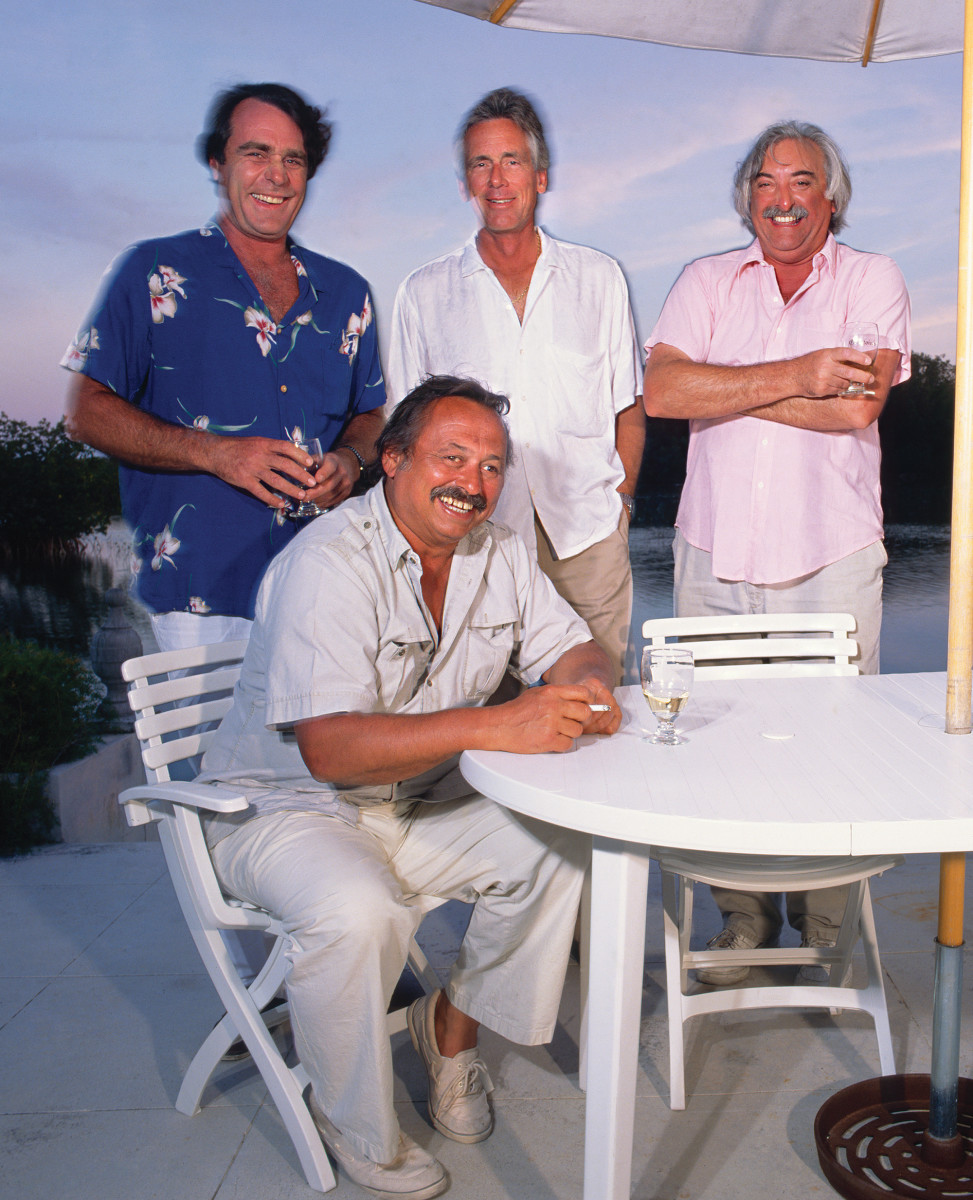
Imagine walking into the Chart Room or Louie's Backyard and seeing these four at the bar ...


There is something in the character of flats-fishing in the tropics that diminishes the appetite: a mixture of sun, heat, fatigue. You are fly-fishing in the shallow water of a river that is fifty miles wide, and casting only to visible fish. The energy expended in the relentless staring into water is exhausting. You are utterly immersed in the act and dare not let a single extraneous thought enter your mind or you'll miss the fish. It was upsetting this year to find that I have become much better at fly-fishing now that my drinking has vastly moderated. A hangover, simply enough, internalizes the quality of attentiveness, and you're looking inside at your myriad fuck-ups rather than outside at fish.

Not that I couldn't eat adequately, only that I'm usually a multiple-entrée type of guy, and I came to know the certain sadness of watching my wife, two daughters, and son-in-law eat more than I did. The tradition of piggery carries on, I thought. Chef Norman Van Aken's Mira is a grand place, with a first-rate wine list devised by Proal Perry. You should buy Van Aken's book, Feast of Sunlight, published by Ballantine. For day-to-day excellence we chose Antonia's, eating rather elaborate meals there three times in two weeks, though you can order simply from the appetizers and list of pastas (including stone-crab claws and mussels in a cream sauce on homemade linguine). Frankly, I find no fault with Antonia's. In a dozen visits I've never met the chef, Phillip Smith, nor the owner, and not a single visit was an expense-account item. There were no disappointments, and the serving staff is deft and unobtrusive.

We also frequented Louie's Backyard, whose upstairs café is informal and beautifully decorated. One day, chef Bill Prahl will become as inventive as Van Aken. The menu could be called “nouvelle Cuban,” and Prahl's squid rings with citrus aioli are exquisite, as are the Havana pork roast and the shellfish zarzuela. Downstairs the atmosphere is more formal but the food, prepared by Doug Shook under the direction of co-owner Phil Tenney, fine indeed. I prefer this area for lunch when the fried-chicken salad is available, along with onion rings made from marinated Spanish red onions. One day a shellfish gumbo beat senseless anything Louisiana ever offered me. A short drive up the Keys to Cudjoe to Rick Lutz's Cousin Joe's will give you a taste of what the area used to be like, only the food is much better.

Back in Key West I can also recommend Café des Artistes (unbelievable desserts), Dim Sum, the Crêperie, and Kyushu. For a relief from the pricey and somewhat formal, we returned frequently to the Full Moon Saloon for the hottest chicken wings imaginable, grouper and conch sandwiches, conch chowder, and conch fritters, as well as more elaborate meals, all turned out by chef Tom Sawyer. (I keep mentioning chefs for the same reason you tell folks who wrote the book.) I eat breakfast at Dennis Pharmacy on Simonton because it doesn't limit you to the nutritional vacuum of bacon and eggs, offering a number of Spanish soups, including red bean, and pigs’ feet. For sandwiches for the boat, go to Uncle Garlin's Food Store out on Flagler, where the meatloaf is better than Mom's.

Curiously, I didn't gain an ounce in two weeks. At least I don't think I did. I defy the mechanistic world of scales, banks, lawyers, dentists, and I wouldn't balance a checking account at gunpoint. My aide-de-camp handles all of this except the dentist. A scale is meaningless when some days you feel light and some days you feel heavy.

Jim Harrison, from "Then and Now"

17 June 2021

Eternal.


Let's all stop a moment in our busy day and return to some eternal verities. It's quite a mystery, albeit largely unacknowledged, to be alive, and, quite simply, in order to remain alive you must keep eating. My notion, scarcely original, is that if you eat badly you are very probably living badly. You tend to eat badly when you become inattentive to all but the immediate economic necessities, real or imagined, and food becomes an abstraction; you merely “fill up” in the manner that you fill a car with gasoline, no matter that some fey grease slinger has put raspberry puree on your pen-raised venison. You are still a nitwit bent over a trough.

Jom Harrison, from Hunger, Real and Unreal

16 June 2021

Vigor.


You begin with simple truths in food: for instance, peeling sweetbreads is not really exercise. When you're trimming a two-pound porterhouse, don't make those false, hyperkinetic motions favored by countermen in delicatessens. Either trim it or skip trimming. Eat the delicious fat and take a ten-mile walk. Reach into your memory and look for what has restored you, what helps you recover from the sheer hellishness of life, what food actually regenerates your system, not so you can leap tall buildings but so you can turn off the alarm clock with vigor. Chances are you will come up with something Latin—I mean food that is quite different from our own in areas of fruit growth, food from a place where garlic and flowers abound, where there are blue water and hot sun. At the bottom of dampish arroyos are giant butterflies and moths, extravagantly plumed birds that feed on the remains of lightning and sunbeams, the unique maggots that feed only on the spleens of road kill. Farther up the cliffs, where the cacti are sparser, rattlers sun themselves. At first you are uncomfortable, then disarmed by the way the snakes contract over hot coals. 

Last March I was hiking out of the Seri Indian country, south of Caborca along the Sea of Cortés, with Douglas Peacock, the fabled grizzly-bear expert. We were both out of sorts: he, because he can't seem to make a living; I, because my sinus pain was so extreme that I had to bash my head against the car door and specific boulders we passed. Luckily, we were able to dig a full bushel of clams at a secret estuary and make a hearty chowder with a pound of chilies and garlic, which started me on the road to recovery. Broiled tripe from an unborn calf helped, as did giant Guaymas shrimp. After this infusion of health I was able to dance five hours with a maiden who resembled a beige bowling ball. She was, in fact, shaped rather like me. In the morning my clothes were crisp from exertion; my head, bell clear. The world seemed new again—like a warm rain after a movie.

One late-November night, on the Navajo reservation in Arizona, I was camping out with two old men who I was reasonably sure were witches, although kind witches. I was researching a film on the life of Edward Curtis and that morning had received word that the studio had fired me again. But that night there was a big moon through the intermittent snow, and above the fire a posole was cooking, with its dark freight of several different chiles, a head of garlic, sun-dried hominy, and the neck, ribs, and shanks of a young goat. After eating the posole, we hiked in the moonlight, and one of the old men showed me his raven and coyote imitations, jumping in bounds the length of which would have shamed Carl Lewis.

Jim Harrison, from "Meals of Peace and Restoration"

12 June 2021

Return.


Before making camp on Double Adobe Creek I headed up a feeder creek, the dense riparian thicket of a long, narrow canyon. I felt a wonderfully mindless eagerness toward exploring the new territory, a palpable return to the curiosity of childhood when the responses to the natural world are visceral. The pulse races at an unrecognized welter of tracks (javelina), then softens, determining where mule deer and a single, large bobcat stopped to drink. Walking at twilight owns the same eeriness of dawn. The world belongs again to its former prime tenants, the creatures, and within the dimming light and crisp shadows you return to your own creature life that is so easily and ordinarily discarded. I have always loved best this time just before dark when the antennae stretch far and caressingly from the body. I heard the flap of a raven's wings before I saw it, and exchanged a series of greetings before heading back.

Jim Harrison, a journal entry recorded in the introduction to Just Before Dark