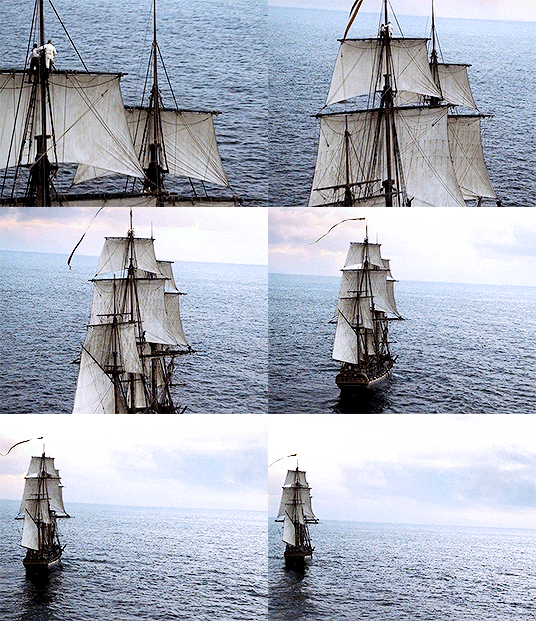
"I am not one who was born in the custody of wisdom. I am one who is fond of olden times and intense in quest of the sacred knowing of the ancients." Gustave Courbet

19 February 2011

Simplicity.

Dürer, The Little Owl, 1508


As I grew older, I realized that it was much better to insist on the genuine forms of nature, for simplicity is the greatest adornment of art.
- Albrecht Dürer

18 February 2011

Dvořák, "Song To The Moon"

Full moon tonight. Anna Netrebko sings the aria from Rusalka ...


Silver moon upon the deep dark sky,
Through the vast night pierce your rays.
This sleeping world you wander by,
Smiling on men's homes and ways.

Oh moon ere past you glide, tell me,
Tell me, oh where does my loved one bide?
Oh moon ere past you glide, tell me
Tell me, oh where does my loved one bide?

Tell him, oh tell him, my silver moon,
Mine are the arms that shall hold him,
That between waking and sleeping he may
Think of the love that enfolds him,

May between waking and sleeping
Think of the love that enfolds him.
Light his path far away, light his path,
Tell him, oh tell him who does for him stay!

Human soul, should it dream of me,
Let my memory wakened be.
Moon, moon, oh do not wane, do not wane,
Moon, oh moon, do not wane ...

04 February 2011

Vigor.

Reach into your memory and look for what has restored you,


... what helps you recover from the sheer hellishness of life,


... what food actually regenerates your system ...


... not so you can leap tall buildings, but so you can turn off the alarm clock with vigor.
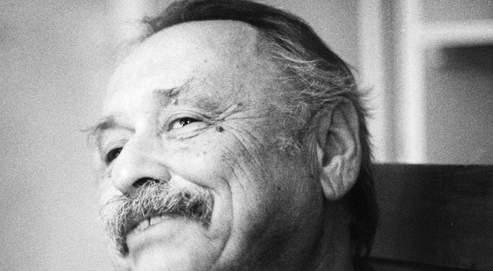
- Jim Harrison

Thanks Pops.

Happy Birthday Bonhoeffer.


Deitrich Bonhoeffer was born on this day in 1906.

The United States Holocaust Memorial Museum has a great biography here.

Three gems from Bonhoeffer ...

I discovered later, and I'm still discovering right up to this moment, that is it only by living completely in this world that one learns to have faith. By this-worldliness I mean living unreservedly in life's duties, problems, successes and failures. In so doing we throw ourselves completely into the arms of God, taking seriously, not our own sufferings, but those of God in the world. That, I think, is faith ... there is meaning in every journey that is unknown to the traveler.

To understand reality is not the same as to know about outward events. It is to perceive the essential nature of things. The best-informed man is not necessarily the wisest. Indeed there is a danger that precisely in the multiplicity of his knowledge he will lose sight of what is essential. But on the other hand, knowledge of an apparently trivial detail quite often makes it possible to see into the depths of things. And so the wise man will seek to acquire the best possible knowledge about events, but always without becoming dependent upon this knowledge. To recognize the significant in the factual is wisdom.

There is nothing that can replace the absence of someone dear to us, and one should not even attempt to do so. One must simply hold out and endure it. At first that sounds very hard, but at the same time it is also a great comfort. For to the extent the emptiness truly remains unfilled one remains connected to the other person through it. It is wrong to say that God fills the emptiness. God in no way fills it but much more leaves it precisely unfilled and thus helps us preserve -- even in pain -- the authentic relationship. Further more, the more beautiful and full the remembrances, the more difficult the separation. But gratitude transforms the torment of memory into silent joy. One bears what was lovely in the past not as a thorn but as a precious gift deep within, a hidden treasure of which one can always be certain.

03 February 2011

Frigid.

Jack Frost, Self Portrait, 2011


snow crunching footsteps
frigid barn timbers popping
clear sky six degrees

Esperanza.

Rush (Alex Lifeson), Hope


And as, in sparkling majesty, a star
Gilds the bright summit of some gloomy cloud;
Brightening the half veil'd face of heaven afar:
So, when dark thoughts my boding spirit shroud,
Sweet Hope, celestial influence round me shed,
Waving thy silver pinions o'er my head!

- John Keats, from To Hope

Head in the clouds.

Five.

"The Mule" put the biscuit in the basket five times last night against Ottawa.

Transcends.


34

Not how many different birds I've seen
but how many have seen me,
letting the event go unremarked
except for the quietest sense of malevolence,
dead quiet, then restarting their lives
after fear, not with song, which is reserved
for lovers, but with the harsh and quizzical
chatter with which we all get by:
but if she or he passes by and the need
is felt we hear the music that transcends all fear,
and sometimes the simpler songs that greet sunrise,
rain or twilight. Here I am.
They will sing what and where they are.

- Jim Harrison

Feel.


Like all art which sticks the implication of the subject matter is what provides the hard core of the work. There is surely an age-old pocket in the subconscious which triggers sympathetic human response to the unexplainable phenomenon of migrating animals. Perhaps it is simply some kind of proclamation that there is, after all, an order to things. Ducks are one of the many creatures that provoke this kind of wonder and gratitude in us. Curtis has given to us the Indian's legacy of spirituality in a form we can see and, much more importantly, feel. If we commit ourselves to learning that man and nature are one sacred entity, we will have gone a long way toward improving our own condition and that of the world on which we live.
- Russell Chatham

Everything the Power Of The World does is done in a circle. The sky is round, and I have heard that the earth is round like a ball, and so are all the stars. The wind, in its greatest power whirls. Birds make their nest in circles, for theirs is the same religion as ours. The sun comes forth and goes down again in a circle. The moon does the same and both are round. Even the seasons form a great circle in their changing, and always come back again to where they were. The life of a man is a circle from childhood to childhood, and so it is in everything where power moves.
- Black Elk

Shadows.

You can only come to the morning through the shadows.
— J.R.R. Tolkien


02 February 2011

Mumford & Sons, "The Banjolin Song/Awake My Soul"

Jerry Douglas, "A Tribute to Peador O'Donnell"

Headed out for a walk in the woods with a bottle of Two Hearted Ale and Jerry on the iPod.

Happy ... ummm ... hour!

Fling.

Andrew Wyeth, The Granary, 1961


The Darkling Thrush

I leant upon a coppice gate
When Frost was spectre-grey,
And Winter's dregs made desolate
The weakening eye of day.
The tangled bine-stems scored the sky
Like strings of broken lyres,
And all mankind that haunted nigh
Had sought their household fires.

The land's sharp features seemed to be
The Century's corpse outleant,
His crypt the cloudy canopy,
The wind his death-lament.
The ancient pulse of germ and birth
Was shrunken hard and dry,
And every spirit upon earth
Seemed fervourless as I.

At once a voice arose among
The bleak twigs overhead
In a full-hearted evensong
Of joy illimited;
An aged thrush, frail, gaunt, and small,
In blast-beruffled plume,
Had chosen thus to fling his soul
Upon the growing gloom.

So little cause for carolings
Of such ecstatic sound
Was written on terrestrial things
Afar or nigh around,
That I could think there trembled through
His happy good-night air
Some blessed Hope, whereof he knew
And I was unaware.

- Thomas Hardy

Chathamesque.

Thundering.


white galloping herds
thundering through open fields
heavily weighted

01 February 2011

Old Blind Dogs, "MacPherson's Rant"

Sae rantingly, sae wantonly
Sae dauntingly gaed he
He played a tune and he danced it aroon'
Alow the gallows tree


Jonny Hardie, fiddle

Quiet.

For Drew ...

Glenn Gould plays the Adagio un poco mosso of Beethoven's Fifth Piano Concerto.

This was the first track of a CD I made for the kids' naps which Drew named, "Quiet Time." No solo violins were allowed on the disk because they were "too scratchy."

Folds.

Bernini, Cardinal Borghese, 1630


Bernini, Urban VIII, 1647


Bernini, The Ecstasy of St. Teresa, 1652

Groping.

For Drew and Zuzu ... I'd imagine that Georgia would appreciate this, as well.

Strandbeest.


Thanks Mom!

31 January 2011

Muddle.


What is art anyway? When I think about how hopelessly unable I am to answer that question I cannot feeling like a farce - pretending to teach anybody anything about it.

I won't be able to keep at it long or I'll lose what little self respect I have unless I can in some way solve the problem a little, give myself some little answer to it. What are we trying to do, what is the excuse for it all? If you could sit down and do just exactly what you wanted to right now for a year, what in the dickens would you do? The things I've done that satisfy me most are charcoal landscapes and things - the colors I seem to want to use absolutely nauseate me.

I don't mean to complain; I am really quite enjoying the muddle and am wondering if I'll get anything out of it and if I do what it will be. I decided I wasn't going to cater to what anyone else might like, why should I, and when you leave that element out of your work there is nothing much left. I'm floundering as usual.

I'm glad I want everything in the world – good and bad – bitter and sweet – I want it all.

- Georgia O'Keeffe

Seeing.

Andrew Wyeth, Branch In The Snow, 1980


Art to me, is seeing. I think you have got to use your eyes, as well as your emotion, and one without the other just doesn't work. I love to study the many things that grow below the corn stalks and bring them back to the studio to study the color. If one could only catch that true color of nature – the very thought of it drives me mad. There's a quote from Hamlet that is my guide... He tells the players not to exaggerate but to hold a mirror up to nature. Don't overdo it, don't underdo it. Do it just on the line.
- Andrew Wyeth

Waits.

Wyeth, Ice Pool, 1969


I prefer winter and fall, when you feel the bone structure of the landscape - the loneliness of it, the dead feeling of winter. Something waits beneath it, the whole story doesn't show.
- Andrew Wyeth

Beethoven, "Storm"

Music for an outdoor Happy Hour ... the Presto from Beethoven's String Quintet in C Major, Op. 29, "Storm"

Secret.


The Secret

Since I am
Somebody’s dream,
I have a good life.

Sometimes I go away in my sailboat on a cloud
and take a quiet little trip.

I have a secret
which I have learned how to read inside myself;
if I told it to you,
it would make you laugh.

My heart is naked
and no one can put clothes on it,
and nothing can be put on
that will not immediately fall off.

My secret is ignorant,
it doesn’t sing songs,
no lie,
it has nothing to tell you.

My two eyes
are maps of the planet—
I see everything
and nothing upsets me.

Just now
I was in China
and saw there a great piece of happiness
that belonged to one man.

And I have been to the center of the earth,
where there is no suffering.

If on your loneliest nights,
I visit other planets
and the most secret stars of all,

besides being no one,
know that I am you
and everybody.

But if I go away
without giving you a name to remember me with,
how will I find
the right dream to return to?

You won’t have to mark down
on your calendar that I am coming back;
don’t bother to write me into your notebooks.
I will be around
when you aren’t thinking about me,

without hair or a neck,
without a nose and cheeks
no reputation—
there won’t be anything.

I am a bird
which God made.


- Thomas Merton

Life.

O'Keeffe,White Flower, 1926


Dear Mr.Miliken:

I have been hoping that you would forget that you asked me to write you of the White Flower, but I see that you do not.

It is easier for me to paint it than to write about it and I would so much rather people would look at it than read about it. I see no reason for painting anything that can be put into any other form as well.

At the time I made this painting - outside my door that opened on a wide stretch of desert these flowers bloomed all summer in the daytime.

The large White Flower with the golden heart is something I have to say about White - quite different from what White has been meaning to me. Whether the flower or the color is the focus I do not know. I do know that this flower is painted large to convey to you my experience of the flower and what is my experience of the flower if it is not color. I know I can not paint a flower. I can not paint the sun on the desert on a bright summer morning but maybe in terms of paint color I can convey to you my experience of the flower or the experience that makes the flower of significance to me at that particular time.

Color is one of the great things in the world that makes life worth living to me and as I have come to think of painting it is my efforts to create an equivalent with paint color for the world, life as I see it.

Yours very truly,
Georgia O'Keeffe

30 January 2011

Medium-rare.

Nine out of ten English chefs have their names on their chests. Who do they think they are? They're dreamers. They're jokes. Just ask yourself how many chefs in this country have Michelin stars and how many have their names on their jackets. We all wear blue aprons in my kitchen because we're all commis. We're all still learning.
- Marco Pierre White

Glorious.

Utrillo, Rue Custine a Montmartre, 1909


Late at night Modigliani could become melancholy, but at other times he clowned and laughed. Lately he had mentioned returning to Italy for some sunshine. He had one last glorious night out with Utrillo. Utrillo, who had just escaped from his gloomy room with its barred windows at the lunatic asylum, burst into Rosalie’s and the two men hugged each other. Modi cadged a free meal for Utrillo from his landlord and then brought Utrillo back to his studio. He had a plan. Maurice painted two street scenes of Montmartre from memory and Modigliani took them over to sell to Zborowski. With the money the two went on a last bid for freedom. What money they did not drink up was folded into paper airplanes and sent gliding into the trees along the Boulevard Raspail. They stomped the streets until they dropped with exhaustion.
- June Rose, Modigliani: The Pure Bohemian

Utrillo, Benches at Montmagny, 1906

Night.

Strength in Numbers (Meyer, Bush, O'Connor, and Douglas), One Winter's Night


Tonight, after sundown, sometime before 9:00, go outside and take a look to the west and ponder Jupiter. It is the brightest body in the night sky this time of year.

Look to the right or upper right of Jupiter to locate the four moderately bright stars that make up the Great Square of Pegasus. It’s difficult to convey the large size of this signpost star formation on the sky chart. These stars lodge far enough apart so that you can place your hand in between any two Great Square stars. Hold your hand at an arm length away.

Earth and Sky has more here.

Jupiter has a diameter of 142,984 km, while The Water Planet's is only 12,756 km.

Peter Rowan, "The Raven"

Happy Birthday Brautigan.

Author Richard Brautigan was born on this date in 1935.

A Brother Of The Rope talks tarpon ...


Brautigan, Harrison, and McGuane go fishing here while Buffett plays the music.

29 January 2011

Nana.


Duérmete, niño, duerme,
Duerme, mi alma,
Duérmete, lucerito
De la mañana.
Nanita, nana,
Nanita, nana.
Duérmete, lucerito
De la mañana.


Goodnight.

Vast.

O'Keeffe, Sky Above Clouds IV, 1965


I recall an August afternoon in Chicago in 1973 when I took my daughter, then seven, to see what Georgia O’Keeffe had done with where she had been. One of the vast O’Keeffe ‘Sky Above Clouds’ canvases floated over the back stairs in the Chicago Art Institute that day, dominating what seemed to be several stories of empty light, and my daughter looked at it once, ran to the landing, and kept on looking. "Who drew it?" she whispered after a while. I told her. "I need to talk to her," she said finally.
— Joan Didion

O'Keeffe, Sky Above Clouds I, 1962

Head in the clouds.

... a Frazier's-eye view.


Nice one, Pops.

Called.


Culturing Offering is restored.

Alive.


CHAPTER 3, BEING ALIVE

The search which we make for this quality, in our own lives, is the central search of any person, and the crux of any individual person’s story. It is the search for those moments and situations when we are most alive.

We know now what the quality without a name is like, in feeling and in character. But so far, concretely, we have not seen this quality in any system larger than a tree, a pond, a bench. Yet it can be in anything – in buildings, animals, plants, cities, streets, the wilderness – and in ourselves. We shall begin to understand it concretely, in all these larger pieces of the world, only when we first understand it in ourselves.

It is, for instance, the wild smile of the gypsies dancing in the road.

The broad brim of the big hat, like arms spread wide, open to the world, confident, huge, … the embrace of the child’s arms about the grass … it is the solid and entrenched repose of the old man lighting a cigarette: hands on his knees, solid, resting, waiting, listening.

In our lives, this quality without a name is the most precious thing we ever have.

And I am free to the extent I have this quality in me.

One man is free at that one instant when you see in him a certain smile and you know he is himself, and perfectly at home within himself. Imagine him especially, perhaps and for one instant utterly oblivious to everything but what is in him and around him at that second.

This wild freedom, this passion comes into our lives in the instant we let go.

It is when all our forces can move freely in us. In nature, this quality is almost automatic, because there are no images to interfere with natural processes of making things. But in all of our creations, the possibility occurs that images can interfere with the natural necessary order of a thing. And, most of all, this way that images distort the things we make, is familiar in ourselves. For we ourselves are, like our works, the products of our own creation. And we are only free, and have the quality without a name in us, when we give up the images which guide our lives.

Yet each of us faces the fear of letting go. The fear of being exactly what one is, of letting the forces flow freely; of letting the configuration of one’s person adjust truly to these forces.

Our letting go is stifled, all the time, so long as we have ideas and opinions of ourselves, which make us hug too tightly to our images of how to live, and bottle up these forces.

So long as we are still bottled up, like this, there is a tightness about the mouth, a nervous tension in the eyes, and stiffness and a brittleness in the way we walk, the way we move.

And yet, until one does let go, in is impossible to be alive. The stereotypes are restricted; there are very different configurations. The infinite variety of actual people, with their vastly and utterly different, require a huge creation, to find the resolution of the person; and in finding this resolution truly, one must above all be free of the stereotypes.

The great film, Ikiru – “to live” – describes it in the life of an old man.

“He has sat for thirty years behind a counter, preventing things from happening. And he finds out that he is to die of cancer of the stomach, in six months. He tries to live; he seeks enjoyment; it doesn’t amount to much. And finally, against all obstacles, he helps to make a park in a dirty slum of Tokyo. He has lost his fear, because he knows that he is going to die; he works and works and works, there is no stopping him, because he is no longer afraid of anyone, or anything. He has no longer anything to lose, and so in this short time gains everything; and then dies, in the snow, swinging on a child’s swing in the park which he has made, and singing.”

Each of us lives most fully “on the wire,” in the face of death, daring to do the very thing which fear prevents us from.

A few years ago a family of hire wire artists had a terrible fall from the high wire, in the middle of the performance. All of them were killed or maimed, except the father, who escaped with broken legs. But even after losing all his children in the fall, a few months later he was back to work, in the circus, on the wire again.

Someone asked him in an interview, how could he bring himself to do it, after such a terrible accident. He answered: “On the wire, that’s living … all the rest is waiting.”

Of course for most of us it is not quite so literal.

The fear which prevents us from being ourselves, from being that one person unique in all the world, from coming to life -- that may mean nothing greater than the fear of giving up the image of a certain job, an image of a certain kind of family life.

One man can be as free in lighting up a cigarette, as that old man dancing on the wire. Another travelling with the gypsies. A handkerchief around your head; a horsedrawn yellow caravan, pulled up in a field; a rabbit stew simmering and bubbling outside the caravan, licking and sucking your fingers as you eat spoonfuls of the stew.

It has above all to do with the elements.

The wind, the soft rain; sitting on the back of an old truck moving clothes and baskets of old possessions while the gentle rain is falling, laughing, crouching, under a shawl to keep from getting wet. Eating a loaf of bread, torn in pieces, hunks of cheese cut crudely with a hatchet which is lying in the corner; red flowers glistening in the rain alongside the road; banging on the window of the truck to shout some joke.

Nothing to keep. Nothing to lose. No possessions, no security, no concern about possessions, an no concern about security; in this mood it is possible to do exactly what makes sense, and nothing else: there are no hidden fears, no morals, no rules, no undercurrent of constraint, no subtle sense of concern for the form of what the people around you are doing, and above all no concern for what you are yourself, no subtle fear of other people’s ridicule, no subtle train of fears which can connect the smallest triviality with bankruptcy and loss of love and loss of friends and death, no ties, no suits, no outward elements of majesty at all. Only the laughter and the rain.

And it happens when our inner forces are resolved.

And when a person’s forces are resolved, it makers us feel at home, because we know by some sixth sense, that there are no other unexpected forces lurking underground. He acts according to the nature of the situations he is in, without distorting them. There are no guiding images in his behavior, no hidden forces; he is simply free. And so, we feel relaxed and peaceful in his company. Of course, in practice we often don’t know what our inner forces might be.

We live, for months, for years, acting in a certain way, not knowing whether we are free or not, doubting, not even sure when we are successfully resolved, and when we aren’t.

Yet still there are those special secret moments in our lives, when we smile unexpectedly – when all over forces are resolved.

A woman can often see these moments in us, better than a man, better than we ourselves even.

When we know these moments, when we smile, when we let go, when we are not on guard at all – these are the moments when our most important forces show themselves; whatever you are doing at such a moment, hold on to it, repeat it – for that certain smile is the best knowledge that we ever have of what our hidden forces are, and where they lie; and how they can be loosed.

We cannot be aware of these most precious moments when they are actually happening.

In fact, the conscious effort to attain this quality, or to be free, or to be anything, the glance which this creates, will always spoil it.

It is, instead, when we forget ourselves completely, playing the fool perhaps among a group of friends, our swimming out to sea, or walking simply, or trying to finish something later at night over a table with a group of friends, cigarette stuck in the lower lip, eyes tired, earnest concentration.

All these moments in my own life – I only know them now, in retrospect.

Yet each of us knows from experience the feeling which this quality creates in us.

It is the time when we are most right, most just, most sad, most hilarious.


- Christopher Alexander, The Timeless Way of Building

More here.

Sheila Chandra, "Ever So Lonely"

Known.

O'Keeffe, Black Petunia and White Morning Glory 2, 1926


… things I feel and want to say – but haven’t words for … make the unknown – known. By unknown I mean the thing that means so much to the person that he wants to put it down – clarify something he feels but does not clearly understand.
- Georgia O’Keeffe

Be.

Mumford & Sons, Sigh No More


Serve God, love me and mend
This is not the end
Lived unbruised, we are friends
And I'm sorry
I'm sorry

Sigh no more, no more
One foot in sea and one on shore
My heart was never pure
And you know me
You know me

But man is a giddy thing
Oh man is a giddy thing

Love it will not betray you
Dismay or enslave you, it will set you free
Be more like the man you were made to be
There is a design, an alignment, a cry
Of my heart to see,
The beauty of love as it was made to be

28 January 2011

Folds.

Sargent, Repose, 1911

yes.

Ansel Adams, Redwoods, Bull Creek Flat, c. 1960


i thank God for this most amazing day, for the leaping greenly spirits of trees & for the blue dreams of sky & for everything which is natural, which is infinite, which is yes.
- e.e. cummings

Silence.


For what we need to know, of course, is not just that God exists. . . but that there is a God right here in the thick of our day-by-day lives who may not be writing messages about himself in the stars but who in way or another is trying to get messages through our blindness as we move around down here knee-deep in the fragrant muck and misery and marvel of the world. It is not objective proof of God's existence that we want but, whether we use religious language for it or not, the experience of God's presence. That is the miracle we are really after. And that is also, I think, the miracle that we really get.

I believe that we know much more about God than we admit that we know. God speaks to us, I would say, much more often than we realize or than we choose to realize. Before the sun sets every evening, he speaks to each of us in an intensely personal and unmistakable way. His message is not written out in starlight, which in the long run would make no difference; rather, it is written out for each of us in the humdrum, helter-skelter events of each day; it is a message that in the long run might just make all the difference.

Who knows what he will say to me today or to you today or into the midst of what kind of unlikely moment he will choose to say it. Not knowing is what makes today a holy mystery as every day is a holy mystery. But I believe that there are some things that by and large God is always saying to each of us. All of us, for instance, carry around inside ourselves, I believe, a certain emptiness- a sense that something is missing, a restlessness, the deep feeling that somehow all is not right inside our skin. Psychologists sometimes call it anxiety, theologians sometimes call it estrangement, but whatever you call it, I doubt there are many who do not recognize the experience itself, especially no one of our age, which has been variously termed the age of anxiety, the lost generation, the beat generation, the lonely crowd.

Part of the inner world of everyone is this sense of emptiness, unease, incompleteness, and I believe that this in itself is a word from God, that this is the sound that God's voice makes in a world that has explained him away. In such a world, I suspect that maybe God speaks to us most clearly through his silence, his absence, so that we may know him best through our missing him
.

- Frederick Buechner, Message In The Stars

27 January 2011

Happy Birthday Mozart.

Wolfgang Amadeus Mozart was born on this day in 1756.

Joseph Lange, Mozart, 1790.


This portrait was considered, by Mozart's wife, Constanze, to be the best likeness of the composer.

Neither a lofty degree of intelligence nor imagination nor both together go to the making of genius. Love, love, love, that is the soul of genius.
- Mozart

From the opera, Don Giovanni ... "Deh, vieni alla finestra," from Act II, Scene III


"... sweetness itself."

Cultural Offering provides a fitting tribute here.

25 January 2011

Strauss, "Morgen!"

Anna Netrebko performing with Joshua Bell, violin.


Another translation ...
Tomorrow's sun will rise in glory beaming,
And in the pathway that my foot shall wander,
We'll meet, forget the earth, and lost in dreaming,
Let heav'n unite a love that earth no more shall sunder...
And towards that shore, its billows softly flowing,
Our hands entwined, our footsteps slowly wending,
Gaze in each other's eyes in love's soft splendour glowing,
Mute with tears of joy and bliss ne'er ending...

Rodney Crowell, "Still Learning How To Fly"

Luckily the iPod was cranked up and on shuffle this morning while I was in the shower ... this one came and I'm glad.


The hour is early
The whole world is quiet
A beautiful morning's about to ignite
I'm ready for danger
I'm ready for fire
I'm ready for something to lift me up higher

Life's been good, I guess
My ragged old heart's been blessed
With so much more than meets the eye
I've got a past I won't soon forget
You ain't seen nothing yet
I'm still learning how to fly

It's the dreams that die hard
With old habits to break
You can't let down your guard
When there's so much at stake
I'm halfway to heaven, halfway to hell
But I might roll a seven
You never can tell

Life's been good it's true
When I'm feeling just like new
The same old rules need not apply
I've got a past full of sticks and stones
And a good feeling in my bones
I'm still learning how to fly

I wanna go faster
I don't wanna slow down
I don't wanna get off of this merrygoround
I wanna be reckless
I wanna be vain
I wanna make love like a runaway train

Life's been good I said
I'm 10,000 miles ahead
The day I rest is the day I die
I've got a past like a broken wing
But you ain't seen anything
I'm still learning how to fly

Folds.

Caravaggio, Death Of The Virgin (detail), 1606

Biber, "Violin Sonata No. 1 in D"


Do yourself a favor ...

Happy Birthday, Woolf.


When you consider things like the stars, our affairs don't seem to matter very much, do they?
- Virginia Woolf