"I am not one who was born in the custody of wisdom. I am one who is fond of olden times and intense in quest of the sacred knowing of the ancients." Gustave Courbet

07 December 2009

"To Gaze Is To Think." -Salvador Dali


I have always been a watcher of the skies. I remember one of my earliest recollections of astral amazement found me riding my bike down the road in the dark (no street lights), staring up at the stars wondering, "How did I get here?"

Tim Ferris has created a film called, Seeing in the Dark. America's Writer Laureate of astronomy invites millions of viewers to enjoy the wonders of the night sky. Ferris says, "It introduces viewers to the rewards of first-person, hands-on astronomy — from kids learning the constellations to amateur astronomers doing professional-grade research in discovering planets and exploding stars. I hope it will encourage many viewers to make stargazing part of their lives, and a few to get into serious amateur astronomy."

"We humans have since learned more about ourselves by studying the wider world—by investigating the processes that created life and shaped its evolution—than we ever did through introspection, and we see those processes written large in the depths of the sky."

Read the rest here.

One With The Birds


leave me alone is all that I say
when I have nothing in me to give away
a purple martin in her house, she hollers at me
why be inhuman ? why be like me ?

like so many robins, like so many doves
like so many lovebirds with so many loves
like the songs of the bobwhite
without any words
when we are inhuman we're one with the birds

at six in the morning you rise from the pillow
stand steaming above me; I slumber below
I'm one with the blanket laying fragrant and loose
you're one with a whippoorwill,
you're one with a goose

so tweet with me and widely spread
your olive wings: embrace my head
fly with me 'til we are dead
and one with the birds

like so many seagulls
like so many hawks
like so many thrushes
and so many cocks
a swallow will tell you without using
misleading
heartrending words
when we are inhuman we're one with the birds
"when we hide our feelings we may as well fly away"

Christopher Alexander


Christopher Alexander on understanding ...
"I read a passage in an ancient Chinese painting manual—the Mustard Seed Garden manual of painting—which made the situation clear to me.

The writer of that manual describes how, in his search for a way of painting, he had discovered for himself the same central way that thousands of others like him had also discovered for themselves, throughout the course of history. He says that the more one understands of painting, the more one recognizes that the art of painting is essentially one way, which will always be discovered and rediscovered, over and over again, because it is connected with the very nature of painting, and must be discovered by anybody who takes painting seriously. The idea of style is meaningless: what we see as a style (of a person or of an age) is nothing but another individual effort to penetrate the central secret of painting, which is given by the Tao, but cannot itself be named.

The more I learn about towns and buildings, the more I feel the same thing to be true. It is true that many of the historic styles of building have some quality in common – they have it not because they are old, but because man has, over and over again, approached the secret which is at the heart of architecture. In fact, the principles which make a building good, are simple and direct – they follow directly from the nature of human beings, and the laws of nature – and any person who penetrates these laws will, as he does so, come closer and closer to this great tradition, in which man has sought for the same thing, over and over again, and come always to the same conclusions."

In one way or another, we all design ... how we live, what we wear, what we eat ... we control all of it. Essentially its creation and how we use design can be broken down into patterns. Alexander describes this in his work.

I really enjoy his thinking and the way he writes.

Winning the 2009 Scully Award recognizing exemplary practice, scholarship or criticism in architecture, historic preservation and urban design, here.

Alexander's site is here.

His books are here. Don't pass up A Timeless Way of Building.

Thanks Kelly!

Music of the soul


"Poetry is the music of the soul. and, above all, of great and feeling souls." -Voltaire

Earliest sunsets in early December ...


At middle latitudes in the U.S. – and throughout the northern hemisphere – the earliest sunset of the year comes around now.

Read the rest here.

06 December 2009

Russell Chatham


"My father said being an artist is the shortest road to the poor house , claiming "real" work is something you don't like. I ignored him through oppositional behavior, later reasoning that only an idiot sets out to find the poor house , not to mention devote himself to something he does not love. Instead, I discovered an interesting back road to the unknown , and deliberately without a safety net." -Russell Chatham

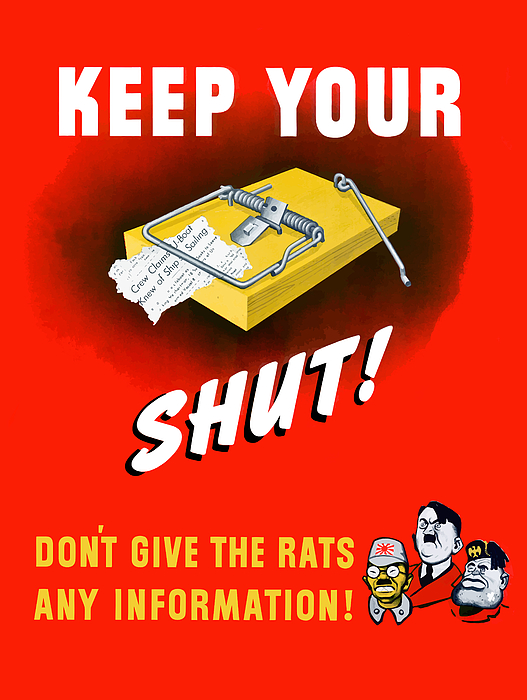
"Always do sober what you said you'd do drunk ...


... it'll teach you to keep your mouth shut." -Ernesto

No more shenanigans, no more tomfoolery, no more ballyhoo.


George Plimpton, Interviewer

Is emotional stability necessary to write well? You told me once that you could only write well when you were in love. Could you expound on that a bit more?

Ernest Hemingway

What a question. But full marks for trying. You can write any time people will leave you alone and not interrupt you. Or rather you can if you will be ruthless enough about it. But the best writing is certainly when you are in love. If it is all the same to you I would rather not expound on that.

Read the rest of this historical event here.

Peter Rowan


From his website ...
"For a long time, people didn't know what to do with him. But now the times have caught up with him - there's a Peter Rowan renaissance.

A follower of Tibetan Buddhism, Rowan is well-traveled and well-schooled. He compares Bill Monroe and his pioneering music to the nature poets and painters of the seventh-century Chinese Tang dynasty, who similarly evoked the 'high lonesomeness' that he says is at the heart of Monroe and bluegrass."

I'm listening to this right now.

Awareness


"Unfortunately, the only recognized relics of yesterday's farmers are obsolete curiosities when the greatest relic, their philosophy of living, is seldom considered." - Eric Sloane, Our Vanishing Landscape

Eric Sloane's devoted the greater part of his life to the exploration of what he later coined his philosophy of awareness. The basic concept of awareness that Sloane articulated through his many books centered upon his belief that the man (and woman) of yesterday was more aware than his or her modern day counterpart. This heightened sense of awareness came principally from "doing for oneself".

Read the rest here.

Weather Lore


"As the days lengthen, so the cold strengthens."

Read monthly installments of weather lore from The Old Farmer's Almanac here.

St. Nicholas Day


Today is St. Nicholas Day. St. Nicholas lived in the fourth century, and he was the archbishop of Myra in Lycia (which is now Turkey). There are all kinds of stories about him, but one of the most famous is that there was a poor man who could not afford a dowry for his three daughters, which meant they would have to be abandoned to prostitution. St. Nicholas didn't want to humiliate the man by giving him charity in public, so he left purses of gold in the man's house at night -- according to one version of the story, he dropped them down the chimney, and in another, one of the daughters had set out her stockings to dry and the gold was put in them. And so St. Nicholas, the bringer of anonymous gifts, inspired Jolly Old St. Nick, Father Christmas, and Santa Claus.

St. Nicholas Day is celebrated in many European countries and in American cities with German influence like Milwaukee, St. Louis, and Cincinnati. On the evening of November 5th, children put out their shoes, and on this morning, they wake up to find those shoes filled with small gifts from St. Nick -- chocolates and cookies, fruit, marbles or other small toys.

05 December 2009

Django


Yes, I was born at the wrong time.

3 MORE DAYS!!!


I can't wait!

Neat slideshow from the desert here.

For stargazing ...


Earth & Sky's Top 10 Tips for Super Stargazers are here.

In the sky tonight ...


Cassiopeia, The Queen.

Cepheus was King of Æthiopia (not present day Ethiopia), and the beautiful Cassiopeia was his Queen. Soon after their marriage, Cassiopeia bore her husband a daughter, Andromeda. Cassiopeia was vain and boastful. So great was her beauty and that of Andromeda, she said, that it surpassed even that of Nereids (the Sea-goddess).

Cassiopeia has also been known as the Celestial "W" and Celestial "M".

Another story says that for her bragging, Cassiopeia was chained to her throne and placed in the sky to circle the North Star. At times she is hanging upside down in a most undignified position as a warning to all.

The Romans called her the Woman of the Chair.

To the Arabs, she was the Lady in the Chair.

More constellations here.

Explanation of of Constellation Position Notation here.

Eric Sloane


At school, we are beginning our Early American History unit. In fifth grade we explore Pre-Colonial Exploration through The Oregon Trail. One of the resources I use frequently to expose the kids to what culture was really like in that period is the amazing collection of books by author/artist Eric Sloane. He's a master.

Some of my favorites of his are Eric Sloane's America, Once Upon A Time: The Way America Was, A Reverence For Wood, and The ABCs of Early Americana. His books on weather are also very useful. Compendiums all.

Sloane's site is here.

Was I born at the right time?

A Bach Christmas


BBC's "Bach Advent Calendar" is out. The "Bach Bites" in the upper right are wonderful!

See it here.

Mozart, R.I.P.


On this day, in 1791, Wolfgang Amadeus Mozart died.

His Requiem in D minor, K. 626, left unfinished, is thought by many to have been the last piece he put quill to as he lay dying.

"Beleaguered by prohibitions, pursued by posthumous presences, overcome by constant sorrows, Mozart for a while had reached almost to the edge of silence. But somehow he had managed to harness his creative forces and the old imperatives to a new purpose - in a great effort to save his own family, which now included the Webers. Protected by a loving family - even if he may have sought solace beyond its borders - he had managed to erect a temporary bulwark against annihilation. He had resisted the pull to extinction through an amalgam of love and music. So long as he could write music, he could keep death at a distance. He composed a Requiem to mourn for a nobleman's wife, to express his feelings of grief - or loss - over the death of every beloved person, to propitiate his father and the gods. But now, once again, Mozart was unable to find an effective antidote to a toxic presence, either in work or in love. He no longer had the physical or emotional resources to resist the sacrificial summons."

Maynard Solomon, Mozart: A Life

The Mozart Project adds insight here.

Poetry and The Primitive


Gary Snyder, "Poetry and the Primitive: Notes on poetry as an Ecological Survival Technique," 1967

“Poetry” as the skilled and inspired use of the voice and language to embody rare and powerful states of mind that are in immediate origin personal to the singer, but at deep levels common to all man who listen. “Primitive as those societies which have remained non-literate and non-political while necessarily exploring and developing in directions that civilized societies tended to ignore. Having fewer tools, no concerns with history, a living oral tradition rather than an accumulated library, no overriding social goals, and considerable freedom of sexual and inner life, such people live vastly in the present. Their daily reality is a fabric of friends and family, the field of feeling and energy that one’s own body is, the earth they stand on and the wind that wraps around it; and various area’s of consciousness.

Read the rest here.

Everything for a reason.


Observing a master is, for me, the best way to learn. Imagine if Caravaggio would have been filmed for YouTube ...

03 December 2009

Sweet baby JESUS!


DUCK MEATLOAF, so help me GOD! DUCK MEATLOAF!!!

Just look.

Thanks Veerle!

What I'm listening to right now ...


Get it here.

Harrison's 5 Rules for Zestful Living


1. Eat well, of course, avoiding the ninny diets and mincing cuisines that demonize appetite and make unthinkable a tasty snack of hog jowls. We’re all going to die. Might as well enjoy a little fat along the way.

2. Pursue love and sex, no matter discrepancies of desire and age. Romance is worth the humbling. Doing it outdoors on stumps, in clearings and even swarmed by mosquitoes is particularly recommended.

3. Welcome animals, especially bears, ravens and wolves, into your waking and dream life. An acceptance of our common creaturedom is essential not just to the health of the planet but to our ordinary happiness. We are mere participants in natural cycles, not the kings of them.

4. Rather than lighting out for territory, we ought to try living in it.

5. And finally, love the detour. Take the longest route between two points, since the journey is the thing.

The Holy Trinity ... Harrison, Chatham, and Bourdain

From Bourdain's Travel Channel show, "No Reservations." He's in Harrison's kitchen and Chatham's studio ... lucky bastard.

Part 1


Part 2


Part 3


Part 4


Part 5


Extras (Pasties!)

Harrison.

From 1997, so he's still in Lake Leelanau, Michigan. In the studio, in the saloon, with wine, and American Spirits ...

Part 1 (complete with dog drinking and shaking in the background)


Part 2


Part 3


Part 4

The Poet Speaks.


Stop what you are doing and live.

Experience this.

More here.

02 December 2009

Dickens & Christmas


"Happy, happy Christmas, that can win us back to the delusions of our childish days; that can recall to the old man the pleasures of his youth; that can transport the sailor and the traveller, thousands of miles away, back to his own fireside and his quiet home!" -Pickwick Papers

It was on this day in 1867 that Charles Dickens gave his first public reading in America, kicking off a four-month reading tour.

David Perdue's site provides interesting insights into how important Dickens' work is to the celebration of Christmas. Read it here.

Christmas Tree Tips


“I have been looking on, this evening, at a merry company of children assembled round that pretty German toy, a Christmas Tree. The tree was planted in the middle of a great round table, and towered high above their heads. It was brilliantly lighted by a multitude of little tapers; and everywhere sparkled and glittered with bright objects." - Charles Dickens

In parts of 18th century Austria and Germany, evergreen tips were brought into the home and hung top down from the ceiling. They were often decorated with apples, gilded nuts and red paper strips. Edible ornaments became so popular on Christmas Trees that they were often called “sugartrees.” The first accounts of using lighted candles as decorations on Christmas Trees come from France in the 18th century.

The Old Farmer's Almanac offers tips for the tree here.

01 December 2009

Whew ... wow!

Jaroslav Pelikan & The Need For Creeds


For many modern Americans, the very idea of reciting an unchanging creed, composed centuries ago, is troublesome. But, Jaroslav Pelikan, who died on May 13, 2006, was a scholar who devoted his life to exploring the vitality of ancient theology and creeds. He insisted that even modern pluralists need strong statements of belief.

Explore here.

J.S. Bach's Bible


"... in devotional music, God is always present with his grace." -J.S. Bach

Another amazing story of "lost and found."

Great slideshow and narration here.

Washington Irving's Old Christmas


Washington Irving's Old Christmas is a collection of five essays that take the reader back to the frosty greens, the gothic "old piles," yule logs, mistletoe, stage coaches, and hog's heads of Christmas in 19th century England. Irving sings the praises of the traditional and frequently worries, even then, about the loss of the ritual and warmth of The Spirit Of The Season.

Enjoy and Merry Christmas to you and yours.

Read this week's installment here.

7 more days!


Buffett's new album, Buffet Hotel, will be out December 8.

Read more here.

Merry Christmas!

All the best to you, your family, and your friends.

29 November 2009

Russell Chatham

"Talent does what it can, genius does what it must." -Edward Bulwer-Lytton

I came to Chatham through the covers of Jim Harrison's novels. I was transfixed by the atmospheric quality created by the meeting of brush, pigment, and canvas. When I sit and contemplate Chatham, I feel like I've gone somewhere ... true.

Mozart piano sonata #16 in C K.545, Andante


One of Mozart's most sublime piano pieces, performed by the definitive interpreter, Mitsuka Uchida.

Inarguable.

"... or don't. I don't care."

Happy Birthday, Kev!!!


40! Wow! Congratulations and Happy Birthday, buddy!

Thanks Route 62 BBQ for the headpiece ... "it's nice."

Frazier ... THROWIN' STRIKES!!!


Last night, as the evening wound down, my friend Frazier presented the staff at Nona with a magnificent gift ... homemade rabbit stew. Rich, robust, rustic ... it was a glory to behold. The rabbit was seared beforehand, and then left to bathe in red wine, stock, and herbs for three hours.

Spot on, Frazier. YEAH BUDDY!
Joe Ely, Settle For Love

One of the truest love songs ever written by this Hill Country poet.

You say you want drama
I'll give you drama
You say you want muscle
I'll give you nerve
You want sugar
Would you settle for honey?
You want romance
Would you settle for love?

Would you settle for love?
Would you settle for love or do you need
All that meaningless stuff?
Would you settle for love?
Would it be enough?
Baby, would you settle for love?

You say you want fire
I'll give you fever
You want kisses
I'll give you all I got
You want diamonds
I'll give you rhinestones
And you want romance
Would you settle for love?

Would you settle for love?
Would you settle for love or do you need
All that meaningless stuff?
Would you settle for love?
Would it be enough?
Baby, would you settle for love?

Tighten your loops

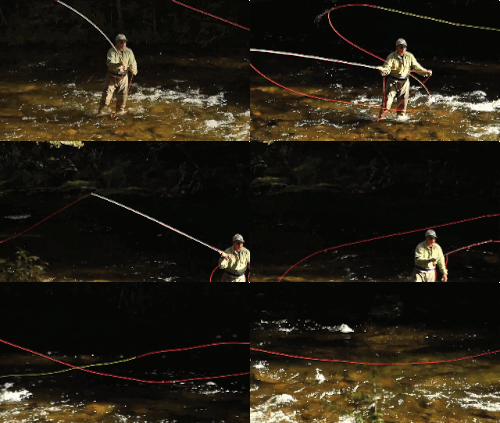
Flip Pallot, one of my angling heroes, is so artistic.

Flip Pallot - Fly Casting Lessons from Slater Productions on Vimeo.

A Cathedral of Sound


from NPR ...
The Mass in B minor is as lofty in design, scope and expression as anything written by the hand of man. It's one of several instances in the music of Johann Sebastian Bach in which a piece is created as an ideal type, rather than crafted for a practical use. As such, it represents an attempt to both summarize the tradition of the mass in a single perfect specimen and leave a statement on the nature of sacred music as a bequest to the future.

Most of the work's component parts date from various times in Bach's long residence in Leipzig; they were assembled to form a complete mass only near the end of his life. The earliest section is the Sanctus, from 1724. The Kyrie and Gloria are taken from a 1733 mass that Bach dedicated to the electoral court of Saxony at Dresden. The last major addition was the Credo; the keystone to the whole archlike structure, and itself a wonderfully symmetrical arch, it was written in 1748-49. Bach never heard the work in its entirety, but it represents a collection of movements in diverse styles; the Mass in B minor transcends the inconsistency of its origins.


As I write, I am listening to John Eliot Gardiner's interpretation. Get it here.

Get it wrong


Is everyone to go off and lock the door and sit secluded like the lonely writers do, in a soundproof cell, summoning people out of words and then proposing that these word people are closer to the real thing than the real people that we mangle with our ignorance every day? The fact remains that getting people right is not what living is all about anyway. It's getting them wrong that is living, getting them wrong and wrong and wrong and then, on careful reconsideration, getting them wrong again. That's how we know we're alive: we're wrong. Maybe the best thing would be to forget being right or wrong about people and just go along for the ride. But if you can do that – well, lucky you.

– from American Pastoral by Philip Roth

Jim Harrison, "Barking"

The moon comes up.
The moon goes down.
This is to inform you
that I didn’t die young.
Age swept past me
but I caught up.
Spring has begun here and each day
brings new birds up from Mexico.
Yesterday I got a call from the outside
world but I said no in thunder.
I was a dog on a short chain
and now there’s no chain.

I'm back ...


Today is the day.

The past few months have seen nothing short of a restoration of my life.