"I am not one who was born in the custody of wisdom. I am one who is fond of olden times and intense in quest of the sacred knowing of the ancients." Gustave Courbet
Showing posts with label patriots. Show all posts

16 December 2022

Remembered.

Andrew, The Boston Tea Party, Destruction of the Tea in Boston Harbor, December 16th, 1773, 1856


The Boston Tea Party took place on this day in 1773.

John Adams, from his diary, December 17, 1773 ...
The Dye is cast: The People have passed the River and cutt away the Bridge: last Night Three Cargoes of Tea, were emptied into the Harbour. This is the grandest, Event, which has ever yet happened Since, the Controversy, with Britain, opened!  The Sublimity of it, charms me!

The People should never rise, without doing something to be remembered—something notable And striking. This Destruction of the Tea is so bold, so daring, so firm, intrepid and inflexible, and it must have so important Consequences, and so lasting, that I cant but consider it as an Epocha in History.

The Question is whether the Destruction of this Tea was necessary?  I apprehend it was absolutely and indispensably so.

09 June 2020

Serves.

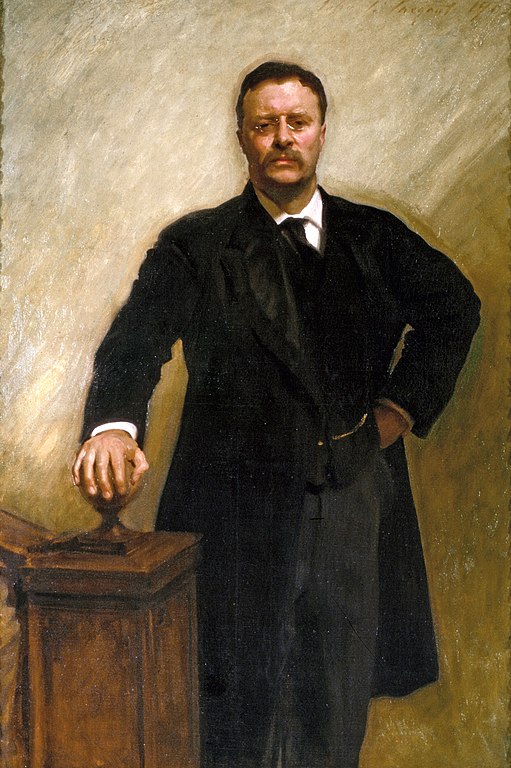
Sargent, Theodore Roosevelt, 1903


Patriotism means to stand by the country. It does not mean to stand by the president or any other public official, save exactly to the degree in which he himself stands by the country. It is patriotic to support him insofar as he efficiently serves the country. It is unpatriotic not to oppose him to the exact extent that by inefficiency or otherwise he fails in his duty to stand by the country. In either event, it is unpatriotic not to tell the truth, whether about the president or anyone else.
Theodore Roosevelt

07 June 2020

Liberty.


The Polish Patriot Who Helped Americans Beat the British ...

Kosciuszko lived in a boarding house in the capital, Philadelphia, collecting back pay for the war from Congress, and seeing old friends. By then, Americans had splintered into their first partisan conflict, between the Federalists, who admired the British system of government and feared the French Revolution, and the Republicans, who initially admired the French Revolution and feared a Federalist-led government would come to resemble the British monarchy. Kosciuszko took the side of the Francophile Republicans, resenting England’s support of Russia and seeing the Federalists as Anglophile elitists. So he avoided President John Adams, but developed a close friendship with Vice-President Thomas Jefferson.

“General Kosciuszko, I see him often,” Jefferson wrote Gates. “He is as pure a son of liberty as I have ever known, and of that liberty which is to go to all, and not to the few or rich alone.”

Kosciuszko took liberty so seriously that he was disappointed to see friends like Jefferson and Washington own slaves. During the American and Polish revolutions, Kosciuszko had employed black men as his aides-de-camp: Agrippa Hull in America, Jean Lapierre in Poland. When he returned to Europe in May 1798, hoping to organize another war to liberate Poland, Kosciuszko scribbled out a will. It left his American assets – $18,912 in back pay and 500 acres of land in Ohio, his reward for his war service -- for Jefferson to use to purchase the freedom and provide education for enslaved Africans. Jefferson, revising the draft into better legal English, also rewrote the will so that it would allow Jefferson to free some of his slaves with the bequest. The final draft, which Kosciuszko signed, called on “my friend Thomas Jefferson” to use Kosciuszko’s assets “in purchasing negroes from among his own as [well as] any others,” “giving them liberty in my name,” and “giving them an education in trades and otherwise.”

CONNECT