"I am not one who was born in the custody of wisdom. I am one who is fond of olden times and intense in quest of the sacred knowing of the ancients." Gustave Courbet
Showing posts with label haiku. Show all posts

15 January 2023

08 June 2022

Itself.


Sitting quietly, doing nothing
Spring comes, and the grass grows
by itself

Basho

29 November 2020

Gate-latch.


A wanderer all his life both in body and spirit, Bashō concerned himself less with destination than with the quality of the traveller’s attention. A poem, he said, only exists while it’s on the writing desk; by the time its ink has dried, it should be recognized as just a scrap of paper. In poetry as in life, he saw each moment as gate-latch. Permeability mattered more in this process than product or will: "If we were to gain mastery over things, we would find their lives would vanish under us without a trace."

Bashō set forth a simple, deeply useful reminder: that if you see for yourself, hear for yourself, and enter deeply enough this seeing and hearing, all things will speak with and through you. "To learn about the pine tree," he told his students, 'go to the pine tree; to learn from the bamboo, study bamboo." He found in every life and object an equal potential for insight and expansion.

Jane Hirshfield, from The Heart of Haiku 

01 October 2020

Never.


Forests and fields, rocks and weeds - my true companions.
The wild ways of the Crazy Cloud will never change.
People think I'm mad but I don't care:
If I'm a demon here on earth, there is no need to fear the hereafter.

Ikkyu

17 December 2019

Casually.

Wyeth, British at Brandywine, 1962


Don’t worry, spiders,
I keep house
    casually.

Issa

05 October 2019

Learning,

Wyeth, Far from Needham, 1966


a warm fall day
learning from this rock
to do nothing

Paul O. Williams

04 October 2019

Tradition.


Honoring the haiku sensibility, I look for what would be the seasonal signals, kigo, in our Mediterranean middle-elevation Sierra mountain landscape. What xeric aromatic herbs and flowers, what birds, what weather signals, will we find? They are different from Japan. I read translations of the myths and tales of the Native people who once lived where I live now, from the Nisenan language (which is no longer spoken) and I can see how much they valued the magic of the woodpecker, the sly character of fox, and the trickster coyote. High-flying migratory sandhill cranes pass north and south in the spring and in the fall directly over my house. They have been doing this for at least a million years.

The Euro-, African-, and Asian-Americans are just a little more than 200 years on the west coast of North America, and it will be several centuries yet before our poetic vocabulary matches the land. The haiku tradition gives us the pointers that we need to begin this process ...

Gary Snyder

20 January 2019

Sound.


Winter solitude –
in a world of one color
the sound of wind.

Basho

23 November 2018

Presence.


When you hear a stone dislodge itself from the high river bluffs and watch it tumble down to rest again, or when the pine branches move slightly in the winter breeze, or when you hear the late winter ice fringe on the river swish and hiss quietly as it breaks up in the current, you know each of these events, together with the human response to it, contains a poem, a complete artistic occurrence. You don’t need to do anything to it. In fact, you have to resist adding. The poet’s job, then, becomes containing that event and its aura of feeling succinctly, without insertions of wordplay or cogitation. The whole task is that of conveying the individual atmosphere present. Often this aura is so delicate and indefinably itself that while the poet can sometimes tell if he has caught it, he doesn’t know what it is he has caught. He simply recognizes its presence. It always lies beyond the image presented—in the escaping hints of implication of the image.

Paul O. Williams

CONNECT

It's turkey sandwich time.

20 June 2018

Singing.


Wandering monks were called unsui in Japan, literally "cloud and water." In Estonia, the perfection of life was personified in the singing wanderer: "If you walk your path without singing then this is an insult to the land, to meadows and forests and trees, and they show their disapproval of such a wanderer by taking away from him the power of moving on ..."

Gabriel Rosenstock, from Haiku: The Gentle Art of Disappearing

26 July 2017

Haiku.


Japanese Zen is associated with many forms of art -- painting, calligraphy, flower arranging, shakuhachi flute, martial arts. Even the tea ceremony qualifies as a kind of Zen art. Poetry is also a traditional Zen art, and the form of Zen poetry best known in the West is haiku.

Haiku, minimalist poems usually in three lines, have been popular in the West for decades. Unfortunately, many of the traditional principles of haiku writing are still not well understood in the West.

Much western "haiku" isn't haiku at all. What is haiku, and what makes it a Zen art?

CONNECT

30 November 2016

Now.


don't wait for the man standing in the snow
to cut off his arm. help him now.


Ikkyu

28 November 2016

Enough.

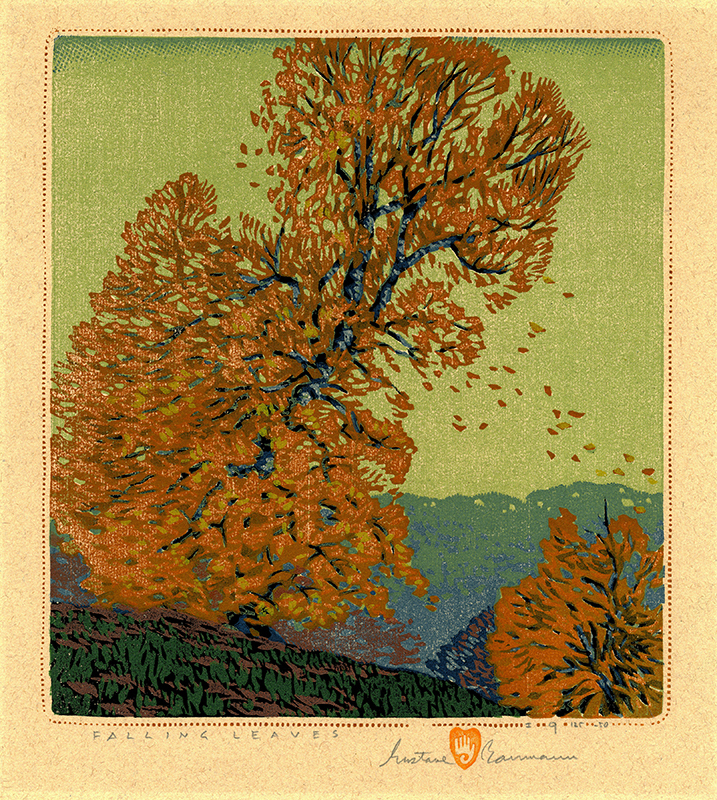
Baumann, Falling Leaves, 1950


the wind brings
enough fallen leaves
to make a fire

Ryokan

You.


as we walked to your school
I tried to teach you that sometimes
there is bliss in not knowing

you said "I know"

Andrew Riutta