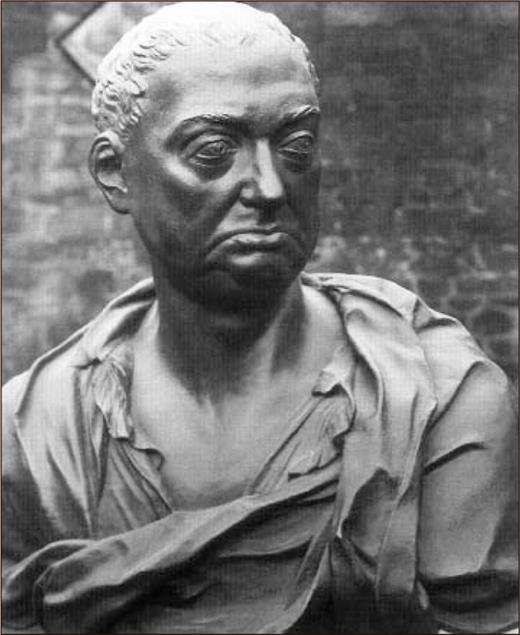
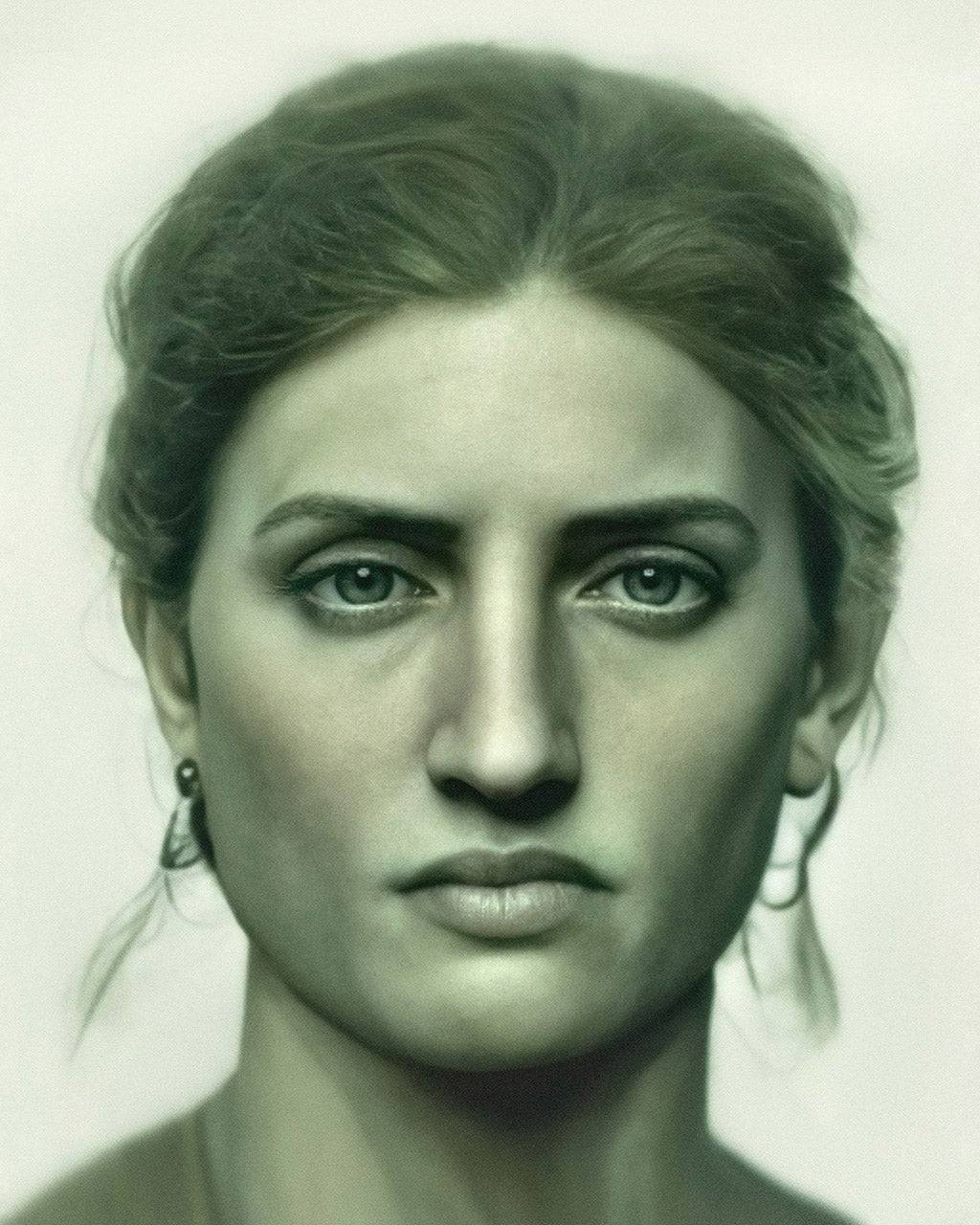
His corpse is going the color of young Stilton.
Showing posts with label Schama. Show all posts
Showing posts with label Schama. Show all posts
29 June 2024


15 July 2023
Happy Birthday, Rembrandt
Rembrandt, An Old Man in Military Costume, about 1631

Rembrandt van Rijn was born on this day in 1606.
Simon Schama's "Rembrandt" from his Power of Art series ...
15 July 2022
Happy Birthday, Rembrandt
Rembrandt, An Old Man in Military Costume (detail), 1631

Schama's masterful "Rembrandt" from his Power of Art series ...
Tracy Chevalier and Schama present their ideas on the depiction of the human condition in the works of Vermeer and Rembrandt, respectively ...
25 September 2021
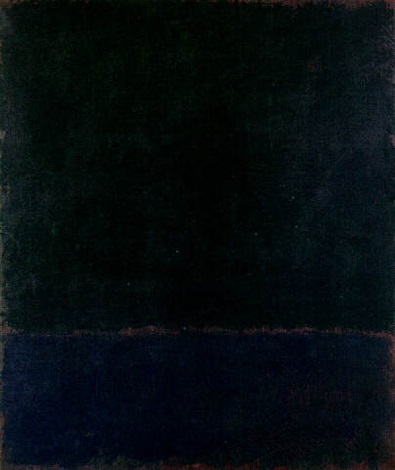
Happy Birthday, Rothko
Mark Rothko, Black Blue Painting, 1968

Mark Rothko was born on this day in 1903.
The reason for my painting large canvases is that I want to be intimate and human. To paint a small picture is to place yourself outside your experience, to look upon an experience as a stereopticon view or with a reducing glass. This world of the imagination is fancy-free and violently opposed to common sense. However you paint the larger picture, you are in it. It isn't something you command.
Mark Rothko
Simon Schama's Power of Art: Mark Rothko ...
Mark Rothko was born on this day in 1903.
The reason for my painting large canvases is that I want to be intimate and human. To paint a small picture is to place yourself outside your experience, to look upon an experience as a stereopticon view or with a reducing glass. This world of the imagination is fancy-free and violently opposed to common sense. However you paint the larger picture, you are in it. It isn't something you command.
Mark Rothko
Simon Schama's Power of Art: Mark Rothko ...
30 August 2021
Happy Birthday, David
David, Napoleon Bonaparte, 1798

Jacques-Louis David was born on this day in 1748.
In the arts the way in which an idea is rendered, and the manner in which it is expressed, is much more important than the idea itself. To give a body and a perfect form to one's thought, this – and only this – is to be an artist.Jacques-Louis David
The David episode from Simon Schama's masterpiece, Power of Art ...
20 July 2021
Sensitive.

A picture lives by companionship, expanding and quickening in the eyes of the sensitive observer. It dies by the same token. It is therefore risky to send it out into the world. How often it must be impaired by the eyes of the unfeeling and the cruelty of the impotent.
Mark Rothko
American Masters' "Rothko: Pictures Must Be Miraculous" ...
30 March 2021
Happy Birthday, van Gogh
van Gogh, Almond Blossom (detail), 1890

Vincent van Gogh was born on this day in 1853.
Vincent van Gogh, from a letter to Theo van Gogh, July 21, 1882
The van Gogh portion of Simon Schama's masterpiece, Power of Art ...
07 December 2020
Happy Birthday, Bernini
Bernini, David, 1623

Gian Lorenzo Bernini was born on this day in 1598.
Three things are needed for success in painting and sculpture: to see beauty when young and accustom oneself to it, to work hard, and to obtain good advice.
Three things are needed for success in painting and sculpture: to see beauty when young and accustom oneself to it, to work hard, and to obtain good advice.
Gian Lorenzo Bernini
Simon Schama's Power of Art, "Bernini" ...
30 August 2020
Happy Birthday, David
David, The Death of Socrates, 1787

The David episode from Simon Schama's BBC masterpiece, Power of Art ...
Jacques-Louis David was born on this day in 1748.
The artist must be a philosopher. Socrates the skilled sculptor, Jean-Jacques [Rousseau] the good musician, and the immortal Poussin, tracing on the canvas the sublime lessons of philosophy, are so many proofs that an artistic genius should have no other guide except the torch of reason.
Jacques-Louis David
15 July 2020
Happy Birthday, Rembrandt
Rembrandt, The Prophetess Anna, 1631

Rembrandt van Rijn was born on this date in 1606.
Try to put well in practice what you already know; and in so doing, you will in good time, discover the hidden things which you now inquire about. Practice what you know, and it will help to make clear what now you do not know.
Rembrandt
The Rembrandt episode of Simon Schama's masterpiece, Power of Art ...
30 March 2020
Happy Birthday, van Gogh
van Gogh, Almond Blossoms (detail), 1890

Vincent van Gogh was born on this date in 1853.
What am I in the eyes of most people — a nonentity, an eccentric, or an unpleasant person — somebody who has no position in society and will never have; in short, the lowest of the low. All right, then — even if that were absolutely true, then I should one day like to show by my work what such an eccentric, such a nobody, has in his heart. That is my ambition, based less on resentment than on love in spite of everything, based more on a feeling of serenity than on passion. Though I am often in the depths of misery, there is still calmness, pure harmony and music inside me. I see paintings or drawings in the poorest cottages, in the dirtiest corners. And my mind is driven towards these things with an irresistible momentum. So, if I am worth anything later, I am worth something now. For wheat is wheat, even if people think it is a grass in the beginning.
Vincent van Gogh
The van Gogh episode from Simon Shama's series, Power of Art ...
07 December 2019
Happy Birthday, Bernini
Bernini, David (detail), 1624

Gian Lorenzo Bernini was born on this date in 1598.
"Bernini," from Simon Schama's Power of Art ...

Gian Lorenzo Bernini was born on this date in 1598.
"Bernini," from Simon Schama's Power of Art ...
30 August 2019
Happy Birthday, David
David, Self-portrait, 1794
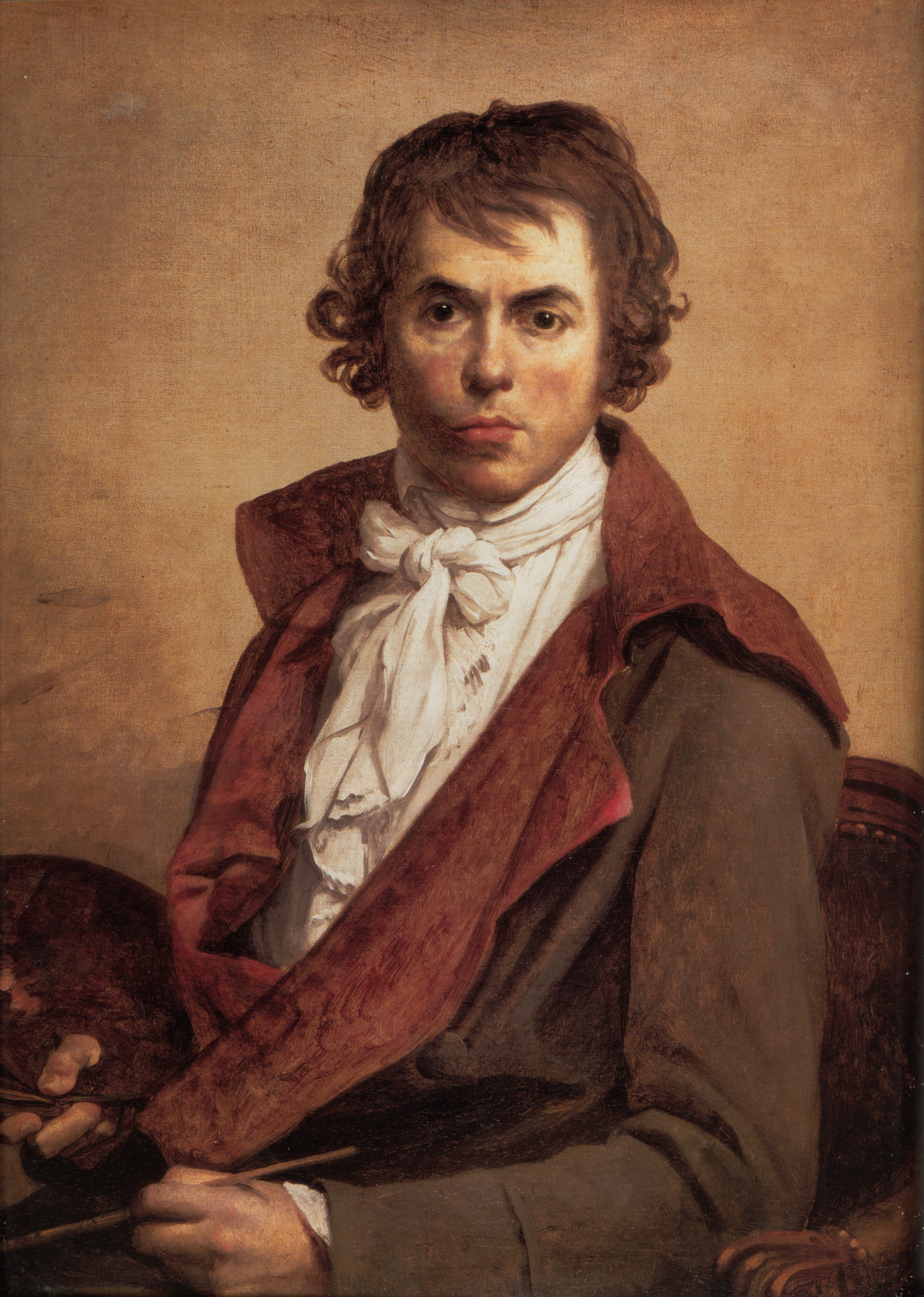
Simon Schama's Power of Art episode on David ...
Jacques-Louis David was born on this date in 1748.
To give a body and a perfect form to one's thought, this - and only this - is to be an artist.
Jacques-Louis David
Simon Schama's Power of Art episode on David ...
30 March 2019
Happy Birthday, van Gogh
van Gogh, Small Pear Tree, 1888

A letter to his brother, Theo, dated April 3, 1878 ...
I have been thinking over what we were discussing, and the saying sprang to mind, "Nous sommes aujourd'hui ce que nous étions hier." [We are today what we were yesterday] That does not mean that one must stand still and may not try to improve oneself, on the contrary, it is a compelling reason for doing so and for being glad to do so. But to be true to the saying, one must not backslide, and once one has started to look at things freely and openly, one must not face about or stray.
Those who said: “We are the same today as we were yesterday,” were “honnêtes hommes” [honest men], as is apparent from the constitution they drew up, which will remain for all time and of which it has been well said that it was written “avec le rayon d'en haut et d'un doigt de feu.” [With a ray of light from on high and a fiery finger”].
It is a good thing to be an “honnêtes homme” and to try increasingly to be one, partially and wholly, and one does well to understand that this entails being an “homme intéreur et spirituel.” [An inward and spiritual man].
He who is firmly convinced he is one of their band will always go about his business quietly and calmly, never doubting that all must end well. There once was a man who went to church and asked: “Can it be that my ardour has deceived me, that I have taken a wrong turning and managed things badly? Oh! if only I could be rid of this doubt and know for certain I shall come out victorious and succeed in the end.” And then a voice answered him: “And if you were certain, what would you do then? Act now as if you were certain and you will not be disappointed.” Then the man went on his way, not unbelieving but believing, and returned to his work no longer doubting or wavering.
As for being an `homme intéreur et spirituel' might one not be able to develop into one through knowledge of history in general and of certain individuals from all ages in particular, from the history of the Bible to that of the Revolution and from the Odyssey to the books of Dickens and Michelet? And could we not learn something from the work of such men as Rembrandt and from Breton's Mauvaises Herbes or Millet's The Hours of the Day, Le Bénédicité by de Groux or Brion, or The Conscript by de Groux (or else by Conscience) or his Apothécaire or The Large Oaks, by Dupré, or even by Michel's mills and sandy plains?
It is by continually holding fast to these thoughts and deeds that we are filled with a good leaven at the last, that of being sorrowful yet always rejoicing, which will become apparent when our lives have come to fruition, bearing the fruits of good works.
Le rayon d'en haut does not always shine upon us and may well be hidden behind clouds, but without that light a man cannot live and is worth nothing and can do no good, and those who claim that man can live without faith in that higher light and need not trouble to acquire it, are sure to have their hopes dashed.
We have talked a good deal about our duty and how we may attain the right goal, and we have properly concluded that our first objective must be to find a specific position and a profession to which we can wholly devote ourselves. And I believe that we also agreed on this point, viz. that one must pay particular attention to the end, and that a victory gained after a whole life of work and effort is better than one gained with greater dispatch.
Anyone who lives an upright life and experiences real difficulty and disappointment and yet is not crushed by them is worth more than one for whom everything has always been plain sailing and who has known nothing but relative prosperity. For who are the most obviously superior to us? Those who merit the words: “Laboureurs, votre vie est triste, laboureurs, vous souffrez dans la vie, laboureurs, vous êtes bien-heureaux,” [Labourers, your life is sad, labourers, your life is full of suffering, labourers, you are blessed]. It is they who bear the marks of “toute une vie de lutte et de travail soutenu sans flêchir jamais.” [a whole life of struggle and labour borne unflinchingly] It is right to try to become like that. So we go on our way, “undefessi favente Deo.” [Should be indefessi favente Deo,]
As for me, I must become a good preacher, who has something to say that is right and is of use in the world, and perhaps it is as well that I should spend a relatively long time on preparation and be securely confirmed in an unwavering faith before I am called to speak to others about it. (It is fitting that before one embarks upon that work, a treasure should be gathered up that others can enjoy). Let us but go forth quietly, testing everything and holding fast to what is good, and trying all the time to learn more of what is useful and adds to our experience. Weemoed [melancholy] may be a good experience, provided we write it as two words: wee , which is in every man, each of us having reason enough, but it must be allied to moed, and the more the better, for it is good to be someone who never despairs.
If only we try to live righteously, we shall fare well, even though we are bound to encounter genuine sadness and real disappointments and shall probably commit real mistakes and do things that are wrong, but it is certainly better to be ardent in spirit, even though one makes more mistakes, than to be narrow-minded and over-cautious.
It is good to love as many things as one can, for therein lies true strength, and those who loves much, do much and accomplish much, and whatever is done with love is done well. If one is affected by some book or other, let us say by Michelet's L' hirondelle, L'alouette, Le rossignol, Les aspirations d'aut-omne, Je vois d'ici une dame, J'aimais cette petite ville singulière - to mention just a few, then it is because that book is written from the heart in simplicity and meekness of spirit. Better to say but a few words, but filled with meaning, than to say many that are but idle sounds and as easy to utter as they are useless
Love is the best and the noblest thing in the human heart, especially when it is tested by life as gold is tested by fire. Happy is he who has loved much, and is sure of himself, and although he may have wavered and doubted, he has kept that divine spark alive and returned to what was in the beginning and ever shall be. If only one keeps loving faithfully what is truly worth loving and does not squander one's love on trivial and insignificant and meaningless things then one will gradually obtain more light and grow stronger.
The sooner one tries to become accomplished in a certain position in life and a certain field and adopts a relatively independent way of thinking and acting, and the more one keeps to set rules, the stronger in character one will grow, and that does not mean becoming narrow-minded. It is a wise thing to do this, because life is short, and time passes quickly. If one is accomplished in one single thing, understanding one single thing well, then one has insight into and knowledge of many other things into the bargain.
It's as well to go out into the world from time to time and mix with other people (and sometimes one feels, in fact, obliged and called upon to do so) - or it may simply be one way "de se jeter dans le travail sans arrière pensée et de toutes ses forces" [Of throwing oneself into work unreservedly and with all one's strength] - but one who prefers to be quietly alone with his work and seems to need very few friends will go safest in the world and among people. One should never feel secure just because one has no difficulties or cares or handicaps, and one should never be too easy-going. Even in the politest circles and the best surroundings and circumstances one should retain something of the original character of a Robinson Crusoe or of primitive man, for otherwise one cannot be rooted in oneself, and one must never let the fire in one's soul die, for the time will inevitably come when it will be needed. And he who chooses poverty for himself and loves it possesses a great treasure and will hear the voice of his conscience address him ever more clearly. He who hears that voice, which is God's greatest gift, in his innermost being and follows it, finds in it a friend at last, and is never alone!
Happy is he who has faith in God, for he will in the end be tided over all life's difficulties, albeit not without trouble and sorrow. One cannot do better than hold on to the thought of God come what may, in all circumstances, in every place and at all times, and try to get to know Him better. One can learn this from the Bible as well as from all other things. It is good to go on believing that everything is more miraculous than one can ever begin to understand, for that is the truth; it is good to remain sensitive and humble and tender-hearted even though one may have to hide one's feelings, as is often necessary. It is good to be well versed in the things that are hidden from the wise and the learned of this world, but that are revealed as if by nature to the poor and simple, to women and little children. For what can one learn which is better than that which God has given by nature to every human soul and which goes on living and loving, hoping and believing, in the depths of every soul, unless we wantonly destroy it.
The need is for nothing less than the infinite and the miraculous, and a man does well to be satisfied with nothing less, and not to feel easy until he has gained it.
That is what all great men have acknowledged in their works, all those who have thought a little more deeply and searched and worked and loved a little more than the rest, who have plumbed the depths of the sea of life. Plumb the depths, that is what we too must do if we want to make a catch, and if we sometimes have to work the whole night through without catching anything, then we do well not to give up and to cast the net once more at dawn.
So let us go forward quietly, each on his own path, forever making for the light, "sursum corda" [lift up your hearts], and in the knowledge that we are as others are and that others are as we are and that it is right to love one another in the best possible way, believing all things, hoping for all things and enduring all things, and never failing. And not being too troubled by our weaknesses, for even he who has none, has one weakness, namely that he has none, and anyone who believes himself to be consummately wise would do well to be foolish all over again.
"Nous sommes aujourd'hui ce que nous étions hier," that is, "honnêtes hommes," yet men who must be tested in the fire of life to become fortified inwardly are confirmed in what, by the grace of God, they are by nature.
So may it be with us, my boy, and may you fare well along your path, and may God be with you in all things and help you to succeed, which, with a warm handshake on your departure, is the wish of
Your very loving brother,
Vincent
It is only a very small light, the one in the little Sunday-school room in Barndesteeg, but let me keep it burning. Even if I should not, however, I do not think that Adler is the man to let it go out.
The van Gogh episode of Simon Schama's Power of Art ...
Vincent van Gogh was born on this date in 1853.
I have been thinking over what we were discussing, and the saying sprang to mind, "Nous sommes aujourd'hui ce que nous étions hier." [We are today what we were yesterday] That does not mean that one must stand still and may not try to improve oneself, on the contrary, it is a compelling reason for doing so and for being glad to do so. But to be true to the saying, one must not backslide, and once one has started to look at things freely and openly, one must not face about or stray.
Those who said: “We are the same today as we were yesterday,” were “honnêtes hommes” [honest men], as is apparent from the constitution they drew up, which will remain for all time and of which it has been well said that it was written “avec le rayon d'en haut et d'un doigt de feu.” [With a ray of light from on high and a fiery finger”].
It is a good thing to be an “honnêtes homme” and to try increasingly to be one, partially and wholly, and one does well to understand that this entails being an “homme intéreur et spirituel.” [An inward and spiritual man].
He who is firmly convinced he is one of their band will always go about his business quietly and calmly, never doubting that all must end well. There once was a man who went to church and asked: “Can it be that my ardour has deceived me, that I have taken a wrong turning and managed things badly? Oh! if only I could be rid of this doubt and know for certain I shall come out victorious and succeed in the end.” And then a voice answered him: “And if you were certain, what would you do then? Act now as if you were certain and you will not be disappointed.” Then the man went on his way, not unbelieving but believing, and returned to his work no longer doubting or wavering.
As for being an `homme intéreur et spirituel' might one not be able to develop into one through knowledge of history in general and of certain individuals from all ages in particular, from the history of the Bible to that of the Revolution and from the Odyssey to the books of Dickens and Michelet? And could we not learn something from the work of such men as Rembrandt and from Breton's Mauvaises Herbes or Millet's The Hours of the Day, Le Bénédicité by de Groux or Brion, or The Conscript by de Groux (or else by Conscience) or his Apothécaire or The Large Oaks, by Dupré, or even by Michel's mills and sandy plains?
It is by continually holding fast to these thoughts and deeds that we are filled with a good leaven at the last, that of being sorrowful yet always rejoicing, which will become apparent when our lives have come to fruition, bearing the fruits of good works.
Le rayon d'en haut does not always shine upon us and may well be hidden behind clouds, but without that light a man cannot live and is worth nothing and can do no good, and those who claim that man can live without faith in that higher light and need not trouble to acquire it, are sure to have their hopes dashed.
We have talked a good deal about our duty and how we may attain the right goal, and we have properly concluded that our first objective must be to find a specific position and a profession to which we can wholly devote ourselves. And I believe that we also agreed on this point, viz. that one must pay particular attention to the end, and that a victory gained after a whole life of work and effort is better than one gained with greater dispatch.
Anyone who lives an upright life and experiences real difficulty and disappointment and yet is not crushed by them is worth more than one for whom everything has always been plain sailing and who has known nothing but relative prosperity. For who are the most obviously superior to us? Those who merit the words: “Laboureurs, votre vie est triste, laboureurs, vous souffrez dans la vie, laboureurs, vous êtes bien-heureaux,” [Labourers, your life is sad, labourers, your life is full of suffering, labourers, you are blessed]. It is they who bear the marks of “toute une vie de lutte et de travail soutenu sans flêchir jamais.” [a whole life of struggle and labour borne unflinchingly] It is right to try to become like that. So we go on our way, “undefessi favente Deo.” [Should be indefessi favente Deo,]
As for me, I must become a good preacher, who has something to say that is right and is of use in the world, and perhaps it is as well that I should spend a relatively long time on preparation and be securely confirmed in an unwavering faith before I am called to speak to others about it. (It is fitting that before one embarks upon that work, a treasure should be gathered up that others can enjoy). Let us but go forth quietly, testing everything and holding fast to what is good, and trying all the time to learn more of what is useful and adds to our experience. Weemoed [melancholy] may be a good experience, provided we write it as two words: wee , which is in every man, each of us having reason enough, but it must be allied to moed, and the more the better, for it is good to be someone who never despairs.
If only we try to live righteously, we shall fare well, even though we are bound to encounter genuine sadness and real disappointments and shall probably commit real mistakes and do things that are wrong, but it is certainly better to be ardent in spirit, even though one makes more mistakes, than to be narrow-minded and over-cautious.
It is good to love as many things as one can, for therein lies true strength, and those who loves much, do much and accomplish much, and whatever is done with love is done well. If one is affected by some book or other, let us say by Michelet's L' hirondelle, L'alouette, Le rossignol, Les aspirations d'aut-omne, Je vois d'ici une dame, J'aimais cette petite ville singulière - to mention just a few, then it is because that book is written from the heart in simplicity and meekness of spirit. Better to say but a few words, but filled with meaning, than to say many that are but idle sounds and as easy to utter as they are useless
Love is the best and the noblest thing in the human heart, especially when it is tested by life as gold is tested by fire. Happy is he who has loved much, and is sure of himself, and although he may have wavered and doubted, he has kept that divine spark alive and returned to what was in the beginning and ever shall be. If only one keeps loving faithfully what is truly worth loving and does not squander one's love on trivial and insignificant and meaningless things then one will gradually obtain more light and grow stronger.
The sooner one tries to become accomplished in a certain position in life and a certain field and adopts a relatively independent way of thinking and acting, and the more one keeps to set rules, the stronger in character one will grow, and that does not mean becoming narrow-minded. It is a wise thing to do this, because life is short, and time passes quickly. If one is accomplished in one single thing, understanding one single thing well, then one has insight into and knowledge of many other things into the bargain.
It's as well to go out into the world from time to time and mix with other people (and sometimes one feels, in fact, obliged and called upon to do so) - or it may simply be one way "de se jeter dans le travail sans arrière pensée et de toutes ses forces" [Of throwing oneself into work unreservedly and with all one's strength] - but one who prefers to be quietly alone with his work and seems to need very few friends will go safest in the world and among people. One should never feel secure just because one has no difficulties or cares or handicaps, and one should never be too easy-going. Even in the politest circles and the best surroundings and circumstances one should retain something of the original character of a Robinson Crusoe or of primitive man, for otherwise one cannot be rooted in oneself, and one must never let the fire in one's soul die, for the time will inevitably come when it will be needed. And he who chooses poverty for himself and loves it possesses a great treasure and will hear the voice of his conscience address him ever more clearly. He who hears that voice, which is God's greatest gift, in his innermost being and follows it, finds in it a friend at last, and is never alone!
Happy is he who has faith in God, for he will in the end be tided over all life's difficulties, albeit not without trouble and sorrow. One cannot do better than hold on to the thought of God come what may, in all circumstances, in every place and at all times, and try to get to know Him better. One can learn this from the Bible as well as from all other things. It is good to go on believing that everything is more miraculous than one can ever begin to understand, for that is the truth; it is good to remain sensitive and humble and tender-hearted even though one may have to hide one's feelings, as is often necessary. It is good to be well versed in the things that are hidden from the wise and the learned of this world, but that are revealed as if by nature to the poor and simple, to women and little children. For what can one learn which is better than that which God has given by nature to every human soul and which goes on living and loving, hoping and believing, in the depths of every soul, unless we wantonly destroy it.
The need is for nothing less than the infinite and the miraculous, and a man does well to be satisfied with nothing less, and not to feel easy until he has gained it.
That is what all great men have acknowledged in their works, all those who have thought a little more deeply and searched and worked and loved a little more than the rest, who have plumbed the depths of the sea of life. Plumb the depths, that is what we too must do if we want to make a catch, and if we sometimes have to work the whole night through without catching anything, then we do well not to give up and to cast the net once more at dawn.
So let us go forward quietly, each on his own path, forever making for the light, "sursum corda" [lift up your hearts], and in the knowledge that we are as others are and that others are as we are and that it is right to love one another in the best possible way, believing all things, hoping for all things and enduring all things, and never failing. And not being too troubled by our weaknesses, for even he who has none, has one weakness, namely that he has none, and anyone who believes himself to be consummately wise would do well to be foolish all over again.
"Nous sommes aujourd'hui ce que nous étions hier," that is, "honnêtes hommes," yet men who must be tested in the fire of life to become fortified inwardly are confirmed in what, by the grace of God, they are by nature.
So may it be with us, my boy, and may you fare well along your path, and may God be with you in all things and help you to succeed, which, with a warm handshake on your departure, is the wish of
Your very loving brother,
Vincent
It is only a very small light, the one in the little Sunday-school room in Barndesteeg, but let me keep it burning. Even if I should not, however, I do not think that Adler is the man to let it go out.
The van Gogh episode of Simon Schama's Power of Art ...
25 September 2018
Happy birthday, Rothko.
Mark Rothko, Untitled, 1969
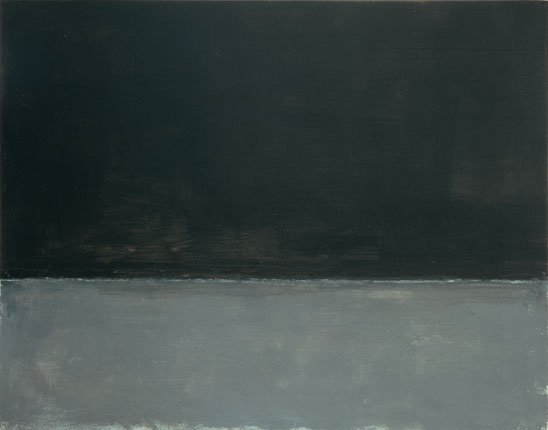
Mark Rothko was born on this day in 1903.
The reason for my painting large canvases is that I want to be intimate and human. To paint a small picture is to place yourself outside your experience, to look upon an experience as a stereopticon view or with a reducing glass. This world of the imagination is fancy-free and violently opposed to common sense. However you paint the larger picture, you are in it. It isn't something you command.
Mark Rothko
Simon Schama's Power of Art: Mark Rothko ...
23 April 2018
Happy birthday, Turner.
Turner, Off Margate, 1843

Joseph Mallord William Turner was born on this day in 1775.
My business is to paint what I see, not what I know is there.
J.M.W. Turner
The Turner episode from Simon Schama's masterpiece, Power of Art ...
My business is to paint what I see, not what I know is there.
J.M.W. Turner
The Turner episode from Simon Schama's masterpiece, Power of Art ...
30 August 2017
Happy birthday, David.
David, Alphonse Leroy, 1783

The David episode of Simon Schama's Power of Art ...
15 February 2017
Debate.
Tracy Chevalier and Simon Schama debate Vermeer and Rembrandt ...
Rembrandt van Rijn is the best known of all the Dutch
masters. His range was vast, from landscapes to portraits to Biblical scenes;
he revolutionised every medium he handled, from oil paintings to etchings and
drawings. His vision encompassed every element of life – the sleeping lion; the
pissing baby; the lacerated soles of the returned prodigal son.
Making the case for him in this debate will be Simon Schama. For him Rembrandt is humanity unedited: rough, raw, violent, manic, vain, greedy and manipulative. Formal beauty was the least of his concerns, argues Schama, yet he attains beauty through his understanding of the human condition, including to be sure, his own.
But for novelist Tracy Chevalier it can all get a little exhausting. Rembrandt’s paintings, she believes – even those that are not his celebrated self-portraits – are all about himself. Championing Vermeer, she will claim that his charm lies in the very fact that he absents himself from his paintings. As a result they are less didactic and more magical than Rembrandt’s, giving the viewer room to breathe.
Chevalier has been obsessed with Vermeer since the age of 19, when she first saw his Girl with a Pearl Earring. The girl’s startled eyes and luscious, inviting mouth produce a tantalising sense of mystery and contradiction.
An other-worldly mystery also veils Vermeer’s Delft street scenes and interiors. Apparently so everyday, they are lifted to a higher sphere by the indirect gaze and the turned back, all bathed in that fuzzy, filmic Vermeer veneer. And so often they, too, ask a question. Who wrote the letter that the woman in blue reads so attentively? Who does the girl in the gold jacket strum her guitar for? The questions are never answered but we are lured back again and again in search of an answer.
07 December 2016
Happy birthday, Bernini.
Bernini, David (detail), 1623


Gian Lorenzo Bernini was born on this day in 1598.
Three things are needed for success in painting and sculpture: to see beauty when young and accustom oneself to it, to work hard, and to obtain good advice.
Three things are needed for success in painting and sculpture: to see beauty when young and accustom oneself to it, to work hard, and to obtain good advice.
Gian Lorenzo Bernini
Simon Schama's Power of Art, "Bernini" ...
30 August 2016
Happy birthday, David.
David, Self-Portrait, 1794
The artist must be a philosopher. Socrates the skilled
sculptor, Rousseau the good musician, and the immortal Poussin,
tracing on the canvas the sublime lessons of philosophy, are so many proofs
that an artistic genius should have no other guide except the torch of reason.
Jacques-Louis David
The David episode from Simon Schama's epic, Power of Art ...
The David episode from Simon Schama's epic, Power of Art ...
Subscribe to:
Posts (Atom)