"I am not one who was born in the custody of wisdom. I am one who is fond of olden times and intense in quest of the sacred knowing of the ancients." Gustave Courbet

22 December 2009

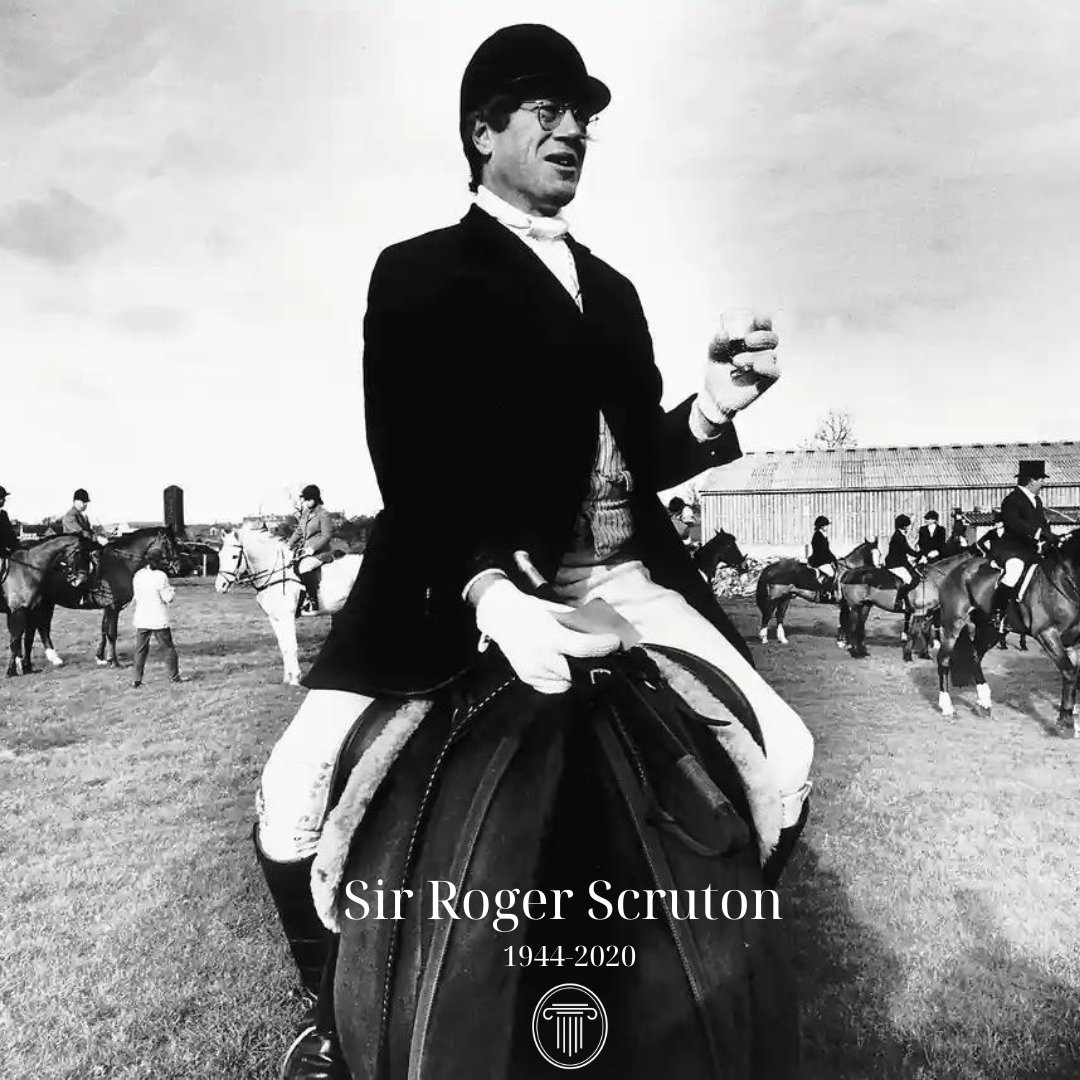
Scruton on wine.


I am reading Roger Scruton's "I Drink Therefore I Am: A Philosopher's Guide to Wine." He's a master. I knew I would love this book from the first lines of the preface ...

"This book is not a guide to drinking wine, but a guide to thinking it. It is a tribute to pleasure, by a devotee of happiness, and a defense of virtue by an escapee from vice ... My purpose is to defend the opinion once attributed to Plato, that 'nothing more excellent or valuable than wine was ever granted by the god's to man,' and I am confident that all those who are offended by this innocent endeavour thereby give proof of their irrelevance."

While I can't say I've completely thrown off the clutches of vice, I'm sure I will be given the full treatise as to why I should through Professor Scruton's lecture.

More to follow, but if you can't wait, the book is here.

John Hartford, River Man

From a PBS documentary ...

My favorite Hartford treatment ...

Newgrange


The passage and chamber of Newgrange are illuminated by the winter solstice sunrise. A shaft of sunlight shines through the roof box over the entrance and penetrates the passage to light up the chamber. The dramatic event lasts for 17 minutes at dawn on the Winter Solstice and for a few mornings either side of the Winter Solstice.

Read the rest here. The Articles For Further Reading are very good.

Professor O'Kelly excavated and restored Newgrange from 1962 to 1975. He discovered that the builders of Newgrange deliberately oriented the passage so that each year around midwinter, the rays of the rising sun would shine through a special aperture to illuminate the chamber.

His article is here.

21 December 2009

The Call.


From an interview Harrison did with Joseph Bednarik ...

Bednarik: There are characters throughout your novels who are either poets or failed poets. What is it about a poet that you find intriguing as a character in fiction?

Harrison: I hadn’t realized I’d used them that much. The interesting thing, and what old Joe Campbell talked about—I was privileged to meet him early in the sixties—is: What does it do to a man or a woman when they refuse the call? It creates a kind of explosive negative force in their life. Because they refuse their calling I can create drama with this negative energy in their lives.

Bednarik: Do you think it’s possible later in life to retrieve the call?

Harrison: No, not largely, because poetry just like painting is something that you have to give your entire life to—and that includes all your life. Those people who say it’s never late to start again are largely fooling themselves. They can start again and retrieve some of the essential integrity of the original calling but they all know that time moves quickly and they’ve blown it.

Bednarik: When did you feel that you got your call as a poet?

Harrison: Most definitively at about nineteen, starting at fourteen when I first read Keats. And Whitman and so on. But then really at nineteen it was almost a metaphysical experience: I’m sitting on the roof of our house watching the moon rise over a big marsh—

Bednarik: This is northern Michigan?

Harrison: Yeah, and birds of various species were criss-crossing the moon and I could see them clearly in silhouette. That sort of faux Chinese experience. Anyway, then I heard the call.

Bednarik: In a number of places you talk about taking your vows as an artist.

Harrison: Well, you do take vows just like a priest or a Zen student takes vows. What did Charles Olson say that was incredible? “One must only traffic in one’s own sign.” That excludes every other thing in your life. To me it’s always been important to belong to nothing, other than my marriage which is forty years duration. But you belong to nothing except this.

Pond hockey


My first experience with the greatest game on earth was on the frozen creek that flowed nearby my childhood home in Michigan. The memories of playing pond hockey are some of my happiest ... friends, competition, camaraderie.

The element of pond hockey that makes it so endearing to me is being outdoors. Playing hockey is spiritual, requiring grace, quickness, and concentration to be played well. This is probably why I love the game so much ... I do none of those things well, but I am challenged. Doing those things well on the rough surface of a frozen river or pond adds another piece to the puzzle.

And then there is the sound. Hockey is a sonorous game. Experiencing hockey's nuance of sound on TV is impossible. Being in an arena is better. Nothing compares to the sound of skates grinding across the ice outside. The sound of a pass placed on the tape of a stick echoes outdoors. Misty breath, runny noses, cold hands and toes ... GOD, I LOVE IT!!!

I was given a copy of the documentary, Pond Hockey, by a student. It is an excellent film. Makes me itch to "put the biscuit in the basket."

Nabokov's Christmas


From The Writer's Almanac ...

Vladimir Nabokov's short story "Christmas" is set on a country estate buried in snowdrifts outside St. Petersburg, Russia. The main character, Sleptsov, carries the coffin of his adolescent son to the village church plot, goes to bed, and wakes up on Christmas Eve Day.

He goes into the room that had been his son's summer study, separate from the main house and unheated, sits at his son's desk, and numbly sifts through some of the dead child's belongings. The son (like Nabokov himself) had enjoyed butterfly-collecting, and at the desk the father finds the tools of the hobby: cork-bottomed spreading boards, supplies of black pins, a torn muslin net, and "an English biscuit tin that contained a large exotic cocoon." Nabokov writes that the cocoon was "papery to the touch and seemed made of a brown folded leaf. His son had remembered it during his sickness, regretting that he had left it behind, but consoling himself with the thought that the chrysalid inside was probably dead."

Sleptsov sits, sobs, and returns to the main house carrying a few of his son's belongings, including the biscuit tin with the cocoon. He reads from his son's diary, realizes that his son was infatuated with a girl he'll never know about, and begins another round of tears. He's convinced he'll die of grief, the next day, Christmas. He sees earthly life "totally bared and comprehensible — and ghastly in its sadness, humiliatingly pointless, sterile, devoid of miracles."

And then, Nabokov writes: "At that instant there was a sudden snap — a thin sound like that of an overstretched rubber band breaking. Sleptsov opened his eyes. The cocoon in the biscuit tin had burst at its tip, and a black, wrinkled creature the size of a mouse was crawling up the wall above the table. It had emerged from the chrysalid because a man overcome with grief had transferred a tin box to his warm room, and the warmth had penetrated its taut leaf-and-silk envelope; it had awaited this moment so long, had collected its strength so tensely, and now, having broken out, it was slowly and miraculously expanding.
"... And then those thick black wings, with a glazy eyespot on each and a purplish bloom dusting their hooked foretips, took a full breath under the impulse of a tender, ravishing, almost human happiness."

A Winter's Solstice.


The rising of the sun
And the running of the deer,
The playing of the merry organ,
Sweet singing in the choir.

Honoring Winter Solstice

"And so the Shortest Day came and the year died
And everywhere down the centuries of the snow-white world
Came people singing, dancing,
To drive the dark away..."

Susan Cooper's lovely poem, The Shortest Day, read at every Revels performance, makes a wonderful introduction or conclusion to a winter solstice ritual. The entire text is here.
A solstice candle, lit at sundown and allowed to burn in a safe place through the night, is a simple tradition deeply connected to ancient ways.
Sun-hued oranges are simple, and readily accessible, ritual and gift objects. They make beautiful ornaments when decorated with whole cloves. Pomander directions

In Japan, citrus fruits, especially the yuzu, a citron, as well as pumpkin figure prominently in traditions around winter solstice. A yuzu bath taken at winter solstice is said to bring health. Pumpkin is a traditional Japanese dish at this time of year. The traditions harken back to the days when Shinto, an ancient nature-based religion, was more prominent.

For a simple family ritual on Winter Solstice, you can pass around an orange. Each person peels off a portion of the rind, while thinking about one thing in their lives they would like to "peel away." Once it's fully peeled, the orange is passed around again. Each person eats a section, while thinking about one new wish or intention for the new year. If it's a mandarin orange, save the peel to make mandarin peel tea!

Nighttime wishing ritual: Go outside and settle into the night. Listen. Think about the night as if it were an island. Have in mind what is important to you — what you want to release from your life and what you want to welcome into your life in the coming year. Breathe each thing you want gone, one at a time, into the palm of your hand, then blow them away into the winter sky. Do the same with each desire you wish to enter your life. When you are finished, go inside and light a red candle. Put it in a safe place to burn out completely. The candle is a symbolic guiding light to draw your desires to you.

Honoring the directions: Many ancient cultures acknowledge and use the four compass points in their rituals. Here are some qualities for each direction in the Northern Hemisphere. These come from the wonderful book, The Winter Solstice:

North: cold, earth, challenge, endings, ice and snow, things waiting to germinate and be born.
East: awakening, new life, air, peace, triumph of the spirit.
South: fire, heat of life ripening in the earth, roots of our lives, stability.
West: water, restless seas and wandering spirits, movement, emotion, seeking new directions.
You can add or change these associations to make them your own.

A simple litany: From the same book, a simple prayer. You can make this both serious and fun. Every person in a group can contribute a line:
For the return of the sun — blessings and praise!
For the gifts we give and receive — blessings and praise!
For animals everywhere — blessings and praise!
You can continue this litany as long as you can keep thinking up new things.
Sun map: Here's a way to observe winter solstice for yourself (assuming the day is sunny). It is similar to sun maps found in Zuni homes. At a specific time on the winter solstice, (perhaps sunrise or noon), mark where the sun's rays shine inside your house, with a special mark or sign on a wall, or by hanging a feather or other object that casts a shadow at a specific point. I use an ornament shaped like the sun with a mirror in the center. Then in future years, you'll be able to observe the sun approaching winter solstice.

St. Francis of Assisi's Canticle of Brother Sun is a beautiful prayer. It has the same spirit of reverence and gratitude for the natural world as you'll find in Native American prayers.

About Yule logs: There are three modern interpretations of this ancient tradition. The first hews closest to the old ritual: Decorate a good-sized log (traditionally oak, also traditionally not purchased but found) with a few sprigs of evergreen tied in ribbon (probably red) and place it in your fireplace. For a ritual touch, write wishes for the new year on slips of paper and tuck them under the ribbon. The full tradition requires that the log be lighted on Yule (winter solstice or Christmas Eve, or both! your choice) along with a piece of the previous year's Yule log, then extinguished before burning out fully, to save a portion to light with the following year's log, hence completing the cycle of the year. Another interpretation of the tradition demands that the fire be kept going for the 12 days of Yule.

For those without fireplaces or for a different take on the tradition, you can create a candle version by taking a smallish log, sawing a flattened side as the base, then drilling holes fat enough to hold candles for a tabletop decoration.

There is more here.

The Winter Solstice has always had a bigger meaning for our family. As a kid, Mom always prepared our home to celebrate the seasons, winter was no different. Christmas time saw our home transformed by pine boughs, candles, music, food. I think of this day and am reminded of the dimming of the day, warmth from the fireplace, candlelight, quiet music softly stealing (usually by Mom at the piano) ... HAPPY BIRTHDAY, MOM!

20 December 2009

Preparing a feast in Brooklyn


Awesome saws and cleavers, beautiful rack, stunning prices!

Hope all went well!
Thanks, V!

The glory of marrow.


Fergus Henderson
Roasted Marrow Bones

Time: 20 minutes

8 to 12 center-cut beef or veal marrow bones, 3 inches long, 3 to 4 pounds total
1 cup roughly chopped fresh parsley
2 shallots, thinly sliced
2 teaspoons capers
1 1/2 tablespoons extra virgin olive oil
2 teaspoons fresh lemon juice
Coarse sea salt to taste
At least 4 1/2-inch-thick slices of crusty bread, toasted.
1. Preheat oven to 450 degrees. Put bones, cut side up, on foil-lined baking sheet or in ovenproof skillet. Cook until marrow is soft and has begun to separate from the bone, about 15 minutes. (Stop before marrow begins to drizzle out.)

2. Meanwhile, combine parsley, shallots and capers in small bowl. Just before bones are ready, whisk together olive oil and lemon juice and drizzle dressing over parsley mixture until leaves are just coated. Put roasted bones, parsley salad, salt and toast on a large plate. To serve, scoop out marrow, spread on toast, sprinkle with salt and top with parsley salad.

Yield: 4 servings.

Fergus Henderson cookbooks are here.

His restaurant is here.

An educational interview here.

Made it!


I'm Up North!

Barking


My favorite Harrison poem ... today.

Barking, by Jim Harrison

The moon comes up.
The moon goes down.
This is to inform you
that I didn’t die young.
Age swept past me
but I caught up.
Spring has begun here and each day
brings new birds up from Mexico.
Yesterday I got a call from the outside
world but I said no in thunder.
I was a dog on a short chain
and now there’s no chain.

19 December 2009

Dreams & Animals


From Salon ...

You've said before that your dream life is very important to you.

HARRISON:
It's not been vivid for years, because I'm not having a nervous breakdown. That's when you get these really vivid electric dreams that are probably in their own way your subconscious trying to save your sorry ass. If only we paid as close attention to our dreams since the Pleistocene period as we have the global economy for the last 20 years. But the global economy is supposed to be relevant, right? Well, fuck the global economy. Why should we discard a third of our lives? I remember I was quite upset once because I had this dream that people were murdering me in New York. They were pushing me off of this enormous waterfall and at the last moment I flew away, but of course it's very difficult to fly. I landed in a tree and looked down and I was a bird with a bear's body, a bear with a vast wingspan. The bear and the bird is what helped me survive. Of course I live in close contiguity to so many bears at my cabin. We even have some down in Patagonia [Arizona] that come from way over the Oachuca and Patagonia Mountains and down around Sonoita Creek. I like that kind of contiguity. One night I couldn't go to the bar where I go because two bear cubs were playing with my garbage cans and the mother was leaning up against the pump house looking at me, like, "Let my kids play, asshole." [Laughs]

Animals play a major part in your work, and you often note the similarities between the desires of humans and animals. In a very fundamental sense they're not all that different for you, are they?

HARRISON: They aren't. Of course, I grew up rural, around animals. I had my eye put out when I was a kid and ran to the woods, and I'm not totally sure I've emerged. [Laughs] This strange Hasidic scholar I know named Neal Claremont, a brilliant young man, said to me one day: "Don't you really think that reality is the accretion of the perceptions of all creatures?" I said, Jesus Christ, that's a monster statement. But of course it's true, and what a marvelous thing to say. I don't think I'm any more important than a dog or a cat. It's become alien to my nature -- that sort of self-importance that is so egregious in this fucking pop stand. I could do my imitation of an important novelist entering Elaine's, but why? There's no bigger trip than self-importance -- to blind you, to decrease the energy of your art. So the animals come in there -- whether horses, dogs, cats, bears, birds -- to help keep you ordinary. You know, in terms of the history of language, the first Chinese ideograms were really imitations of animal tracks. I like that. I like to hike after a good rain because every track is fresh and I always have Olaus Murie's "Field Guide to Animal Tracks" with me. The tracks speak their own language. They reveal everything that happened -- what crossed here, what went that way. But we don't know about that any more. We've become more dislocated and urban. Most people who eat beef and pork and chicken now have never known a cow or pig. They've never held a pig in their arms or chased a rooster.

Fin art


See more here...

... and here.

Past three o'clock on a cold and frosty morning


Past Three O'Clock
Old English Carole
(George Ratcliff Woodward)


Past three o'clock,
On a cold frosty morning,
Past three o'clock,
Good morrow masters all.

Born is a baby
Gentle as may be,
Son of the Eternal
Father supernal.

Seraph choir singeth,
Angel bell ringeth,
Hark how they rhyme it,
Time it and chime it!

Mid earth rejoices
Hearing such voices.
Ne'ertofore so well
Carolling nowell!

Hinds o'er the pearly
Dewy lawn early
Seek the high stranger
Laid in the manager.

Cheese from the dairy
Bring they for Mary,
And, not for money,
Butter and honey.

Light out of star-land
Leadeth from far land
Princes, to meet him,
Worship and greet him.

Myrrh from full coffer,
Incense they offer;
Nor is the golden
Nugget withholden.
Thus they: I pray you,
Up sirs, nor stay you
Till ye confess him
Likewise and bless him.

17 December 2009

Bertolt Brecht


"Before familiarity can turn into awareness, the familiar must be stripped of its inconspicuousness; we must give up assuming that the object in question needs no explanation. However frequently recurrent, modest, vulgar it may be, it will now be labeled as something unusual."

16 December 2009

Everything is interesting. Look closer.


Keri Smith has created another wonder. Subtitled, "Portable Life Museum," How To Be An Explorer Of The World is a manual for the observer, the collector, the wanderer of the world ... an invitation to "come and see." I can't put it down. I have begun using it as a source for journal prompts for my students.

The book contains 59 explorations ranging in focus from "Right Where You Are Sitting," to "Sound Map," "Blind Observation," to "Found Smells."

The "introduction" to the book includes a T.S. Eliot quote that sets the tone for the entire book ...
"We shall not cease from exploration and at the end of all our exploring will be to arrive where we started and know the place for the first time."

Be looking for more on THP.

Buckminster Fuller


"The closer man gets to the unknown, the more inventive he becomes -- the quicker he adopts new ways."

In Fuller's Operating Manual, he investigates the great challenges facing humanity, and the principles for avoiding extinction and “exercising our option to make it.” How will humanity survive? How does automation influence individualization? How can we utilize our resources more effectively to realize our potential to end poverty in this generation? He questions the concept of specialization, calls for a design revolution of innovation, and offers advice on how to guide “spaceship earth” toward a sustainable future.

Read the rest here.

Thanks Christi(ne).

"Wearing underwear ..."


"... is as formal as I ever hope to get."

Hemingway was full of 'em ...

"Always do sober what you said you'd do drunk. It will teach you to keep your mouth shut."

"The best way to find out if you can trust somebody is to trust them."

"The man who has begun to live more seriously within begins to live more simply without."

15 December 2009

Brown Dog is back.


Harrison's latest collection of novellas contains the return of the Yooper Chippewa (Anishnabe) Brown Dog, my favorite naturalist. The author states, "The attitudes of Brown Dog are my survival mechanism in a world in which I most often feel out of place."

The NYT Book Review described Brown Dog as, "an alter ego for Harrison, or for anyone who might imagine a life unburdened by ambition and materialism, in tune with both nature and natural appetites."

From Brown Dog Redux ...
"The only loud sound he liked was a storm on Lake Superior when monster waves would come crashing over the pier in Grand Marais or Marquette. He also liked the sounds of crickets and birds, and a hard rain in the forest in the summer with the wind blowing through billions of leaves."

Simple words, simple language, sublime images.

Get the book here.

14 December 2009

HAPPY BIRTHDAY, DREW & ZOE!!!


Drew & Zuzu are 7 today, born on this date in 2002, at 10:11 and 10:12 in the morning!

Happy birthday, monkeys!!! I love you very, very much!

Let us have birthdays every day,
(I had the thought while I was shaving)
Because a birthday should be gay,
And full of grace and good behaving.
We can't have cakes and candles bright,
And presents are beyond our giving,
But let lt us cherish with delight
The birthday way of lovely living.
-Robert Service

Workshops for Modernity


"Bauhaus 1919–1933: Workshops for Modernity” at the Museum of Modern Art, New York.
"... the Bauhaus demonstrated that modernism could function as a collective enterprise in an institutional setting, and still give the student the widest scope for individual expression. It is this extraordinary achievement that has created the mythic Bauhaus of the imagination, a shrine where artists toiled away in happy accord, savoring the idyllic fellowship of the guild—much as the eighteenth century had imagined Periclean Athens, or the nineteenth the great cathedral-building lodges of the Middles Ages."

Read the rest here.

Bauhaus creator, Walter Gropius, here.

Geminid meteors tonight


I just woke up and took a hopeful look outside ... too cloudy. Oh well, the swelling creek sounds nice!

Earth & Sky's outlook is here.

13 December 2009

New Hoover Dam By-Pass


Creeping closer inch by inch – 900ft above the mighty Colorado River – the two sides of the bridge at the Hoover Dam in America slowly take shape.

The bridge will carry a new section of US Route 93 past the bottleneck of the old road which can be seen twisting and winding around and across the dam itself.

When complete, it will provide a new link between the states of Nevada and Arizona. In an incredible feat of engineering, the road will be supported on the two massive concrete arches which jut out of the rock face. The arches are made up of 53 individual sections – each 24ft long – which have been cast on-site and are being lifted into place using an improvised high-wire crane strung between temporary steel pylons.

Read the rest and see an incredible photo here.

The official site is here.

Thanks John.

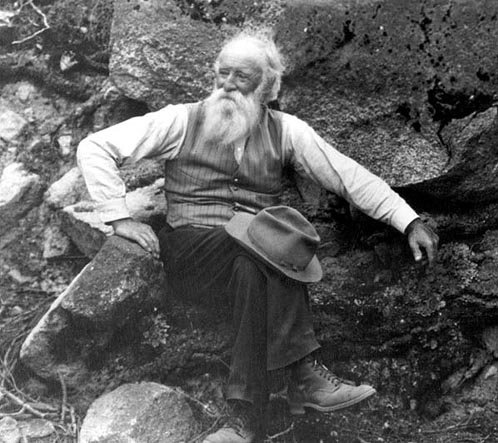
John Burroughs, naturally affirmative


Wise words from a wise man ...

"If I were to name the three most precious resources of life, I should say books, friends, and nature; and the greatest of these, at least the most constant and always at hand, is nature. Nature we always have with us, an inexhaustible storehouse of that which moves the heart, appeals to the mind, and fires the imagination – health to the body, a stimulus to the intellect, a joy to the soul. To the scientist, nature is a storehouse of facts, laws, processes; to the artist she is a storehouse of pictures; to the poet she is a storehouse of images, fancies, a source of inspiration; to the moralist she is a storehouse of precepts and parables; to all, she may be a source of knowledge and joy.

I am bound to praise the simple life, because I have lived it and found it good. When I depart from it, evil results follow. I love a small house, plain clothes, simple living. Many persons know the luxury of a skin bath – a plunge in the pool or the wave unhampered by clothing. That is the simple life – direct and immediate contact with things, life with the false wrappings torn away – the fine house, the fine equipage, the expensive habits, all cut off. How free one feels, how good the elements taste, how close one gets to them, how they fit one’s body and soul! To see the fire that warms you, or better yet, to cut the wood that feeds the fire that warms you; to see the spring where the water bubbles up that slakes your thirst and to dip your pail into it; to see the beams that are the stay of your four walls and the timbers that uphold the roof that shelters you; to be in direct and personal contact with the sources of your material life; to want no extras, no shields; to find the universal elements enough; to find the air and water exhilarating; to be refreshed by a morning walk or an evening saunter; to find a quest of wild berries more satisfying than a gift of tropic fruit; to be thrilled by the stars at night; to be elated over a bird’s nest or a wild flower in spring – these are some of the rewards of the simple life.


For anything worth having one must pay the price; and the price is always work, patience, love, self-sacrifice - no paper currency, no promises to pay, but the gold of real service.

The secret of happiness is something to do.

Nature comes home to one most when he is at home; the stranger and traveler finds her a stranger and traveler also. One's own landscape comes in time to be a sort of outlying part of himself; he has sowed himself broadcast upon it, and it reflects his own moods and feelings; he is sensitive to the verge of the horizon: cut those trees, and he bleeds; mar those hills, and he suffers. How has the farmer planted himself in his fields; builded himself into his stone walls, and evoked the sympathy of the hills by his struggle! This home feeling, this domestication of nature, is important to the observer. This is the birdlime with which he catches the bird; this is the private door that admits him behind the scenes. I go to nature to be soothed and healed, and to have my senses put in order.

One of the hardest lessons we have to learn in this life and one that many persons never learn, is to see the divine, the celestial, the pure, in the common, the near at hand - to see that heaven lies about us here in this world. Nothing relieves and ventilates the mind like a resolution.

The lure of the distant and the difficult is deceptive. The great opportunity is where you are.

The lesson which life repeats and constantly enforces is 'look under foot.' You are always nearer the divine and the true sources of your power than you think.

I still find each day too short for all the thoughts I want to think, all the walks I want to take, all the books I want to read, and all the friends I want to see. The longer I live the more my mind dwells upon the beauty and the wonder of the world.

What is the best thing for a stream? It is to keep moving. If it stops, it stagnates. So the best thing for a man is that which keeps the currents going - the physical, the moral, and the intellectual currents. Hence the secret of happiness is - something to do; some congenial work. Take away the occupation of all men, and what a wretched world it would be! Few persons realize how much of their happiness is dependent upon their work, upon the fact that they are kept busy and not left to feed upon themselves. Happiness comes most to persons who seek her least, and think least about it. It is not an object to be sought; it is a state to be induced. It must follow and not lead. It must overtake you, and not you overtake it. How important is health to happiness, yet the best promoter of health is something to do. Blessed is the man who has some congenial work, some occupation in which he can put his heart, and which affords a complete outlet to all the forces there are in him.

How many thorns of human nature - hard, sharp, lifeless protuberances that tear and wound us, narrow prejudices, bristling conceits that repel and disgust us - are arrested developments, calcified tendencies, buds of promise that should have lifted a branch up into the sunny day with fruit; and flowers to delight the heart of men, but now all grown hard, petrified, for want of culture and a congenial soil and climate. Joy in the universe, and keen curiosity about it all - that has been my religion.

I see on a immense scale, and as clearly as in a demonstration in a laboratory, that good comes out of evil; that the impartiality of the Nature Providence is best; that we are made strong by what we overcome; that man is man because he is as free to do evil as to do good; that life is as free to develop hostile forms as to develop friendly; that power waits upon him who earns it; that disease, wars, the unloosened, devastating elemental forces have each and all played their part in developing and hardening man and giving him the heroic fiber.

It is always easier to believe than to deny. Our minds are naturally affirmative."

Thanks Kelly.

11 December 2009

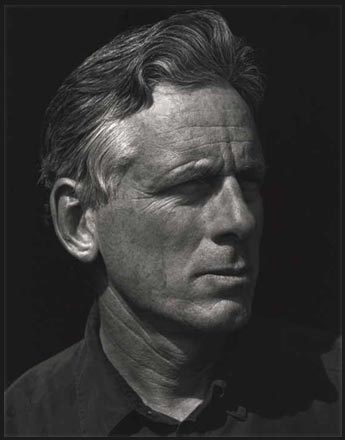
Harrison.


Today is Ursa Major's birthday.

Do yourself a favor ... read his work ... your life will be enriched deeply.

Lift a bottle (skip the glass) to the man.

10 December 2009

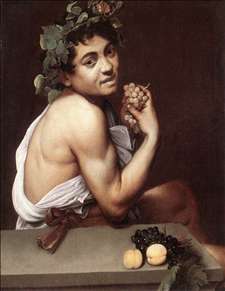
Caravaggio's Bacchus


The Villian Genius


"Michelangelo Merisi left his birth town of Caravaggio in the north of Italy to study as an apprentice in nearby Milan. In 1593 he moved to Rome, impatient to use his talents on the biggest stage possible.

Caravaggio's approach to painting was unconventional. He avoided the standard method of making copies of old sculptures and instead took the more direct approach of painting directly onto canvas without drawing first. He also used people from the street as his models. His dramatic painting was enhanced with intense and theatrical lighting.

Caravaggio's fate was sealed when in 1606 he killed a man in a duel. He fled to Naples where he attempted to paint his way out of trouble, he became a Knight, but was then imprisoned in Malta and then finally he moved to Sicily. He was pardoned for murder in 1610, but he died of a fever attempting to return to Rome."

Read the rest here. Simon Schama's BBC documentary, The Power of Art, is fascinating.

Antoine de Saint-Exupéry


The best navigators aren't always sure where they're going, and then when they get there, they're still not sure. -Frank Bama

I see what the poets see


I've never had so much to lose
I never had anything worth holdin' on to
I never had a home, someone who cares
Yeah, lookin at you, I know I'm there

Yeah, with your barefeet on the dash
And your pretty hair pulled back
Oh girl it don't get better than that
Yeah you beat all I've ever had

My lust for life has been elusive
Elusive at best for me
Yeah, now one time the first time in my life
Yeah, I see what the poets see

Dwell in possibility


Happy Birthday, Emily Dickinson!

Her complete poetry can be found here.

XXXIX

I MEANT to have but modest needs,
Such as content, and heaven;
Within my income these could lie,
And life and I keep even.

But since the last included both, 5
It would suffice my prayer
But just for one to stipulate,
And grace would grant the pair.

And so, upon this wise I prayed,—
Great Spirit, give to me 10
A heaven not so large as yours,
But large enough for me.

A smile suffused Jehovah’s face;
The cherubim withdrew;
Grave saints stole out to look at me, 15
And showed their dimples, too.

I left the place with all my might,—
My prayer away I threw;
The quiet ages picked it up,
And Judgment twinkled, too, 20

That one so honest be extant
As take the tale for true
That “Whatsoever you shall ask,
Itself be given you.”

But I, grown shrewder, scan the skies 25
With a suspicious air,—
As children, swindled for the first,
All swindlers be, infer.

09 December 2009

Beppe Gambetta, On The Road With Mama


A master. When I am sentenced to a deserted island, Beppe's music will go with me.

Fish and write, write and fish ...


... I'll tell you what I think, you write what you wish.

Poetry In The Air


Flip Pallot, what a poet ... with words and a rod.

TARPON.


"In 1973, Guy de la Valdene found himself in Key West, Florida surrounded by people who would later become literary, musical and angling icons. One result was the film “Tarpon,” which has become cult classic. MidCurrent asks de la Valdene about the story behind the movie, the convergent paths that brought so many remarkable people together, and the lifelong bonds that fly fishing for tarpon created."

Read the rest, plus a 2009 interview with GDLV here.

This is incredible ... HARRISON, MCGUANE, BRAUTIGAN!!!

Observe.


“We have reached the time in the life of the planet, and humanity’s demands upon it, when every fisherman will have to be a riverkeeper, a steward of marine shallows, a watchman on the high seas. We are beyond having to put back what we have taken out. We must put back more than we take out. We must make holy war on the enemies of aquatic life as we have against gillnetters, polluters, and drainers of wetlands. Otherwise, as you have already learned, these creatures will continue to disapear at an accelerating rate. We will lose as much as we have lost already and there will be next to nothing, remnant populations, put-and-take, dim bulbs following the tank truck”

“Early on, I decided that fishing would be my way of looking at the world. First it taught me how to look at rivers. Lately it has been teaching me how to look at people, myself included.”

“The Bible tells us to watch and to listen. Something like this suggests what fishing ought to be about: using the ceremony of our sport and passion to arouse greater reverberations within ourselves.”

“Only in the observation of nature can we recover the view of eternity that consoled our forebears”

Shelby Foote, a master storyteller


"I think making mistakes and discovering them for yourself is of great value." -Shelby Foote

If you saw Ken Burns' masterpiece, The Civil War, you experienced the genius of Shelby Foote. A spirited historian of The Civil War, Foote made the documentary great. His three volume narrative, The Civil War, was a work 20 years in the making.

Siegfried Horn Call


Invigorating.

Wind


NOAA predicting gusts up to 55 mph today!

The Wind, Robert Louis Stevenson

I saw you toss the kites on high
And blow the birds about the sky;
And all around I heard you pass,
Like ladies' skirts across the grass

Oh wind, a blowing all day long,
Oh wind, that sings so loud a song!

I saw the different things you did,
But always you yourself you hid.
I felt you push, I heard you call,
I could not see yourself at all

Oh wind, a blowing all day long!
Oh wind, that sings so loud a song!

O you that are so strong and cold,
O blower, are you young or old?
Are you a beast of field and tree,
Or just a stronger child than me?

O wind, a blowing all day long,
O wind, that sings so loud a song!

Trout Fishing, Eunice Lamberton


Give me a rod of the split bamboo,
a rainy day and a fly or two,
a mountain stream where the eddies play,
and mists hang low o'er the winding way,

Give me a haunt by the furling brook,
A hidden spot in a mossy nook,
No sound save hum of the drowsy bee,
or lone bird's tap on the hollow tree.

The world may roll with it's busy throng,
And phantom scenes on it's way along,
It's stocks may rise, or it's stocks may fall,
Ah! What care I for it's baubles all?

I cast my fly o'er the troubled rill,
Luring the beauties by magic skill,
With mind at rest and a heart at ease,
And drink delight at the balmy breeze.

A lusty trout to my glad surprise,
Speckled and bright on the crest arise,
Then splash and plunge in a dazzling whirl,
Hope springs anew as the wavelets curl.

Gracefully swinging from left to right,
Action so gentle- motion so slight,.
Tempting, enticing, on craft intent,
Till yielding tip by the game is bent

Drawing in slowly, then letting go
Under the ripples where mosses grow
Doubting my fortune, lost in a dream,
Blessing the land of forest and stream.


Rochester, N.Y.
December fifteenth, 1873

These lines were written on the spur of the moment at the famous pool midway between Martin's and Bartlett's on the Saranac River- Adirondacks- As Mr. Lamberton "with split bamboo and a fly or two" whipped the water. -A. B. Lamberton

Be aware today.


How do you know but every bird that cuts the airy way, is an immense world of delight, closed by our senses five? -William Blake

A.D. Maddox, Trout Art


I love her work.

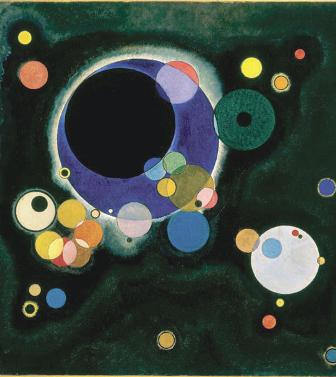
Kandinsky's Circles


"Quirkily enough, the artist’s life followed a circular form: He was born in December 1866, and he died the same month in 1944. This being December, I’d like to honor Kandinsky through his favorite geometry, by celebrating the circle and giving a cheer for the sphere. Life as we know it must be lived in the round, and the natural world abounds in circular objects at every scale we can scan. Let a heavenly body get big enough for gravity to weigh in, and you will have yourself a ball. Stars are giant, usually symmetrical balls of radiant gas, while the definition of both a planet like Jupiter and a plutoid like Pluto is a celestial object orbiting a star that is itself massive enough to be largely round."

Read the rest here.

08 December 2009

Culture.

Fisherman Style from Ian Provo on Vimeo.

van Gogh's Letters: An Exhibition


"Even before he dedicated himself to painting, van Gogh's earliest dispatches, penned in Dutch, reveal the vision and intensity that in time would shape his art. When he turned to painting as a profession, the letters took on an even greater primacy, filled now with sketches (or croquis) that are reproduced here to scale. Usually inscribed in the same ink as his prose, they shared its striking immediacy. And in them, as the artist weds image to text to distill the essence of a painting or theme that preoccupied him, we glimpse both his burning ambition and burgeoning theories about modern art. Some of the letter-sketches have also become invaluable as records of paintings that have not survived."

Read the rest here.

The exhibition's site is here.

The six volumes are ... here.

The Yule Log


The Yule log was dragged to the hearth of the great open fireplace—a common household feature in old England. The log was lit with a scrap of burned log carefully preserved from the previous year, a practice that ensured the continuity of good fortune not only from year to year, but also from generation to generation.

One popular aspect of the Yule log tradition was that no unnecessary work would take place in or around the household as long as the log burned. This season of merriment and reflection was a time for respite from daily labors.

Read the rest here.

Irving's, Old Christmas


This week's installment, The Stage-Coach. Read it here.

Friends


Thanks for showin' me the ropes!

Speaking of The Captain ...


Steve Yzerman was inducted into the NHL Hall Of Fame this fall. Congratulations, Captain!

Perseverance.

Thanks, Mac!

Mac Hangs 'Em Up


After 15 seasons, my all-time favorite NHL player, Darren McCarty, retired yesterday.

I was always impressed with Mac's tenacity, perseverance, and heart. If the Wings had an enforcer, it was Mac ... but he wasn't a thug. He was a loyal protector. He wasn't the fastest skater or the best puck-handler, but he knew his role and did it very well. Playing with other heroes of mine (Yzerman, Chelios, Lidstrom. Holmstrom), he held is own ... as a teammate. He was always the last one on and off the ice during warm up, following his team. Mac always carried the bucket.

I would want to play on his team.
.
If you need more, it's here.