"I am not one who was born in the custody of wisdom. I am one who is fond of olden times and intense in quest of the sacred knowing of the ancients." Gustave Courbet
Showing posts with label inklings. Show all posts

24 January 2025

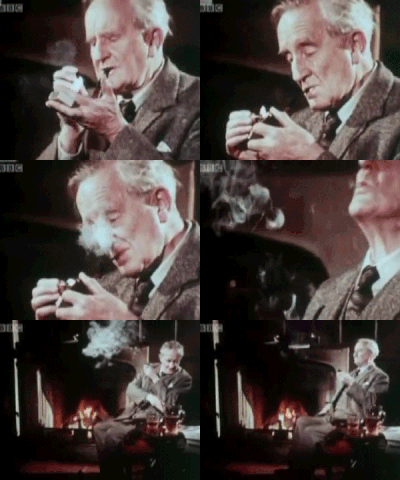
Thinking.

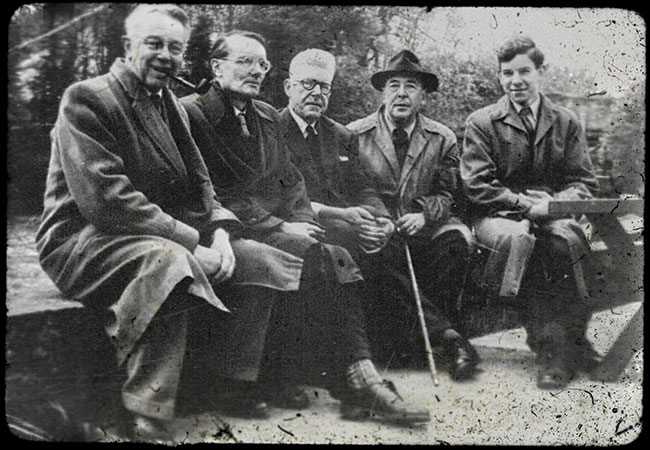
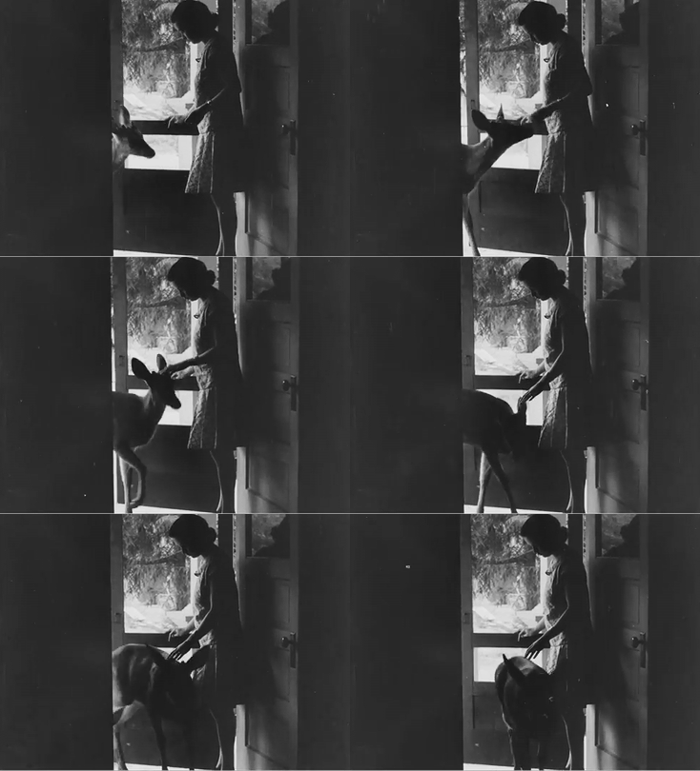
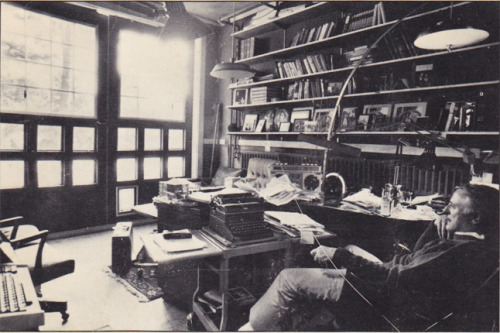
Parkinson, C.S. Lewis, 1951


Lewis responding to a letter from a young fan in 1953 ...
Dear Phyllida,

Thanks for your most interesting cards. How do you get the gold so good? Whenever I tried to use it, however golden it looked on the shell, it always looked only like rough brown on the paper. Is it that you have some trick with the brush that I never learned, or that gold paint is better now than when I was a boy! 

I'm not quite sure what you meant about "silly adventure stories without my point". If they are silly, then having a point won't save them. But if they are good in themselves, and if by a "point" you mean some truth about the real world which which one can take out of the story, I'm not sure that I agree. At least, I think that looking for a "point" in that sense may prevent one sometimes from getting the real effect of the story in itself - like listening too hard for the words in singing which isn't meant to be listened to that way (like an anthem in a chorus). I'm not at all sure about all this, mind you: only thinking as I go along.

We have two American boys in the house at present, aged 8 and 6 1/2. Very nice. They seem to use much longer words than English boys of that age would: not showing off, but just because they don't seem to know the short words. But they haven't as good table manners as English boys of the same sort would. 

yours, 
C.S. Lewis

Can you imagine what it must have been like to attend a meeting of The Inklings? 

18 August 2024

Tribe.


Late mornings on Tuesdays from 1933 (although some reports say it could have been earlier) until 1949, Lewis could be found on the other side of Oxford, usually at the Eagle and Child pub, holding court with the Inklings, the informal literary society, most likely over a pint or three. Lewis was a founder of the small tribe, which included Tolkien and the writers Charles Williams and Owen Barfield.

Works in progress, including drafts from “The Lord of the Rings” and the first Narnia proofs, were presented here.

Members did not shy away from disagreement. Lewis struggled at times with Tolkien’s books for all their “Hobbit talk,” and Tolkien thought Narnia was a haphazard attempt at mythology, regretting that Narnia and Lewis’s work “should remain outside the range of my sympathy as much of my work was outside his,” Tolkien wrote in a 1964 letter.

16 March 2023

Incalculable.

Diana Pavlac Glyer on the dynamo of The Inklings ...

The group served its purpose: Tolkien won the curriculum debate, and the meetings came to an end. But the two new friends decided to meet each week, first sharing lunch and conversation and then exchanging drafts of the poems and stories they were writing. 

This simple plan had a profound impact. Both men thrived as they offered encouragement, criticism, and advice. These critique sessions were so fruitful that they invited others to join them, including Owen Barfield, David Cecil, Hugo Dyson, and Charles Williams. Lewis’s brother, Warren Lewis, became a regular member, as did Tolkien’s son Christopher. They called themselves the Inklings. All in all 19 men joined this writers’ circle, and they met weekly for 17 years. Members brought rough drafts of works in progress. They read them aloud, heard honest critique, and revised their work in response.

These writers had different outlooks, competing interests, contrasting backgrounds, and varied Christian traditions—but found common ground in their common labor. As Lewis once explained: “Friends are not primarily absorbed in each other. It is when we are doing things together that friendship springs up—painting, sailing ships, praying, philosophizing, fighting shoulder to shoulder. Friends look in the same direction.” A stran-ger becomes a friend, said Lewis, when we “fight beside him, read with him, argue with him, pray with him.”

The work of the Inklings changed the landscape of literature; the experience transformed their lives. Warren Lewis called the Inklings “a famous and heroic gathering” and said their meetings were characterized by “an outpouring of wit, nonsense, whimsy, dialectical swordplay, and pungent judgment such as I have rarely heard equaled.” Tolkien expressed his appreciation with simple enthusiasm: “That was true joy!” And Lewis mused, “Is any pleasure on earth as great as a circle of Christian friends by a good fire?” He added, “What I owe to them all is incalculable.”

Paula Marantz Cohen says faculty members no longer have time to indulge in the free play of ideas ...
If students are less equipped to converse with one another than they once were, faculty members also seem to have become deficient in this area. The past few years have seen an increasing dearth of collegial talk.

Conversation used to be a great draw for those contemplating an academic career. One could engage with a wide variety of people who loved ideas and had devoted their lives to them in an environment conducive to intellectual exchange. There was time for long lunches and summers off to do research and share new knowledge with interested peers.

Forty years ago, when I first arrived at my university, the faculty club offered three meals a day. There was also a cozy bar, tucked in the corner of the same floor, that opened at 4 p.m. and that a variety of faculty and staff, including the university president, frequented on a regular basis. One friend recalled how he and the president, after a few drinks, cooked up the idea of making a documentary film about the introduction of microcomputers to the university. (This was the early ’80s and the film was made, complete with a cameo from Steve Jobs, whose Macintosh computers the university had made available to all students.) Faculty members then looked forward to conversation; new courses, research projects, and partnerships were hatched over meals and over drinks. 
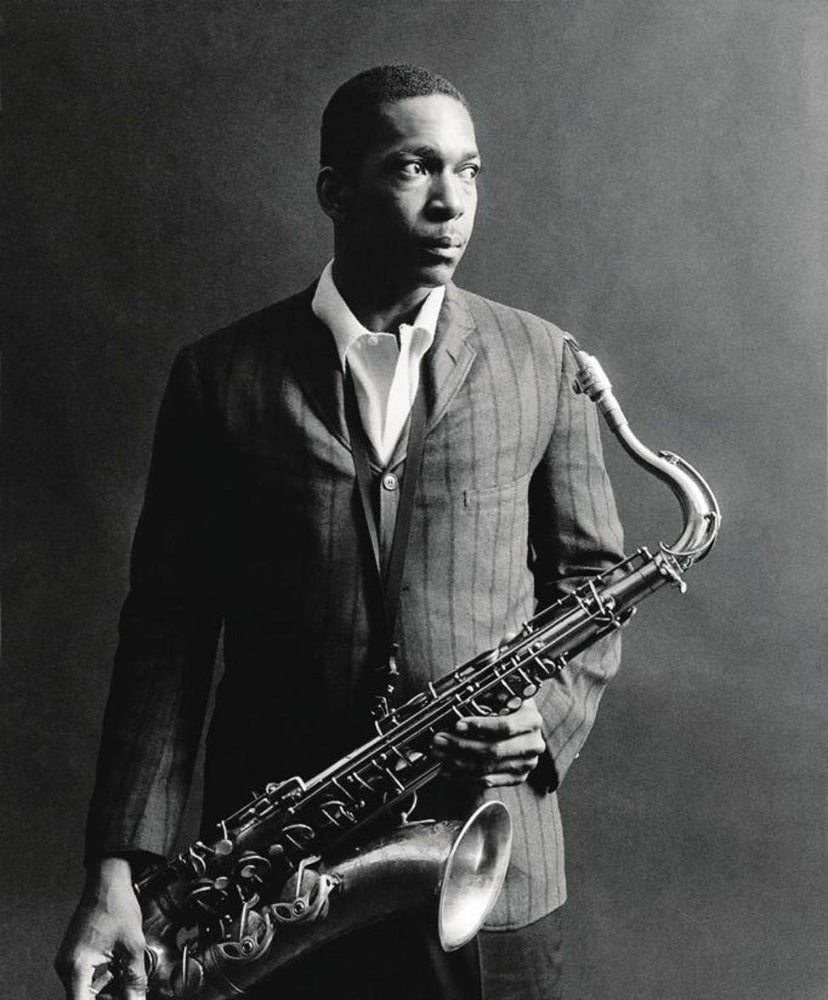
By the early 1990s, however, the bar had closed. A decade later, the faculty club had ceased to serve breakfast and dinner. Lunch was offered but was woefully attended. People complained that the food was bad, but the real problem was that faculty members weren’t motivated to meet each other in the old way. They preferred to eat prepared salads at their desks, to catch up on grading or grant-proposal editing. They didn’t want to take time away from busy schedules to trek a block or two to the club. Only one table was regularly occupied — by a group of septuagenarian engineers. These men, the product of an earlier era than my own, were lively conversationalists. I would occasionally join them, and they were always welcoming. Their impresario was an electrical engineer who would expound, Dr. Johnson-like, on everything from opera to politics, the rest of the group chiming in at intervals. It was the last remaining vestige of the collegial university of yesteryear. 

"Is any pleasure on earth as great as a circle of Christian friends by a good fire?"

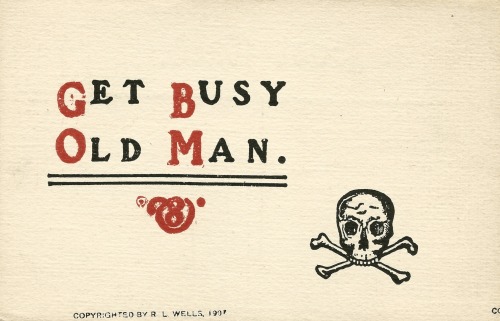
Abolish the cult of "busy". 

11 December 2022

Realise.


... I wonder whether people who ask God to interfere openly and directly in our world quite realise what it will be like when He does.