"I am not one who was born in the custody of wisdom. I am one who is fond of olden times and intense in quest of the sacred knowing of the ancients." Gustave Courbet
Showing posts with label Montessori. Show all posts

20 July 2023

Working.


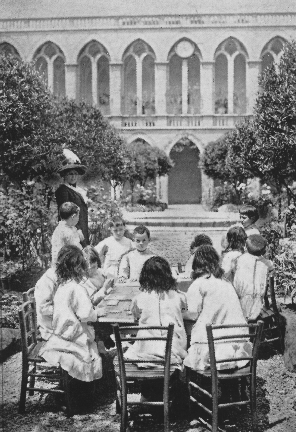
The child who has never learned to work by himself, to set goals for his own acts, or to be the master of his own force of will is recognizable in the adult who lets others guide his will and feels a constant need for approval of others.  The greatest sign of success for a teacher is to be able to say, "The children are now working as if I did not exist." 

Maria Montessori

31 August 2022

Happy Birthday, Montessori


Maria Montessori was born on this day in 1870.

We wish the old things because we cannot understand the new, and we are always seeking after that gorgeousness which belongs to things already on the decline, without recognising in the humble simplicity of new ideas the germ which shall develop in the future.

Maria Montessori, from The Montessori Method

26 February 2022

Independently.


The only true freedom for an individual is to have the opportunity to act independently.  There is no such thing as an individual until a person can act by himself.

Maria Montessori

Understanding.


Discipline is born when the child concentrates his attention on some object that attracts him and which provides him not only with a useful exercise but with a control of error. Thanks to these exercises the child becomes calm, radiantly happy, busy, forgetful of himself and, in consequence, indifferent to prizes or material rewards.

Maria Montessori
Children have real understanding only of that which they invent themselves, and each time that we try to teach them something too quickly, we keep them from reinventing it themselves.

Jean Piaget

Children learn how to make good decisions by making decisions, not by following directions.

Alfie Kohn

18 June 2020

Education.

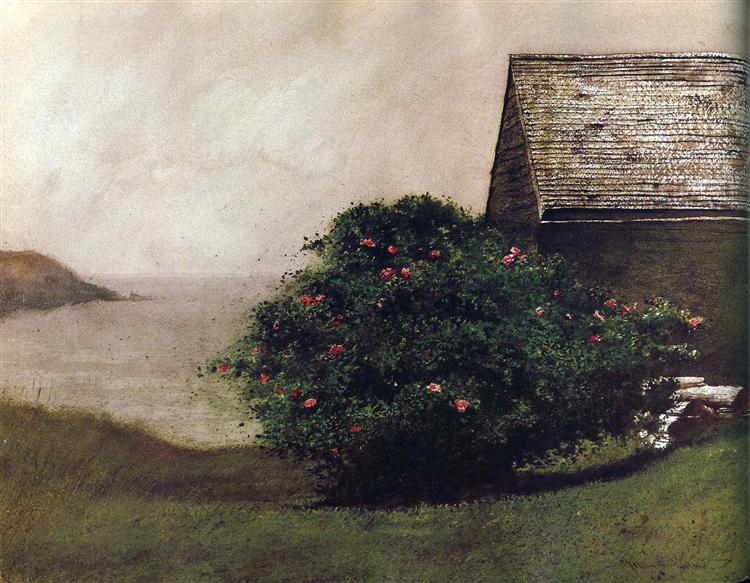
Wyeth, Jamie, Island Roses, 2004


We cannot create observers by saying 'observe', but by giving them the power and the means for this observation and these means are procured through education of the senses. 

Maria Montessori

Thank you, Casey.

05 February 2019

Call.


Those who teach little children too often have the idea that they are educating babies and seek to place themselves on the child's level by approaching him with games, and often with foolish stories. Instead of all this, we must know how to call to the man which lies dormant within the soul of the child.

Maria Montessori

10 January 2019

Unfolding.


Discipline must come through liberty. Here is a great principle which is difficult for the followers of common-school methods to understand. How shall one obtain discipline in a class of free children? Certainly in our system, we have a concept of discipline very different from that commonly accepted. If discipline is founded upon liberty, the discipline itself must necessarily be active. We do not consider an individual disciplined only when he has been rendered as artificially silent as a mute and as immovable as a paralytic. He is an individual annihilated, not disciplined.

We call an individual disciplined when he is master of himself, and can, therefore, regulate his own conduct when it shall be necessary to follow some rule of life. Such a concept of active discipline is not easy to comprehend or to apply. But certainly it contains a great educational principle, very different from the old-time absolute and undiscussed coercion to immobility.

A special technique is necessary to the teacher who is to lead the child along such a path of discipline, if she is to make it possible for him to continue in this way all his life, advancing indefinitely toward perfect self-mastery. Since the child now learns to move rather than to sit still, he prepares himself not for the school, but for life; for he becomes able, through habit and through practice, to perform easily and correctly the simple acts of social or community life. The discipline to which the child habituates himself here is, in its character, not limited to the school environment but extends to society.

The liberty of the child should have as its limit the collective interest; as its form, what we universally consider good breeding. We must, therefore, check in the child whatever offends or annoys others, or whatever tends toward rough or ill-bred acts. But all the rest,–every manifestation having a useful scope,–whatever it be, and under whatever form it expresses itself, must not only be permitted, but must be observed by the teacher. Here lies the essential point; from her scientific preparation, the teacher must bring not only the capacity, but the desire, to observe natural phenomena. In our system, she must become a passive, much more than an active, influence, and her passivity shall be composed of anxious scientific curiosity, and of absolute respect for the phenomenon which she wishes to observe. The teacher must understand and feel her position of observer: the activity must lie in the phenomenon.

Such principles assuredly have a place in schools for little children who are exhibiting the first psychic manifestations of their lives. We cannot know the consequences of suffocating a spontaneous action at the time when the child is just beginning to be active: perhaps we suffocate life itself. Humanity shows itself in all its intellectual splendour during this tender age as the sun shows itself at the dawn, and the flower in the first unfolding of the petals; and we must respect religiously, reverently, these first indications of individuality. If any educational act is to be efficacious, it will be only that which tends to help toward the complete unfolding of this life. To be thus helpful it is necessary rigorously to avoid the arrest of spontaneous movements and the imposition of arbitrary tasks. It is of course understood, that here we do not speak of useless or dangerous acts, for these must be suppressed, destroyed.

Maria Montessori

CONNECT

Thank you, Casey.

17 March 2018

Experiences.


Education is a natural process carried out by the human individual, and is acquired not by listening to words, but by experiences in the environment.

Maria Montessori

06 October 2016

Senses.


We cannot create observers by saying "observe," but by giving them the power and the means for this observation and these means are procured through education of the senses.

Maria Montessori