"I am not one who was born in the custody of wisdom. I am one who is fond of olden times and intense in quest of the sacred knowing of the ancients." Gustave Courbet

30 March 2011

Seen.

Chatham, Mt. Tamalpais In The Fog, 2001


Piute Creek

One granite ridge
A tree, would be enough
Or even a rock, a small creek,
A bark shred in a pool.
Hill beyond hill, folded and twisted
Tough trees crammed
In thin stone fractures
A huge moon on it all, is too much.
The mind wanders. A million
Summers, night air still and the rocks
Warm. Sky over endless mountains.
All the junk that goes with being human
Drops away, hard rock wavers
Even the heavy present seems to fail
This bubble of a heart.
Words and books
Like a small creek off a high ledge
Gone in the dry air.
A clear, attentive mind
Has no meaning but that
Which sees is truly seen.
No one loves rock, yet we are here.
Night chills. A flick
In the moonlight
Slips into Juniper shadow:
Back there unseen
Cold proud eyes
Of Cougar or Coyote
Watch me rise and go.


- Gary Snyder

Moving.


Nordstrom had taken to dancing alone. He considered his sanity unblemished and his nightly dances an alternative to the torpor of calisthenics. He had chided himself of late for so perfectly living out all of his mediocre assumptions about life. The dancing was something new and owned an almost metaphysical edginess to it. At forty-three he was in fine but not spectacular shape, though of late he felt a certain softness, a blurring in the perimeters of his body. After cleaning up the dishes from a late dinner, he would dim the lights in the den and put an hour’s worth of music on the stereo though recently he often increased it to two hours: the selection was eclectic depending on his mood and might, on any evening, include music as varied as Merle Haggard, Joplin’s “Pearl”, The Beach Boys, Stravinsky’s The Rite of Spring, Otis Redding, and the Grateful Dead. The point was to keep moving, to work up a dense sweat and to feel the reluctant body become fluid and graceful. The fact of the matter is that Nordstrom wasn’t a very good dancer, but when you’re dancing alone, who cares?

Beginning with his childhood in Michigan he had been an excellent swimmer, a fair flycaster and bird hunter, and a fair basketball player, a fair linebacker, a fair golfer, and a fair tennis player. Only the swimming haunted his dreams, all other sports had been discarded. Perhaps swimming was dancing in the water, he thought. To swim under lily pads seeing their green slender stalks wavering as you passed, to swim under upraised logs, past schools of sunfish and bluegills, to swim through reed beds past wriggling water snakes and miniature turtles, to swim in small lakes, big lakes, Lake Michigan, to swim in small farm ponds, creeks, giant rivers where one was easily swept along easily by the current …


From Jim Harrison's novella, The Man Who Gave Up His Name

Boogie on the picnic table ...

29 March 2011

Molson.

My buddy, Molson, passed away a year ago today.


My favorite moment in life is when I give my dog a fresh bone.
- Jim Harrison

I miss you, buddy. I hope Sam has shown you where to find all the balls and carrots.

28 March 2011

Piazzoni.

Piazzoni, The Forest, 1945


The Monterey Museum of Art, La Mirada, will feature Russell Chatham's grandfather, Gottardo Piazzoni, in an exhibition entitled "From Dawn To Dusk."

More here.

Adams, Gottardo Piazzoni in his Studio, San Francisco, 1932


Piazzoni has frequently been labeled a mystic. He perceived nature and the landscape as the embodiment of God, and in his paintings he sought a communion with both, yet he was not religious in the doctrinaire sense. His family was Roman Catholic and he had attended church regularly when a boy in Switzerland, but later in life went to church only on Easter Sunday at the Mission San Carlos Borromeo del Rio Carmelo in Carmel. Piazzoni's religion was not to be found indoors, but in nature. "He appreciated everything about nature," his daughter recalled. For Piazzoni, nature, like his lapsed Catholicism, could be the source of powerful ritual. It is still something of a family legend that he knew and celebrated the exact moment of the full moon.

He knew exactly where the moon would be coming up, and we'd sit there and wait, and wait for the moon. And pretty soon you'd see the light. There was nothing to disturb this moon and the light would start coming up behind the hill...the more we could see the moon the more we'd yell and scream till the whole moon would show, and then we'd clap, and yell, and scream--hooray, hooray!


Boost your knowledge a little more here.

Billy Joe Shaver, "Live Forever"

Soothing.

Chatham, Spring Pond, 1997


Call it artistic ADD – Chatham had his hand in so many things that by the age of forty he felt his painting was suffering. He pulled back on the writing and faced his family’s legacy head on. During this period he polished his signature style -the deliberate brush strokes of muted color so superbly blended together as to create a sublime landscape even Mother Nature could celebrate. Many have called his work subtle or subdued, but he bristles at the description. “I’ve always thought of myself as a colorist,” he explains. “I’ve heard the comment that my work is subdued and I think it’s foolish. If you go back in time you find there are no great paintings in history with color. Everything is a matter of gray. It’s the relationship of one color to another that matters.” You have to look no further than Chatham’s studio to know he takes that philosophy to heart. He starts with primary colors, mixes his own hybrid hues, and then meticulously applies the paint one horizontal line at a time. Each inch he brings in just a dab more color – orange or red -depending on placement. His touch with color is so delicate that the changes are almost imperceptible. “I like the 30 feet, three feet, three inch rule. A painting should be interesting at all three distances,” he says. No question, Chatham’s paintings are indeed compelling at all three, but it’s up close and far away that they pack the most punch. At three inches, you can see every deliberate brush stroke and its relationship to the next. At thirty feet you can appreciate the whole – invariably a soothing sublime and always emotional experience.

Read the rest here.

Clearer.

Wyeth, Spring Beauty, 1943


This is important for the development of my way of seeing reality. Here is a time I used pencil and Higgins' in, too, to make the silver gray of the bark, for the texture of that bark was fascinating to me. Now this is far from the colorful "impressionism" of my earlier works. Here I'm slowly changing. I'm seeing things in a clearer way.
- Andrew Wyeth

Van Morrison, "Orangefield"

On a gold autumn day
You came my way in Orangefield
Saw you standing by the riverside in Orangefield
How I loved you then in Orangefield
Like I love you now in Orangefield

And the sun shone on your hair
When I saw you there in Orangefield
Saw you standing by the riverside in Orangefield
How I loved you then in Orangefield
Like I love you now in Orangefield

And the sun shone so bright
And it lit up all our days
You were the apple of my eye
Baby it's true

On a golden autumn day
All my dreams came true in Orangefield
On a throne of Ulster day
You came my way in Orangefield
How I loved you then in Orangefield
Like I love you now in Orangefield

And the sun shone so bright
And it lit up all our lives
And the apple of my eye
Baby was you

On a throne of Ulster day
You came my way in Orangefield
Saw you standing by the riverside in Orangefield
How I loved you then in Orangefield
Like I love you now in Orangefield
How I loved you then in Orangefield


On.


Should the king in exile pretend he is happy there?

Should he not seek his own country?

His miseries are his ally; they urge him on. Let them grow, if need be. But do not forsake the secret of life; do not despise those kingly desires. We abandon the most important journey of our lives when we abandon desire. We leave our hearts by the side of the road and head off in the direction of fitting in, getting by, being productive, what have you. Whatever we might gain – money, position, the approval of others, or just absence of the discontent self – it’s not worth it.

— John Eldredge

Van Morrison, "I'll Take Care Of You"

26 March 2011

Quack.

Chardin, A Green-Neck Duck with a Seville Orange, 1730


Jethro Tull, One White Duck


The best thing to do (to who?) to duck is to produce soup ... Can you do this one?

Wander.

The Acropolis.

Invaluable.

Only once in your life, I truly believe, you find someone who can completely turn your world around.

You tell them things that you’ve never shared with another soul and they absorb everything you say and actually want to hear more.

You share hopes for the future, dreams that will never come true, goals that were never achieved and the many disappointments life has thrown at you.

When something wonderful happens, you can’t wait to tell them about it, knowing they will share in your excitement.

They are not embarrassed to cry with you when you are hurting or laugh with you when you make a fool of yourself.

Never do they hurt your feelings or make you feel like you are not good enough, but rather they build you up and show you the things about yourself that make you special and even beautiful.

There is never any pressure, jealousy or competition but only a quiet calmness when they are around.

You can be yourself and not worry about what they will think of you because they love you for who you are.

The things that seem insignificant to most people such as a note, song or walk become invaluable treasures kept safe in your heart to cherish forever.

Memories of your childhood come back and are so clear and vivid it’s like being young again.

Colours seem brighter and more brilliant.

Laughter seems part of daily life where before it was infrequent or didn’t exist at all.

A phone call or two during the day helps to get you through a long day’s work and always brings a smile to your face.

In their presence, there’s no need for continuous conversation, but you find you’re quite content in just having them nearby.

Things that never interested you before become fascinating because you know they are important to this person who is so special to you.

You think of this person on every occasion and in everything you do.

Simple things bring them to mind like a pale blue sky, gentle wind or even a storm cloud on the horizon.

You open your heart knowing that there’s a chance it may be broken one day and in opening your heart, you experience a love and joy that you never dreamed possible.

You find that being vulnerable is the only way to allow your heart to feel true pleasure that’s so real it scares you.

You find strength in knowing you have a true friend and possibly a soul mate who will remain loyal to the end.

Life seems completely different, exciting and worthwhile.

Your only hope and security is in knowing that they are a part of your life.


- Robert Nesta Marley


Bob & The Wailers, Wake Up & Live


Esperanza.

Classical.

Terry, Thenford Summerhouse, 1982


A popular misconception is that classical architecture is pastiche; it is often said that it is a simple matter of cribbing from the pattern books. I notice that many art historians are full of this and – like all people who are protected from reality – they will never learn until they start to practise. I believe there is something in the Gospels: 'If you know these things, happy are ye if ye do them'. It is only in the doing that we learn.
- Quinlan Terry

Read the rest here.

More here.

Karl Jenkins, Palladio, an homage to Il Maestro.

Autonomy.

No bird soars too high, if he soars with his own wings.
— William Blake

The.


Andrew Peterson, The Magic Hour

Come climb the hill with me
Come and be still with me
Come watch the sun sink away
If you will with me

Come watch the garden grow
Down by the gravel road
Come warm your hands in the gold
Of the afterglow

Into the peace of these wild things,
Into the wild of this grace,
Into the grace of this blessing,
Speak in the peace of this place

Come walk the cedar stand
Over the broken dam
Sit on the bench at the bend in the trail again

Look how the children laugh
Out in the tumble grass
Bright as a fire and as fine as a photograph

Here at the magic hour
Time and eternity
Mingle a moment in chorus
Here at the magic hour
Bright is the mystery
Plain is the beauty before us
Could this beauty be for us?

What is this voice that sings
Holy and hovering
Over this hill in the still of the evening?
(Son of God, speak)


25 March 2011

Order.


Nature goes her own way, and all that to us seems an exception is really according to order.
- Goethe

Revealing.

Sloane, Hoxie House at Sandwich, Massachusetts, 1971


The antique things and wooden oddities that give me such pleasure do open glorious doors to the past; yet, if I could only meet and speak with the men who made them, an important hunger would be satisfied. The living difference or lack of difference between us and our ancestors is a revealing thing; this, and not the change in our attic material, is the proof of progress. It is important to remember, when comparing the past with the present, not to allow modern wonders to awe one into believing that all changes are synonymous with progress.
- Eric Sloane

Read the rest here.

More here.

Jack Ingram doing Guy Clark poetry ... Stuff That Works

24 March 2011

Eagles, "How Long"

Then ...


... and now ...


Darn the wheel of the world! Why must it continually turn over? Where is the reverse gear?
- Jack London

Need.


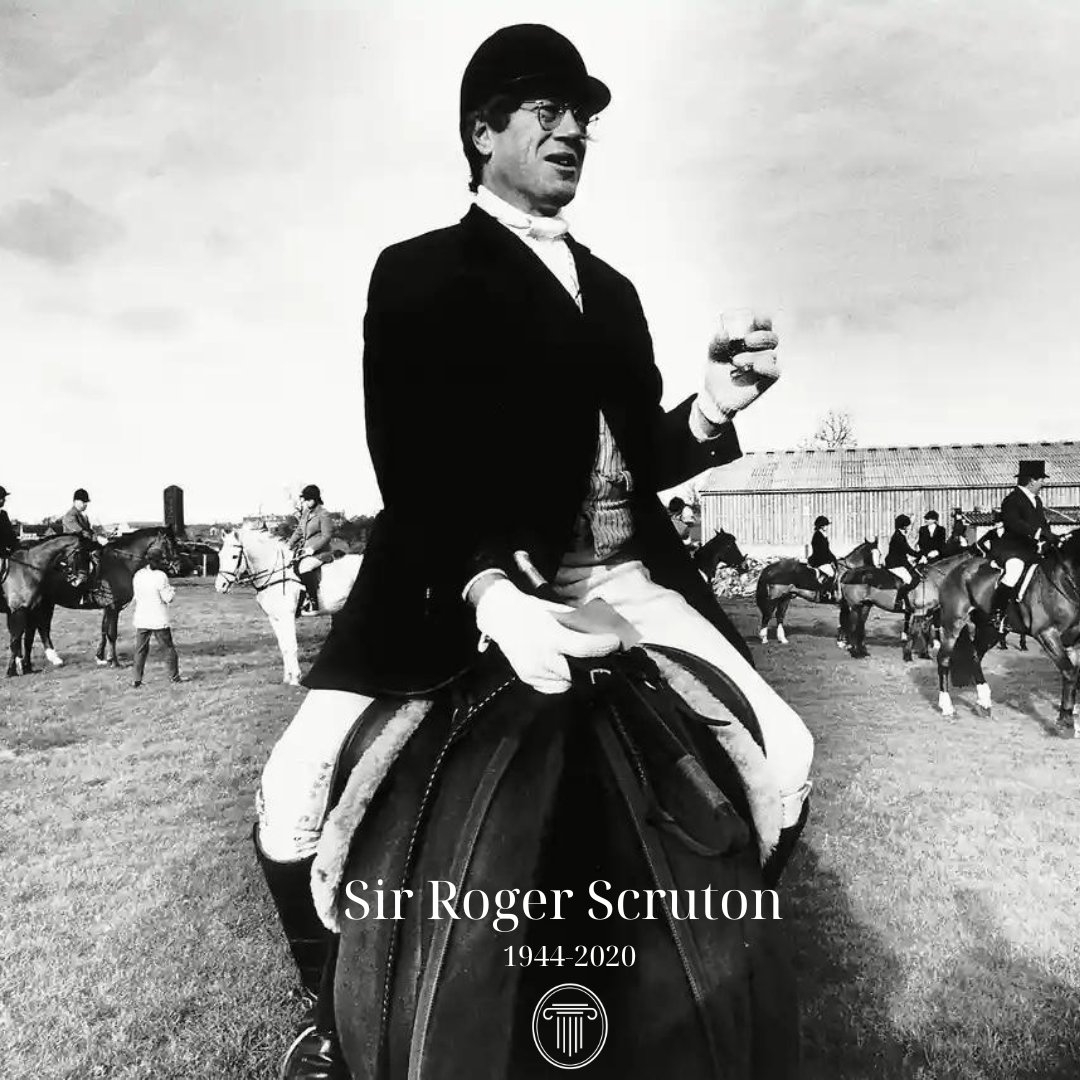
...beauty matters ... it is not just a subjective thing, but a universal need of human beings. If we ignore this need we find ourselves in a spiritual desert.
- Roger Scruton

I've posted Scruton's BBC series, Why Beauty Matters, in the past, but it's worth another look.

Noticed.

Bernini, Ponte Sant'Angelo Angel, 1670


Beauty can be consoling, disturbing, sacred, profane; it can be exhilarating, appealing, inspiring, chilling. It can affect us in an unlimited variety of ways. Yet it is never viewed with indifference: beauty demands to be noticed; it speaks to us directly like the voice of an intimate friend. If there are people who are indifferent to beauty, then it is surely because they do not perceive it.
- Roger Scruton

23 March 2011

Metanoia.


I discovered later, and I’m still discovering right up to this moment, that it is only by living completely in this world that one learns to have faith. One must completely abandon any attempt to make something of oneself, whether it be a saint, or a converted sinner, or a churchman, a righteous man or an unrighteous one, a sick man or a healthy one. By this worldliness I mean living unreservedly in life’s duties, problems, successes and failures, experiences and perplexities. In so doing we throw ourselves completely into the arms of God, taking seriously nor our own sufferings, but those of God in the world – watching with Christ in Gethsemane. That, I think, is faith; that is metanoia; and that is how one becomes a man and a Christian. How can success make us arrogant, or failure lead us astray, when we share in God’s suffering through a life of this kind?
- Dietrich Bonhoeffer

Henryk Górecki, Symphony No.3, Lento e Largo. Tranquillissimo

21 March 2011

Happy Birthday, Bach.

Bela Fleck, Praeludium to the Harp Partita, BWV 1006A

Idleness.


... The assumption of a deep and creative bond with nature and the elevation of the uniquely individual over the mechanized and standardized, made it hospitable to the deeper ethos of idleness. Which is to say: to the rhythms and expressions of life unfettered. Witness the poetry in England of Wordsworth, William Blake, Samuel Taylor Coleridge, Percy Bysshe Shelley, and John Keats, or that of Friedrich Hölderlin and Novalis in Germany. Is there a purer, more lyrically nuanced expression of this languor of being than Keats’ “Ode to Autumn,” though here idleness has shifted from a state of possibility to one of almost dazed fulfillment? The poet invokes the season personified:

Who hath not seen thee oft amidst thy store?
Sometimes whoever seeks abroad may find
Thee sitting careless on a granary floor,
Thy hair soft-lifted by the winnowing wind ...


There is a long-standing connection, a harmony, between literary expressions of idleness and the invocation of the gods, and the lesser rural deities, such as populate the Eclogues. Milton’s “Lycidas” (1637), a pastoral elegy, draws directly on the Virgilian model. The poet’s lament for his deceased friend reimagines a former happy rural leisure—the shepherd in his idleness—complete with “oaten flute” and “rough satyrs” dancing, before the gods see fit to steal it away. We find a similar conflation of the bosky world of the pagan gods and the more leisurely disposition of impulses and affections in Shakespearean comedies, such as A Midsummer Night’s Dream and As You Like It, where customary strivings are overtaken by an almost antic lightness of being.

Read the rest here.

Eagles, Learn To Be Still

Happy Birthday, Dad.

In normal life we hardly realize how much more we receive than we give, and life cannot be rich without such gratitude. It is so easy to overestimate the importance of our own achievements compared with what we owe to the help of others.
— Dietrich Bonhoeffer

Today is my Dad's birthday.


It's difficult to think of a way in which my Dad didn't influence me.


One of the most important lessons my Dad taught me was how to be a loving and compassionate father.


Happy birthday, Pop ... I love you.

19 March 2011

This.


Even in your hobbies, has there not always been some secret attraction which the others are curiously ignorant of- something not to be identified with, but always on the verge of breaking through; the smell of cut wood in the workshop or the clap-clap of water against the boat's side? Are not all lifelong friendships born at the moment when at last you meet another human being who has some inkling (but faint and uncertain even in the best) of that something which you were born desiring, and which, beneath the flux of other desires and in all the momentary silences between the louder passions, night and day, year by year, from childhood to old age, you are looking for, watching for, listening for? You have never had it. All the things that have ever deeply possessed your soul have been but hints of it- tantalizing glimpses, promises never quite fulfilled, echoes that died away just as they caught your ear. But if it should really become manifest- if there ever came an echo that did not die away but swelled into the sound itself- you would know it.

Beyond all possibility of doubt you would say, 'Here at last is the thing I was made for.' We cannot tell each other about it. It is the secret signature of each soul, the incommunicable and unappeasable want, the thing we desired before we met our wives or made our friends or chose our work, and which we shall still desire on our deathbeds, when the mind no longer knows wife or friend or work. While we are, this is. If we lose this, we lose all.

- C.S. Lewis

John Williams and Juliam Bream perform Debussy's Clair de Lune ...

Longing.


The sweetest thing in all my life has been the longing — to reach the mountain, to find the place where all the beauty came from — my country, the place where I ought to have been born.
- C.S.Lewis

Frank Sinatra, Moonlight Serenade

Alan Jackson, "Good Time"

A new favorite I sing with Drew & Zuzu.

Pancake flippin' music ...

Wander.

The Moon.

18 March 2011

Big.


The monthly full moon always looks like a big disk, but because its orbit is egg-shaped, there are times when the moon is at perigee—its shortest distance from Earth in the roughly monthlong lunar cycle—or at apogee, its farthest distance from Earth.

Likewise, because the size of the moon's orbit varies slightly, each perigee is not always the same distance away from Earth. Friday's supermoon will be just 221,566 miles (356,577 kilometers) away from Earth. The last time the full moon approached so close to Earth was in 1993, according to NASA.


Read the rest here.

More from Earth & Sky here.

17 March 2011

Light.

Lighting architect Rogier van der Heide offers a beautiful new way to look at the world -- by paying attention to light (and to darkness). Examples from classic buildings illustrate a deeply thought-out vision of the play of light around us.

Dancing.

The same stream of life that runs through my veins night and day
runs through the world and dances in rhythmic measures.


It is the same life that shoots in joy through the dust of the earth
in numberless blades of grass
and breaks into tumultuous waves of leaves and flowers
.


It is the same life that is rocked in the ocean-cradle of birth
and of death, in ebb and in flow.


I feel my limbs are made glorious by the touch of this world of life.
And my pride is from the life-throb of ages dancing in my blood this moment.

- Rabindranath Tagore

16 March 2011

Atmosphere.

Vermeer, Woman Holding a Balance, 1664


The special appeal of Vermeer’s paintings is not to be found in the seemingly everyday scenes frequently depicted, but much more in the atmosphere that these pictures exude. Seldom, however, is the tranquility so often conjured up in the works of the Master of Delft so manifestly transposed through the motif as in this work, which focuses on the moment when the pretty young woman pauses, concentrating fully on adjusting the balance. What is actually happening is less to be found in a visible deed but rather in the figure itself.

Read the rest here.

More from The National Gallery of Art.

Head in the clouds.

Over Alexandria ...


Shine.

We hear nothing so clearly as what comes out of silence.
- David James Duncan


The River Why author, David James Duncan, interviewed ...

I now hold that every single person is first in importance, and no one is second. Yes, some are saints, some are blackguards, brigands and SOBs, and most of us are some of both. And yes, some people, when I see them coming, make me want to run away. But there is a soul enlivening every saint and sinner. And this soul, I sense more and more strongly, is a glory in its own right–a godgiven shard of invincible perfection. The entry of this godshard into a human body is a wonder to me. Watching the births of my children made that clear forever. And I hold that this holy shard goes on shining in us no matter how many times or how deeply we bury its brilliance under untruths and cruelties and low desires and addictions and delusions. I hold that, for inconceivable reasons, it is none other than the Lord of Love Who invites all of us to live and breathe here, and now and then allows our beautiful souls to shine.

Read the rest here.

Don't miss this artistry from Duncan.

Respond.


[Ramachandran] seeks a science of art. Enunciating nine “artistic universals,” he propounds what he allows is a “reductionist” view of art, attempting to provide brain-based laws of aesthetic response. Peacocks, bees, and bowerbirds possess rudimentary aesthetic responses, he suggests, and we are not so different. Thus we respond well to “grouping” and “peak shift”: we like similarly colored things to go together, and we are entranced by certain kinds of exaggeration of ordinary reality (as with caricatures) or other unrealistic images in art (like the Venus of Willendorf, as cited by Nigel Spivey in How Art Made the World). These biases result from our evolutionary ancestry as arboreal survivors—seeing lions through leaves and so on. Our taste for abstract art is compared to the propensity of gulls to be attracted to anything with a big red dot on it, since mother gulls have such a dot on their beak: “I suggest this is exactly what human art connoisseurs are doing when they look at or purchase abstract works of art; they are behaving exactly like the gull chicks.”

Read the rest here.

Transfixed.

Caravaggio, Bacchus, 1595


What begins in the work of Caravaggio is, quite simply, modern painting.

Our entire sense of Caravaggio as a modern artist is, according to historians, a fiction. We see what we want to see. It's not even true that Caravaggio was some kind of despised, marginal figure in his lifetime. On the contrary, he was the most famous artist in Rome, the founder of a new kind of sharply illuminated naturalism that influenced every one of Europe's great artists in the 17th century. Caravaggio inspired the early genre paintings of Velazquez in Spain, and the lighting effects of Dutch Golden Age painters. He was recognised as the genius of his age even when he had to flee Rome to escape a murder charge. It was after his death that the critical backlash began; his art was condemned as wild, uncontrolled, gauchely disobedient to the rules of classicism. By the 18th century his influence was downplayed and his low, realist painting was disparaged as an insignificant chapter in the history of art.

Caravaggio looks like our contemporary because his scenes are so mesmerically poised in time, dramatising moments of choice and decision in which we ourselves are implicated. Will you accept the boy's offer of fruit? Will you just stand there watching St Peter being crucified upside down, or will you do something about it? These scenes transfix us as they transfixed their original viewers. And we will always walk away from the Victorious Cupid embarrassed and confused, a little relieved to be back among the nativity scenes and landscapes by other Old Masters, which don't have us blushing and wondering where to put our eyes.


Read the rest here.

More high-resolution exploration here.

Happy Birthday, Scamp.

One of my all-time favorites, Jerry Jeff Walker, was born on this date in 1942. Jackie Jack's catalog will go with me when I'm inevitably banished to that ol' deserted island ...

Ol' boy can write ...

Sometimes I just wake up hummin'
Feelin' like this world is right
Want to jump right up and take a walk outside
And take in the morning light
Feel the music running through me
Makes me want to dance
Clap my hands and dance

Sometimes it just takes my lady
To smile and make this day complete
When she's touching me
I feel free and easy to be me
Lucky to be alive
Feelin' alright
Take a walk outside, feeling alright

People they tell me now,
I'm living too fast
Slow down now Jackie boy
Let some of life pass
I don't know no other way
Got to live it day to day
If I die before my time
When I leave I'm leaving nothing behind
No,no, I'm tasting every single grape on the vine

I got a feeling
Something that I can't explain
It's like dancing naked
In that high Hill Country Rain

I ain't worried 'bout tomorrow
I'll get by best I can
Lovin' is my will to live
It makes me laugh
Want to sing and dance
Clap your hands, take a chance
Come on and dance

I got a feeling
Something that I can't explain
It's like dancing naked
In that high Hill Country Rain
Let it rain, let it rain


An' he's a purty good sanger, too ...

15 March 2011

Happy Birthday, Cooder.

El Twanguero, Ry Cooder, was born on this date in 1947.

Doin' the Do-Re-Mi with Flaco ...

14 March 2011

Long.

For Drew and Zuzu ...


If you want to build a ship, don’t herd people together to collect wood and don’t assign them tasks and work, but rather teach them to long for the endless immensity of the sea.
- Antoine de Saint-Exupery

Long.

Grant Wood, New Road, 1933


As much as I converse with sages and heroes, they have very little of my love and admiration. I long for rural and domestic scene, for the warbling of birds and the prattling of my children.
- John Adams

Pleasure.

Giotto, Angel, 1306


Take pleasure in your dreams; relish your principles and drape your purest feelings on the heart of a precious lover.
- Giotto di Bondone

Follow.


The road goes ever on and on
Down from the door where it began,
Now far ahead the road has gone,
And I must follow if I can,
Pursuing it with eager feet,
Until it joins some larger way
Where many path and errands meet.
And whither then? I cannot say.


- Bilbo Baggins, The Old Walking Song

Water.

I love the water of wells and springs
and the taste of roofs in the water of cisterns.
I am a dry man whose thirst is praise
of clouds, and whose mind is something of a cup.

- Wendell Barry, from Water


John Fahey, Sunflower River Blues

Solitude.


Therefore, dear Sir, love your solitude and try to sing out with the pain it causes you. For those who are near you are far away... and this shows that the space around you is beginning to grow vast.... be happy about your growth, in which of course you can't take anyone with you, and be gentle with those who stay behind; be confident and calm in front of them and don't torment them with your doubts and don't frighten them with your faith or joy, which they wouldn't be able to comprehend. Seek out some simple and true feeling of what you have in common with them, which doesn't necessarily have to alter when you yourself change again and again; when you see them, love life in a form that is not your own and be indulgent toward those who are growing old, who are afraid of the aloneness that you trust.... and don't expect any understanding; but believe in a love that is being stored up for you like an inheritance, and have faith that in this love there is a strength and a blessing so large that you can travel as far as you wish without having to step outside it.
- Rainer Maria Rilke

Balance is the key.

More here.

Thanks, Cultural Offering.