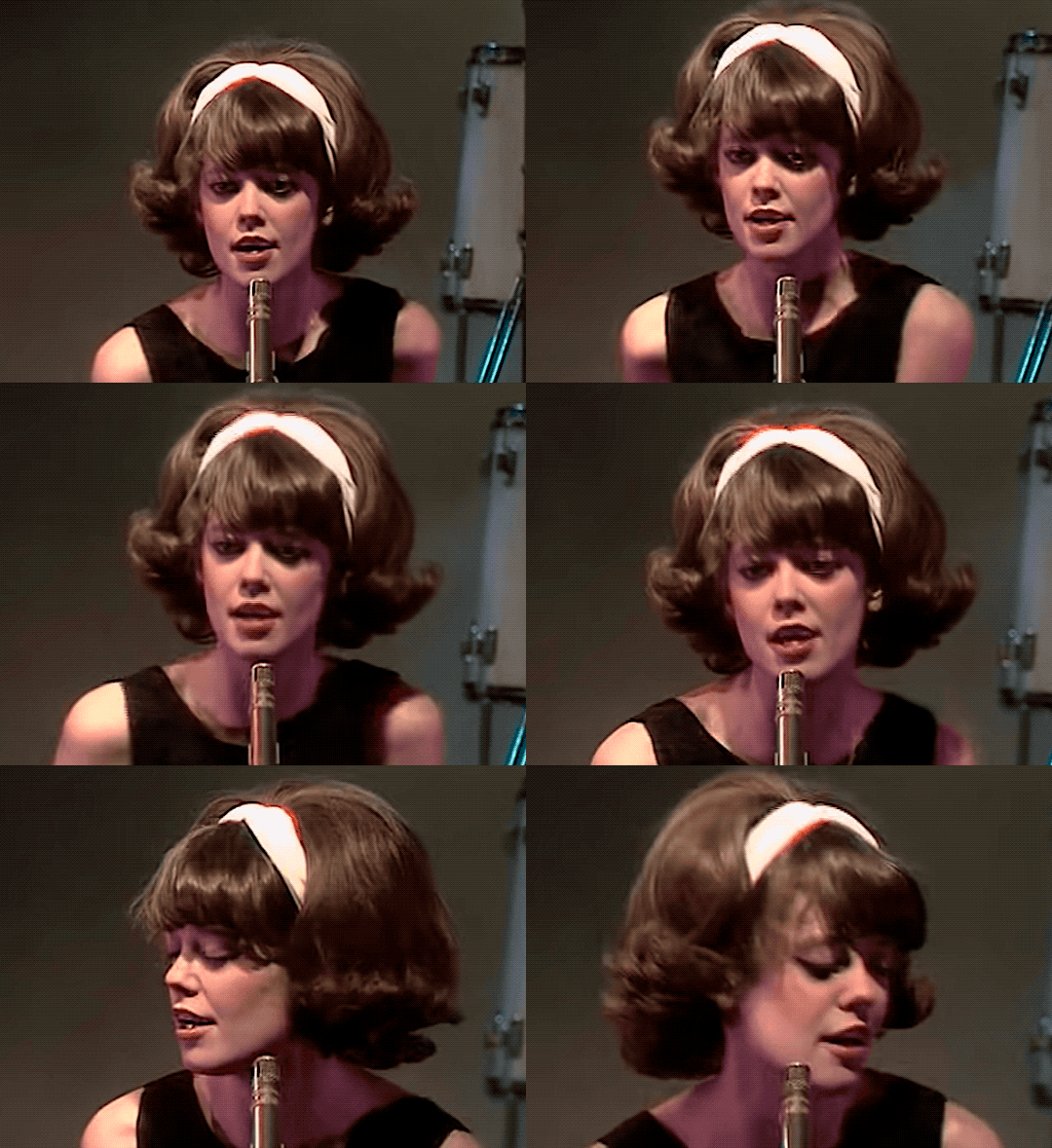
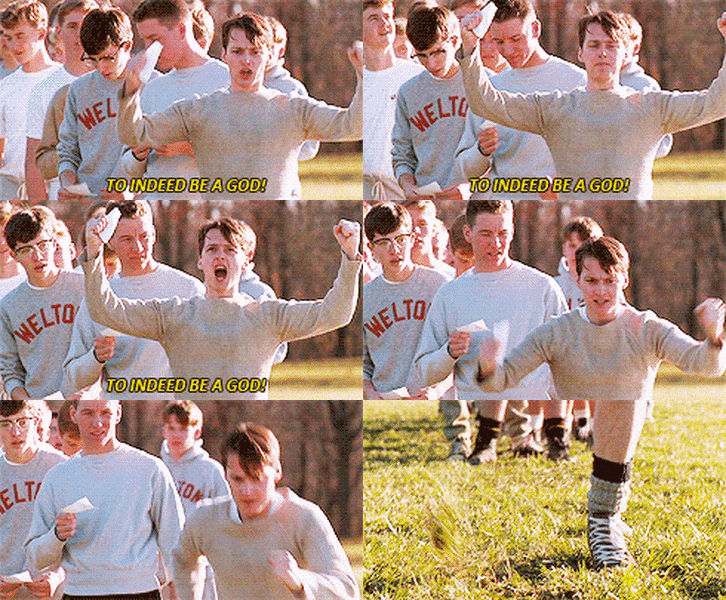
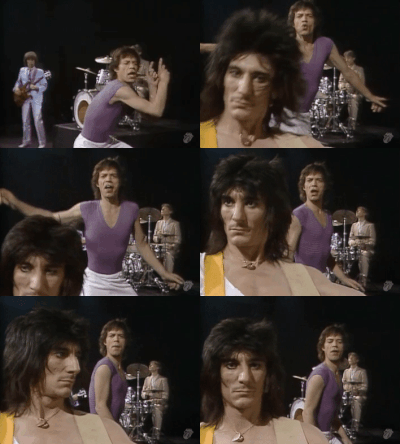
Dr. John and Tom Waits will be inducted into the Rock and Roll Hall of Fame tonight.
Here's Dr.John doing the Professor Longhair classic, "Tipitina" ...
... and Tom Waits, "Come On Up To The House."
14 March 2011


Happy Birthday, Telemann.
My favorite baroque composer, Georg Philipp Telemann, was born on this date in 1681.
Il Giardino Armonico performs his Concerto for flute, strings & continuo in E minor .
Sorry about the recorder.
A copy of Telemann's Tafelmusik is a must ... every kitchen should have one.
Il Giardino Armonico performs his Concerto for flute, strings & continuo in E minor .
Sorry about the recorder.
A copy of Telemann's Tafelmusik is a must ... every kitchen should have one.
13 March 2011
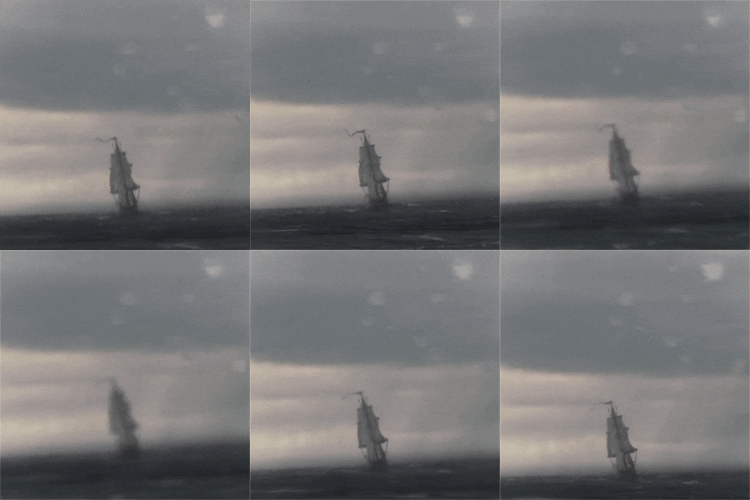
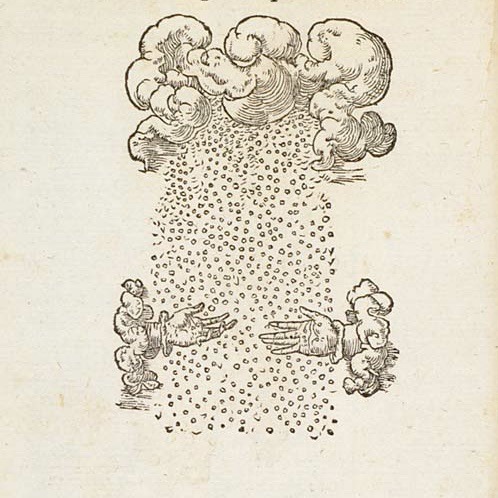
Head in the clouds.
From the Castle in the Air, To the Little Corner of the World
In the region of clouds, where the whirlwinds arise,
My castle of fancy was built;
The turrets reflected the blue from the skies,
And the windows with sunbeams were gilt.
The rainbow sometimes, in its beautiful state,
Enamel'd the mansion around;
And the figures that fancy in clouds can create,
Supplied me with gardens and ground.
I had grottoes, and fountains, and orange tree groves,
I had all that enchantment has told;
I had sweet shady walks, for the Gods and their - Loves,
I had mountains of coral and gold.

But a storm that I felt not, had risen and roll'ds
While wrapp'd in a slumber I lay;
And when I look'd out in the morning, behold
My Castle was carried away.
It pass'd over rivers, and valleys, and groves,
The world it was all in my view;
I thought of my friends, of their fates, of their loves,
And often, full often of You.

At length it came over a beautiful scene,
That nature in silence had made;
The place was but small, but 'twas sweetly serene
And checkered with sunshine and shade.
I gazed and I envied with painful goodwill,
And grew tired of my seat in the air;
When all of a sudden my Castle stood still,
As if some attraction was there.

Like a lark from the sky it came fluttering down,
And placed me exactly in view,
When whom should I meet in this charming retreat,
This corner of calmness, but You.
Delighted to find you in honor and ease,
I felt no more sorrow, nor pain;
But the wind coming fair, I ascended the breeze,
And went back with my Castle again.
- Thomas Paine
Will Ackerman, In A Region Of Clouds
Will Ackerman is a true artist. A carpenter by trade, he founded Windham Hill Records in 1979, the label responsible for giving us the work of George Winston and Alex Di Grassi.
More on Will Ackerman can be found here.
12 March 2011
Connection.

As a designer of buildings, things, and systems, I ask myself how to apply these three characteristics of living systems to my work. How do I employ the concept of waste equals food, of current solar income, of protecting biodiversity in design? Before I can even apply these principles, though, we must understand the role of the designer in human affairs.
In thinking about this, I reflect upon a commentary of Emerson’s . In the 1830’s, when his wife died, he went to Europe on a sailboat and returned in a steamship. He remarked on the return voyage that he missed the “Aeolian connection.” If we abstract this, he went over on a solar-powered recyclable vehicle operated by craftspersons, working in the open air, practicing ancient arts. He returned in a steel rust bucket, spilling oil on the water and smoke into the sky, operated by people in a black dungeon shoveling coal into the mouth of a boiler. Both ships are objects of design. Both are manifestations of our human intention.
Read the rest here.
Thanks Randolfo.
Technique.
Caravaggio, The Calling of St. Matthew, 1600

The painting is one of three Caravaggio masterpieces that have been put on show in the Contarelli Chapel of the Church of S. Luigi dei Francesi in Rome, Italy. The show running from 10 March to 15 October 2011, was organized and promoted by the Superintendence for the State Museums of Rome and presents the results of new diagnostic testing performed on the paintings to acquire more knowledge of Caravaggio's painting technique.
More here.
11 March 2011
Head in the clouds.
Clouds come floating into my life,

... no longer to carry rain or usher storm,

... but to add color to my sunset sky.
- Rabindranath Tagore

... no longer to carry rain or usher storm,

... but to add color to my sunset sky.
- Rabindranath Tagore
With.

Be strong and courageous. Do not be afraid or terrified because of them, for the Lord your God goes with you; he will never leave you nor forsake you.
– Deuteronomy 31:6
Thanks, Ragamuffin Ramblings.
McGuane.

McGuane has lived on Montana ranches for almost as long as he’s been a published writer, and the processes of maintenance and improvement feature frequently in his fiction and nonfiction. In Nobody’s Angel (1981), the troubled and aimless protagonist has only his horsemanship as bedrock: “Patrick used spurs like a pointing finger, pressing movement into a shape, never striking or gouging. And horseback, unlike any other area of his life, he never lost his temper, which, in horsemen, is the final mark of the amateur.” Some Horses (1999), a nonfiction look at training, using, and competing with cattle-ranching horses (known as cutting horses), contains some of McGuane’s most meticulously descriptive and effortlessly analogic writing, in which the lessons of horse riding seem to stand in for lessons of life.
“A cutting horse not only has to be quicker than the cow but also has to have the strategic sense to deal with the cow’s bold first moves. The rider, through weight shifts and other body signals (such as leg pressure and touches of the spurs), can tell the horse what he thinks the cow will do. The rider must also react without interference to moves the horse devises on his own. These shared signals constitute the elusive ‘feel’ of cutting.”
And McGuane is not unaware of connections between properly learned process or technique and proper living:
"I once gave Eugen Herrigel’s little masterpiece Zen in the Art of Archery to Buster [a famed cutting-horse trainer] to read and he concluded that its application to horsemanship was that if you are thinking about your riding you are interfering with your horse."
Process (“doingness”) mastered to this extent comes to feel analogous not only to proper living but to proper writing, and McGuane’s approach does seem to include an element of Zenlike dedication to writing as process, or at least a workerlike dedication to putting in the hours. About his writing apprenticeship he has this to say: “I thought that if you didn’t work at least as hard as the guy who runs a gas station then you had no right to hope for achievement. You certainly had to work all day, every day. I thought that was the deal. I still think that’s the deal.”
McGuane has never been a proponent of the easy answer. A fish moving by “force of blood” may be “exactly noble,” but people get no such pass. At best, they achieve a craftsman’s expertise—guiding, riding, fishing. And expertise is a guarantee only of itself. Wider knowledge or continued growth may not be in the cards. “The bonefisherman has a mildly scientific proclivity for natural phenomenology insofar as it applies to his quest, but unfortunately he is inclined to regard a flock of roseate spoonbills only in terms of flying objects liable to spook fish.” A writer’s style—a similarly practicable craft in McGuane’s world—holds no promise of ongoing improvement. Michael Wood, in his introduction to On Late Style, points out that it “can’t be a direct result of aging or death, because style is not a mortal creature, and works of art have no organic life to lose.” Style does not grow, like a plant, based on soil and rainfall, or like a fish or a horse, based on breeding and instinct and environment. It is a willed thing.
Read the rest here.
Grow.
Today is Johnny Appleseed Day.

Johnny Appleseed is described as a man of medium height, blue eyes, long, light-brown hair, slender figure, wiry and alert. He wore but little clothing and that, for the most part, was obtained by trading apple trees to the settlers for cast-off garments. Often, while traveling through the forest his only garment was a coffee sack with holes cut in it for his head and arms. He said clothes should not be worn for adornment – only for comfort. He went barefoot most of the time, even in winter. Reports indicate that he was a vegetarian, eating no meat or fish. He believed it was wrong to take life in order to procure food. This likely contributed to his zeal for urging people to plant and grow fruit.
He rarely sought shelter in a house, and when he did so would usually sleep on the floor before the fireplace with his kit for a pillow. Except in very bad weather he preferred to sleep in the open forest or out of doors in the
shelter of a shed or other weather breaker.
Half poet-philosopher, half mystic, perhaps out of phase with the goals and aspirations of his contemporaries, but infinitively attuned to the larger harmony of the Universe, Johnny Appleseed occupies a special place in the long line of dreamers, innovators and statesmen who have contributed to America's greatness.
Read the rest here.
Now.

Now is no time
to think of what you do not have.
Think of what you can do
with that there is.
- Ernest Hemingway
There is nothing else than now. There is neither yesterday, certainly, nor is there any tomorrow. How old must you be before you know that? There is only now, and if now is only two days, then two days is your life and everything in it will be in proportion. This is how you live a life in two days. And if you stop complaining and asking for what you never will get, you will have a good life.
- Ernest Hemingway, For Whom The Bell Tolls
W.A. Mathieu, "Deep Water Gospel"

Just in from a much needed walk in the fresh air.
The snow has stopped falling.
It was very nice to stand in the darkness, listening to Mathieu on the iPod, and still hear and feel the sound and power of the swollen stream inches from my feet.
Lifting.
10 March 2011


09 March 2011
See.
Paul Gauguin, Self-portrait with Portrait of Bernard (Les Misérables), 1888

I shut my eyes in order to see.
- Paul Gauguin

I shut my eyes in order to see.
- Paul Gauguin
Agua.
Many men go fishing all of their lives without knowing that it is not fish they are after.
- Henry David Thoreau
- Henry David Thoreau
Stimulating.

Sir Ken Robinson on the importance of Reading, Writing, and Creativity ... in the classroom and throughout life ...
How do you define creativity?
Ultimately it's the process of having original ideas, but there are several steps. The first step is imagination, the capacity that we all have to see something in the mind's eye. Creativity is then using that imagination to solve problems -- call it applied imagination. Then innovation is putting that creativity into practice as applied creativity.
That seems pretty straightforward. What do people not understand?
There are several common misconceptions. The first is that people think that only some are creative. It's in the nature of human beings that we are creative. The second misconception is that creativity is about design and marketing. What the TED conference shows is that creativity is central to the practice of science and business and more. Creative initiatives should help you find what you are passionate about. The third is that you can't do anything about it. You can cultivate creativity.
How?
There are several elements, but I think the first is curriculum. Things like the recent Innovation Initiative in the U.S. are a big mistake, because they focus too much on math and science. Yes, the U.S. needs more people doing math and more doing science, but it needs creative people in all fields.
The Renaissance was a flowering on all fronts. It concerns me that this U.S. initiative is focused on a piece of the problem but not the whole thing. A second element is teaching. You can't just give someone a creativity injection. You have to create an environment for curiosity and a way to encourage people and get the best out of them.
Companies that are clued into the innovation imperative have set up labs intended to foster creativity. But it can't be as easy as setting up a cool room with creative toys and a whiteboard.
No. On the corporate level, Pixar is a good example. The company has something called Pixar University, that runs classes, events, workshops and stuff throughout the day. Every employee is entitled to spend four hours a week at Pixar University, and they are encouraged to not take anything job-related. That keeps peoples' minds alive.
You can't be a creative thinker if you're not stimulating your mind, just as you can't be an Olympic athlete if you don't train regularly.
Read the rest here.
More Wonder and Joy here.
08 March 2011
Wise.
If the fool would persist in his folly, he would become wise.
- William Blake
Kris Kristofferson on Charlie Rose.
I've posted this quote before, but I love it ..
You don't paddle against the current, you paddle with it. And if you get good at it, you throw away the oars.
- Kristofferson
- William Blake
Kris Kristofferson on Charlie Rose.
I've posted this quote before, but I love it ..
You don't paddle against the current, you paddle with it. And if you get good at it, you throw away the oars.
- Kristofferson
Heaven.
Galileo, Pleiades, 1610

Love seeketh not itself to please, nor for itself hath any care, but for another gives its ease, and builds a Heaven in Hell's despair.
- William Blake

Love seeketh not itself to please, nor for itself hath any care, but for another gives its ease, and builds a Heaven in Hell's despair.
- William Blake
07 March 2011
Imagination.
Henri Fantin-Latour, A Vase of Roses, 1875

The tree which moves some to tears of joy is in the Eyes of others only a Green thing that stands in the way. Some see Nature all ridicule and deformity, and by these I shall not regulate my proportions; and some scarce see Nature at all. But to the Eyes of the Man of Imagination, Nature is Imagination itself.
- William Blake
Wisdom.

Maybe that’s enlightenment enough: to know that there is no final resting place of the mind; no moment of smug clarity. Perhaps wisdom...is realizing how small I am, and unwise, and how far I have yet to go.
- Anthony Bourdain
Happy Birthday, Van Zandt.
Townes Van Zandt was born on this date in 1944.
I don't think you can ever do your best. Doing your best is a process of trying to do your best.
- Townes Van Zandt
Townes van Zandt is the best songwriter in the whole world and I'll stand on Bob Dylan's coffee table in my cowboy boots and say that.
- Steve Earle
Indeed, sublime poetry.
My favorite poem of his done by one of my favorite singers, Peter Rowan.
06 March 2011

Beethoven, String Quartet in E-flat, Op. 127
Beethoven premiered this piece today, in 1825.
Ultimately, everyone concerned agreed that Schuppanzigh should give the first performance, which took place on March 6, 1825, led by Schuppanzigh, with Karl Holz on second violin, Franz Weiss on viola, and Linke on cello. Beethoven and the players signed a rather curious agreement drawn by the composer’s nephew Karl: 'Each one is herewith given his part and is bound by oath and indeed pledged on his honor to do his best, to distinguish himself to vie each with the other in excellence. Each one who takes part in the affair in question is to sign this sheet.
Beethoven
Schuppanzigh
Weiss
Linke, the great master’s accursed cello
Holz, the last, but only with this signature'
The performance was a near-disaster; there were several copying errors, Schuppanzigh’s strings broke, and while asserting that individual passages were not a problem for him, he confessed ensemble was difficult to achieve, especially in the Adagio. It reportedly took him a whole year to make sense of the movement. In all fairness, however, seeing only the first violin part rather than a full score, Schuppanzigh could not have discerned that the movement was a set of unnumbered variations, much less realize that the entire work was, as a Beethoven scholar describes it, 'filled with mysterious suggestions, hints, and allusions to voices that come and go in the four-instrument texture, which is perpetually resonant with content, infused with even more motivic and thematic material than it overtly presents.'
The work was subsequently played, this time with a new first violinist, Joseph Böhm, who later wrote about a rehearsal:
"[T]he unhappy man was so deaf that he could no longer hear the heavenly sound of his compositions. And yet rehearsing in his presence was not easy. With close attention his eyes followed the bows and therefore he was able to judge the smallest fluctuations in tempo or rhythm and correct them at once. At the close of the last movement of this quartet there was a meno vivace, which seemed to me to weaken the general effect. At the rehearsal, therefore, I advised that the original tempo be maintained, which was done, to the betterment of the effect. Beethoven, crouched in a corner, heard nothing, but watched with strained attention. After the last bow-stroke he said, laconically, 'Let it remain so,' went to the desks and crossed out the meno vivace in the four parts."
Read the rest here.
Happy Birthday, Michelangelo.
Michelangelo, Sybil of Delphi (detail), 1512

In the spring of 1509, just two years after a mapmaker coined the word “America” in honor of the explorer Amerigo Vespucci, a fellow Florentine named Buonarotti was beginning to work on one of the defining masterpieces of Western Civilization. His first name—Michelangelo—would also reverberate through the ages. And, like many of the early transatlantic voyages of discovery, his ceiling frescoes in Rome’s Sistine Chapel had gotten off to a terrible start.
“He was working on the largest multi-figure compositions of the entire ceiling when the actual fresco plaster itself became infected by a kind of lime mold, which is like a great bloom of fungus,” says Andrew Graham-Dixon, chief art critic for London’s Sunday Telegraph. “So he had to chip the whole thing back to zero and start again. Eventually he sped up. He got better.”
However difficult the conditions—and even the challenge of painting at a height of 65 feet required considerable ingenuity, with scaffolds and platforms slotted into specially fashioned wall openings—by the time Michelangelo unveiled the work in 1512, he had succeeded in creating a transcendent work of genius, one which continues to inspire millions of pilgrims and tourists in Vatican City each year. The Sistine Chapel holds a central place in Christendom as the private chapel of the pope and the site of the papal enclave, where the College of Cardinals gathers to elect new popes. Thanks to Michelangelo, however, the chapel’s significance extends to all who have been inspired by the originality and power of his vision—both directly and indirectly, through its influence on subsequent artists and the iconography of world culture.
Read the rest here.
The Vatican's Virtual Tour is very nice ... take it here.
The BBC's Michelangelo documentary ...
Part 1
Part 2
Part3
Part 4
Michelangelo's Poem ...
Ravished by all that to the eyes is fair,
Yet hungry for the joys that truly bless,
My soul can find no stair
To mount to heaven, save earth's loveliness.
For from the stars above
Descends a glorious light
That lifts our longing to their highest height
And bears the name of love.
Nor is there aught can move
A gentle heart, or purge or make it wise,
But beauty and the starlight of her eyes.
That death should spare perfection so complete?
05 March 2011
(En)light(enment).
The soul is dyed the color of its thoughts. Think only on those things that are in line with your principles and can bear the light of day. The content of your character is your choice. Day by day, what you do is who you become. Your integrity is your destiny - it is the light that guides your way.
- Heraclitus
Some get spiritual 'cause they see the light, and some 'cause they feel the heat.
-Ray Wylie Hubbard
Here's a lesson from the Wylie Lama ...
- Heraclitus
Some get spiritual 'cause they see the light, and some 'cause they feel the heat.
-Ray Wylie Hubbard
Here's a lesson from the Wylie Lama ...
From an NPR interview ...
HANSEN: How much do real people and situations inspire your lyrics?
Mr. HUBBARD: Well, it's a thing I've kind of - I guess I've learned that songwriting is inspiration plus craft, the inspiration being what we call the great a-ha. You go a-ha, boy, that would be a good idea for a song. And then the craft being taking that inspiration and making it rhyme and, you know, fit the laws of music, whatever song you're trying to write. One of my favorite quotes is from Flannery O'Connor, who said never second-guess inspiration.
HANSEN: Forty-one years old...
Mr. HUBBARD: Yes.
HANSEN: ...when you put down the bottle for the last time, or you picked up the bottle for the last time. And you started taking guitar lessons after everything that you knew?
Mr. HUBBARD: Well, at 41, you know, that whole - I'd been a working musician, but I was playing in honky-tonks. Somewhere after I got clean and sober, I said in order to be a real songwriter there were certain things I had to do, and one of them was to learn to play guitar better. So somewhere around that time, too, someone gave me a book called Letters to a Young Poet by Rilke. And there was a line in there about fear. And to paraphrase him, it was like our fears are like dragons guarding our most precious treasures.
And so at age 41 or 42, I overcame this fear of embarrassment and picked up the phone and called a fellow there in Dallas, Texas by the name of Sam Swank(ph). And I said would you give me guitar lessons? Because I'd never had guitar lessons; I just, you know, in high school picked up a guitar, and just playing in honky-tonks. You know, once I overcame that fear, there were these little treasures on the other side, these little songs.
Mr. HUBBARD: (Singing) Down in Corpus Christi always around midnight, you'll find the devil limping along because his shoes is too tight. His hair's up in pigtails, his whiskers are in braids, he's talking about the promises he says God forgot he made. Oh the way of the fallen is hard, the way of the fallen is hard...
HANSEN: Here you are, you're quoting Rilke, you're quoting Flannery O'Connor. Do you think it would surprise people to learn that your song, The Way of the Fallen, is based on Dante's Divine Comedy?
Mr. HUBBARD: It would probably surprise some of the people that come to see me perform, but I don't really think about that when I'm writing. I just will get an idea and see where it goes.
HANSEN: This is all about a conversation with the devil, and you really paint a picture of him, with the billy goat that he feeds marmalade, and you write a lot about demons and angels.
Mr. HUBBARD: Well, yeah. I write songs about God too, but they're not gospel songs or spirituals, you know. I'm so interested in mythology and religion and spirituality that I read a lot about it.
Mr. HUBBARD: (Singing) God smiles and lights a cigarette and says this is the souls you ain't gonna get. I'd take all the little critters if I could, some are too smart for their own damn good. They don't even believe I'm here. They ain't seen where I've been. Hell wants (unintelligible), Hell wants (unintelligible), get me out of this and never do again. All it takes is some grains of faith and a few kilowatts of sweat and grace.
Here's more ...

Rescued.

The author CS Lewis loved reading his translation of Virgil's epic poem the Aeneid to fellow Oxford-based writers, including JRR Tolkien, at the Inklings, the famous informal literary discussion group they both frequented.
The translation was believed to have been lost in a bonfire in 1964, a year after the author's death. Now, nearly 50 years later, it has resurfaced. The work was apparently rescued by Lewis's former secretary, Walter Hooper, 79. The complete translation is to be published in the book CS Lewis's Lost Aeneid, which is out next month.
"Although it had been known that Lewis had worked on this translation, no one realised that portions still survived until Walter began sifting through his material," said the book's editor, Andy Reyes. "The bonfire, it was assumed, had consumed the most significant fragments of Lewisiana."
"Major Lewis, after setting aside those papers which had special significance for him, began disposing of the others," wrote Hooper. "Thus it was that a great many things which I was never able to identify found their way on to a bonfire which burned steadily for three days."
Read the rest here.
Here it is.
Beautiful.
O'Keeffe, Birch and Pine Trees -- Pink, 1925

A man should hear a little music, read a little poetry, and see a fine picture every day of his life, in order that worldly cares may not obliterate the sense of the beautiful which God has implanted in the human soul.
- Goethe

A man should hear a little music, read a little poetry, and see a fine picture every day of his life, in order that worldly cares may not obliterate the sense of the beautiful which God has implanted in the human soul.
- Goethe
Chatham.
Chatham, Spring Moonrise Over the Sangre de Cristo Mountains, 2000

Russell Chatham's latest catalog of lithographs is now available.
Harrison's latest collection of poetry, again, features Chatham's work.

Russell Chatham's latest catalog of lithographs is now available.
Harrison's latest collection of poetry, again, features Chatham's work.
04 March 2011
Happy Birthday, Squire.
Yes bassist, Chris Squire, was born on this date in 1948. It's interesting that he shares his day with Vivaldi ... I'd imagine that they'd get along well.
Happy Birthday, Vivaldi.
Il Prete Rosso was born on this date in 1678.

‘He came with his fingers within a grass-stalk’s breadth of the bridge, so that the bow had no room. He played a fugue on all four strings with such incredible speed that everyone was startled’.
This striking description of Vivaldi improvising a cadenza during an opera performance in 1715 in Venice captures perfectly the character of the composer who was such a pivotal figure in the development of violin music. A proto-Paganini with his long fingers stretching up the fingerboard into hitherto uncharted territory, I can well imagine his fiery red curls flying dramatically while playing with an almost religious fervour (he was, after all, trained as a priest). If only I had such an image in mind when, as a young boy, I took my first steps in violin playing, like so many other beginners, with Vivaldi’s A minor Concerto RV356, a ‘warhorse’ of juvenile scrapers everywhere. Those characteristic repeated notes of the opening and the seemingly prosaic passagework would have seemed much less of a chore had I an inkling of Vivaldi’s free imagination and passion at the violin.
A vain man, he had no small opinion of his playing and composition. He was proud of his fame and his illustrious patrons and demanded high fees as a result. His vast output was facilitated by an extraordinarily quick hand in composition, a fact of which he boasted, and he was particularly sensitive to criticism of his music by listeners who could not reconcile such a prodigious opus with consistent quality. Of course his speed in writing was necessitated by his duties at the Pio Ospedale Della Pietà, where he was ‘Maestro di Violino’ from 1703–1709 and 1711–1716. The Pietà was an orphanage for girls in Venice, Vivaldi’s home town, which specialised in musical training. Don Antonio Vivaldi, nicknamed ‘il Prete Rosso’ (the Red Priest) on account of his hair, had an impressive list of duties here. He had to teach violin to a large number of the girls, composition to some (interestingly enough, only if they wrote in his style!), rehearse and direct the orchestra, was in charge of procuring instruments and instrument repair and had to provide a constant supply of fresh music for the institution. The services at the Pietà soon grew in reputation and had the status of concerts rather than religious gatherings, a stop there being an essential part of any foreigner’s visit to the city. Vivaldi’s music and the excellence of the orchestra were no doubt the main attractions but one cannot help thinking that the spectacle of an orchestra made up entirely of teenaged girls, many of whom achieved considerable proficiency and even fame outside the Pietà, was also a strong lure!
Whatever the judgement of his professional contemporaries, Vivaldi’s contribution to the development of the concerto is unarguable. Until his first essays in the solo concerto, composers’ efforts had been largely directed toward the concerto grosso, a piece for orchestra with a small group of solo instruments, the ‘concertino’. The drama in such a work was achieved by the contrast in colour, texture and dynamics between these two groups — solo parts emerging briefly from orchestral tuttis only to be subsumed again by the larger ensemble but both generally exploring the same musical material. Vivaldi wrote many pieces which, on the face of it, are concerti grossi but which develop the idea of contrast by including extended solo passages for one or more instruments, often using material unrelated to the orchestral tuttis. Although Vivaldi was by no means the first composer to successfully write for a solo instrument with orchestra (one thinks of Torelli and Albinoni in particular) it was he who finally set the form which we instantly recognise today as a Baroque concerto. The characteristic pattern of orchestral ‘ritornelli’ alternating with solo passage work in outer movements and aria-like middle movements was the framework which inspired so many composers after him. Bach, of course, was the prime example, arranging many of Vivaldi’s Violin Concertos for the harpsichord, thus setting him on the path to his own masterpieces.
The justifiable fame and popularity of his Four Seasons sadly overshadows the rest of Vivaldi’s output for violin in mainstream concert repertoire. This is particularly regrettable in the case of the Opus 12 set of concertos which reveal the full range of Vivaldi’s musical personality, from the wistful, philosophical atmosphere of No.I to the showy ebulliance of, say the last movement of Concerto No.V. Concerto No.III is a piece for strings without soloist and with it’s striking dissonances, bold chromaticism and vigorous character deserves to be at least as well known as the Sinfonias Al santo sepulchro or the famous Concerto Alla Rustica.
So what are the special demands facing the performer of these pieces? On a purely violinistic level the passages of repeated cross-string patterns with mixed bowings require a steady hand in bowing as well as facility in double stops; Vivaldi’s prediliction for double-stopping, particularly the interval of a fifth, high up the instrument is a great souce of angst for the violinist as it requires a good deal of pressure to depress the strings all the way to the fingerboard here (we know that Paganini had a very low action on his violin to facilitate extended playing in high positions: I wonder if Vivaldi, with his experience in maintaining the Pietà’s collection of instruments, might have fixed a similar setup for himself?). All his other usual tricks are here including rapid arpeggios and scale passages, often with a mischievous bowing of which he was particularly fond where bow changes occur exactly in the ‘wrong’ places (i.e. off the beat instead of on it). This bowing gives a delightfully jazzy syncopation to certain passages but can be a real ‘tongue-twister’ for the fingers!
Vivaldi took great joy in writing non-symmetrical phrases, often using an odd number of bars in a common-time movement where phrase lengths of 2, 4 and 8 bars would be normal and commonly a finishing a phrase on the half bar. It is this characteristic phrasing which emphasises the rhetorical nature of Vivaldi’s music and actually outweighs in good part the significance of all his pyrotechnics (let us not forget that his training as a priest would have given him a thorough grounding in the rules of rhetoric). Such oddly proportioned phrasing can ‘wrong-foot’ the performer and listener alike but when we examine carefully the emphasis given to individual notes and motifs, logic and order are revealed. Treating the music as if it were a spoken text we can find it’s own articulations, subtle shifts of meaning, repetitions and even punch lines, for these concerti certainly show off Vivaldi’s sense of humour to great effect. His lighter side often comes through with his use of the musical device ‘perfidia’ with which a composer, through repetition of a particular figure, seeks almost to bore his audience, or at least to lull them. This has the effect of throwing the subsequent material into sharp relief and this passage in the first movement of Concerto No.VI is just such a place:
More than anything else it is most important when playing Vivaldi’s music to capture the ever-changing moods of this composer’s quicksilver imagination. Let us look at these bars at the end of the first solo from the last movement of Concerto No.IV: First we have a tumbling downward figure played three times in an ascending sequence, then suddenly three bars of a more lyrical nature appear which are rudely interrupted by an almost grotesque leaping figure, a flighty bar of semiquavers drops in from nowhere to be superceded by bars of a tender and yearning character before the ‘round up’ brings us back to the tutti — and all this in the space of 14 bars!
Passages like this and indeed the Opus 12 set of concertos as a whole show us perhaps the quintessence of Vivaldi’s musical style: an irrepressible imagination allied with a vigorous personality, which led Charles de Brosses, who became friendly with Vivaldi at the very end of his life, to describe him, even then, as having a ‘furie de composition’ — a mania for composing.
Thanks, Academy of Ancient Music.
Viktoria Mullova performs Vivaldi's Violin Concerto in D Major "Grosso Mogul" RV 208,: I Allegro, with Il Giardino Armonico.
I play Vivaldi quite a bit in my classroom. The kids have commented favorably to his work ... "This rocks out loud, Mr. Firchau!"
03 March 2011
Beethoven.
On this day in 1802, Beethoven published the "Moonlight" Sonata. He was never happy about the sonata's popularity. He said, "Surely I've written better things."
He did. Here it is ...
Piano Concerto No. 5 in E-flat major, "Emperor"
... and the String Quartet Op. 18 No. 6
More here.
He did. Here it is ...
Piano Concerto No. 5 in E-flat major, "Emperor"
... and the String Quartet Op. 18 No. 6
More here.
It.

Experience teaches me, however, that it is indeed possible to be in the moment. Often, immersed in various activities — in a classroom, woodworking, writing, reading — I have “zoned out,” have felt the so-called “flow experience,” that deep, subjective state, that almost cellular, almost mitochondrial hum of effortlessly embodied energy, where muscle experiences itself as motion, mind as mindfulness; that thrumming calm into which I descend and become other than that watchful observer standing outside myself. It is a state of honed sensibility so profound it disremembers itself, a state of wakefulness wholly entuned with the rhythm of a task, an inattentive attentiveness, a tranced alertness and focus. Cezanne captures this sense of vigilant self-forgetting when he describes painting as becoming a “sensitive plate” to the moment, so as “to paint it in its reality, and forget everything for that.” Even lowly, much maligned routine, which sent Thoreau to the garden of Walden and then expelled him with a sword of fire two years and two months later, can stop time in its passing. In its pattern of actions, recurrent and familiar, routine domesticates time, allows us to locate ourselves in it, to be on social terms with it, to dwell in it.
Read the rest here.
Notice.
I know about the despair of overcoming chronic temptation. It is not serious, provided self-offended petulance, annoyance at breaking records, impatience, etc. don’t get the upper hand. No amount of falls will really undo us if we keep on picking ourselves up each time. We shall be very muddy and tattered children by the time we reach home. But the bathrooms are all ready, the towels put out, and clean clothes in the airing cupboard. The only fatal thing is to lose one’s temper and give it up. It is when we notice the dirt that God is most present in us; it is the very sign of His presence.
- C.S. Lewis
Do yourself a favor, go visit Ragamuffin Ramblings.
Journey.

In Pilgrim’s Progress, John Bunyan’ seventeenth century allegory of the Sacred Romance, there is a man who comes to see his own story as he has never seen it before, and he is appalled by what he sees. He longs for life, real life, which is to say eternal life, and he knows that the stay where he is means death. He has no more sense of direction than that he must go and find the path that leads to the Celestial City, his heart’s true home. Against the protestations of his family and friends, in rejection of all the comforts of his smaller story, he launches on a remarkable adventure: “So I saw in my dream,” Bunyan wrote, “that the man began to run.” A good place to start. But as Bunyan tells it, “he had not run far from his own door” before the characters in his own small story ran to fetch him back, crying out all the threats and excuses they could think of. “But the man put his fingers in his ears, and ran on, crying, ‘Life! Life! Eternal life!’”
This man becomes Pilgrim and the story of his journey is the story of our own. Entering into the Sacred Romance begins with a decision to become a pilgrim of the heart. As Gabriel Marcel reminds us, the soul is a traveler: “It is the soul and the soul alone that we can say with supreme truth that ‘being’ necessarily means ‘being on the way’ (en route).” We are, he says, “homo viator,” which means “itinerant man,” man or woman on a pilgrimage. The choice before us now is to journey or to homestead, to live like Abraham the friend of God, or like Robinson Crusoe, the lost soul cobbling together some sort of existence with whatever he can salvage from the wreckage of the world. Crusoe was no pilgrim; he was a survivor, hunkered down for the duration. He lived in a very, very small world where the lead character and all else found its focus in him. Of course, to be fair, Crusoe was stranded on an island with little hope of rescue. We have been rescued, but still the choice is ours to stay in our small stories, clutching our household gods and false lovers, or run in search of life.
- John Eldredge
Please remind me, many times per day, not to be the creator of my deserted island.
I have found Eldredge's book, The Sacred Romance, to be one of the most important books I have ever read.
Extraordinary.
Sir Ken reminds us to FIRE and STOKE! ...
I’m constantly surprised by how many people settle for so little fulfilment in their lives, who endure their lives rather than enjoy them. On the other, I know people who simply love what they do and couldn’t imagine doing anything else. “This isn’t what I do,” they say, “this is who I am.” There are people in every walk of life for whom this is true: people who are in their element. Being in your element involves doing something for which you have a natural aptitude. But it’s more than that: it’s about passion. You have to love it, too.
Passion can be a disconcerting idea in Britain, conjuring up images of fiery glances, pounding hearts and a hint of castanets. It’s not always like that. Passion is a deep attraction. It can be for someone else or for a process: music, maths, cooking, sport, entrepreneurship, teaching… whatever fires your imagination and stokes your energy. We all have different aptitudes and we have unique passions. The challenge is to find them because it’s in the fusion of both that we live our best lives.
More here ... and here ...
01 March 2011
Flourish.
Creativity expert Sir Ken Robinson challenges the way we're educating our children. He champions a radical rethink of our school systems, to cultivate creativity and acknowledge multiple types of intelligence.
Here he makes an entertaining and profoundly moving case for creating an education system that nurtures (rather than undermines) creativity.
In this talk, the argument is made for a radical shift from standardized schools to personalized learning -- creating conditions where kids' natural talents can flourish.
Sir Ken's website is here.
Randolfo.
Randolfo, Female Cardinal, 2011

A friend, fellow fanatic of dry-cured pork products, and extremely talented watercolorist has launched a blog ... don't miss it.

A friend, fellow fanatic of dry-cured pork products, and extremely talented watercolorist has launched a blog ... don't miss it.
Laugh.

Among those I like or admire, I can find no common denominator, but among those whom I love, I can: all of them make me laugh.
- W.H. Auden
Simply.
O'Keeffe, Oriental Poppies, 1937

No, it is not yours to open buds into blossom.
Shake the bud, strike it,
it is beyond your power to make it blossom.
Your touch soils it.
You tear its petal to pieces
and strew them in the dust,
but no colors appear and no perfume.
Oh, it is not for you to open the bud into blossom.
He who can open the bud does it so simply.
He gives it a glance and the life sap stirs through its veins.
At his breath the flower spreads its wings
and flutters in the wind.
Colors flash out like heart longing,
the perfume betrays a sweet secret.
He who can open the bud does it so simply.
- Rabindranath Tagore
Happy Birthday, Chopin.
Frédéric Chopin was born on this date in 1810.
Vladimir Horowitz plays the Mazurka No. 13 in A Minor, Op. 17, No. 4
Vladimir Horowitz plays the Mazurka No. 13 in A Minor, Op. 17, No. 4
28 February 2011
Imagination.
Edward Hopper, Marshall's House, 1932

Great art is the outward expression of an inner life in the artist, and this inner life will result in his personal vision of the world. No amount of skillful invention can replace the essential element of imagination.
- Edward Hopper

Great art is the outward expression of an inner life in the artist, and this inner life will result in his personal vision of the world. No amount of skillful invention can replace the essential element of imagination.
- Edward Hopper
Hope.
Robert ParkeHarrison, The Sower, 2002

To keep desire alive a flourishing, we must renew our vision for what lies ahead. Desire is kept alive by imagination, the antidote to resignation. We will need imagination, which is to say, we will need hope.
- John Eldredge

To keep desire alive a flourishing, we must renew our vision for what lies ahead. Desire is kept alive by imagination, the antidote to resignation. We will need imagination, which is to say, we will need hope.
- John Eldredge
Graces.
Titian, Flora, 1515

. . . He on his side
Leaning half raised, with looks of cordial love,
Hung over her enamoured, and beheld
Beauty which, whether waking or asleep,
Shot forth peculiar graces; then with voice,
Mild, as when Zephyrus on Flora breathes,
Her hand soft touching, whispered thus: "Awake!
My fairest, my espoused, my latest found,
Heaven's last, best gift, my ever-new delight.
- Milton

Subscribe to:
Posts (Atom)