Kazuaki Tanahashi, born in Japan in 1933 and active in the United States since 1977, is an artist, writer, and peace and environmental worker. As a painter and calligrapher, he has been pioneering the genres of one-stroke painting, multi solo exhibitions of his brushwork worldwide and has taught numerous workshops, including at seven international calligraphy conferences. As a writer, editor, and translator, he has produced over forty books in English and Japanese.
CONNECT
Showing posts with label calligraphy. Show all posts
Showing posts with label calligraphy. Show all posts
06 December 2019


28 March 2019
Return.
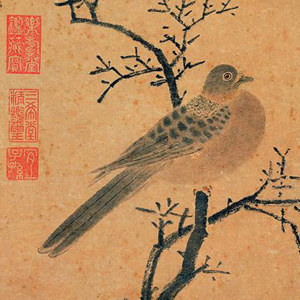
Without looking for the traces I may have left;
A cuckoo’s song beckons me to return home;
Hearing this, I tilt my head to see
Who has told me to turn back;
But do not ask me where I am going,
As I travel in this limitless world,
Where every step I take is my home.
Dōgen
25 April 2018

16 March 2016
Simplify.

In the spring of 1962, Inge Druckrey, a tall, blonde student
from Germany is sitting at her desk in Armin Hofmann’s graphic design class at
the Basel School of Design in Switzerland. She is drawing lines with a pencil
in a workbook, a pad with a special fold-over cover that contains lines that
one could slip underneath the tracing paper. These are the last two hours of a
nine-hour class. It is meant as quiet time, a meditative time designed to let
the students relax and think about nothing but controlling the marks: uniform
pressure, length, and alignment — evenly spaced vertical lines, horizontal
lines, diagonal lines, circles and half-circles. It is a language that appears
to only make sense to a few. Mark after mark, page after page, two hours go by
in silence, but for the collective sound of graphite in contact with the
paper’s surface and the occasional turning of a page. With her long, slender
hands she makes these marks with joy, precision, and the appreciation for this
gift. She is beginning to see.
This is the start of her quest to become fluent in the magic language of form. She became an expert, a master in composition, drawing, handwriting, calligraphy, letterforms, and spent most of her life devoted to teaching others how to see. The film called Teaching to See is about Inge Druckrey’s journey, which she dedicated to essential sight and insights. The film finds its gentle, persuasive pace through the editing and camera work of the young, Russian filmmaker Andrei Severny, a storyteller deep in his psyche, and from the insightful observation by Edward Tufte, the producer and her husband, who suggested that the film be “reduced to verbs.” That is, actions, not labels — gestures, not histories.
Inge Druckrey has been a passionate devotee to what Tufte calls “forever knowledge,” that indispensable understanding that one carries for life. She became the first European-trained designer to bring this way of knowing to the United States, first at the Kansas City Art Institute in 1966. Philadelphia College of Art follows, then the Yale School of Art, and finally, The University of the Arts — with some other stops at the Rhode Island School of Design and the Hartford Art School in between. Shortly after her retirement as professor emerita from The University of the Arts, where she had taught until 2010, the idea to create Teaching to See was born. Her steadfast belief is that elemental principles of form shed light on the essence of communication. At a screening of the film in Reykjavik, Iceland, a woman in the audience intoned, “I wish I could put you in my pocket so that you could teach me to see!”
The film celebrates what we are missing in this densely textured world that we inhabit. Just when we thought we had things figured out — seeing this film — we are quick to realize that we have been overlooking an indispensable gift, but one that can be sought, earned, and cared for. If only we knew how to see as intensely as she does. To simplify, to work and learn in a slower, contemplative way that allows us to feel and perceive, unhinged from any burden save for the deep knowledge of what is exactly before us. If only we had the opportunity to be guided by someone like Inge Druckrey. In the film, many examples appear and are not explained in detail — but it’s enough. One intuitively senses the care and thoughtfulness in their creation. Contrast, tension, and a sense of resolution are key to the most artful endeavors from music, to poetry, to painting. One wonders what would happen if architects or musicians took her class — for that matter, anyone in the arts.
19 August 2015
Master.

One simple fact highlights how much the art form has died;
there are now only 12 people left in the entire world who currently hold the
title of ‘Master Penman.’ Jake Weidmann, from Colorado, is one of them and the
youngest by far. From early on he was consumed by handwriting and would often
choose to work on it rather than play outside or go to recess with all the
other children. His whole life has revolved around working at, and perfecting,
his penmanship. All of his time, energy, practice, and dedication to the art
has paid off because he has since earned the title of Master Penman. Everything
he does in his work, down to the pens and tools he uses, is in the old school
way of writing and drawing. Oftentimes a piece he is working on will take well
over a year to completely finish. If it’s not to his exact standards, he scraps
it and starts over. All of this preciseness and the need for perfection is what
earned him recognition and has helped make him a master at the art of penmanship.
CONNECT
23 June 2015

26 February 2015
Hand-lettered.

The Society of Antiquaries' rough translations and calligraphic manuscripts of The Story of Lancelot of the Lake, hand-lettered by William Morris, have been digitized.
CONNECT
Subscribe to:
Posts (Atom)


































































































































