"I am not one who was born in the custody of wisdom. I am one who is fond of olden times and intense in quest of the sacred knowing of the ancients." Gustave Courbet
Showing posts with label Bacchus. Show all posts

26 March 2025

Marvelous.

Tiepolo, Bacchus and Ariadne, 1735


I am an excitable person who only understands life lyrically, musically, in whom feelings are much stronger as reason. I am so thirsty for the marvelous that only the marvelous has power over me. Anything I can not transform into something marvelous, I let go. Reality doesn't impress me. I only believe in intoxication, in ecstasy, and when ordinary life shackles me, I escape, one way or another. 

Anaïs Nin

18 October 2024

Happy Birthday, Giordano

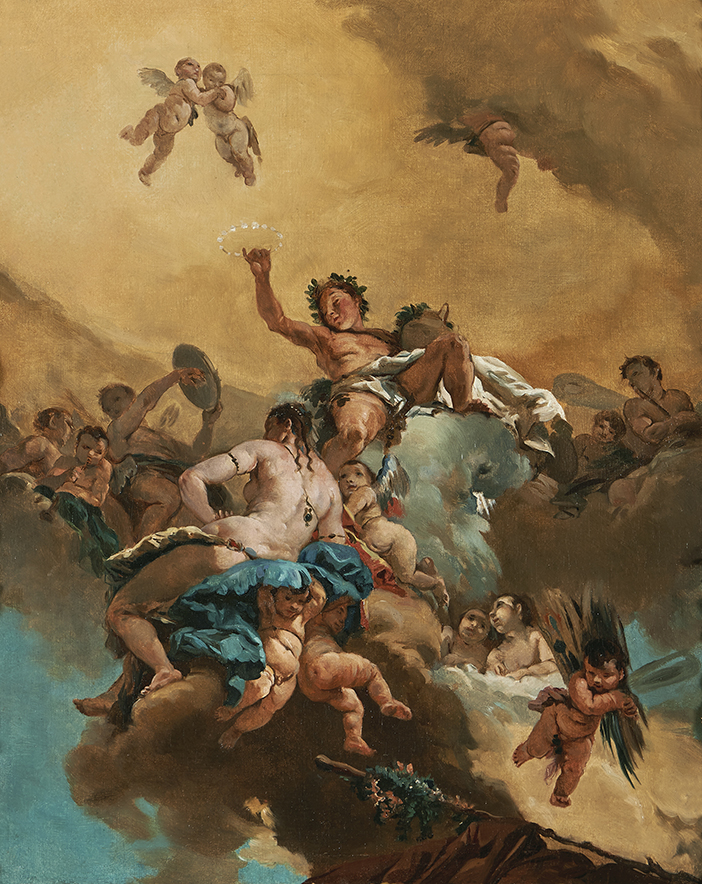
Giordano, The Triumph of Bacchus with Ariadne, 162


Lucca Giordano was born on this day in 1632.

14 April 2023

Celebratory.

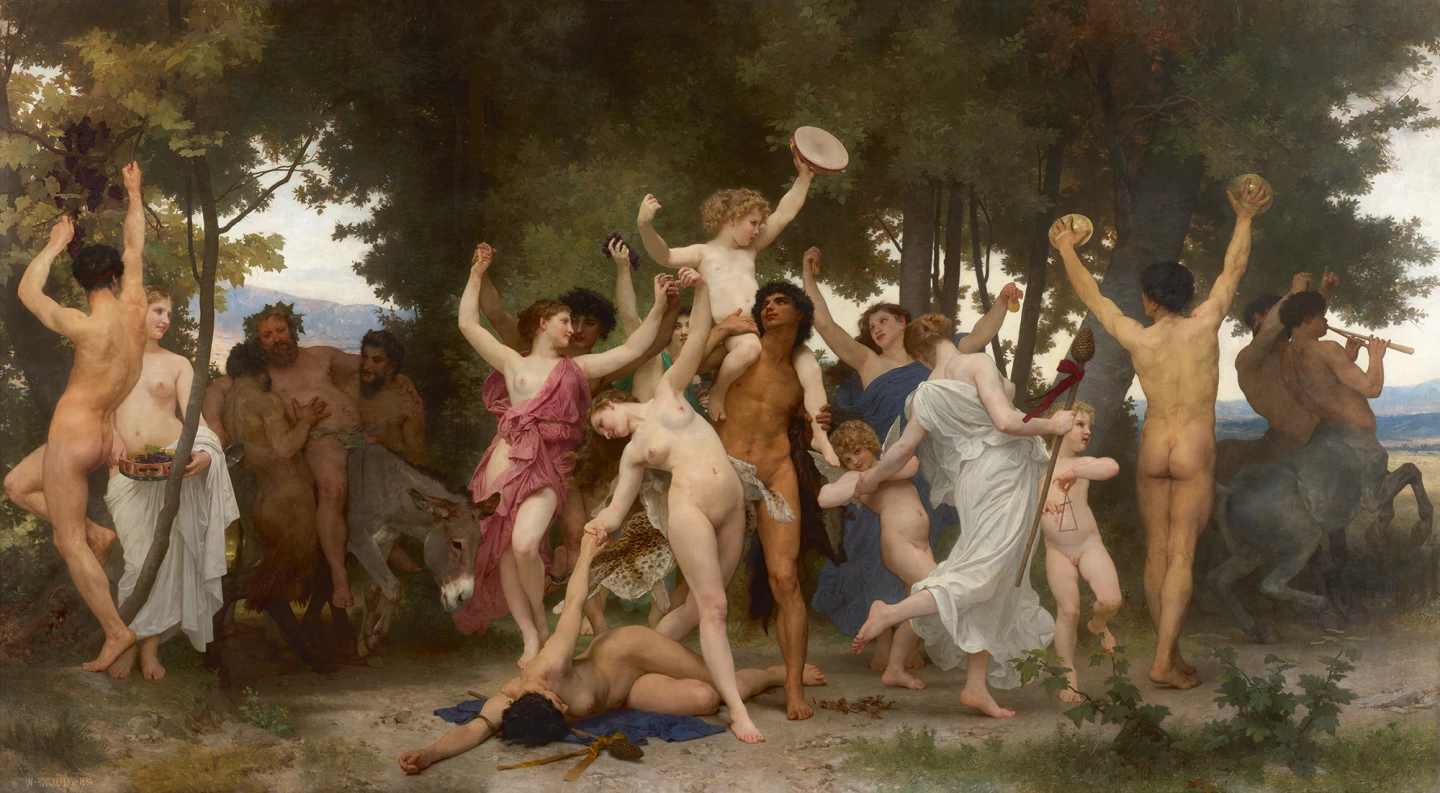
Bouguereau, La Jeunesse de Bacchus, 1884


Life is so short you want to remember all of it, bad and good.  It has occurred to me that I’m drawn to wine for the same reason that fishing and bird hunting have been lifelong obsessions. The pleasure is in the path, the search for something good; finding and drinking a fine, reasonably priced wine is similar to catching a trout in an unlikely eddy of a river, or a two grouse in the bag on a cold, rainy October morning -- it is celebratory rather than sedating, a nod to the realities of existence rather than an erasure.

Jim Harrison

23 April 2022

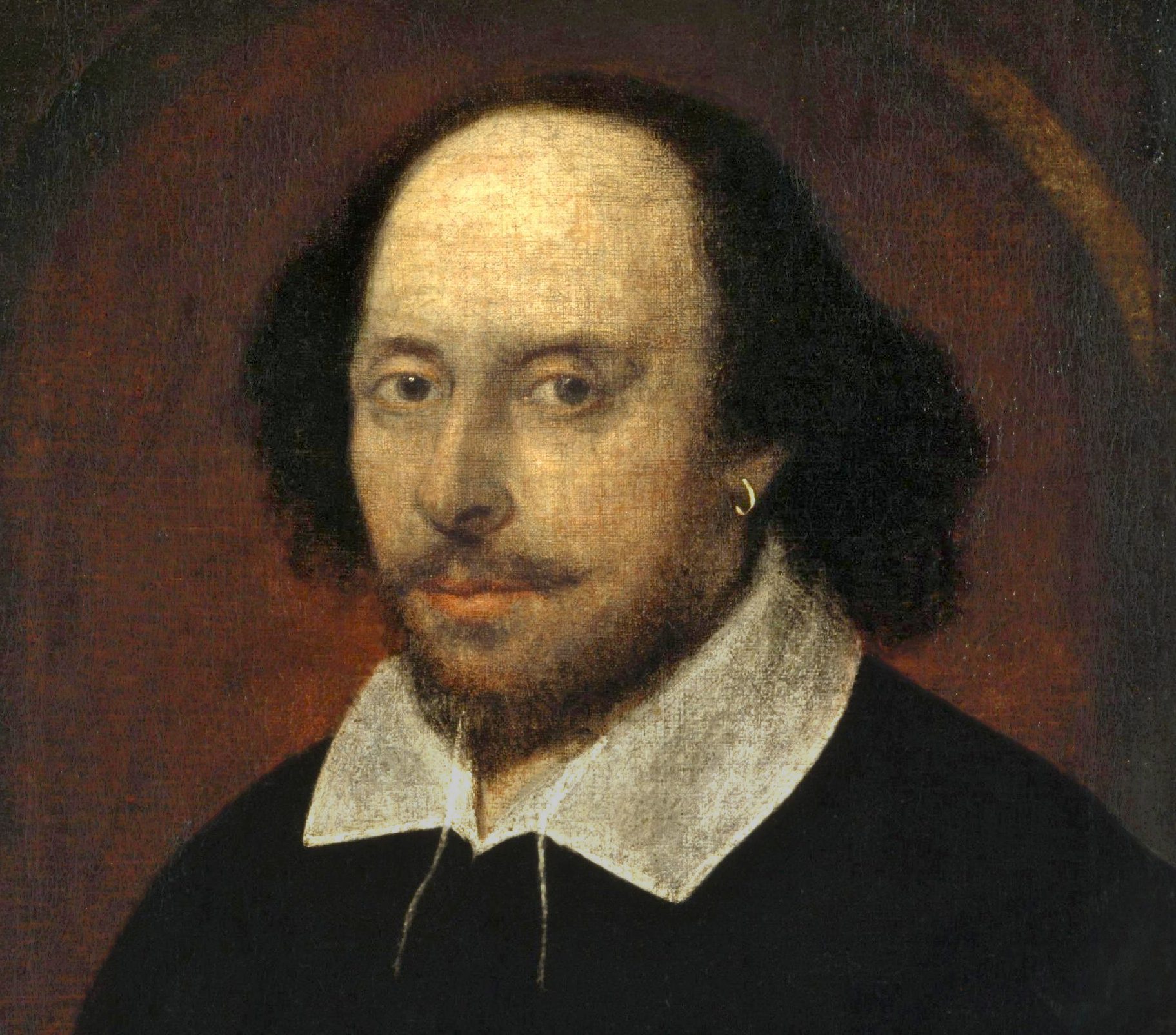
Happy Birthday, Shakespeare


William Shakespeare was born on this day in 1564.
Come, thou monarch of the vine,
Plumpy Bacchus, with pink eyne!
In thy fats our cares be drown’d,
With thy grapes our hairs be crown’d:
Cup us, till the world go round,
Cup us, till the world go round!

From Antony and Cleopatra

03 May 2020

Joy.

Rubens, Venus, Cupid, Bacchus and Ceres, 1613


Prepare yourselves
for the roaring voice of the God of Joy!

Euripides

Rules.

van Dalens, Bacchus, 1662


Come boy, and pour for me a cup
Of old Falernian. Fill it up
With wine, strong, sparkling, bright, and clear;
Our host decrees no water here.
Let dullards drink the Nymph's pale brew,
The sluggish thin their blood with dew.
For such pale stuff we have no use;
For us the purple grape's rich juice.
Begone, ye chilling water sprite;
Here burning Bacchus rules tonight!

Catullus

Entertain.

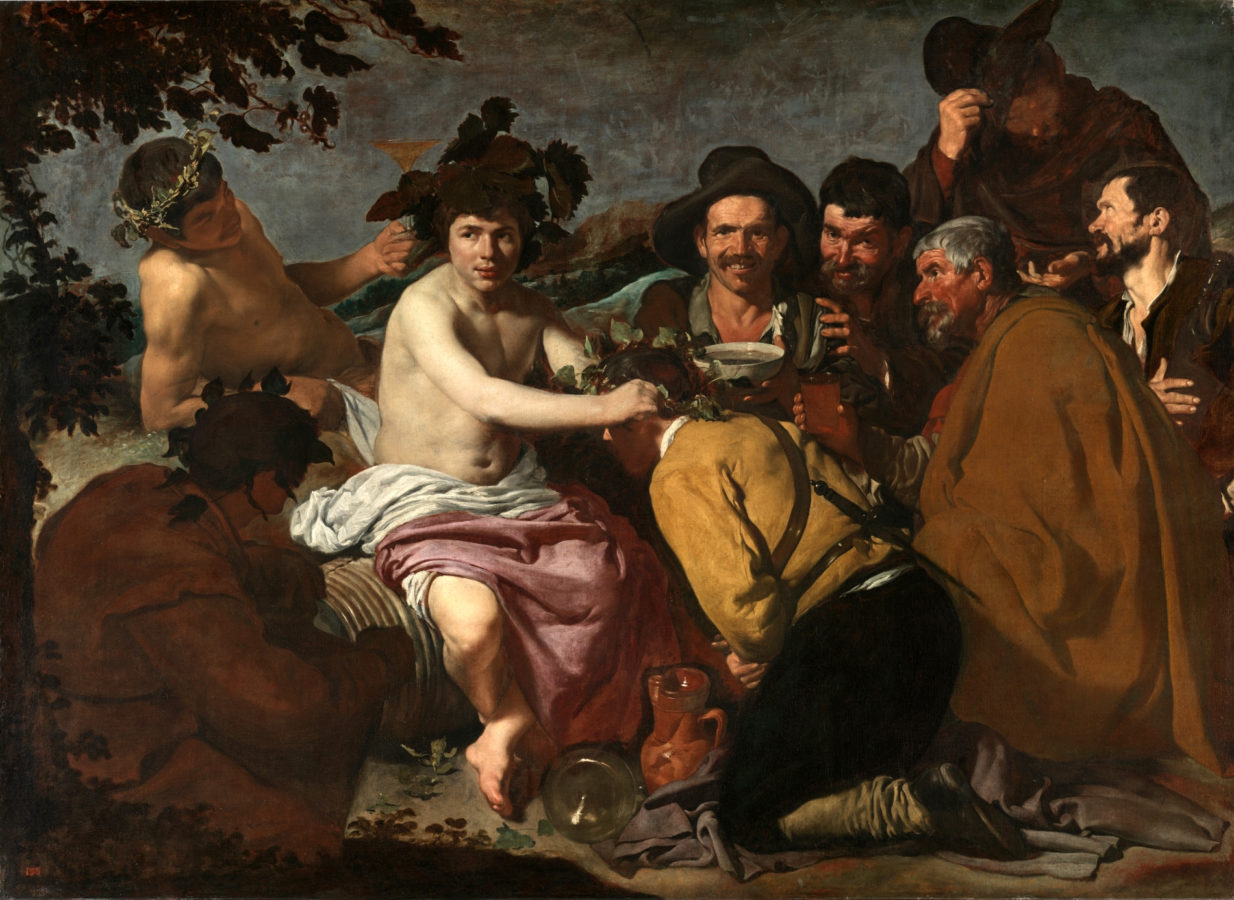
Velázquez, The Triumph of Bacchus, 1629


The ancient view that saw happiness as the by-product of virtue, and virtue as suspended from the four "hinges" of courage, temperance, prudence and justice, does not exhaust the precepts of morality. It tells us how we should care for ourselves and for others; but it does not tell us how to care for the world. Discovering the extent of our trespass on the natural order, we have come face to face with categorical imperative to live in another way. The message that Rilke read in the headless, legless torso of an antique statue of Apollo, we read now in every portion of our mutilated earth: you must change your life.

It is appropriate to begin from the feature of wine that has been most absurd: its ability to intoxicate. What exactly is intoxication? Is there a single phenomenon that is denoted by this word? Is the intoxication induced by wine an instance of the same general condition as the intoxication induced by whisky, say or that induced by cannabis? And is 'induced' the right word in any or all of the familiar cases? Why all this fuss about wine? Is there something about wine that removes it altogether from the class of drugs, as Chesterton once suggested, when he wrote that "the dipsomaniac and the abstainer are not only both mistaken, but they both make the same mistake. They regard wine as a drug and not a drink"? It would be strange if Chesterton, who was right about most things, were wrong about wine.

The social drinking of wine, during or after a meal, and in full cognizance of its delicate taste and evocative aura, seldom leads to drunkenness, and yet more seldom to loutish behavior. The drink problem that we witness in British cities stems from our inability to pay Bacchus his due. Thanks to cultural impoverishment, young people no longer have a repertoire of songs, poems, arguments or ideas with which to entertain one another in their cups. They drink to fill the moral vacuum generated by their culture, and while we are familiar with the adverse effect of drink on an empty stomach, we are now witnessing the far worse effect of drink on an empty mind.

This is the difference between a genuinely cultivated mind and one that only aspires to be.  The genuinely cultivated mind knows when to remain silent.  This is one of the uses of the Greek symposium.  It imposes on everybody around the table the obligation to be silent while one of them speaks.  And that way when you speak it becomes seriously meaningful. 

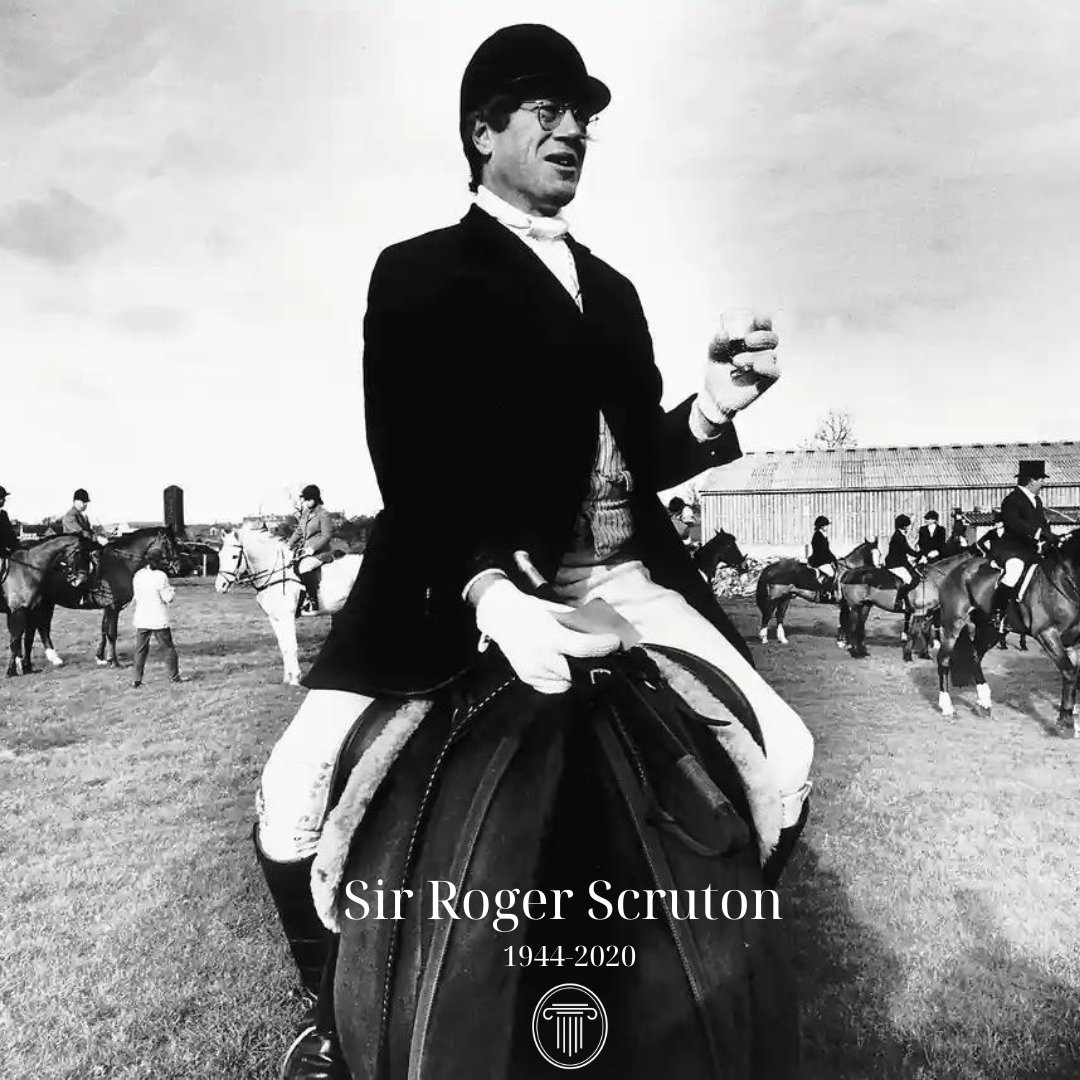
Sir Roger Scruton, from I Drink Therefore I Am.

CONNECT

14 April 2019

Yet.

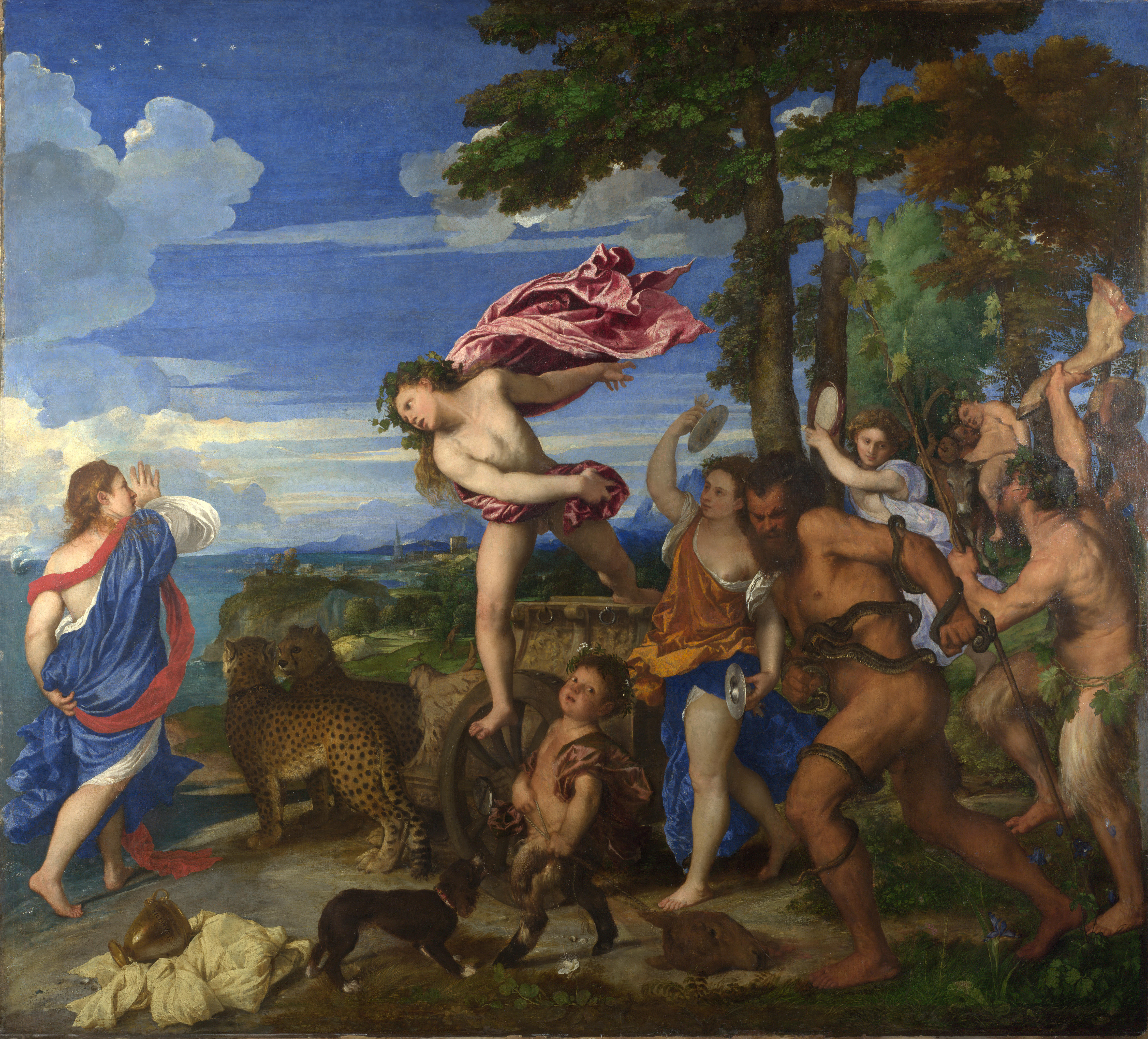
Titian, Bacchus and Ariadne, 1523


To BACCHUS: A CANTICLE

Whither dost thou hurry me,
Bacchus, being full of thee?
This way, that way, that way, this,
Here and there a fresh love is;
That doth like me, this doth please:
Thus a thousand mistresses
I have now; yet I alone,
Having all, enjoy not one.

Robert Herrick

23 April 2018

Carries.

van Dalen, Bacchus, 1648


If with water you fill up your glasses,
You'll never write anything wise.
But wine is the horse of Parnassus,
That carries a bard to the skies.

Athenaeus

Nice try, Monday.  Thank you, Jessica.  

21 April 2017

Revels.

von Aachen, Bacchus, Ceres, and Amor, 1603


INSCRIPTION for an ANTIQUE PITCHER

Come, old friend! sit down and listen!
From the pitcher, placed between us,
How the waters laugh and glisten
In the head of old Silenus!


Old Silenus, bloated, drunken,
Led by his inebriate Satyrs;
On his breast his head is sunken,
Vacantly he leers and chatters.


Fauns with youthful Bacchus follow;
Ivy crowns that brow supernal
As the forehead of Apollo,
And possessing youth eternal.


Round about him, fair Bacchantes,
Bearing cymbals, flutes, and thyrses,
Wild from Naxian groves, or Zante's
Vineyards, sing delirious verses.


Thus he won, through all the nations,
Bloodless victories, and the farmer
Bore, as trophies and oblations,
Vines for banners, ploughs for armor.


Judged by no o'erzealous rigor,
Much this mystic throng expresses:
Bacchus was the type of vigor,
And Silenus of excesses.


These are ancient ethnic revels,
Of a faith long since forsaken;
Now the Satyrs, changed to devils,
Frighten mortals wine-o'ertaken.


Now to rivulets from the mountains
Point the rods of fortune-tellers;
Youth perpetual dwells in fountains;
Not in flasks, and casks, and cellars.


Claudius, though he sang of flagons
And huge tankards filled with Rhenish,
From that fiery blood of dragons
Never would his own replenish.


Even Redi, though he chaunted
Bacchus in the Tuscan valleys,
Never drank the wine he vaunted
In his dithyrambic sallies.


Then with water fill the pitcher
Wreathed about with classic fables,
Ne'er Falernian threw a richer
Light upon Lucullus' tables.

Come, old friend, sit down and listen!
As it passes thus between us,
How its wavelets laugh and glisten
In the head of old Silenus!

Henry Wadsworth Longfellow
Rules.

Caravaggio, Bacchus, 1595


Come boy, and pour for me a cup
Of old Falernian. Fill it up
With wine, strong, sparkling, bright, and clear;
Our host decrees no water here.
Let dullards drink the Nymph's pale brew,
The sluggish thin their blood with dew.
For such pale stuff we have no use;
For us the purple grape's rich juice.
Begone, ye chilling water sprite;
Here burning Bacchus rules tonight!

Catullu

Prepare.

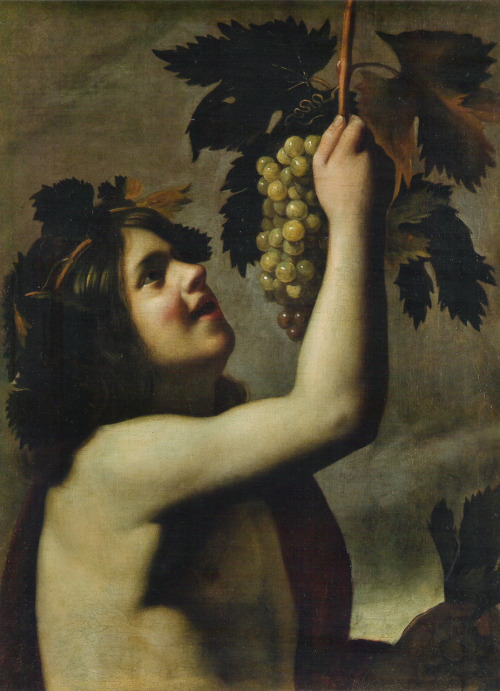
Salini, The Young Bacchus, 1623


Prepare yourselves for the roaring voice of the God of Joy! 

Euripides